El Salvador’s bereaved mothers unite after gang violence, turning shared grief into solidarity and hope beyond hatred.
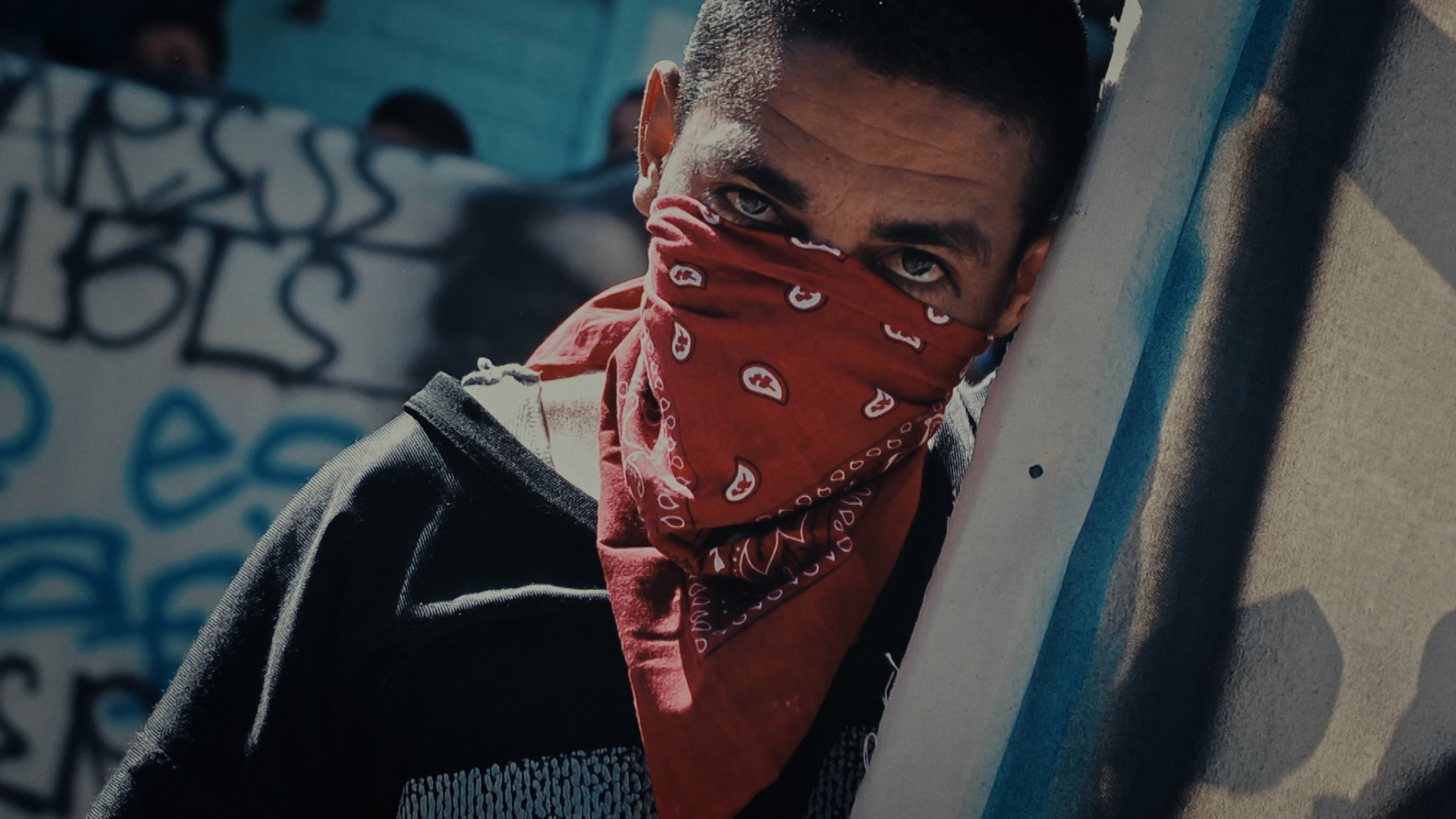
El Salvador has long been shaped by cycles of violence, from its brutal civil war to the grip of gangs such as MS-13 and Barrio 18. For many families, losing a child is a harsh reality. Sadness, fear and anger fill their daily lives. Amid this, a group of mothers has chosen a different path. They support one another, share their stories, and work to restore hope. In doing so, they turn personal loss into collective strength and show that courage can exist alongside pain.
Mari has turned her tragedy into a source of resilience, dedicating herself to walking alongside other mothers and offering support in the midst of grief. Beatriz, still searching for her son, finds guidance and comfort in Mari’s presence as she navigates her loss. Through these quiet acts of care, the episode shows how mourning can become inner strength, how women, carrying each other’s suffering, can become a light for one another, and how together they find a way forward beyond anger and despair.
The Academic Staff Union of Universities (ASUU), Federal University of Technology, Minna (FUT Minna) Branch, has raised concern over what it described as an alleged attempt by the Niger State Government to take over the Bosso Campus of the institution.
In a statement signed by its Chairperson, Luqman ‘Kunle’ Oyewobi, the union condemned the move, describing it as unlawful and a threat to the autonomy and legal status of federal universities.
According to ASUU, the land and infrastructure of FUT Minna are federal assets held in trust for national educational development, stressing that any attempt by a state authority to appropriate or annex the Bosso campus would violate existing federal laws and constitutional provisions.
The union explained that the Bosso Campus is a legally recognised property of the university, established following the creation of FUT Minna by an act of the federal government in 1983.
READ ALSO: NDLEA Arrests ‘UK-Wanted Drug Lord’ After 15 Years On The Run
It dismissed claims that the facility was merely leased to the institution as a temporary takeoff site.
ASUU said historical records indicate that the property, formerly St Malachy’s College, was formally transferred to the federal government after consultations between the federal and Niger State governments.
The transfer, it said, was concluded after an agreed compensation of ₦2.8 million was paid to the state government, effectively completing the handover of ownership.
The union also stressed that the Bosso Campus remains a fully functional academic environment and not idle land, noting that it houses key infrastructure for teaching, research, student accommodation, and administrative operations.
It added that the campus currently supports thousands of students and academic and non-academic staff, warning that any disruption to its ownership or operational control could undermine academic programmes, research activities, and the stability the university has built over the years.
Citing a communication from the National Universities Commission (NUC) dated 13 August 2014, ASUU maintained that facilities provided for federal universities do not revert to state governments.
The union argued that the state government’s alleged claim lacks legal, moral, and historical basis and could set a dangerous precedent for federal educational institutions across the country.
ASUU, therefore, called on the federal government, the National Assembly, and the NUC to urgently intervene and reaffirm the federal ownership of all properties belonging to FUT Minna.
It also urged the Niger State government to exercise restraint and pursue constructive dialogue rather than unilateral action.
The union advised the Governor of Niger State, Mohammed Bago, to support and consolidate the growth of the university, noting his association with the institution as a recipient of an honorary doctorate degree.
ASUU reaffirmed its commitment to defending the integrity, autonomy, and assets of FUT Minna through lawful means.
Describing the development as a test of respect for constitutional order and the rule of law, the union noted, “It is only in the jungle that might is right. Niger State and Nigeria are not jungles.”
The Niger State Government reportedly claimed the Bosso Campus was a 40-year lease that had expired and planned to convert it into a teaching hospital for Ibrahim Badamasi Babangida University.
However, FUT Minna and ASUU reject this, insisting the federal government bought the land outright in 1983.
The Federal Government is gradually closing in on the set national metering target of 6,966,584 meters, as a total of 677,942 new meters were added to installations by the 11 electricity distribution companies within one year.
The development has increased the national metering rate to 57.27 per cent.
According to fresh data released by the Nigerian Electricity Regulatory Commission (NERC), the development showed that 109,556 customers were newly metered in December alone, up from 88,592 recorded in November.
The data disclosed that the number of metered customers in Nigeria’s power sector moved closer to the metering target for the first time, rising to 6,966,584 as of December 2025.
This represents an increase of 677,942 meters within the 12 months of 2025, compared to 6,288,642 metered customers recorded in December 2024 – a 10.78 per cent boost in year-on-year growth in metered customers.
The national metering rate also improved significantly from 46.57 per cent in December 2024 to 57.27 per cent in December 2025, an increase of 10.7 percentage points.
Data show that meter installations equally rose from 572,055 end-use customer meters deployed in 2024 to 677,942 in 2025, indicating an additional 105,887 meters installed year-on-year, an 18.51 per cent increase in annual installations.
As of December 2025, the total number of active electricity customers, defined as those billed or who vended electricity at least once within 12 months, stood at 12,163,412. Of this figure, 6,966,584 have been metered, leaving about 5.19 million customers still on estimated billing.
Despite the gains in the number of meters distributed so far, the number of active customers in the Nigerian Electricity Supply Industry dropped from 13,503,342 as of December 31, 2024, to 12,163,412 in December 2025, a decline of 1,339,930 customers, representing a 9.92 per cent reduction.
According to statistics, however, more than four out of every 10 electricity customers remain unmetered, underscoring the scale of Nigeria’s longstanding metering deficit.
A month-on-month analysis of the sector’s performance showed that as of November 2025, the total number of metered customers stood at 6,857,028, representing a national metering rate of 56.54 per cent out of 12,128,611 active customers. Within that month alone, distribution companies installed 88,592 new meters.
By December 2025, the number of metered customers had increased to 6,966,584, pushing the national metering rate to 57.27 per cent. The total active customer base also rose slightly to 12,163,412. Notably, meter installations accelerated during the month, with 109,556 customers newly metered, 20,964 more than the figure recorded in November.
The data further reveal that while the number of active customers rose by 34,801 within one month, metering growth outpaced customer expansion, resulting in a 0.73 percentage-point improvement in the national metering rate.
Ikeja, Eko, and Abuja DisCos emerged as leading distribution companies in meter installations in the month under review.
In Abuja DisCo’s franchise area, active customers stood at 1,341,807, out of which 1,044,014 have been metered, translating to a 77.81 per cent metering rate. The company added 19,953 new meters during the month, reinforcing its position among the top performers.
Eko DisCo maintained one of the highest coverage levels nationwide, recording 550,764 metered customers out of 641,411 active users, representing an 85.87 per cent metering rate.
Ikeja DisCo posted the strongest performance overall, with 1,130,213 of its 1,308,042 active customers metered, resulting in an 86.40 per cent coverage. Ikeja installed 7,748 new meters in December.
A combo of the Chief Executive Officer of the Association of Nigerian Electricity Distributors (ANED), Sunday Oduntan, and electricity installations.
Our latest Metering Factsheet is here!
The November & December 2025 Metering Status of Distribution Companies (DisCos) factsheet provides a breakdown of metering progress across the country.
Highlights: Metering Rate: The national metering rate rose to 57.27% by the end of… pic.twitter.com/Q3nmoNEp7u
READ ALSO: OpenAI Tops $25bn In Annualised Revenue
On its part, Port Harcourt DisCo recorded 678,446 metered customers out of 1,057,858 active users, representing a 64.13 per cent metering rate, with 17,471 new meters installed.
Benin DisCo achieved a 53.45 per cent metering rate after metering 564,500 of its 1,056,069 customers, deploying 17,928 meters within the month.
Ibadan metered 1,267,503 of its 2,444,715 active customers, with 11,298 new installations, while Enugu recorded 847,109 metered customers out of 1,641,569 active users, but added only 1,538 new meters in December.
Jos DisCo recorded 257,258 metered customers out of 818,628 active users, representing a 31.43 per cent metering rate, despite installing 13,626 meters during the month.
Kaduna DisCo posted a 34.42 per cent coverage with 187,050 metered customers from a base of 543,497, while Kano DisCo recorded 35.35 per cent, having metered 282,319 of its 798,718 customers.
Yola DisCo remained among the lowest performers, with 157,408 metered customers out of 511,098 active users, translating to a 30.80 per cent metering rate, even as it deployed 4,763 meters in December.
Overall, the sector recorded 12,163,412 active customers in December 2025, of which 6,966,584 were metered, reflecting a national metering rate of 57.27 per cent.
A total of 109,556 customers were newly metered within the month, underscoring ongoing efforts to narrow the country’s persistent metering gap.
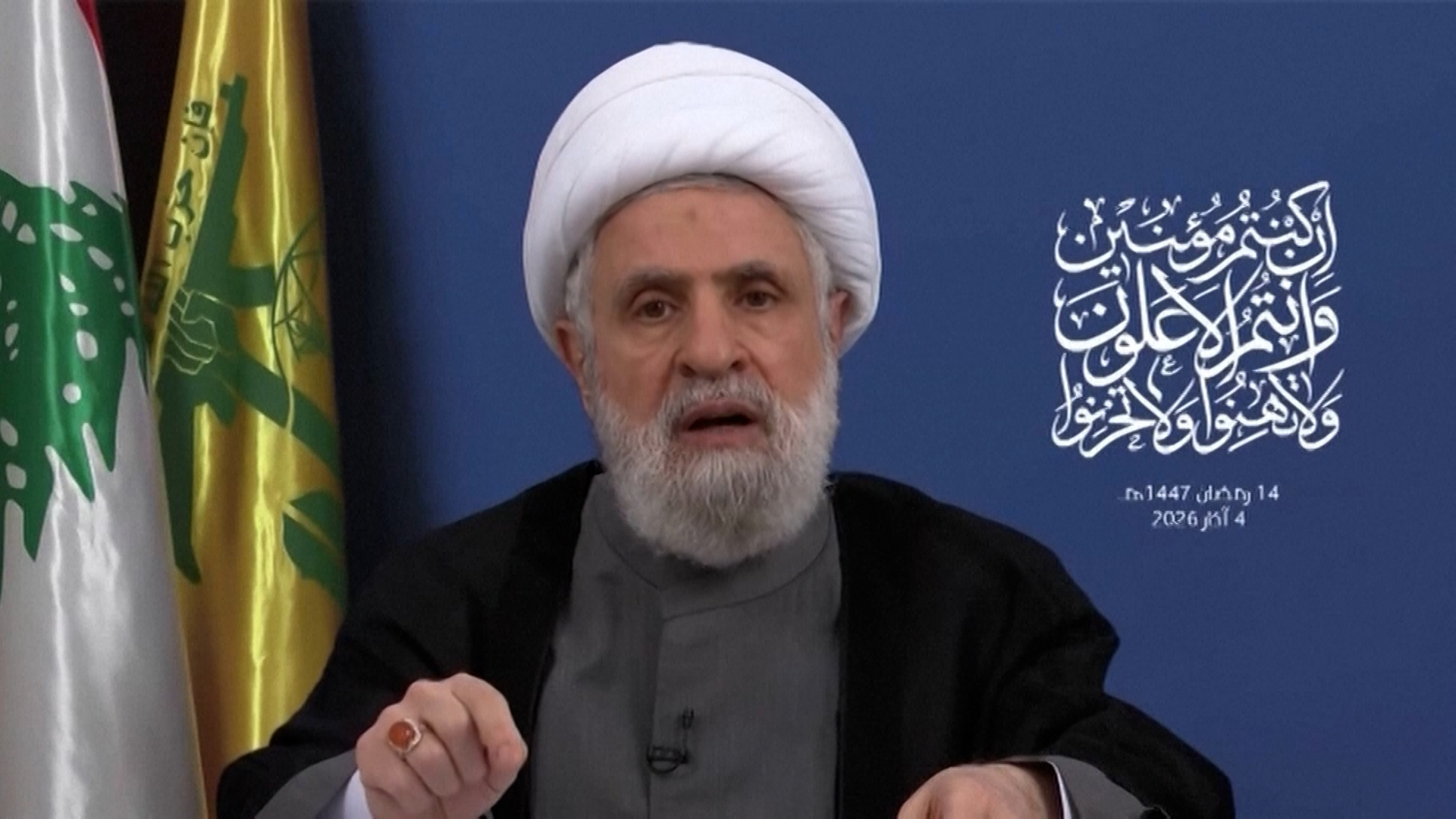
Hezbollah leader Naim Qassem has pledged to continue the group’s fight against Israel, which continues to bomb Lebanon and occupy positions in the south of the country. Qassem rejected the Lebanese government’s plans to disarm the group.
Duma, occupied West Bank – Since Israel and the United States began their war on Iran last week, retaliatory missiles fired at Israeli targets have been flying through the skies over the occupied West Bank.
But it has been Israeli settlers on the ground who have been terrorising Palestinians in their small hamlets across rural areas of the West Bank more than the Iranian missiles or the Israeli interceptors trying to shoot them down.
Thus, when debris from one missile crashed about 20 metres (22 yards) from the century-old Mosallam family home in the northern West Bank village of Duma earlier this week, Thabet remained unfazed by the threat.
“We have the rockets in the sky, but the [Israeli] settlers are at our door,” the 24-year-old said. “Of course, the settlers and the army, they are the ones who pose a danger to us. They are what we are afraid of right now.”
‘The army closes the gate, and the settler comes and stands there’
While Israeli settlements, built on lands occupied in the 1967 war in violation of international law, are equipped with sirens and bomb shelters, adjacent Palestinian communities in the West Bank are afforded no such protections. Under international law, Israel, as the occupying power, is obligated to provide for the protection of the population under its occupation.
Instead, since the war against Iran broke out on Saturday, Palestinians in the rural West Bank find themselves penned in as settlers roam free. Israeli authorities have distributed leaflets to rural communities banning movement between West Bank governorates, proclaiming “terrorism and terrorists bring only death, destruction and devastation.”
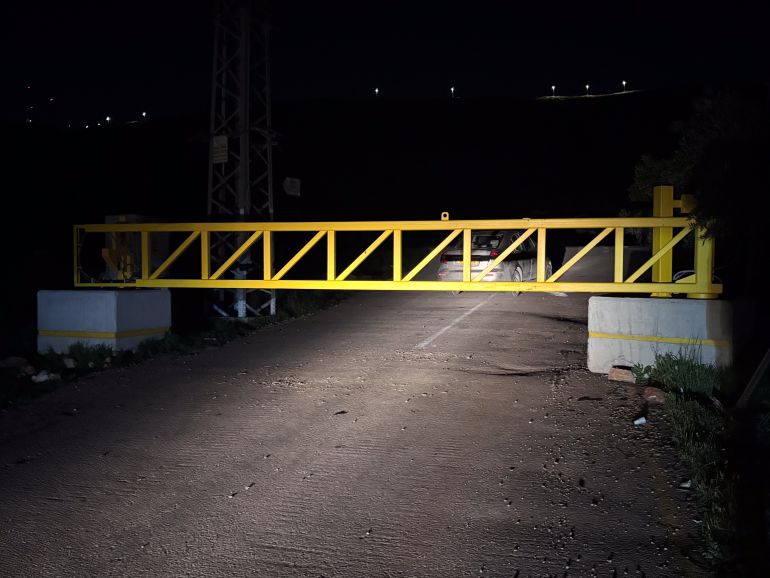
Following similar lockdowns after the previous war on Iran in June and the October 7, 2023, Hamas-led attacks on southern Israel, Israeli authorities have closed existing gates at village entrances and this time have installed new ones to cut off movement between villages.
Closed gate at entrance into Duma-1772695826
Meanwhile, Israeli settler chat groups have stepped up incitement towards loftier aims in recent days. “Don’t miss the opportunity,” encouraged one such post. “It’s time to beat the enemy and expel him from the country.”
Among a myriad of Israeli settler attacks in recent days, two Palestinian brothers were killed on Monday by a gang of settlers in Qaryut, 4km (2.5 miles) west of Duma, where they were videotaped shooting live fire at Palestinian homes.
Several Bedouin communities, including those violently displaced from Khirbet Ein ar-Rashash after the October 2023 attacks, live near the Mosallam family in what they described as a spiraling crisis.
“No one is allowed to go in or out, and the people here are without food or drink,” said a 35-year-old man who identified himself as a representative of one such hamlet. “From the day the war [on Iran] started, … no one can go to the doctor, no one can go to the hospital, no one can get bread, no one can eat.”
Similar shortages are crippling communities across the West Bank with movement so restricted that even humanitarian groups are unable to reach them. “The army closes the gate, and the settler comes and stands there,” said Muhammad, a neighbor of the Mosallam’s who declined to give his family team due to security worries, explained.
These settlers threaten people “with weapons, with intimidation, with beatings and sticks”.
“Every day, they beat young children, they scare people, they terrorise them,” the 35-year-old man said. “‘Forbidden! Go home! Forbidden to leave your house! Forbidden! Forbidden! Forbidden!’ Everything is forbidden.”
‘Like an orgy of violence’
With increasing collaboration with the military, the settlers haven’t simply penned in these isolated communities. They are also attacking them. According to witnesses, several Israeli settlers on Sunday entered Muhammad’s community and assaulted a 70-year-old man. When some Palestinians physically resisted, giving one of the perpetrators a bloody lip, a settler fired two live bullets into the air.
What followed was a violent rampage by the Israeli settlers that unfolded over several hours, witnesses said, continuing even after soldiers arrived. Joined by a few additional armed settlers, the group marauded through the community, repeatedly kicking, beating and pepper-spraying residents. One settler emptied out the community’s water tanks.
Palestinian men sustained head injuries from beatings. In one instance, a settler pepper-sprayed a room where an elderly woman with a heart condition was sheltering. Settlers smashed cars and vandalised other property.
“I’ve never seen [the settlers] like that,” said Yael Rosmarin, a teenage Israeli solidarity activist who was also pepper-sprayed during the rampage along with several other activists.
As Yotam, another Israeli activist assaulted several times that day, said: “It was like an orgy of violence.”
Witnesses said that when soldiers arrived, they stood by as the violence persisted – testimony that is backed up by video evidence.
Adele Shoko, another Israeli activist who was pepper-sprayed, said she saw a soldier “aiming and shooting, … firing directly at Palestinians”.
“The army was protecting them, so they could go and break things and attack people,” Muhammad said.
Soldier pointing gun at Palestinians during Sunday attack [Courtesy of Herd of Justice]
The activists and Palestinian witnesses said settlers continued to deploy pepper spray in people’s faces even in the presence of the army. “They sprayed pepper spray in my eyes more than once and on my elderly mother and on the elderly women and on the children,” Muhammad said.
The settlers also tried to steal the villager’s goats but were prevented by the solidarity activists.
Soldiers later detained four people, including a 14-year-old boy and Shoko, under what video footage indicated and witnesses said were direct instructions from a right-wing Israeli influencer identified as Benyahu Ben Shabbat.
Muhammad said one soldier told him to “Go to Jordan” and “This is Israeli land! This army is here to protect the settlers. This is government policy.”
Allegra Pacheco, head of the West Bank Protection Consortium, a partnership among several leading international NGOs and 14 Western donor countries, noted that the attacks on Palestinian communities have a pattern. “What we see is that during the attacks when Palestinians are defending their families and property in a self-defence mode, the Palestinians are arrested on the spot but no settlers are.”
This sentiment was echoed by Rosmarin, who confronted a soldier during the attack. “I asked one of the soldiers, ‘You saw [the settlers] hitting, and we have videos. Why aren’t you doing anything?’” she recounted.
“And he said, ‘because we’re here to protect the Jews from the Arabs’.”
‘We go to sleep talking about the settlers. We wake up talking about the settlers’
On Monday, a neighbouring Bedouin community led by Bassam Aarara, 35, experienced a similar assault. The community, composed of many women and children, has been continuously terrorised by settlers for the past eight months since a nearby outpost was erected. Settlers have repeatedly destroyed the community’s water pipes and electrical lines.
Hours after the attack on Muhammad’s community, settlers stormed the iron gate of Aarara’s community using vehicles supplied by Prime Minister Benjamin Netanyahu’s government to rural outposts. The gate struck an 11-year-old boy in the hand when it swung open, injuring him.
Teenage settlers then returned the following day, stealing security cameras and televisions. When villagers arrived, the settlers struck Palestinians and solidarity activists with sticks and sprayed them with pepper spray. They split open the head of Aarara’s brother. When Mustafa Rizik’s nephew tried to film the scene, they attacked him, snatched the phone and fled in an all-terrain vehicle.
Bassam Aarara [Steven Davidson/Al Jazeera]
“This attack was different because they beat the children,” Aarara said as members of the community tended their injuries. “We are scared for the children and also because they cut off our electricity.”
Amid daily invasions, Aarara tells the community’s children to stay calm when rockets fly overhead, calling it “thunder in the rain”, although acknowledging their tin shacks offer little protection from them.
But really for the families, “We go to sleep talking about the settlers. We wake up talking about the settlers,” Aarara said.
Aarara made the difficult decision to evacuate the women and children from the community after Monday’s attack.
“The rocket? One in a million [chance] it falls on you,” said Rizik, whom a settler had tried to club in the head during Monday’s attack. “But the settler? No, he is coming.”
‘A domino effect’ of displacement
As the regional war widens, Pacheco worries about a cascading wave of violence and forcible displacement in the West Bank.
“My biggest concern is that we reach a similar situation that we had in the beginning of the Gaza war … when the West Bank was under the radar,” Pacheco warned. “That’s when Israeli settlers escalated this extreme violence that led to a massive forced displacement then.”
Since the June war against Iran, conditions on the ground have worsened considerably. After the forcible displacement of the entire community of Ras Ein el-Auja, there has been a steady drip of violent displacement across the West Bank.
West Bank communities, including some in Area B, which is under shared Israeli and Palestinian control, and in Area A, which is under the administration of the Palestinian Authority, have been facing intensified settler attacks.
More than 4,000 Palestinians have been forcibly displaced across more than 80 Palestinian communities since the October 7, 2023, attacks, according to the United Nations Office for the Coordination of Humanitarian Affairs.
“The relentless violent attacks on Palestinian families and communities, threatening their safety and security, coupled with the coercive restrictions affect Palestinian resilience,” Pacheco explained. “In many cases, when one community in a block leaves, it’s a domino effect because the communities also rely on each other for protection and support.”
Having fled Ein al-Rashash after his village’s ethnic cleansing in October 2023, Ra’id Zawahra’s modest tin shack is the only home remaining on top of a gorgeous mountain ridge near Duma overlooking the Jordan Valley.
Ra’id in front of his home [Steven Davidson/Al Jazeera]
The fields surrounding the ridge are overgrown with wildflowers, strewn with random items from abandoned Palestinian homes that have been looted by settlers. The haunting landscape is as breathtaking as it is terrifying – a sinister emptiness punctuated only by roaming armed settlers dressed in black.
After sending his wife and infant child away for safety, Zawahra, 22, endured constant pepper spray attacks and night-time raids by settlers trying to tear down his home.
“They come with stones at night. They hit with slingshots. They try to enter the house. They break the walls. They try to open the door,” Zawahra said when he was still living in his lonely, battered home.
Although he rarely slept more than three consecutive hours, Zawahra was determined to stay. He believed he could hold out as long as the Israeli solidarity activists remained with him around the clock.
But after the mass settler violence this week, the Israeli military delivered a stunning blow on Tuesday evening: It declared the vast pastoral areas around Duma a closed military zone.
While theoretically it applied to everyone but military personnel and residents, including the hilltop youth in settler outposts that are technically illegal even under Israeli law, the order was directed solely at the Israeli solidarity activists, who were forced to leave the entire area.
For Zawahra, it meant he was left completely alone. Fearing for his life, Zawahra made the agonizing decision to abandon his home for the night.
Activists reported that shortly after they were forced out, military vehicles arrived to ensure the area was clear. Within the hour, settlers had descended upon Zawahra’s property. They attacked his solar panels, tore the walls of his home to the ground and destroyed many of his belongings.
Dancer and creative entrepreneur Kafayat Shafau, better known as Kaffy, has asked women and girls to reject validation, focus on personal growth, and embrace their authenticity as the world marks the 2026 International Women’s Day.
The 45-year-old award-winning choreographer told women that transformation should not come at the cost of losing their identity.
“Transformation is my watchword… transform your environment, but how to do that is not to sacrifice who you are for it. I did that one time, and I had to try to find myself,” Kaffy told Channels Television on the sidelines of the Wema Bank International Women’s Day event held in Lagos.
“Use who you are to transform you so that the world around you will automatically transform. You don’t even need to perform for it. You don’t need to get approval or validation from anybody,” she said.
READ ALSO: I Am Proof That Success Cannot Be Boxed – Kaffy
The Guinness World Record holder also spoke about the realities many women face while trying to navigate life, acknowledging that even those expected to guide younger women are sometimes still figuring things out themselves.
“I feel like, where are the women that are supposed to help raise you? I will let you know that we are here. We are also figuring ourselves out,” the fitness coach said.
According to the dance critic, young girls should remain open to mentorship and guidance whenever the opportunity presents itself.
“When you see one moment, one opportunity that a woman has to pour into you, receive it,” Kaffy added.
She also emphasised the importance of forgiveness and understanding, especially towards women who may not have been able to provide the support expected of them.
“Forgive your mother. Forgive those women that are not able to show up for you because they are also trying to survive.”
Challenging young women to focus on the future rather than past hurts, she believes the next generation has the responsibility to build a better world.
Kaffy said, “It’s not about the past or the pains of the past. It’s about now. You are our future. I want you to be better than us.”
She urged women and girls to prioritise knowledge, emotional healing, and courage.
“Be informed. Empower your mind, heal your heart, and be audacious… and be authentic. No fear. Keep moving,” the choreographer stated.
International Women’s Day is celebrated annually to recognise the achievements of women while also advocating for gender equality and empowerment across the world.