Never-before-seen footage and recordings of the stars talking about some of their worst moments are included in Netflix’s miniseries.
Fans of Take That are gearing up for the release of Netflix’s upcoming documentary series, named after the band, which tells the unbelievable story of one of the world’s most successful boy bands.
The three-part series goes behind the scenes with Gary Barlow, Howard Donald, Mark Owen, Jason Orange, and Robbie Williams as they open up about the highs and lows of global fame.
After winning the hearts of millions of fans, some band members experienced devastating effects after their initial split in February 1996.
Now-retired singer Jason Orange stayed with the band until their separation in 1996, when he went on to pursue a short career in acting, starring in the crime drama series Killer Net.
He later came to the conclusion that acting was not for him, and he would later reunite with the band in 2005 and take part in the band’s The Circus Tour.
The our, which includes footage that shows Jason addressing screaming fans proudly on stage, is included in the documentary.
However, earlier footage of the young star suggested he might not have been as content as he appeared.
In a voiceover, he can be heard admitting: “When I was in Take That the first time around, I was the dancer of the band and I accepted it at the time.
I was never told to bother singing. I suppose I was forced to reveal my true feelings to people and even explain what I had to endure to get there. So I’m enjoying it so much this time, singing.
His fellow stars, who were proud of their friend, said, “Jay has the most beautiful voice, tone, and singing style. He is a very gentle singer, and he never oversing.
In a statement, Orange made the official announcement of his retirement from the band and the music business, saying, “I want to start by expressing how proud I am of what we have accomplished over the years.
“I’ve had the best experiences of my life with Take That, and I want to thank everyone who has helped me along the way, including my band mates, who I consider to be my brothers.
Without the help of all of the good, kind, beautiful, and ever-loyal fans of the band, nothing could have come of this. Thank-you. “
The band’s accomplishments since it formed in 1990 were “grateful,” the singer continued, “At the conclusion of The Progress Tour, I began to wonder if it might be time for me to stop with Take That.”
“The guys started writing new material at the beginning of this year, and with my full knowledge and blessing.” There haven’t been any disagreements; all I have to say is that I no longer want to do this.
I am aware of Mark, Gary, and Howard’s love of writing and producing music, and they know I’m giving them my full support and encouragement to move forward with this exciting chapter of the band.
A chemist questioned the patches on her face while sharing her strict sun-care regimen has a terrifying memory for Tana Ramsay.
3 images to be seen
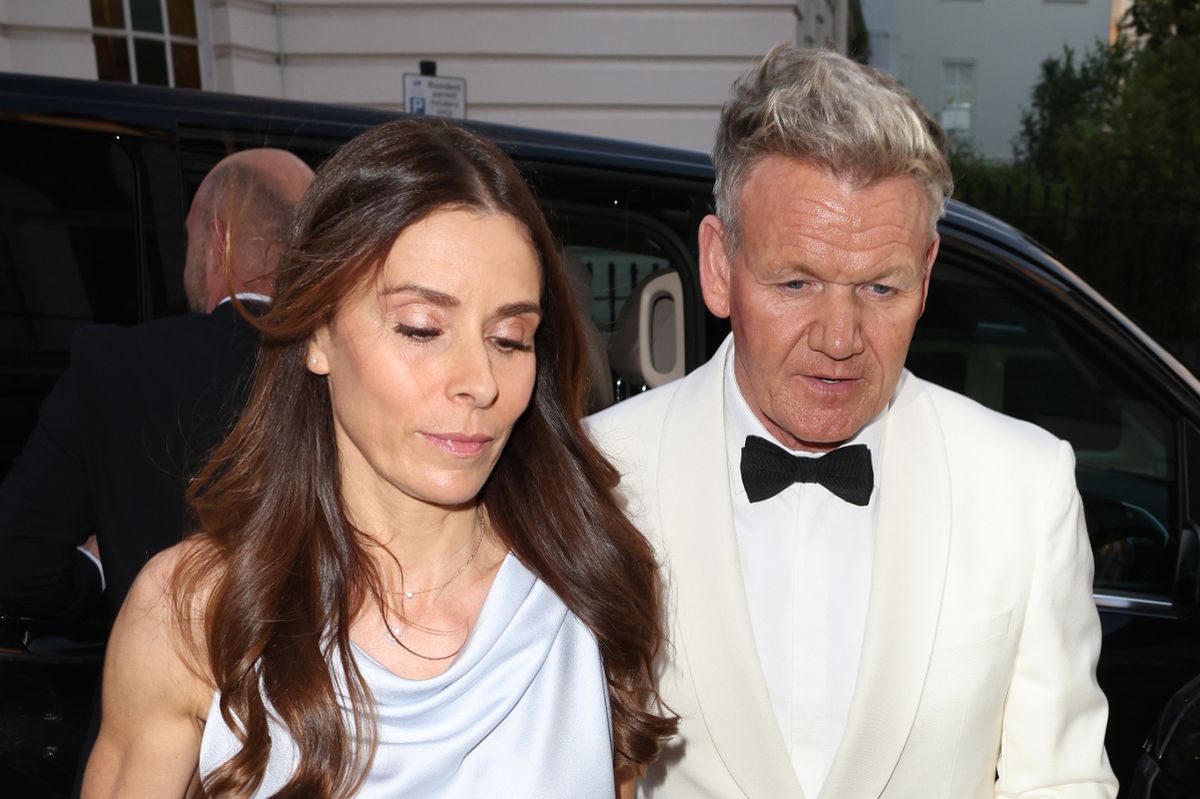
Since 1996, Gordon and wife Tana have six children.
Tana Ramsay revealed the moment she felt embarrassed when asked a question at a pharmacy about living with a life-long skin condition.
The television host’s wife, Gordon Ramsay’s wife, and Gordon Ramsay’s wife, Gordon Ramsay, opened up to the Times about her experiences with melasma, a common skin condition that can cause brown or gray-brown patches on the face that can sometimes appear after sun exposure.
Stay away from the sun, according to Tana, 51, if she could give any advice to Tilly, her youngest daughter. The Sixth-Mother said. “Gordon and I used to bake,” I now have melasma. I’ll never forget the woman behind the counter who inquired about the stains on my face when I walk into a pharmacy.
Women typically experience melasma, which can be caused by hormonal changes, genetics, and sunlight exposure.
According to the NHS, using sunscreen with a high SPF, wearing protective clothing, and avoiding peak sun hours are among the recommended precautions.
Tana clearly has her eyes on the matter, stating that she always leaves the house without Klira The Dayscript SPF50, a show of her commitment to managing the condition.
Tana also touched on the Ramsay family’s approach to skincare, with Tilly serving as the household’s “product discoverer.” The 24-year-old claims that she “rarely strays” once her mother finds something to love. It’s impossible to get Mum to alter anything. She has always worn the same things.
Through her travels abroad, Tilly has introduced her parents to more recent beauty trends, including Sarah Chapman sheet masks and Rhode Peptide Eye Prep patches. And those frightful white sheet masks! Gordon interjected, stumbling upon the call from the women only.
“Dad can’t cope that he’s not invited to this interview,” Tilly said, laughing. Tana clarified: “They’re the Sarah Chapman sheet masks. We never did anything like that when I was growing up, but now people pose with them on Instagram. And I think, all right, maybe I can.”
According to The Times, Tana and Tilly both appeared natural on the call, wearing little makeup and off-duty clothing, which shows up in the items they prioritize.
At the top of Tana’s wish list are Victoria Beckham The Foundation Drops (£104). “They’re sold out at the moment,” she sighed. When reminded of her friendship with Victoria Beckham, who attended the recent wedding of Tana’s eldest daughter, Holly Ramsay, to Olympic swimmer Adam Peaty, Tana insisted on waiting. “I don’t like doing that. You just wait until it’s in stock and buy it properly,” she said.
Before getting married in Lonon in December 1996, Gordon and Tana Ramsay first met in the early 1990s. Megan, Holly, Jack, Tilly, Oscar, and Jesse James are the couple’s six children, and they frequently share photos of their family life with the general public.
preventing melasma
The British Association of Dermatologists recommend using prescription creams, including hydroquinone, to treat melanin production, which stops the production but may cause irritation.
Continue reading the article.
It can also be managed with retinoid creams or other serums containing ingredients like azelaic acid, vitamin C, kojic acid, cysteamine, or thiamidol; combination creams with multiple active ingredients are also sometimes prescribed, but hydroquinone and retinoids should be avoided in pregnancy.
Chemical peels, microneedling, and laser therapy can reduce pigmentation by removing or addressing pigmented skin cells, but they can cause irritation, scarring, or worsen pigmentation, and should only be performed by trained professionals. These treatments are typically not offered on the NHS.
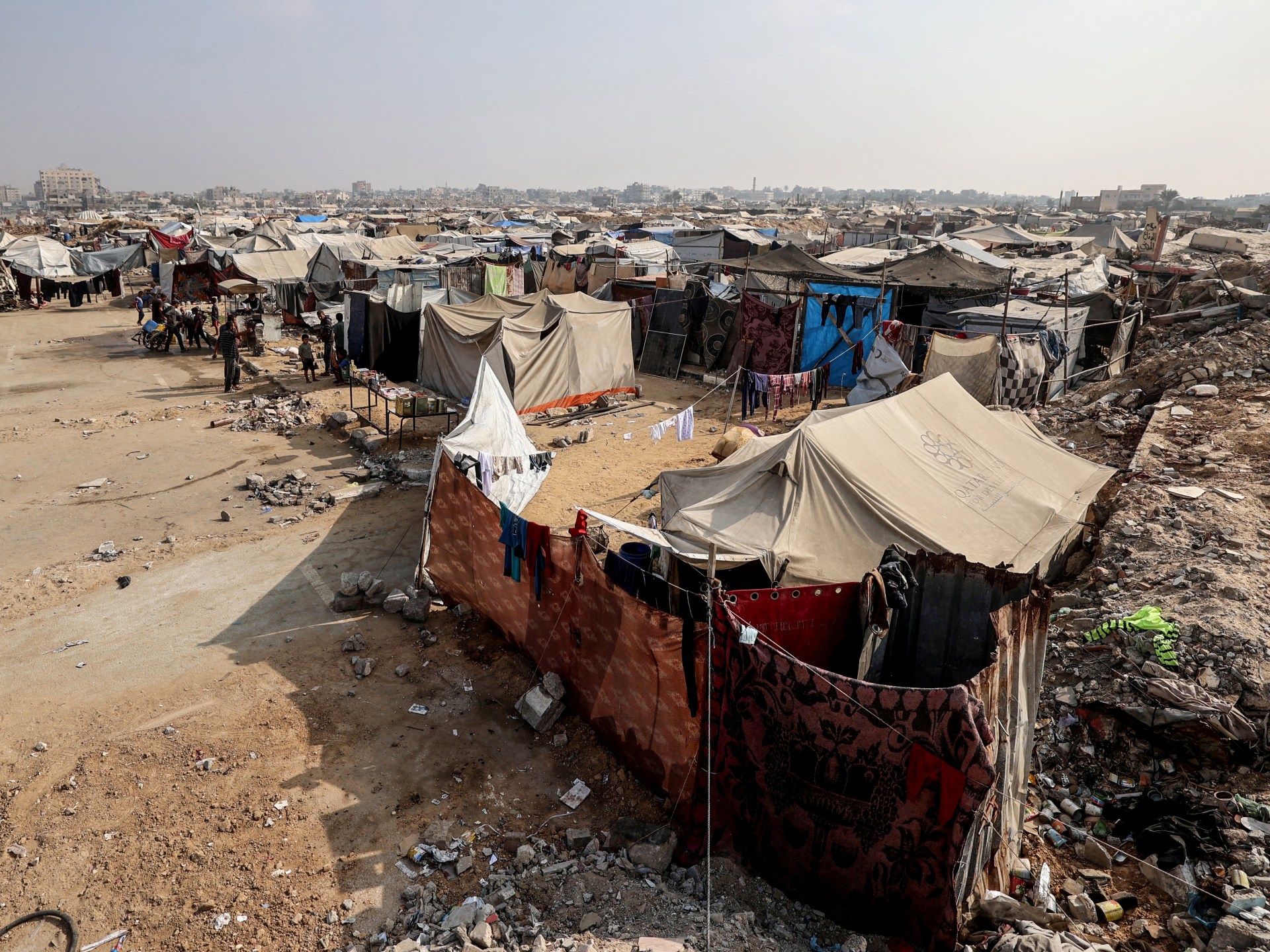
Gaza: When Steve Witkoff announced “phase two” of the ceasefire, it seemed like the update everyone in Gaza was looking for. Phase Two really made it seem like things might be turning around in his words, with the exception of phase two.
Another announcement arrived less than 24 hours later. A new “Board of Peace” was created by the White House and is tasked with establishing a technocratic body that would oversee post-war Gaza. Dr. Ali Shaath, a former Palestinian official, will serve as the committee’s chairperson as part of a forward-looking reconstruction and stability strategy.
It appears to be a movement on the surface. similar to a structure like imagining a world without war.
There isn’t a sense of confidence in Gaza, though. There is a lot of doubt.
When the destruction is still visible everywhere, and no one has been held accountable, many Palestinians here struggle to comprehend how a board intended to rebuild Gaza can include those who have publicly supported Israel.
Buildings are still standing in ruins. Families are still grieving. The entire neighborhood has vanished. Talk of governance and reconstruction seems to be aback in light of this.
The contradiction is difficult to ignore for families who have lost their homes, loved ones, and sense of security. It’s difficult to assume any future will be built by those who appear unaffected by the present suffering and unaffected by responsibility for it.
Nothing has really changed for those whose daily routine is characterized by the constant buzz of Israeli air strikes and sudden Israeli air attacks.
Parents are still pondering where their kids will sleep tonight. Aid workers still determine their routes based on where they are most in need rather than which roads will actually keep them alive. Families continue to hush up at night, trying to discern whether the silence will last or if fighting will reappear.
These official statements, exactly? They distance themselves from what is actually happening. Although a second phase might be included in a news release, the majority of people still feel stuck in their original state.
Speeches and headlines don’t seem to have a ceasefire in your opinion. You sense it in the sudden silence, the easing in your chest, and the nights that don’t end in a jolt when you hear something missing. That is what people are anticipating. Not the milestone, but the label. simply the change itself.
It’s common to feel relieved and depressed after months of loss and exhaustion to think things are improving. The concept of progress is cherished by diplomats. Governments must declare that the momentum is growing. However, who actually leads this? They simply desire a steady object. They want to know that tomorrow will not be as bad as it was today and that they can rise up and not sneeze.
That feeling is not present, though. Promises are inconsistent, deadlines are slipping, and too many commitments fade into the background. This doesn’t seem like peace on the move for those who are affected; instead, it feels like everything is hanging by a thread and ready to snap at any moment. It doesn’t feel any safer just by calling it “phase two.”
Then there is the quieter pain of hope being inflated too thin. People learn to lower their expectations when official expressions don’t match reality. Hope turns into something you hold dear but don’t trust a lot because it hurts once more when you’re let down. Lacks trust when announcing progress before anyone can feel it. It is eroded by it.
This is not about removing diplomacy. Just be honest, really. People need to experience “phase two” in their daily lives: Fewer funerals, hospitals that operate, roads that don’t feel like traps, days when there isn’t always a fear.
Walking down the street without bracing yourself, sleeping through the night without making plans for a run in the event of an emergency creates real peace in those small, everyday moments.
“Phase two” is largely just a symbol up until those times appear. And no matter how optimistic they may seem, symbols can’t protect anyone. That is only possible with real change.
For most of his adult life, Rafiul Alam did not believe that voting was worth the walk to the polling station. He is 27, grew up in a middle-class neighbourhood of Dhaka, and became eligible to vote nearly a decade ago. He never did – not in Bangladesh’s national elections in 2018, nor in the 2024 vote.
“My vote had no real value,” he said.
Like many Bangladeshis in his age group, Alam’s political consciousness formed under former Prime Minister Sheikh Hasina’s long period of government, when opposition parties and election watchdogs repeatedly questioned the credibility of polls.
Over time, he said, disengagement with politics became normal, even rational, for a generation. “You grow up knowing elections exist, but believing they actually don’t have the power to decide anything. So you put your energy elsewhere… studies, work, even trying to leave the country,” he said.
This calculation began to shift for him in July 2024, when student protests over a government job reservation system favouring certain groups spiralled into a nationwide uprising. Alam joined marches in Dhaka’s Mirpur area and helped coordinate logistics for protests, as Hasina’s security forces launched a brutal crackdown.
The United Nations Human Rights Office later estimated that up to 1,400 people – most of them young – may have been killed before Hasina fled to India on August 5, 2024, ending nearly 15 years in power.
When Hasina left, Alam said the moment felt like something that had appeared permanent had broken. “For the first time, it felt like ordinary people could push for a change,” he said. “Once you experience that, you feel responsible for what comes next.”
Bangladesh is now heading for a national election on February 12, the first since the uprising. European Union observers have described the upcoming vote as the “biggest democratic process in 2026, anywhere”. And Alam plans to vote for the first time.
“I’m thrilled to exercise my lost right as a citizen,” he said.
He is not alone. Bangladesh has about 127 million registered voters, nearly 56 million of them between the ages of 18 and 37, according to the Election Commission. They constitute about 44 percent of the electorate, and are a demographic widely seen as the driving force behind Hasina’s downfall.
“Practically speaking, anyone who turned 18 after the 2008 parliamentary election has never had the chance to vote in a competitive poll,” said Humayun Kabir, director general of the Election Commission’s national identity registration wing.
“That means people who have been unable to vote for the last 17 years are now in their mid-30s… and especially eager to cast their ballots.”
This eagerness comes after three post-2008 elections that “were not considered credible”, Ivars Ijabs, the EU’s chief observer, said.
The 2014 polls saw a mass opposition boycott, and dozens of seats where Hasina’s Awami League party faced no contest. The 2018 vote, though contested, became widely known as the “night’s vote”, after allegations that ballot boxes had been filled before polling day.
The 2024 election, meanwhile, again went ahead amid a major boycott by opposition parties, with critics arguing that conditions for a “fair contest did not exist”.
Protesters shout slogans as they celebrate Prime Minister Sheikh Hasina’s resignation, in Dhaka, Bangladesh, Monday, August 5, 2024 [Rajib Dhar/AP]
A pivotal electorate
Fragmented by class, geography, religion and experience, Bangladesh’s young voters are united less by ideology than by a shared suspicion of institutions, which, for most of their adult lives, have failed to represent them, say analysts.
“There is a significant age gap between pre–Hasina regime voters and new voters,” said Fahmidul Haq, a writer and faculty member at Bard College in New York and a former professor at the University of Dhaka. “Because of the nature of elections under the Hasina administration, we do not know the actual level of public acceptance of the political parties.”
As a result, he said, the current cohort of first-time voters will play a decisive role in shaping the future direction of politics in Bangladesh. Haq described the upcoming election as a psychological release valve after years of repression, during which young people “could not hold their representatives accountable; rather, those representatives appeared to them as oppressors”.
Many young people still do not trust the existing system, Haq argued, and some remain sceptical of the democratic transition itself.
Umama Fatema, a Dhaka University student who emerged as a prominent leader during the 2024 protests, said the uprising generated powerful expectations among young people: promises of “no corruption, no manipulation, equality of opportunity and political reform”.
But translating these aspirations into institutions has proven far more difficult. As the transition unfolded, Fatema said the reform process, led by the interim administration of Nobel laureate Muhammad Yunus, alongside manoeuvring by political parties – including those born out of 2024’s protests – became increasingly complex.
“Very few people and their aspirations have been meaningfully involved and incorporated,” she said.
Leader of National Citizen Party (NCP), Nahid Islam, addresses supporters during a political rally in Dhaka, Bangladesh, Sunday, August 3, 2025 [Mahmud Hossain Opu/ AP Photo]
A fraught alliance
With the Awami League barred from political activity by the interim Yunus government, the election has turned into a battle between two rival coalitions: one led by the Bangladesh Nationalist Party (BNP), and the other by Jamaat-e-Islami.
For many young protesters, this outcome cuts against the spirit of 2024.
Pantho Saha, a 22-year-old student from the Cumilla district in the country’s southeast, said many with whom he protested in 2024 had hoped the leaders who emerged from the uprising would break what he described as the “same old dynastic” patterns.
That expectation began to fracture, he said, when the National Citizen Party (NCP), a youth-led formation born out of the protest movement, moved towards an electoral alliance with Jamaat-e-Islami. A far-right Islamist party, the Jamaat’s opposition to Bangladesh’s independence during the 1971 war has long limited its mainstream appeal.
“Historically, those who rule us come to power with big promises,” Saha said. “But after a few years, power blinds them, and the same abuses repeat.”
The NCP, he said, initially felt different. “We thought of the NCP as a beacon of light. But seeing it align with a party that carries so much historical baggage made many of us lose hope.”
Fatema, who led the protests alongside several figures who later founded the NCP, said the party’s alignment with the Jamaat risks shrinking the significance of the July 2024 uprising. “Over time, it could seriously damage how this uprising is remembered in history,” she warned.
The NCP positioned itself at its launch as a generational alternative to Bangladesh’s traditional parties, promising what it called a “new political settlement” rooted in the 2024 July movement. But as talks advanced over the electoral alliance with Jamaat-e-Islami, the party saw a wave of resignations, including from several senior figures and women leaders who had been expected to contest parliamentary seats. Many of them have since announced independent bids, saying the party was “drifting from its founding commitments”.
Nahid Islam, the NCP’s chief, has defended the alliance with Jamaat-e-Islami, describing it as a “strategic electoral arrangement aimed at greater unity”, rather than an ideological alignment.
People watch Bangladesh’s Chief Election Commissioner AMM Nasir Uddin’s address to the nation on a television, in Dhaka, Bangladesh, Thursday, December 11, 2025 [Mahmud Hossain Opu/AP Photo]
Between hope and politics
Even so, the February 12 ballot carries particular weight for many younger Bangladeshis who helped drive last year’s uprising.
Moumita Akter, 24, a master’s student at Chittagong University who took part in the anti-Hasina protests, described the vote as “the first step to restore at least the most basic democratic practices”.
“I don’t expect miracles from a single vote. But I want to see whether the system can at least function properly. That alone would be a major change,” she said.
For others, like Sakibur Rahman, 23, a voter from the eastern Brahmanbaria district who studies philosophy at the University of Dhaka, the appeal of democracy remains conditional.
“You can talk about democracy all day, but if people don’t feel safe, can’t speak freely and can’t earn a living, democracy feels abstract, he told Al Jazeera.
Rahman said he would support whichever party could credibly guarantee public safety, freedom of expression, religious freedom, and minorities living without fear.
For many women voters, the calculation is sharper still. Women make up nearly half of Bangladesh’s electorate, but young women say questions of dignity and everyday security will shape their ballot.
“We hear promises of women’s rights, but the lived reality is far from ideal. That will shape how many of my female friends will vote,” Akter, the master’s student, said.
Yet the political field they are being asked to choose from remains overwhelmingly male. Election Commission data shows that only 109 of the 2,568 candidates contesting the election, or about 4.24 percent, are women.
Fatema said the political space for women has narrowed rather than expanded since the uprising. “After August 5, women who speak about their agency, their contributions, and their right to representation have been suppressed in many ways,” she said.
“Harassment, from online abuse to sexual threats, has become routine in political spaces.” These pressures are pushing women out of visible political roles, just as the country enters a critical political transition, she added.
Mubashar Hasan, a political observer and adjunct researcher at Western Sydney University’s Humanitarian and Development Research Initiative, said the disconnect between women’s prominence in protest movements and their marginalisation in formal politics raises doubts about the depth of reform.
“No structural change is possible without women’s political representation, and participation at the highest levels… both in parliament and in policymaking,” he said. “Without that, promises of any new political order remain incomplete.”
Fahmidul Haq of Bard College said political parties would have to approach young voters differently than in the past, by addressing “their traumas, desires, and demands sincerely”, and by campaigning with honesty and transparency.
“Young people are deeply sceptical of absurd promises,” he said, adding that those may in fact alienate them.
Still, something fundamental has changed. For Alam, the first-time voter from Dhaka’s Mirpur, July 2024 permanently altered how his generation relates to power.
“We now dare to question everyone,” he said. “Whoever comes to power, that habit won’t disappear.”
The money-saving expert swears by one essential factor: taking 9, 532, 571 steps last year.
3 images to be seen
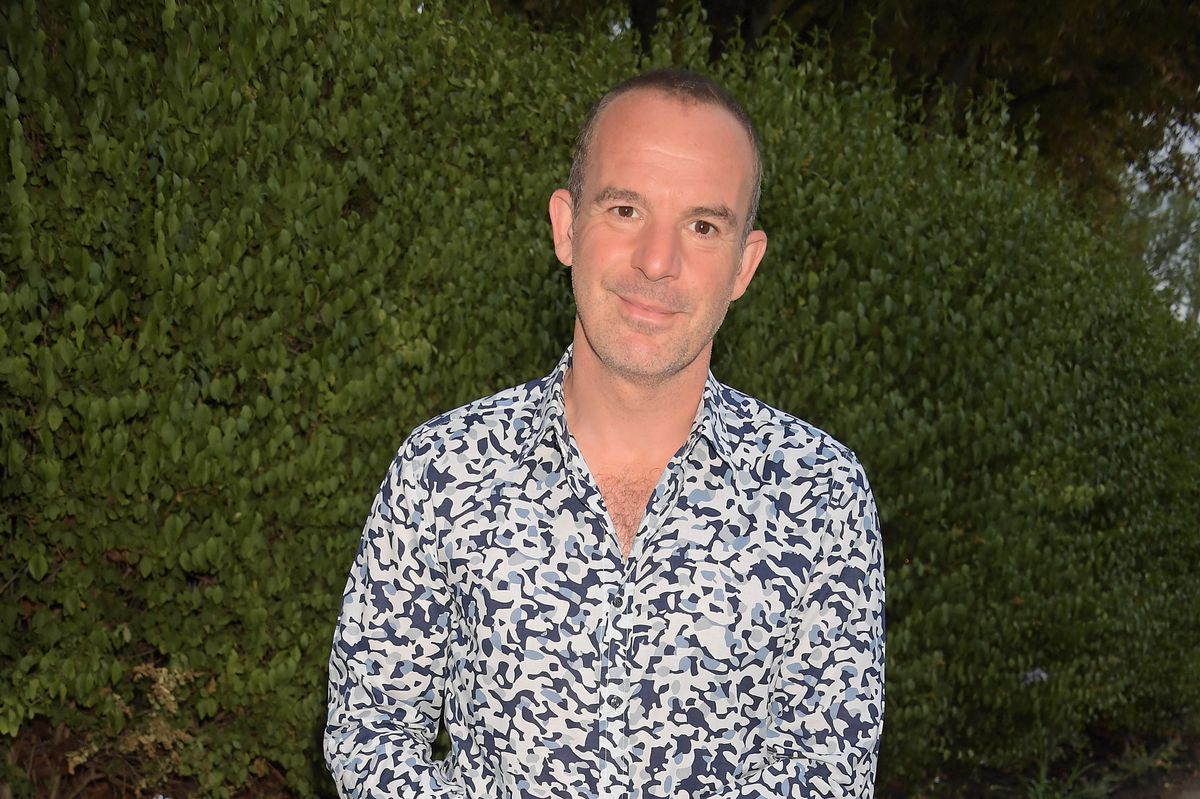
Martin Lewis swears by one “big rule” to get to his walking targets (stock image) (Image: David M. Benett/Dave Benett/Getty Images)
He’s the expert behind game-changing advice on all things personal finance – whether it’s energy bill tips or DWP claims. So, it may surprise you to learn that Martin Lewis, 53, has now shed light on his personal fitness routine, having achieved an impressive 9,532,571 steps in 2025.
In total, that equates to roughly 26,000 steps per day, which completely smashes the commonly lauded ‘10,000’ daily steps health target. Although the MoneySavingExpert (MSE) founder confessed it had become quite an ‘obsession’ during the past year, he owes much of his triumph to one ‘big rule’.
In a blog updated on January 5, he wrote: “My big rule… if I’m talking, I’m walking. If I have a phone call to make or a meeting that doesn’t need a video call, then I do it while walking. Often, this is outdoors – I try to get all my calls arranged in a row so I can have a long walk. It’s now instinctive that if the phone rings and I’m sitting down, I jump up before I answer it.”
Ahead of his Tuesday shows, Martin also added that he doesn’t get transport to the filming studio and instead opts for a 75-minute walk, even when it’s snowing, raining or freezing outside. He continued: “For many, this will sound bizarre, but I find obeying self-imposed routines can help with health and fitness, so if it keeps me stepping, it’s good.”
Despite Martin’s walking milestones, the NHS suggests that you ‘do not have to walk for hours’ to reap the perks from this low-intensity exercise. In fact, just a brisk 10-minute walk per day can help you build stamina, burn calories, and potentially bolster heart health.
In a past ZOE Podcast, Professor Claire Steves from King’s College London, also revealed that just 45 minutes of walking three times a week could enhance your brain health.
She said at the time, “Unless you’re an Olympic athlete, you need to do more exercise than you’re doing right now to improve your cognitive health.”
The key phrase is “That’s the key.” Even with minimal exercise, and it’s fairly linear, we can see effects in really large population studies… Therefore, whatever you’re doing, you’ll gain a third more confidence in yourself.
What exactly is a “brisk walk”?
Official NHS advice encourages Brits to incorporate ‘brisk walks’ into their daily routine. This generally means moving at around three miles per hour, which is faster than a stroll.
The free Active 10 app for smartphones can be downloaded if you’re unsure of your walking speed. This gives advice on how to increase your speed.
Continue reading the article.
The health service’s recommendation continues, “An increase your walking distance gradually if you’re not very active but are able to walk.” Check your neighborhood swimming pool’s website for exercise classes if your joints are sore.
“The water helps to support your joints while you move and can help you strengthen your muscles.” For more information, click here.
In a rare public rebuke of officials in the secretive state, North Korean leader Kim Jong Un fired a senior official tasked with overseeing economic policy and condemned “incompetent” party members, according to state media.
At the start of the first stage of a modernization project at the Ryongsong Machine Complex, Kim fired Vice Premier Yang Sung-ho, according to the state-run Korean Central News Agency (KCNA) on Tuesday.
Recommended Stories
list of 3 itemsend of list
Yang was fired “on the spot,” according to KCNA, adding that Kim viewed him as “unfit to be entrusted with heavy duties.”
Kim was quoted in the news as saying, “It was like hitching a cart to a goat… an unintentional mistake in our cadre appointment process.” He continued, “It’s an ox that pulls a cart, not a goat,” adding that.
Yang, a former minister of the machinery industry and current vice premier in charge of the machinery sector, serves on the party’s leadership council, according to South Korea’s state news agency Yonhap.
Yang’s replacement has not been made public.
The removal comes as the Workers’ Party, which is currently in power in North Korea, prepares for its upcoming Ninth Party Congress, which is scheduled to take place soon and sets out major policy objectives.
Kim also criticized officials he claimed lied about the delays in the modernization project during his Monday visit to the industrial machinery complex.
Kim Jong Un, the leader of North Korea, is seen completing the first phase of the Ryongsong Machine Complex’s first phase of renovation and modernization on Monday [KCNA via KNS/AFP].
The first-stage modernization project of the Ryongsong Machine Complex encountered difficulties, according to Kim, according to KCNA, “due to the irresponsible, rude, and incompetent economic guidance officials.”
He also attacked party members who had “been accustomed to defeatism, irresponsibility, and passiveness” for “too long.”
Kim rebuffed Kim’s claim that current economic policymakers “hardly ever” could steer the country’s industry’s efforts to modernize and upgrade it technologically.
In advance of the Party Congress, Yonhap’s public admonition of officials appeared to tighten discipline among officials, which Yonhap described as “rare.”
In response to what it called “assassination concerns,” Yonhap reported last week that North Korea had replaced its top military personnel in charge of keeping an eye on Kim.
The Guard Office of the ruling party, the Guard Department of the State Affairs Commission, and the Bodyguard Command, all of which were replaced, are said to be the report’s chiefs.
Although uncommon, the public’s denials resemble those of earlier cases like Jang Song Thaek’s uncle, who was hanged in 2013 for allegedly plotting to overthrow his nephew, according to Yang Moo-jin of the University of North Korean Studies.