Some Politicians Are Funding Terrorism — Irabor

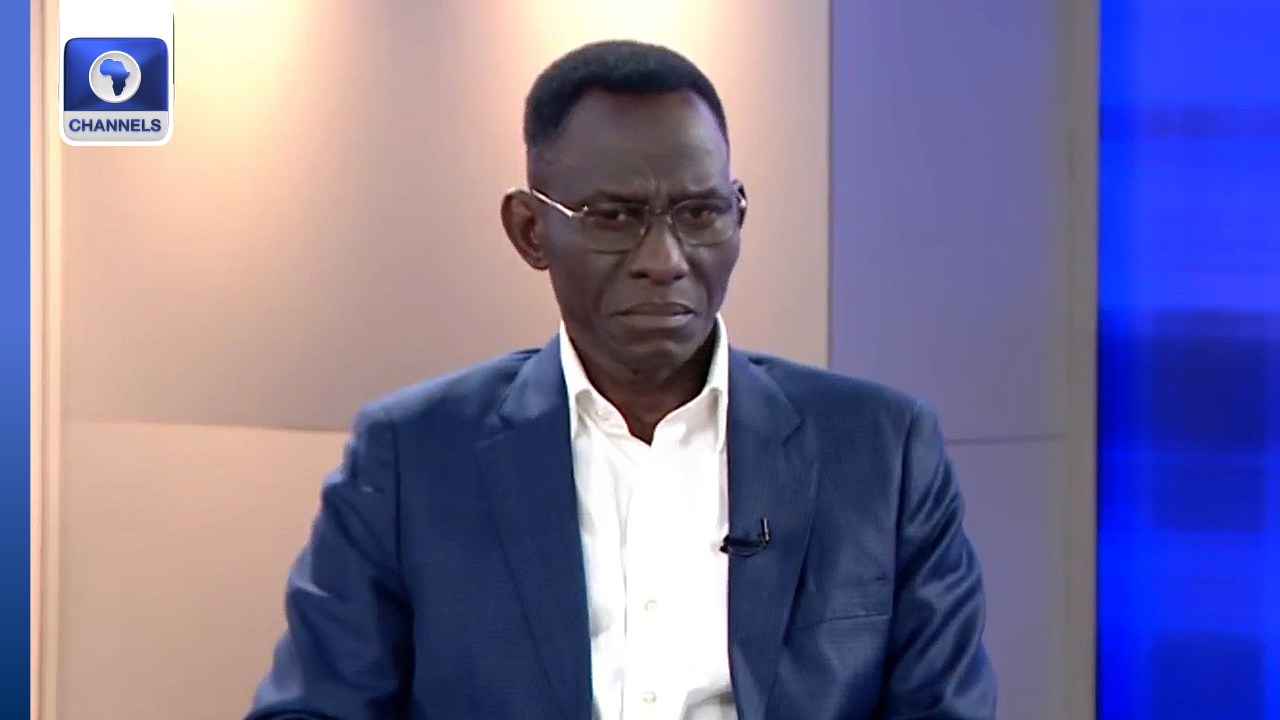
General Lucky Irabor, the former head of the defense service, claimed that some politicians contribute to Nigeria’s terrorism funding.

Irabor made the comment on Monday during a discussion of the country’s growing insecurity on Channels Television’s Politics Today program.

Irabor responded, “Some politicians. Some politicians.

He explained that some political figures make money off of insecurities.

“Some politicians haven’t used the undercurrent’s to give the impression that they can do better,” they say.

Others may want to convey the impression that there is poor governance, but they may also want to spark a particular crisis in some way. Those who think it may be entirely political may have a point in their favor. He said, “It will be wrong for me.”

Also, READ: Former CDS Irabor: It’s Impossible For Repentant Boko Haram Members to Join The Military

Irabor also criticized the government’s alleged inability to release the names of alleged terrorists.

He claimed that despite the fact that the information is still classified, investigators have interrogated a number of people.

There are many people who have been called into question, in my opinion. He said that what we should do at this point is to support and trust those who have promised to do what’s right because it’s not for public consumption.

Irabor added that Nigerians must be aware that not everyone in power lies and is unserious.

He added that the nation needs to do better because there is a significant gap in “manpower and equipment.”

Irabor criticized the rise in attacks as not unusual. He noted that recent attacks do not seem new, but rather worse because criminal organizations now have access to more sophisticated equipment and weapons.

There is nothing novel here. One might assume that the existence of external dimensions is new. Because these criminal elements have access to more sophisticated tools and methods, the number has increased, as has the level of violence they use against people.

We had a long time believing we were on a winning streak, but suddenly we realized it was like we had reversed all of our previous gains, which is so troubling, he said.

Security Efforts Have Gaps

The former defense chief urged the authorities to close these gaps, noting that there are still significant human and technical gaps in Nigeria.

Iraphoria claimed that recent attacks demonstrate how poorly governance is run, stressing that security in Nigeria should be a national, not regional, issue.

He claimed that because criminal organizations now use more sophisticated tools, violence has increased.

He reaffirmed that “repentant insurgents cannot be recruited into the military,” and that Boko Haram and ISWAP ideologies still have an impact on communities.

Surge In Attacks

Recent insecurity has been characterized by widespread abductions and deadly attacks in the northern and central regions.

Numerous states experienced high-profile attacks just in November. These included the abduction of 25 schoolgirls in Kebbi State and the abduction of more than 300 students and teachers from a Catholic school in Niger State.

The illusion of Western peacemaking

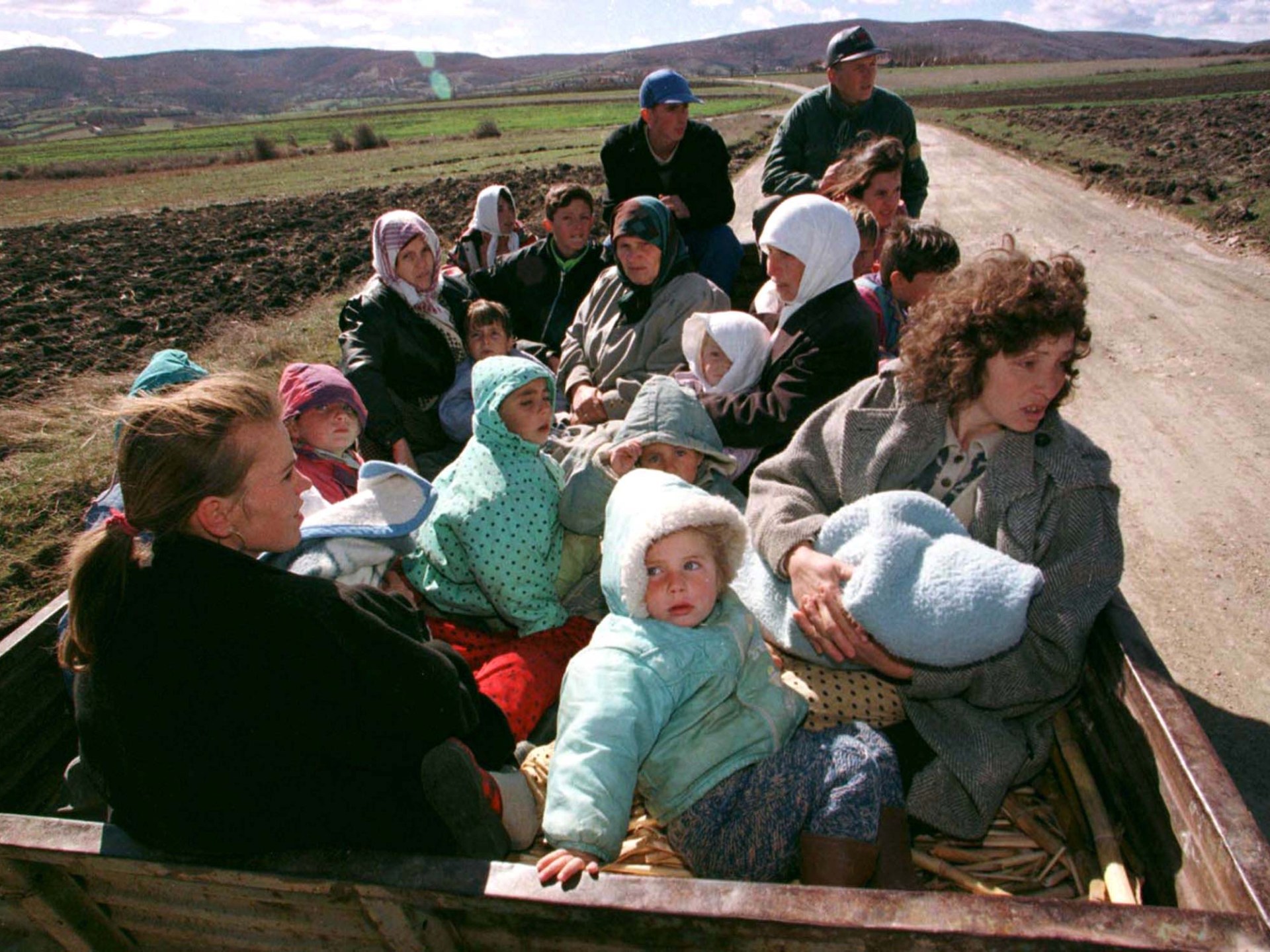
Political science author Vjosa Musliu’s most recent book, Girlhood at War, examines the experiences of her 12-year-old self during the 1998-1999 conflict in Kosovo. Musliu explains how international organizations responded quickly to the end of the war by providing Serbs and Albanians living in Kosovo with workshops on peace and reconciliation.

She describes one such session that she attended as a teenager in 2002 in the final chapter, “Little Red Riding Hood.” The workshop, which was led by Belgian and British facilitators, began with the tale of Little Red Riding Hood, which the participants were asked to reimagine from the perspective of the wolf.

The wolf had not eaten in weeks when he met the girl in the red hood because the forest’s massive deforestation had made him more isolated. The wolf ate the grandmother and the girl out of fear of their imminent death.

Musliu and her classmates struggled to understand the significance of the story in a workshop on reconciliation, first to understand how hunger might have justified the wolf killing the young girl and her grandmother. The facilitators explained that the exercise was intended to demonstrate that there are always new perspectives on every story, that the truth can be found somewhere in the middle, and that there are always new perspectives.

More than 20 years later, I was in a very similar situation. I took part in a workshop led by the Organization for Security and Co-operation in Europe (OSCE) in October to bring together young women from Kosovo and Serbia to practice dialogue and peacemaking.

We also had a foreign facilitator and several international speakers, just like Musliu. It was obvious that both had been given a thorough script that they could not deviate from this time, which included two additional assistant facilitators, one from Kosovo and one from Serbia.

We were asked to explain our understanding of peace on the training’s first day. We did this by sharing a number of traumatic story accounts. Some things keep me from stopping to think about. The facilitator appeared more preoccupied with our running fifteen minutes late than with our conversation. The depth of those stories, the bravery, and vulnerability that they possessed sounded uncomfortably small.

We were given more information about integrative negotiations on the second day. In a bullet point, the presentation stated that negotiating involves “separating the people from the problem.” I couldn’t continue reading because I felt something in my chest as I read it.

When I am aware of what happened to my family and my neighborhood during the war, how can I separate the perpetrators from the perpetrators? Before Serb forces arrived in Albania, my parents were forced to flee, but when they returned, their home was damaged, broken into, and some items missing, including my mother’s wedding dress. According to neighbors, Serb soldiers regularly burned women’s wedding dresses they discovered.

Other crimes included broken homes in some neighborhoods as well. More than 20 000 girls, boys, women, and men were raped, and over 8, 000 ethnic Albanian civilians were killed or forcibly disappeared.

I was trying to protect myself during the rape because I was only an 11-year-old. But I was marked. This is the memory you’ll keep of us, they carved a cross into my heart. From the inside out, it destroyed me as a child. One survivor recalled how they used a knife to leave those marks on me.

Knowing this and so many others, it was difficult to convey to a group of young women whose families were forced to relocate, be tortured, or be killed during the war that the issue must be secluded from the population.

Foreign facilitators would take a taxi to the airport, fly home, and leave behind the survivors who are still struggling to transition from war to peace and all the suffering in between, which is simple for them. We should ask them how their differences would be resolved if the wolf had eaten their grandmothers, Musliu said at the conclusion of her story about peacemaking.

We were given seats in the conference room where we were mixed throughout the workshop, with the girls from Kosovo and Serbia seated next to each other. We sat at different tables as soon as the lunch break began, which was a failure.

When the organisers inquired about this division, I responded that the workshop had not yet addressed the topic of the room, which was the war itself. Without bringing up the causes of the war, what transpired during it, and how it ended, how could there possibly be peace and resolution? If there was no way to talk about justice, how could we reconcile?

The facilitators intervened whenever I wanted to highlight the complexity of the post-war situation, such as when I brought up the topic of survivors of sexual violence. They said, “You are not ready yet” to discuss this.

I was moved when someone else evaluated my conversational skills. The West frequently uses it when speaking to people outside of the West. We are told that we are “not ready” for democracy, “not prepared” for self-government, and “not objective enough” to confront our own past.

To determine who can speak and who must listen, civilization is measured by readiness. In these settings, power is the key to “not being ready,” not emotional strength. It is polite to say that our pain must wait for translation, moderation, and approval because our truth is awkward.

The claim that the workshop’s organizers placed a focus on gender was overstated, but they also avoided the subject of rape as a war crime because it went beyond the level of depth, or rather, superficiality, that they had planned.

The facilitator stated that we would discuss historical narratives even if we disagree with all of them on the fifth day of the training.

It is obvious that such a task was useful for the organizers. I found it dangerous to use different perspectives and truths interchangeably. The distinction between true events and true events may become blurry.

Yes, there are many perspectives and experiences in wars, but there isn’t much truth to be found in all of them. Truth rests on evidence and is founded on facts, not balance or compromise. We run the risk of distorting the truth when we challenge or debate facts, and we also run the risk of making assumptions that are reasonable in terms of historical interpretations.

There are many truths to a story, and so I sat there 26 years after the end of the war as a result. I was told to let go of the past, look forward, reconcile, and find a way to live together.

I have to wonder how someone will go about teaching the Palestinians who went through genocidal horrors as children Western-style peacebuilding.

How would they approach a Palestinian and say that the Gaza genocide story contains many truths? How on earth would this promote peace?

I don’t want to be a part of it if this is what the West refers to as building peace today.
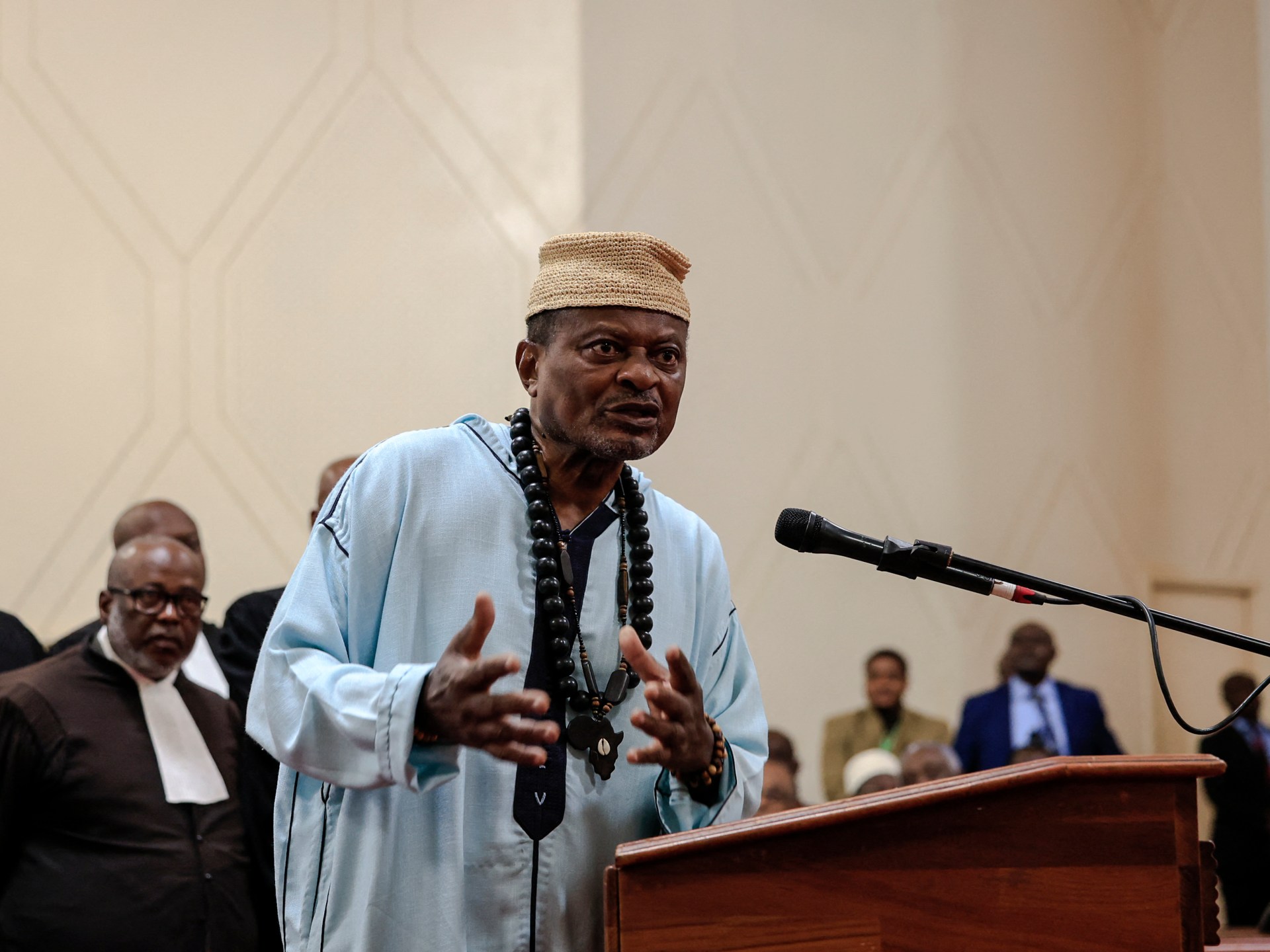
Cameroon’s opposition leader Anicet Ekane dies in military detention

I’m A Celeb star has been secretly swiping other campmates’ things says axed Eddie Kadi

Items have been missing, and Ruby Wax, I’m A Celeb’s most recent evictee, is to blame, according to the article’s author!

TV presenter Ruby Wax has been secretly pinching other campmates’ belongings in the jungle, according to Eddie Kadi. He said that Ruby “doesn’t care” and has been taking items such as socks, boots and water bottles. He said: “Vogue has lost all her socks and Ruby has taken them. She showed me, she’s like, ‘I got her socks. So what? I like it’.

She apparently once took Vogue’s boots. Because of how she was moving, you could tell. Ruby, it’s obvious one of your boots is too long, I thought. She says, “Just keep walking,” she replies. Your job is to “keep walking,” you say.

READ MORE: Angry Ginge’s mum shares incredible story of his I’m A Celeb journey for first time

Because she has so much stuff in her bags, I believe it to be her. She will depart with everything. She’s leaving the jungle with her. She doesn’t care, he continued. She has a lot of freedom. He claimed he also clocked her with Vogue’s water bottle after she became the second contestant to leave the jungle.

He acknowledges that we had a conversation at the tree house. She began drinking from a water bottle that read “Vogue,” and I responded, “Rose, that’s Vogue’s bottle.” Oh, dear, she said. Oh no, please. She’ll be fine, I promise. She won’t pass away. However, Ruby resembles the Queen Mother. Because we all want to look after her, Ruby has freedom to do whatever she wants. However, we are all falling for the falsehood that she is simultaneously a youth.

She opposes being viewed as elderly. She says, “I’m with you guys,” and that’s it. He also has a suspicion that she may have brought in some contraband. But he acknowledges, “Yes, but obviously I wasn’t brave enough to say it in front of her face.” I’m attempting to survive. He even inquired as to whether she had been concealing it on her person.

He continues, “If you watch how Ruby dresses up in the camp, I have one look at her. She has one of her pants long, and she tucks it in her sock.” She therefore appears to be an Asbo grandma. Ruby resembles the grandma you use to shoplift.

Continue reading the article.

Eddie also dismissed rumours of a romance between Aitch and Shona McGarty, after the rapper confessed to having a soft spot for the EastEnders actress. He said: “Aitch and Shona? You do realise Aitch has a soft spot for me? More than Shona. Did you see him massaging me?

Peter Kay gives devastating Billy Connolly health update

Billy Connolly, a comedy hero, is in good health, according to Peter Kay.

Comedian Peter Kay has revealed he speaks to his hero Billy Connolly but the says the Scottish stand up is “not doing so well”. Kay was asked about his comic heroes and told how he is lucky enough to have met all of them, including Connolly.

Connolly was diagnosed with Parkinson’s disease in 2013 and retired from live performances five years later. Kay said: “ I met Billy Connolly. I still keep in touch with Billy Connolly now and he’s not so good now, but he would still message and that. I think a lot of comedians in this country would not be doing what they did if it weren’t for him. I think so much of it is influenced by him, heavily. Amazing.”

His comments were met with enthusiastic applause at the Manchester Lyric Theatre as part of a Radio 2 special that aired tonight. Kay also mentioned a lovely exchange with another comedy hero. He continued, “I have met them all, and I have been really lucky.” Ronnie Barker and I met. I used to watch Porridge, but I’d always adored it so much. Oh. Anyway, I sent him a letter back. Porridge was something I mentioned and how important it was to me.

I thought, “Who’s written to me from prison? ” when the letter came in and said “prison.” And when I opened it, he had written to me in character as Norman Fletcher, and it was Her Majesty’s Prison Slade. And he wrote about nicking this paper from the library when MacKay wasn’t looking and Barrowclough, and he also wrote that this two-page letter was all about being in prison.

Kay loves meeting Billy Joel, who he adores, and is a huge music fan. He stated to Sara Cox on Radio 2 that he had always loved Billy Joel and that he had released a four-track EP, Uptown Girl, My Life, Still Rock and Roll to Me, and Just the Way You Are, which he had delivered from town on bonfire night in 1983. I was utterly delighted.

You kind of connect with him because my father liked him and I liked him. I’d seen him live, I’d traveled up and down to London on the coach to see him, and in 2007 he went on a tour, I attended every show, and we just really got along.

Then, when I went to X Records and saw the LPs, I went in and said, “Hey, if I bring me LPs, would you sign them,” the maddest thing.” And he responded, “yes, no problem.”

So I brought them all up to Glasgow and sat in his dressing room, where he wrote, “This one shouldn’t have been made,” and that this was divorce number one. He wrote, “I like this one, this isn’t bad,” and, oh, I treasure them a lot.

Peter Kay was speaking on Radio 2 about his new book, “Peter Kay’s Diary: The Monthly Memoir of a Boy From Bolton.” Additionally, he has expanded his tour, and money raised from his Better Late Than Never performances will go toward 12 cancer charities for the final performances in the year.

He also discussed his struggle to lose weight during the interview with Sara Cox.

Kay, 52, responded, “Only for the first 48 years, and they lied,” when Sara inquired about his previous attempts to lose weight. Yes, I eventually had to because, you don’t think about your health and other things like that? But I tried everything, including weight-loss organizations in flames. At one point, I did quite well.

Continue reading the article.

Sara Cox is on Radio 2 on weekdays from 4 to 7pm while Peter Kay’s Diary: The Monthly Memoir of a Boy From Bolton is available.