Piers Morgan shared insights into a dramatic incident that happened at The British Press Awards in 2004 and how he “enraged” his army colonel brother with his reaction
View 3 Images
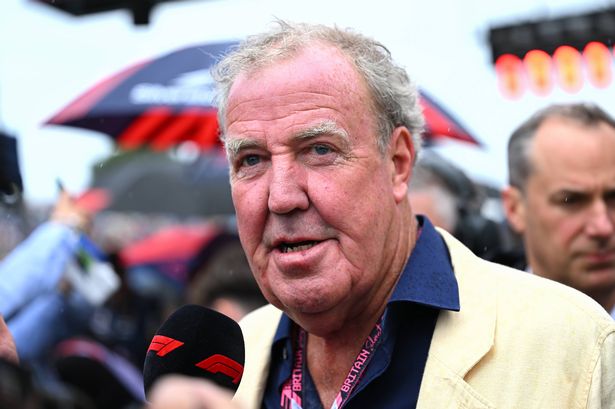
Piers Morgan was quizzed on whether he and Clarkson had truly had a “feud”(Image: NurPhoto, NurPhoto via Getty Images)
Piers Morgan has revealed that he “enraged” his army colonel brother with his reaction to Jeremy Clarkson punching him in the head. In a recent interview, the controversial host of Piers Morgan Uncensored was asked if he and Jeremy had truly been in a “feud”.
Piers confirmed it before claiming that a scar on his forehead was from a time when Clarkson “punched” him. It all began when Jeremy, who was then married to his now ex-wife, Frances Cain, allegedly asked Piers (then-editor of the Daily Mirror) not to publish photos of him with another woman. However, Piers reportedly published them anyway.
Piers recounted how the dramatic incident took place at The British Press Awards in 2004, but also claims that he retorted to the Clarkson’s Farm star, taunting that his child hit him “harder than that”.
Speaking to Best magazine, he said: “It was only when he hit me for the third time, I said, ‘Is that it? My three-year-old hits me harder than that’, and he also broke his little finger hitting my head.”
Piers alleged that Jeremy’s finger remains “disfigured and mashed up” as a result of the attack. He also admitted that he didn’t retaliate against the former Top Gear presenter, which left his brother “absolutely enraged”.
He continued: “It was a bit like Colin Firth and Hugh Grant in the fountain scene in Bridget Jones’ Diary. A couple of drunk men slapping each other around, and it was absolutely pathetic. I didn’t hit him back because I was sober.
“My brother was an army colonel, and he was absolutely enraged that I’d just allowed Clarkson to hit me, and I hadn’t hit him back. I told them I didn’t want to get the sack, and then I got fired three weeks later. “.
The pair have since buried the hatchet, according to Piers, following a decade of “abusing each other”. Jeremy previously spoke about the incident in 2022.
Writing in The Times, he said: “‘Why’s your f****** wife looking at me like that?’ he [Piers Morgan] thundered. So I punched him. And then I punched him again.”
Clarkson claimed he didn’t think it would “ever get boring”, so he “punched him again”, but “annoyingly” ended up breaking his finger.
This comes after reports detailing how Piers apologised on This Morning following a live on-air swear word. During a discussion with Ashley James about the patriarchy, he used the term “bulls**t”.
He immediately realised his mistake, covered his mouth and issued an apology. Addressing viewers, he said: “Sorry! I’d like to apologise for what the guest just said live on air.
“We are a live programme, we apologise for Mr Morgan and he won’t be invited back for at least three weeks.”
Dr Clare Bailey Mosley recently had an ‘eerie’ moment relating to her late husband, TV doctor Michael Mosley, while she was working in the study in their family home
View 3 Images
Clare Mosley had an “eerie” moment she believed was a “message” from her late husband(Image: PA)
Dr Michael Mosley’s wife Clare has recalled an “eerie” moment that she believes was a “message” from her late husband. Michael was known to many for his advocacy of intermittent fasting as well as his work on the BBC.
Michael and Clare were enjoying a break on the Greek island of Symi in June 2024 when the physician decided to embark on a two-mile walk to a neighbouring town. His remains were discovered four days later on a rocky stretch of terrain near a private resort called Agia Marina.
An inquest concluded that the cause of his death was “unascertainable”. It said it was likely to be down to “either to heat stroke or non-identified pathological cause.”
Now Clare believes a moment she experienced recently while in the couple’s home could have been a message from her late husband. Speaking to Good Housekeeping Live, she recalled how Michael would regularly hide chocolate around the house.
She said: “He asked me to hide chocolate regularly and I still find chocolate in the broom cupboard. Literally, and you won’t believe it, some weeks ago I stood up from the desk and there was a loud clunk and it was just an enormous bar of chocolate that had fallen off the shelves. It was slightly eerie. It was a message from Michael.”
Clare and Michael’s son, Jack, joked that his father was “addicted” to chocolate. He added: “He had a chocolate addiction. Dad believed that willpower was somewhat overrated.”
Clare recently admitted that she was still considering going to therapy to help process Michael’s death. Speaking to The Telegraph, she said: “I feel I need to have time to do it.
“It’s next on my list. I’m not going just because everyone tells me I should.”
She revealed that she has created an informal grief support network of her own: “I do have friends I see. There are two other [widowed] women nearby so we often meet up.”
She continued: “We call ourselves ‘the three merry widows’. Although I don’t use the word ‘widow’ unless I have to. I feel a bit awkward about the word itself. It just reminds me of what I’ve lost.”
Article continues below
Clare and Jack – who are both doctors – have now vowed to continue Michael’s work. They have written three books on healthy eating – Food Noise, Eating Together, and The Fast 800 Favourites.
“Michael would have been so proud of Jack,” Clare told Good Housekeeping Live.
While working in the study area of their family home, Dr. Clare Bailey Mosley recently had an “eerie” moment involving her late husband, TV doctor Michael Mosley.
3 images view
Clare Mosley had an “eerie” moment she believed was a “message” from her late husband(Image: PA)
Dr Michael Mosley’s wife Clare has recalled an “eerie” moment that she believes was a “message” from her late husband. Michael was known to many for his advocacy of intermittent fasting as well as his work on the BBC.
When the physician made the decision to make a two-mile walk to a nearby town on the Greek island of Symi in June 2024. Four days later, his remains were discovered close to a private resort called Agia Marina on a rocky stretch of land.
An inquest concluded that the cause of his death was “unascertainable”. It said it was likely to be down to “either to heat stroke or non-identified pathological cause.”
Clare now thinks her late husband may have sent her a message while she recently spent the couple’s home. She described how Michael would frequently conceal chocolate around the house in a conversation with Good Housekeeping Live.
She remarked, “I frequently asked him to hide chocolate, and I still find it in the broom cupboard.” You won’t believe it, but some weeks ago when I sat up from the desk, there was a loud clunk and the entire box of chocolate had fallen off the shelves. It had a slight eerie quality. Michael sent a message to me. ”
Jack, the son of Clare and Michael, joked that his father had a chocolate addiction. He continued, “He had an addiction to chocolate.” Willpower, in the eyes of Dad, was viewed as being overrated. ”
Recently, Claire revealed that she was still considering attending therapy to assist with Michael’s passing. She told The Telegraph, “I believe I need to have time to do it.”
It’s “next on my list,” I said. I’m not going because everyone says I should. “
She stated that she has established a private network for grief support, adding, “I do have friends I see. We frequently meet up because there are two other [widowed] women nearby. “
We are known as “the three merry widows,” she continued. Although I don’t use the word “widow” unless I feel the need to. The word itself makes me feel a little awkward. It only serves as a reminder of my shortcomings. “
Continue reading the article below.
Both doctors Clare and Jack have pledged to carry out Michael’s work. The Fast 800 Favourites, Eating Together, and Food Noise are three of their three books on healthy eating.
Clare told Good Housekeeping Live that Michael would have been very proud of Jack.
Ukrainian President Volodymyr Zelenskyy says he is working on a proposal from the United States to end the Russia-Ukraine war, as Kyiv faces growing pressure from Washington and sustained attacks by Russian forces on the battlefield nearly four years into the conflict.
Zelenskyy said on Friday that he discussed US President Donald Trump’s plan in a call with French President Emmanuel Macron, British Prime Minister Keir Starmer and German Chancellor Friedrich Merz.
Recommended Stories
list of 3 itemsend of list
“We are working on the document prepared by the American side. This must be a plan that ensures a real and dignified peace”, the Ukrainian leader wrote on X.
“We are coordinating closely to make sure that the principled stances are taken into account. We coordinated the next steps and agreed that our teams will work together at the corresponding levels”.
Zelenskyy’s comments come as media reports indicate that Trump’s 28-point proposal to end the war endorses several of Russia’s top demands, and its war narrative, including that Ukraine cede additional territory, curb the size of its military and be barred from joining NATO.
At the same time, the West would lift sanctions on Russia, and Moscow would be invited back into the Group of Eight (G8), which it was expelled from for seizing and annexing Crimea in 2014, the AFP news agency said.
I held a joint call with President of France @EmmanuelMacron, Prime Minister of the United Kingdom @Keir_Starmer, and @bundeskanzler Friedrich Merz. I am grateful for their principled support for Ukraine and for all our people.
We discussed the plan for peace for Ukraine and all… pic. twitter.com/Lz6Tq38QUR
Citing two unnamed people familiar with the matter, the Reuters news agency reported on Friday that the Trump administration has threatened to cut intelligence sharing and weapons supplies for Kyiv to pressure it into accepting the plan.
The sources told the agency that Ukraine “was under greater pressure from Washington than during any previous peace discussions” as the US wants the country to sign “a framework of the deal” by next Thursday.
For their part, Ukraine’s European allies, which were not consulted on the US proposal, have stressed the need to safeguard “vital European and Ukrainian interests”, Germany said after the talks with Zelenskyy.
Merz, Macron and Starmer welcomed the “US efforts” to end the war, which began in February 2022 when Russia launched a full-scale invasion of its neighbour.
But they assured the Ukrainian leader of their “unwavering and full support for Ukraine on the path to a lasting and just peace”.
The European Union’s foreign policy chief, Kaja Kallas, also said the EU and Ukraine want peace but will not give in to Russian aggression. “This is a very dangerous moment for all”, Kallas told reporters.
“We all want this war to end, but it matters how it ends,” he said. In the end, Ukraine must decide the terms of any agreement because Russia has no legal right to any concessions from the nation it invaded.
Fighting rages incessantly
Ukrainian forces are also facing significant challenges on the battlefield and deadly bombings by Moscow as the Trump administration pressures Ukraine to accept the deal.
According to Ukrainian officials, more bodies have been extracted from the rubble following a Russian missile attack earlier this week that killed at least 31 people.
The strike, which struck a residential apartment block, left 94 people injured, including 18 children.
On the eastern bank of the Oskil River, in the eastern Kharkiv region of Ukraine, about 5, 000 Ukrainian soldiers were reportedly trapped. The Ukrainian military did not respond right away.
The report comes as Ukrainian forces have been attempting to stop a Russian assault on Pokrovsk and Myrnohrad, which are both in exile.
Five people were killed and three others were hurt by a Russian attack on the southern Ukrainian city of Zaporizhzhia on Thursday, according to emergency services. The Zaporizhia region, which borders the two banks of the Dnipro River and is home to the city in southeast Ukraine, is gaining ground for Russia.
Dmitry Peskov, a spokesman for the Kremlin, claimed on Friday that Zelenskyy should be persuaded to “get it now rather than later” by the country’s advances on the battlefield.
Richard Madeley, the host of Good Morning Britain, has admitted to sleeping with his wife Judy Finnigan in a separate bedroom.
View 4 Images
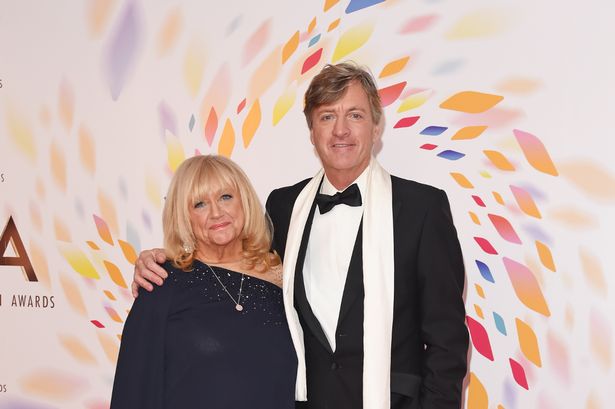
Richard Madeley revealed he sleeps separately from his wife Judy Finnigan(Image: Dave Benett/Getty Images)
Richard Madeley has revealed the heartfelt reason behind why he sleeps in a different bedroom to Judy Finnigan. The 69-year-old Good Morning Britain presenter shot to fame alongside Judy during the 1980s as they fronted ITV’s This Morning before launching their own show, Richard and Judy, on Channel 4.
The pair first met in 1982 when they were both married to different partners, but their romance blossomed and they tied the knot in Manchester today (November 21). Richard is stepfather to Judy’s two eldest sons, Dan and Tom Henshaw, both of whom she previously married, and they have two children, Jack and Chloe Madeley.
When ratings dropped, the television program Watch canceled Richard and Judy from 2001 to 2009. While Richard joined Good Morning Britain, Judy later joined ITV’s Loose Women panel.
However, Judy and Judy made the important life decision to leave television and spend the rest of their time together ten years ago.
And Richard says his wife is “really enjoying” her break from the spotlight. This comes as he continues on GMB alongside journalist Susanna Reid, reports the Manchester Evening News.
He recently announced that he was “operating at 80%” after contracting Covid, and that he had recently taken his own break from the program. Richard enjoys early mornings thanks to the hosting of ITV’s top breakfast program.
He frequently sleeps separately from his wife to allow her to get rest restless because GMB broadcasts at 6am. On Kate Thornton’s White Wine Question Time podcast, the presenter discussed how they slept.
He said, “I sleep in the spare room when I’m doing Good Morning Britain.” I’m okay on my own, but I probably do better when I’m in bed with Judy.
When asked if he had thought about awakening Judy early, he replied, “I wouldn’t think of doing that to Judy.” You don’t mess with Judy and her sleep, aside from that.
Amol Rajan, a fellow breakfast host, claims he “sleeps better” beside his wife, according to Kate. The couple, who have four children under the age of seven, both get up early when he presents the Today program. The wife of Amol Rajan must be a saint, Richard said.
He continued, “We did This Morning, but Judy and I would get up at the same time, which is the difference between us.” We would both get dressed up and roll into our jeans, get in the car, and drive to Liverpool to see the show, and then, when we were in London, drive down to the Southbank. We both went to bed the same way and both erupted the same.
Richard and Judy first met in the 1980s while simultaneously producing various Granada TV programs. After he said “something sexist,” Richard claims to have heard Judy “dicing]an executive] into small cubes with her tongue.” He said, “Wow, I’m going to marry her,” when he spoke to the Guardian in 2014.
However, Richard recently revealed that Judy had initial doubts about being a stepfather. Richard recalled how Judy made it clear that she was a “three-pack” along with twins Dan and Tom during an appearance on Busted star Matt Willis’ On the Mend podcast.
Needing to properly evaluate his feelings about the relationship, Richard jetted off to Greece for some soul-searching.
Though the story would eventually come to a happy ending, he dedicated a fortnight in the Mediterranean nation to thinking “quite deeply” about what lay ahead. “So I left on my own,” Richard said. I spent two weeks in Greece, sort of on a solo vacation, because I didn’t want to rush, even though I wasn’t rushing, but I also didn’t want to make that error.
When the Virgin Mary stepped into a packed square from the nearby church Saint-Augustin and Saint Fidele, Halq al-Wadi, also known as La Goulette, in Tunisia, about fell in the night.
Carried on the shoulders of a dozen churchgoers, the statue of the Virgin was greeted with cheers, ululations and a passionately waved Tunisian flag.
Recommended Stories
list of 3 itemsend of list
Hundreds of people – Tunisians, Europeans, and sub-Saharan Africans – had gathered for the annual procession of Our Lady of Trapani.
Sub-Saharan Africa was a major source of the participants in the procession and the Catholic Mass that followed.
Isaac Lusafu, a native of the Democratic Republic of the Congo, told Al Jazeera, “The Holy Virgin is who brought us all here today.” “Today the Virgin Mary has united us all”.
As people prayed and sang hymns in a large, tightly packed square just outside the church gates, the statue moved in a circle. A mural of the famous Italian actress Claudia Cardinale, who was born in La Goulette, was all under the watchful eye of the area’s eminently fictional home, where thousands of Europeans lived.
People carry the shrine of the Virgin Mary, as a mural depicting Italian actress Claudia Cardinale overlooks the crowd]Joseph Tulloch/Al Jazeera]
A melting pot
Sicilian immigrants brought the Catholic feast of Our Lady of Trapani to La Goulette in the late 1800s in order to provide for the city’s poor southern European fishermen looking for a better life.
Immigration to Tunisia from Sicily peaked in the early 20th century. The statue of the Virgin was left, and almost everyone who had been fishing, along with their families and descendants, has since returned to Europe. Every year on August 15, the statue is carried out of the church in procession.
Tunisian journalist and radio host Hatem Bourial described it as “a unique event.”
He went on to describe how, in the procession’s heyday in the early 20th century, native Tunisians, Muslims and Jews alike, would join Tunisian-Sicilian Catholics in carrying the statue of the Virgin Mary from the church down to the sea.
Participants would ask Mary to bless the fishermen’s boats there. According to Bourial, many residents yelled “Long live the Virgin of Trapani,” while others threw their traditional red cap, the chechia, into the air.
As well as its religious significance – for Catholics, August 15 marks the day that Mary was taken up into heaven – the feast also coincides with the Italian mid-August holiday of Ferragosto, which traditionally signals the high point of the summer.
Silvia Finzi, a Tunisian born in the 1950s, described how many La Goulette residents would declare the worst of the punishingly hot Tunisian summer was over after the statue was brought down to the sea.
According to Finzi, an Italian professor at the University of Tunis, “the sea had changed once the Virgin had been taken down.”
“People would say ‘ the sea has changed, the summer’s over’, and you wouldn’t need to go swimming to cool down any more”.
[Photo by Dialoghi Mediterranei of La Goulette, late 19th century]
Exodus from Europe
The first European immigrants began to arrive in La Goulette in the early 19th century. After Tunisia became a French protectorate in 1881, their numbers quickly increased. More than 100, 000 Italian immigrants were reportedly present in Tunisia at their highest point in the early 1900s, which is estimated to have included primarily Sicilians.
In the decade after 1956, when Tunisia gained its independence from France, the vast majority of its European residents left the country, as the new government pivoted towards nationalism.
The Vatican and Tunisia reached an agreement in 1964 that gave the government control of the majority of the country’s now largely deserted churches so they could be used as public buildings. Additionally, the agreement put an end to all public Christian holidays, including the La Goulette procession.
For more than half a century, August 15 was marked only with a Mass inside the church building, and the statue of Our Lady of Trapani remained immobile in its niche. The date remained significant for La Goulette’s severely depleted Catholic population, but it largely ceased to be significant for the community as a whole.
[Joseph Tulloch/Al Jazeera] The Catholic Church of Saint Augustin and Saint Fidele
Nostalgia
In 2017, the Catholic Church received permission to restart the procession, initially just inside the church compound. The procession left the church property this year, but it only made it to the square outside when Al Jazeera arrived.
Young Tunisian Muslims with little connection to La Goulette’s historical Sicilian population were many of the attendees.
A major reason for this is undoubtedly the high status accorded to the Virgin Mary in Islam – an entire chapter of the Quran is dedicated to her.
Other participants’ hints of nostalgia for La Goulette’s multiracial and ethnic past.
Rania, 26, told Al Jazeera, “I love the procession. “Lots of people have forgotten about it now, but European immigration is such an important part of Tunisia’s history”.
Un ete a La Goulette (A Summer in La Goulette), a 1996 movie, is a film Rania, a student, has become a source of love for her.
The movie is an ode to La Goulette’s past, featuring dialogue in three different languages, and haunting images of sunlit courtyards and shimmering beaches.
Directed by the renowned Tunisian filmmaker Ferid Boughedir, it follows the lives of three teenage girls – Gigi, a Sicilian, Meriem, a Muslim, and Tina, a Jew – over the course of a summer in the 1960s.
The film ends, however, with the start of the 1967 War between Israel and a number of Arab states and the exodus of nearly all of Tunisia’s undocumented Jews and Europeans.
Our Lady of Trapani’s procession in La Goulette in the 1950s [Photo by Dialoghi Mediterranei]
New migrations
Sub-Saharan Africa’s population has increased, and Tunisia has seen a rise in new migrant communities.
The majority of these newcomers, who are in the thousands, are from Francophone West Africa. Many come to Tunisia in search of work, others hope to find passage across the Mediterranean to Europe.
Many of Tunisia’s sub-Saharan migrants are Christians, who are subject to widespread discrimination, making up the majority of Tunisia’s church-going population.
A mural in the La Goulette church, which was inspired by Our Lady of Trapani’s feast, reflects this fact. Painted in 2017, it depicts the Virgin Mary sheltering a group of people – Tunisians, Sicilians and sub-Saharan Africans – under her mantle.
Passports are everywhere in the air around the Virgin in the mural. These represent the documents that immigrants threw into the sea in order to avoid deportation, according to the church’s priest, Father Narcisse, who is from Chad.
The mural highlights the fact that the Madonna of Trapani, once considered the protector of Sicilian fishermen, is today called upon by immigrants of far more varied backgrounds.
The deep connections between the two Mediterranean shores were highlighted by this celebration, according to Tunisian Archbishop Nicolas Lhernould, in its original form. Tunisians, Africans, Europeans, locals, migrants, and tourists are among the more diverse groups that are present today.
“Mary herself was a migrant”, Archbishop Lhernould said, referring to the New Testament story which narrates Mary’s flight, together with the child Jesus and her husband Joseph, from Palestine to Egypt.
He argued that “we are all migrants, just passing through, citizens of a kingdom that is not of this world” from a Christian point of view.
A group of Tunisians, Sicilians, and sub-Saharan Africans are sheltered under the Virgin Mary’s mantle in the Saint Augustin and Saint Fidele church. The air around the Virgin in the mural is full of passports]Joseph Tulloch/Al Jazeera]
La Goulette’s spirit
Little Sicily, an area known for its clusters of apartment buildings in the Italian style, was once located in La Goulette. The vast majority of these structures – modest buildings built by the newly-arrived fishermen – have been torn down and replaced, and little more than the church remains to testify to the area’s once significant Sicilian presence.
Only 800 Italians from Tunisia’s original immigrant community were left as of 2019 totaling 800.
Rita Strazzera, a Tunisian born to Sicilian parents, said, “There are so few of us left.” The Tunisian-Sicilian community meets very rarely, she explained, with some members coming together for the celebration on the 15th August, and holding occasional meetings in a small bookshop opposite the church.
Little Sicily’s spirit is still present, though not completely gone. Old La Goulette echoes in both film and memory, and Strazzera told Al Jazeera in other, more unexpected ways.
“Every year, on All Saints ‘ Day, I go to the graveyard”, said Strazzera, referring to the annual celebration when Catholics remember their deceased loved ones.
“And there are Tunisians, Muslims, people who may have had Sicilian parents or Sicilian grandparents and who have visited their graves because they are aware of what Catholics do,” said one of the mourners.
According to Strazzera, “there have been many mixed marriages, and more of them are visiting the graves every year.” When I see them, it’s like a reminder that Little Sicily is still with us”.
Sicilian farmers in Tunisia in 1906 [Photo by Dialoghi Mediterranei]