Trump’s ‘board of peace’ appears to seek wider mandate beyond Gaza

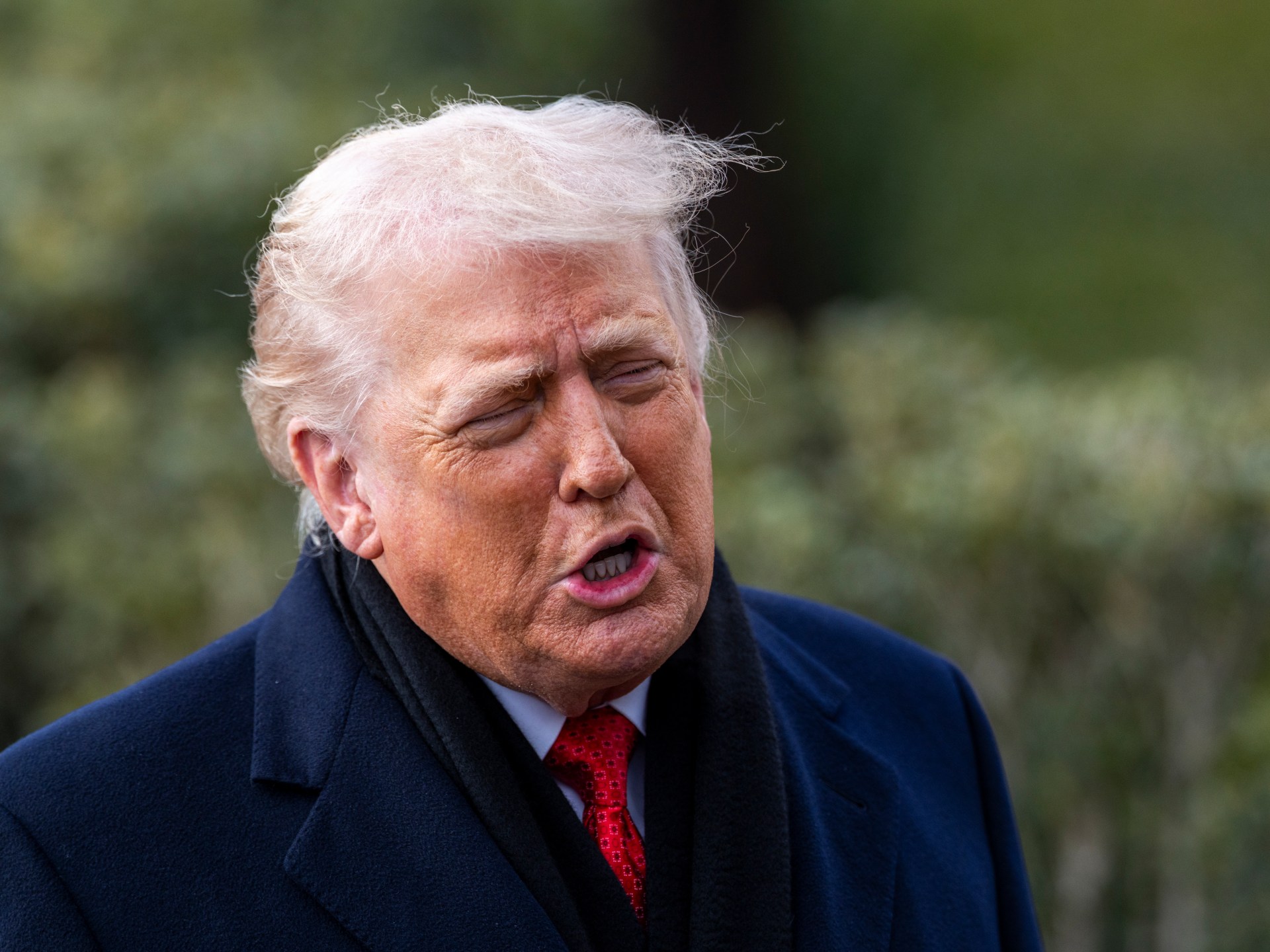
According to reports, US President Donald Trump has begun inviting world leaders and other well-known figures to his “board of peace,” which would outline a longer-term plan for a body that addresses international conflicts beyond Gaza.

In the enclave, Trump had initially proposed the board as part of the second phase of a ceasefire between Israel and Hamas to end Israel’s genocidal war against Gaza. The board would be in charge of “governance capacity-building, regional relations, reconstruction, investment attraction, large-scale funding, and capital mobilisation.”

Recommended Stories

list of 3 itemsend of list

However, Trump’s letters, which were posted on social media on Saturday by two leaders who were invited to be board members, Santiago Pena and Javier Milei, pointed to wider goals. According to several reports, the letter’s so-called “charter” also included loftier objectives.

The board would “seek to consolidate Peace in the Middle East,” the US president wrote in Trump’s letter to Milei, and it would “enter a bold new strategy to resolving global conflict” at the same time.

The accompanying “charter,” which was quoted by The Financial Times as saying, “is an international organization that seeks to promote stability, restore dependable and lawful governance, and secure enduring peace in areas affected or threatened by conflict,” was also quoted as saying.

The charter, which did not directly mention Gaza, was used to define “durable peace” and necessitated “pragmatic judgment, common sense solutions, and the courage to depart from approaches and institutions that have too frequently failed,” according to the newspaper.

A “charter” that laid out a wider scope for the body was also included in the invitations, two diplomatic sources told the Reuters news agency.

One diplomat in contact with the news agency claimed, “It’s a “Trump United Nations” that disregarded the fundamentals of the UN charter.”

Meanwhile, a senior US official told The Associated Press that the board of peace’s expanded role is still “aspirational.”

The official continued, noting that Trump and his advisers think it was possible to play such a role, given Washington and other UN members’ repeated grievances with the organization.

The board of peace, according to the official, did not intend to replace the UN.

Concentration on Gaza

The Trump administration has, to be sure, stated in the past that Gaza will be the first priority for the board of peace.

Trump’s son-in-law Jared Kushner, US Secretary of State Marco Rubio, and US special envoy to the Middle East, Steve Witkoff, were announced as the board’s founding executive members on Friday.

Ajay Banga, president of the World Bank Group, Marc Rowan, and Robert Gabriel, a deputy US national security adviser, were also first-named as officials.

A separate “Gaza executive board,” which is supposed to control a technocratic group of Palestinians, is named the National Committee for the Administration of Gaza (NCAG), and many of those figures were also given names. Hamas is expected to take over the committee’s daily management of Gaza.

Blair, Kushner, and Witkoff are on the executive board, along with Israeli-Cypriot billionaire Yakir Gabay, Qatari diplomat Ali Al Thawadi, Qatari diplomat Ali Al Thawadi, United Arab Emirates peace coordinator Sigrid Kaag, and Israeli-Cypriot billionaire Ali Al-Hashimy, who are also on the 11-member executive board.

Turkey’s Milei and Pena, along with Recep Tayyip Erdogan and Abdel Fattah el-Sisi, have confirmed that their respective leaders, Milei and Pena, have been invited to the wider board of peace. Ursula von der Leyen, the president of the European Commission, was also invited to represent the EU, according to a representative from the EU.

Although there is no official confirmation, four sources tell Reuters that the board’s members include members from France, Germany, Australia, and Canada.

In the upcoming weeks, the White House said it would add more members.

However, the initial board members’ announcement sparked outrage from many Middle Easterners because they didn’t include any Palestinians but instead elevated steadfast supporters of Israel.

Meanwhile, Israeli Prime Minister Benjamin Netanyahu criticized the Gaza executive board on Saturday, claiming that its makeup “was not in line with Israel and goes against its policy.”
Britain’s Fery causes first shock of Australian Open

Images courtesy of Getty

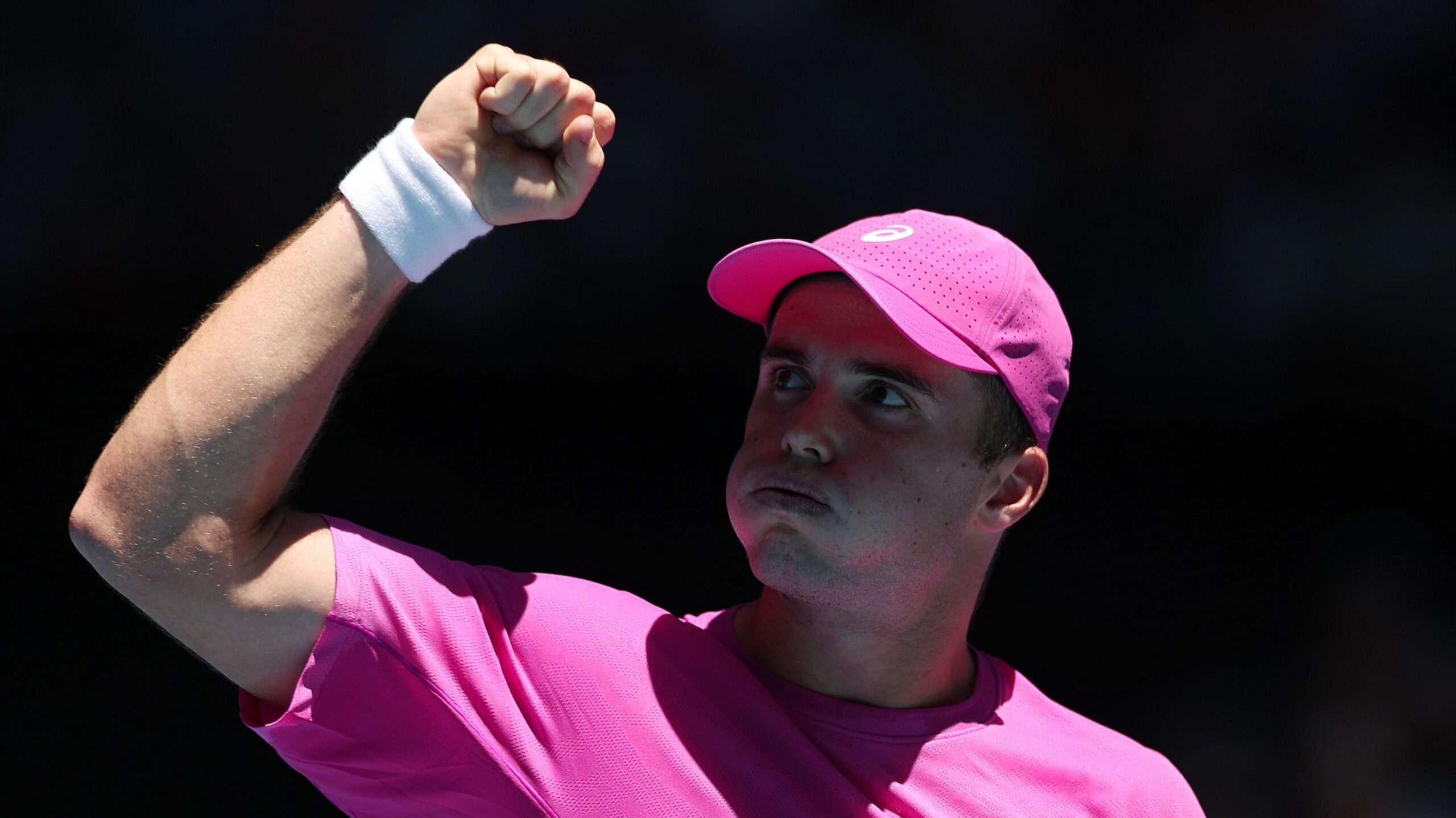
The first surprise of the Australian Open was caused by the defeat of Italian 20th seed Flavio Cobolli by British qualifier Arthur Fery, who also claimed another notable Grand Slam victory.

Fery, 23, won 7-6 (7-1), 6-4 6-1 in a scorching Melbourne, matching his biggest win of his career, having previously defeated 20th seed Alexei Popyrin at Wimbledon last year.

Cobolli ran off the court at the end of the opening set for a toilet break, having a stomach issue from the beginning.

Fery, who is ranked 185th in the world, joked afterward, “It seems I like drawing 20th seeds at Grand Slams.”

“I enjoy playing on big courts and stages.”

After going off court, Cobolli, 23, requested a timeout from the medical staff after going 3-0 up in the third set, and he then requested a refill of the supply.

    • 4 October 2020

The Londoner, who was raised close to the All England Club in Wimbledon, played smart and aggressively, moving Cobolli around the court to further punish him.

Fery’s serve, which is 5 feet 9 inches tall, shows that he has plenty of venom in his groundstrokes as he fires forehands past his opponent, despite lacking the punch of some opponents.

As Fery clinched the victory, producing a number of double faults to tie the match 5-1 in the third set, the body language of a desolate-looking Cobolli revealed how much he was struggling.

Given his comfortable cushion, Fery was without a doubt serving out for his third career Grand Slam victory, not his third at the top of the standings.

related subjects

  • Tennis

More on this story.

  • Some tennis balls
    • 16 August 2025
    BBC Sport microphone and phone

Russia-Ukraine war: List of key events, day 1,424

On Sunday, January 18, 2018, this is how things are going.

Fighting

  • Since Moscow’s full-scale invasion of Ukraine in February 2022, according to the General Staff of the Ukrainian military, about 1, 225, 590 personnel have been lost, according to estimates from the general staff of the Ukrainian military.
  • According to the office, Russia has lost an additional 11 569 tanks, 23 914 armoured fighting vehicles, 74, 601 vehicles and fuel tanks, 36, 261 artillery systems, 1, 615 multiple launch rocket systems, 1, 278 air defense systems, 434 aircraft, 347 helicopters, 108, 605 drones, 28 ships and boats, and two submarines. Since the start of the war, it has been challenging to independently verify the causalties of both sides.
  • Russian forces reportedly seized Pryvillya and Prylukya, both of which are located in the Donetsk region, according to the Russian TASS news agency.
    in the Zaporizhia region, citing Moscow’s Ministry of Defense.
  • According to the ministry, 305 Ukrainian forces have lost 1,030 personnel in the past 24 hours, and 214 Ukrainian fixed-wing drones and two long-range Neptune missiles have been shot down by Russian air defenses.
  • In addition to “ammunition depots, assembly workshops, storage sites, pre-flight preparation and launch sites for long-range unmanned aerial vehicles,” Russia’s defense ministry reported that it carried out attacks on Ukrainian energy and transportation infrastructure in 167 locations over the course of the past 24 hours.

Energy strikes

    The Ukrainian Ministry of Energy reported that the Russian forces were continuing their assault on Ukraine’s energy infrastructure over the weekend night, carrying out attacks in the Kyiv and Odesa regions. Russian authorities have portrayed the attacks as an attempt to sabotage the country’s energy system due to the country’s current cold weather.

  • More than 20 communities in the Kyiv region were left without power as a result of the strikes, according to the Ukraine’s Energy Ministry in a post on the messaging app Telegram.
  • Ihor Terekhov, the mayor of Kharkiv, claimed that the energy system of Ukraine’s second-largest city was “constantly operating at its limits” because of constant Russian attacks. He claimed that overnight strikes caused three injuries to three people.
  • The most pressing energy issues are affecting Kyiv, Kharkiv, and Zaporizhzhia, according to Volodymyr Zelenskyy, the president of Ukraine, during a meeting on energy coordination. He added that countries must increase their energy imports and seek out additional equipment from allies.
  • Despite power outages, infrastructure problems, and extreme cold predictions, foreign embassies are planning to remain in Kyiv, according to the Ukrainian news outlet Kyiv Independent. Weather forecasts for later this month range from 20 degrees Celsius (–4 degrees Fahrenheit). According to the report, Kyiv hosts about 80 foreign diplomatic missions.
  • Moscow is reportedly planning attacks to shut Ukraine out of three nuclear power plants in the coming days, according to Ukraine’s HUR military intelligence body. According to the intelligence agency, those efforts are intended to “force Ukraine to accept unacceptable capitulation demands to end the war” and undermine the nation’s energy infrastructure.

Peace talks

  • Kyrylo Budanov, Zelenskyy’s chief of staff, said he was scheduled to meet with US President Donald Trump’s son-in-law Jared Kushner, US Secretary of the US Army, and Secretary of State Dan Driscoll, US President.
  • On Sunday, Rustem Umerov and Davyd Arakhamia, the negotiators from Ukraine, will also participate in the discussions in Miami, Florida.
  • On Friday, Zelenskyy stated that the weekend discussions would concentrate on developing ideas for a possible peace agreement regarding issues like economic reconstruction and post-war security guarantees.
  • The delegation’s statement, “in addition to stressing the destructive role that Russian continued strikes play on Ukraine,” was “constantly worsening” the country’s already constrained prospects for a peaceful resolution to end the war.
  • The two nations could sign a document at the World Economic Forum in Davos, Switzerland, next week if the Trump administration and Ukraine reach a consensus on a proposal. Russian support would also be required for any such proposal.

Diplomacy

    Kaja Kallas, the head of the European Union’s foreign policy, claimed that the Trump administration’s threats to seize control of Greenland and impose tariffs on European allies who disagree with him should not be allowed to undermine the effort to put an end to Russia’s conflict with Ukraine, which she described as the “core task” of the bloc.

  • As Trump continues to threaten the self-governing Danish territory and NATO member, Russian envoy Kirill Dmitriev made fun of European leaders by sending military personnel there. In a social media post addressed to EU chief Ursula von der Leyen, he said that European nations should not “provoke the daddy”.
  • Emmanuel Macron, the president of France, praised Denmark and Greenland as examples of how the continent’s “sovereignty is upheld,” and claimed that the concept of sovereignty underlies France’s support for Ukraine.
  • Before the upcoming Winter Olympic Games, Zelenskyy announced Ukrainian sanctions against individuals and organizations involved in Russian athletics, claiming that Moscow uses “sports venues to spread anti-Ukrainian narratives and Russian propaganda.” Russian athletes are prohibited from competing, but they can still be considered “neutral athletes.”