How Trump’s absence marks leadership opportunity for China at G20

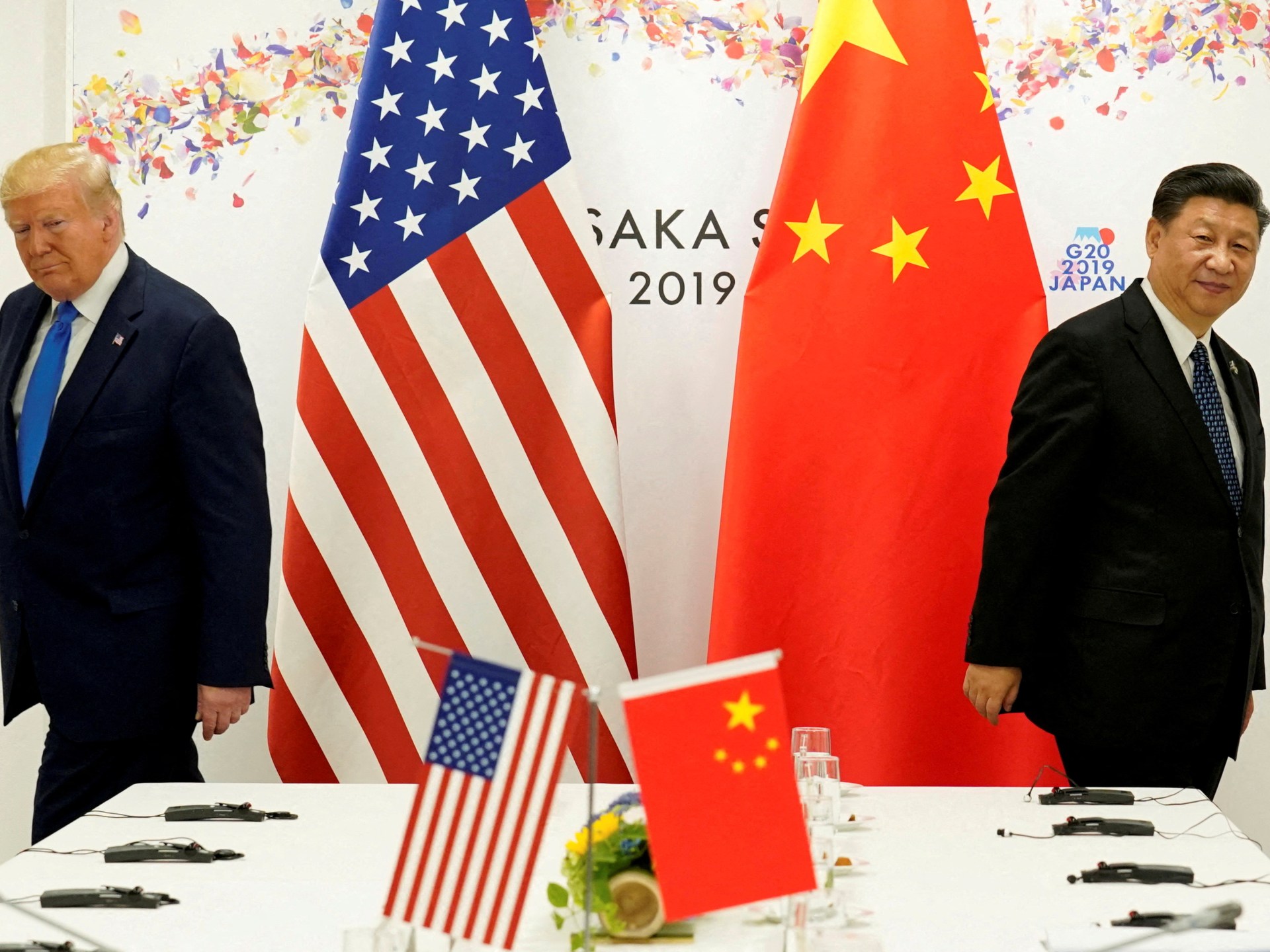
US President Donald Trump’s decision to snub the G20 summit in South Africa this year has handed an opportunity to China, as it seeks to expand its growing influence in the African continent and position itself as an alternative to the dangers of a unilateralist United States.

Washington said it would not attend the two-day summit set to kick off on Saturday over widely discredited claims that the host country, previously ruled by its white minority under an apartheid system until 1994, now mistreats white people.

Recommended Stories

list of 3 itemsend of list

South Africa’s President Cyril Ramaphosa hit back at Trump’s claim that hosting the summit in Johannesburg was a “total disgrace”. “Boycott politics doesn’t work,” Ramaphosa said, adding that the US was “giving up the very important role that they should be playing as the biggest economy in the world”.

By Friday morning, Trump appeared to have backtracked on his stance somewhat, when speculation that Washington might send a US official to Johannesburg after all circulated.

Regardless, the spat comes as Chinese President Xi Jinping sends Premier Li Qiang to represent him on the world stage. China’s 72-year-old president has dialled back foreign visits, increasingly delegating his top emissary.

“The US is giving China an opportunity to expand its global influence,” Zhiqun Zhu, professor of political science and international relations at Bucknell University, told Al Jazeera. “With the absence of the US, China and EU countries will be the focus of the summit and other countries will look for leadership [from them].”

But observers say that while Trump’s absence will direct heightened attention to Beijing’s statements and behaviour, it does not spell the end of the US-led order altogether.

Jing Gu, a political economist at the United Kingdom-based Institute of Development Studies, said the US’s failure to attend “does not automatically make China the new leader, but it creates visible space for China to present itself as a more stable, reliable partner in governance”.

“It reinforces the perception that the US is stepping back from multilateralism and the shared management of global problems,” she said. “In that context, China can present itself as a more predictable, stable actor and emphasise continuity, support for open trade and engagement with the Global South.”

Expanding influence in the African continent

This year’s G20 will, for the first time, have an African chair and take place on the African continent. The African Union (AU) will also participate fully as a member.

South Africa, which holds the G20 presidency, is expected to push for consensus and action on priority issues for African countries, including debt relief, economic growth, climate change and transition to clean energy.

Zhu, who also serves as editor-in-chief of the academic journal, China and the World, said South Africa’s themes were a “natural fit” for China, Africa’s largest trading partner.

“China aims to become a leader in green energy, and there’s a lot of room for China and African countries to work on that,” he said.

The African continent, with its mineral wealth, booming population and fast-growing economies, offers huge potential for Chinese firms. Li, China’s premier, travelled to Zambia this week, marking the first visit to the country by a Chinese premier in 28 years. The copper-rich nation has Beijing as its largest official creditor for $5.7bn.

Eager to secure access to Zambia’s commodities and expand its exports from resource-rich East Africa, China signed a $1.4bn deal in September to rehabilitate the Tazara Railway, built in the 1970s and connecting Tanzania and Zambia, to improve rail-sea transportation in the region.

“The Chinese economy and African economy are complementary; they both benefit from trade,” Zhu said. The G20 “is a great platform for China to project its global influence and seek opportunities to work with other countries”, he added.

Africa’s growing demand for energy and China’s dominance in manufacturing make the two a good fit, observers say. This is playing out. A report by energy think tank Ember, for instance, found Africa’s imports of solar panels from China rose a whopping 60 percent in the 12 months to June 2025.

According to Gu at the Institute of Development Studies, China will be looking to tap into this growing synergy with Africa and will deliver a three-fold message at this year’s G20.

“First, it will stress stability and the importance of global rules and regulations,” she said. Second, “it will link the G20 to the Global South and highlight issues like development and green transformation”.

Third, “by offering issue-based leadership on topics such as digital economy, artificial intelligence and governance, it will position itself as a problem-solver rather than a disruptor”, the economist added.

China as a bastion of multilateralism

An absence of American officials at this year’s G20 – after skipping the Asia-Pacific Economic Cooperation (APEC) meeting in Korea as well as the United Nations Climate Change Conference (COP30) in Brazil – would be “another opportunity for China”, Rosemary Foot, professor of politics and international relations at the University of Oxford, told Al Jazeera.

“It can contrast, yet again, its declared commitment to multilateralism and responsible behaviour as a major state versus the dangers of a unilateralist America focusing not on public goods but on benefits to itself only.”

China has been looking to expand its influence in Africa as a counterweight to the US-led world order. In stark contrast to Trump’s decision to end Africa’s duty-free era and slap 15-30 percent tariffs on 22 nations, Xi announced at the APEC summit last month a zero-tariff policy for all African nations with diplomatic ties to Beijing.

On that occasion, Xi emphasised China’s commitment “to joint development and shared prosperity with all countries”, stressing the country’s goal to “support more developing countries in achieving modernisation and opening up new avenues for global development”.

Similarly, Li, China’s premier, marked the United Nations’ 80th anniversary at the General Assembly in September by expressing the need for stronger collective action on climate change and emerging technologies, calling for greater solidarity to “[lift] everyone up, while division drags all down”.

His remarks were in stark contrast to Trump’s, who, in his speech, described climate change as the “greatest con job ever perpetrated” and called renewable sources of energy a “joke” and “pathetic”.

Adam Peaty ‘deeply hurt’ by family feud but ‘fatal error means statement will backfire’

Adam Peaty has finally broken his silence on a family feud that has erupted over recent weeks, and one expert warns that there’s a crucial problem in his statement

As Olympic swimmer Adam Peaty prepares to marry Holly Ramsay in what promises to be the celebrity wedding of the season, the backdrop is not one of champagne and confetti, but of police investigations, public snubs, and a family feud threatening the occasion.

The chaos began when reports surfaced that Adam’s mother Caroline is no longer invited to his wedding to influencer Holly, the daughter of world-renowned chef Gordon Ramsay. Weeks of turmoil followed, with furious social media posts from Adam’s aunt, his brother getting arrested and bailed, and a heartbreaking plea for reconciliation from Caroline.

Now Adam has finally broken his silence in a lengthy statement on Instagram. In the post, the three-time Olympic champion said that he, Holly, and his sister Bethany could not share full details due to an “ongoing police investigation into serious matters that arose long before recent events.” But he did express his dismay at how things have unfolded, saying: “It has been deeply hurtful and upsetting to read, especially given the false basis upon which we have been targeted. What makes it worse is that it has been encouraged by members of my family.”

READ MORE: Adam Peaty finally breaks silence on family feud with sad admissionREAD MORE: Inside Adam Peaty and Holly Ramsay’s lavish wedding wishlist

He coninued: “For those who know me personally, you know that I work so hard on trying to improve myself as a person who wants to contribute to making the world a better place. I am continuing to learn about myself and how I can be the man I want to be; a worthy partner, father, businessman, friend and athlete; even through these challenging times.

“Bethany, Holly and I will get through this – we do not ask for sympathy. We just need people to be aware that there are always two sides to every story. To those of you who have reached out and shown kindness and understanding – thank you. It is deeply appreciated.” In a show of solidarity, his wife-to-be Holly also shared the post on her social media to her 400,000 followers.

And according to communications expert Judi James, the statement is a clear signal of a man under emotional distress. “Adam is clearly suffering from all this fallout and keen to put his own side across as well as protect his own brand and image,” she says. “But sometimes it’s hard to say nothing when the narrative is so public; saying anything risks feeding interest and prompting more response from the other side.”

The narrative Judi refers to has been dominating headlines for weeks. The saga reportedly began with a “snub” regarding Holly hen do at Soho Farmhouse, which Adam’s mother, Caroline, did not attend. This sparked a social media backlash from Adam’s aunt, Louise, who branded the exclusion “hurtful.”

Since then, the rumour mill has spun out of control. There have been tales of rows over wedding dress colours, with Caroline reportedly being told her cream outfit was inappropriate, and a stark “clash of cultures” narrative pitting Adam’s working-class Staffordshire roots against the glitzy, celebrity-chef world of the Ramsays.

The tension culminated dramatically earlier this month when Adam was met by police at Manchester Airport following his stag do, after reported concerns of ‘threats’ made to the Olympian. While in Budapest with his future father-in-law Gordon, Adam was said to have become alarmed after receiving text messages, with Holly alerting the police. His older brother, James, 34, was arrested at his home in Uttoxeter, Staffordshire, on Monday and has since been bailed.

Judi argues that the very public nature of this feud has made reconciliation almost impossible. “The problem is that, because this rift is played out so publicly, there’s less room to apply the kind of ‘dampening’ techniques it might need,” she says.

Adam’s Instagram statement was an attempt to regain control, Judi explains. He described the public saga as “deeply hurtful,” explicitly denied the “false basis” of the attacks on his character, and listed his roles as a “partner, father, businessman, friend and athlete.”

However, Judi warns that while the emotion is genuine, the execution may have backfired. “Adam’s distress does seem to sing out here,” Judi notes. “He appears to have tried to get three major messages across: The first is his angle on what has happened, then there is a protecting of his own image and life objectives as a person, then finally a thank you to his supporters.”

Yet, Judi cautions that the language used in the first section of his statement – words like “hurtful”, “intrusive”, “targeted”, and “police investigation” might work against him.

“The first section is unlikely to dampen down any negative emotions,” she says. “They might be seen by him as fair, but they are strong words that might also risk keeping any emotional responses and arguments stoked, too.”

Judi highlights a critical flaw in trying to resolve family matters via written statements. “Anything that is written on social media or in the press will suffer from one glaring communication problem which is it can be read in the tone that the reader decides to apply to it,” she says.

“A message intended to sound warm or conciliatory can be viewed as sarcastic. It’s the face-to-face communications that count as they include tone and body language to convey genuine emotions.”

Perhaps the most telling part of Adam’s statement was his list of personal attributes. By sharing his desire to “make the world a better place” and his growth as a man, Judi believes Adam is attempting to elevate himself above the squabble.

“His personal defense is so emphatic that it makes him sound deeply hurt and feeling vulnerable and challenged in terms of public and private perceptions,” says Judi.

Article continues below

“He lists his areas of worthiness… to show how keen he is to ring-fence his character. His mention of wanting to ‘make the world a better place’ appears to self-define him as the adult in the room. Then he thanks people for their kindness to appear to reflect this warmer, worthier side.”

Get Christmas ready

This article contains affiliate links, we will receive a commission on any sales we generate from it. Learn more
Content Image

£42

£33.60

Buy here

Adam Peaty ‘deeply hurt’ by family feud but ‘fatal error means statement will backfire’

Adam Peaty has finally broken his silence on a family feud that has erupted over recent weeks, and one expert warns that there’s a crucial problem in his statement

As Olympic swimmer Adam Peaty prepares to marry Holly Ramsay in what promises to be the celebrity wedding of the season, the backdrop is not one of champagne and confetti, but of police investigations, public snubs, and a family feud threatening the occasion.

The chaos began when reports surfaced that Adam’s mother Caroline is no longer invited to his wedding to influencer Holly, the daughter of world-renowned chef Gordon Ramsay. Weeks of turmoil followed, with furious social media posts from Adam’s aunt, his brother getting arrested and bailed, and a heartbreaking plea for reconciliation from Caroline.

Now Adam has finally broken his silence in a lengthy statement on Instagram. In the post, the three-time Olympic champion said that he, Holly, and his sister Bethany could not share full details due to an “ongoing police investigation into serious matters that arose long before recent events.” But he did express his dismay at how things have unfolded, saying: “It has been deeply hurtful and upsetting to read, especially given the false basis upon which we have been targeted. What makes it worse is that it has been encouraged by members of my family.”

READ MORE: Adam Peaty finally breaks silence on family feud with sad admissionREAD MORE: Inside Adam Peaty and Holly Ramsay’s lavish wedding wishlist

He coninued: “For those who know me personally, you know that I work so hard on trying to improve myself as a person who wants to contribute to making the world a better place. I am continuing to learn about myself and how I can be the man I want to be; a worthy partner, father, businessman, friend and athlete; even through these challenging times.

“Bethany, Holly and I will get through this – we do not ask for sympathy. We just need people to be aware that there are always two sides to every story. To those of you who have reached out and shown kindness and understanding – thank you. It is deeply appreciated.” In a show of solidarity, his wife-to-be Holly also shared the post on her social media to her 400,000 followers.

And according to communications expert Judi James, the statement is a clear signal of a man under emotional distress. “Adam is clearly suffering from all this fallout and keen to put his own side across as well as protect his own brand and image,” she says. “But sometimes it’s hard to say nothing when the narrative is so public; saying anything risks feeding interest and prompting more response from the other side.”

The narrative Judi refers to has been dominating headlines for weeks. The saga reportedly began with a “snub” regarding Holly hen do at Soho Farmhouse, which Adam’s mother, Caroline, did not attend. This sparked a social media backlash from Adam’s aunt, Louise, who branded the exclusion “hurtful.”

Since then, the rumour mill has spun out of control. There have been tales of rows over wedding dress colours, with Caroline reportedly being told her cream outfit was inappropriate, and a stark “clash of cultures” narrative pitting Adam’s working-class Staffordshire roots against the glitzy, celebrity-chef world of the Ramsays.

The tension culminated dramatically earlier this month when Adam was met by police at Manchester Airport following his stag do, after reported concerns of ‘threats’ made to the Olympian. While in Budapest with his future father-in-law Gordon, Adam was said to have become alarmed after receiving text messages, with Holly alerting the police. His older brother, James, 34, was arrested at his home in Uttoxeter, Staffordshire, on Monday and has since been bailed.

Judi argues that the very public nature of this feud has made reconciliation almost impossible. “The problem is that, because this rift is played out so publicly, there’s less room to apply the kind of ‘dampening’ techniques it might need,” she says.

Adam’s Instagram statement was an attempt to regain control, Judi explains. He described the public saga as “deeply hurtful,” explicitly denied the “false basis” of the attacks on his character, and listed his roles as a “partner, father, businessman, friend and athlete.”

However, Judi warns that while the emotion is genuine, the execution may have backfired. “Adam’s distress does seem to sing out here,” Judi notes. “He appears to have tried to get three major messages across: The first is his angle on what has happened, then there is a protecting of his own image and life objectives as a person, then finally a thank you to his supporters.”

Yet, Judi cautions that the language used in the first section of his statement – words like “hurtful”, “intrusive”, “targeted”, and “police investigation” might work against him.

“The first section is unlikely to dampen down any negative emotions,” she says. “They might be seen by him as fair, but they are strong words that might also risk keeping any emotional responses and arguments stoked, too.”

Judi highlights a critical flaw in trying to resolve family matters via written statements. “Anything that is written on social media or in the press will suffer from one glaring communication problem which is it can be read in the tone that the reader decides to apply to it,” she says.

“A message intended to sound warm or conciliatory can be viewed as sarcastic. It’s the face-to-face communications that count as they include tone and body language to convey genuine emotions.”

Perhaps the most telling part of Adam’s statement was his list of personal attributes. By sharing his desire to “make the world a better place” and his growth as a man, Judi believes Adam is attempting to elevate himself above the squabble.

“His personal defense is so emphatic that it makes him sound deeply hurt and feeling vulnerable and challenged in terms of public and private perceptions,” says Judi.

Article continues below

“He lists his areas of worthiness… to show how keen he is to ring-fence his character. His mention of wanting to ‘make the world a better place’ appears to self-define him as the adult in the room. Then he thanks people for their kindness to appear to reflect this warmer, worthier side.”

Get Christmas ready

This article contains affiliate links, we will receive a commission on any sales we generate from it. Learn more
Content Image

£42

£33.60

Buy here

One win in six – what is going wrong at stumbling Liverpool?

Getty Images

Reigning Premier League champions Liverpool began the season well, but now find themselves in eighth place after 11 games.

Over the past six league games Liverpool have picked up just three points – with only bottom-of-the-league Wolves gaining fewer in this period.

And this is despite the Reds spending more than £400m – and bringing in superstar talent – in the summer.

Why Liverpool struggle to build out from back

Many of Liverpool’s problems this season stem from how they build from the back.

As a result of Trent Alexander-Arnold joining Real Madrid in the summer and goalkeeper Alisson Becker’s injury six weeks ago, Liverpool’s backline is playing differently.

Giorgi Mamardashvili has replaced the injured Alisson in goal and a subtle detail contributing to Liverpool’s form comes from the fact the keepers have different strong feet.

Mamardashvili is left-footed, which means he plays certain passes Alisson wouldn’t.

A pass map from Opta showing Giorgi Mamardashvili's preference for passing short and to the right. Opta

Keepers are able to play short passes more quickly when passing across their body. Opening up their body and playing to the far side generally takes longer.

For Alisson, this would funnel play towards Virgil van Dijk, the stronger ball-playing centre-back. Mamardashvili’s left foot ushers the ball more naturally to the right side now occupied by Ibrahima Konate and Conor Bradley or Jeremie Frimpong.

For the majority of this season, Liverpool have opted to build up short and have struggled to do so, particularly down their right.

A screengrab from Man City vs Liverpool this season showing Haaland curving his run as he presses Liverpool's keeper forcing the keeper to pass it to Konate at right centre back.BBC Sport

When the ball does go to the right side of defence, Liverpool are less able to get out of pressurised situations without Alexander-Arnold.

Screengrab of Trent Alexander Arnold passing the ball to his central midfielder from right back using his left foot when Liverpool played Tottenham last season.BBC Sport

A closer look at individual players highlights Milos Kerkez’s struggles in disguising his passing intentions at times from left-back. Bradley appears to play at a fast pace but slowing down play in the build-up can actually help teams disrupt an opponents’ press and establish safer possession.

Why Liverpool aren’t getting best out of Salah

Mohamed Salah was central to much of Liverpool’s success last season, so why has the Egyptian been less effective so far this campaign?

Liverpool’s right flank last season was impressive, often consisting of Salah, Dominik Szoboszlai and Alexander-Arnold.

Analysing the latter last season demonstrates how it wasn’t only his quality on the ball that stood out – his excellent off-the-ball movement also helped Salah shine.

Using the game against Bournemouth last season as an example, Alexander-Arnold would take a high, attacking midfield position centrally when Liverpool’s defenders had the ball. A Bournemouth central midfielder was now responsible for defending him and they would often have to drop deeper.

His positioning helped free up the passing lane from Konate to Salah, allowing the Egyptian to receive the ball with ease.

Screengrab of Trent Alexander Arnold taking an attacking midfield position against Bournemouth last season clearing the passing lane allowing Konate to pass the ball to Salah with ease.BBC Sport

Another benefit to Alexander-Arnold’s inside position here is that rather than having two of the midfield three playing in attacking positions high up the pitch, he and Szoboszlai occupied these areas instead.

This allowed two natural central midfielders in Ryan Gravenberch and Alexis Mac Allister to be positioned behind the ball, centrally. Natural defensive midfielders playing behind the ball offer greater defensive solidity when starting in central areas, as this is where counter-attacks are most dangerous.

When compared to this season, the knock-on effects become clear.

Liverpool’s full-backs find themselves out wide in their own half, often unable to find their team-mates centrally. The passing lane from Konate to Salah can become crowded too.

Liverpool’s full-backs will at times play passes straight to Salah instead. Salah therefore receives passes with pressure from behind him, meaning he is unable to turn and attack dangerously. This reduces how effective he can be.

Liverpool’s biggest defensive problem this season

Liverpool pressed intensely for many years under Jurgen Klopp but under Slot their out-of-possession tactics differ.

Liverpool now tend to press in a 4-2-4 shape. A principle Slot likes to use is having an extra player in the defensive line compared to the number of attackers the opponents have. This can be described as having a ‘plus one’ at the back.

Opponents often have a striker and two wide players positioned high. Liverpool under Slot usually keep their four defenders back to have a one player advantage.

Screengrab of Liverpool's defensive shape against Chelsea this season showcasing how they leave an extra player back, leaving them numerically outnumbered at the front of the pitch. BBC Sport

Pressing opponents that have an extra player in the build-up is a challenge that can be addressed through strong individual pressers.

Alternatively, the press can be executed in a way that allows one player to cover multiple opposition players, often by pressing one player while blocking the passing lane to another.

Generally, teams that press with fewer players up front are looking to force opponents into building down one side before cutting off access to the other side of the pitch.

Slot’s big defensive dilemma

In the win against Arsenal earlier this season, Liverpool started the match by keeping a ‘plus-one’ in their defensive line. This meant that in the build-up Arsenal regularly had a spare man.

A screengrab showing Arsenal building up from the back against Liverpool with seven players (four defenders and three midfielders) compared to Liverpool's six pressing players (four attackers and two midfielders) from the game this season.BBC Sport

Arsenal dominated the first half partly because of this overload and Slot opted for a man-to-man press in the second half to fix this.

Szoboszlai was then tasked with pressing Calafiori which helped Liverpool impose themselves and showcased Slot’s understanding of the issue.

It did, however, leave Liverpool man-for-man at the back, something Slot doesn’t like to do.

Form down to more than just tactics

This isn’t an exhaustive list of all of Liverpool’s problems this season but does highlight some of the main issues Slot and his coaching staff will have to contend with to get Liverpool back on track.

Liverpool’s struggles from set-pieces and in dealing with long balls, in a league that is increasingly prioritising both, have contributed to their poor results this season.

There is also the unavoidable fact that the tragic death of team-mate Diogo Jota will have played on the minds of Liverpool’s players and staff.

Related topics

  • Liverpool
  • Premier League
  • Football

One win in six – what is going wrong at stumbling Liverpool?

Getty Images

Reigning Premier League champions Liverpool began the season well, but now find themselves in eighth place after 11 games.

Over the past six league games Liverpool have picked up just three points – with only bottom-of-the-league Wolves gaining fewer in this period.

And this is despite the Reds spending more than £400m – and bringing in superstar talent – in the summer.

Why Liverpool struggle to build out from back

Many of Liverpool’s problems this season stem from how they build from the back.

As a result of Trent Alexander-Arnold joining Real Madrid in the summer and goalkeeper Alisson Becker’s injury six weeks ago, Liverpool’s backline is playing differently.

Giorgi Mamardashvili has replaced the injured Alisson in goal and a subtle detail contributing to Liverpool’s form comes from the fact the keepers have different strong feet.

Mamardashvili is left-footed, which means he plays certain passes Alisson wouldn’t.

A pass map from Opta showing Giorgi Mamardashvili's preference for passing short and to the right. Opta

Keepers are able to play short passes more quickly when passing across their body. Opening up their body and playing to the far side generally takes longer.

For Alisson, this would funnel play towards Virgil van Dijk, the stronger ball-playing centre-back. Mamardashvili’s left foot ushers the ball more naturally to the right side now occupied by Ibrahima Konate and Conor Bradley or Jeremie Frimpong.

For the majority of this season, Liverpool have opted to build up short and have struggled to do so, particularly down their right.

A screengrab from Man City vs Liverpool this season showing Haaland curving his run as he presses Liverpool's keeper forcing the keeper to pass it to Konate at right centre back.BBC Sport

When the ball does go to the right side of defence, Liverpool are less able to get out of pressurised situations without Alexander-Arnold.

Screengrab of Trent Alexander Arnold passing the ball to his central midfielder from right back using his left foot when Liverpool played Tottenham last season.BBC Sport

A closer look at individual players highlights Milos Kerkez’s struggles in disguising his passing intentions at times from left-back. Bradley appears to play at a fast pace but slowing down play in the build-up can actually help teams disrupt an opponents’ press and establish safer possession.

Why Liverpool aren’t getting best out of Salah

Mohamed Salah was central to much of Liverpool’s success last season, so why has the Egyptian been less effective so far this campaign?

Liverpool’s right flank last season was impressive, often consisting of Salah, Dominik Szoboszlai and Alexander-Arnold.

Analysing the latter last season demonstrates how it wasn’t only his quality on the ball that stood out – his excellent off-the-ball movement also helped Salah shine.

Using the game against Bournemouth last season as an example, Alexander-Arnold would take a high, attacking midfield position centrally when Liverpool’s defenders had the ball. A Bournemouth central midfielder was now responsible for defending him and they would often have to drop deeper.

His positioning helped free up the passing lane from Konate to Salah, allowing the Egyptian to receive the ball with ease.

Screengrab of Trent Alexander Arnold taking an attacking midfield position against Bournemouth last season clearing the passing lane allowing Konate to pass the ball to Salah with ease.BBC Sport

Another benefit to Alexander-Arnold’s inside position here is that rather than having two of the midfield three playing in attacking positions high up the pitch, he and Szoboszlai occupied these areas instead.

This allowed two natural central midfielders in Ryan Gravenberch and Alexis Mac Allister to be positioned behind the ball, centrally. Natural defensive midfielders playing behind the ball offer greater defensive solidity when starting in central areas, as this is where counter-attacks are most dangerous.

When compared to this season, the knock-on effects become clear.

Liverpool’s full-backs find themselves out wide in their own half, often unable to find their team-mates centrally. The passing lane from Konate to Salah can become crowded too.

Liverpool’s full-backs will at times play passes straight to Salah instead. Salah therefore receives passes with pressure from behind him, meaning he is unable to turn and attack dangerously. This reduces how effective he can be.

Liverpool’s biggest defensive problem this season

Liverpool pressed intensely for many years under Jurgen Klopp but under Slot their out-of-possession tactics differ.

Liverpool now tend to press in a 4-2-4 shape. A principle Slot likes to use is having an extra player in the defensive line compared to the number of attackers the opponents have. This can be described as having a ‘plus one’ at the back.

Opponents often have a striker and two wide players positioned high. Liverpool under Slot usually keep their four defenders back to have a one player advantage.

Screengrab of Liverpool's defensive shape against Chelsea this season showcasing how they leave an extra player back, leaving them numerically outnumbered at the front of the pitch. BBC Sport

Pressing opponents that have an extra player in the build-up is a challenge that can be addressed through strong individual pressers.

Alternatively, the press can be executed in a way that allows one player to cover multiple opposition players, often by pressing one player while blocking the passing lane to another.

Generally, teams that press with fewer players up front are looking to force opponents into building down one side before cutting off access to the other side of the pitch.

Slot’s big defensive dilemma

In the win against Arsenal earlier this season, Liverpool started the match by keeping a ‘plus-one’ in their defensive line. This meant that in the build-up Arsenal regularly had a spare man.

A screengrab showing Arsenal building up from the back against Liverpool with seven players (four defenders and three midfielders) compared to Liverpool's six pressing players (four attackers and two midfielders) from the game this season.BBC Sport

Arsenal dominated the first half partly because of this overload and Slot opted for a man-to-man press in the second half to fix this.

Szoboszlai was then tasked with pressing Calafiori which helped Liverpool impose themselves and showcased Slot’s understanding of the issue.

It did, however, leave Liverpool man-for-man at the back, something Slot doesn’t like to do.

Form down to more than just tactics

This isn’t an exhaustive list of all of Liverpool’s problems this season but does highlight some of the main issues Slot and his coaching staff will have to contend with to get Liverpool back on track.

Liverpool’s struggles from set-pieces and in dealing with long balls, in a league that is increasingly prioritising both, have contributed to their poor results this season.

There is also the unavoidable fact that the tragic death of team-mate Diogo Jota will have played on the minds of Liverpool’s players and staff.

Related topics

  • Liverpool
  • Premier League
  • Football

One win in six – what is going wrong at stumbling Liverpool?

Getty Images

Reigning Premier League champions Liverpool began the season well, but now find themselves in eighth place after 11 games.

Over the past six league games Liverpool have picked up just three points – with only bottom-of-the-league Wolves gaining fewer in this period.

And this is despite the Reds spending more than £400m – and bringing in superstar talent – in the summer.

Why Liverpool struggle to build out from back

Many of Liverpool’s problems this season stem from how they build from the back.

As a result of Trent Alexander-Arnold joining Real Madrid in the summer and goalkeeper Alisson Becker’s injury six weeks ago, Liverpool’s backline is playing differently.

Giorgi Mamardashvili has replaced the injured Alisson in goal and a subtle detail contributing to Liverpool’s form comes from the fact the keepers have different strong feet.

Mamardashvili is left-footed, which means he plays certain passes Alisson wouldn’t.

A pass map from Opta showing Giorgi Mamardashvili's preference for passing short and to the right. Opta

Keepers are able to play short passes more quickly when passing across their body. Opening up their body and playing to the far side generally takes longer.

For Alisson, this would funnel play towards Virgil van Dijk, the stronger ball-playing centre-back. Mamardashvili’s left foot ushers the ball more naturally to the right side now occupied by Ibrahima Konate and Conor Bradley or Jeremie Frimpong.

For the majority of this season, Liverpool have opted to build up short and have struggled to do so, particularly down their right.

A screengrab from Man City vs Liverpool this season showing Haaland curving his run as he presses Liverpool's keeper forcing the keeper to pass it to Konate at right centre back.BBC Sport

When the ball does go to the right side of defence, Liverpool are less able to get out of pressurised situations without Alexander-Arnold.

Screengrab of Trent Alexander Arnold passing the ball to his central midfielder from right back using his left foot when Liverpool played Tottenham last season.BBC Sport

A closer look at individual players highlights Milos Kerkez’s struggles in disguising his passing intentions at times from left-back. Bradley appears to play at a fast pace but slowing down play in the build-up can actually help teams disrupt an opponents’ press and establish safer possession.

Why Liverpool aren’t getting best out of Salah

Mohamed Salah was central to much of Liverpool’s success last season, so why has the Egyptian been less effective so far this campaign?

Liverpool’s right flank last season was impressive, often consisting of Salah, Dominik Szoboszlai and Alexander-Arnold.

Analysing the latter last season demonstrates how it wasn’t only his quality on the ball that stood out – his excellent off-the-ball movement also helped Salah shine.

Using the game against Bournemouth last season as an example, Alexander-Arnold would take a high, attacking midfield position centrally when Liverpool’s defenders had the ball. A Bournemouth central midfielder was now responsible for defending him and they would often have to drop deeper.

His positioning helped free up the passing lane from Konate to Salah, allowing the Egyptian to receive the ball with ease.

Screengrab of Trent Alexander Arnold taking an attacking midfield position against Bournemouth last season clearing the passing lane allowing Konate to pass the ball to Salah with ease.BBC Sport

Another benefit to Alexander-Arnold’s inside position here is that rather than having two of the midfield three playing in attacking positions high up the pitch, he and Szoboszlai occupied these areas instead.

This allowed two natural central midfielders in Ryan Gravenberch and Alexis Mac Allister to be positioned behind the ball, centrally. Natural defensive midfielders playing behind the ball offer greater defensive solidity when starting in central areas, as this is where counter-attacks are most dangerous.

When compared to this season, the knock-on effects become clear.

Liverpool’s full-backs find themselves out wide in their own half, often unable to find their team-mates centrally. The passing lane from Konate to Salah can become crowded too.

Liverpool’s full-backs will at times play passes straight to Salah instead. Salah therefore receives passes with pressure from behind him, meaning he is unable to turn and attack dangerously. This reduces how effective he can be.

Liverpool’s biggest defensive problem this season

Liverpool pressed intensely for many years under Jurgen Klopp but under Slot their out-of-possession tactics differ.

Liverpool now tend to press in a 4-2-4 shape. A principle Slot likes to use is having an extra player in the defensive line compared to the number of attackers the opponents have. This can be described as having a ‘plus one’ at the back.

Opponents often have a striker and two wide players positioned high. Liverpool under Slot usually keep their four defenders back to have a one player advantage.

Screengrab of Liverpool's defensive shape against Chelsea this season showcasing how they leave an extra player back, leaving them numerically outnumbered at the front of the pitch. BBC Sport

Pressing opponents that have an extra player in the build-up is a challenge that can be addressed through strong individual pressers.

Alternatively, the press can be executed in a way that allows one player to cover multiple opposition players, often by pressing one player while blocking the passing lane to another.

Generally, teams that press with fewer players up front are looking to force opponents into building down one side before cutting off access to the other side of the pitch.

Slot’s big defensive dilemma

In the win against Arsenal earlier this season, Liverpool started the match by keeping a ‘plus-one’ in their defensive line. This meant that in the build-up Arsenal regularly had a spare man.

A screengrab showing Arsenal building up from the back against Liverpool with seven players (four defenders and three midfielders) compared to Liverpool's six pressing players (four attackers and two midfielders) from the game this season.BBC Sport

Arsenal dominated the first half partly because of this overload and Slot opted for a man-to-man press in the second half to fix this.

Szoboszlai was then tasked with pressing Calafiori which helped Liverpool impose themselves and showcased Slot’s understanding of the issue.

It did, however, leave Liverpool man-for-man at the back, something Slot doesn’t like to do.

Form down to more than just tactics

This isn’t an exhaustive list of all of Liverpool’s problems this season but does highlight some of the main issues Slot and his coaching staff will have to contend with to get Liverpool back on track.

Liverpool’s struggles from set-pieces and in dealing with long balls, in a league that is increasingly prioritising both, have contributed to their poor results this season.

There is also the unavoidable fact that the tragic death of team-mate Diogo Jota will have played on the minds of Liverpool’s players and staff.

Related topics

  • Liverpool
  • Premier League
  • Football