England battle despite Carey ton in crucial Test

To play this video you need to enable JavaScript in your browser.

  • 374 Comments

Third Ashes Test, Adelaide Oval (day one of five)

Australia 326-8: Carey 106, Khawaja 82; Archer 3-29

England: yet to bat

Australia won the toss

England battled hard to stay in the Ashes as Alex Carey’s century led Australia to 326-8 on the first day of the third Test.

On a dramatic, poignant and emotional day in Adelaide, Carey’s composed 106 ensured Australia did not waste the opportunity to bat first on a slow pitch in baking temperatures.

Carey’s knock was not without controversy. On 72 England failed with a review for caught behind off Josh Tongue, which Carey later admitted to edging.

Australia’s effort means England, who must win to keep their hopes of regaining the Ashes alive, will be batting under pressure on the second day.

Even before the Adelaide Oval paid tribute to the victims of the shooting at Bondi Beach, Steve Smith was ruled out of the Test with symptoms of dizziness and nausea.

Smith’s replacement Usman Khawaja took his unexpected opportunity with 82 after being dropped by Harry Brook on five. Khawaja steadied the home side amid some loose Australian shots against some mixed England bowling.

Jofra Archer was outstanding for his 3-29 from 16 overs, including taking two wickets in the first over after lunch.

Khawaja and Carey added 91 for the fifth wicket, yet when Australia were reduced to 271-7 England had a real opportunity.

Once again, Mitchell Starc found a way to contribute, adding 50 for the eighth wicket with Carey.

To play this video you need to enable JavaScript in your browser.

    • 9 hours ago

England pushed towards day of reckoning

To play this video you need to enable JavaScript in your browser.

For all the talk of England errors in the first two Tests, the wisdom of their holiday in Noosa and a change of approach in this match, the tourists cannot be faulted for their effort or attitude in the 34-degree heat.

There were times when the bowling was ragged and part-time off-spinner Will Jacks struggled to contain.

But Archer stepped up as the attack leader and, bar the Brook drop, England’s fielding was largely blemish-free.

They were helped by the wastefulness of the Australians, who had to deal with the loss of Smith. The hosts’ premier batter is expected to be fit for the fourth Test on Boxing Day.

The mood at the Adelaide Oval – one of the most beautiful grounds in world cricket – was initially sombre as the victims of Bondi were mourned. A moment’s silence was observed and Australian singer John Williamson performed ‘True Blue’.

From then on the cricket was nip-and-tuck, an arm-wrestle for supremacy. Both sides mixed moments of quality with self-inflicted errors.

Khawaja and Carey stand up for Australia

To play this video you need to enable JavaScript in your browser.

Their respective innings would have carried plenty of meaning for both Khawaja and Carey.

A day short of his 39th birthday, Khawaja may have thought his Test career was over until Smith’s illness. For Carey, a South Australian, this was a first Test on his home ground since the passing of his father in September.

Both men arrived after two wickets fell in quick succession. Khawaja looked nervous at first and a flashing drive at Tongue should have been held by Brook diving to his left at second slip.

From there, left-hander Khawaja waited for England to drift straight and tucked off his pads – barely a run came in front of square on the off side. He eventually fell sweeping Jacks into the hands of deep square leg.

Carey is proving a thorn in England’s side and a third Test century came with crisp drives and aggression against Jacks.

He was almost caught on 52, only for Carse to put down an extremely difficult chance, then came the huge moment of the review.

With Australia 245-6, Carey aimed a cut at Tongue that ended in the gloves of Jamie Smith. Denied the decision on field, the tourists called for a review.

Carey even appeared to nod towards the England players, suggesting he hit the ball. Despite evidence of sound on the technology, TV umpire Chris Gaffaney did not overturn the decision of Ahsan Raza.

England improve, but face defining day

To play this video you need to enable JavaScript in your browser.

Stokes has said his dressing room is “no place for weak men” and called this the most important Test of his captaincy. His words certainly drew a show of character from his team.

Archer was a constant threat, bowling with high pace and miserly economy. He bounced out Jake Weatherald in the first hour, then produced leg-side pokes from both Marnus Labuschagne and Cameron Green in the over after lunch.

Carse typified England’s ups and downs. He was far too short with the new ball, yet still took the wicket of Travis Head thanks to Zak Crawley’s stunning one-handed catch at short cover.

The Durham paceman leaked runs at more than five an over and bowled six no-balls, though still took two catches, almost held Carey and had returning Australia captain Pat Cummins caught at short leg.

Tongue deserved more on his recall to the England side, especially as the victim of Brook’s drop. The most obvious issue for the tourists was part-time spinner Jacks’ inability to hold an end – he returned 2-105 from his 20 overs.

Related topics

  • England Men’s Cricket Team
  • Australia
  • The Ashes
  • Cricket

More on this story

    • 16 August

How loss of brother shaped Smith’s rugby journey

SNS

The highs and lows of elite sport can take a personal toll on even the most resilient of characters, but Ollie Smith has been through moments in his life far tougher than anything rugby can throw at him.

In 2019, Smith’s older brother, Patrick, a chemical engineering student at the University of Edinburgh, was at a house party when he fell from a third-floor window. He was pronounced dead at the scene, aged just 21.

“I remember my dad being almost like a rock for us and he just seemed to be strong through the whole thing – and we could really lean on that when we were trying to figure out what was really happening.

    • 2 days ago
    • 3 days ago

Smith recalls that Patrick did not share his love of rugby – “he grew tall quite early, was stuck in the second row and hated it” – and focused instead on swimming at university.

While his brother may not have been a rugby fan, Smith feels driven to honour Patrick by making the most of whatever opportunities the game may afford him and tackle any disappointments along the way – such as the horror knee injury that cost him more than a year of his career – with a sense of perspective.

“The way I look at it is that I’m still having the opportunity to live out my dream and that’s something that my brother didn’t get to do,” the 25-year-old said.

“He didn’t even finish his uni degree and he was so smart. I have no idea what he would have done after uni, but I’m sure he would have loved it. I’ve had the opportunity to carry out this dream of mine and still go on with it.

“It puts it into perspective. Everyone goes through these hardships and it’s another thing you realise in rugby – I’m not the only one that’s gone through something like this.

“I know multiple people who have had the same thing and I think you really count your blessings of how lucky I am as an individual to still be living my dream.”

And he added: “Having gone through this hard thing is difficult for the whole family and I’m not taking away from that, but it allows you to be more positive and take those hits in your stride rather than dwelling on things that maybe are going wrong in your own life.

“You’re still having the opportunity to still be here and still live the dream and have a good life.”

As a way of extracting something positive from the pain of the sudden loss of his brother, Smith is a dedicated campaigner for blood donation, something Patrick was also passionate about.

“My sister, one of her friends, my dad and my uncle all kind of got together to set up a blood donation charity, which was something that my brother was a massive driver for,” Smith said.

Hampden ParkSNS

“The recent figures ScotBlood posted last week, that donations have dropped under 2% in Scotland for the last year, it’s something that we’re trying to change and grow awareness.

“We have our Young Ambassador Programme, myself and one of the other girls, Megan, at the charity, we’ve been going into schools to help educate pupils. And we get some of the sixth-year students to set up the initiative in their school.

“We also have our Bloody Brilliant Uni Squad at places like Edinburgh, Stirling, to really grow education around blood donation and show that it’s not as daunting as it maybe seems.

“We’ve grown over the last six years and had loads of brilliant events, so it’s been nice over the past few years that something that was so dark for our family, something so good has come out of it.”

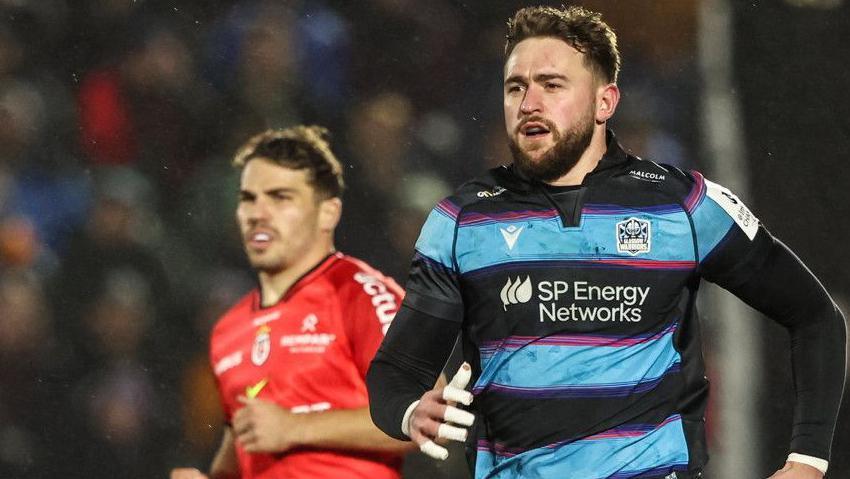
Smith will run out at Hampden Park to face Edinburgh in the first leg of the 1872 Cup on Saturday and, while he says Patrick may not have had much interest in the action itself, he would have relished such a special occasion.

“I don’t know if he would have been even slightly bothered about my rugby exploits, to be honest,” Smith smiles.

“He was never really a fan. I think maybe he would have enjoyed the big events, to say that he’d been in a big stadium or something like that, but I don’t think he was very bothered about the actual ins and outs of rugby.

“I think it’s brilliant [to play at Hampden]. We see Scotstoun as a fortress and the Warrior Nation are so important for us in these home games, especially these big home games.”

Now he comes face-to-face with some Scotland colleagues at what is better known as the national football stadium.

“You spend so much time with those Edinburgh boys in camp and you get to know them really well and then to face them twice a year back-to-back in these big stadiums, you want them to be proper occasions,” Smith added.

“I think Hampden allows more home support for us to make it a bit more hostile for them.

BBC Scotland Rugby Podcast: Ollie Smith on life, loss & fulfilling dreams

Listen on Sounds

Related topics

  • Glasgow Warriors
  • Scottish Rugby
  • Rugby Union

Antonelli goes incognito at Milton Keynes go-kart race

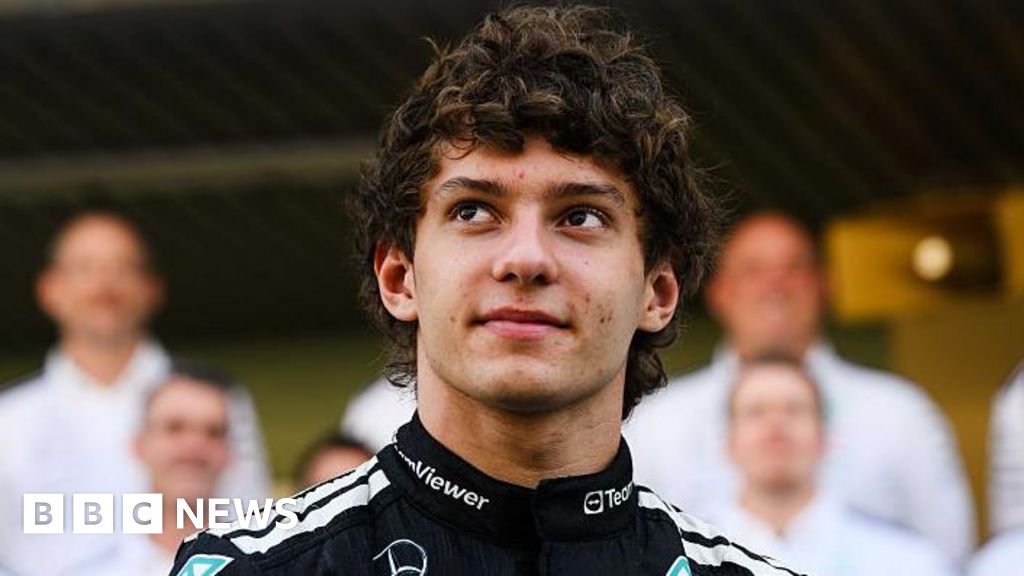
F1 driver Kimi Antonelli has surprised local go-karters by going incognito at a packed racing session.

Antonelli attended Daytona Milton Keynes on Saturday and registered under the name “Henry Shovlin”.

The 19-year-old Italian, who drives professionally for Mercedes, set the fastest lap of the session in the main race but did not win.

Mr Prince said Antonelli did the usual briefing and then raced with everyone else but “no-one had a clue” who he was.

“He actually got two penalties for pushing too hard so didn’t finish on the podium at the end of it,” he told Roberto Perrone on BBC Three Counties Radio.

“But he did get the fastest lap of the race by at least three seconds.”

Mr Prince said the star was not recognised because he was wearing a helmet, but when he went back inside and removed it “everyone realised who they’d been racing against”.

“Everyone really mobbed him so a member of staff quickly rescued him and put him behind the desk for a cheeky photo by our celebrity leaderboard, and then he ran away and left.”

Drone attacks kill over 100 civilians across war-torn Sudan’s Kordofan

At least 104 civilians have been killed in drone attacks across Sudan’s Kordofan region as fighting between rival military factions reached deadly new heights in the brutal civil war deep into its third year.

The attacks have battered the central region since early December, right up to Friday, following the capture of a significant army base by the paramilitary Rapid Support Forces (RSF) in Babnusa after a week of intense fighting.

Recommended Stories

list of 3 itemsend of list

The escalation has displaced tens of thousands and overwhelmed health facilities already strained by cholera and dengue outbreaks, as the main fighting shifts from Darfur in the west to the vast central region of Kordofan.

The deadliest attack was reported from a kindergarten and a hospital in Kalogi, South Kordofan, where 89 people were killed, including 43 children and eight women. United Nations human rights chief Volker Turk said he was “alarmed by the further intensification in hostilities” and warned that targeting medical facilities violates international humanitarian law.

Six Bangladeshi peacekeepers serving with the UN mission were killed when drones hit their base in Kadugli, South Kordofan’s capital, on December 13. UN Secretary-General Antonio Guterres condemned what he termed “horrific drone attacks”, noting that attacks on peacekeepers “may constitute war crimes under international law”.

A day later, Dilling Military Hospital came under fire, with casualty figures varying. The Sudan Doctors Network reported nine deaths and 17 injuries, calling it “systematic targeting of health institutions”.

UN officials said six people were killed and 12 wounded, many of them medical staff.

The government-aligned Sudanese Armed Forces (SAF) has blamed the RSF for the attacks, though the paramilitary group has not responded to the accusations.

Epidemics on the rise

The violence has created severe humanitarian consequences beyond the immediate death toll. North Kordofan’s Health Minister Iman Malik reported that the state has recorded 13,609 cholera cases and 730 dengue fever infections, with 30 percent of health facilities no longer functioning due to the conflict.

More than 40,000 people have fled North Kordofan, while civilians remain trapped in besieged cities, including Kadugli and Dilling.

In nearby Heglig, which the RSF captured before handing it to South Sudan’s army under a tripartite agreement with the army, nearly 2,000 people were displaced to White Nile state.

The fighting in Kordofan represents a significant expansion of the conflict following the RSF’s October seizure of el-Fasher, the army’s last stronghold in Darfur. Researchers at Yale School of Public Health’s Humanitarian Research Lab (HRL) found in a new report that the RSF killed civilians attempting to flee the city, then systematically began destroying evidence by burying, burning and removing bodies.

The escalation comes as international efforts to broker peace have restarted. SAF chief Abdel Fattah al-Burhan met Saudi Crown Prince Mohammed bin Salman on December 15, expressing readiness to work with United States President Donald Trump on peace efforts.

The following day, Egypt and the US jointly rejected “any attempts to divide Sudan” and called for a comprehensive ceasefire.