Jade’s best knitwear moments on The Traitors – and where exactly to shop them

Move over Claudia, The Traitors has a new and unexpected style icon

While this season of The Traitors is packed with some of the biggest twists, tension and unforgettable moments, it’s also delivering some of the most covetable fashion, and we’re not just talking about Claudia.

At the centre of it all is contestant Jade Scott’s statement knitwear. Episode after episode, the PHD student’s cosy but stylish looks have caught viewers’ attention.

In a castle full of cloaks, tartan and of course, Claudia’s kilts, Jade’s knits have emerged as the unexpected talking point.

From rainbow chunky cardigans to cherry-printed pieces, Jade has already been labelled the “queen of serving looks” over on X, and we’ve found exactly where you can shop her maximalist buys and similar styles.

READ MORE: Molly-Mae praises favourite £28 body moisturiser that ‘leaves no white cast’

READ MORE: Ugg jumps on the ‘sneakerina’ trend with divisive new design shoppers say is ‘iconic’

CHUNKY RAINBOW CARDIGAN

The most talked about look of all the contestants so far comes from Jade’s multicoloured chunky cardigan. This handmade knit hails from Irish brand Hope Macaulay, and is one of Jade’s most joyful moments on The Traitors (paired with Jade’s rainbow eye look). With its bold colour block and oversized design, it brings a bright contrast to the show’s often dark and dramatic setting.

Plus, Jade appears to have taken a leaf out of fellow Traitors star Tom Daley’s style book, as the Olympic diver was spotted wearing the exact same knit last year.

Hope Macaulay’s Pastel Colossal Knit Cardigan is priced at £420 and is still in stock in all sizes. This design is on the pricier side, but as a family-run, woman-owned business, Hope’s slow fashion brand is worth the investment for its unmatched quality.

If Jade’s knit is too pricey, however, you can get a similar dopamine-boosting look from Next’s Multi Blue/Green Stripe Soft Touch Chunky Knit Cardigan, £44.

WAVY BLUE KNIT

Jade’s wavy blue knit from Kiwi & Co offers a softer, more understated take on statement knitwear, while still incorporating her quirky style.

Featuring a fluid, wave-like design, this cosy knit feels both relaxed and calming – the perfect piece for toning down tensions in the castle.

The Blueberry Pie Hugs & Kisses Cardigan is still in stock for £69.99 on the Kiwi & Co website. If you’re after different colours to shop, ASOS stocks the knit in mocha and brown stripe.

CHERRY PRINTED JUMPER

Last night’s episode saw Jade sporting House of Sunny’s cherry printed cardigan. Playful yet fashion-forward, the cherry motif injects a little fun into the classic cardigan shape, and is also right on trend for 2026.

Article continues below

This standout piece has a vintage feel while remaining modern and cool.
Ant McPartlin makes rare comments on sobriety as Dec says he’s a ‘better person’ now

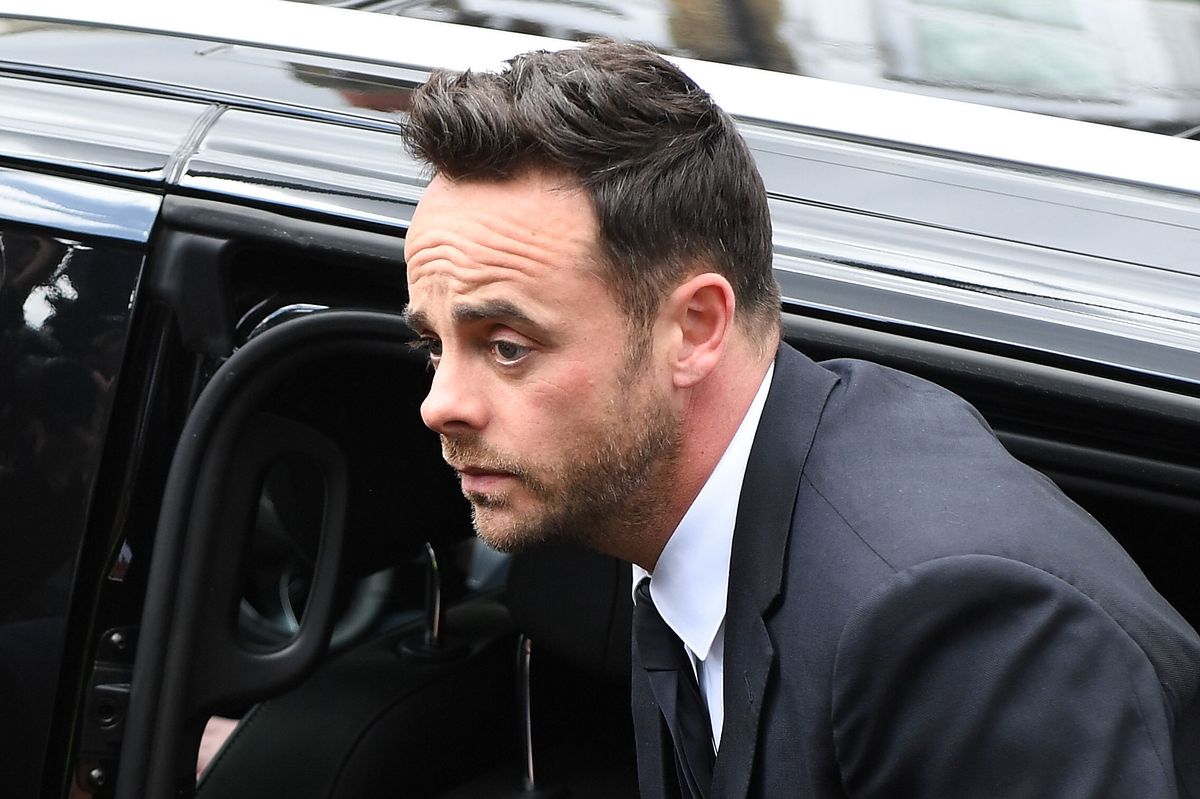
ITV presenter Anthony McPartlin has spoken candidly about his sobriety, in rare comments made in a new interview alongside his longtime showbiz pal Declan Donnelly

ITV star Ant McPartlin has made rare comments about his decision to go sober – after he was arrested for drink-driving in 2018.

The presenter admits he is happier than he has been “in a long, long time” as he reflects on turning 50 — with co-host Declan Donnelly saying the presenter is now “a much better person than he was before”. The I’m a Celebrity… Get Me Out of Here! star opened up in a candid interview, where he spoke about how difficult his early forties were and how life has changed for the better in recent years.

Ant, who stepped away from the spotlight in 2018 following a drink-driving conviction and entered rehab, has largely avoided speaking publicly about his recovery. In the interview, however, he acknowledged how sobriety has reshaped his outlook on both work and life.

“Turning 50 for me was great because my early forties was a really tough time,” McPartlin told The Sunday Times. “These last few years, it’s the happiest I’ve been in a long, long time.”

“What changes as you get older, especially being sober as well, for me, is the purpose,” he explained. Despite his long-running TV success alongside Dec, Ant suggested that his priorities are now firmly rooted beyond his career. The duo have fronted some of ITV’s biggest shows for over two decades, including Britain’s Got Talent, Ant & Dec’s Saturday Night Takeaway and I’m a Celebrity, which they film live from Australia.

Ant described how filming the hit jungle series still gives him a huge sense of fulfilment — but only in the moment. “When you’re live on I’m a Celebrity in Australia and you’re in the moment with your best friend, there’s nowhere else I want to be,” he said. However, he added that the feeling changes once the cameras stop rolling and normal life resumes. “But as soon as we finish, we go back to our apartments by the beach and we’re with our families. That’s where we want to be right then.”

Ant, 50, and his best friend Dec, also 50, have enjoyed a lengthy career in showbiz after meeting one another on the set of Byker Grove in 1989. The pair have hosted a string of high-profile shows across four decades from the ’90s to now – including CD:UK and Ant and Dec’s Saturday Night Takeaway. The pair have remained professionally inseparable ever since, even during Ant’s absence from television while he sought treatment.

When asked what they most admired about each other, Ant gave a light-hearted response, saying he admired Dec’s vocabulary. Dec’s answer, however, was notably emotional. “What I most admire is that with the challenges he’s faced, especially over the last few years, Ant took responsibility and real action,” Dec said. “He worked on himself so much to get back not just to being himself but actually being a much better person than he was before.”

Ant returned to television in 2019, resuming his presenting duties alongside Dec. Since then, the pair have continued to dominate ITV’s entertainment schedule, with Saturday Night Takeaway recently coming to an end after its 20th series.

Ant married Anne-Marie Corbett in 2021 and welcomed his first child last year, while Dec is also a father of two. Both presenters have spoken previously about how becoming parents has altered their perspective on work.

Article continues below

Senegal Hope Morocco Final Will Not Be Mane’s AFCON Goodbye

On Saturday, Senegal coach Pape Thiaw stated that Sadio Mane’s last game at the Africa Cup of Nations would not be his last appearance there, saying the former Liverpool player would not want to leave.

“His decision is no longer his responsibility. On the eve of the final game against the host nation, Thiaw told reporters in Rabat that there is a whole community behind him and that they would like for him to continue.

Mane, 33, declared he would not participate in another Cup of Nations after the semi-final defeat to Egypt on Wednesday, which was the winner.

His comments suggested that he might end his international career entirely after the World Cup in June and July, when he will turn 34.

Read more about Senegal’s AFCON Final: Security, Ticketing, and Other Concerns.

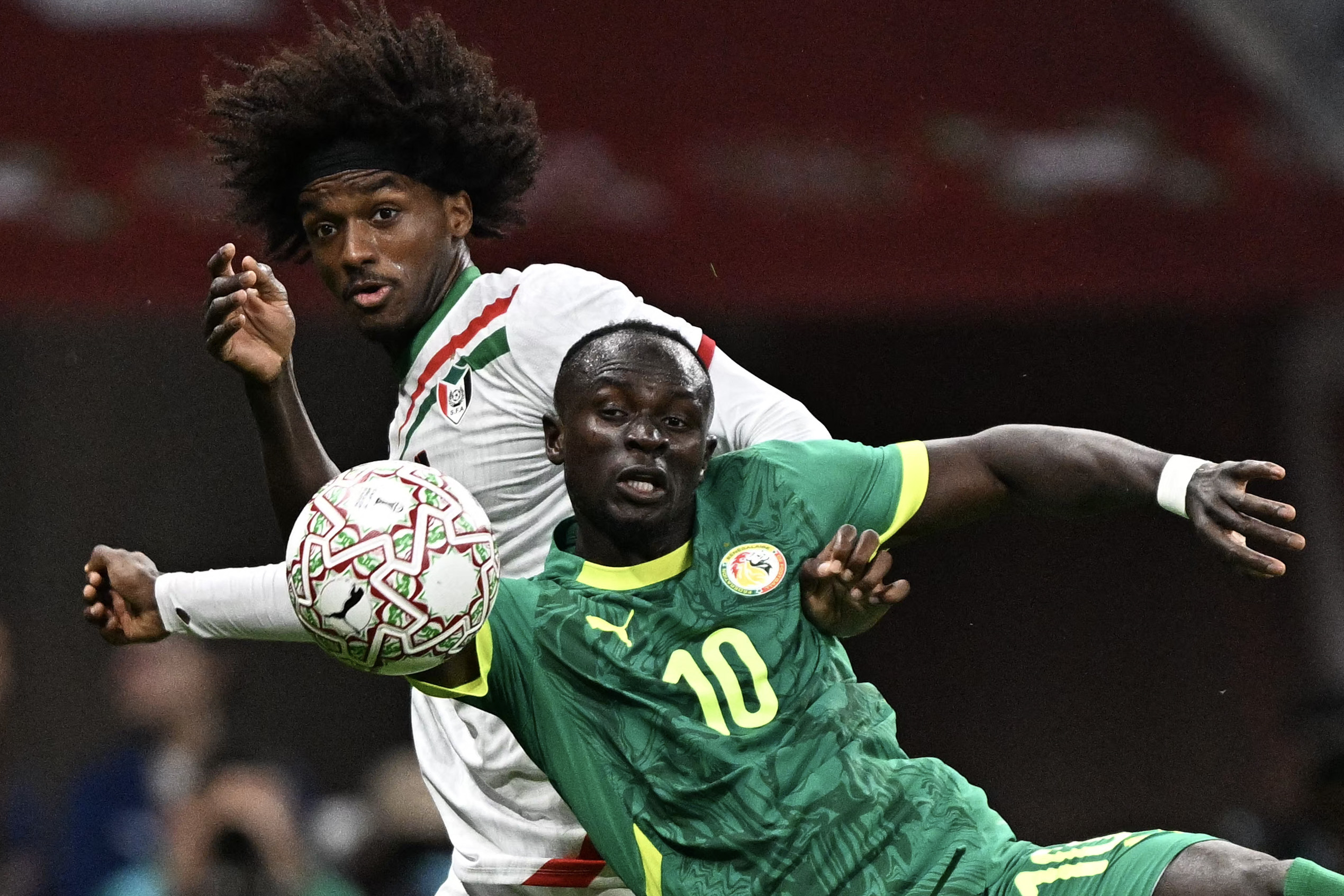
On January 3, 2026, Senegal’s defense #25 Sheddy Barglan and Senegal’s #10 Sadio Mane square off in the Africa Cup of Nations (CAN) round of 16 football game at Grand Stadium in Tangiers. (Photo by Gabriel Bouys/AFP)

In 2027, Kenya, Tanzania, and Uganda are scheduled to host the next Cup of Nations.

“I believe he made his decision in the midst of the monment, and the country does not agree with me, and I do not at all agree with that,” said Thiaw, the national team’s coach.

“We want to keep him as long as possible,” he said.

Senegal won the Cup of Nations in 2022 for the first time in their history when the former Liverpool star scored the winning penalty in the shoot-out against Egypt.

The two-time African player of the year winner also participated in the team that lost to Algeria in the 2019 final; this will be Senegal’s third AFCON final after the previous three years.

Sadio is a remarkable player who “would have deserved to win a Ballon d’Or.” He is simply amazing, according to defensive player Moussa Niakhate.

He lacks a large ego, he claims. He simply works hard and cares about his country; this is his sixth AFCON, demonstrating his perseverance and longevity.

security concerns

On January 14, 2026, Senegal’s head coach Pape Thiaw reacts during the Africa Cup of Nations (CAN) semi-final football game between Egypt and Senegal at the Grand Stadium in Tangiers. (Sebastien Bozon/AFP photo)

The coach of Senegal expressed anger over the welcome his team received on Friday when they arrived in the Moroccan capital.

Since Tangiers, the port city in which The Lions of Teranga have been based since the start of the competition, made a trip to Rabat.

Late on Friday, the Senegalese Football Federation made a statement expressing “serious concerns,” including a “lack of adequate security” for the team’s arrival, which “put the players and staff in danger.”

Additionally, it expressed concern about the hotel the delegation received and the number of tickets given to their supporters for the final, and that they were unsatisfied that the Moroccan team had offered them a training pitch.

Thiaw resisted saying, “What happened yesterday was not normal.”

Anything could have happened, given the number there, they said. My players were in danger, I imagine.

That kind of interaction shouldn’t take place between two neighboring nations.

(COMBO) This set of images shows Morocco’s #10 Brahim Diaz and Senegal’s #10 Sadio Mane on January 14, 2026 (L) during the Africa Cup of Nations (CAN) in Rabat on January 9, 2026. (Photo by Gabriel BOUYS and Abdel Majid BZIOUAT)

Morocco aims to capitalize on its home advantage to win the AFCON title for the first time in 50 years as the top two teams in Africa are paired up for the final, which is held in front of the top two teams in the FIFA rankings.

However, the semi-finalists for the 2022 World Cup are under enormous pressure to win.

The final step will be the most challenging, Morocco coach Walid Regragui said, “We dreamed of being here, and we are now,” Regragui said.

Senegal are a great team, and this is their third of four finals, but a final between the top two teams is fantastic for African football.

He continued, “It will be crucial how we handle the emotion of the occasion.” We can’t put too much pressure on ourselves.

Avoiding FPL & watching sunrise – how tennis players cope with jetlag

Getty Images

Jetlag is often the first topic of conversation when the tennis world converges on the Australian Open.

Anyone who has ever travelled across multiple time zones knows how devilish the effects can be. Ironically, ideas about writing this piece came while wide awake at 5am in Melbourne.

Players might be considered super-human to their adoring fans, but they suffer with broken sleep, fatigue and acclimatisation just like the rest of us.

The difference is they regularly have to step on court – sometimes within hours of landing – to perform in one of the most physical sports going.

“As tennis players we don’t have a choice,” Australian player Tristan Schoolkate, who grew up in Perth – considered the most isolated major city in the world – told BBC Sport.

Filipino player Alexandra Eala agreed. “If you’re on the tour, you’re going to have jetlag. The reality is you just have to deal with it,” she said.

Coping strategies players turn to

Tennis stars travel globally more than any other group of athletes due to the international nature of the sport.

With tour-level tournaments held in 29 countries across five continents, men’s players travelled a combined 2.3 million km across the 2024 season, according to ATP data.

Every player knows the importance of getting over jetlag quickly and has their own method of attempting to regulate their circadian rhythm.

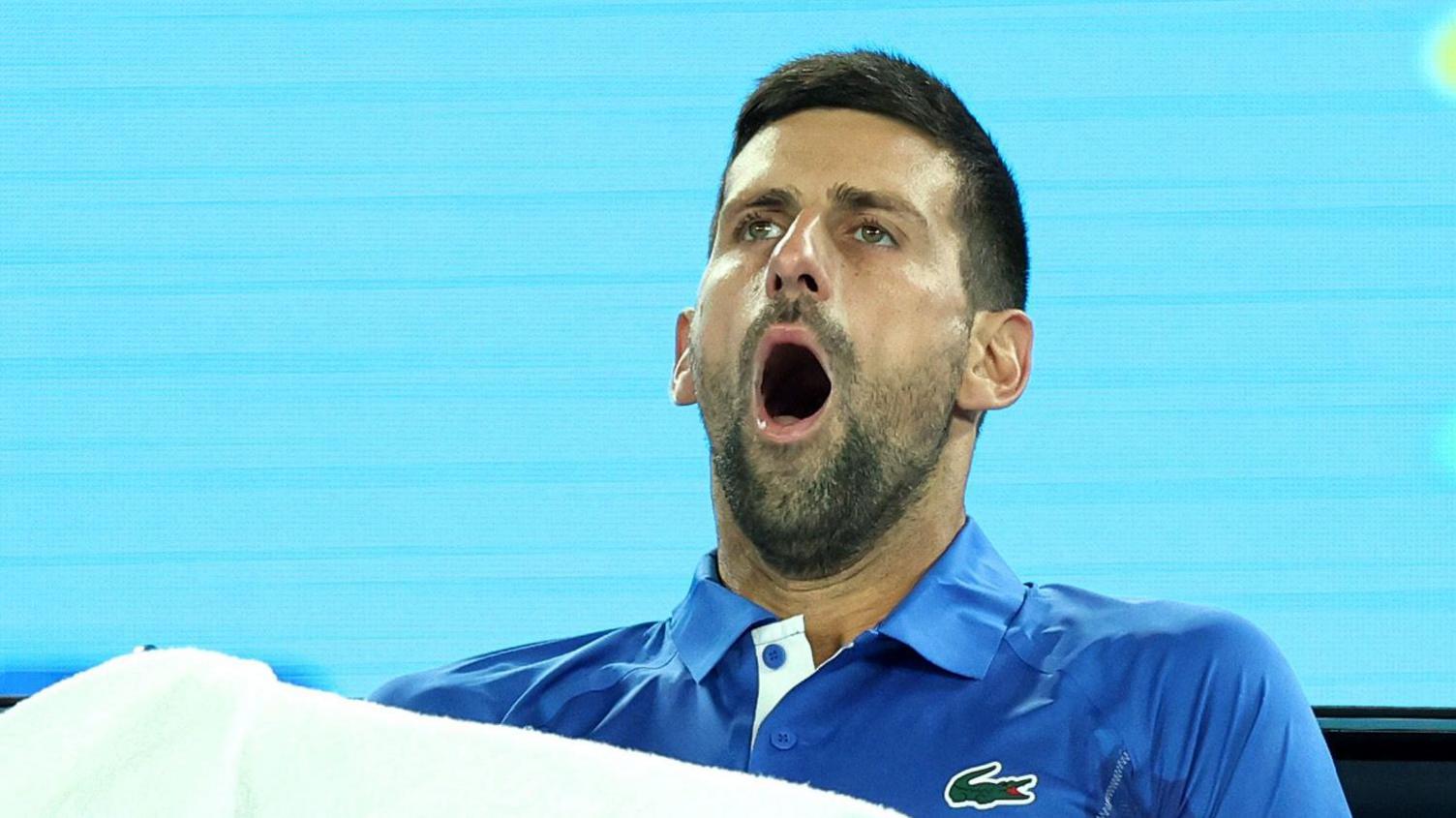
Novak Djokovic, known for meticulously fine-tuning his body, tries to “over-hydrate” on his flight, adding lemon, mint, and salt to his water.

“When I arrive at the hotel, I ground myself with bare feet on natural ground as soon as possible, followed by a hot bath with Epsom salts,” the 24-time major champion told Travel + Leisure magazine.

“Then on the first morning, I try to watch the sunrise, to reset my brain.”

Natural herbal tablets, often containing plant-based ingredients like valerian, hops, chamomile and passionflower are a popular coping strategy, while many players have turned to melatonin as a sleep aid.

Taking the hormone, which your brain produces in response to darkness and therefore helps you sleep, has led to serious repercussions for some leading players, though.

Six-time Grand Slam champion Iga Swiatek was banned for one month in 2024 after failing a doping test because the melatonin she took to avoid jetlag was contaminated.

    • 7 hours ago
    • 1 day ago
    • 5 hours ago

Given her experience, Poland’s Swiatek now prefers a more natural approach.

“I’m totally fine here since I’m always coming from dark, sometimes grey Europe in November or December. Just waking up with having sun outside honestly is the best cure,” she said.

But waking up too early is a problem. British men’s number two Cameron Norrie suffered from “brutal” jetlag when he arrived in Brisbane at the start of the month.

“At like 3am I was ready to go. I think it didn’t help there were a lot of Premier League matches at that time and I was checking the scores,” he said.

“I was also seeing all my fantasy [football] players not scoring. I was so annoyed and I couldn’t go back to sleep after that.”

Muting goal notifications on his phone – and not looking at his device generally during the night – is going to be his strategy going forward.

Fellow British player Francesca Jones has little trouble sleeping all the way through when she arrives in Australia.

Jones forces herself to stay awake for the whole 24-hour trip and believes the sleep deprivation enables her to get straight into rhythm.

Does travelling contribute to injury?

Disruption to your circadian rhythm can lead to sickness, indigestion, mild anxiety and concentration problems, according to NHS guidance on jetlag.

Travelling long distances, and the different air pressures on planes, can also cause dehydration and inflammation.

Sports scientist Stephen Smith, whose Kitman Labs company provides professional teams with data and analytics to monitor player welfare, says this increases the chances of injury.

“When players are showing up after long journeys where they haven’t slept well, they’re fatigued,” Smith told BBC Sport.

“The compounding effects of fatigue, and if they don’t have enough time to acclimatise, predisposes them to injury. There are also slight issues with range of movement and mobility.

“Obviously players travelling on first class, and able to lie down to sleep, is very different from players that do not have that luxury.

Tristan Schoolkate reaches for a forehandGetty Images

Schoolkate, ranked 97th in the world, still travels in economy class amid financial constraints.

He says there have been plenty of occasions where he has taken to the match court when not physically ready, due to the necessity of chasing money or ranking points.

One example was travelling from India to the United States last year, landing a day and a half before his opening match at Indian Wells and feeling “so fatigued” before his match at 1pm in California.

“I was starting to yawn which is not ideal, then you’ve got the sun in your eyes and you’re not really adjusting,” said Schoolkate.

“We’re affected physically and mentally by jetlag. We’re trying to perform a tricky task, playing at the top level and hitting the ball in a certain spot.

Related topics

  • Tennis

More on this story

  • Some tennis balls
    • 16 August 2025
    BBC Sport microphone and phone

Avoiding FPL & watching sunrise – how players cope with jetlag

Images courtesy of Getty

When tennis players converge on the Australian Open, jet lag is frequently the first subject of conversation.

Anyone who has ever traversed multiple time zones is aware of the devilish effects that can occur. Ironically, inspiration for writing this piece came while I was awake at 5am in Melbourne.

Although the fans who adore them may consider them to be superhuman, they also experience fatigue, acclimatization, and broken sleep.

The difference is that they frequently have to step on the court to play one of the most rigorous sports, sometimes even within hours of landing.

Tristan Schoolkate, an Australian tennis player who was raised in Perth, which is thought to be the most remote major city in the world, told BBC Sport: “As tennis players, we don’t have a choice.

Alexandra Eala, a Filipino player, agreed. You’re going to experience jet lag if you’re on the tour. You just have to deal with it, she said.

Players use various coping techniques.

Due to the sport’s international nature, tennis stars travel more frequently than any other group of athletes.

Men’s soccer players traveled a total of 2.3 million kilometers over the course of the 2024 season, ATP data shows. This includes tour-level competitions held in 29 nations on five continents.

Every player has their own method of attempting to regulate their circadian rhythm, and they all understand how crucial it is to overcome jet lag quickly.

Novak Djokovic, who is known for meticulous body tuning, adds salt, mint, and lemon to his water on a flight to try to “over-hydrate.”

The 24-time major champion stated in Travel + Leisure magazine, “When I arrive at the hotel, I ground myself with bare feet on natural ground as soon as possible, followed by a hot bath with Epsom salts.”

I then try to wake up early in the morning to reset my mind.

Popular coping strategies for players have turned to melatonin as a sleep aid, and natural herbal tablets frequently contain plant-based ingredients like valerian, hops, chamomile, and passionflower.

However, some of the leading players have had serious repercussions from taking the hormone, which your brain produces in response to darkness and helps you sleep.

Iga Swiatek, a six-time Grand Slam champion, was found guilty of contaminated melatonin after failing a doping test in 2024.

    • nine hours ago
    • a day ago
    • last 7 hours

Swiatek, from Poland, now prefers a more natural approach because of her experience.

“I’m completely fine here because I’m always traveling through dark, sometimes grey, Europe in November or December.” The best treatment, she claimed, is simply having the sun outside when you wake up.

However, it’s problematic to wake up too early. When Cameron Norrie arrived in Brisbane at the beginning of the month, the British men’s number two experienced “brutal” jetlag.

“I was all set to go at 3 a.m. There were many Premier League games at the time, and he claimed that it wasn’t helpful because of that.

“I was also noticing all of my fantasy football players not scoring.” I couldn’t fall asleep after getting so enraged.

Going forward, he will switch off the goal notifications on his phone and refrain from using it frequently at night.

When Francesca Jones, a fellow British player, arrives in Australia, she has no trouble getting enough sleep.

Jones insists on staying awake for the entire 24-hour journey because she feels like she can get into rhythm without getting too much sleep.

Does traveling cause injury?

According to NHS recommendations for jet lag, a disruption to your circadian rhythm can cause nausea, indigestion, mild anxiety, and poor concentration.

Dehydration and inflammation can also be caused by traveling for a long distance and the various air pressures on airplanes.

This increases the likelihood of injury, according to sports scientist Stephen Smith, whose company Kitman Labs monitors player welfare.

According to Smith, “players are fatigued when they show up after long journeys where they haven’t slept well.”

“Fool has a multiplicity of effects, and it makes them more susceptible to injury if they don’t have enough time to adjust.” There are also some minor mobility and movement limitations.

Players who travel on first class and be able to lie down to sleep are obviously very different from those who do not.

Tristan Schoolkate reaches for a forehandImages courtesy of Getty

Schoolkate, which is ranked 97th in the world, continues to travel in the middle of the money.

He claims that there have been numerous instances where he has traveled to the match court physically when he is unable to compete for ranking points or money.

One instance is that a year prior to his opening game at Indian Wells, India’s ambassador to the United States, he flew there at 1pm and was “so exhausted” before his match.

You have the sun in your eyes, and you’re not really adjusting, said Schoolkate, “but I was starting to yawn, which is not ideal.”

“Jet lag has a physical and mental impact on us. Playing at the highest level and hitting the ball in a specific location are two difficult tasks we are trying to accomplish.

related subjects

  • Tennis

More on this story.

  • Some tennis balls
    • 16 August 2025
    BBC Sport microphone and phone

Avoiding FPL & watching sunrise – how players cope with jetlag

Images courtesy of Getty

When tennis players converge on the Australian Open, jet lag is frequently the first subject of conversation.

Anyone who has ever traversed multiple time zones is aware of the devilish effects that can occur. Ironically, inspiration for writing this piece came while I was awake at 5am in Melbourne.

Although the fans who adore them may consider them to be superhuman, they also experience fatigue, acclimatization, and broken sleep.

The difference is that they frequently have to step on the court to play one of the most rigorous sports, sometimes even within hours of landing.

Tristan Schoolkate, an Australian tennis player who was raised in Perth, which is thought to be the most remote major city in the world, told BBC Sport: “As tennis players, we don’t have a choice.

Alexandra Eala, a Filipino player, agreed. You’re going to experience jet lag if you’re on the tour. You just have to deal with it, she said.

Players use various coping techniques.

Due to the sport’s international nature, tennis stars travel more frequently than any other group of athletes.

Men’s soccer players traveled a total of 2.3 million kilometers over the course of the 2024 season, ATP data shows. This includes tour-level competitions held in 29 nations on five continents.

Every player has their own method of attempting to regulate their circadian rhythm, and they all understand how crucial it is to overcome jet lag quickly.

Novak Djokovic, who is known for meticulous body tuning, adds salt, mint, and lemon to his water on a flight to try to “over-hydrate.”

The 24-time major champion stated in Travel + Leisure magazine, “When I arrive at the hotel, I ground myself with bare feet on natural ground as soon as possible, followed by a hot bath with Epsom salts.”

I then try to wake up early in the morning to reset my mind.

Popular coping strategies for players have turned to melatonin as a sleep aid, and natural herbal tablets frequently contain plant-based ingredients like valerian, hops, chamomile, and passionflower.

However, some of the leading players have had serious repercussions from taking the hormone, which your brain produces in response to darkness and helps you sleep.

Iga Swiatek, a six-time Grand Slam champion, was found guilty of contaminated melatonin after failing a doping test in 2024.

    • nine hours ago
    • a day ago
    • last 7 hours

Swiatek, from Poland, now prefers a more natural approach because of her experience.

“I’m completely fine here because I’m always traveling through dark, sometimes grey, Europe in November or December.” The best treatment, she claimed, is simply having the sun outside when you wake up.

However, it’s problematic to wake up too early. When Cameron Norrie arrived in Brisbane at the beginning of the month, the British men’s number two experienced “brutal” jetlag.

“I was all set to go at 3 a.m. There were many Premier League games at the time, and he claimed that it wasn’t helpful because of that.

“I was also noticing all of my fantasy football players not scoring.” I couldn’t fall asleep after getting so enraged.

Going forward, he will switch off the goal notifications on his phone and refrain from using it frequently at night.

When Francesca Jones, a fellow British player, arrives in Australia, she has no trouble getting enough sleep.

Jones insists on staying awake for the entire 24-hour journey because she feels like she can get into rhythm without getting too much sleep.

Does traveling cause injury?

According to NHS recommendations for jet lag, a disruption to your circadian rhythm can cause nausea, indigestion, mild anxiety, and poor concentration.

Dehydration and inflammation can also be caused by traveling for a long distance and the various air pressures on airplanes.

This increases the likelihood of injury, according to sports scientist Stephen Smith, whose company Kitman Labs monitors player welfare.

According to Smith, “players are fatigued when they show up after long journeys where they haven’t slept well.”

“Fool has a multiplicity of effects, and it makes them more susceptible to injury if they don’t have enough time to adjust.” There are also some minor mobility and movement limitations.

Players who travel on first class and be able to lie down to sleep are obviously very different from those who do not.

Tristan Schoolkate reaches for a forehandImages courtesy of Getty

Schoolkate, which is ranked 97th in the world, continues to travel in the middle of the money.

He claims that there have been numerous instances where he has traveled to the match court physically when he is unable to compete for ranking points or money.

One instance is that a year prior to his opening game at Indian Wells, India’s ambassador to the United States, he flew there at 1pm and was “so exhausted” before his match.

You have the sun in your eyes, and you’re not really adjusting, said Schoolkate, “but I was starting to yawn, which is not ideal.”

“Jet lag has a physical and mental impact on us. Playing at the highest level and hitting the ball in a specific location are two difficult tasks we are trying to accomplish.

related subjects

  • Tennis

More on this story.

  • Some tennis balls
    • 16 August 2025
    BBC Sport microphone and phone