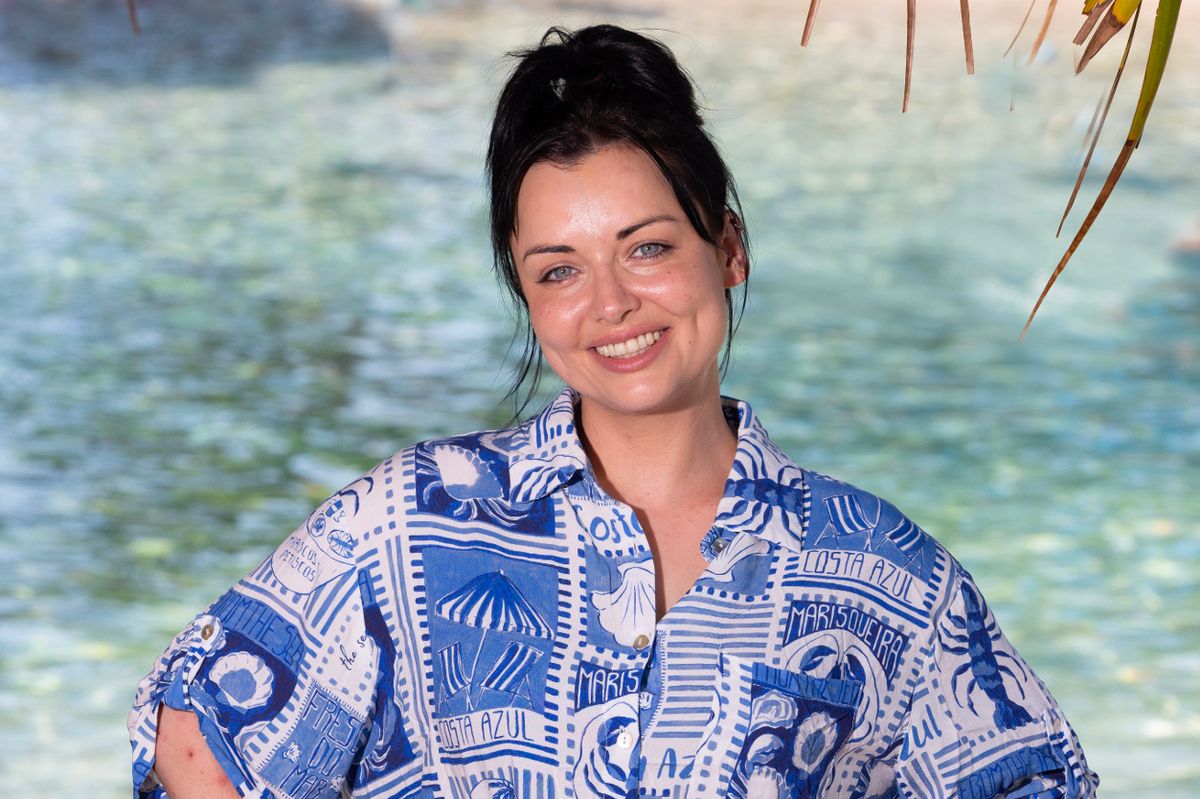
I’m A Celebrity star Shona McGarty couldn’t stop the tears in an emotional video shared to Instagram on Sunday in which she realised a career dream – admitting, ‘I promised I wasn’t going to cry again!’
View 4 Images
It was clearly a milestone moment for the former EastEnders star(Image: Tim Merry/Staff Photographer)
I’m A Celeb finalist Shona McGarty was overcome with emotion in a video shared to Instagram on Sunday in which she debuted her song, Unapologetically Me, on Radio 2 alongside host Joel Dommett.
Shona could be seen singing along to the power ballad – a personal anthem about self-acceptance, in the Radio 2 studio as the track was played, looking emotional and teary-eyed.
And when it ended, Joel – who hosted jungle sister show I’m A Celebrity: Unpacked alongside Kemi Rogers, said, “Yes, Shona McGarty! I feel so privileged that I got to play that. That’s since. I feel like I’ve been in a moment of your life. How does that feel?
READ MORE: Amanda Holden wows at Christmas party in ‘golden bauble’ mini dress you can shop
Former EastEnders star Shona responded, “You really have. It feels unbelievable. I promised I wasn’t going to cry.” To which Joel replied, “‘Well, I wish it was up to me. What a key change!”
Followers loved it, too, with one writing in the comments, “No one deserves this more than you Queen. I play it in my car everyday’, while another wrote, “Literally screamed when I heard it. I adore this song.”
Another delighted fan called for a collab with fellow jungle star Aitch, writing, “Love it! Can’t wait to see you and @aitch, so when is this karaoke party. Be great to see you both collab.’
Shona launched her solo music career with Unapologetically Me, her debut single, on October 30, 2025. It follows earlier singles for charity, including Let It Be for Mind.
Unapologetically Me was co-written by the actor and produced by legendary music producer Steve Anderson, famed for his work with the likes of Kylie Minogue and Britney Spears.
Shona, who was open about her battles with anxiety before her jungle stint, said previously of her debut, “I wrote ‘Unapologetically Me’ as a reminder to myself, and to anyone who has ever felt pressure to be someone they are not, that it is okay to simply be who you are.”
“Having spent years in the public eye, surrounded by glitz, glam, and expectation, I often felt the need to play a character. But beneath all that, I am just human, silly, sensitive, strong, imperfect, and that is okay.
She added: “This song is about stripping away those layers and celebrating authenticity. It is a declaration of freedom, of learning to love every part of myself, and of standing proud in my truth. Unapologetically.”
Ahead of the single’s release, the actress – who split from her fiance, Irish singer-songwriter David Bracken, before going Down Under – shared a sweet Instagram post encouraging others to enjoy life on their own terms. The video montage featured clips of the star dancing, singing and having fun with friends and family.
She added in the caption, “It’s taken me a long time to stop apologising, for my voice, my feelings, my choices, my laugh, my dreams, my boundaries… all of it,” she explained in the caption.
Article continues below
“For so long, I thought being accepted meant shrinking myself to fit what others were comfortable with. But somewhere along the way, I realised the only person I was really hurting was me. “
“So here’s to no longer saying ‘sorry’ for simply being. Here’s to showing up as we are, imperfect, evolving, and utterly real.”
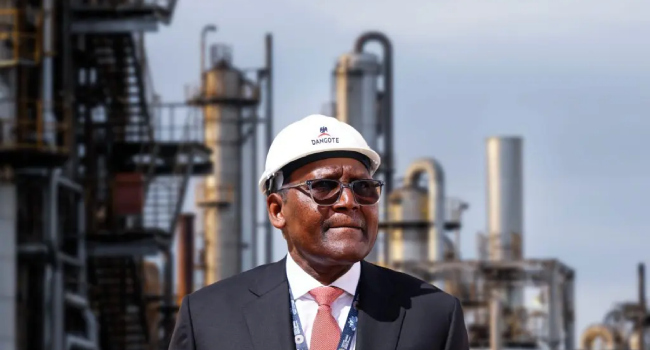
Founder and President/Chief Executive of the Dangote Group, Aliko Dangote, has raised concerns over alleged sabotage in Nigeria’s downstream oil sector.
Dangote, who spoke to journalists at a briefing on Sunday, recounted multiple ‘sabotage’ incidents at both his facility and public refineries.
The billionaire businessman lamented that organised cartels pose a “bigger threat than drug mafias.”
He cited examples at his refinery in Lekki, including the removal of spare parts from a 400-ton boiler, which he described as the largest ever built.
“If I tell you the sabotages that we went through, including some of the machine manufacturers that were on the verge of going to court, you will know what I’m saying.
“Drug mafias are actually smaller than the people who are in oil and gas. They have robbed so many people in this sector,” he added.
READ ALSO: Dangote Accuses NMDPRA CEO Farouk Of Corruption, Seeks CCB Probe
Dangote also highlighted the destruction of pipeline infrastructure across the country.
He alleged that depots from Kano to other states had been deliberately sabotaged, not damaged by natural causes.
“You are talking about sabotage, and I’m happy that you are also here in Nigeria. I don’t know if Mele Kyari [former NNPCL GCEO] is still in town, but I think you should go to his house in Maitama and ask him how many sabotages the Port Harcourt refinery repairs went through.
“He told me many times that they have had more than 100 sabotages at the refinery. You can ask him, and he will tell you. How come now, for example, all the pipelines that were built, right from the military base to date, none of them are functioning?
“The one that we have, which is from where I am from, Kano, that depot, we were not using trucks. The depots were only going to the trucks to load. Everything was piped up to that. 22 depots were built. They are all piped, all 22 depots.
“Actually, even the sediments don’t have it anymore. They have destroyed the pipes, all of them. So, if it is not sabotage, is that an earthquake? It’s not an earthquake now, because it’s sabotage. Sabotage is sabotage. So, that is what it is,” Dangote stated.
‘Lost $82m Items To Theft’
The Dangote Refinery was commissioned in May 2023.
The billionaire quantified losses at his refinery to theft and sabotage.
“In this refinery, we have lost maybe $82 million of stolen items. They were actually trying to make us put massive claims on insurance. Continuously, our insurance premiums will just keep going up. Yes, there is sabotage”, he said.
Dangote described the extreme security measures at the refinery, explaining that over 2,000 security personnel were employed, more than the number of operational workers.
“People will come here with long pieces of cord cables and put [them] on their bodies to try and see how they can take it out. And we answer, ‘Okay, fine, what are you doing with it?’ It’s just sabotage,” he said.
The group CEO warned that the scale of sabotage and organised theft in the oil sector represents a serious threat to production and national economic security.
“You should ask all the people who have ever built modular refineries. I challenge any one of them to say that nothing was stolen. That’s why we have more security people than actual workers,” he said.
In October 2025, Devakumar Edwin, Vice President of Dangote Industries Limited, disclosed that the refinery had experienced 22 attempted physical sabotage incidents since commencing operations.
Members of PENGASSAN chanted solidarity songs to press home their demands.
The company linked some of these incidents to a mass reorganisation and dismissal of about 800 workers, which had triggered a temporary strike by the Petroleum and Natural Gas Senior Staff Association of Nigeria (PENGASSAN).
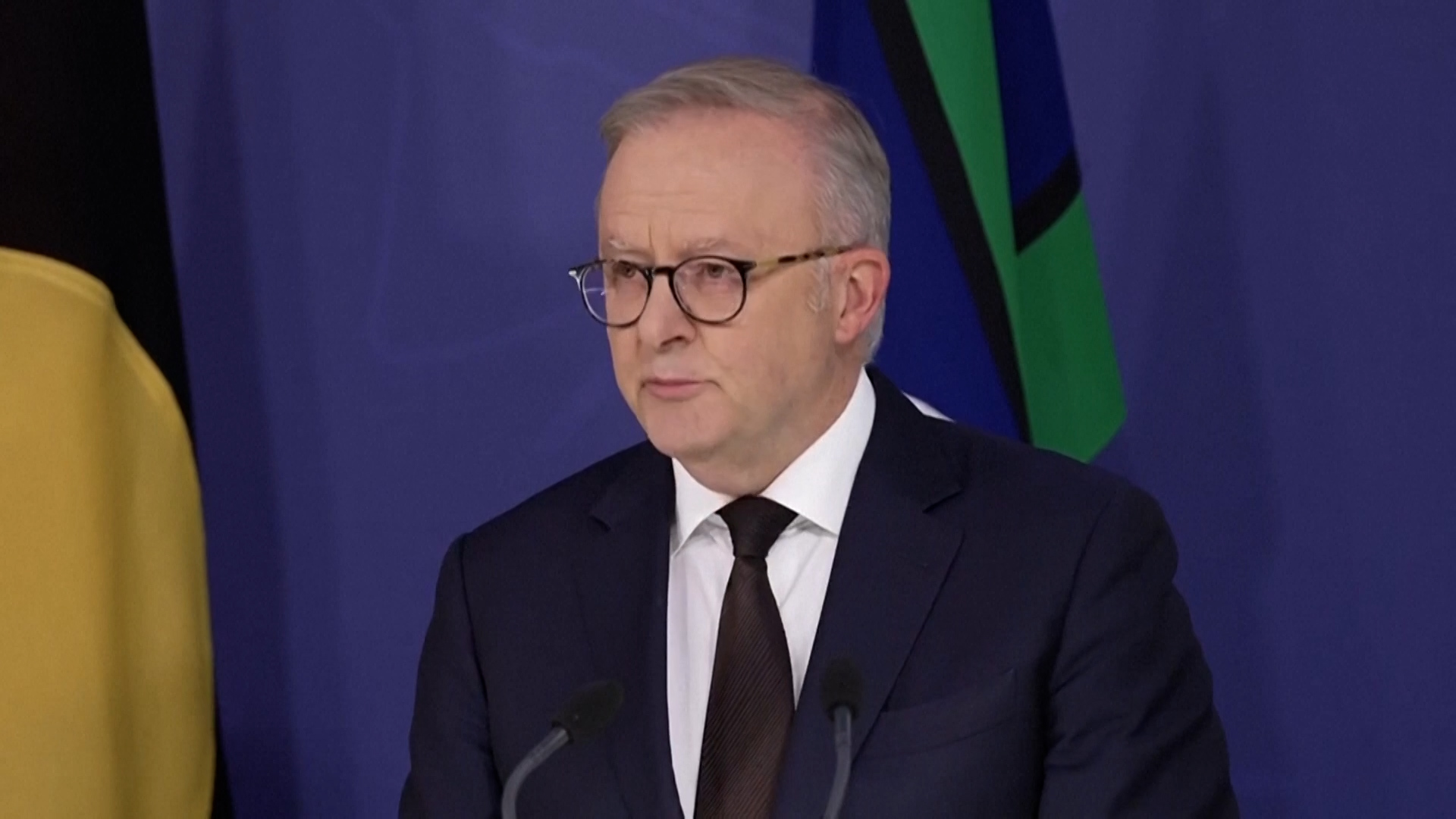
Australian Prime Minister Anthony Albanese has called the shooting that killed at least 15 people at a Jewish celebration an ‘act of evil’, and said the government is considering tougher gun laws.
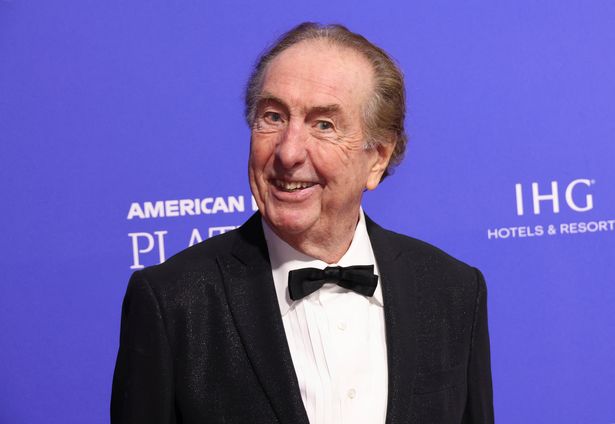
Eric Idle has revealed that he spoke to director Rob Reiner just before his horrific death aged 78 as the Monty Python star paid an emotional tribute to him. The Princess Bride director was found dead alongside his wife Michele Singer Reiner, 68, at their Los Angeles home, with detectives reportedly telling local news that the deaths are being investigated as homicides.
The couple’s family issued a statement confirming their deaths earlier this morning. “It is with profound sorrow that we announce the tragic passing of Michele and Rob Reiner.
“We are heartbroken by this sudden loss, and we ask for privacy during this unbelievably difficult time,” they confirmed to Variety. Now, Rob’s friend and The Meaning of Life star Eric Idle revealed that his final conversation with the director took place shortly before his death.
Eric Idle has revealed that he spoke to Rob Reiner last night ( Willy Sanjuan/Invision/AP)
Sharing a message on X, Eric wrote: “Rob Reiner was a lovely man. I spoke to him last night for over an hour.
“I always enjoyed his company. I met him at his Dad’s in 1975. He was telling me about fiming [sic] at Stonehenge and his thoughts for the future. This is so awful. I shall miss him. A clever, talented and very thoughtful man. So awful.”
It is reported that Rob and Michele were discovered by their 28-year-old daughter Romy, with calls being made at 3.30pm on Sunday. The Los Angeles Fire Department was called to the couple’s Brentwood home to provide medical care, however they had already died.
The LA Police Department went on to confirm that an investigation was being led by the robbery homicide division who were treating the case as an “apparent homicide”. Law enforcement also told TMZ.com that the couple suffered lacerations “consistent with a knife [attack]”.
Speaking at a press conference, LAPD Deputy Chief Alan Hamilton said: “We have not identified a suspect at this time. No one has been detained.”
When Harry Met Sally star Billy Crystal and comedian Larry David arrived at their home shortly after reports of his death. Crystal “looked like he was about to cry”, according to ABC 7 Los Angeles.
LA’s mayor Karen Bass paid tribute to the couple earlier this morning. She said in a statement: “This is a devastating loss for our city and our country.
“Rob Reiner’s contributions reverberate throughout American culture and society, and he has improved countless lives through his creative work and advocacy fighting for social and economic justice.
“An acclaimed actor, director, producer, writer, and engaged political activist, he always used his gifts in service of others. Personally, I am heartbroken by the tragic loss of Rob and his wife Michele. I knew Rob and have tremendous respect for him.”
She added: “I want to thank all of the first responders who were called to this tragic event. The investigation is ongoing. I’m holding all who loved Rob and Michele in my heart.”
* Join The Mirror’s WhatsApp Community or follow us on Google News , Flipboard , Apple News, TikTok,Snapchat,Instagram , Twitter,Facebook,YouTubeandThreads – or visit The Mirror homepage.
Thirty years since the war there ended, Bosnia and Herzegovina is still scarred by the ethnic cleansing campaigns which tore through the country, killing about 100,000 people and displacing more than two million.
The 1992-1995 war, triggered by ethnic tensions and competing nationalist projects in the wake of the violent breakup of Yugoslavia, was marked by the systematic targeting of civilians and culminated in the 1995 Srebrenica genocide – the worst atrocity to be perpetrated in Europe since World War II.
Recommended Stories
list of 3 itemsend of list
When and why did the war in Bosnia begin?
Bosnia was one of six republics of the Socialist Federal Republic of Yugoslavia, a federation created during World War II and held together for decades under President Josip Broz Tito.
After Tito’s death in 1980, economic collapse and rising nationalism, particularly in Serbia and Croatia, led to demands for independence across the republics.
Slovenia and Croatia declared independence in 1991, with Macedonia following in early 1992, accelerating Yugoslavia’s disintegration.
On March 1, 1992, Bosnia and Herzegovina held a referendum in which 99.7 percent of participating voters backed independence.
Most Bosnian Serbs boycotted the vote, however, and instead formed their own “Serb Republic” structures, which later became the Republika Srpska (RS) entity within Bosnia.
Bosnia’s push for independence was also unfolding against the backdrop of Serbia’s aggressive separatist policies under Slobodan Milosevic, who sought to unify Serb-populated areas in Bosnia and Croatia.
The European Community recognised Bosnia and Herzegovina as an independent state on April 6, 1992. That same month, Bosnian Serb forces, supported by the Yugoslav People’s Army and paramilitaries, launched coordinated attacks within the country to seize territory and expel non-Serb communities.
On April 5, the capital city of Sarajevo came under siege by Bosnian Serb forces, in what became the longest blockade of a city in modern European history. For nearly 43 months, the attacking forces shelled residential areas, cut electricity and water and tightened their grip on the capital, killing about 11,000 people.
Soon after that assault began, the United Nations Security Council imposed sweeping sanctions on Serbia and Montenegro for supporting efforts to carve up Bosnia and Herzegovina. In October 1992, Croat forces also attacked Bosniak (Bosnian Muslim) areas around Prozor in southwest Bosnia, marking the start of a separate Croat-Bosniak conflict that brought its own campaigns of ethnic cleansing.
How many people were killed and displaced?
A post-war research project commissioned by the Bosnian authorities estimated that about 104,000 people were killed, most of them civilians. Roughly two-thirds of those killed were Bosniaks.
International and Bosnian sources estimate that about 2.2 million people, more than half of the pre-war population, were forced from their homes as refugees or internally displaced. Most have never been able to return.
Which atrocities led up to the genocide in Srebrenica?
From the start, the war was characterised by systematic ethnic cleansing – particularly of Bosniaks – killings, mass rape, forced displacement and the destruction of cultural and religious sites. Here are some of the key events during the war.
1992 – Ethnic cleansing and the siege of Sarajevo
Prijedor and the camps: In the northwestern region of Prijedor, Bosnian Serb authorities set up detention camps, including Omarska, Keraterm and Trnopolje, where thousands of Bosniak and Bosnian Croat civilians were beaten, tortured, raped and killed.
Research by the International Criminal Tribunal for the Former Yugoslavia (ICTY) described the crimes as “widespread and systematic”, targeting non-Serb citizens of the country.
Foca and Visegrad: In eastern Bosnia, Bosniaks were killed or expelled, and women and young girls were subjected to organised rape. The ICTY’s Foca case established rape and sexual enslavement as crimes against humanity.
Siege of Sarajevo: The capital, a multiethnic city, was surrounded by Bosnian Serb forces who shelled residential areas and used snipers to target civilians on the streets, in markets and at water queues. The siege lasted from April 1992 to February 1996 and killed an estimated 11,000 people, including more than 1,000 children.
(Al Jazeera)
1993 – ‘Safe areas’ established but massacres continue
With peace efforts failing, the UN declared Srebrenica in eastern Bosnia a “safe area” in April 1993, followed by Sarajevo, Tuzla, Zepa, Gorazde and Bihac a month later. But atrocities continued.
Ahmici massacre: In April 1993, Croat forces killed more than 100 Bosniak civilians in the village of Ahmici, central Bosnia, and burned homes and mosques. ICTY judgements called it one of the worst acts of ethnic cleansing in the area.
Rape camps: The ICTY and rights groups also documented that rape was used as an instrument of terror, particularly in Foca – now located in Republika Srpska in the southeast of the country – where women and girls were held in “rape camps”.
1994-1995 – Market attacks and pressure for intervention
Sarajevo remained under siege. In February 1994, a mortar attack on the Markale market killed 68 civilians and wounded many more. A second strike at the same market in August 1995 killed 43 people. ICTY judgements and UN investigators have blamed Bosnian Serb forces for these attacks.
These and other attacks on so-called “safe areas” raised pressure on NATO and Western governments to act, setting the stage for heavier air attacks against the Bosnian Serb leadership later in 1995.
Sniper ‘safaris’ during the siege of Sarajevo
During the siege of Sarajevo, citizens were subjected to “sniper safaris” – so named as a grotesque reference to hunting expeditions – in which foreigners paid Bosnian Serb units to join them and shoot civilians from positions overlooking the city.
Following a recent Italian investigation, prosecutors in Milan are examining whether wealthy visitors from Italy and other countries travelled to Sarajevo on organised “tours” to shoot at civilians for sport.
No one has yet been convicted for organising or taking part in these “safaris”, but the allegations highlight the extreme dehumanisation that accompanied the siege of the city.
It is believed that citizens from multiple countries took part. In 2022, Bosnian film director Miran Zupanic’s documentary, Sarajevo Safari, investigated wealthy foreigners who had participated, including some from the United States and Russia.
Moreover, in 2007, former US Marine John Jordan testified to the ICTY that “tourist shooters” had come to Sarajevo.
How did the 1995 Srebrenica genocide happen?
By 1995, Srebrenica, a town in eastern Bosnia, had become a refuge for tens of thousands of Bosniaks fleeing surrounding villages, which had been raided and ransacked by Bosnian Serb forces hunting them. The enclave was overcrowded and had become dependent on irregular UN aid convoys, and Bosnian Serb forces controlled the surrounding areas.
Although the UN had declared Srebrenica a protected zone and stationed a small Dutch peacekeeping unit there, the enclave was under siege. In March 1995, Bosnian Serb leader Radovan Karadzic issued a directive ordering that Srebrenica be completely cut off.
In early July 1995, Bosnian Serb forces advanced on the enclave. On July 9, Karadzic’s forces were ordered to seize Srebrenica and, on July 11, Ratko Mladic, a Bosnian Serb military leader known as the “Butcher of Bosnia”, entered the town.
Over the following days, Bosnian Serb units separated men and boys from women and younger children. More than 8,000 Bosniak men and boys were executed at sites in and around Srebrenica and their bodies dumped in mass graves, while about 20,000 women, children and elderly people were forcibly expelled.
The ICTY and the International Court of Justice later ruled that these killings constituted genocide.
How and when did the Bosnian war end?
Western governments had been reluctant to intervene decisively earlier in the war, but the genocide at Srebrenica forced a shift in approach. In August and September 1995, NATO launched a sustained air campaign against Bosnian Serb forces – a turning point that paved the way for the Dayton Peace Agreement, which formally ended the war.
US-brokered talks brought the leaders of Bosnia and Herzegovina, Croatia, and the then-Federal Republic of Yugoslavia to an airbase near Dayton, Ohio, in the US.
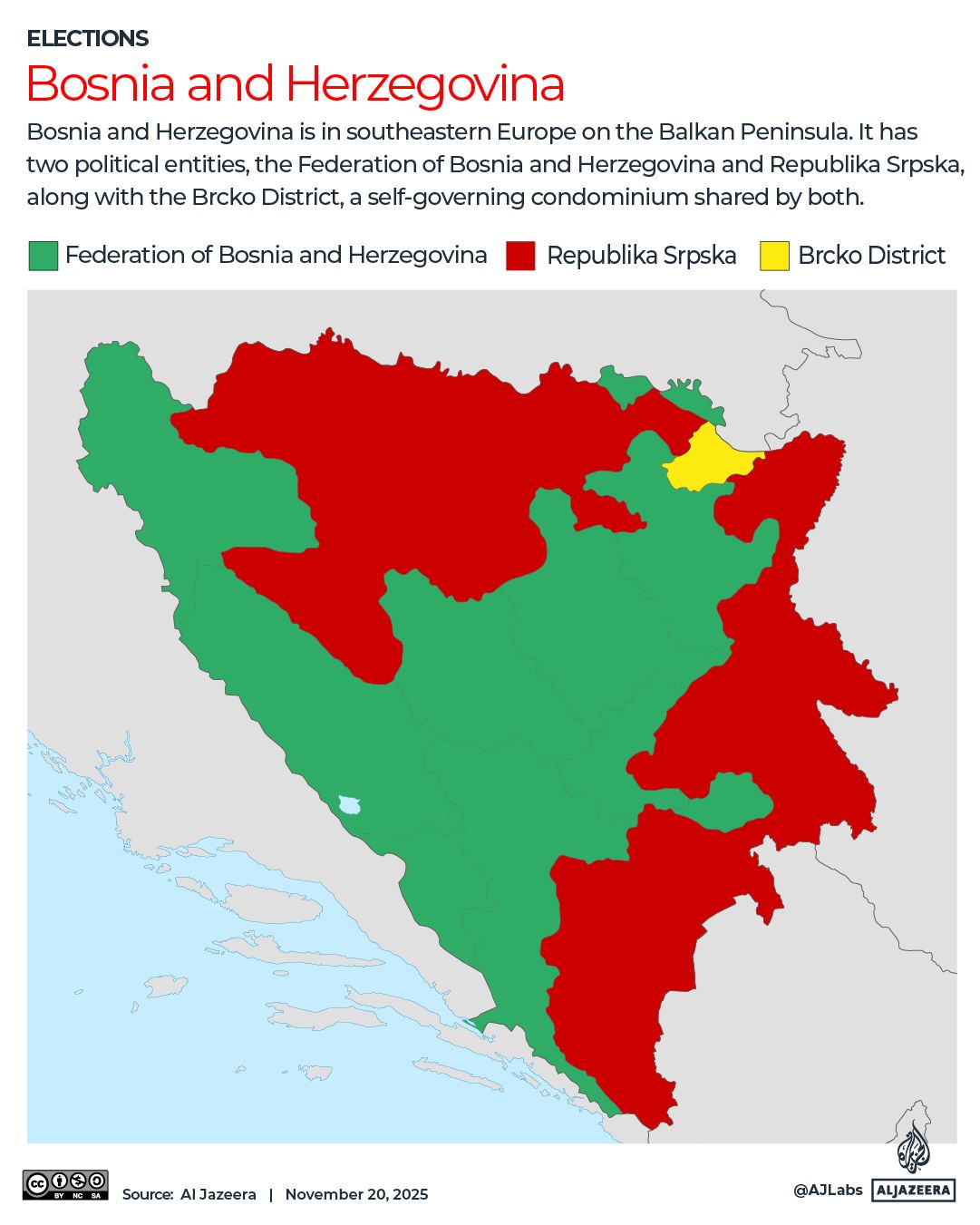
On November 21, 1995, they agreed to the General Framework Agreement for Peace in Bosnia and Herzegovina, better known as the Dayton Peace Agreement, which preserved Bosnia as a single state divided into two main entities – the Federation of Bosnia and Herzegovina and the Republika Srpska entity.
The agreement was formally signed in Paris on December 14.
What were the Dayton Accords?
The Dayton Peace Agreement was meant to do more than just end active fighting, and it reshaped the post-war political system.
Bosnia today has a highly decentralised structure of government, with two political entities as well as the third, self-governing Brcko District, shared between the other two, and layers of state-level institutions.
An entire section of the Dayton Agreement is devoted to refugees and those displaced during the war. It explicitly states that “all refugees and displaced persons have the right freely to return to their homes of origin” and to have property restored or be compensated if that is not possible.
But many experts describe the agreement as flawed in practice, as implementation has been partial at best. While many people did return to their homes and hundreds of thousands of property claims were processed, significant numbers of Bosniaks were never able to return to their pre-war homes.
There were many reasons for this, including the presence of minefields, the fact that their housing had been destroyed, fear, economic hardship, and lingering, deep-rooted ethnic tensions.
Today, entire communities, particularly survivors of the Srebrenica genocide, remain in exile or have simply had to resettle elsewhere in countries such as the US and Australia.
Has anyone been held to account for the atrocities committed during the war?
In 1993, the UN created the ICTY to prosecute serious violations of international humanitarian law committed in the Balkans. The tribunal lasted 24 years, from 1993 to 2017.
Over more than two decades, witnesses and survivors gave evidence about the atrocities and 161 individuals were indicted. Ninety of those were sentenced, 19 were acquitted, 20 had their indictments withdrawn, 17 died before conviction, 13 were referred to other courts, and two were retried.
Four types of crime were recorded at the tribunal – genocide, crimes against humanity, violations of laws/customs of war and grave breaches of the Geneva Convention.
Among the people tried by the tribunal were:
Radovan Karadzic – the wartime leader of the Bosnian Serbs. In 2016, he received a life sentence for genocide, crimes against humanity and war crimes, including his role in Srebrenica and the siege of Sarajevo. In 2021, he was transferred to the high-security prison, HMP Parkhurst, on the Isle of Wight, off the south coast of England, UK.
Ratko Mladic – the Bosnian Serb military commander. In 2017, he was also sentenced to life imprisonment for genocide and other crimes. He is being held in the UN Detention Unit in The Hague, Netherlands.
Bosnian Croat leaders – several were convicted for crimes against Bosniaks during the Croat-Bosniak conflict.
Hairy Bikers stars Si King and Dave Myers travelled the world together after bonding over their love of cooking and motorcycles, but tragedy struck when Dave was diagnosed with cancer in 2022
View 3 Images
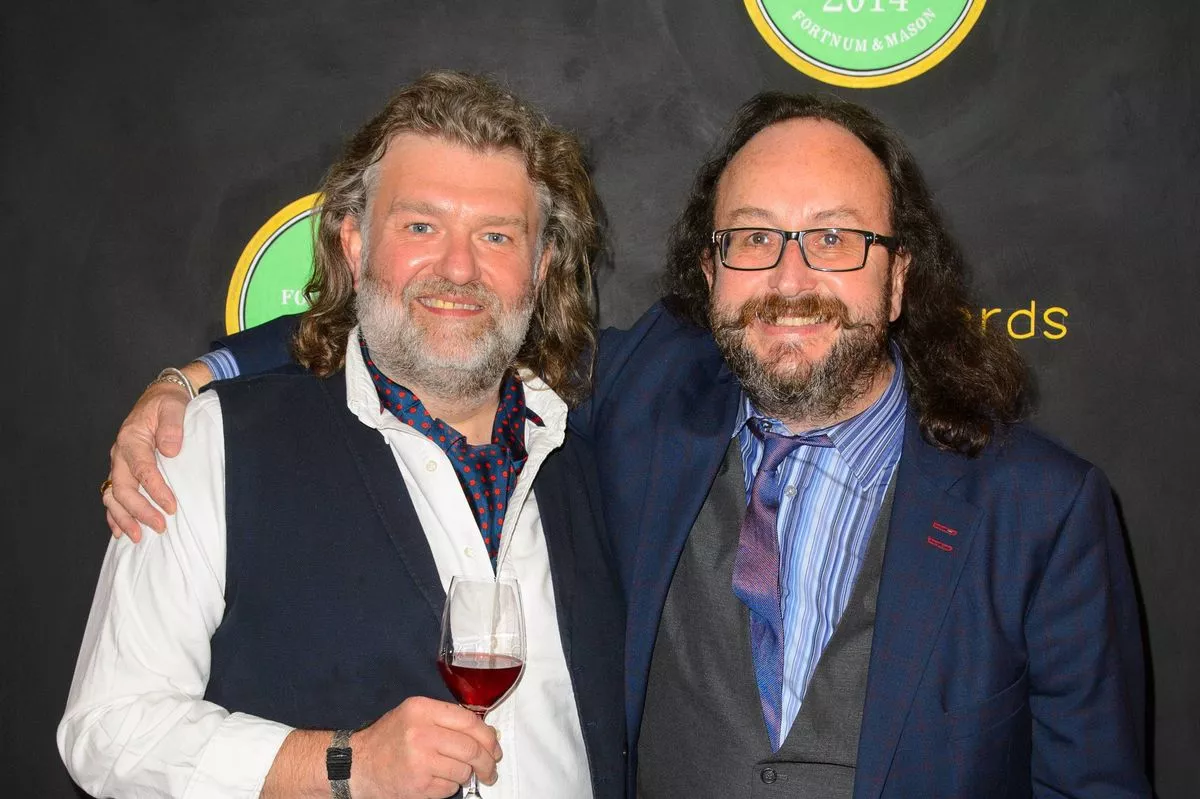
Si King and Dave Myers rose to fame as The Hairy Bikers(Image: PA Archive/PA Images)
Hairy Bikers star Si King had a heartbreaking realisation almost two years after the death of close friend Dave Myers. The pair met in 1995 when they were both working on the set of The Gambling Man in 1995.
They struck up a close friendship before making their name as television chefs thanks to their programmes that combined their love of food and motorcycles. Tragedy struck however in 2022 when Dave was diagnosed with cancer.
He subsequently underwent chemotherapy. However in February 2024, Dave died aged 66. Last June thousands of riders travelled from London to his hometown of Barrow-in-Furnes as a tribute to Dave.
Now, speaking to The Times magazine, Si admits he still misses his close friend. He said: “When I was riding a bike the other day, I automatically looked behind me to see if Dave was there.
“I thought, ‘Where the bloody hell is he? Has he gone around that bend?’ Then I realised, ‘Oh no, of course he hasn’t.’”
Si admits he finds grief “very odd” and says he experienced a “huge mix of emotions” after losing Dave. He added: “It’s anger, frustration, sadness, disappointment. They come when you least expect them.”
Si, 59, describes the two as “great friends” and revealed he was “so close” to both his diagnosis and subsequent treatment. He believes the pair had a “fruitful and fulfilling time together” and prefers concentrating on highs of their friendship “rather than the loss”.
The TV presenter has also faced his own health battles during his life. In 2014 he suffered a brain aneurysm that he says left him needing to “lie down after making a cup of tea”.
Si admits he would find himself feeling “exhausted” after making a brew and would end up “sedentary” for the rest of the day. He however decided he needed to “crack on” despite acknowledging that he faced an “uphill struggle” during his recovery.
The star candidly admits that his gruelling filming schedule, which he says takes up 200 days a year, has had an impact on his family throughout his career. Si split from ex-wife Jane in 2016, after 27 years.
Article continues below
He says there is “no blueprint” for overnight success and admits children at school “took the mickey” out of his sons when he became famous. He recalls one moment where his sons were taken aback after he jumped into a pool in Africa while completely naked.
And while he fondly reminisces about the Hairy Bikers, Si also faced some “scary” moments with Dave.