James Martin admits ‘people are scared at work’ as he shares health update after surgery

TV chef James Martin has opened up about his recent surgery, admitting that his colleagues on ITV’s Saturday Morning are now “scared” of him because he can “see stuff a mile off”

TV star James Martin, 53, has confessed that his post-surgery transformation has left his ITV Saturday Morning colleagues terrified of him.

The telly chef, who presents the weekend show from his own kitchen alongside fellow cooks and famous faces, was grilled about his obsessive attention to detail across every element of his career.

Speaking on Good Housekeeping’s My Life In A Biscuit Tin podcast, presenter Liz Moseley observed that James couldn’t be substituted on his ITV programme, since the show is so intrinsically tied to the chef’s own character, questioning: “There’s obviously a real aesthetic to everything.

“You’re obsessed with the way you do your garden, your house, you’re very particular about it all. Are you a bit of a nightmare to be around?”.

James chuckled at the inquiry before disclosing that this fundamental trait of his personality has actually intensified in recent months, as his vision is so much sharper now after surgery, meaning he can “see stuff a mile off”.

Discussing his health, he responded: “Not really, I think I see everything… worse now because I’ve had my eyes done! So, you know you have laser surgery? I had full refractive lens surgery, so I had the lenses taken out and new ones put in.”

Revealing the outcome of the operation, James declared: “Oh my God, I can see round corners now, it’s scary! People are now scared at work because I can see stuff a mile off. I can see veins on a tree, I can now read without glasses, it’s amazing.”

According to Nuffield Health’s website, refractive or clear lens surgery, also known as ‘lens replacement surgery’, involves a consultant ophthalmic surgeon replacing the eye’s natural lens with an artificial one.

The new lens is specifically designed to correct common focusing or ‘refractive’ conditions.

Despite singing praises for the benefits of the surgery, James stressed that his career as a professional chef has also honed his attention to detail, stating: “But the attention to detail to me comes from the fact that you work in an industry where detail is everything.

“So can I stop that attention to detail in terms of the industry, always wanting to be better every single day, and can I, when I go up into TV production, do the same?”.

“I think you can still have that attention to detail, because it still matters to people watching.”

James further explained how his culinary skills translate into the world of television, revealing that he and the Saturday Morning team hold regular meetings to discuss potential improvements for the show.

Article continues below

The star shared: “We all have a meeting afterwards at the end of the day – what worked, what didn’t work, what could be better, what couldn’t be better, and we all have a meeting in the morning [to discuss] what’s coming up.

FG Unveils Health Strategies To Boost Planning

The Federal Government has launched major national health strategies to strengthen planning, resource allocation, service delivery performance measurement, and across the country.

The launch was announced in a communiqué issued on Friday, and signed by the Federal Ministry of Health and Social Welfare, following the 2025 Health Sector–Wide Joint Annual Review, Nigeria’s annual accountability forum that evaluates the performance of the health sector and guides planning, budgeting, and coordination across federal, state, and local levels.

The communiqué stated that the launch of national products and strategies forms an integrated ecosystem that helps improve planning, resource allocation, performance measurement, and service delivery.

The products and strategies include “the data Plans, Tools & Reports (Health Sector Strategic Blueprint, National Health Facility Registry, National Health Management Information System Assessment, Multi-Source Data Analytics and Triangulation, Larval Source Management) to strengthen data quality, visibility and coordination; the National Comprehensive Emergency Obstetric and Newborn Care Facility Readiness Assessment Report, providing Nigeria’s most comprehensive evaluation of emergency obstetric and newborn capacity; the Climate and Health National Adaptation Plan, advancing resilience against climate-driven health risks.

“The Second National Action Plan for Health Security, strengthening outbreak preparedness and response; the Nigeria Collaborative Action Strategy, integrating campaigns under ‘One Plan. One Campaign. One Frontline,’ and the Mini-DHS Framework, enabling annual, high-fidelity outcome measurement to track progress toward National Health Sector Renewal and Investment Initiative goals.”

The three-day meeting, chaired by the Coordinating Minister of Health and Social Welfare, Prof Muhammad Pate, alongside the Minister of State for Health, Iziaq Salako, convened nearly 1,000 participants representing federal and state governments, development partners, traditional and religious leaders, the Association of Local Governments of Nigeria, the private sector, civil society, academia, and the media.

According to the communiqué, this represented a two-fold increase from the 450 participants in 2024.

It noted that the 2025 review was held after state-level JARs for the first time, describing the development as evidence of “Nigeria’s deepening commitment to the NHSRII Compact and to the Sector-wide approach principles of One Plan, One Budget, One Report, and One Conversation.”

It highlighted the official signing of the UHC Compact Addendum, expanding the Compact to private sector actors, LGAs, traditional institutions, and other ministries; integrating emerging health sector priorities; responding to global health financing shifts; and strengthening accountability through clearer “Ask-and-Offer” frameworks.

It also said five NHSRII Spotlight Sessions showcased progress and opportunities across the 13 priority areas, including early gains in maternal and neonatal mortality reduction under the Maternal Mortality Reduction Innovation and Initiatives; improvements in PHC functionality, emergency referral systems and social health insurance uptake; advancements in local manufacturing, regulation and pooled procurement; strengthened health security via surveillance, laboratories and emergency operations; and governance and financing transitions in preparation for evolving donor landscapes.

It added that key digital tools were showcased, including the Basic Health Care Provision Fund digital platform, the national e-learning system enabling free training for frontline health workers, and PHC revitalisation dashboards providing real-time facility readiness and service delivery visibility; the SAVE MAMA from Rural Emergency Service and Maternal Transportation; and the National Health Insurance Act digital platform for claims.

The review hosted a flagship exhibition and learning showcase with over 45 abstracts and exhibits and convened an interactive People’s Pulse Town Hall to elevate citizens’ perspectives and strengthen transparent feedback between Nigerians and health leaders.

READ ALSO: Osimhen Seeks More Goals As Nigeria Eye World Cup Qualification

The communiqué also highlighted a first-of-its-kind open dialogue on corruption and fiduciary risk using the BHCPF as a case study, producing clear actions to strengthen transparency and accountability.

After reviewing performance and sector challenges, participants agreed on resolutions for 2026, including measures to improve transparency, data quality, health financing, PHC functionality, and maternal and reproductive health outcomes.

Among these resolutions is a commitment to operationalise the UHC Compact Addendum by the first quarter of 2026 and to adopt biometric verification across all primary health centres and health insurance platforms to eliminate ghost workers, strengthen attendance management, and enhance HRH transparency and performance.

On immunisation and commodities, the communiqué stated, “Nigeria committed to the full release of its counterpart for vaccines procurement and meeting its obligations in the revised accountability framework.”

The council also resolved to expand health insurance coverage, with a target of enrolling five million Nigerians, including one million more vulnerable citizens, by the end of 2026.

It further detailed actions to enhance local manufacturing by transitioning at least 20 priority commodities to local production, with five new manufacturing plants operational by 2026, and strengthening state and LGA systems to improve readiness, accountability, and emergency response.

It concluded with commitments to institute data-guided monitoring and fund allocation and to optimise state-level investments, particularly to unlock the Nigeria Primary Health Care Provision Strengthening Programme (HOPE-PHC) incentives and strengthen frontline service delivery.

Hilly Boy Michaels dead: Sparks drummer dies as as bandmates pay tribute

An iconic drummer from a huge band has died. Hilly Boy Michaels of Sparks fame was honoured in a moving tribute from his bandmates, Ron and Russell Mael.

No cause of death has been announced. In a tribute, the brothers said: “We are saddened by the passing of Hilly Boy Michaels. He was Sparks’ drummer during the Big Beat (1976) era, but stayed in the ‘Sparks realm’ throughout the years. Our thoughts are with his friends and family.”

Fans have since paid tribute, with one writing: “So sad to hear. He was a lovely unique guy and rock solid musician.” A second penned: “Such a hidden gem of a musician. It shouldn’t need to be mentioned, but Calling All Girls is so good.”

While a third went on to write: “Condolences and LVX to Hilly, and all family and friends. He was a great drummer musician.”


Sparks inb 1976 during the Big Beat era with Hilly Boy Michaels second from right
(
Getty)

“So sad about the passing of my dear friend Hilly Michaels. Remembering all the fun we had in the Hunter/Ronson days, and with Sparks. Also remembering Sal Maida and Jeff Salen… Rock In Peace friends,” a fourth expressed.

“His music was awesome and very sparks esque ! Really saddened to hear this,” a fifth mourned. Meanwhile a sixth remarked: “His ‘Calling All Girls’ disc is wonderful! Sorry to hear he left the stage.”

Another noted that they still play his music now, saying: “I still play his two albums!” While another compared the star to David Bowie: “Oh that’s sad brilliant drummer so accurate as the mix was drum orientated hence big beat so groundbreaking: Bowie was to do the same thing on low.”

Before joining Sparks for the recording of their 1976 album Big Beat, Hilly’s first professional music experience was with a band called Joy, which also featured a young Michael Bolton.

He was a New York -based session drummer when he was hired to work with Sparks on their album and was the only session musician subsequently invited to join the North American tour with the group.

He also made an appearance with Sparks in the film Rollercoaster, where they performed the songs Big Boy and Fill’er Up from the album.

Some of Michaels’ other songs from throug his career can be heard in the films Caddyshack and Die Laughing. Throughout his career, he collaborated with artists such as The Cherry Vanilla Band, Peach & Lee, Sparks, Ellen Foley, The Hunter/Ronson Band, Dan Hartman, John Mellencamp, Ronnie Wood and Marianne Faithfull.

He and Marianne, who passed away in January this year at the age of 78, also had a brief relationship in the 1980s, living together in New York City.

In addition to his collaborations, he gained recognition as a solo artist for his two solo albums: 1980’s Calling All Girls and 1981’s Lumia.

He joined Sparks during the 1970s which is when he was involved in some of the band’s biggest hits. The star worked as a producer and manager of marketing and development since being slightly less involved in music. He lived in Connecticut.

Like this story? For more of the latest showbiz news and gossip, follow Mirror Celebs on TikTok, Snapchat, Instagram, Twitter, Facebook, YouTubeand Threads.

Will Scotland’s luck hold for biggest test of World Cup dream?

SNS

World Cup qualifying Group C: Greece v Scotland

Venue: Georgios Karaiskakis Stadium, Piraeus Date: Saturday, 15 November Kick-off: 19:45 GMT

OK, Tartan Army, can you hear Lady Liberty calling you from New York Harbour, can you feel the rush of the Niagara Falls, can you almost taste the tequila in Guadalajara?

How close do you think you are to making it to the World Cup next summer – or can you not go there just yet? Too soon? Too much like tempting fate? Too good to be true?

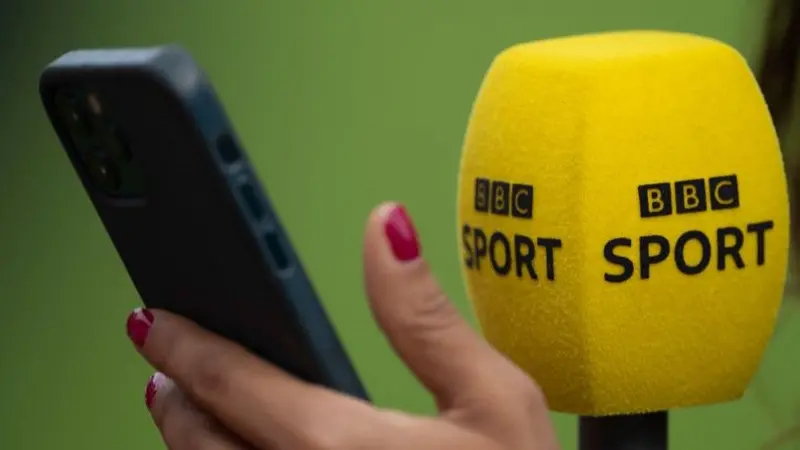
We’re now in the endgame of Scotland’s group campaign. A draw or a win on Saturday against Greece in Piraeus – live on the BBC – and a win against Denmark (presuming they’ve already beaten Belarus) on Tuesday in Glasgow and it’s done.

Six men’s World Cups have come and gone without Scotland and, frankly, it’s beginning to get annoying.

Sixty-one different countries have played on football’s biggest stage since Scotland last featured, from North Korea to New Zealand, from Togo to Trinidad & Tobago. It’s time, isn’t it? Well, isn’t it?

    • 1 day ago
    • 2 days ago

Consider Scotland’s last performance, a 2-1 home win against Belarus last month. Remember the things that were said in the aftermath of that dismal contest.

Andy Robertson: “It doesn’t feel like a win.”

Scott McKenna: “We let ourselves down.”

Scott McTominay: “We’ve got to be better than that.”

On and on they went. Honesty personified. It was stark and it was unusual and it was more impressive than anything we’d seen from them in the 90 minutes that went before.

You don’t normally hear such talk after a victory, but those comments kept coming.

Che Adams: “I think they [the fans] were right [to boo].”

Steve Clarke: “Really, really disappointed in my team.”

John McGinn: “At half-time, it was the wildest I’ve seen him [Clarke] in 72 games.”

McGinn followed up later on social media, referencing the pair of wins over Greece and Belarus.

“Two jobby performances, but six massive points,” he wrote. That just about summed it up.

So, in terms of the group table, Scotland are in a good place, but in terms of belief and psychology going into this pivotal double-header, Lord only knows where they are.

They have the safety net of a place in the play-offs next March, but that could be brutal terrain and it’s best avoided if they can help it.

We can speculate about Clarke’s formation – is it Craig Gordon in goal despite not playing a game all season; is it Ben Gannon-Doak despite playing limited minutes for Bournemouth; is it Che Adams or Lyndon Dykes, or Che Adams and Lyndon Dykes?

All of that is up for grabs and we’ll know it before kick-off.

Heady mix of uncertainty

Scotland's Billy Gilmour and Greece's Vangelis PavlidisSNS

It’s a campaign that’s flown by, beginning with a hugely credible, and largely unexpected, draw in Copenhagen in September. Scotland’s resilience was evident that night.

Angus Gunn had not played a club game since May. Lewis Ferguson had been an unused substitute in Bologna’s previous two games. Adams had been in and out at Torino. Dykes had started one game in six for Birmingham City. Aaron Hickey had played 77 minutes in almost two years before facing Denmark.

Scotland fans were almost hyperventilating when Grant Hanley was named in the team, but the Hibernian centre-back was terrific against Denmark, emblematic of a performance that was disciplined, dogged and occasionally threatening.

A point away from home – and a clean sheet – was an excellent beginning to a group that few saw Scotland surviving in.

They backed it up with a professional win over Belarus in a closed-doors game in Zalaegerszeg in Hungary. Two goals and another clean sheet.

Four points from six in a six-game group. Out of the blocks quickly in a section that is tantamount to a sprint.

Then everything became a little trippy in October. Against Greece at home, Scotland didn’t have an attempt on goal for an hour. Greece led and deserved to be leading by more.

Vangelis Pavlidis, their go-to striker, missed a sitter early on and then missed again and again. Greece weren’t in any danger and, lo, they were losing 3-1. “We were like a dazed boxer,” Dimitris Giannoulis, the Greek substitute, said.

Credit Scotland with the fight they showed in coming back from a grim place, but even in victory there were red flags all over the place and even more so when they stumbled across the line against Belarus a few days later.

Luck was on their side again. Belarus, who had already lost 5-1 to Greece and 6-0 to Denmark, had 22 attempts on goal to Scotland’s 12. McKenna said later that Belarus “probably looked more dangerous than us”, which was broadly true.

Out of character, Clarke went barmy at the break – and that’s the last time we saw his team. Booed off and slamming their own performance.

And yet, on an ugly night, that table looked handsome. It was hard to know what to think. And it still is.

There will be no Gunn and no Billy Gilmour on Saturday night. It’s been an uncomfortably long time since Scotland has seen the best of McGinn and McTominay, their twin totems, and Ryan Christie hasn’t started any of Bournemouth’s last five games.

Gannon-Doak has played 53 minutes of club football since the end of September – and he’s supposed to be Scotland’s fearless spark out wide. It’s hard to be fearless when you’re a bit-part player with your club.

To add to the heady mix of uncertainty, Greece are out of contention and their head coach, Ivan Jovanovic, is under pressure.

But this is Scotland they’re playing, the Scotland that sucker-punched them in Glasgow and destroyed their World Cup hopes in the process. If they have a bit of vengeance in mind then who would blame them?

In early autumn, every Scotland supporter would have bitten your hand if you’d offered them this scenario.

Related topics

  • Greece
  • Football
  • Scotland Men’s Football Team

Trump says will sue BBC for up to $5bn over edited video

United States President Donald Trump says he would likely sue the British Broadcasting Corporation (BBC) next week for as much as $5bn after the British broadcaster admitted it wrongly edited a video of a speech he gave, but insisted there was no legal basis for his claim.

“We will sue them for anywhere between a billion and five billion dollars, probably sometime next week. I think I have to do it. They have even admitted that they cheated,” Trump told reporters on board Air Force One late on Friday.

Recommended Stories

list of 4 itemsend of list

Trump’s lawyers had sent the BBC a letter on Monday, accusing it of defaming the US president with the video of the speech before the 2021 US Capitol riot and giving it until Friday to apologise and pay compensation for what they described as “overwhelming reputational and financial harm”.

The controversy centres on the BBC’s edit of Trump’s remarks from January 6, 2021, the day his supporters stormed the US Capitol. The dispute has pushed the network into its most severe crisis in decades, triggering the resignations of two senior leaders and prompting a wave of political scrutiny.

“The people of the UK are very angry about what happened, as you can imagine, because it shows the BBC is fake news,” Trump said.

He added that he planned to raise the BBC issue with British Prime Minister Keir Starmer, who has backed the broadcaster’s independence while avoiding taking sides against Trump.

“I’m going to call him over the weekend. He actually put a call into me. He’s very embarrassed,” Trump said.

‘Beyond fake, this is corrupt’

The documentary, aired on the BBC’s flagship Panorama programme, stitched together three separate clips of Trump’s January 6 speech. His lawyers say the sequence created the false impression he was inciting the riot, calling the edit “false and defamatory”.

In an interview with GB News, Trump accused the BBC of misconduct. He said the edit was “impossible to believe” and likened it to election interference.

“I made a beautiful statement, and they made it into a not beautiful statement,” he said. “Fake news was a great term, except it’s not strong enough. This is beyond fake, this is corrupt.”

He dismissed the BBC’s apology as insufficient, arguing that the broadcaster had spliced together remarks that were nearly an hour apart. “It’s incredible to depict the idea that I had given this aggressive speech which led to riots,” he said.

BBC chair Samir Shah issued a personal apology to the White House and told British lawmakers that the edit was “an error of judgement”. Culture Minister Lisa Nandy said on Friday the apology was “right and necessary”.

Thomas to miss start of 2026 after back operation

Getty Images

Two-time major winner Justin Thomas has been sidelined after back surgery and “will miss some events in the beginning of 2026”.

The 32-year-old American has not played since he was part of the US team that was beaten by Europe in the Ryder Cup in September.

“I’ve had some nagging hip pain for a handful of months and, after some time off and worsening symptoms, an MRI showed I had a disc problem that needed to be treated,” said Thomas on social media.

Thomas’ two major wins were at the US PGA Championship in 2017 and 2022.

His first title since the latter came when he won a play-off at the RBC Heritage in April.

“My next few weeks will be a lot of resting before the rehab process begins,” he said. “I have a great team behind me who I fully trust to get me back to a better place than I was before.

“Before you ask, I’m not putting any tournament on the calendar or specific time for returning.

Related topics

  • Golf