blinking-dotLive updatesLive updates,
Iran live: US Senate backs Trump’s attacks on Tehran, Israel pounds Lebanon
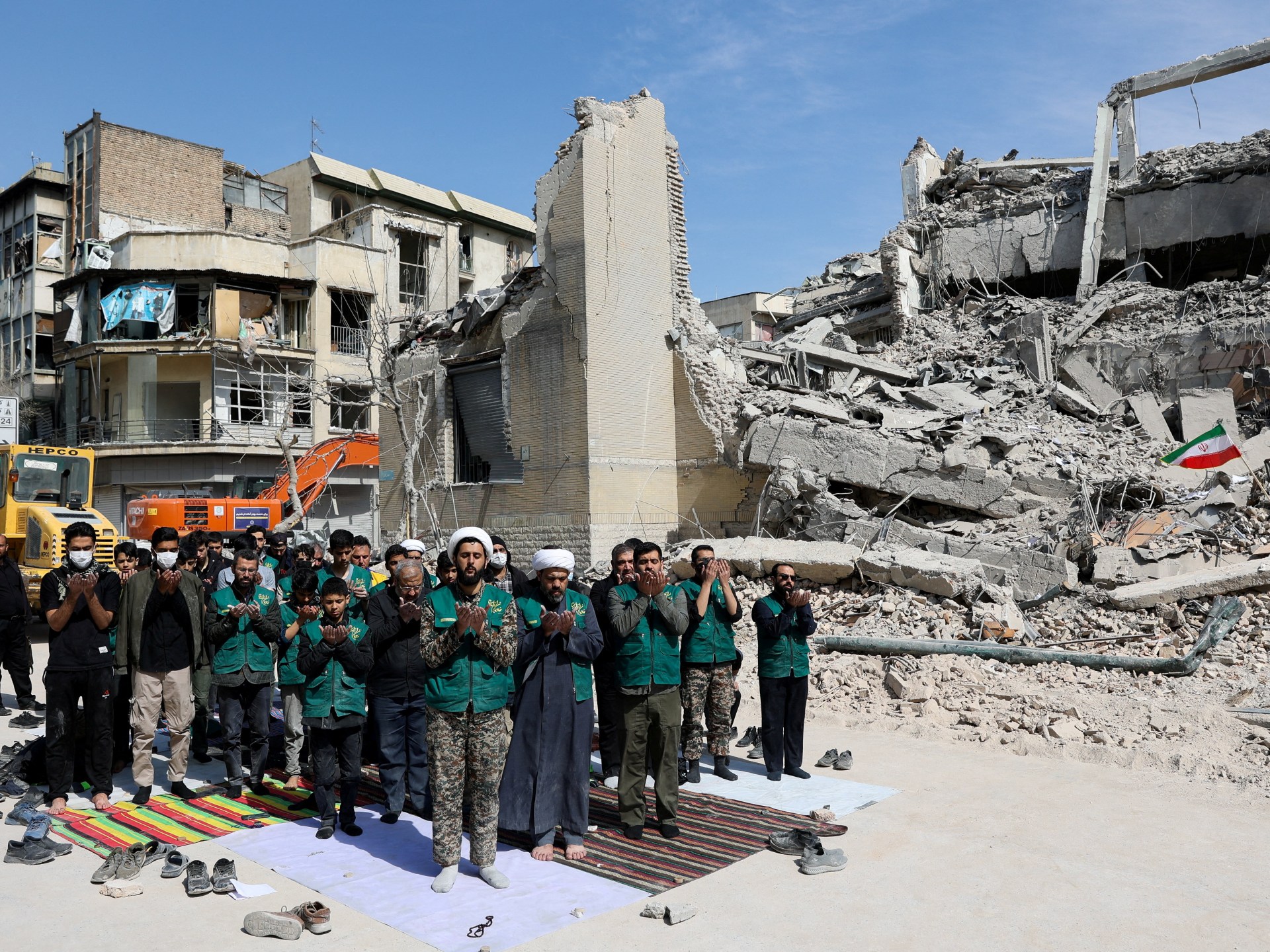
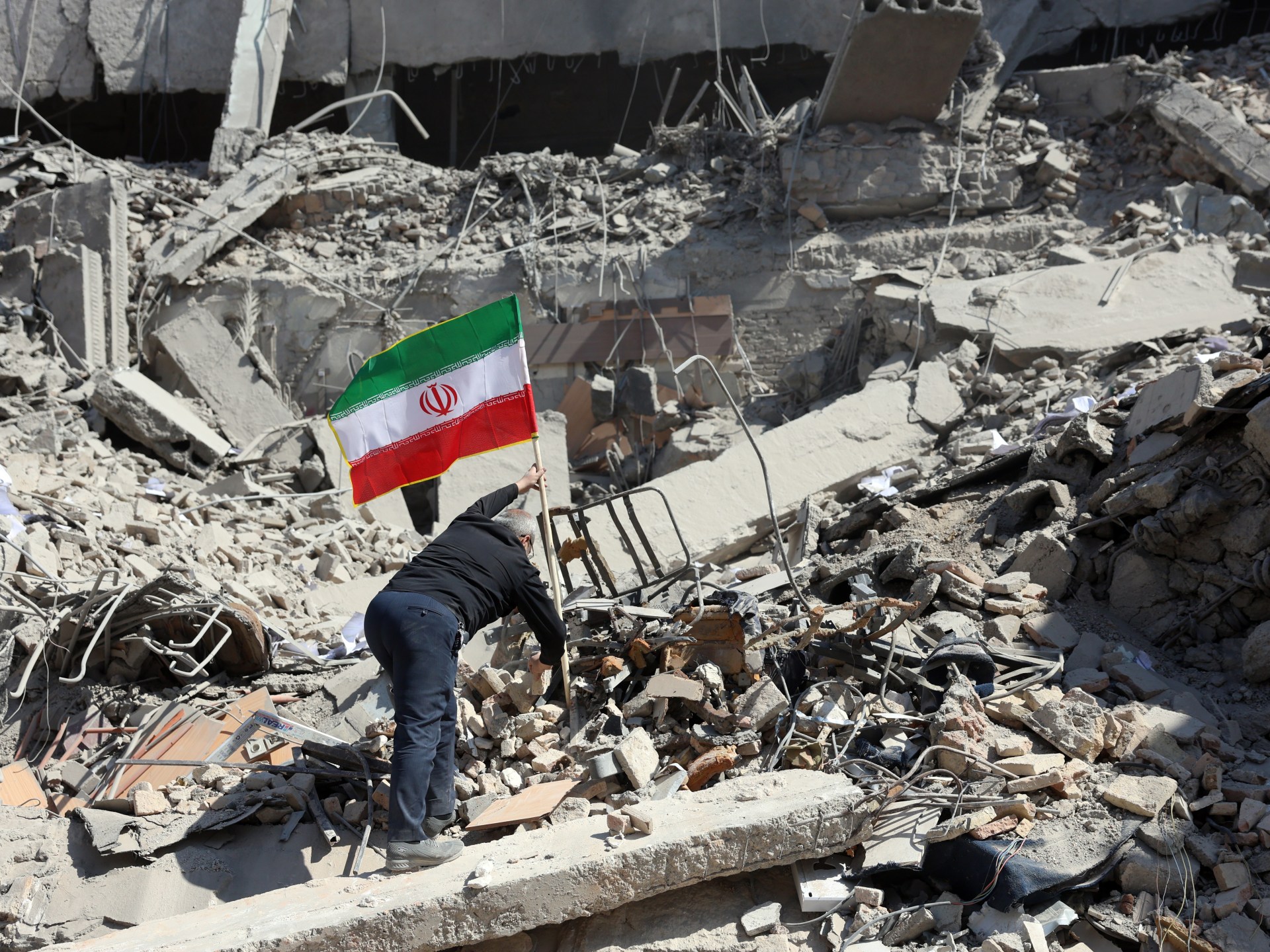
The United States and Israel’s joint strikes on Iran have sparked political backlash, with critics across the aisle questioning the White House’s unilateral military action.
But attention in Washington is also turning to those profiting from the crisis through prediction‑market platforms Kalshi and Polymarket, where traders are betting on the outcomes of conflict and high‑stakes geopolitical events.
list of 4 itemsend of list
Over the weekend, a Polymarket user known as “Magamyman” reportedly made more than $500,000 in a single day with a bet on US–Israel strikes that Iran’s supreme leader, Ayatollah Ali Khamenei, would be out of power, raising concerns of insider trading.
Mike Levin, a Democratic representative from California, highlighted on the social media platform X that this user bought in on the position when the probability of a strike was at 17 percent and with the first trade placed 71 minutes before the news broke publicly.
Other users named “Planktonbet,” “Dicedicedice,” and “nothingeverhappens911” also placed bets within 24 hours of the strike on the potential of a US strike, according to data compiled by analytics firm Bubblemap. All accounts were opened in February and exclusively placed bets on Iran.
This echoes past incidents that spooked lawmakers amid concerns of profiteering from war and of potential insider trading.
Those red flags were raised, for instance, when a trader profited from a prediction on former Venezuelan President Nicolas Maduro’s abduction hours before it occurred, or another trader made $50,000 prior to opposition leader Maria Corina Machado winning the Nobel Peace Prize.
Polymarket, which operates using cryptocurrency and allows anonymous users, has faced heightened scrutiny for this reason. Kalshi, the only US-regulated prediction market, requires user identification and is overseen by the Commodity Futures Trading Commission (CFTC).
Prediction markets let people buy and sell “shares” based on real-world events, including elections, sports, or geopolitical developments. Share prices shift with the perceived likelihood of outcomes, similar to stocks, but each contract has an end date once the event concludes – the Iran strike position was US will strike Iran by February 28, 2026 – akin to gambling or sports betting. Trading these outcomes, however, resembles futures trading on commodities like oil.
“The core thesis here is should we be gambling or creating futures markets in our own democracy? Should we be doing this on geopolitics and war? Sports are for entertainment, betting there is one thing, but it’s very different when we’re talking about rule of law, the integrity of democracy, and people’s personal safety,” Ryan Kirkley, CEO of Global Settlement, a company that builds institutional blockchain settlement infrastructure, told Al Jazeera.
“We need to step back and assess whether this is good for society, beyond just the political implications or Democrat versus Republican debates.”
The latest trades have intensified calls for reform.
On the right, former White House Office of Management and Budget Director Mick Mulvaney, who served during the first administration of US President Donald Trump, launched a coalition earlier this week, Gambling Is Not Investing, advocating for regulation of prediction markets that would be similar to state-level gambling rules, which include licensing, age restrictions and taxes.
Mulvaney, who previously supported legalising sports betting in South Carolina when he represented the state in the House, did not respond to Al Jazeera’s request for comment.
Utah Governor Spencer Cox, where sports betting is illegal, has pushed to ban prediction markets entirely.
“Rebranding betting as a financial product doesn’t reduce the harm it causes,” he wrote on X, and in a separate post, called it “gambling—pure and simple”.
Cox’s position echoes that of former New Jersey Governor Chris Christie, who has called for state-level regulation and for prediction markets to be regulated like sports betting enterprises. Betting on sports is legal in some form in the US in 40 states and Washington, DC.
Christie has long been an advocate for legal sports betting and has raised concerns about the prediction market’s classification. His stance comes as he joined the American Gambling Association in an advisory role, where the organisation has pushed for greater oversight of prediction markets.
On the left, Senator Chris Murphy, a Democrat, criticised the Polymarket Iran trades, calling them “insane” and pledging to introduce legislation “ASAP to ban this”.
Murphy had already been working on legislation to ban the industry entirely.
“I’m working on legislation to ban corrupt and destabilizing prediction markets, where insiders who know the outcome (especially in government) can rig the game to favor certain bets,” Murphy said in a post on X only a day prior.
Murphy’s office did not respond to Al Jazeera’s request for details.
In February, a group of 21 Democratic senators led by Senator Adam Schiff of California, penned a letter to CFTC Chairman Mike Selig calling for increased regulation of the industry.
“The real-world consequences are already evident. Prediction market platforms are offering contracts that mirror sportsbook wagers and, in some cases, contracts tied to war and armed conflict. These products evade state and tribal consumer protections, generate no public revenue, and undermine sovereign regulatory regimes,” the letter said.
Before the 2024 US presidential election, Al Jazeera reported that more than 1,300 public comments opposed Kalshi’s request to trade election contracts.
“This is absolutely insane. It would greatly contribute to the continued deterioration of our tenuously held democracy by encouraging and rewarding intervention in the political process for monetary gain,” wrote at the time commenter Ken Bell.
But there are concerns about how platforms like Polymarket, in particular, would even be regulated. Polymarket does not technically allow US users to trade on the platform. Americans can observe markets but not actively participate.
“Polymarket is already not theoretically present in the United States. It’s not really operating in the US; it’s operating offshore. They are getting increased media scrutiny because it’s particularly heinous that somebody was betting on the bombing run, but this is an ongoing issue with [Polymarket],” Aleksandar Tomic, associate dean for strategy, innovation and technology at Boston College, told Al Jazeera.
Traders are overseas, operate anonymously, and can trade using cryptocurrency. While US users are officially prohibited from accessing Polymarket, a 2024 CoinDesk investigation found that Americans bypassed geolocation restrictions using VPNs.
Kalshi issued a statement noting its “death carveout” policy, which prevents settling trades when the outcome of a given event ends in death, following concerns surrounding positions on Iran, reimbursing net losses for users in violent-event markets.
“Death carveouts are important; as a federally regulated prediction market, we are required and feel it is important not to enable direct profiting from war, assassination, terrorism, or other violent outcomes,” CEO Tarek Mansour emphasised in a post on X.
“Kalshi doesn’t allow markets directly tied to death. We included every precaution on this market to make sure people could not trade on the outcome of death. Our rules were clear from the beginning, we never changed them, and we settled based on the rules. We reimbursed all fees and net losses [for Iran positions] because we thought the UX could have been clearer for users,” a spokesperson for Kalshi told Al Jazeera.
“This market was important because leadership changes in Iran have [a] major impact on the world order, including geopolitical, economic, and national security consequences.”
Polymarket, however, has posted a disclosure on its “Middle East Markets” trades defending its platform’s role.
“The promise of prediction markets is to harness the wisdom of the crowd to create accurate, unbiased forecasts for the most important events to society. That ability is particularly invaluable in gut-wrenching times like today. After discussing with those directly affected by the attacks, who had dozens of questions, we realized that prediction markets could give them the answers they needed in ways TV news and X could not,” the note says.
It has continued to host positions on Iran, including “Will the Iran regime fall before 2027?” and “Who will enter Iran by June 30th?”
The platform allowed a position on the likelihood of nuclear detonation, but Coinbase reported that it dropped it on Tuesday.
Polymarket did not respond to requests for comment.
Polymarket has faced ongoing scrutiny. In November 2024, CEO Shayne Coplan was the subject of an FBI raid, during which authorities seized his devices amid concerns over betting on the 2024 presidential election and speculation that positions on the platform based on Donald Trump winning the election swayed voters.
The platform pushed back, calling it “political retribution”.
Internally, Coplan has faced allegations of creating a hostile work environment, including yelling at employees, sometimes while shirtless, according to The Wall Street Journal.
In 2022, the platform faced a three-year ban by the CFTC, later eased for sports betting, while other political, business, tech, and geopolitical markets remain inaccessible to US users.
In July 2025, the US Department of Justice dropped its investigation into Polymarket. A month later, the company received backing from 1789 Capital, a venture firm associated with US President Donald Trump’s son, Donald Trump Jr, who also joined Polymarket’s board.
Kalshi, too, has ties to the administration.
In January 2025, Donald Trump Jr joined Kalshi as a strategic adviser. In May, the CFTC withdrew an appeal that had sought to block a federal court decision allowing Kalshi to offer bets on US elections.

Officials in the United States are claiming success in their campaign against Iran, stressing that Washington is in the process of crushing the government in Tehran “without mercy”.
Speaking to reporters on Wednesday, Pentagon chief Pete Hegseth said the US military is loosening the rules of engagement and operating with little restraint as casualties, including hundreds of civilian deaths, mount in Iran.
list of 3 itemsend of list
“Iranian leaders [are] looking up and seeing only US and Israeli air power every minute of every day, until we decide it’s over, and Iran will be able to do nothing about it,” Hegseth said.
He added that US jets over Iran are “controlling the skies, picking targets” and bringing “death and destruction from the sky, all day long”.
“This was never meant to be a fair fight, and it is not a fair fight,” Hegseth said. “We are punching them while they’re down, which is exactly how it should be.”
Iran’s Foreign Ministry spokesperson Esmaeil Baghaei said Hegseth’s remarks represent an admission of war crimes and crimes against humanity.
“Only a NAZI mentality can unleash, in cold blood, death & destruction on another nation just to ‘satisfy the desires’ of his boss,” Baghaei wrote on X.
Still, White House spokeswoman Karoline Leavitt echoed the US defence chief’s language later on Wednesday.
“In the next few hours, we’ll be achieving that dominance over the skies, which means the United States military will be raining missiles and weapons down on Iran to hit these specific targets that have been identified as crucial to take out by the Department of War,” Leavitt said.
Iranian officials have reported many attacks by the US and Israel on civilian targets, including schools and hospitals, across the country.
Baghaei detailed on Wednesday a list of incidents of what he said were US-Israeli attacks on civilian sites, including residential buildings, street markets and medical centres.
In the early hours of the US-Israeli campaign on February 28, a strike hit a girls’ school in the southern city of Minab, killing 165 people.
On Wednesday, Leavitt said the Pentagon is “investigating” the incident.
“I will reaffirm that the Department of War and the United States armed forces do not target civilians,” she told reporters.
During a briefing earlier on Wednesday, the Pentagon had shown a map illustrating US attacks in Iran during the first 100 hours of the offensive. Two strikes appear to have occurred in or near Minab, according to the graphic.
The US and Israel have killed Iranian Supreme Leader Ali Khamenei and several top officials, and they have been striking Iranian ships and military installations.
But the conflict, which quickly turned into a regional war, shows no signs of subsiding. Iran has also been accused of launching missiles and drones at civilian targets in the Gulf region, including energy instalments, hotels and airports.
Despite thousands of US and Israeli strikes, the Iranian ruling structure remains standing despite the hits, with no visible internal challenge emerging against the Islamic Republic system.
Despite the misery, destruction and mass displacement that are intensifying across the Middle East, US President Donald Trump hailed the war effort on Wednesday.
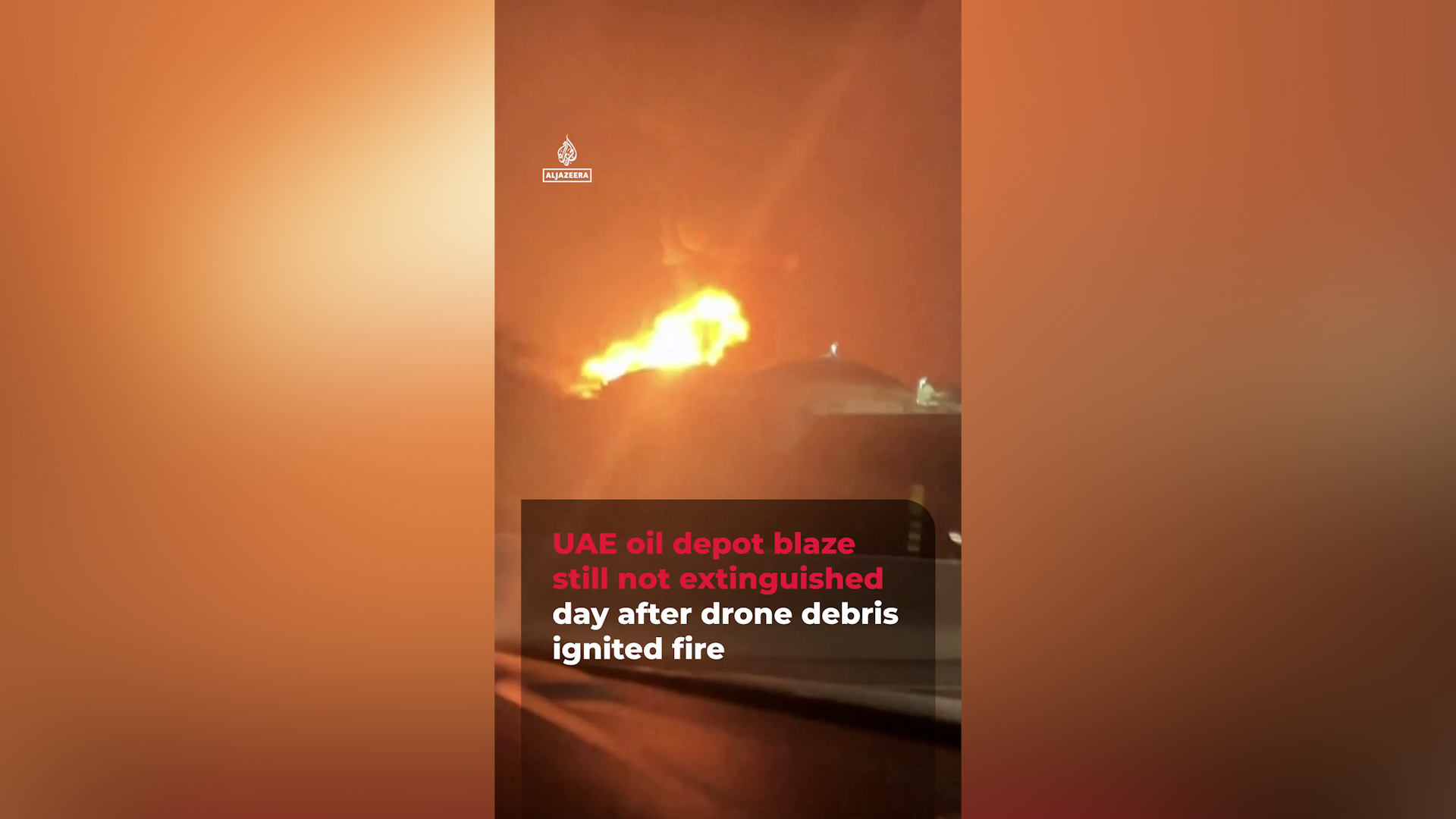
Footage shows a huge fire still raging at an oil depot in Fujairah, UAE a day after falling debris from an intercepted drone ignited the blaze.
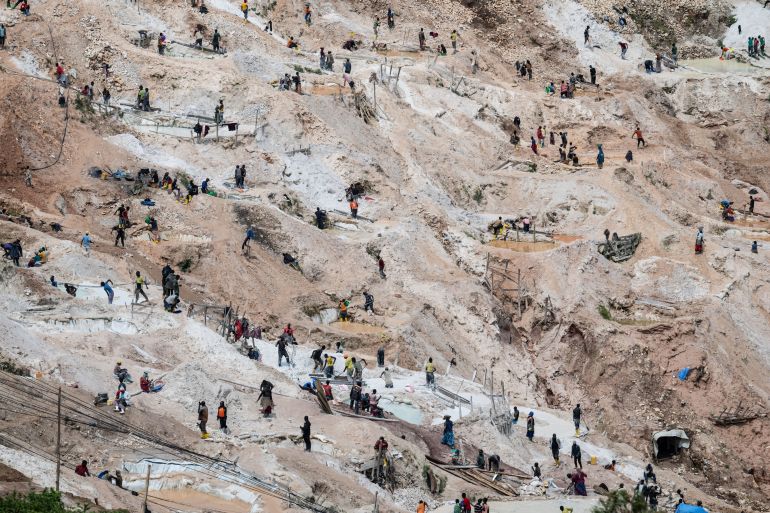
A landslide triggered by heavy rains has killed more than 200 people at the Rubaya coltan mine in the eastern Democratic Republic of the Congo, authorities said.
DRC’s Ministry of Mines said on Wednesday that about 70 children were among the victims, and others who were injured were evacuated to medical facilities in the city of Goma, the capital of North Kivu province.
list of 3 itemsend of list
Fanny Kaj, a senior official in the M23 rebel group, which controls the mines, disputed the government figure and said that the collapse was caused by “bombings” and only five people had been killed.
“I can confirm that what people are publishing is not true. There was no landslide; there were bombings, and the death toll isn’t what people are saying. It’s simply about five people who died,” Kaj said.
Ibrahim Taluseke, a miner at the site, said that he had helped to recover more than 200 bodies from the area.
“We are afraid, but these are lives that are in danger,” Taluseke told The Associated Press news agency. “The owners of the pits do not accept that the exact number of deaths be revealed.”

A senior official from the AFC (Congo River Alliance)/M23 Rwanda-backed rebel group, which has controlled the mine since 2024, told the Reuters news agency that “continued operation had been discouraged” at the site.
“Pending the securing of the area and the implementation of protective measures for miners. The incident is due to the heavy rains of the last few days,” the official said.
A similar collapse at the site in late January following heavy rainfall killed more than 200 people. At the time, Congolese authorities blamed the incident on the rebels and said that they were allowing illegal mining without sufficient safety standards.
Rubaya produces about 15 percent of the world’s coltan, an essential metal that is processed into tantalum and in high demand by manufacturing industries to make mobile phones, computers, aerospace components and gas turbines.

Manchester United manager Michael Carrick says defeat to 10-man Newcastle “hurts a lot” and he is “bitterly disappointed” after the 2-1 loss at St James’ Park in the Premier League.
MATCH HIGHLIGHTS: Newcastle United 2-1 Manchester United