DSS Arrests Suspect Over Attack On Peter Obi, Others In Edo

The Department of State Services (DSS) has arrested a man suspected of being behind the recent attack on the 2023 presidential candidate of the Labour Party (LP), Peter Obi, in Benin City, the Edo State capital.

READ ALSO: Police Confirm Attack On ADC In Edo, Ex-Gov’s Residence, CP Orders Investigation


Obi, a former governor of Edo State, Chief John Oyegun, and several chieftains and members of the opposition All Democratic Congress (ADC), were attacked on February 24 by armed men who fired several gunshots shortly after the party’s meeting in the state.


Shortly after the attack, one Udeme Monday Stephen was alleged to have posted on his X account @stevetom788, threatening further attacks on Obi.

The attack was said to have occurred shortly after the chieftains returned from the ADC secretariat, where they formally welcomed a former governorship candidate of the Labour Party, Olumide Akpata, into the party.

Condemning the attack, a former presidential candidate of the LP, Peter Obi, who is a chieftain of the ADC, said, “We will make a formal complaint, and I assure you that this cannot continue,” Obi told the party members in Benin City.

“We have a country, and we are part of the country. We cannot have terrorism terrorising the country and have officials in government terrorising citizens. It is unacceptable,” he added.

Similarly, the leadership of the ADC said it would neither bow nor retreat despite the attack.

“Let it be clearly understood: violence and intimidation are the weapons of those who fear the will of the people. Such actions stain our democracy and must be condemned by all who believe in freedom,” the party’s spokesman, Bolaji Abdullahi, said in a statement on Tuesday.

Governor Monday Okpebholo condemned the recent attack on members of the ADC.

Okpebholo, in a statement, described the incident as an internal party crisis that was taken too far.

The governor, while sympathising with the affected members of the party, noted that it was unfortunate that certain elements allegedly exploited the peaceful atmosphere of the state to perpetrate violence.

Alleged Phone-Tapping: El-Rufai’s Family Accuses ICPC Of Smear, Challenges Search Warrant

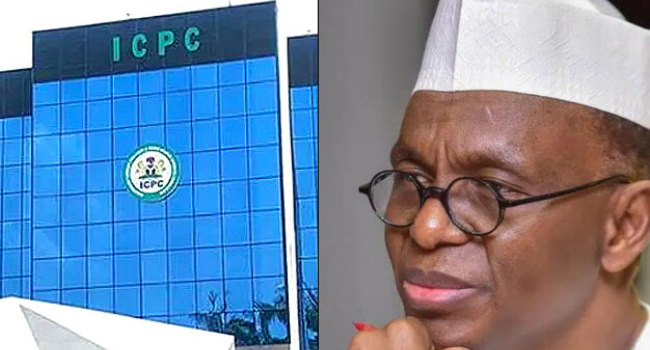
The family of former Kaduna State governor, Nasir El‑Rufai, has accused the Independent Corrupt Practices and Other Related Offences Commission (ICPC) of mounting a “malicious smear campaign” in relation to a probe involving alleged surveillance equipment.

READ ALSO: El-Rufai Sues ICPC For ₦1bn Over Alleged Abuja Home Invasion

In a statement issued by his son, Mohammed Bello El-Rufai, who is a member of the House of Representatives, the family rejected claims that the former governor refused to cooperate with investigators.

“The ICPC has ludicrously attempted to weaponise the silence of Mallam Nasir el-Rufai against him, claiming he ‘refused to cooperate’. We must educate the Commission on the most basic tenet of Nigerian jurisprudence.

“The Constitution of the Federal Republic of Nigeria guarantees every citizen the right to remain silent. This is not an act of non-cooperation; it is a fundamental human right,” the statement partly read.

They also dismissed suggestions that specialised phone-tapping or espionage devices were found at a property linked to El-Rufai, saying only “old discarded personal mobile phones, flash drives, and laptops” were taken.

The family further questioned the legality of the search operation, alleging that the warrant used to authorise the raid was improperly secured and lacked jurisdiction.

‘Legally Defective Warrant’ 

They said their legal team has already approached the courts to contest the validity of the warrant and any material obtained under it.

“The entire foundation of this investigation is rotten. The search that purportedly uncovered these phantom items originated from a legally defective warrant.

“We have credible evidence that the warrant was a forgery, fraudulently procured and presented by a Magistrate who was, bizarrely, purporting to sit in the High Court of the Federal Capital Territory. An illegality of this magnitude—a forgery at the very inception of a state-sponsored search—renders everything that follows it inadmissible and void,” the statement added.

₦1bn Suit 

The Abuja residence of the former governor was searched by officials of the ICPC, according to a statement by his media aide, Muyiwa Adekeye.

According to the statement, ICPC officials arrived at El-Rufai’s residence around 2 p.m. and immediately began searching the entire property.

The ICPC also confirmed that El-Rufai was in its custody in connection with an ongoing investigation.

Subsequently, the former chieftain of the African Democratic Congress (ADC) filed a ₦1 billion fundamental rights enforcement suit against the agency over the alleged unlawful invasion of his Abuja residence.

El-Rufai, through his team of lawyers led by Oluwole Iyamu, SAN, is challenging the validity of a search warrant issued on February 4 by the Chief Magistrate of the Magistrate’s Court of the FCT, listed as the second respondent in the suit.

In the originating motion on notice, the former governor sued ICPC as the first respondent, while the Chief Magistrate, Magistrate’s Court of the FCT, Abuja Magisterial District; the Inspector-General of Police (I-G); and the Attorney-General of the Federation (AGF) were named as second to fourth respondents respectively.

El-Rufai: Claim ICPC’s Search Warrant Was Fraudulently Obtained Should Be Proven — Bulama Bukarti

A lawyer, Bulama Bukarti, has said the family of former Kaduna State governor Nasir El‑Rufai must provide evidence if they insist the search of the politician’s residence by the Independent Corrupt Practices and Other Related Offences Commission (ICPC) was illegal.

Bukarti stated this on Monday while appearing on Channels Television’s Politics Today, amid the growing dispute between El-Rufai’s family and the anti-corruption agency.

The lawyer said allegations of fraud are criminal in nature and must be proven through due legal process.

“The claim or allegation of fraud is a criminal allegation, and even before a court of law, you have to prove it beyond a reasonable doubt that the warrant was fraudulently obtained, and the only way you can know that the warrant was fraudulently obtained will be through a thorough criminal investigation.

“I don’t think whoever is claiming that this warrant was fraudulently obtained has conducted any criminal investigation. If they are making that claim, it is for them to go before a court of law and prove fraud beyond a reasonable doubt,” he said.

READ ALSO: Alleged Phone-Tapping: El-Rufai’s Family Accuses ICPC Of Smear, Challenges Search Warrant

Bukarti also argued that it would be unnecessary for a federal agency to falsify documents to secure a search warrant.

He added that if investigators possessed sufficient evidence, they should proceed with prosecution rather than prolonged detention.

“If ICPC has found any evidence, they should arraign Mallam El-Rufai; they should not be detaining him for this long. And if any family member has any piece of evidence against any search that was conducted, or any evidence that was obtained, they should wait for their day in court and present their evidence before a court of law and allow the court to decide,” he said.

Bukarti noted that even if a warrant were later found to be defective, evidence recovered could still be admissible, while any wrongdoing in obtaining the warrant would be addressed separately by the courts.

“If the evidence was found in El-Rufai’s house, that evidence is still admissible under our laws. Then the question will be for those who committed the fraud in obtaining the search warrant, if any, to be punished, or for the court to compensate Mallam El-Rufai for the improper search warrant executed,” he explained.

Family Alleges Smear

The family of Nasir El-Rufai on Monday accused the ICPC of orchestrating what they described as a “malicious smear campaign” over allegations that surveillance and phone-tapping devices were discovered at his Abuja residence.

In a statement issued by his son, Mohammed Bello El‑Rufai, a member of the House of Representatives, the family rejected claims that the former governor failed to cooperate with investigators.

They argued that his silence is a constitutional right and cannot be interpreted as non-cooperation.

File Photo: Nasir El-Rufai

The family also dismissed reports that sophisticated espionage equipment was recovered, stating that only old personal phones, laptops, and flash drives were taken.

They further alleged that the warrant authorising the search lacked jurisdiction and may have been improperly obtained.

Meanwhile, El-Rufai has filed a ₦1 billion fundamental rights enforcement suit challenging the legality of the search and seizure carried out at his residence.

The suit, filed through his legal team led by Oluwole Iyamu, names the ICPC, the Chief Magistrate of the FCT Magistrate’s Court, the Nigeria Police Force through the Inspector-General of Police, and the Attorney‑General of the Federation Nigeria as respondents.

Court Halts Ondo APC State Congress

The Federal High Court sitting in Akure, the Ondo State capital, has halted the state congress of the All Progressives Congress (APC) scheduled to hold on Tuesday, March 3, 2026.

Justice Toyin Bolaji Adegoke granted the order in an ex parte ruling, restraining both the Independent National Electoral Commission (INEC) and the APC from proceeding with the planned congress.

The order followed an ex parte application moved by Adedayo Adedeji, SAN, on behalf of aggrieved party members led by Lawrence Adebayo, alongside 7,427 other APC members.

Ruling on the motion, which was supported by an affidavit of extreme urgency, Justice Adegoke granted an interim injunction.

The injunction restrains INEC and the APC, acting through their officers, agents, assigns, successors-in-title, representatives, or any persons acting on their behalf, from “acknowledging, accepting, recognising, giving effect to, or in any manner whatsoever validating the purported ward and local government congresses conducted by the second respondent on 18 and 21 February 2026 in Ondo State, and the proposed state congress scheduled for 3 March 2026 or any other date.”

READ ALSO: DSS Arrests Suspect Over Attack On Peter Obi, Others In Edo

The restriction will remain in effect pending the hearing and final determination of the motion on notice for interlocutory injunction.

The court also granted a further order restraining the APC, its officers, agents, servants, privies, assigns, successors-in-title, representatives, and all persons acting through or under it from “conducting, holding, proceeding with, or concluding any state congress in Ondo State on March 3, 2026 or any other date, pending the hearing and determination of the motion on notice for interlocutory injunction.”

In addition, the court directed the respondents to maintain the status quo ante bellum before the conduct of the disputed congresses held on February 18 and 21, 2026, as well as the proposed state congress scheduled for 3 March 2026.

The court further ordered that no steps be taken that could prejudice the hearing and determination of the motion on notice.

UN Building Bombing: Court Grants DSS’ Request For Accelerated Hearing

Justice Emeka Nwite of the Federal High Court, Abuja, has issued an order for accelerated hearing in the ongoing prosecution of five men accused of being behind the August 26, 2011, bombing of the United Nations building in Abuja.

READ ALSO: UN Bombing: Court Commences Trial-Within-Trial On Terrorism Suspects’ Statements

Justice Nwite issued the order while ruling on an application moved by the Prosecuting Counsel, Alex Izinyon (SAN), who noted that the case has dragged on for nearly 15 years.

Al- Barnawi, also known variously as Kafuri, Naziru, Alhaji Yahaya, Mallam Dauda, Alhaji Tanimu, is being prosecuted by the DSS along with Mohammed Bashir Saleh, Umar Mohammed Bello (aka Datti; Mohammed Salisu), and Yakubu Nuhu (aka Bello Maishayi).

Izinyon had noted that the case had been in court for about nine years and prayed the court for an expeditious hearing in line with the court’s practice direction on the prosecution of terrorism and related cases.

He said it was in the interest of all parties that the case be promptly determined by allowing the conduct of proceedings on a daily basis, where possible.

Counsel to the defendants did not object to Izinyon’s application, following which Justice Nwite granted it.

DSS Operative Testifies

At the resumed hearing of the trial, a prosecution witness, a senior operative of the DSS, told the court that the security agency was always professional in its investigations.

He made the assertion while testifying in the trial-within-trial.

The trial-within-trial was being conducted to ascertain whether or not the defendants offered their statements voluntarily.

The witness, identified as PW3, who spoke while being cross-examined by the lawyer to the second defendant, Bala Dakum, said he could not recollect the specifics of all that were contained in a video recording of one of the interview sessions with the second defendant, which was admitted in evidence as Exhibit C.

The witness, who said he was a computer forensic expert and works in DSS’ technical department, told the court that he recorded the interview sessions with the five defendants, but could no longer recall the exact month and year that Exhibit C was recorded.

He, however, explained that portable evidential forensic recorders being used by the DSS complied with the Evidence Act and global standards.

Claims Over Recording

The witness faulted Dakum’s claim that there were several skips in the recording of the statements of the second defendant, Exhibit C, in particular.

On the lawyer’s claim that the cautionary words were not administered to the second defendant before he made his statements, the witness said his role, as the technical officer, was limited to recording everything that transpired between the defendant and the interviewers.

The witness added that from the video evidence, he observed that the second defendant was administered the cautionary words and given all the options to volunteer or decline, as well as access to legal counsel, but he voluntarily elected to continue with the interview.

On the lawyer’s suggestion that not all that transpired in the interview room was captured in the video, the witness said, “Every official interaction between the interviewers and defendants was duly recorded.”

On why it was only the face of the second defendant that was shown in the video, the witness said it was the standard practice not to capture the faces of the interviewers for their personal safety.

“The standard operating procedure of the SSS provides for protection in the interest of the personal security for the interviewers,” the witness added.

On whether a video in which an interviewer’s face is inadvertently captured is either edited or discarded, the witness said every session of official interactions between the defendants and the interviewers is always submitted to the court.

“However, where there are concerns bordering on security as a result of inadvertent exposure, such concerns are left for the determination of the court,” the witness stated.

Earlier, while being cross-examined by a lawyer to the first defendant, F. K. Kamaga, the witness gave details of how he audio-visually recorded the interview, statements taken, and translation sessions with the five defendants.

He faulted the claim by Kamaga that the recording device could be edited or paused in the course of recording a session.

“This is so that the recorder has been used even outside this country. The forensic recorder is designed to be tamper-proof, so that in the event of a pause, it automatically triggers a closure and signs digitally so that nothing can be added to it again.

“In a nutshell, the device records on two digitally exact DVDs in real time, as it is happening, and it is not designed to be paused or stopped midway into interview. Those are part of the security features of the equipment,” he added.

‘The Big One Is Coming Soon,’ Trump Doesn’t Rule Out Sending Troops To Iran

The 79-year-old Republican has long campaigned against decades of US military entanglements in the Middle East, but ordered a large-scale war against Iran starting Saturday.While so far the assault has focused entirely on aerial attacks by missiles and bombs, Trump refused to rule out sending ground troops — something far riskier in terms of possible casualties.”I don’t have the yips with respect to boots on the ground,” Trump said, using a golf term for anxiety. “Every president says, ‘There will be no boots on the ground.’ I don’t say it.”

“I say ‘probably don’t need them,’ (or) ‘if they were necessary,’” he told the New York Post in one of numerous brief interviews he has given since launching the Iran operation.

Trump also spoke to CNN on Monday, flagging what he said would be an escalation in the assault on Iran.

“We haven’t even started hitting them hard. The big wave hasn’t even happened,” he told CNN, without elaborating. “The big one is coming soon.”

READ ALSO: Three US Military Members Killed In Iran Operation – Pentagon

US and Israeli forces have so far struck hundreds of targets across Iran, including the Islamic republic’s missiles, navy and command-and-control sites.

Four US military members have been announced killed and three fighter jets have been shot down — officially in friendly fire.

Iran has fired missiles at Israel, at US bases around the region and also at targets in regional Arab countries — Bahrain, Jordan, Kuwait, Qatar and the United Arab Emirates — something that Trump called “the biggest surprise.”

‘Substantially Ahead’ Of Schedule

Trump, speaking at the White House at an award ceremony, said that the United States could sustain the assault beyond the month-long timeframe he has publicly spoken about.

Some analysts have wondered if the United States, even with the world’s most powerful military, has enough ammunition to carry out such a long war against a determined foe.

“We’re already substantially ahead of our time projections,” Trump said at the White House, adding: “From the beginning we projected four to five weeks, but we have capability to go far longer than that. We’ll do it.”

Trump again justified his attack by accusing Iran’s clerical state of developing nuclear weapons and missile capacity, claims that have been disputed.

“This was our last, best chance to strike, what we’re doing right now, and eliminate the intolerable threats posed by this sick and sinister regime,” Trump said.

Defense Secretary Pete Hegseth also signaled Monday that deploying troops inside Iran had not been ruled out.

Asked if there were already boots on the ground, Hegseth told a news conference: “No, but we’re not going to go into the exercise of what we will or will not do.”

“We’ll go as far as we need to go,” he said.

As for how long the war will last, Hegseth said: “Four weeks, two weeks, six weeks, it could move up. It could move back.”

He sought to differentiate the Iran operation from past long-running US wars in Iraq and Afghanistan, saying the war is not an effort to build democracy in Iran.

“No stupid rules of engagement, no nation building quagmire, no democracy-building exercise. No politically correct wars. We fight to win and we don’t waste time or lives,” the Pentagon chief said.

“This is not Iraq. This is not endless,” Hegseth said. “Our generation knows better and so does this president. He called the last 20 years of nation building wars ‘dumb’ and he’s right.”

General Dan Caine, the top US military officer, spoke alongside Hegseth, saying that air superiority had been achieved over Iran.