Ogun @ 50: Gov Abiodun Celebrates Legacy, Progress In State Broadcast


image

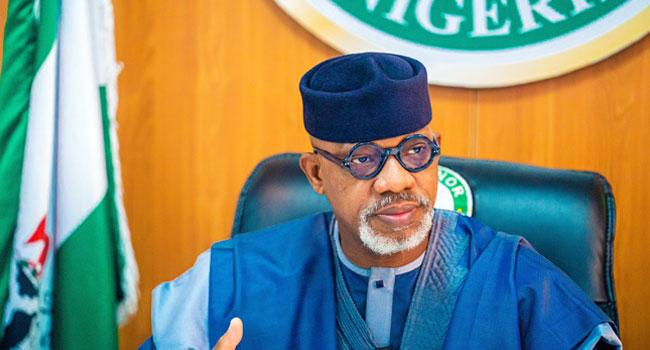
The Ogun State Governor Dapo Abiodun, has described the 50th anniversary of the creation of Ogun State as a moment of deep reflection, gratitude, and renewed commitment to sustained development.

In a statewide broadcast on Tuesday to mark the Golden Jubilee celebration, Governor Abiodun said the milestone underscored five decades of purposeful existence, built on the vision, sacrifices, and collective determination of the people of the Gateway State.

He recalled that Ogun State was created on February 3, 1976, out of the old Western Region, noting that the decision gave birth to a state founded on clarity of purpose and a strong sense of destiny. According to him, the Golden Jubilee offers an opportunity to celebrate the achievements of the past while preparing the state for a more prosperous future.

The governor expressed gratitude to Almighty God and paid special tribute to President Asiwaju Bola Ahmed Tinubu, GCFR, for leading the nation at a historic moment when several states, including Ogun, are marking 50 years of creation. He prayed for continued wisdom and strength for the President as he implements the Renewed Hope Agenda.

READ ALSO: Six Dead, 23 Injured In Lagos–Ibadan Expressway Crash

Governor Abiodun highlighted the contributions of past leaders to the growth and stability of the state, acknowledging the roles played by former President Olusegun Obasanjo, former Governor Olusegun Osoba, and other civilian and military administrators who guided the state through different phases of its history.

He said Ogun State had earned a reputation as a fountain of excellence, having produced notable national and global figures such as Chief Obafemi Awolowo, Prof. Wole Soyinka, Chief MKO Abiola, Chief Ernest Shonekan, former Vice President Yemi Osinbajo, Sir Adetokunbo Ademola, and Tai Solarin, among others.

The governor also praised the contributions of women from the state, including Funmilayo Ransome-Kuti, describing them as trailblazers who broke barriers and inspired generations.

According to Abiodun, political stability, religious tolerance, and inclusive governance have remained defining strengths of Ogun State, creating a peaceful environment conducive to growth and investment.

He noted that education has consistently been central to the state’s identity, adding that Ogun has evolved into Nigeria’s education capital with numerous federal, state, and private tertiary institutions. He also highlighted the state’s strategic location and growing industrial base as key drivers of economic expansion.

Governor Abiodun said his administration had prioritised infrastructure development, with over 1,600 kilometres of roads constructed or rehabilitated across the state. He added that the Gateway International Airport has been completed and certified, while projects such as the Kajola and Ijebu-Ode Inland Dry Ports and plans for the Olokola Deep Sea Port are expected to further strengthen the state’s economy.

He disclosed that Ogun State’s economy is now estimated at about ₦17 trillion, with Internally Generated Revenue rising from about ₦52 billion in 2020 to approximately ₦250 billion by the end of 2025. He said significant progress had also been recorded in healthcare, education, housing, agriculture, power, security, and social empowerment.

While celebrating the achievements of the past five decades, the governor urged residents to remain united and committed to the state’s continued growth. He called on the youth to carry forward the legacy of hard work and responsibility, while appreciating elders and pioneers for laying a solid foundation.
Trump Seeking $1 Billion In Damages From Harvard

image

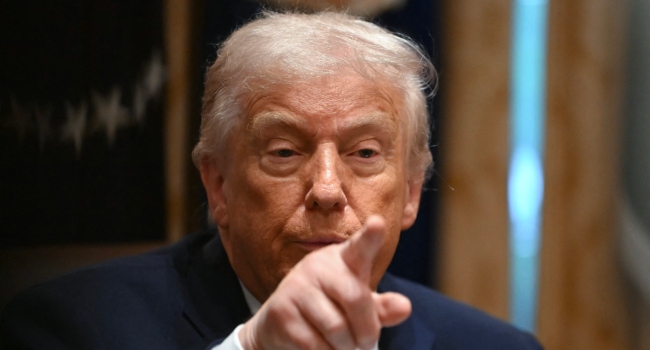
US President Donald Trump said Monday his administration would seek $1 billion in damages from Harvard University after a New York Times report said the college had won some concessions in ongoing settlement negotiations with the government.

“We are now seeking One Billion Dollars in damages, and want nothing further to do, into the future, with Harvard University,” Trump wrote on his Truth Social platform.

Trump officials have accused Harvard and other colleges of promoting so-called “woke” ideology while failing to sufficiently protect Jewish students during pro-Palestinian protests, filing legal complaints and demanding exorbitant payouts.

Critics have called it a pressure campaign by the administration on liberal universities.

Fellow Ivy League institution Columbia University agreed to pay the Trump administration $200 million last summer and pledged to obey rules that bar it from taking race into consideration in admissions or hiring.

But the New York Times earlier on Monday reported Trump had dropped his administration’s demands for a settlement payout of $200 million from Harvard, after protracted talks.

Trump told reporters last September that negotiations were close to reaching a $500 million settlement with Harvard, with part of the deal including the opening of trade schools.

“They wanted to do a convoluted job training concept, but it was turned down in that it was wholly inadequate and would not have been, in our opinion, successful,” Trump said in his post late Monday evening.

“It was merely a way of Harvard getting out of a large cash settlement of more than 500 Million Dollars, a number that should be much higher for the serious and heinous illegalities that they have committed,”  he added, without specifying what laws Harvard has allegedly broken.

The University of Pennsylvania, another Ivy League institution, also bowed to Trump administration concerns last year, announcing it would ban transgender women from participating in women’s sports.

Makoko Demolition Part Of Safety, Environmental Policy, Says Lagos Govt

image

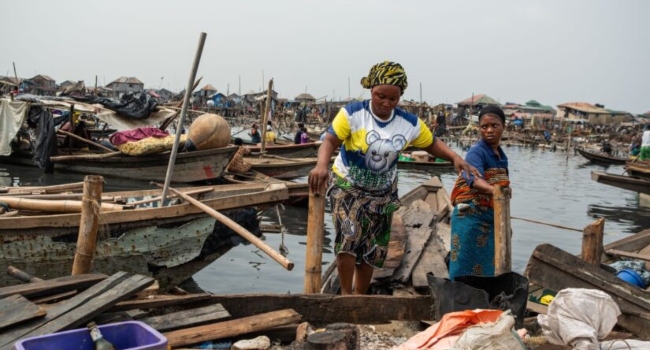
The Lagos Government has again defended the Makoko demolition, explaining that the action forms part of a broader statewide safety and environmental policy aimed at preventing disasters linked to unsafe settlements, fire outbreaks, and high-risk infrastructure locations.

This is according to the Special Adviser to the Lagos State Governor on eGIS and Urban Development, Olajide Babatunde, who spoke during a press briefing held at Alausa, Ikeja.

Babatunde said the state’s intervention in Makoko was driven primarily by the need to protect lives, particularly in areas located beneath high-tension power lines.

According to him, similar clearance exercises had been carried out in several parts of Lagos following fatal incidents caused by fallen power cables, stressing that Makoko was not singled out for enforcement.

READ ALSO: [Makoko Demolitions] Community Leader Alleges Police Disrupted Protest With Teargas, Gunshots

“Clearing of high-tension corridors is a safety requirement across Lagos State. The action taken in Makoko is consistent with what has been done in other communities,” he said.

He explained that the government had earlier explored multiple redevelopment options for Makoko, including a proposed shoreline extension project.

However, the plan was discontinued after environmental assessments by technical experts, construction firms, and international partners indicated that it posed significant ecological risks to the lagoon and surrounding marine life.

According to him, the state has since adopted the Water Cities Project as a more sustainable alternative, which allows for continued habitation of the fishing community while addressing sanitation, infrastructure, and environmental concerns.

Babatunde disclosed that the Lagos State Government has committed $2 million to the project and continues to engage international development partners for counterpart funding and technical support.

He also highlighted the government’s broader urban regeneration strategy, which prioritises stakeholder engagement, compensation, and resettlement where relocation becomes unavoidable.

The aide previous regeneration projects in Okobaba, Adeniji-Adele, and Dosunmu as examples where redevelopment was achieved through consultation and negotiated agreements with affected residents and traders.

The Special Adviser pointed to recurring fire incidents, building collapses, and poor access for emergency services in densely populated settlements as key reasons for enforcing building codes, minimum setbacks, and land pooling in regeneration areas.

Abdulrahman-Led PDP Schedules National Convention For March 28, 29

image

The Peoples Democratic Party (PDP) faction led by Abdulrahman Muhammed has officially scheduled its National Convention for March 28 and 29, 2026, in Abuja, following its 105th National Executive Committee (NEC) meeting on Monday.

The meeting, chaired by Muhammed, National Caretaker Committee Chairman, with Secretary Senator Samuel Anyanwu, discussed the state of the party, preparations for upcoming congresses, and judicial developments affecting the PDP.

The NEC reaffirmed the legitimacy and authority of the Abdulrahman Muhammed-led National Caretaker Committee, emphasizing that it remains the only lawful national administrative organ of the party and will continue to act as the National Working Committee (NWC) until elected leadership is installed.

The committee also approved the schedule for party congresses across the country: Ward Congresses: February 2026; Local Government Congresses: February 2026; State Congresses: March 2026.

The party directed the National Caretaker Committee to issue detailed guidelines and notices for the congresses, ensuring compliance with the PDP Constitution, INEC regulations, and judicial directives.

Welcoming the judgment of the Federal High Court in Ibadan, the NEC reiterated its support for the independence of the judiciary and urged all party organs and members to act strictly in accordance with court rulings.

In preparation for the national convention, the NEC instructed the immediate activation of convention sub-committees and the commencement of all logistical and administrative arrangements. It also extended the tenure of state and zonal caretaker committees pending the conduct of congresses and the convention.

Buhari Was Pained By Inability To Do More On Security Before Leaving Office — Gambari

A former Chief of Staff to ex-President Muhammadu Buhari, Professor Ibrahim Gambari, has said the late Nigerian leader was deeply troubled by his inability to resolve the country’s security challenges before leaving office.

Gambari stated this during an appearance on Politics Today, a current affairs programme on Channels Television.

According to him, although Buhari made significant progress in degrading Boko Haram and reclaiming territories once held by insurgents, lingering insecurity in other regions weighed heavily on him.

“One of the things that pained him the most is that he was unable to do more about the security situation in the country before he left.

“He did a lot by making sure that no territory of Nigeria was under Boko Haram,” Gambari said on Monday.

[embedded content]

READ ALSO: Those Who Benefit Most From Nigeria Are Least Committed To Its Stability — Gambari

The ex-chief of staff, however, noted that the persistence of banditry and violent attacks in the North-West and parts of the North-Central regions remained a major concern for the former president.

“The situation in the North-West, in the North-Central, even in banditry, it pained him a lot. And he felt, ‘I’ve done everything I can for these people.’ He even said at some point that maybe the base was not good enough,” he added.

Gambari also reacted to questions surrounding reports of coup rumours before the end of Buhari’s administration, following claims by the Minister of Defence that such threats existed prior to President Bola Tinubu’s inauguration.

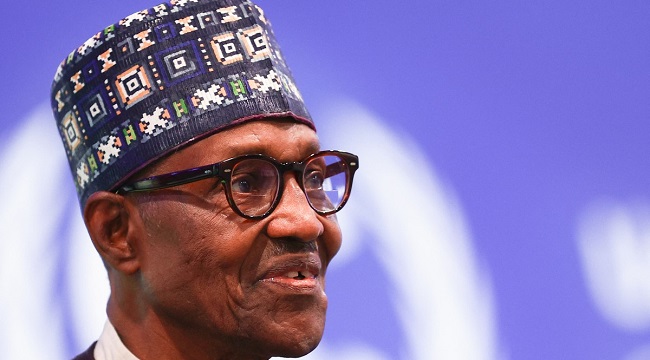
(FILES) Ex-Nigerian President Muhammadu Buhari attends the second day of the COP26 UN Climate Summit in Glasgow on November 2, 2021. (Photo by Adrian DENNIS / POOL / AFP)

He said he was not aware of any such intelligence reaching Buhari through his office.

“Honestly, I’m not aware of that. The president had many sources of information. The Chief of Staff is probably a principal one, but not the only one. He could have received information that I was not privy to,” Gambari stated.

He further explained that Buhari, as a former military head of state who later became a democratically elected president, maintained strong ties with the armed forces but “operated within constitutional limits.”

Beyond security, Gambari offered insights into Buhari’s leadership style, describing him as “loyal to individuals who contributed to his personal and political development.”

He also stated that those who benefited most from Nigeria were often the least committed to its progress.

On the issue of power dynamics, Gambari stated that every president has a cabal, noting that the cabal under Buhari knew their limitations.

He also revealed that Buhari did not believe in imposing a successor during the 2023 general election, insisting that the choice of candidate should be left to party members and the electorate.

Buhari’s Tenure

(FILES) Muhammadu Buhari looks on at the presidential fleet review held at the Naval Dockyard in Lagos on May 22, 2023. Former Nigerian president Muhammadu Buhari — who led his country first as a military strongman and later as an elected democrat — died on July 13, 2025, at the age of 82, an aide said. (Photo by Samuel Alabi / AFP)

Buhari served Nigeria from 2015 to 2023 and previously ruled as military head of state between 1983 and 1985.

Buhari’s eight-year tenure (2015–2023) was marked by recurring and evolving insecurity across Nigeria, despite early gains against Boko Haram, including the recovery of territories in the North-East.

However, violence later spread to the North-West and North-Central regions, with banditry and kidnappings becoming widespread.

By the end of his tenure, insecurity remained one of the administration’s most unresolved challenges, but it was not without key feats.

FG Signs MoU With Six Professional Bodies To Train 10m Nigerians


image

The Federal Government of Nigeria, on Monday, flagged off a free nationwide training of 10 million Nigerians on financial inclusion and literacy.

This is just as the Vice President, Senator Kashim Shettima, has said Nigeria can reap bountifully from its demographic dividend only if young Nigerians and women are equipped with the needed skills and ethical grounding required for a speedily progressing digital economy.

The training being undertaken by the Office of the Vice President through the Presidential Committee on Economic & Financial Inclusion (PreCEFI), chaired by Vice President Kashim Shettima, is designed to equip Nigerians, particularly women and youths, with essential financial skills, investment knowledge, and digital competencies for sustainable wealth creation.

Accordingly, the Office of the Vice President, through the PreCEFI, signed a Memorandum of Understanding (MOU) with six professional bodies to jointly design training programmes, certification pathways, digital skills initiatives, and mentorship platforms that would strengthen Nigeria’s financial and enterprise workforce.

The professional bodies include the Institute of Chartered Accountants of Nigeria (ICAN); Chartered Institute of Bankers of Nigeria (CIBN); Chartered Institute of Stockbrokers (CIS); National Institute of Credit Administration (NICA); Chartered Risk Management Institute (CRMI) and Nigeria Institute of Innovation and Entrepreneurship (NIIE).

Speaking when he officially flagged off the free nationwide training of 10 million Nigerians, on behalf of President Bola Ahmed Tinubu, at the Presidential Villa, Abuja, the Vice President noted that the signing of the MoU between the Federal Government and the six of Nigeria’s foremost professional bodies was more than a formal agreement.

“It is a strategic national investment in capacity as infrastructure which is the human, institutional, and ethical foundations upon which inclusive growth must rest,” he stated

Senator Shettima noted that the Aso Accord on Economic and Financial Inclusion, which the PreCEFI is mandated to implement, recognises the fact that “financial inclusion is not achieved by access alone, but by competence, trust, and capability.”

According to him, the nation “cannot build a one-trillion-dollar economy on weak skills, fragmented standards, or disconnected professional ecosystems.”

He explained: “This MoU therefore establishes a working framework to harness the collective expertise of ICAN, CIBN, CIS, CRMI, NICA, and NIIE to advance inclusion through capacity building, advocacy, digital transformation, youth empowerment, and support for small and medium practitioners.

“It establishes a structured mechanism for joint training programmes, policy dialogue, digital skills development, and professional standards that align market practice with national inclusion goals.”

VP Shettima pointed out that while capacity building is financial inclusion, “without accountants who understand MSME formalisation, credit administrators who can assess risk beyond collateral, bankers who embed consumer protection, risk professionals who anticipate digital threats, and innovators who translate ideas into enterprises, inclusion remains a slogan rather than a system.”

Maintaining that the training programme must prioritise young Nigerians and women, the VP said, “Importantly, this collaboration prioritises women and youth inclusion and digital transformation, recognising that Nigeria’s demographic dividend will only materialise if young people are equipped with relevant skills and ethical grounding for a fast-evolving digital economy.”

He charged the PreCEFI and the professional bodies not to treat the MoU as a mere document, but as a living platform for execution.

“Accordingly, on behalf of President Bola Ahmed Tinubu,GCFR, I hereby flag off the free training of 10 million Nigerians with priority for women and youth across the country,” VP Shettima declared.

Earlier, the President of the Institute of Chartered Accountants of Nigeria (ICAN), Mallam Haruna Nma Yahaya, applauded the administration of President Bola Ahmed Tinubu for its bold economic reforms that has culminated in the flag off of the financial inclusion free training programme for 10 million women and youths in Nigeria.

He said the decision to embark on the project was prompted by visible improvements in the economy as a result of the gains of the Federal Government’s policy reforms.

Yahaya assured the Vice President of their professional support in the realisation of set objectives, describing their involvement involvement in the project as an institutional honour.

For his part, the CEO of WAWU Africa – technical partners in the programme, Mr Emmanuel Lennox, assured of the company’s readiness to deliver on the project, particularly in providing the digital platform and overall enabling environment for its success.

Also, explaining why the training of 10 million Nigerians on financial inclusion had become necessary, the Technical Adviser to the President on Economic and Financial Inclusion, Dr. Nurudeen Abubakar Zauro, said said, “Exclusion is not only by lack of access, but by limited skills, weak institutional capacity, and insufficient professional support.

“Consequently, financial inclusion is not achieved by infrastructure alone; it is achieved when people and institutions are equipped to use that infrastructure responsibly, productively, and sustainably.”