External Reserves Rise To $50.45bn, Highest In 13 Years — Cardoso

Nigeria’s gross external reserves climbed to $50.45 billion as of 16 February 2026, marking the highest level in 13 years, according to the Governor of the Central Bank of Nigeria, Olayemi Cardoso.

Cardoso disclosed this on Tuesday while addressing journalists at the end of the 304th Monetary Policy Committee (MPC) meeting held in Abuja.

He said the increase reflects stronger macroeconomic conditions and improved confidence in the country’s policy direction.

“Gross external reserves rose significantly to 50.45 billion dollars as of February 16, 2026, the highest in 13 years. This provides an import cover of 9.68 months for goods and services,” Cardoso stated.


Drivers 

Providing further insight, the governor attributed the rise to favourable trade dynamics, a surplus current account position, and growth in non-oil exports.

Cardoso noted that market confidence played a central role.

“The gross reserves are the largest that we have had in the last 13 years. We have seen very positive signals with respect to the way the macro is developing, favourable trade developments, the current account is in healthy surplus, and non-oil exports have also gone up.

“Underpinning all these, quite frankly, is market confidence. Without market confidence, no matter what you do, you will find significantly sub-optimised outcomes.

“Over time, we have embarked on a number of international fora where we told our story, made promises, and ensured we stuck to those promises. We have been as open and transparent as possible to engender positive market sentiment, and I believe that has paid off,” he stated.

Sustainability, Risks

On the sustainability of the reserves, Cardoso cautioned that external and domestic risks remain, including global shocks, oil price volatility, and fiscal pressures.

“On how sustainable, there will always be risks to any outlook. We cannot underestimate potential global shocks that could come our way. Nobody has a crystal ball; we can only project into the future. Oil prices and how they play out are factors we can only forecast.

“Importantly, pre-election spending, if not properly contained, could destabilise the stability we have accomplished, as well as fiscal deficits. We are in a new year, and that is being looked at carefully. On our side, we must ensure consistency in policy formulation and avoid policy somersaults,” he said.

Inflation
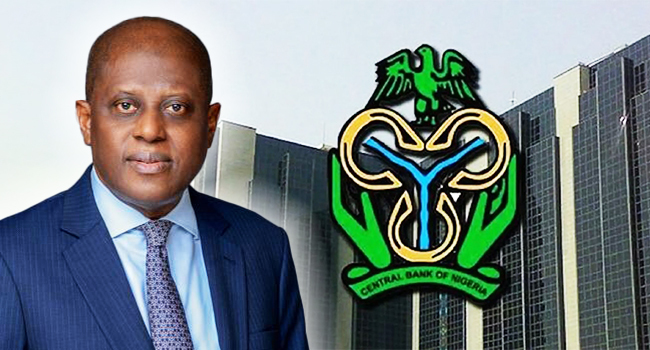
FILES: CBN Governor, Olayemi Cardoso

The apex bank had earlier projected that reserves could rise to about $51.04 billion by the end of 2026.

This is the strongest balance since May 2013, when reserves stood at approximately $48.51 billion.

The reserves ended 2025 at roughly $45.5 billion (up from $40.8 billion at the start of that year) and have maintained a steady upward trajectory throughout early 2026.

Meanwhile, the Central Bank of Nigeria (CBN) has projected that reserves could reach $51 billion by the end of 2026.

Interest Rate

At the event, Cardoso announced that the MPC reduced the Monetary Policy Rate (MPR) by 50 basis points to 26.50 per cent from 27 per cent, with all committee members voting unanimously.

“The committee decided to reduce the monetary policy rate by 50 basis points to 26.50 per cent,” he said.

The MPC also “retained the liquidity ratio at 30 per cent, adjusted the standing facilities corridor to +50/-450 basis points around the MPR, maintained the Cash Reserve Ratio at 45 per cent for commercial banks and 16 per cent for merchant banks, kept the 75 per cent CRR on non-TSA public sector deposits.”

Cardoso explained that the policy decision followed a balanced assessment of risks, with inflation continuing on a downward path.

“The decision was premised on a balanced evaluation of risks to the outlook, which suggests that the ongoing disinflation trajectory would continue, supported by the lagged transmission of previous tightening, sustained exchange rate stability, and improved food supply.

The committee noted the sustained deceleration in year-on-year headline inflation in January 2026, marking the 11th consecutive month of decline,” he added.
UPDATED: Kayode Egbetokun Resigns As IGP — Presidency

Kayode Egbetokun has resigned from his position as the Inspector General of Police (IGP). 

A source in the presidency told Channels Television that Egbetokun resigned from the position on Tuesday.

Presidential spokesman, Bayo Onanuga, later confirmed Egbetokun’s resignation.

“President Bola Ahmed Tinubu, GCFR, has accepted the resignation of the Inspector-General of Police, Mr Kayode Egbetokun, following the submission of his letter citing pressing family considerations,” Onanuga said in a statement on Tuesday evening.

Tinubu thanked the ex-IGP for his “decades of distinguished service to the Nigeria Police Force and the nation”.

“The President acknowledged his dedication, professionalism, and steadfast commitment to strengthening internal security architecture during his tenure,” he said.

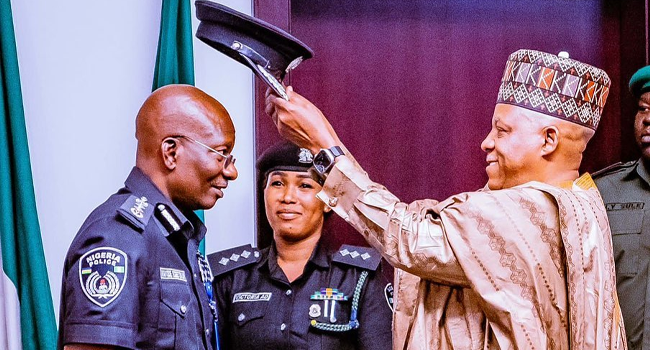
Following the resignation, the ex-Lagos governor approved the appointment of Assistant Inspector-General of Police Tunji Disu to serve as Acting Inspector-General of Police with immediate effect.

The President is confident that AIG Disu’s experience, operational depth, and demonstrated leadership capacity will provide steady and focused direction for the Nigeria Police Force during this critical period.

“In compliance with the provisions of the Police Act 2020, President Tinubu will convene a meeting of the Nigeria Police Council shortly to formally consider the appointment of AIG Disu as substantive Inspector-General of Police, after which his name will be transmitted to the Senate for confirmation,” the statement read.

Tinubu appointed Egbetokun as the 22nd Inspector-General of Police on June 19, 2023.

READ ALSO: Letter Confirms IGP’s Four-Year Tenure, To Remain In Office Till 2027

The Nigeria Police Council confirmed his substantive appointment on October 31 of the same year.

Upon his appointment, Egbetokun promised to “chase away” criminals in Nigeria.

“I will tell you that right now, I feel like a Tiger inside of me, ready to chase away all the criminals in Nigeria. And some other time, I feel like a lion in me, ready to devour all the internal enemies of Nigeria,” he said.

He replaced  Usman Baba, who was appointed as the Inspector General of Police by ex-President Muhammadu Buhari in 2021.

Born on 4th September, 1964 from the Egbado South Local Government Area of Ogun State, Egbetokun enlisted into the Nigeria Police Force as a Cadet ASP (Course 16) on March 3, 1990.

The latter part of Egbetokun’s tenure was marked by controversy over his extended stay in office, which drew public criticism.

Under Section 18(8) of the Police Act 2020, Egbetokun, who was born on September 4, 1964, was expected to retire in September 2024 upon attaining the age of 60.

But his tenure extended beyond the mandatory retirement limits of 60 years of age or 35 years of service, prompting sustained criticism from civil society groups, among others.

Critics argued that the extension breached established police service regulations and weakened institutional discipline.

However, the police maintained at the time that the development did not amount to an extension but was a confirmation that he would complete the four-year tenure stated in his original letter of appointment.

In July 2024, the National Assembly passed the Police Act (Amendment) Bill to allow a person appointed as Inspector-General of Police to remain in office until the end of the term stipulated in the letter of appointment.

CBN Reduces Interest Rate To 26.50%

The Central Bank of Nigeria has cut the interest rate by 50 basis points to 26.50 percent from 27 percent.

Nigeria’s apex bank announced this during its 304th Monetary Policy Committee (MPC) meeting held in Abuja on Tuesday.

The CBN Governor, Olayemi Cardoso, said all members of the MPC unanimously agreed upon the decision.

“The committee decided to reduce the monetary policy rate by 50 basis points to 26.50 percent,” he said.

Cardoso stated that the liquidity ratio was maintained at 30 percent, and the standing facilities corridor was adjusted to +50 to -450 basis points around the monetary policy rate.

He said the committee retained the Cash Reserve Ratio (CRR) at 45 percent for commercial banks and 16 percent for merchant banks, while the 75 percent CRR on non-TSA public sector deposits was equally maintained.

READ ALSO: Dangote Hosts NNPCL CEO Ojulari At Refinery, Unveils Port Expansion Plans


“The Committee’s decision was premised on a balanced evaluation of risk to the outlook which suggests that the ongoing disinflation trajectory would continue largely supported by the lad transmission of previous monetary tightening, sustained exchange rate stability and enhanced food supply.

“In reaching this policy decision, the committee took into account, the sustained deceleration in year-on-year headline inflation in January 2026, marking the 11th consecutive month of decline.

“This downward trajectory in inflation was driven mainly by the continued effect of the contractionary monetary policy, stability in the foreign exchange market, robust capital inflows and improvements in the balance of payments.

“The momentum was further reinforced by relative stability in the prices of petroleum products and improved food supply conditions, especially staples. These outcomes have indicated that prior tightening has continued to anchor expectations,” he added.

Cardoso stated that the MPC noted the remarkable performance of Nigeria’s external sector.

He attributed the positive improvement to the higher export earnings and increased remittance inflows.

According to him, “This has contributed to greater stability in the foreign exchange market and bolstered investor confidence.

“Members also welcomed the newly issued Presidential Executive Order 09 which redirects oil and gas revenues into the federation account.”

Cardoso said the order would play a crucial role in improving fiscal revenue.

The CBN uses the MPR, which works as the benchmark interest rate, to manage inflation, macroeconomic stability, and liquidity.

Last November, the MPC retained the Monetary Policy Rate (MPR) at 27.00 percent. The last time the apex bank cut interest rates was in September last year, from 27 percent to 27.50 percent.

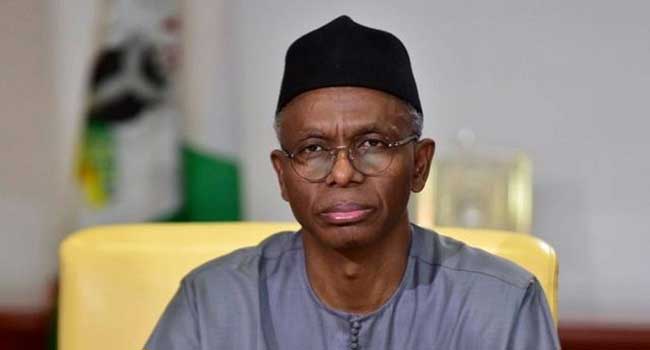
El-Rufai Files ₦2bn Suit Against DSS Over Alleged Abuse Of Power

Former Kaduna State Governor, Nasir El-Rufai, has asked the Federal High Court to quash charges filed against him by the Department of State Services (DSS).

El-Rufai is challenging the competence and legality of the charges, describing them as an abuse of court process.

According to statement by his media adviser, Muyiwa Adekeye, El-Rufai filed an application before the Federal High Court seeking to quash Charge Number FHC/ABJ/CR/99/2026 instituted against him by the secret service.

The matter is scheduled to be heard on February 25, 2026, before Justice Joyce Abdulmalik.

In his motion on notice, El-Rufai is asking the court to strike out the charge on grounds that it is incompetent, discloses no offence known to law, and constitutes what he describes as a gross abuse of court process.

Among the reliefs sought, the former governor is requesting: an order quashing the charge in its entirety, an order discharging him on the ground that no prima facie case has been established and an order awarding ₦2 billion in costs against the DSS for what he terms misuse of the criminal justice system.

READ ALSO: El-Rufai Sues ICPC For ₦1bn Over Alleged Abuja Home Invasion

According to court documents, the motion cites 17 grounds for dismissal of the charges, including constitutional invalidity, lack of prosecutorial competence, alleged absence of evidence, and claims of political persecution.

The filing also argued that the prosecution violates several constitutional provisions, including the presumption of innocence, the right against self-incrimination, the requirement that offences be defined in written law, as well as freedoms of expression and association.

El-Rufai’s legal team has formally notified the Director General of the DSS of the application and provided details of his counsel.

NAPTIP Facilitates Safe Rescue, Return Of 23 Nigerians From Southeast Asia

The National Agency for the Prohibition of Trafficking in Persons (NAPTIP), in partnership with the British High Commission Abuja, has rescued and returned 23 Nigerians trafficked to scam centres in Southeast Asia as part of efforts to combat cyber-enabled human trafficking and support survivor recovery.

The agency disclosed this at a survivor-centred event in Abuja titled “Confronting the Global Scam Centre Crisis: Perspectives of Nigerian Survivors.”

The event brought together victims recently repatriated after being trafficked to Myanmar, Laos, Cambodia, and Thailand under false job promises.

The rescue followed coordinated interventions by NAPTIP, the Ministry of Foreign Affairs, the Nigerian Embassy in Bangkok, and British NGO EDEN. On-ground triangulation at the Thai–Myanmar border and welfare visits to detained Nigerians in Bangkok facilitated their release and safe return.

According to the United Nations Office of the High Commissioner for Human Rights 2026 report titled “A Wicked Problem,” at least 120,000 people are trapped in forced scam operations in Myanmar, with over 300,000 victims across Southeast Asia. The report stated that between 2020 and 2025, about 74 per cent of identified victims globally were trafficked into scam centres in the region after being lured with fake employment opportunities.

Speaking at the event, UK Deputy High Commissioner to Abuja Gill Lever said: “We are here today to listen to survivors who have shown remarkable bravery in sharing their experiences. The UK is working closely with NAPTIP, the Nigerian Ministry of Foreign Affairs, EDEN and IOM to ensure survivors receive trauma-informed care and safe repatriation. Their courage will help prevent others from being harmed, and we stand firmly with Nigeria and all African Commonwealth partners in confronting this rapidly evolving threat.”

NAPTIP’s Director of Public Enlightenment, representing the Director-General, added: “The courage these survivors have shown in sharing their stories is remarkable. Their experiences expose the brutal reality of trafficking into scam centres, a crime that strips people of their dignity and freedom.”

One of the survivors stated: “I was promised opportunity, a good job and a chance for a better life. Instead, I was trapped and forced to do things that went against everything I believe in.”

FULL LIST: Beef Export Block, Visa Bans And Other Recommendations By US Congress On Nigeria

The House Committees on Appropriations and Foreign Affairs of the United States Congress have recommended a series of measures aimed at addressing what they described as the “persecution of Christians” in Nigeria.

The recommendations follow the formal submission of a report to the White House outlining the committees’ findings and proposals. The submission comes after President Donald Trump redesignated Nigeria as a Country of Particular Concern.

In the report released by committee chairman Riley Moore, lawmakers proposed several steps to address the alleged crisis and improve security and religious freedom.

READ ALSO: US Congress Submits Report On Nigeria, Recommends Sanctions Over ‘Christian Persecution’

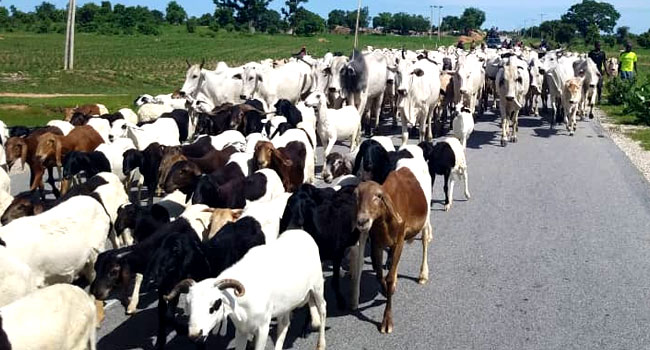
One key recommendation is the blocking of beef exports from Nigeria, a measure intended to encourage Fulani herdsmen to disarm amid reports of increasing attacks on Christian communities.

The committees also recommended continuing visa restrictions on individuals involved in violence against Christians and violations of religious freedom.

The full recommendations include:

Recommendations

➤ A bilateral agreement between the United States and the Government of Nigeria to protect vulnerable Christian communities, eliminate jihadist activity, enhance economic cooperation, and counter regional adversaries such as the Chinese Communist Party and the Russian Federation. The agreement should include:

Commitments by the Government of Nigeria to co-fund humanitarian assistance, including through faith-based organisations, and prioritise Internally Displaced Persons and host communities in the predominantly Christian Middle Belt region;

Support for early-warning systems to prevent attacks and kidnappings, including the deployment of capable security forces to respond rapidly and hold those who ignore warnings accountable;

Removal of Fulani militias from confiscated farmland and facilitation of the voluntary return of displaced communities, with security and infrastructure support to encourage agricultural productivity;

Expansion of security cooperation with the United States, including divestment of Russian military equipment in favour of American systems through sales and financing.

➤ Technical support for the Nigerian government to reduce and eliminate violence from armed Fulani militias through:

A demobilisation, disarmament, and reintegration programme to address illicit weapons while enabling lawful self-defence;

Support for the Ministry of Livestock and ranching initiatives alongside land reform efforts;

Strengthening the recruitment and operational capabilities of security forces to respond to violent attacks.

➤ Enhanced counter-terrorism cooperation to eliminate foreign terrorist organisations posing security threats, including the provision of defence equipment and relevant drawdown authorities.

➤ Measures to counter the influence of Chinese illegal mining operations and their alleged practice of funding Fulani militias through protection payments.

➤ Implementation of the National Security, Department of State, and Related Programs Appropriations Act, 2026, including:

Accountability mechanisms requiring demonstrable progress before additional funds are released;

Programmes to strengthen religious freedom, legal reforms, policing, and anti-money laundering capabilities;

Efforts to disrupt terrorist financing and recover illicit funds linked to militias;

Oversight of U.S. aid through a Government Accountability Office audit;

Investments via the U.S. Development Finance Corporation, particularly in the Middle Belt.

➤ Public enforcement of directives under the Country of Particular Concern designation to identify and hold perpetrators accountable.

➤ Sanctions on individuals and groups involved in violence against Christians or religious persecution.

➤ Continued visa restrictions for those implicated in religious violence.

➤ Calls for the repeal of Sharia-based codes and anti-blasphemy laws.

➤ Use of leverage, including restrictions on beef and cattle product exports to countries such as Ivory Coast, Ghana, South Africa, and Senegal, to encourage disarmament by Fulani herdsmen.

➤ Strengthening of diplomatic staffing in Nigeria.

➤ Improvements to the Foreign Military Sales process to expedite procurement of defence equipment.

➤ A National Intelligence Estimate on sectarian and communal violence in Nigeria and consideration of classifying Fulani militia groups linked to terror activities as Foreign Terrorist Organisations.