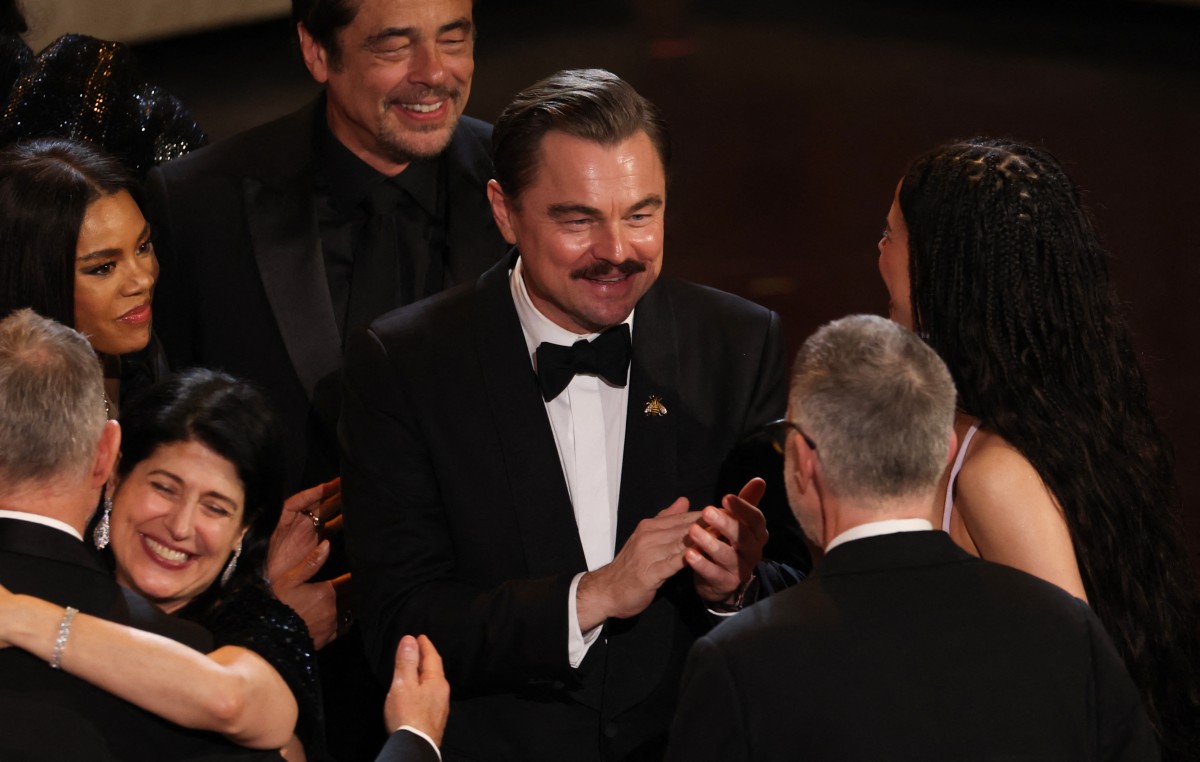
“One Battle After Another” on Sunday won the Oscar for best picture, capping a brilliant awards season.
The zany political thriller bested “Bugonia,” “F1,” “Frankenstein,” “Hamnet,” “Marty Supreme,” “The Secret Agent,” “Sentimental Value,” “Sinners” and “Train Dreams.”
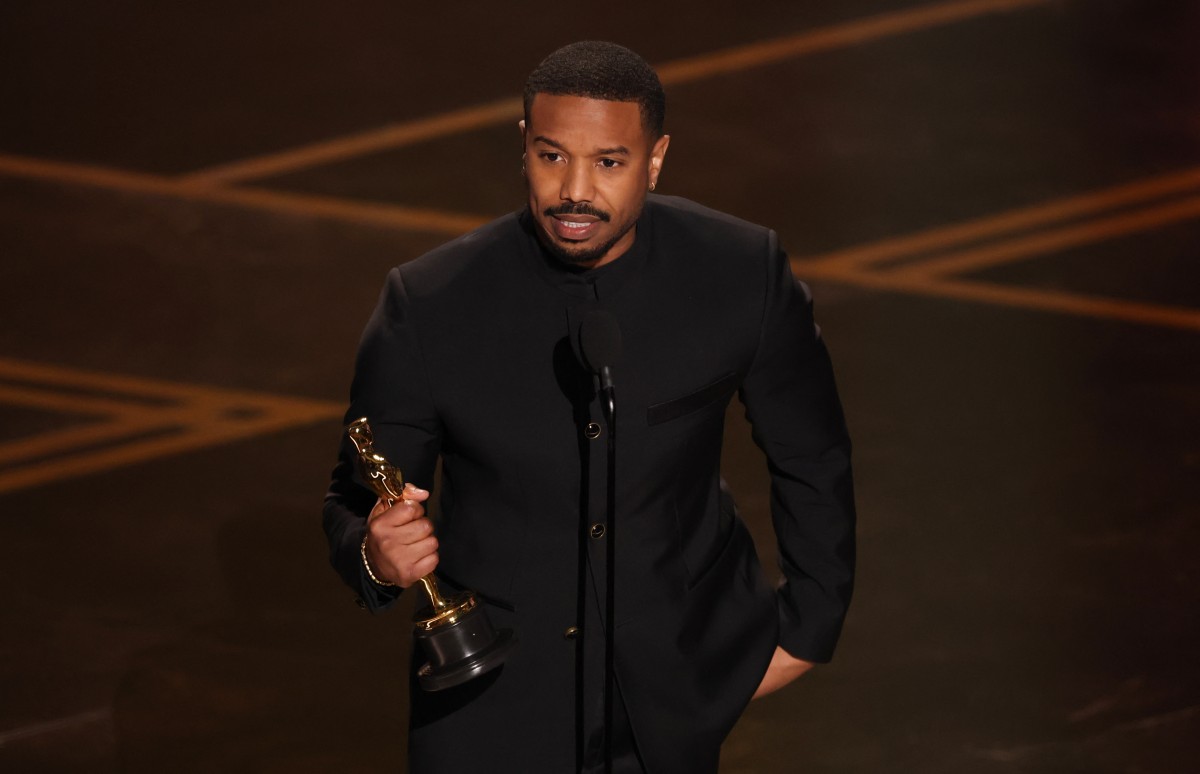
Michael B. Jordan on Sunday won the best actor Oscar for playing twins confronted with pure evil in vampire race fable “Sinners” — tortured fighters typical of the roles director Ryan Coogler has repeatedly created for him.
Jordan made good on the momentum he gained by winning the SAG Actor Award two weeks ago to bring home an Academy Award in his first try.
He bested “Marty Supreme” star Timothee Chalamet, who had been the frontrunner for most of Hollywood’s awards season, along with Leonardo DiCaprio of “One Battle After Another,” Wagner Moura (“The Secret Agent”) and Ethan Hawke (“Blue Moon”).
At age 39, Jordan joins a small circle of Black actors who have won the prestigious Best Actor Oscar, after Sidney Poitier, Denzel Washington, Forest Whitaker and Will Smith.
“I stand here because of the people who came before me,” an emotional Jordan told the audience.
READ ALSO: Paul Thomas Anderson Wins Best Director Oscar For ‘One Battle After Another’
“Sinners,” a supernatural tale of racial segregation in 1930s Mississippi, was a box office success in large part due to Jordan’s compelling performances as Smoke and Stack, World War I veterans who return home after working in organised crime in Chicago.
The brothers want to open an off-the-books juke joint, smack in the middle of the Prohibition era.
Of course, they want to make some money, but they also want to help the locals drown their sorrows in alcohol and the blues.
Things quickly go sour when white vampires come calling, looking to quench their thirst for blood and music.
‘Charisma’
The twin roles fall right in line with other characters designed for Jordan by Coogler, who has featured the actor in all of his films — always a complicated, imperfect man.
The pair started their collaboration with “Fruitvale Station” (2013), in which Jordan played Oscar Grant, a young Black man battling fate until he is shot dead by a police officer.
They moved on to the titular boxer in “Creed,” tormented by his father’s legacy, and the villainous Killmonger of “Black Panther,” traumatized by being an orphan in a racist world.
Coogler says Jordan’s success in tough roles is a “testament to his charisma.”
“As soon as you put the camera on him, you just naturally care about the guy, he told The New York Times in April last year, when “Sinners” debuted.
The filmmaker has turned Jordan into a star over the last decade, even when the actor doubted he could overcome the perennial obstacles for Black performers in Hollywood.
Coogler “gave me the reassurance and the confidence that I needed,” Jordan told the Times in the same interview.
“It made me double down and fueled this fire that I had to make it a reality.”
‘Workaholic’
Born in California on February 9, 1987 and raised in Newark, New Jersey, Jordan’s teacher mom pushed him into modelling at age 11.
After a few commercials, Jordan picked up small television roles before his first real break, appearing in a season of the lauded HBO crime drama “The Wire” at age 15.
He then did stints on soap opera “All My Children” and the NBC football drama “Friday Night Lights” before moving on to the big screen with a role in 2012’s “Red Tails,” about the Tuskegee Airmen, a crew of Black pilots during World War II.
“Fruitvale Station” came out the following year, and his partnership with Coogler was sealed.
In 2015, the director called him back for “Creed,” a reboot of the “Rocky” franchise with Jordan playing Adonis, the son of Rocky’s nemesis Apollo Creed and Sylvester Stallone sliding back into his signature role — this time as Adonis’s trainer.
His first taste of the superhero genre came in the unfancied 2015 adaptation of “Fantastic Four” as Johnny Storm, the Human Torch, but “Black Panther” and its sequel solidified his presence in the Marvel cinematic universe.
Since then, Jordan has carefully managed his image.
He has made no secret of going to therapy to shed Killmonger’s demons, but has said little about his private life and described himself to GQ last year as a “workaholic” whose longest relationship lasted a year.
In recent years, he has moved into co-producing some of the films in which he has appeared, including “Just Mercy” and “Without Remorse.” He even directed the third installment of the “Creed” series himself.
He is directing and starring in an upcoming adaptation of “The Thomas Crown Affair,” expected in theaters in 2027, in which he will play the role of the gentleman thief previously taken on by Steve McQueen and Pierce Brosnan.
But Jordan has a new dream.
“I’m looking forward to directing something that I’m not in at all,” he told Vanity Fair earlier this year.
US actor Michael B. Jordan accepts the award for Best Actor in a Leading Role for “Sinners” onstage during the 98th Annual Academy Awards at the Dolby Theatre in Hollywood, California on March 15, 2026. (Photo by Patrick T. Fallon / AFP)HOLLYWOOD, CALIFORNIA – MARCH 15: (L-R) Adrien Brody presents the Actor in a Leading Role award for “Sinners” to Michael B. Jordan onstage during the 98th Oscars at Dolby Theatre on March 15, 2026 in Hollywood, California. Kevin Winter/Getty Images/AFP (Photo by KEVIN WINTER / GETTY IMAGES NORTH AMERICA / Getty Images via AFP)HOLLYWOOD, CALIFORNIA – MARCH 15: Michael B. Jordan accepts the Actor in a Leading Role award for “Sinners” onstage during the 98th Oscars at Dolby Theatre on March 15, 2026 in Hollywood, California. Kevin Winter/Getty Images/AFP (Photo by KEVIN WINTER / GETTY IMAGES NORTH AMERICA / Getty Images via AFP)HOLLYWOOD, CALIFORNIA – MARCH 15: Michael B. Jordan accepts the Actor in a Leading Role award for “Sinners” onstage during the 98th Oscars at Dolby Theatre on March 15, 2026 in Hollywood, California. Kevin Winter/Getty Images/AFP (Photo by KEVIN WINTER / GETTY IMAGES NORTH AMERICA / Getty Images via AFP)US actor Michael B. Jordan accepts the award for Best Actor in a Leading Role for “Sinners” onstage during the 98th Annual Academy Awards at the Dolby Theatre in Hollywood, California on March 15, 2026. (Photo by Patrick T. Fallon / AFP)US actor Michael B. Jordan accepts the award for Best Actor in a Leading Role for “Sinners” onstage during the 98th Annual Academy Awards at the Dolby Theatre in Hollywood, California on March 15, 2026. (Photo by Patrick T. Fallon / AFP)HOLLYWOOD, CALIFORNIA – MARCH 15: (L-R) Khalid Jordan, Michael A. Jordan, Michael B. Jordan, Donna Jordan and Jamila Jordan-Theus attend the 98th Oscars at Dolby Theatre on March 15, 2026 in Hollywood, California. Julian Hamilton/Getty Images/AFP (Photo by Julian Hamilton / GETTY IMAGES NORTH AMERICA / Getty Images via AFP)HOLLYWOOD, CALIFORNIA – MARCH 15: Michael B. Jordan attends the 98th Oscars at Dolby Theatre on March 15, 2026 in Hollywood, California. Julian Hamilton/Getty Images/AFP (Photo by Julian Hamilton / GETTY IMAGES NORTH AMERICA / Getty Images via AFP)
The Federal Government has said that some of the criticisms against the policies of President Bola Tinubu are out of a lack of adequate knowledge and sheer mischief.
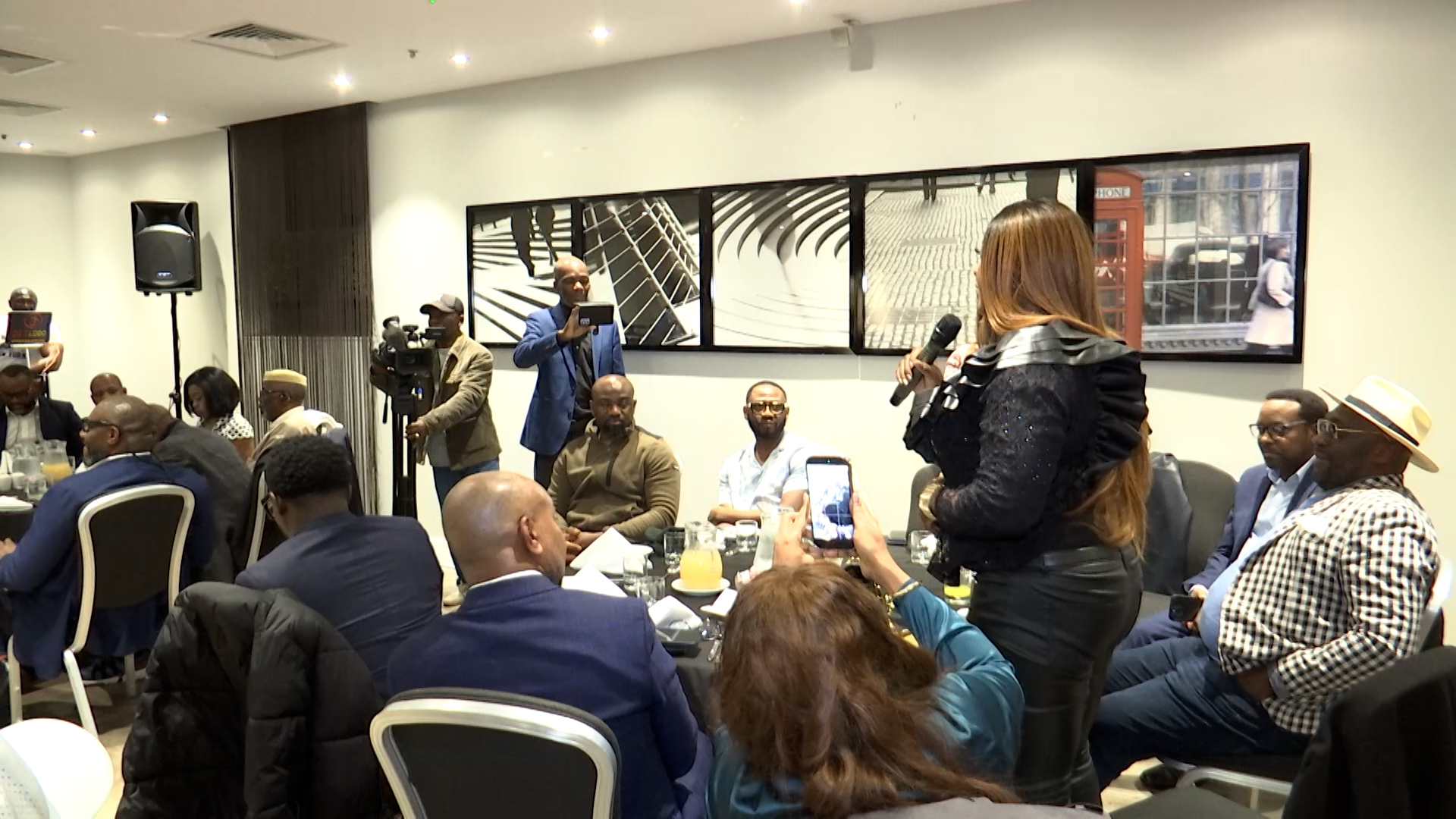
The Minister of Information and Orientation, Mohammed Idris, stated this during an engagement with the international media in the United Kingdom.
READ ALSO: Tinubu To Meet King Charles, Pay State Visit To UK
The meeting was part of preparations for President Bola Tinubu’s state visit to the UK this week.
“We know that Nigeria has had its own fair share of criticism about some of those policies that were instituted back home, some of them (criticism) arising from a lack of adequate knowledge and some out of sheer mischief,” he said.
On the visit, the minister said that Nigeria and the UK have maintained a strong partnership for decades, adding that the state visit would further strengthen the ties.
“This visit is significant in many ways. It highlights the historic and strategic relationship Nigeria and the United Kingdom, between Nigeria and the United Kingdom, a relationship that is built on deep diplomatic, economic, cultural, and democratic ties.
“For decades, our two countries have maintained a partnership that spans trade, education, security cooperation, cultural exchange, and shared democratic values.
“President Tumbu’s visit provides an important opportunity to strengthen collaboration across critical areas, including trade and investment, security cooperation, climate action, education, and technological innovation.
“It also reflects Nigeria’s growing importance as a key democratic and economic partner in Africa, and a responsible participant in global affairs,” Idris said.
“So, as communicators, we thought that it is important, regardless of whatever position anyone may have taken, to go through some of these programmes and policies that have happened in the last… close to three years, and then interact with you.
“Where you have questions, we take them; where you seek clarifications, we provide. Where we need to take some advice from you, we’ll also take and get back home,” he added.
President Tinubu will be hosted by His Majesty King Charles III in what is expected to be a landmark moment in UK–Nigeria relations.
The visit will combine the ceremonial traditions of a royal welcome with high-level engagements aimed at strengthening economic, diplomatic, and strategic ties between the two countries.
‘Wonderful Evening’
Last week, the king hosted members of the Nigerian diaspora in the UK to a pre-visit reception.
The reception featured jollof rice and live music by Dele Sosimi and the Afrobeats Orchestra.
King Charles hosted Nigerians in UK ahead of President Bola Tinubu’s state visit Photo credit: X/@RoyalFamily
The Royal Family described the event on its official X handle on Thursday as “a wonderful evening,” thanking those who attended the event.
“Last night, The King hosted a reception with members of the Nigerian diaspora in the UK, ahead of the incoming State Visit of the President of Nigeria.
“With jollof rice and music by Dele Sosimi and the Afrobeats Orchestra — it was a wonderful evening. Thank you to everyone who joined us,” it said.
Ahead of the planned state visit, UK authorities have activated airspace restrictions over Windsor Castle, which will reportedly be extended on March 18 to cover the period from 7 a.m. to 11:59 p.m.
Armed officers, search teams, the Mounted Section, road policing units, and Project Servator resources are expected to be deployed across Windsor, alongside an extensive CCTV network.
The Royal Family had announced in February an invitation to Tinubu from King Charles III.
“The President of the Federal Republic of Nigeria, Mr. Bola Ahmed Tinubu, accompanied by the First Lady, Mrs. Oluremi Tinubu, has accepted an invitation from His Majesty The King to pay a State Visit to the United Kingdom from Wednesday, 18th March to Thursday, 19th March 2026,” the statement read.
President Bola Ahmed Tinubu has pledged his administration’s support for the Nigerian media’s push for fair revenue from global technology companies, promising policy interventions to ease economic pressures on the industry.
Tinubu described the press as an “indispensable partner” in Nigeria’s democratic development and economic stability, assuring media leaders that his administration would back their campaign against what they describe as the dominance and anti-competitive practices of big tech companies.
The President gave the assurance during an inter-faith dinner with a delegation of the Nigerian Press Organisation (NPO) at the State House in Abuja.
“You have the government’s full support, because we know how important your work is to the sustenance of democracy,” he told the delegation on Friday.
He said the government would support evidence-based advocacy by the Nigerian media industry while working to dismantle fiscal obstacles and what he described as “digital cannibalisation” threatening the survival of local media organisations.
Tariff Review
As part of efforts to ease the financial burden on media organisations, Tinubu disclosed that the government was reviewing the tariff exemption list and could extend relief to key media production materials.
“You have the government’s full support, because we know how important your work is to the sustenance of democracy,” the President was quoted as saying in a statement by the Chief Executive Officer of NPAN, Segun Adediran, on Sunday.
Items under consideration include newsprint, printing plates, chemicals, and broadcast equipment used by radio and television stations, which currently attract tariffs of five to 10 per cent.
“If this happens, these items would enjoy a status similar to that of educational and research materials,” the statement added.
Soaring Costs
The President’s pledge comes at a time when the industry has been grappling with soaring costs of newsprint and broadcast equipment, putting financial pressure on media houses across the country.
Earlier, Deputy President of NPAN and Publisher of BusinessDay, Frank Aigbogun, speaking on behalf of the NPO, raised concerns about what he described as unfair practices by global technology firms.
According to him, some companies are increasingly “scraping” proprietary content from media organisations to train artificial intelligence models, sometimes by breaching digital paywalls.
Aigbogun said such practices were depriving Nigerian media organisations of a significant portion of their legitimate revenue.
He urged the president to direct the Federal Competition and Consumer Protection Commission (FCCPC) to work with the media industry to investigate the issue.
According to him, big tech dominance and anti-competitive practices are costing Nigerian media outlets as much as 70 per cent of potential revenue, running into hundreds of millions of dollars and resulting in job losses across the sector.
Govt Engaging Tech Giants
The Minister of Information and National Orientation, Mohammed Idris, said the government had already begun discussions with major technology companies, including Meta and Google.
“The government will not allow anybody to come here, reap from our economy, and go away without giving back,” the minister said.
He added that the administration was committed to ensuring a fair digital ecosystem that protects local content creators and media organisations.
High-Level Delegation
The NPO delegation was led by its President and Publisher of The Guardian, Lady Maiden Alex-Ibru.
Other prominent media leaders present included veteran publisher Sam Amuka-Pemu, Chairman of Channels Television, Dr. John Momoh; Chairman of THISDAY/ARISE News Channel, Prince Nduka Obaigbena; Director-General of the Nigerian Television Authority (NTA), Saliu Abdulhamid Dembos; and President of the Nigerian Guild of Editors (NGE), Eze Anaba.
Also present were former NPAN president Ray Ekpu, President of the Guild of Corporate Online Publishers (GOCOP), Danlami Nmodu, and President of the Nigeria Union of Journalists (NUJ), Alhassan Yahya Abdullahi.
Vice President Kashim Shettima and several senior presidential aides also attended the meeting.
Chaos erupted during the Peoples Democratic Party (PDP) state congress in Taraba State after two different candidates were announced as consensus winners for the party’s chairmanship position.
READ ALSO: ‘We Accept Reconciliation,’ Wike Gives Conditions For Peace Deal In PDP
The congress, organised by the Mohammed Abdulrahman-led faction of the PDP, initially began peacefully before descending into confusion following the announcement of two separate consensus lists.
Trouble started when a member of the congress committee declared Victor Falack as the consensus candidate and winner of the Taraba State PDP chairmanship position.
The announcement sparked outrage among party members.
Moments later, another committee member contradicted the declaration, announcing Ibrahim Sale as the consensus candidate and winner of the same position alongside other executive members.
The official argued that Falack had only served as the caretaker committee chairman of the party in Taraba and was appointed to oversee the party for just 30 days.
Following the announcement, Sale and other executives were immediately sworn in.
The development angered Falack’s supporters, who reportedly confronted the chairman of the congress committee for announcing a different candidate.
The disagreement quickly escalated into chaos, forcing security operatives to intervene.
Police officers eventually whisked the congress chairman away from the venue in a patrol van to prevent further violence.
The incident has deepened the leadership crisis within the PDP in Taraba State.
Attempts to reach Falack for comments were unsuccessful, as his phone lines were unreachable and messages sent to him had not been answered as of press time.
New Executives Emerge In Borno
Meanwhile, the Abdulrahman-led faction of the PDP also conducted a state congress in Borno State, where Abbas Aliyu emerged as the new state chairman.
Aliyu was elected alongside 34 other members of the state executive committee during the congress held in Maiduguri, the Borno State capital.
The newly elected executives were sworn in shortly after the exercise.
The congress was monitored by officials of the Independent National Electoral Commission (INEC).
Lingering Leadership Crisis
The developments come amid a prolonged leadership tussle within the PDP following a recent judgment of the Court of Appeal, which set aside the party’s Ibadan convention that produced Tanimu Turaki as national chairman.
The court ruling further deepened divisions within the party as rival factions continue to organise parallel activities across states.
The Turaki faction has rejected the judgment, insisting that the Ibadan convention complied with the party’s constitution and warning that attempts to overturn its outcome could worsen the crisis within the opposition party.
The Independent National Electoral Commission (INEC) recently announced a revised timetable for party activities ahead of the 2027 general elections, including new dates for political parties to conduct their primaries to select candidates.
INEC stated that party primaries (including resolution of disputes) are expected to be held between April 23 and May 30, 2026.
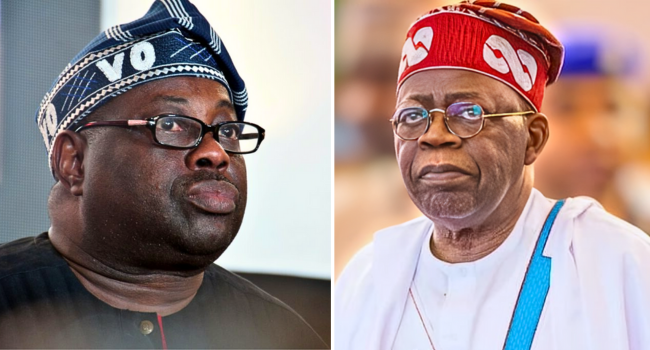
Former presidential candidate Dele Momodu has said that an opposition ticket involving Atiku Abubakar and a southern political figure could unseat President Bola Tinubu in the 2027 general election.
The ADC chieftain argued that a coalition ticket involving Atiku and a prominent southern politician such as Peter Obi or Rotimi Amaechi could significantly weaken the ruling party’s chances in the next election.
“I believe if we have a combination of Atiku, maybe with Peter Obi, maybe with Rotimi Amaechi, or any other person that comes from the South, Tinubu will be gone. It will be the end of Tinubu’s foundation, not the APC,” Momodu, a chieftain of the African Democratic Congress (ADC), said on Channels Television’s Sunday Politics.
READ ALSO: ADC Fixes National Convention For April 14, Says Ward Congresses Begin April 7
According to him, Atiku’s long-standing political ambition and experience position him as a formidable contender if he emerges as the opposition candidate.
“From my analysis, Atiku Abubakar – even those who didn’t like Atiku before – now he’s smelling like roses, because the enemy of your enemy is your friend. He has prepared forever, just like Donald Trump was preparing forever. People said Donald Trump is old, and like a joke, he is doing his second term now.
“I believe that there must be opposition politics; there must be opposition candidates. But Tinubu wants to contest against himself, and it doesn’t make sense to me,” Momodu said.
Asked whether he believes Atiku has what it takes to defeat Tinubu in 2027, Momodu said the former vice president’s political structure and persistence made him a strong contender.
According to him, the growing wave of defections from the Peoples Democratic Party (PDP) to the All Progressives Congress (APC) since Tinubu assumed office is troubling for Nigeria’s democracy.
He described the development as “a sad day for democracy,” warning that it could be dangerous if the PDP is left with only a handful of governors.
Atiku, Obi, and Amaechi, who were in different parties for the 2023 elections, have aligned in the ADC as part of an opposition coalition aimed at challenging the ruling APC in the 2027 general election.
All three leading figures in the coalition are widely regarded as potential presidential contenders under the ADC platform.
The alliance, which also has figures such as David Mark, Rauf Aregbesola, and Nasir El-Rufai, is seeking to build a united political front.