My Successor Will Emerge Based Loyalty To Oyo, Not Me — Makinde

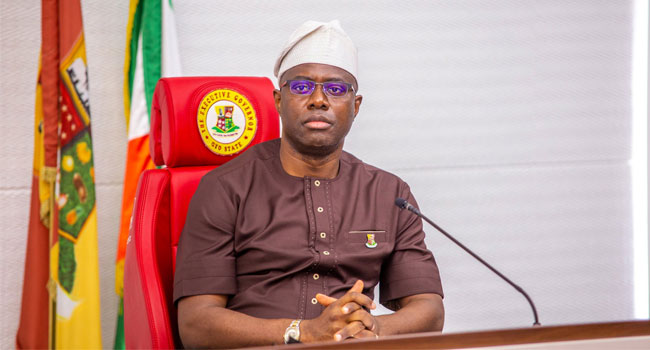
Oyo State Governor Seyi Makinde has said competence and loyalty to the people of the state will be the determining factors in choosing his successor ahead of the 2027 governorship election.

Makinde made the declaration at the 12th ‘Omituntun’ Annual Ramadan Public Lecture held at the Ibadan North Local Government Motor Park, Agodi Gate, Ibadan.

“I have been talking to quite a number of my colleagues, and they said the person they handed over power to got to office and started misbehaving. I asked them how they chose the person, supported him, but he changed when he got to the office.

“The common thread has been that they installed someone whom they felt would be loyal to them. Today, I have made up my mind that whoever would emerge as my successor would be based on competence and loyalty to Oyo State, not to Seyi Makinde,” he said.

“But moving forward, we don’t want to return to the period of political violence, irrespective of party affiliations. So, please keep praying that whoever would become the next governor should be loyal to the state,” the governor added.

He noted that his administration’s achievements were driven by loyalty to the state, adding that the government had paid over ₦25 billion to clear outstanding gratuities inherited from previous administrations.

READ ALSO: Governor Fubara Swears In SSG, Chief Of Staff

Makinde added that the monthly gratuity payment had been increased from ₦1 billion to ₦3 billion to ensure no retiree is owed by May 2027.

The governor also listed the upgrade of the Samuel Ladoke Akintola Airport to international status as a key milestone, expressing optimism that Hajj pilgrims would be airlifted from the facility by May 2026.

Makinde thanked the Muslim community for its support since he assumed office in 2019, urging continued prayers for the administration.

To mark the lecture, he donated seven buses to mosques across the state and presented a brand-new SUV to the guest lecturer, Sheikh Jamiu Ajadi Sanusi (Ami Olohun).

Sheikh Sanusi, delivering a lecture on contentment, praised the government’s developmental efforts, advised caution against “mischievous people,” and encouraged residents to embrace contentment and peaceful coexistence.

‘A Dependable Ally,’ Wike Leads Rivers Delegation To London For Mpigi Condolence Visit

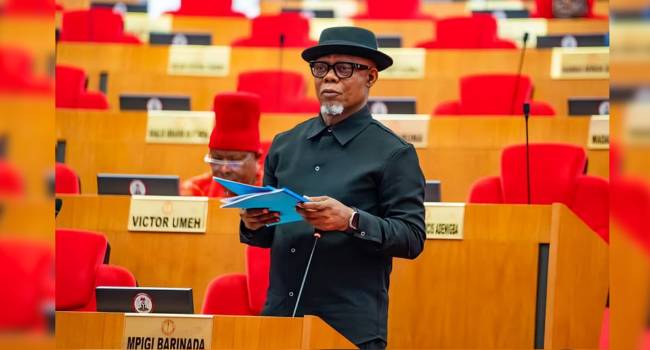
The Minister of the Federal Capital Territory, Nyesom Wike, has described the death of Senator Barinada Mpigi as a profound loss to Rivers State and Nigeria, paying tribute to him as “a dependable ally who stood by his friends, even during trying times.”

Mpigi, who represented Rivers South-East Senatorial District, died aged 64 on February 19, 2026, after a brief illness.

In a statement issued on Thursday by his Senior Special Assistant on Public Communications and Social Media, Lere Olayinka, Wike said he led a delegation of Rivers leaders to condole with the late senator’s family, including his wife, Patricia Mpigi, in London, assuring them of continued support and a befitting burial.

The minister was accompanied by his sons, Jordan and Joaquin, alongside the Speaker of the Rivers State House of Assembly, Martin Amaewhule, senators Magnus Abe, Allwell Onyesoh, and Olaka Nwogu, as well as the state chairman of the Peoples Democratic Party, Aaron Chukwuemeka, among other leaders.

READ ALSO: Rivers Senator Mpigi Dies At 64

Wike, during the visit, told the family that while the loss was painful, the delegation would remain supportive.

“We are here as a delegation sent by the leader of Rivers State… We were asked to come and see you before you return home,” he was quoted as saying.

“Your husband was a strong pillar in the politics of Rivers State… When he says he is your friend, he is your friend. He stands with his friends through thick and thin.

“We will play our own part. We will not forget Bari… we will be there with you and ensure that he is accorded a befitting burial,” Wike added, reflecting on Mpigi’s life.

Responding, Mrs. Mpigi expressed appreciation for the visit and support.

“Thank you for your presence and support. All I can say is thank you for all you have done,” she was quoted as saying.

Mpigi’s Political Career 

Mpigi served in the 10th National Assembly and previously spent two terms in the House of Representatives between 2011 and 2019.

He was Chairman of the Senate Committee on Works, where he played a significant role in federal infrastructure oversight.

A long-standing member of the PDP, he was widely regarded for his influence in Rivers politics, particularly in infrastructure development and educational empowerment initiatives.

The politician hailed from the Tai Local Government Area in the Ogoni region of Rivers State.

Governor Siminalayi Fubara earlier described the late lawmaker as “a brother, a consummate politician, and one of the leading lights in Rivers State,” while extending condolences to his family, constituents, and colleagues.

2027: I’m Ready To Serve,’ ‘Mọdele Sarafa-Yusuf Declares Ogun Governorship Bid

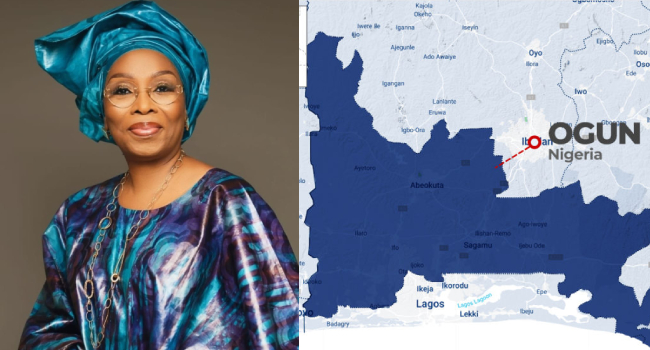
An award-winning journalist and public administrator, ’Mọdele Sarafa-Yusuf, has formally declared her intention to contest the 2027 governorship election in Ogun State.

READ ALSO: Ogun @ 50: Gov Abiodun Celebrates Legacy, Progress In State Broadcast

She pledged what she described as a “managed transition option” rooted in stability, unity, and institutional balance, if elected to succeed Governor Dapo Abiodun.

In an open letter dated February 26, 2026, Sarafa-Yusuf said her decision followed “deep reflection and wide consultation,” adding that she chose a public declaration to remain “honest, and focused on responsibility rather than spectacle.”

“I am presenting myself as the safest option.

“I bring experience working with government institutions and processes, broad appeal and acceptance across different parts of Ogun State, and calm under pressure,” she wrote.

Referencing her relationship with the outgoing governor, Sarafa-Yusuf emphasised continuity over confrontation.

“I have maintained a cordial and respectful relationship with the outgoing governor — the leader of our party. This is because I believe that continuity matters. Order matters. Transitions matter,” she said.

She also addressed zoning debates, particularly agitation from Ogun West, warning against what she termed “unmanaged grievance.”

“Our task is not to choose sides emotionally; it is to prevent a scenario where zoning becomes a blunt instrument that destabilises the entire state. What Ogun needs is inclusion without escalation,” she stated.

Sarafa-Yusuf, who previously contested in 2022 but did not secure her party’s ticket, said she accepted the outcome at the time without destabilising party structures.

“I did not fracture the system. I accepted the outcome, preserved relationships, and stayed engaged,” she wrote.

On the gender question, she acknowledged the broader national context.

“Nigeria has never elected a female governor, and I’m aware of the weight of breaking that ceiling,” she noted, adding, however, that her aspiration “is not about symbolism,” but about capacity and competence.”

If elected, she promised “result-oriented governance,” consolidation of Ogun’s industrial advantage, youth empowerment, infrastructure modernisation, and stronger trust between government and citizens.

“I believe Ogun State is ready for a future built on balance, unity, and effective leadership. I am ready to serve,” she added.

Ogun, one of Nigeria’s industrial hubs, is renowned for its strategic economic position, proximity to Lagos, and expanding infrastructure base.

Governor Fubara Swears In SSG, Chief Of Staff

The Governor of Rivers State, Siminalayi Fubara, has sworn in Dagogo Wokoma as Secretary to the State Government (SSG) and Sunny Ewule as Chief of Staff, charging them not to politicise their offices.

Speaking shortly after administering the oath of office, just hours after announcing their nominations, the governor emphasised that their roles are strictly administrative and service-driven.

Fubara advised the Chief of Staff against convening unauthorised meetings or engaging in external political activities without his approval, stressing that the position is primarily to serve as his personal aide and support the administration’s objectives.

He described the appointments as a call to duty rather than political patronage, noting that both officials are expected to help strengthen governance in the state.

READ ALSO: Tunji Disu Assumes Office As Acting IGP, Promises Professional, Accountable Policing

The governor urged the new SSG, a mathematics lecturer, to leverage his academic background to ensure diligence, objectivity and proper representation of the government in official matters.

Fubara reiterated that his administration remains focused on sustaining ongoing projects and advancing inherited programmes, adding that the overarching goal is to guarantee peace, progress and prosperity in the state.

He warned that any action capable of bringing the government into “disrepute” would not be tolerated, assuring that the activities of the new appointees would be closely monitored.

The governor also expressed confidence in his selections, describing the appointments as well-considered decisions aimed at supporting the administration’s agenda.

Addressing permanent secretaries present at the ceremony, Fubara directed those who have reached retirement age but remain in office to begin preparing their handover notes.

[VIDEO] Persecution: US President Won’t Stand By, Let Innocent Blood Be Shed — Trump’s Spiritual Advisor

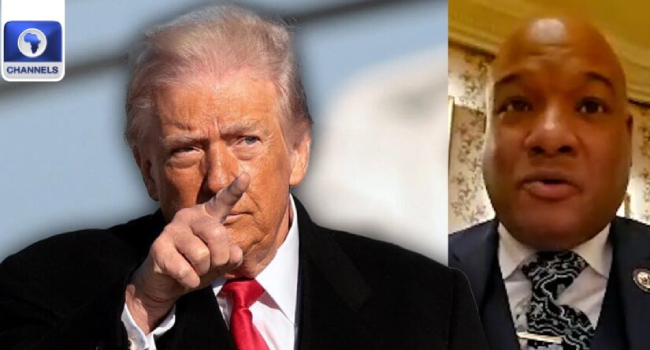
An American clergyman, Reverend Mark Burna, has said that US President Donald Trump will not allow the persecution of Christians in Nigeria to go unabated.

READ ALSO: [VIDEO] US Report: Cooperation With China, Russia Not Reason For Christians Persecution — Fr. Aniedi Okure

Burns, who is Trump’s spiritual advisor, told Channels Television in an interview that the US leader would not let innocent people continue to die.

His comments came amid the report submitted by the United States House Committees on Appropriations and Foreign Affairs to the White House outlining their findings and recommendations on the alleged persecution of Christians in Nigeria.

Watch the full interview below:


The report followed President Donald Trump’s decision to redesignate Nigeria as a Country of Particular Concern.

The US President subsequently directed Congressman Riley Moore and Chairman of the House Appropriations Committee, Tom Cole, to lead a comprehensive investigation into the reported persecution of Christian communities by terrorists, as well as the broader security challenges confronting Nigeria.

Opposition Parties Reject 2026 Electoral Act, Demand Fresh Amendment

Opposition political parties have rejected the 2026 Electoral Act recently passed by the National Assembly and signed into law by President Bola Tinubu.

The parties called on the National Assembly to immediately begin a fresh amendment process to remove what they described as “all obnoxious provisions” in the law.

Their position was made known at a press briefing themed “Urgent Call to Save Nigeria’s Democracy,” held at the Transcorp Hilton Hotel in Abuja on Thursday.

In a communiqué read by the Chairman of the New Nigeria Peoples Party (NNPP) Ahmed Ajuji, the opposition leaders stated: “We demand that the National Assembly immediately commence a fresh amendment to the Electoral Act 2026, to remove all obnoxious provisions and ensure that the Act reflects only the will and aspiration of Nigerians for free, fair, transparent and credible electoral process in our country. Nothing short of this will be acceptable to Nigerians.”


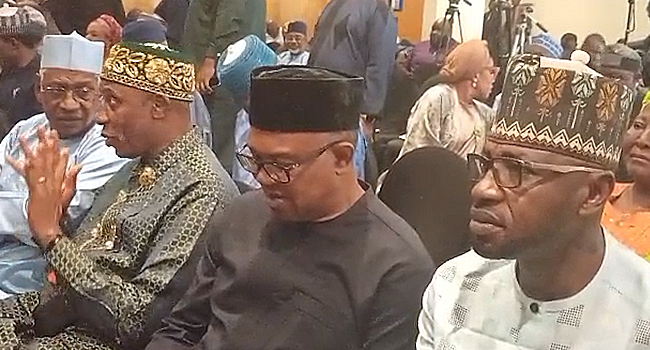
Some of the opposition leaders present in at the event include former Senate President David Mark, former Osun State governor Rauf Aregbesola, former Vice President Atiku Abubakar, former Rivers State governor Rotimi Amaechi, and former Anambra State governor Peter Obi, all from the African Democratic Congress (ADC).

The National Chairman of the New Nigeria Peoples Party (NNPP), Ahmed Ajuji, and other prominent members of the NNPP, notably Buba Galadima, were also in attendance.

coalition said the amended law, signed by Bola Tinubu, contains “anti-democratic” clauses, which they argue may weaken electoral transparency and public confidence in the voting system.

Rejection Of Key Provisions

At the centre of the opposition’s concerns is the amendment to Section 60(3), which allows presiding officers to rely on manual transmission of election results where there is communication failure.

According to the coalition, the provision weakens the mandatory electronic transmission of results and could create loopholes for manipulation.

READ ALSO: Tinubu Signs Electoral Act 2026 Into Law, Says ‘We Need To Avoid Glitches, Unnecessary Hacking’

They argued that Nigeria’s electoral technology infrastructure is sufficient to support nationwide electronic transmission, citing previous assurances by officials of the Independent National Electoral Commission (INEC).

The parties also rejected the amendment to Section 84, which restricts political parties to direct primaries and consensus methods for candidate selection.

They described the change as an unconstitutional intrusion into the internal affairs of parties, insisting that indirect primaries remain a legitimate democratic option.

FCT Election Concerns 

The opposition cited alleged irregularities in the recent Federal Capital Territory local government elections as evidence of what they described as a broader pattern of electoral compromise.

They characterised the polls as a “complete fraud” and said the outcome has deepened their lack of confidence in the ability of the electoral system to deliver credible elections in 2027.

The coalition also condemned reported attacks on leaders of the African Democratic Congress in Edo State, describing the incidents as a serious threat to democratic participation and political tolerance.

They warned that increasing violence against opposition figures could destabilise the political environment if not urgently addressed.

In their joint statement, the opposition parties pledged to pursue “every constitutional means” to challenge the Electoral Act 2026 and safeguard voters’ rights.

“We will not be intimidated,” the leaders said, urging civil society organisations and citizens to support efforts aimed at protecting Nigeria’s democratic system.

Electoral Act 2026 And Controversy

On February 18, 2026, President Bola Tinubu signed the Electoral Act (Amendment) 2026 into law following its passage by the National Assembly. The Act introduced several reforms, including statutory recognition of the Bimodal Voter Accreditation System and revised election timelines.

However, opposition figures such as Atiku Abubakar and Peter Obi have also called for further amendments, particularly over the manual transmission fallback clause, which critics say leaves room for manipulation.

The president said the law will strengthen democracy and prevent voter disenfranchisement.

Tinubu defended manual collation of results, questioned Nigeria’s readiness for full real-time electronic transmission, and warned against technical glitches and hacking.

The Electoral Act sparked intense debate in the National Assembly over how election results should be transmitted ahead of the 2027 general elections.

Civil society groups under the “Occupy NASS” campaign demanded real-time transmission to curb manipulation.

In the Senate, lawmakers clashed during consideration of Clause 60, which allows manual transmission of results if electronic transmission fails.

Senator Enyinnaya Abaribe (ADC, Abia South) demanded a formal vote to remove the proviso permitting manual transmission, arguing against weakening real-time electronic reporting.

The move led to a heated exchange on the floor, with Senate President Godswill Akpabio initially suggesting the demand had been withdrawn.

After procedural disputes and a brief confrontation among senators, a division was conducted. Fifteen opposition senators voted against retaining the manual transmission proviso, while 55 supported it, allowing the clause to stand.

Earlier proceedings had briefly stalled during clause-by-clause review, prompting consultations and a closed-door session.

In the House of Representatives, a similar disagreement came up over a motion to rescind an earlier decision that mandated compulsory real-time electronic transmission of results to IReV.