ADC Faults Revised 2027 Timetable, Says Fielding Candidates ‘Almost Impossible’

The African Democratic Congress (ADC) has rejected the revised election timetable released by the Independent National Electoral Commission (INEC), warning that the new schedule and legal requirements could make it “almost impossible” for opposition parties to field candidates for the 2027 general elections.

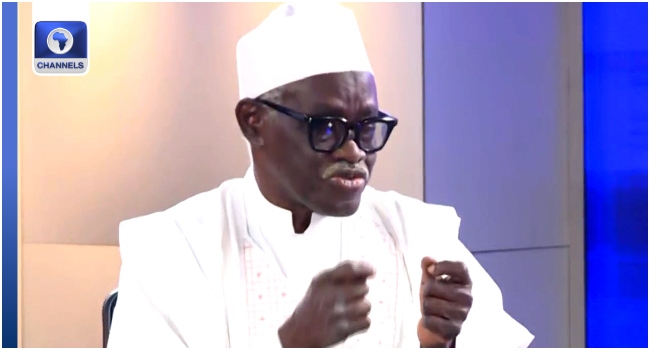
The party’s National Publicity Secretary, Bolaji Abdullahi, in an interview on Channels Television’s Politics Today,  said the party’s position stems from its broader objection to the Electoral Act 2026, which he argued contains provisions that create significant compliance hurdles for smaller parties.

“The rejection of the timetable is only consequential to our rejection of the Electoral Act 2026. It is very clear when INEC released its timetable that some of the requirements we will need to meet to field candidates for the 2027 elections, as contained in the Act, are almost impossible for us to meet,” he said on Friday’s edition of the show.

Abdullahi explained that the law requires parties to submit a fully digitalised membership register across all 36 states within a short timeframe when notifying INEC of congresses or conventions.

“What the law expects us to do is that within the next 32 days or so, we will have a digitalised membership register in all the 36 states of the federation that we will be able to submit to INEC while giving them notice of our congresses or conventions. It is almost practically impossible for us to do this,” he said.

READ ALSO: INEC Releases Revised 2027 Elections Timetable; Presidential Poll To Hold Jan 16

‘Structural Disadvantage’

The ADC spokesperson also compared the requirement with the preparations of the ruling All Progressives Congress (APC), alleging that the governing party had a significant head start.

“We know for a fact that the ruling APC has commenced membership registration since February 2025 and actually hired a consultant to help them in the process of developing a digital register ahead of the 2027 election.

“What took them more than one year to do is what they expect us to do in one month,” he said.

He described the provisions as deliberate obstacles designed to weaken opposition participation.

“Even in practical terms, these are booby traps set in the path of opposition parties because if you look at the law, it says our failure to comply means we will not be able to field candidates for the election… It is all part of the game plan,” the ADC chieftain said.

The party maintains that the timetable, combined with the legal framework, is “not democratic” and could undermine the credibility of the 2027 polls if not reviewed.

Revised Timetable

Nigeria’s preparations for the 2027 general elections entered a new phase after INEC adjusted key dates following the repeal of the Electoral Act 2022 and the enactment of the Electoral Act 2026, signed into law by President Bola Tinubu.

In a statement, National Commissioner and Chairman of the Information and Voter Education Committee, Mohammed Haruna, said the revision was necessary to align the electoral calendar with the new legal framework.

He noted that the commission had initially scheduled the following:

Presidential and National Assembly elections for February 20, 2027

Governorship and State Assembly elections for March 6, 2027

However, the dates were brought forward partly after concerns that the earlier timetable coincided with the Ramadan fasting period.

New Election Dates

This prompted the commission to reschedule the activities for the polls as follows:

Presidential and National Assembly elections: 16 January 2027

Governorship and State Assembly elections: 6 February 2027

INEC also released a detailed build-up schedule, including:

Party primaries (including dispute resolution): April 23 – May 30, 2026

Start of presidential and NASS campaigns: August 19, 2026

Start of governorship and state assembly campaigns: September 9, 2026

Campaigns are required by law to end 24 hours before election day.

Haruna emphasised that the timetable complies with the constitution and urged stakeholders to cooperate to ensure peaceful and credible elections.

Other Electoral Adjustments

Beyond the general elections, INEC announced a minor change to the governorship poll in Osun State, shifting it to August 15, 2026, from the earlier date of August 8.

The Commission said outstanding activities in both the Osun and Ekiti processes would strictly follow the provisions of the Electoral Act 2026.

While INEC maintains that the revised timetable ensures compliance with the law and inclusivity, opposition parties argue that operational and administrative requirements could reshape the competitive landscape if not revisited.

Court Remands Malami, Son, Wife Over ₦8.7bn Money Laundering Charges

Justice Joyce Abdulmalik of the Federal High Court, Abuja, has remanded former Attorney General and Minister of Justice Abubakar Malami, his son, Abdulaziz, and his wife, Asabe, at Kuje and Suleja correctional centres, following their re-arraignment by the Economic and Financial Crimes Commission (EFCC) on alleged money laundering charges.

Justice Abdulmalik issued the order shortly after they pleaded not guilty to a 16-count charge to the tune of ₦8.7 billion in corruption charges.

In the same vein, the judge granted the ex-AGF and his son 200 million naira bail in the charges bordering on alleged terrorism and illegal possession of firearms brought against them by the Department of State Services (DSS).

The judge ordered the former AGF and his son to get two sureties, each one of whom must own landed property either in Maitama or Asokoro.

Justice Abdulmalik said that the title of the property must be deposited with the deputy chief registrar of the court, along with valid passports.

The sureties are also to depose to an affidavit of means and submit their two recent passport photographs to the court.

Malami and his son were also ordered to submit their passports and recent passport photographs to the court.

The judge subsequently fixed March 4 for the commencement of the trial.

They were, however, ordered to be remanded at Kuje Correctional Centre pending the perfection of the bail conditions.

Justice Obiora Egwuatu had, on February 12, withdrawn from the case shortly after the civil case filed by the EFCC was brought to him.

The case was formerly before Justice Emeka Nwite, who sat as a vacation judge during the Christmas/New Year break.

After the vacation period, the CJ reassigned the cases to Justice Egwuatu, who had now recused himself, before it was reassigned to Justice Abdulmalik.

The former AGF, his wife, and son were earlier arraigned before Justice Nwite on December 30, 2025.

Court Sentences ‘Akwa Okuku’ To Cumulative 24 Months’ Jail

A self-acclaimed native doctor, popularly known as “Akwa Okuku Tiwara Aki n’Oba,” has been sentenced to two years’ imprisonment following his arrest by the Anambra State Government last year.

The High Court sitting in Awka, however, ruled that part of the sentence will run concurrently with the period already spent in custody, effectively leaving him with eleven months to complete his jail term.

READ ALSO: [Sit-At-Home] Anambra Shuts Auto Spare Parts Market For One Week

According to the ruling, after serving the prison term, he will take up the following activities as ordered by the court:

  1. He will become an ambassador for youth reorientation.
  2. ⁠His Oba shrine will be destroyed
  3. ⁠He will no longer practise “Okeite” and won’t administer such charms.
  4. ⁠Upon completion of his term, he will make a public statement denouncing “Okeite” and such charm practices
  5. ⁠He will serve his prison term at Awka Correctional Centre.

He was arrested over alleged shady fetish activities linked to dangerous charms prepared for youths for financial boom, among other charges.

The arrest forms part of the state’s crackdown on criminal elements and fraudulent practices impacting the people of Anambra State negatively.

Ogun Awards ₦6.1bn Contract For Construction Of Court Of Appeal Complex

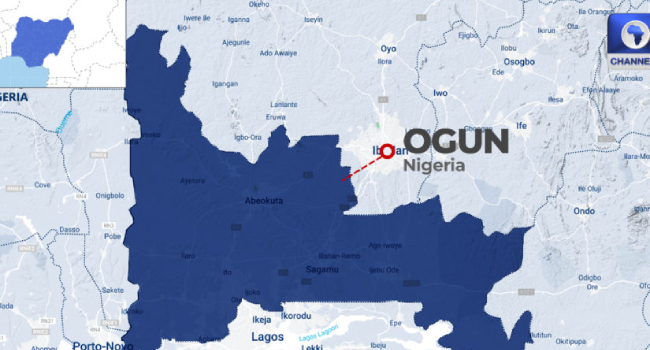
The Ogun State Government has approved the award of a contract for the construction of an Abeokuta Division of the Court of Appeal complex in Abeokuta.

The approval was granted at the Ogun State Executive Council meeting held in Abeokuta on Friday.

Ogun State’s Attorney General and Commissioner for Justice, Oluwasina Ogungbade (SAN), provided the details of the contract after the meeting.

The contract, valued at ₦6,118,098,154.70, provides for the development of the court complex on a 2.6-hectare parcel of land adjoining the existing State Judiciary Complex in Olipakala Village via the Kobape area of Abeokuta, within the Judiciary Cluster along the Abeokuta–Sagamu Expressway.

This is part of the steps by the state government towards deepening access to justice and bringing appellate adjudication closer to the people of Ogun State.

A review by the Ministry of Justice showed that a clear majority of appeals currently heard by the Ibadan Division of the Court of Appeal emanate from Ogun State.

The absence of a division within the state has, over the years, increased the financial burden on litigants and legal practitioners and, in some instances, contributed to delays in the resolution of appeals.

READ ALSO: [2027: ‘I’m Ready To Serve,’] ‘Mọdele Sarafa-Yusuf Declares Ogun Governorship Bid

The state government has consistently demonstrated readiness for the takeoff of the Abeokuta Division. In preparation, six duplexes were constructed on 4,359 square metres of land in Ibara Housing GRA to serve as official residences for justices of the division. In addition, twenty bungalows at the Prince Court Estate, Kobape, have been set aside for support staff.

In 2025, the state received approval from the president of the Court of Appeal for the Abeokuta Division to commence operations.

This followed the special sitting of the court in Abeokuta in May 2024, during which about ten panels sat in the state and disposed of over 150 appeals within three days.

The groundbreaking ceremony for the new Court of Appeal complex will take place in the coming days, while construction is expected to be completed within twelve months.

2027: INEC Commissioner Defends Timetable, Says Party Digital Membership Deadline Feasible

A National Commissioner with the Independent National Electoral Commission (INEC) defended its timetable, stating that the timeline provided to political parties for establishing a comprehensive digital membership is quite feasible.

The commission, on Thursday, released a revised timetable outlining timelines for party compliance, voter registration processes, and other pre-election activities.

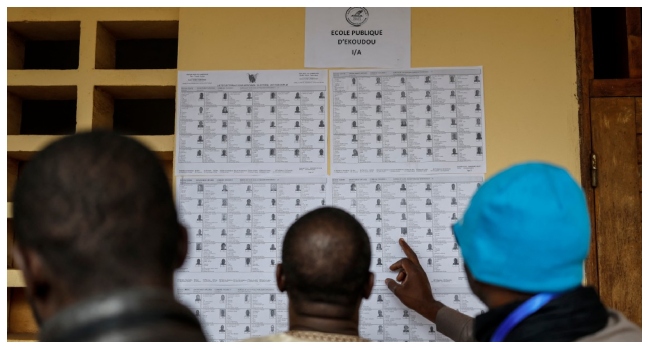
The timetable requires political parties to submit detailed digital membership registers by April 2, 2026, which has led to objections from various political parties.

But the agency’s national commissioner, Mohammed Kudu Haruna, during an interview on Channels Television on Politics Today on Friday, dismissed claims that political parties face difficulties meeting membership requirements.

“I don’t see what the big problem or big issue with membership is. Right now, they are supposed to have had their membership sorted out.”

“Every serious party should have no problem collating its membership,” he said.

Meanwhile, the spokesman of an opposition party, the African Democratic Congress (ADC), who also appeared on the show, Bolaji Abdullahi, claimed that the amendment of the Electoral Act was a tactic by the ruling All Progressives Congress (APC) to rig the 2027 elections.

He emphasised that his party would not permit this.

”What I can assure you is that ADC will not be used to legitimise a fraudulent process,” Bolaji said.

However, Haruna was confident that completing the registration process within the stipulated timeline should not be a challenge.

“I don’t think that it is difficult to have that registration process done by April,” he noted.

Reacting to the rejection of the timetable by the ADC, Haruna maintained that the commission is bound strictly by existing laws.

“They are entitled to their opinion. That is the law of the land. INEC doesn’t have the pleasure of rejecting any law. It is guided by what the law is,” he said.

Despite defending the timetable, the commissioner acknowledged that the schedule presents operational pressures for the commission.

“Of course, we are bothered by it. We need six months now for our money to be released, and a lot of the things we require are not off the shelf,” he said.

Haruna explained that INEC would need to procure additional Bimodal Voter Accreditation System (BVAS) machines to replace lost units, as well as print ballot papers and result sheets.

While the commission previously printed much of its materials internally, he said several raw materials were sourced externally.

“INEC is getting ready, but I can’t tell you that we are ready because we have yet to get the money for the sensitive materials,” he stated.

The commissioner also revealed plans to revalidate the voter register but expressed concern over public participation in the process.

“We intend to do a revalidation of the voter register, but the main problem is we have a period of publication for objections and so on, and people never get back to us; sometimes it is a kind of self-indictment,” he said.

On whether the forthcoming election would be glitch-free, Haruna was cautious.

Bill Clinton Faces Grilling On Significant Epstein Ties

Former US president Bill Clinton faces a grilling from a Congressional panel on Friday on his well-documented links to Jeffrey Epstein, as Democrats seek to shift focus onto Donald Trump’s own ties to the convicted sex offender.

Clinton features prominently throughout the latest Epstein files disclosures, with the former president insisting that he broke ties with him well before the disgraced billionaire’s 2008 conviction for sex offences.

Mere mention in the files released by the US Department of Justice does not imply wrongdoing, and Clinton has not been accused of a crime or formally investigated.

READ ALSO: Bill Gates Admits Affairs But Denies Involvement In Epstein Crimes

He follows his wife, former Secretary of State Hillary Clinton, who testified Thursday, defiantly calling for President Trump — who, like Bill Clinton, had ties with Epstein — to appear before the panel.

“If this committee is serious about learning the truth about Epstein’s trafficking crimes… it would ask (Trump) directly under oath about the tens of thousands of times he shows up in the Epstein files,” she said in an opening statement published online.

The depositions under oath are being held behind closed doors, with Bill Clinton likening the proceedings to a “kangaroo court.” The couple has called for them to be open and televised.

The grilling comes with greater peril for the former president than for his wife, as he has acknowledged extensive interactions with Epstein, but said he never visited the shady financier’s private Caribbean island.

Epstein mingled with the world’s rich, famous and powerful, and was convicted in 2008 for soliciting sex from girls as young as 14.

He died in a New York jail cell in 2019 while facing trial on sex trafficking charges. His death was ruled a suicide.

The Republican-led House Oversight Committee is probing those who were linked to Epstein, particularly in light of the Justice Department’s disclosures of millions of new documents related to its investigation of him.

Hillary insisted that she had neither flown on Epstein’s plane nor visited his island.

The Clintons had initially rejected subpoenas ordering them to testify in the panel’s probe, but the Democratic power couple agreed to do so after House Republicans threatened to hold them in contempt of Congress.

– Newly released pictures –

Former US Secretary of State Hillary Clinton speaks to the press after her deposition with the House Oversight Committee as they investigate links to convicted sex offender Jeffrey Epstein, in Chappaqua, New York, on February 26, 2026.

Hillary Clinton said in her opening statement to the panel that it “justified its subpoena to me based on its assumption that I have information regarding the investigations into the criminal activities of Jeffrey Epstein and Ghislaine Maxwell.”

“Let me be as clear as I can. I do not.”

Democrats say the investigation is being weaponised to attack Trump’s political opponents rather than to conduct legitimate oversight.

Bill Clinton features prominently in the trove of investigative files related to Epstein released by the Justice Department, but has not been accused of any wrongdoing.

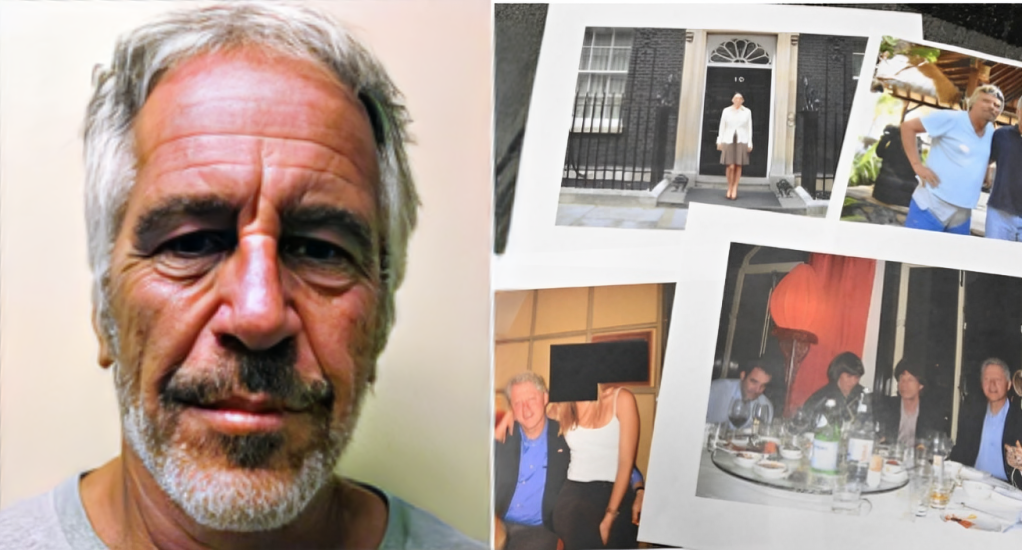
Previously unseen photographs from the files include one showing the former president reclining in a hot tub, part of the image obscured by a stark black rectangle.

In another, Clinton is pictured swimming alongside a dark-haired woman who appears to be Epstein’s accomplice, Ghislaine Maxwell.

Clinton has acknowledged flying on Epstein’s private plane several times in the early 2000s for Clinton Foundation-related humanitarian work.

This undated photo from the personal collection of Jeffrey Epstein, provided by the Democrats on the House Oversight Committee on December 12, 2025, shows US President Donald Trump (L), flanked by Epstein (C), talking to an unknown woman. Democratic lawmakers released a new cache of photos on Friday from the estate of convicted sex offender Jeffrey Epstein that includes images of US President Donald Trump and former president Bill Clinton,  AFP) /

David Markus, an attorney for Maxwell, said recently that Clinton and Trump are “innocent of any wrongdoing.”

The depositions are being held in Chappaqua, New York, where the Clintons reside.

Dozens of journalists have converged on the wealthy hamlet, and the Secret Service erected metal barricades around the arts centre where the depositions are happening.