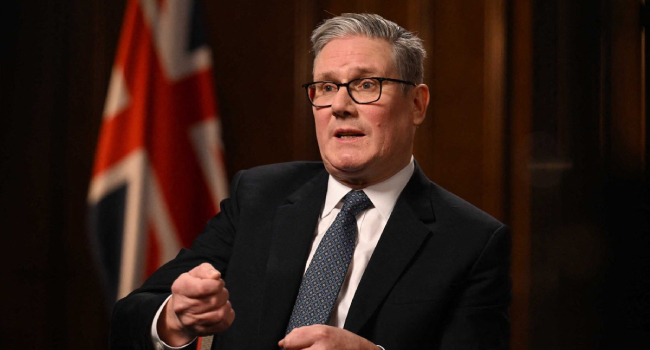
Starmer Says UK Warplanes Involved In ‘Defensive’ Mideast Actions

Prime Minister Keir Starmer said Saturday British warplanes were involved in “defensive operations” in Middle East skies but the UK had “played no role” in the US-Israeli attack on Iran.

In his first public response to the strikes, which triggered missile launches from Tehran, Starmer said that Britain’s operations were separate from the attack on Iran and “in line with international law”.

“The United Kingdom played no role in these strikes,” he said in a short televised statement.

“As part of our commitments to the security of our allies in the Middle East we have a range of defensive capabilities in the region — which we’ve recently taken steps to strengthen,” the UK leader added.

“Our forces are active and British planes are in the sky today as part of coordinated regional defensive operations to protect our people, our interests and our allies.”

READ ALSO: Trump Has No Plans To Address Nation Saturday After Iran Attacks — White House

Starmer spoke after holding an emergency meeting with senior UK ministers and officials and separate talks with European counterparts, in response to the evolving conflict in the Middle East.

In his comments, he argued Iran “can end this now” and that Tehran “should refrain from further strikes, give up their weapons programmes, and cease the appalling violence and repression against the Iranian people”.

“That is the route to de-escalation and back to the negotiating table,” Starmer said.

Earlier, his government warned the military strikes against Iran could blow up into a broader regional conflict, while adding the UK’s “immediate priority” was the safety of its citizens in the region.

In a message on X, the Foreign Office urged its citizens in Bahrain, Kuwait, Qatar and United Arab Emirates to “immediately shelter in place” because of reported missile attacks on sites in those countries.

The ministry also updated its travel advice to urge “against all travel to Israel and Palestine”.

Meanwhile British Airways was among the airlines to say it has cancelled flights to and from Tel Aviv and Bahrain for several days, and its Saturday flight to Amman, because of the US-Israel airstrikes and Iran’s retaliation.

Wizz Air, which also flies to the region from Britain, confirmed that it was suspending all flights to and from Israel, Dubai, Abu Dhabi and Amman “with immediate effect up until and including March 7”.
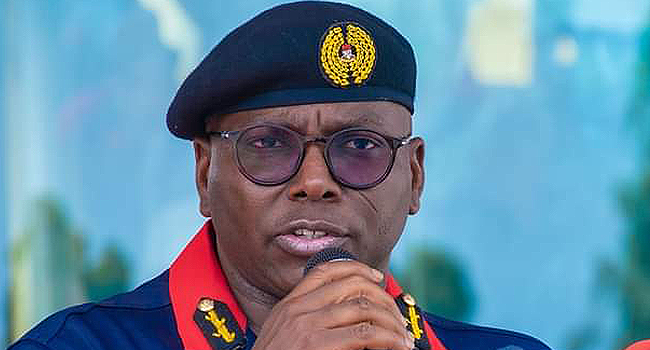
Tinubu Renews Tenure Of NSCDC Commandant-General Audi

President Bola Tinubu has approved the reappointment of Ahmed Abubakar Audi as the Commandant-General of the Nigeria Security and Civil Defence Corps (NSCDC) for a fresh five-year term.

The renewal, which took effect from Friday, February 27, ensures that Audi continues in office following the expiration of his initial tenure. He was first appointed in 2021 by former President Muhammadu Buhari.

The announcement of his reappointment was conveyed in a statement signed by the President’s Special Adviser on Information and Strategy, Bayo Onanuga, on Saturday.

Audi’s first five-year term concluded last Friday, coinciding with activities marking the 2026 World Civil Defence Day at the NSCDC National Headquarters in Abuja. He is expected to resume his duties on Monday under the renewed mandate.

READ ALSO: Four Suspects Arrested As NSCDC Busts Illegal Arms Fabricating Factory In Katsina

President Tinubu tasked the NSCDC boss with repositioning the Corps to assume a more prominent role in national security, particularly as the police concentrate on their core responsibility of protecting citizens from banditry, kidnapping, and terrorism.

Born on September 30, 1967, in Laminga Town, Nasarawa Local Government Area of Nasarawa State, Audi began his educational journey in the state before proceeding to Teachers’ College, Jengre, Plateau State, where he earned a Teachers’ Grade II Certificate in 1987.

He later attended the College of Education, Akwanga, obtaining a Nigeria Certificate in Education (NCE) in 1992. He subsequently gained admission to Ahmadu Bello University, Zaria, where he earned a bachelor’s degree in Physical and Health Education in 1995.

In pursuit of further academic advancement, he obtained a Master’s Degree in Public Administration from the University of Calabar in 2001. He went on to earn a PhD in Public Administration from Nasarawa State University, Keffi, in 2014, and later secured a Master’s in Law Enforcement and Criminal Justice (MLCJ) from Ahmadu Bello University, Zaria, in 2019.

Audi joined the NSCDC as a volunteer in November 1996. After completing his basic officer training in 1997, he was deployed as a Divisional Officer in Obi Local Government Area of Nasarawa State.

FG Issues Travel, Safety Warning For Nigerians In Iran, Gulf States

The Federal Government has advised Nigerians living in the Middle East, particularly in the Islamic Republic of Iran and surrounding Gulf nations, to take extra security precautions following rising military tensions in the region.

In a statement released on Saturday by the Ministry of Foreign Affairs, the government said it is closely watching developments involving military operations reportedly carried out by Israel and the United States against targets in Iran, as well as subsequent retaliatory actions affecting parts of the Gulf.

Authorities urged Nigerian citizens in the affected areas to remain alert and avoid locations considered strategic or sensitive, such as military bases and government installations, which could become flashpoints for further conflict.

The advisory recommended limiting non-essential movement and avoiding public gatherings or demonstrations until the security environment improves.

READ ALSO: Trump Says US Aims To Destroy Iran’s Military, Topple Govt

Nigerians were also advised to comply with instructions from local security agencies, noting that cooperation with authorities is vital for personal safety.

Diplomatic missions, including the Nigerian Embassy in Tehran and consular offices across neighbouring Gulf countries such as Qatar, Bahrain, Kuwait, the United Arab Emirates, and Saudi Arabia, have been placed on high alert to assist citizens and facilitate communication where necessary.

The government reiterated that the safety of Nigerians abroad remains a priority and pledged to continue monitoring the situation while providing updates as developments unfold.

It also appealed to parties involved in the conflict to de-escalate hostilities and return to negotiations in the interest of global peace and stability.

The advisory comes after reports of airstrikes targeting sites in Iranian cities, with explosions and plumes of smoke observed in the capital.

The military actions were described by U.S. officials as efforts to neutralise security threats, while Israeli authorities characterised them as preventive measures.

Donald Trump stated that the United States aimed to eliminate what he described as imminent dangers and vowed to destroy missile infrastructure linked to Iran’s defence capabilities. Israeli officials similarly framed the operations as defensive.

International reactions to the escalation have been cautious. African Union expressed concern over the potential impact on regional and global stability, urging restraint from all sides.

The European Union also weighed in, with European Council President António Costa noting that developments in Iran were troubling and that European leaders remained in contact with regional partners.

What Led To US-Israeli Strikes On Iran?

The US and Israeli strikes on Iran follow the Islamic Republic’s violent repression of mass protests and stalled negotiations between Tehran and Washington over existential issues for Iran: its nuclear program, ballistic missiles, and regional proxies.

Here is a blow-by-blow account:

Protest crackdown

Protests over economic hardship erupted in Tehran in late December before spreading nationwide as a broad anti-government movement, peaking on January 8 and 9.

The unrest prompted a violent crackdown by Iranian authorities, with the US-based Human Rights Activists News Agency (HRANA) recording more than 7,000 deaths, mostly protesters, while warning the full toll was likely far higher.

In addition, more than 53,000 people have been arrested since January.

US President Donald Trump has cited 32,000 deaths, echoing figures reported by Persian-language media based outside of Iran.

For their part, Iranian authorities acknowledge more than 3,000 deaths but blame the violence on “terrorist acts” they alleged were orchestrated by the United States and Israel.

As the crackdown was waged, Trump initially pledged to the Iranian people on January 13 that “help is on its way” and ordered the biggest military build-up in decades in the Middle East.

Nuclear Programme

While Trump initially focused on the protest crackdown, he soon pivoted to Iran’s nuclear programme — a long-standing point of contention. Western powers have accused Tehran of seeking nuclear weapons, allegations Iran denies.

The United States has pushed for a total ban on all uranium enrichment, even for civilian purposes, while Tehran maintains its nuclear programme is strictly peaceful, despite enriching uranium to 60 per cent — a level exceeding civilian requirements.

Washington and Tehran opened indirect talks in Geneva this week in an attempt to revive a deal on Iran’s nuclear programme.

United Nations peacekeepers stand near the wreckage of an Iranian rocket that was reportedly intercepted by Israeli forces in the southern Syrian countryside of Quneitra, near the Golan Heights, close to the town of Ghadir al-Bustan. Photo by BAKR ALKASEM / AFP

On Tuesday, in his State of the Union address to Congress, Trump spoke of Iran’s “sinister nuclear ambitions” and accused Tehran of seeking to develop weapons that could hit the United States.

The latest round of negotiations concluded on Thursday without an agreement as Washington reportedly sought to have negotiations include Tehran’s ballistic missile program and regional network of proxy militias.

Iran’s Foreign Minister Abbas Araghchi warned Friday that Washington must abandon its “excessive demands” if it hopes to secure an agreement, without specifying which terms he was referring to.

Ballistic Missiles

The US president expressed frustration after Tehran refused to address its ballistic missile program during the latest negotiations.

Israel has also pushed for the issue to be addressed, warning that Iran’s short- and medium-range missile arsenals pose a direct threat to its security.

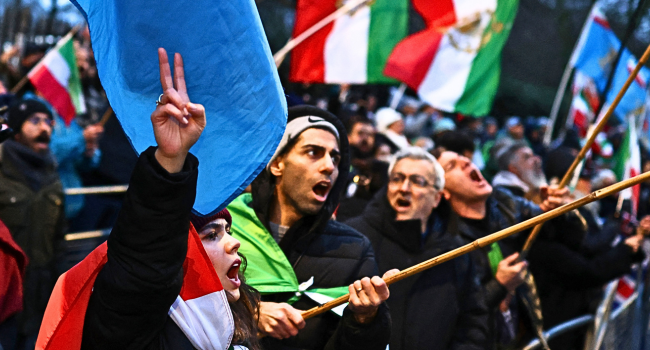
Protesters gather with Iranian national flags during a demonstration in support of the government and against US and Israeli strikes outside a mosque in Tehran on February 28, 2026. Photo by ATTA KENARE / AFP

Trump said Wednesday that Tehran has developed missiles capable of threatening Europe and US military bases overseas, warning that the regime is also developing weapons that “will soon reach” the United States.

But the Islamic Republic said it refuses to negotiate on its ballistic missiles, asserting its right to self-defence.

Iranian-Backed Proxies

Beyond seeking regime change, the US and Israel have vowed to dismantle Iran’s so-called “axis of resistance” — a network of armed and funded regional proxies that includes Hezbollah in Lebanon, Palestinian militant group Hamas, the Houthis in Yemen, and various militias in Iraq.

“We’re going to ensure that the region’s terrorist proxies can no longer destabilize the region or the world and attack our forces,” Trump said in a message posted to his Truth Social platform on Saturday.

“It’s been mass terror, and we’re not going to put up with it any longer. From Lebanon to Yemen and Syria to Iraq, the regime has armed, trained, and funded terrorist militias that have soaked the earth with blood and guts,” he said.

US-Iran combo

He further condemned the “monstrous October 7th attacks on Israel” by Hamas.

Hezbollah and the Houthis have also targeted Israel in recent months.

Trump also cited “countless attacks” against US forces in the Middle East, alongside strikes targeting US naval and commercial vessels and international shipping lanes.

Four Suspects Arrested As NSCDC Busts Illegal Arms Fabricating Factory In Katsina

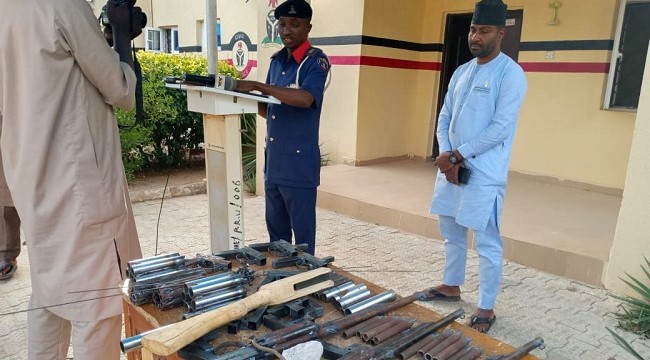
The Katsina State Command of the Nigeria Security and Civil Defence Corps (NSCDC) has announced the successful uncovering and dismantling of a suspected illegal arms fabricating factory in Kore Village along Batsari Road in Batagarawa Local Government Area of the state.

The operation was carried out on Thursday, 26th February, 2026, at about 1000 hours by the command’s Special Rapid Response Squad, acting on credible intelligence.

In a statement issued on Friday, the Public Relations Officer of the Command, Buhari Hamisu, stated that upon receiving the information, State Commandant Abbas Dan-ile Moriki directed the squad to respond immediately while maintaining professionalism.

He explained that the team promptly acted, uncovered and dismantled the factory, seized weapons and fabricating equipment, and arrested four suspects.

READ ALSO: Police Confirm Killing Of Five Persons In Plateau Attack

The suspects—Haruna Lawal (male, 28), Badamasi Kabiru (male, 50), Hamza Lawal (male, 30), and Sagir Abba (male, 25)—were apprehended inside the factory while allegedly perpetrating the crime.

He added that the suspects are currently under investigation to identify other members of the syndicate and potential buyers, and that due diligence would be observed in their prosecution.

The Commandant assured the public of adequate security and reiterated the command’s commitment to combating illicit arms proliferation, uncovering activities of vandals and economic saboteurs, and tackling crime in the state.

“Commandant Moriki thanks the general public for their continued cooperation and urges more support for security agencies by providing actionable and timely intelligence to help expose the activities of miscreants in the state.

“The Commandant remains committed to promoting safety, security, and protecting critical national assets and infrastructure in Katsina State and Nigeria as a whole.

VIDEO: DHQ Defends US Military Support, Says Nigeria’s Sovereignty Not Threatened

The Defence Headquarters (DHQ) has clarified that military assistance from the United States to Nigeria does not undermine the nation’s sovereignty, insisting that the partnership is legitimate and beneficial to ongoing security efforts.

Speaking on Friday, military authorities said the support from the U.S. government is strictly advisory and capacity-building in nature, with no financial burden on the Federal Government.

According to the DHQ, the collaboration is primarily aimed at training Nigerian troops and enhancing counter-terrorism operations across the country.

The clarification comes days after the DHQ announced the arrival of about 100 U.S. military personnel and related equipment on February 17. In an earlier statement, the Director of Defence Information, Maj. Gen. Samaila Uba, explained that the deployment was the outcome of discussions held during a working group meeting between Nigerian officials and their U.S. counterparts.

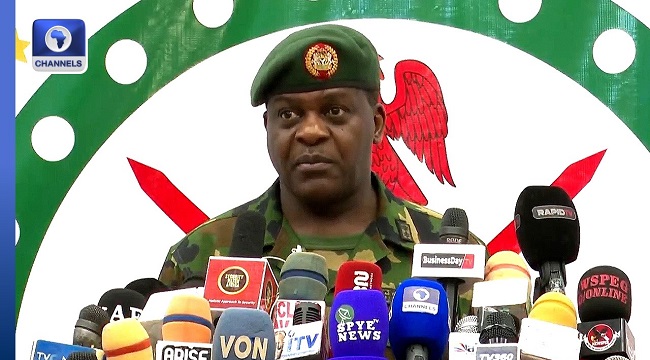
Providing further details at a press briefing in Abuja on Friday, the Director of Defence Media Operations, Maj. Gen. Micheal Onoja, said the partnership should not be misconstrued, describing it as a routine military-to-military engagement consistent with international cooperation in combating terrorism.

He maintained that such collaboration is common practice among nations facing security challenges and is designed to strengthen Nigeria’s operational capacity rather than compromise its independence.

Watch the video below: