The National President, Petroleum Products Retail Outlets Owners Association of Nigeria (PETROAN), Billy Gilly-Harry, has provided a couple of solutions following the continuous rise in prices of crude oil in the global market as a result of the Middle East war.
Brent crude oil jumped back above $100 a barrel on Tuesday, a day after plunging more than 10 per cent in reaction to President Donald Trump’s decision to delay fresh strikes on Iran as he hailed “very good” talks with Tehran.
Brent rose 2.9 per cent to $102.84, while West Texas Intermediate jumped 3.5 per cent to $91.20.
Trump’s comments sparked a sharp reversal on markets, with crude prices sinking as much as 14 per cent after rising around one per cent earlier on Monday.
Iran has, however, denied knowledge of any talks with Trump.
In Nigeria, the Dangote Petroleum Refinery announced a fresh increase in the price of Premium Motor Spirit (PMS) from N1,175 to N1,245 per litre.
A notice to marketers by the Refinery on Friday noted that its ex-depot (gantry) price would rise from N1,175 to N1,245 per litre, while the coastal price increased from N1,512,648 to N1,606,518 per metric tonne.
The notice explained that the revision reflected global market realities, including fluctuations in crude oil prices and increased shipping costs, which are beyond the Refinery’s control.
Dangote Warns Of Volatility
Responding to the crisis, Aliko Dangote, President of the Dangote Group, met with President Bola Tinubu on Monday and raised concerns about the growing volatility in the global oil market.

Speaking on the implications of the crisis, Dangote said that although Nigeria is not directly involved in the war, the ripple effects of global oil price fluctuations would inevitably be felt.
“It means quite a lot. We don’t have much to do with it, but I know the world is a global village. And it definitely will affect us, unfortunately, but we pray this situation will be sorted out,” he said after his visit to President Bola Tinubu in Lagos on Monday.

Dangote warned that a prolonged crisis could further destabilise economies, particularly in Africa, where fiscal buffers are limited, and debt pressures remain high.
“If it doesn’t de-escalate, we’ll end up paying big prices, like what I said earlier on CNN. Africa is very busy paying debt, and putting this again on top of us is going to add a lot of hardship on people, on the government, on the people, on everybody, for something that we have no involvement in.”
He stressed that energy costs are central to nearly all sectors of the economy, meaning sustained increases would have widespread and cascading effects on livelihoods and production.
[embedded content]READ ALSO: Dangote Refinery Increases Fuel Price As Iran War Drives Oil Surge
No Country Will Be Spared — IEA Birol
This is as Fatih Birol, International Energy Agency chief, on Monday, said that the global economy is under “major threat” from the energy crisis caused by the Middle East war, and “no country will be immune” to its effects.

(Photo by JUSTIN TALLIS / POOL / AFP)
Speaking at the National Press Club in Australia’s capital, Birol compared the current energy crisis to those of the 1970s and the impact of Russia’s 2022 invasion of Ukraine.
“This crisis, as things stand, is now two oil crises and one gas crash put all together,” Birol said.
“The global economy is facing a major, major threat today, and I very much hope that this issue will be resolved as soon as possible.
“No country will be immune to the effects of this crisis if it continues to go in this direction. So there is a need for global efforts.”
READ ALSO: ‘No Country Will Be Immune’ To Effects Of Global Energy Crisis: IEA Chief
‘How FG Can Reduce Impact Of High Petrol Prices’
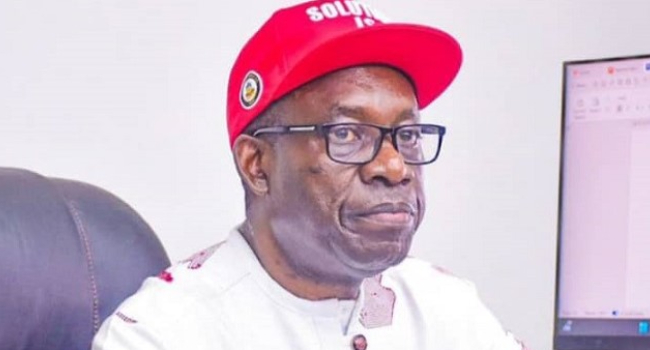
As a follow-up to Dangote’s meeting, Gilly-Harry, while appearing as a guest on Channels Television’s The Morning Brief on Tuesday, listed some of the solutions to the crisis, including the construction of massive gas stations across the country.
“The meeting between Dangote and the president is on point, and if I had an opportunity to meet with the President, I believe I would be talking about those palliatives the government can put in place to cushion the effects of soaring oil prices.
“In this case, he is finally proffering the solution, which is why we are thankful that Dangote Refinery is a very strong structure at this time.
“What we should be looking at today should be solutions and not to cry on the shoulders of this war.
“One of those things will be a total pursuit of one of our gas alternatives, because we have gas, so it’s not like we are going to import gas from anywhere. What you and I are going to do is to make sure we have gas, and make sure we have enough investments.
“If we have enough gas stations on CNGs, introduce EVs, those will definitely help cushion the effects of the war.
“But in the interim, what I will suggest is that, could there be some sort of subsidy to cushion the effects of transportation costs for transport owners, especially commercial transport owners.
“For us in PETROAN, the profit margins are still very meagre at this time.
“The size of what we sell at the pump does not translate to the profit margins we make, because we are still very mindful that we need products in our stations, and we should be able to buy our products and be able to carry them around as fast as possible.”

READ ALSO: Middle East War: Dangote Meets Tinubu, Urges De-escalation Amid Global Oil Market Volatility
He noted that oil marketers are not taking undue advantage of Nigerians following the increase in prices of petrol across the country, adding that PETRON is already in talks with the government on how to get deeply involved in gas penetration across the country.
“We are not taking undue advantage of the situation. We have even come out with the idea of crowd-buying to get as much products as possible to as many outlets.
“So, if I had the opportunity to meet with the president, those are the things I would discuss. We need to have massive gas stations across the country, and we are willing to partner with the government, with the PCNG.
“We are already in talks with them on how PETROAN can be deeply involved in gas penetration across the country.
“In my opinion, I don’t think the government is folding its hands. I am certain the President is very keen on solving the challenges facing Nigerians. But I can’t speak for the government.