Acting Was My Calling, Not Just Family Legacy – Gabriel Afolayan

Nigerian actor and singer, Gabriel Afolayan, has said his decision to pursue acting was driven by an inner calling rather than the weight of his family’s legacy.

The 40-year-old movie star made the remarks during an interview on Channels Television’s Sunrise on Saturday, where he spoke on growing up in a renowned entertainment dynasty, his creative philosophy, and the evolution of his career.

Asked what it feels like to come from a celebrated acting family, Afolayan admitted that the legacy comes with pressure.

“It’s a big weight to… because one thing is the legacy. Then another thing is what spice do you have as a person? And it calls for a whole lot of heavy talks around, because they already know what your dad had done.

“So what about you? Who are you? We are, we’re all out proving ourselves almost all the time, making sure the legacy is still very intact. And also let people know that, okay, we’re from this family, but also this is our own calling as well,” he said.

READ ALSO: ‘I’m Doing This For Posterity’, Says Kunle Afolayan As He Unveils KAP Film Village

He noted that constantly trying to separate oneself from a famous name can be unnecessary.

“For me, I think it’s a common talk, but then again, you can’t rule out your legacy.
There’s nothing anybody can do about that. No matter how astute you are with your craft and all that, people still would have to tag you to that legacy, whether you like it or yes.

“But as time goes by for you as a person, I think your own personal dream will start revealing itself over time based on what you get to do with whatever you’ve been given. And as time goes by, people will be able to say, okay, we know him also, even though he’s part of this legacy. I think that would happen over time. So you can’t put up an argument all the time and defend yourself that ‘I’m different.’ People will know if you’re different,” the actor said.


The Afolayan family from Kwara State is a celebrated Nigerian entertainment dynasty, regarded as Nollywood royalty. Their legacy spans acting, directing, and film production across multiple generations.

The patriarch, Adeyemi Josiah Afolayan (Ade Love, 1940–1996), was a pioneer of modern Nigerian theatre and cinema, known for films like Taxi Driver and Kadara.

His children have continued his legacy, including filmmaker Kunle Afolayan, actor and singer Gabriel Afolayan, actor-director Aremu Afolayan, actress-filmmaker Moji Afolayan, and veteran actress Toyin Afolayan (Lola Idije).

In November 2024, the family mourned the passing of their mother, Mama Omoladun Ayanladun Afolayan, at age 81. At her wake, Kunle and Aremu Afolayan publicly reconciled, ending a long-standing feud and reaffirming family unity.

‘Inner Feeling’

Asked why he chose acting, Afolayan explained that the profession chose him from the onset and described acting as an inner feeling of a calling more than a career.

“Yes. I’ll put it that way. Because being inspired is one thing. Having your own inner core is another thing. And that, because we’re just, I think we’re just six in this business. And we have a whole bunch of other kids that are into something totally different. It could have been the same with them as well, if, truly, you know, that’s the case.

“I think this is just what the few of us that are into this business I think this is just what we also want to do. Whether our father was into it or not. Because I grew up strictly feeling that this is exactly what I wanted, even without having anything to do with or seeing my dad or seeing any other person. I think it was just inner.

“It was within for me. And we saw a lot of films while growing up. And there’s a way all these things get to inspire your own intuition as well. So, for me, I’ll say for a fact that it’s also what I would love to do. Trust me. If it’s in another life, we probably won’t know what to do until we are in that particular life. So this life that we are in right now, for me, I think this is more of a calling than a job,” he stated.

Working With Kunle Afolayan

The actor also opened up about his professional and personal relationship with his brother, filmmaker Kunle Afolayan, revealing how their shared upbringing shaped their work in Nollywood.

Reflecting on their childhood, he recalled how early experiences watching films together created a lasting bond:

“I can remember when we were much younger; he’s going to put me on his shoulder… we go and watch films together. So we’ve already had that filmic bond while growing up. And also, it translated pretty much well,” he said.

This foundation of shared experiences, he said, made working together on large-scale projects, such as the Anikulapo series, a natural and rewarding process.

“We love quality stuff, fundamentally. And we love ourselves, even though when we argue, it’s for a certain course that’s going to set things right. So it was pretty easy to work with him. I think we got that niche from our dad, always wanting to do things right.”

‘Anikulapo’

Afolayan also spoke about collaborating with his family, particularly on the Anikulapo project, the scale and demands of the production.

“For a big-scale project like Anikulapo, you can’t be any better. The project itself calls for exactly what it gets at the moment, building set from scratch, having professional cinematographers, good technical people on grading, costumes, art design… everything has to be grand,” he said.

READ ALSO: We Need Grants From Govt To Help Movie Industry – Kunle Afolayan

Explaining the transition from film to series, he said, “Because it’s a series now, it needs to extend, that’s the fundamental… you can’t journey through a singular plot. The protagonists are always going to evolve. It’s not solely rested on a particular character.

“The stuff itself is called Anikulapo. Anikulapo is a title, it’s not a name. The next Anikulapo might be a pretty much younger person. The protagonists are going to evolve. So it’s not going to be solely rested on a particular character.

“Like, I said, it’s a title, Anikulapo, meaning the one with death in his pouch. Anybody who is able to bring people back to life or return from the dead can be Anikulapo. So it keeps going,” he said.

According to him, the series carries strong moral and societal lessons.

Nollywood Standards

Addressing the state of the Nigerian film industry, the 40-year-old actor pointed to funding as a key challenge.

“The standard is here. The only thing now is the personality around those standards. Sometimes you can have a very good script, but because of budget, the expression, the storytelling will turn another way around.… People create good things, great stuff, good stories. But when it comes to execution, everything is still about the budget input,” he said.

READ ALSO: YouTube Is The Future Of Nollywood, But Piracy Remains A Threat — Afolayan

For Afolayan, the foundation of his craft remains the story itself.
Davido Drops Custody Battle Over Daughter Imade 

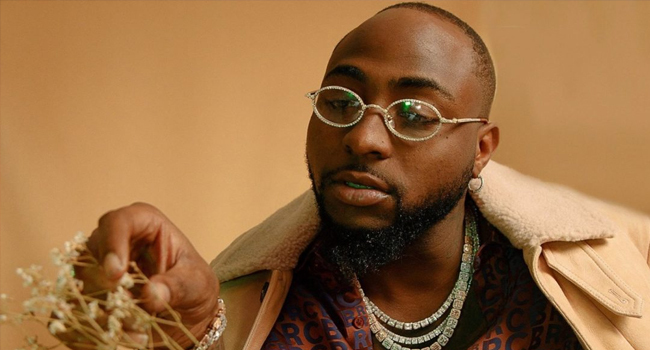
Nigerian music star Davido has withdrawn his legal action seeking joint custody of his daughter, Imade Adeleke, following a hearing at the Lagos State High Court.

The case, which had been ongoing since 2024, came up for hearing on 13 February 2026.

Proceedings became tense during cross-examination when issues surrounding child safety were raised, including references to the 2022 death of Davido’s son, Ifeanyi Adeleke, whom he had with Chioma Rowland.

Following the exchange, the session was paused. When it resumed, the court reportedly asked the singer to apologise for his reaction, which he declined.

Shortly afterwards, he opted to discontinue the suit.

Davido publicly confirmed the decision in an X post shared on Friday, stating:

“I never asked for full custody; I asked for joint custody. Nobody won, nobody lost, but Imade, so I don’t know why some people are celebrating… there’s nothing to celebrate.

“I’ve decided to drop the case because when I was spanking that lawyer in the courtroom…she would get so frustrated because normally I finished school…I was finishing her…until she brought out her last card! My Deceased Son! That’s a No No! Lowest blow! My daughter will grow up knowing I fought for her. Let’s move on, One love!”

In another message, he wrote, “You’re constantly bringing up the death of my child at any point you can to just remind us of this tragedy that haunts us every day of our lives. Imade will grow up to see I fought for her. As for now, you can have her. P.S she won’t be a child forever… enjoy Imade Aurora Adeleke! Your father loves you!”

He maintained that the case was intended to formalise joint custody and ensure structured access, not to take the child away from her mother.

Backstory

Davido filed the suit in April 2024 seeking joint custody and unrestricted access to Imade.

The move followed years of co-parenting disagreements with her mother, Sophia Momodu, who opposed the request and argued that she remained the primary caregiver.

READ ALSO: Paternity Claims Unnecessary, DNA Tests Show Anu Not Davido’s Daughter – Adeleke

The matter had gone through multiple hearings and attempts at settlement without resolution before the February 2026 development.

With the withdrawal, the legal proceedings have effectively ended for now, leaving existing informal arrangements in place.

Davido said his priority is to “move on”, adding that his daughter would know he sought to remain actively involved in her life.

Kano Turns To Online Matchmaking For Love

Aisha adjusted her beige veil over her circular-shaped headgear as a matchmaker scrolled through rows of dozens of pictures on a computer to find a man she could be interested in as a potential match.

Many young women in northern Nigeria’s conservative city of Kano marry as early as 18.

After waiting for years for a suitor, Aisha is frustrated and has turned now to enlist the services of an online matchmaker site to find a husband of her dreams: rich and educated.

Matchmaking websites are booming in Kano, blending traditional methods with artificial intelligence.

“This is the right place to ask for help in finding a person to marry,” Aisha, using a pseudonym, told AFP inside Northern Halal Marriage online matchmaking office.

“It is not every man who sees you that will express his love,” said the soft-spoken college graduate, adding online is “the best way to find true love”.

She’s trying her luck after some of her friends found their dream husbands through online matchmaking.

The five-month-old site, one of several that have sprung up in the city, has attracted 1,000 clients and garnered around 10,000 followers across social media platforms, said Jaafar Isah Shanawa, its 27-year-old CEO.

With four staff, the platform accords clients privacy by modifying their pictures using AI and changing their real names.

The concealed details are only shown to interested clients when they visit the office in person after paying a registration fees.

Looking for second wife

“Men are afraid to speak to women on the streets because they think they are respectful people of integrity,” Shanawa said.

His clients are mostly elite: professionals and business-owners.

Cultural dispositions makes it “difficult” for women to meet men on the streets or at work “to give them attention”, said Shanawa, adding searching for love online “makes it easier and accessible to a lot of people”.

Muhammad Siraj Suleiman, 41, has been a client for the past month looking for a second wife.

Shanawa has put the university lecturer in touch with two women he chose from the portal but none met his requirements after meeting them.

“I have been given a third contact and we have started courtship,” said Suleiman.

Three-monthly renewable subscription contracts range between $6 and $54, with the fees reflecting the social class and educational level of the matches being sought.

Traditional Hausa society stresses background checks on lineage, morality and family reputation before marriage.

Kano imams also insist on medical checks for intending couples.

However, online matchmaking platforms like Shanawa’s don’t provide background checks because they only act as a “bridge” connecting those wanting to marry.

“When our clients meet and feel they are a match, our job stops there and it then becomes their responsibility to make background and medical checks for themselves,” Shanawa said.

Queen of matchmaking

Matchmaking is a tradition in northern Nigeria dating generations within families, friends or close social units.

Over time, the tradition expanded and parents take the pictures of their daughters they want to marry off but have no suitors to a traditional matchmaker to find them a lover.

Population explosion and the pressure of work which limits socialisation among people has made matchmaking “more popular and attracting more people,” said Asabe Abba Yarmaishinkafi, a Kano matchmaker for 25 years and head of an 85-member matchmakers association in Kano.

With a population of around 16 million, Kano is Nigeria’s second most populated state after Lagos.

“It seems like there are more women than men and they all want to get married.

That’s why the matchmaking was expanded to online,” said Yarmaishinkafi, 50, and mother of five.

“This is why the whole matchmaking business is booming,” said Yarmaishinkafi who also runs an online matchmaking portal.

With the proliferation of smartphones, parents send her pictures of their daughters via WhatsApp which she shows to her male clients.

Unlike the online matchmaking platforms, Yarmaishinkafi conducts “thorough background checks” on her clients, provides marriage counselling and settles marital disputes all for a one-off $4 fee.

Now, known as the “queen of matchmaking”, she has over the years matched more than a 1,000 couples.

Only 11 out of the marriages she matched ended in divorce, a huge feat in a city with the highest divorce rate in Nigeria, according to the morality police, Hisbah.

Trader Anwar Dahiru Abdulmalik, 25, arrived just at Yarmaishinkafi’s office, is looking for a match two years younger, tall and fair in complexion from a middle-class background.

“This one… is appealing to me and she is within the age bracket,” Abdulmalik pointed at one, after scanning through dozens of pictures.

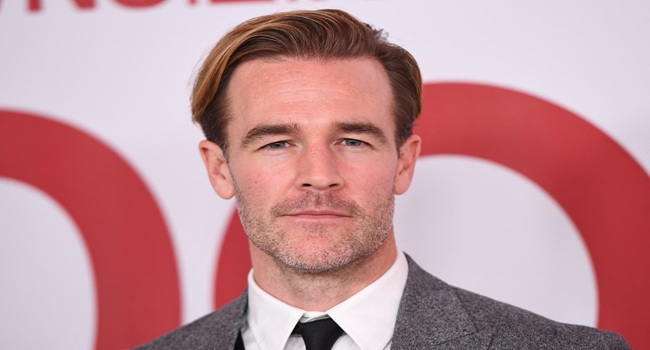
James Van Der Beek, Star Of ‘Dawson’s Creek,’ Dies At 48

US actor James Van Der Beek, the star of the American TV series “Dawson’s Creek”, died on Wednesday at age 48 after a battle with colorectal cancer.

“Our beloved James David Van Der Beek passed peacefully this morning.  He met his final days with courage, faith, and grace,” read a post on his Instagram page.

Van Der Beek, who was married and had six children, announced his cancer diagnosis in 2024.

READ ALSO: UK-Based Nigerian Footballer Dies After Brain Injury

He was best known for playing Dawson, the lead character of the eponymous 1998-2003 teen drama that followed a group of friends living in a small Massachusetts town.

While he also had roles in the films “Varsity Blues” and “The Rules of Attraction,” Van Der Beek never truly established himself in cinema, as he struggled to separate himself from the legacy of “Dawson’s Creek”.

But the actor insisted he was happy with his career path.

“Overall, I’ve worn my past with pride rather than seeing it as something to get rid of,” he told celebrity site Page Six in 2011.

Wednesday’s Instagram post showed a picture of Van Der Beek wearing a white top and cardigan. It was also shared by his wife, Kimberly.

“There is much to share regarding his wishes, love for humanity, and the sacredness of time. Those days will come,” the post added.

“For now we ask for peaceful privacy as we grieve our loving husband, father, son, brother, and friend.”

Britney Spears Sells Rights To Her Music Catalogue

US singer Britney Spears has become the latest musician to sell the rights to her catalogue that includes hits like “…Baby One More Time” and “Oops!…I Did It Again,” US media reported Tuesday.

The deal is believed to be worth around $200 million, according to sources cited by celebrity site TMZ, though it said the exact amount is not detailed in legal documents.

That sum would be comparable to the sale of Canadian singer Justin Bieber’s catalogue in 2023.

Spears, 44, joins a growing list of artists who have sold their music rights in recent years, including Bruce Springsteen and Bob Dylan, as well as Shakira and KISS.

US media reported that the rights were bought by music publisher Primary Wave, whose portfolio includes the works of Whitney Houston, Bob Marley, Prince, and others.

Owners of a song’s publishing rights receive payment for every broadcast, album sale, or use in advertising and films.

The growing music rights market allows artists to monetise their catalogues, which are attractive long-term assets for investors in the streaming era.

READ ALSO: 2026 Grammy: Again, Tyla Beats Davido, Burna Boy, Ayra Starr To Clinch ‘Best African Music Performance’ 

Major labels like Sony, Universal, and Warner have also expanded in this line of business, alongside specialist investors Recognition Music Group and Concord Music Publishing.

Spears shot to fame in the late 1990s but has largely stepped back from the music scene in recent years.

In 2021, a US court terminated a 13-year conservatorship that had allowed Spears’s father to control her finances—an arrangement the singer had described as abusive.

Tems Makes History With Seven Billboard Hot 100 Entries

By the time the Billboard Hot 100 chart for the week of February 14, 2026, was published, Nigerian singer Temilade Openiyi, known globally as Tems, had quietly rewritten a chapter of music history.

With her latest single, “What You Need,” debuting on the chart, the Grammy-winning Nigerian singer became the first African female artist to record seven entries on the U.S. Billboard Hot 100.

In the same chart week, she earned not one but two placements, at No. 91 and No. 93, underlining her growing dominance in the world’s most competitive music market.

For an artiste who once taught herself music production through YouTube tutorials in her Lagos bedroom, the milestone represents more than a statistic. It is a cultural shift.

READ ALSO: Tems Performs At FIFA Club World Cup Final Halftime Show

Across social media, fans celebrated the achievement with pride. What followed was a wave of congratulatory messages and renewed conversations about Afrobeats’ expanding global footprint.

But beyond the trending hashtags lies a deeper story, one of persistence, evolution and the steady rise of African music on the global stage.

Seventh Entry, Double Chart Moment

Tems’ seventh entry came with “What You Need,” a R&B-leaning Afrobeats record. The song debuted at No. 93, marking another solo appearance for the singer.

In a rare double-chart moment, she also secured a second entry that week at No. 91, an indication of sustained streaming power and audience engagement rather than a fleeting viral spike.

Industry observers note that simultaneous entries on the Hot 100 signal more than popularity; they demonstrate consistency in streams, radio airplay and sales across the United States — the three metrics that determine chart placement.

With seven total entries, Tems now ties Burna Boy and South African rock band Seether for the most Billboard Hot 100 appearances by any African act. Yet her record stands uniquely historic: she is the first African woman to reach that number.

Featured Voice To Chart Mainstay

Tems’ journey on the Hot 100 tells the story of an artiste who moved from guest appearances to global headliner.

Her Billboard breakthrough began in 2021 with Wizkid’s “Essence”, later remixed with Justin Bieber.

The track became a cultural phenomenon, peaking at No. 9 and introducing her voice to mainstream American audiences. It remains one of the defining Afrobeats records of the decade.

READ ALSO: Women Can Be In Any Space They Want, Says Tems

That same year, she featured on Drake’s “Fountains”, which peaked at No. 26, and pushed her cross-Atlantic appeal.

In 2022, she also made history with “Wait For U”, alongside Future and Drake.

The song debuted at No. 1 on the Billboard Hot 100, a landmark moment that made her the first African artiste to debut atop the chart.

It later earned a Grammy Award for Best Melodic Rap Performance. Her solo single “Free Mind” climbed to No. 46 after gaining massive traction on TikTok, proving she could command the charts independently.

She later appeared on Beyoncé’s “Move” from the Renaissance album, adding another high-profile entry to her catalogue.

Now, with “What You Need” and her additional 2026 chart appearance, Tems’ Billboard résumé reflects both collaboration and self-sustained star power.

Tems Music Journey 

Tems attends 2025 GQ Men of the Year on November 13, 2025, in Los Angeles, California. Photo: Phillip Faraone/Getty Images for GQ/AFP

Born on June 11, 1995, in Lagos, Temilade Openiyi spent part of her childhood in the United Kingdom before returning to Nigeria.

Raised primarily by her mother after her parents separated, she found refuge in music early on, singing in school choirs and learning to play the piano.

After studying economics in South Africa, she returned to Lagos and worked in digital marketing, a stable career path that contrasted sharply with her artistic ambitions.

In January 2018, she made a decision that would alter her life: she resigned from her job to pursue music full-time.

Her early singles “Mr Rebel” and “Try Me” introduced a voice that was at once fragile and commanding. By 2020, her EP For Broken Ears positioned her as one of Nigeria’s most promising alternative artistes.

International recognition followed swiftly after “Essence.” A deal with RCA Records expanded her reach, and collaborations with global superstars became frequent.

Her debut album, Born in the Wild, released in 2024, explored themes of identity, survival and spiritual growth — a reflection of her own unconventional path.

Tems’ Billboard milestone complements an already impressive trophy cabinet.

She has won two Grammy Awards, multiple BET Awards, NAACP Image Awards and a Billboard Women in Music honour. She co-wrote Rihanna’s Oscar-nominated “Lift Me Up” for Black Panther: Wakanda Forever, further showcasing her songwriting depth.

In 2025, she became the first Nigerian artiste to win two Grammy Awards. Her work has surpassed one billion Spotify streams, placing her among Africa’s most commercially successful exports.

Her influence also extends beyond music. From Met Gala appearances to fashion campaigns, Tems has emerged as a cultural figure whose impact bridges music, style and identity.

Nigeria’s Expanding Footprint 

Burna Boy, Rema, Wizkid, Asake and Ayra Starr

Tems joins a growing list of Nigerian artistes who have made inroads into the Billboard chart.

Burna Boy also boasts seven entries, including the global hit “Last Last.” Wizkid has recorded multiple appearances, while artists such as Rema, Davido, Fireboy DML, CKay and Lojay have each secured entries in recent years.

The surge reflects Afrobeats’ transformation from a regional genre into a global movement.

Streaming data supports this shift. Over the past few years, Afrobeats consumption has grown rapidly across North America, Europe and Latin America, fuelled by diaspora communities, social media virality and high-profile collaborations.

The Recording Academy’s introduction of the Best African Music Performance category in 2024 further institutionalised the genre’s global legitimacy.

Billboard Hot 100 

Established in 1958, the Billboard Hot 100 remains the definitive ranking of song popularity in the United States. It blends streaming data, radio airplay and sales across all genres.

For decades, it has served as the industry’s most recognised benchmark of mainstream success.

For African artistes, entry onto the chart signifies more than international recognition; it signals penetration into the heart of the global music economy.

Tems’ seventh Billboard entry represents not just personal triumph, but it’s a marker of how far African women in music have travelled and how much further they can go.

Her success arrives at a time when Afrobeats artistes are selling out arenas in London, Paris and New York, while commanding festival stages once reserved exclusively for Western acts.

For young African women watching from Lagos, Accra or Johannesburg, Tems’ achievement signals expanded possibilities. The charts are no longer distant territory.

As the February 2026 rankings circulate and the celebrations continue, one reality is clear: Tems is no longer just participating in global music history; she is shaping it.