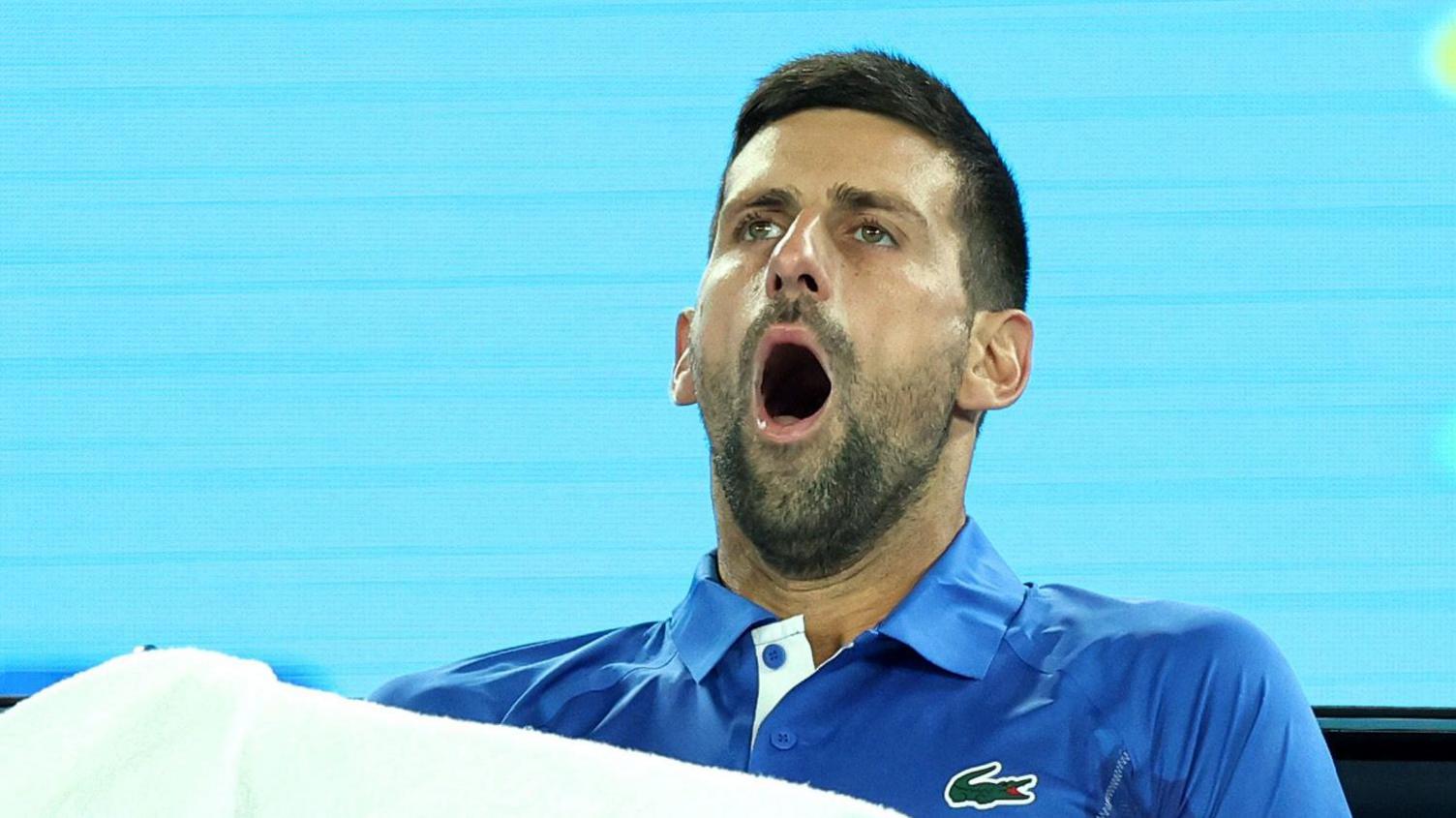
Jetlag is often the first topic of conversation when the tennis world converges on the Australian Open.
Anyone who has ever travelled across multiple time zones knows how devilish the effects can be. Ironically, ideas about writing this piece came while wide awake at 5am in Melbourne.
Players might be considered super-human to their adoring fans, but they suffer with broken sleep, fatigue and acclimatisation just like the rest of us.
The difference is they regularly have to step on court – sometimes within hours of landing – to perform in one of the most physical sports going.
“As tennis players we don’t have a choice,” Australian player Tristan Schoolkate, who grew up in Perth – considered the most isolated major city in the world – told BBC Sport.
Filipino player Alexandra Eala agreed. “If you’re on the tour, you’re going to have jetlag. The reality is you just have to deal with it,” she said.
Coping strategies players turn to
Tennis stars travel globally more than any other group of athletes due to the international nature of the sport.
With tour-level tournaments held in 29 countries across five continents, men’s players travelled a combined 2.3 million km across the 2024 season, according to ATP data.
Every player knows the importance of getting over jetlag quickly and has their own method of attempting to regulate their circadian rhythm.
Novak Djokovic, known for meticulously fine-tuning his body, tries to “over-hydrate” on his flight, adding lemon, mint, and salt to his water.
“When I arrive at the hotel, I ground myself with bare feet on natural ground as soon as possible, followed by a hot bath with Epsom salts,” the 24-time major champion told Travel + Leisure magazine.
“Then on the first morning, I try to watch the sunrise, to reset my brain.”
Natural herbal tablets, often containing plant-based ingredients like valerian, hops, chamomile and passionflower are a popular coping strategy, while many players have turned to melatonin as a sleep aid.
Taking the hormone, which your brain produces in response to darkness and therefore helps you sleep, has led to serious repercussions for some leading players, though.
Six-time Grand Slam champion Iga Swiatek was banned for one month in 2024 after failing a doping test because the melatonin she took to avoid jetlag was contaminated.
- 7 hours ago
- 1 day ago
- 5 hours ago
Given her experience, Poland’s Swiatek now prefers a more natural approach.
“I’m totally fine here since I’m always coming from dark, sometimes grey Europe in November or December. Just waking up with having sun outside honestly is the best cure,” she said.
But waking up too early is a problem. British men’s number two Cameron Norrie suffered from “brutal” jetlag when he arrived in Brisbane at the start of the month.
“At like 3am I was ready to go. I think it didn’t help there were a lot of Premier League matches at that time and I was checking the scores,” he said.
“I was also seeing all my fantasy [football] players not scoring. I was so annoyed and I couldn’t go back to sleep after that.”
Muting goal notifications on his phone – and not looking at his device generally during the night – is going to be his strategy going forward.
Fellow British player Francesca Jones has little trouble sleeping all the way through when she arrives in Australia.
Jones forces herself to stay awake for the whole 24-hour trip and believes the sleep deprivation enables her to get straight into rhythm.
Does travelling contribute to injury?
Disruption to your circadian rhythm can lead to sickness, indigestion, mild anxiety and concentration problems, according to NHS guidance on jetlag.
Travelling long distances, and the different air pressures on planes, can also cause dehydration and inflammation.
Sports scientist Stephen Smith, whose Kitman Labs company provides professional teams with data and analytics to monitor player welfare, says this increases the chances of injury.
“When players are showing up after long journeys where they haven’t slept well, they’re fatigued,” Smith told BBC Sport.
“The compounding effects of fatigue, and if they don’t have enough time to acclimatise, predisposes them to injury. There are also slight issues with range of movement and mobility.
“Obviously players travelling on first class, and able to lie down to sleep, is very different from players that do not have that luxury.

Schoolkate, ranked 97th in the world, still travels in economy class amid financial constraints.
He says there have been plenty of occasions where he has taken to the match court when not physically ready, due to the necessity of chasing money or ranking points.
One example was travelling from India to the United States last year, landing a day and a half before his opening match at Indian Wells and feeling “so fatigued” before his match at 1pm in California.
“I was starting to yawn which is not ideal, then you’ve got the sun in your eyes and you’re not really adjusting,” said Schoolkate.
“We’re affected physically and mentally by jetlag. We’re trying to perform a tricky task, playing at the top level and hitting the ball in a certain spot.
Related topics
- Tennis

- 16 August 2025



Source: BBC

Leave a Reply