US-Iran tensions: Trump has no path to an easy ‘win’ despite Tehran’s woes

Washington, DC – Donald Trump says his goal in Iran is to “win”.

But the United States president has no easy path to victory against an ideological Iranian governing system fighting for survival, analysts say.

Recommended Stories

list of 3 itemsend of list

Iran is likely to meaningfully retaliate against any attack against its central government, unlike its largely symbolic response to the US bombing of the country’s nuclear facilities in June and the assassination of its top general Qassem Soleimani in 2020.

A decapitation strike to kill Supreme Leader Ali Khamenei and other top officials may fail to collapse the regime and could lead to further destabilisation, and a protracted US war could prove catastrophic and costly for Washington and the region.

“All the options are pretty terrible,” said Barbara Slavin, distinguished fellow at the Stimson Center think tank.

“It’s very hard to know what will take place if you do ‘A’ or ‘B’. What are the after-effects going to be? And particularly if the regime feels that its back is up against the wall, it could lash out in really horrific ways against American forces in the region, against allies.”

Since the start of the year, as a wave of antigovernment demonstrations sweep Iran, Trump has threatened to intervene militarily against the country if the authorities kill protesters.

“If Iran shots [sic] and violently kills peaceful protesters, which is their custom, the United States of America will come to their rescue. We are locked and loaded and ready to go,” Trump wrote in a social media post on January 2.

Over the past two weeks, he repeated that threat several times, and he called on protesters to take over state institutions, promising them that “help is on the way”.

But the government has led a deadly crackdown, and the death toll has risen into the thousands, according to activist groups. As Iranian authorities imposed a total internet blackout on the country, Trump appeared to dial back his position.

On Wednesday, Trump presented Tehran’s version of the events – that armed demonstrators were targeting security forces.

“They [Iranian officials] said people were shooting at them with guns, and they were shooting back,” Trump said. “And you know, it’s one of those things, but they told me that there will be no executions, and so I hope that’s true.”

Two days later, Trump conveyed his “respect” and gratitude to Iran for cancelling what he said were 800 executions scheduled for Thursday.

‘Sugar high from Venezuela’

Some reports also suggest that the protest movement appears to be receding for now, although it is difficult to verify the situation on the ground with Iranians unable to access the internet.

But experts warn the crisis is not over, and the situation could change quickly. Demonstrations may ignite again, and Trump has not taken the military option off the table.

Several US media outlets reported on Friday that the Pentagon is starting to surge military assets to the Middle East, including an aircraft carrier strike group.

Trump has shown willingness to deploy the brute force of the US military to advance his policy goals.

He has bragged about the killing of ISIL (ISIS) leader Abu Bakr al-Baghdadi in 2019, the Soleimani assassination and the bombing of Iran’s nuclear facilities last year. Just this month, he ordered the abduction of Venezuelan President Nicolas Maduro.

But experts say Trump’s chances of a swift operational victory in Iran are slim.

“This is not Venezuela,” Slavin said of Iran.

“This is not one and done, and given all the other crises, many of them self-inflicted, that he is dealing with – Venezuela, this ridiculous effort to take over Greenland – does he really want a massive crisis in the Middle East after having campaigned against this sort of adventure?”

Only two months ago, the Trump administration released a National Security Strategy outlining a push to shift foreign policy resources away from the Middle East. It said that the past considerations that made the region so important to the US – namely, energy production and widespread conflict – “no longer hold”.

The document also asserted Trump’s commitment to non-interventionism.

“We seek good relations and peaceful commercial relations with the nations of the world without imposing on them democratic or other social change that differs widely from their traditions and histories,” it read.

However, given the Iranian government’s brutal crackdown on protests, Trump may have “cornered himself into being a humanitarian interventionist”, according to Trita Parsi, the executive vice president at the Quincy Institute, a think tank focused on diplomacy.

“He may be on a sugar high from Venezuela, but that’s not replicable in Iran in that same manner, and it would require tremendous amount of military force,” Parsi told Al Jazeera.

How Iran may respond

After the June 2025 strikes against Iran’s nuclear facilities, Tehran’s response was relatively restrained. Iranian forces fired a volley of missiles at Al Udeid Air Base in Qatar, which hosts US troops, in an attack that caused no casualties.

But Parsi said Iranian authorities have come to the conclusion that they will no longer tolerate attacks to avoid a major confrontation with Washington.

“Even though it’s going to be very bad for them, of course, the metric of success for Trump and the metric of success for Iran may be very different,” he said.

“Trump may need to take down the entire state. The Iranians cannot win the war, but they don’t have to. They just need to make sure that they destroy Trump’s presidency before they lose a protracted war that goes on for some weeks. Oil prices shooting up, inflation going up worldwide, including in the United States, could be sufficient to destroy Trump’s presidency.”

Naysan Rafati, a senior Iran analyst at the International Crisis Group think tank, said Iranian officials were willing to tolerate both the Soleimani assassination and the strikes on nuclear facilities because of the limited nature of the attacks.

But the regime views the antigovernment protests as an existential threat, and even a limited US attack may prompt a stronger response from Tehran.

“If the Iranians are convinced that it’s a start of a wider campaign or that its effect on the ground will be sufficiently galvanising to spark another surge in the protests, then their desperate position could lead to reckless decisions,” Rafati told Al Jazeera.

If Trump’s goal were to collapse the regime, Rafati believes that Washington would ideally rely on a “synergy” of protesters reaching a critical mass and Iranians acting as boots on the ground, supported by a US air campaign.

But he noted that Trump is more inclined to pursue quick and decisive military operations.

“And here you get into potential scenarios where the ends are a little bit muddied,” Rafati said.

“Like, what happens if you end up in a scenario of US action, Iranian retaliation and then further US response – and then broadening of the campaign?”

Iran struggling

Despite the risks associated with military action with Iran, Tehran’s foes, including many US officials in Trump’s orbit, see a historic opportunity to take down the Iranian system.

Since the triumph of the Islamic revolution in 1979, Iran has endured enormous hardships and survived wars, sanctions and internal unrest.

The Iran-Iraq war in the 1980s lasted eight years and killed hundreds of thousands of people. But the regime survived it, as it has withstood several waves of protests, economic crises and feuds within the ruling class.

But the Islamic Republic is currently living through the most challenging period in its 47-year history, analysts say.

The network of regional allies that Tehran fostered over decades – known as the “axis of the resistance” – has all but crumbled.

Hamas and Hezbollah have been severely weakened by Israel’s genocidal war on Gaza and its devastating 2024 campaign in Lebanon. Former President Bashar al-Assad in Syria fell to armed opposition fighters hostile to Tehran who have since taken power.

Even in Venezuela, Iran lost one of its last standing allies in Maduro after his detention.

Militarily, Iran’s ability to deter attacks has been severely degraded after Israel took out the country’s air defences and claimed total control of the country’s skies in June of last year.

Tehran’s nuclear programme was also severely damaged by the US strikes, and Iran is no longer enriching uranium, although it continues to emphasise its right to enrichment.

These external challenges have been compounded by a crushing economic downfall after years of sanctions. The Iranian currency, the rial, has lost more than 90 percent of its value, reaching an all-time low.

And the protests, which have been met by a harsh security response, now represent a legitimacy crisis for the government.

“The ferociousness with which the state has responded in the last two weeks underscores their sense of deep vulnerability, both in terms of their internal political legitimacy but also their strategic position in the region and vis-a-vis the US,” said Rafati.

For war hawks in Washington, Iran’s current vulnerability is a chance to “vanquish the great bete noir of US regional policy for the past 47 years”, Rafati added.

Diplomacy chances

US Senator Lindsey Graham, who is close to Trump, has been making the case that Iran is ripe for regime change, and he travelled to Israel this week to advance the push for war.

The interventionist voices around Trump, however, are balanced by geopolitical dynamics: The US’s Gulf allies, wary of instability and regional violence, have cautioned against striking Iran.

Internally, Trump must also face American voters ahead of the critical 2026 midterm elections, including large segments of his “America First” base who are largely opposed to war after the failures in Iraq and Afghanistan.

Parsi noted that, even though the abduction of Maduro came at a minimal cost to the US, opinion polls suggest that the American public is not pleased with the military intervention in Venezuela.

“I don’t think his base is excited about this at all,” Parsi said.

“I think the base wonders why he is still so focused on foreign policy issues instead of focusing on domestic issues that they believe are much more important for their concerns.”

So is diplomacy still possible?

On Thursday, Trump’s special envoy Steve Witkoff said he hopes that there is a diplomatic resolution.

He outlined a list of US demands for Iran: giving up on nuclear enrichment, handing over highly enriched uranium, cutting back its missile programme and ending support for “proxies” like Hezbollah.

“If they want to come back to the league of nations [and] we can solve those four problems diplomatically, then that would be a great resolution. The alternative is a bad one,” Witkoff said.

Parsi, however, said the US is asking for capitulation from Iran and moving the goal posts.

“I don’t see a likelihood of diplomacy succeeding unless there is a profound recalibration of what it is that the US actually seeks to achieve, at least in this scenario,” he said.

“I’m not particularly optimistic that diplomacy in the manner that the administration currently is envisioning can succeed.”

But Rafati underscored that Iran is currently already at zero enrichment, but that the country has maintained it has a right to concentrate uranium and bolster its defences.

“Given that the Iranian position, especially on enrichment, has been fairly consistent [and] its position on missiles has been fairly consistent, it would require a very significant shift in its positions, recognising that its economic and political fortunes are not promising,” he said.

Iran has remained defiant throughout the ordeal, describing the protests as a US-Israeli plot to spread chaos in the country. Iranian officials have pointed to Israeli media reports that foreign agents are arming demonstrators to kill security forces and attack public institutions.

Tehran has also promised strong retaliation against any external attack.

But Slavin said it is possible that Iran could compromise on the nuclear issue and give up its enriched uranium for sanction relief.


Russia-Ukraine war: List of key events, day 1,423

Here is where things stand on Saturday, January 17 :

Fighting

  • Russian forces attacked the Ukrainian city of Nikopol in the Dnipropetrovsk region, killing two women and injuring six people, the head of the regional administration, Oleksandr Hanzha, wrote on Facebook.
  • Russia’s Ministry of Defence said that Russian forces seized five settlements in Ukraine’s Zaporizhia region in the past week, including Zakotnoye and Zhovtnevoye in the past 24 hours, Russia’s TASS state news agency reports.
  • Russia’s Defence Ministry acknowledged its forces attacked Ukrainian energy infrastructure and military facilities seven times over the past week, including one operation described as a major strike against its neighbour.
  • A Ukrainian drone strike killed a man in Russian-occupied Kherson, Moscow’s appointed official in the region, Volodymyr Saldo, said, according to TASS.
  • Ukrainian attacks left 68,000 households without electricity in Russian-occupied areas of Ukraine’s Zaporizhia region, TASS also reported, citing local Russian-appointed official, Yevhen Balitsky.
  • Russia and Ukraine on Friday agreed to a localised ceasefire to allow repairs on the last remaining backup power line at the Zaporizhzhia nuclear power plant, the International Atomic Energy Agency said.
  • Work on the power line, which was damaged and disconnected as a result of military activity on January 2, should start “in the coming days”, the United Nations nuclear watchdog said in a statement.
  • ‍Russian Security Council deputy chairman Dmitry Medvedev said that 422,704 people had signed ⁠contracts with the Russian ​Armed Forces last year, state ‍news agencies reported. The number of sign-ups is lower than in 2024, ‍when about 450,000 ⁠people signed contracts to join the Russian army.

Ukraine energy crisis

  • Children across Ukraine risk hypothermia in freezing temperatures as emergency stocks of power generators run low following Russian attacks on energy infrastructure, international aid agencies said on Friday.
  • Almost the entire Ukrainian city of Mariupol, which is currently occupied by Russian forces, was left without electricity following an explosion, Petro Andriushchenko, head of the Center for the Study of Occupation, said on the Telegram messaging app.
  • Kyiv Mayor Vitali Klitschko said that 67 apartment buildings remain without heat in Ukraine’s capital Kyiv, more than a week after a Russian attack left 6,000 apartments without heating, as temperatures continue to fall to -17 degrees Celsius (1.4 Fahrenheit) overnight.
  • Ukrainian Prime Minister Yulia Svyrydenko said that “severe weather conditions and frost” are continuing to complicate efforts to restore heat and electricity following Russian attacks, in an update shared on Facebook.
  • Svyrydenko said that 17 electrical substations are now being powered by generators, as repair work continues and that 1,300 tents have been deployed in the Ukrainian capital Kyiv, where many households still remain without heating.
  • Curfew restrictions have been relaxed in places where the energy emergency is ongoing, so that people can access shelters with heating where needed, the prime minister said.
  • Ukrainian President Volodymyr Zelenskyy, responding to Svyrydenko’s updates, said that tens of thousands of people are working to restore electricity and heat across the country.
  • Zelenskyy also said that he spoke with British Deputy Prime Minister David Lammy and thanked him for the United Kingdom’s decision to provide an “energy support package” for Ukraine.
  • The UK announced on Friday that it would provide 20 million British pounds ($26.7m) “of new support … for vital energy infrastructure repairs in Ukraine as Russia’s barbaric attacks on innocent civilians intensify”.

Peace talks

  • A Ukrainian delegation is en route to the United States for talks with Washington on security guarantees and a post-war recovery package, Zelenskyy said on Friday, expressing hope the documents could be signed on the sidelines of the World Economic Forum in Davos next week.
  • During the talks, ⁠Kyiv’s team also hopes to get clarity from the US on the Russian stance towards US-backed diplomatic efforts to end the nearly ​four-year war, Zelenskyy told a news conference in Kyiv alongside visiting Czech President Petr Pavel.
  • The European Commission is considering ways to allow Ukraine’s quick accession to the European Union as part of a peace deal with Russia, but without giving Kyiv full membership rights, which would only be “earned” after transition periods, EU officials told the Reuters news agency.

Military aid

  • President Zelenskyy said on Friday that allied supplies of air defence systems and missiles were insufficient and warned Russia was preparing new massive strikes. He said it was crucial that allied countries heed Ukraine’s requests for additional supplies.
  • The ‌Czech Republic is set to provide Ukraine with combat ‍planes shortly ‍that can shoot down incoming drones, President Pavel told Zelenskyy in Kyiv on Friday. Pavel did not give specifics, but two years ago ⁠said Czech-made subsonic L-159 fighter jets could be transferred to ​Ukraine.

Regional security

  • Five men have been charged in Poland with taking part in a Russian-run sabotage plot to send explosive parcels to the UK, the US, Canada and other destinations, and will face life sentences if convicted, prosecutors said ⁠on Friday.
  • The four Ukrainian citizens and one Russian were charged “with acting … on behalf of the intelligence ​services of the Russian Federation”, the Polish National Prosecutor’s Office said in a statement.
  • Lithuanian prosecutors charged six foreign nationals accused of planning an arson attack in 2024 on a company producing military equipment for Ukraine, in a plot believed to have been ordered by Russia’s military intelligence agency, the GRU.
  • Those charged include nationals of Spain, Colombia, Cuba, Russia and Belarus, as well as a dual Spanish-Colombian citizen. The company manufactures mobile radio-frequency analysis stations for the Ukrainian armed forces.

Politics and diplomacy

  • The Kremlin said Friday it considered calls by some European states to resume dialogue with Russia as “positive”, after French and Italian leaders called for re-engagement with Moscow on Ukraine.
  • Dialogue between the EU and Russia has been virtually frozen since Moscow launched its full-scale offensive on Ukraine in 2022, with the bloc imposing huge sanctions and travel restrictions on Russia.
  • A court in Kyiv released former Prime Minister Yulia Tymoshenko on bail on Friday pending a trial to determine whether she paid members of Ukraine’s parliament to sway their voting. The 65-year-old stalwart of Ukrainian politics, who has denied the charges and said the case is politically motivated, served as prime minister twice after 2005.

5 Live Sport: All About… Australian Open

Available for 29 days

Gigi Salmon is joined by tennis correspondent Russell Fuller and 2013 Wimbledon champion Marion Bartoli to reflect on Jannik Sinner and Carlos Alcaraz meeting in three epic Grand Slam finals in 2025. We explore how the two best players in the world took their level and their rivalry to new heights – including delivering one of the greatest matches ever played to decide the French Open.

Programme Website

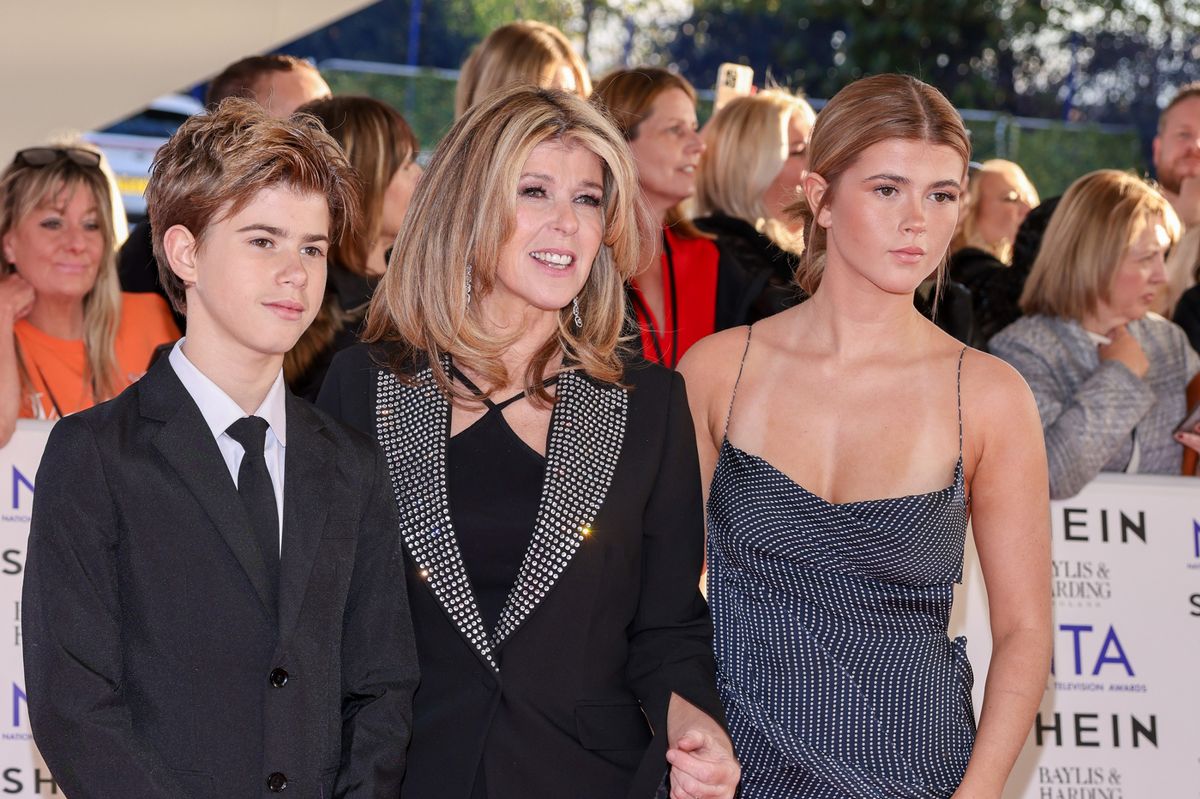
Kate Garraway explains chilling impact of fake pics of her and ‘new man’ on her kids

Good Morning Britain presenter Kate Garraway has admitted the effect an AI-created partner has had on her family after initially saying she tried to brush off the incident

Kate Garraway has revealed the impact of being the victim of AI-created deepfake images after she was put beside a fictitious partner. The Good Morning Britain presenter, 58, lost her husband Derek Draper two years ago after a long health battle following a Covid diagnosis.

And while she admits she initially laughed off the fake images, she quickly realised how upsetting they were to her and Derek’s two kids. She claimed people have been incorrectly congratulating her on her alleged new relationship for over a year. The presenter said she had to take calls from friends as well as be stopped in the street. And she says it is all because of artificial intelligence creating something that didn’t exist – and making people believe it was the truth.

READ MORE: The Wanted’s Max George back in hospital amid ‘issue’ following heart surgeryREAD MORE: Rock star who said ‘I couldn’t give a f***’ about Ozzy after his death’ in fresh outburst

Kate admitted she was naive at first and thought the timing of questions was just an accident. She also confessed she thought it was touching to see people cared for her and her family.

However, she said she’d seen that there was more to it, after the intial laughing off of the whole thing when the imagined match-ups were co-stars and friends including Richard Arnold or Ben Shephard. She wrote in The Sun. that “we laughed it off”.

However, she added: “The turning point for me was when I became aware of the impact it might have on my children and Derek’s family, too. A headline popped up, sent to me by an algorithm I assume, saying: ‘Everything you need to know about Kate Garraway’s new boyfriend’.”

Kate said she was “flabbergasted and intrigued” to find out more about the new man in her life who didn’t actually exist. But it was one detail that claimed her son was not happy and wanted his mum to end her “relationship” that Kate said “stopped me cold”.

She fumed that her 16-year-old son had already had enough to deal with without reports claiming he was being obstructive of his mum’s happiness. Kate insisted he is “the opposite of that”.

The presenter said it was this moment that made her worry and set her mum instinct into play. And she said the instance had left her worrying about how we can trust what we are seeing anymore due to the rapid rise of AI’s capabilities.

“When everything can be faked, proof starts to lose its meaning,” she said. And Kate said that if the trust is eroded, then it makes it extremely hard to get it back.

She urged for the world to slow down and actually question what they are seeing. By doing this, Kate says we can teach our children that scepticism isn’t cynicism, but instead is a vital skill.

Article continues below

Uganda’s Bobi Wine taken to unknown location in army helicopter, party says

Bobi Wine‘s political party says the Ugandan opposition presidential candidate has been “forcibly” removed from his home and taken to an “unknown destination” in an army helicopter.

The National Unity Platform made the announcement in a social media post on Friday, a day after Ugandans cast their ballots in a tense election that took place amid an internet blackout.

Recommended Stories

list of 3 itemsend of list

There was no immediate comment from the Ugandan authorities.

Wine, the country’s top opposition figure, had challenged longtime President Yoweri Museveni in an election campaign that the United Nations said was marred by “widespread repression and intimidation”.

Reporting from the Ugandan capital, Kampala, early on Saturday, Al Jazeera’s Catherine Soi said the internet shutdown has made getting information about Wine’s whereabouts difficult.

Soi said a National Unity Platform official reached by Al Jazeera could only confirm that “men who appeared to be military and other security agents jumped over the fence” of Wine’s home.

But the official could not say whether Wine was at home or had been taken away.

Soi added that Al Jazeera has been unable to reach the Ugandan military or the police to confirm what happened.

She noted that shortly after Thursday’s vote, Wine had alleged in a social media post that “massive ballot stuffing” was reported across the country.

He had also called on the Ugandan people to “rise to the occasion and reject the criminal regime”.

Wine’s remarks came as Museveni’s government has been accused of leading a years-long crackdown on opposition politicians and their supporters.

The 81-year-old president is seeking to extend his nearly four decades in power, saying ahead of this week’s election that he expected to secure 80 percent support.

Museveni was comfortably leading as votes were counted on Friday, with the Electoral Commission saying he had secured 73.7 percent support to Wine’s 22.7 percent, with close to 81 percent of votes counted.

Final results were due around 4pm local time in Kampala (13:00 GMT) on Saturday.

After a campaign marred by clashes at opposition rallies and the arrests of opposition supporters, voting passed peacefully on Thursday.

But at least seven people were killed when violence broke out overnight in the town of Butambala, about 55km (35 miles) southwest of the capital Kampala.

Local police spokesperson Lydia Tumushabe said machete-wielding opposition “goons” organised by local MP Muwanga Kivumbi attacked a police station and vote-tallying centre.

Kivumbi, a member of Wine’s party, said security forces attacked opposition supporters who had gathered at his home to wait for the election results to come in. The opposition lawmaker said 10 people were killed.

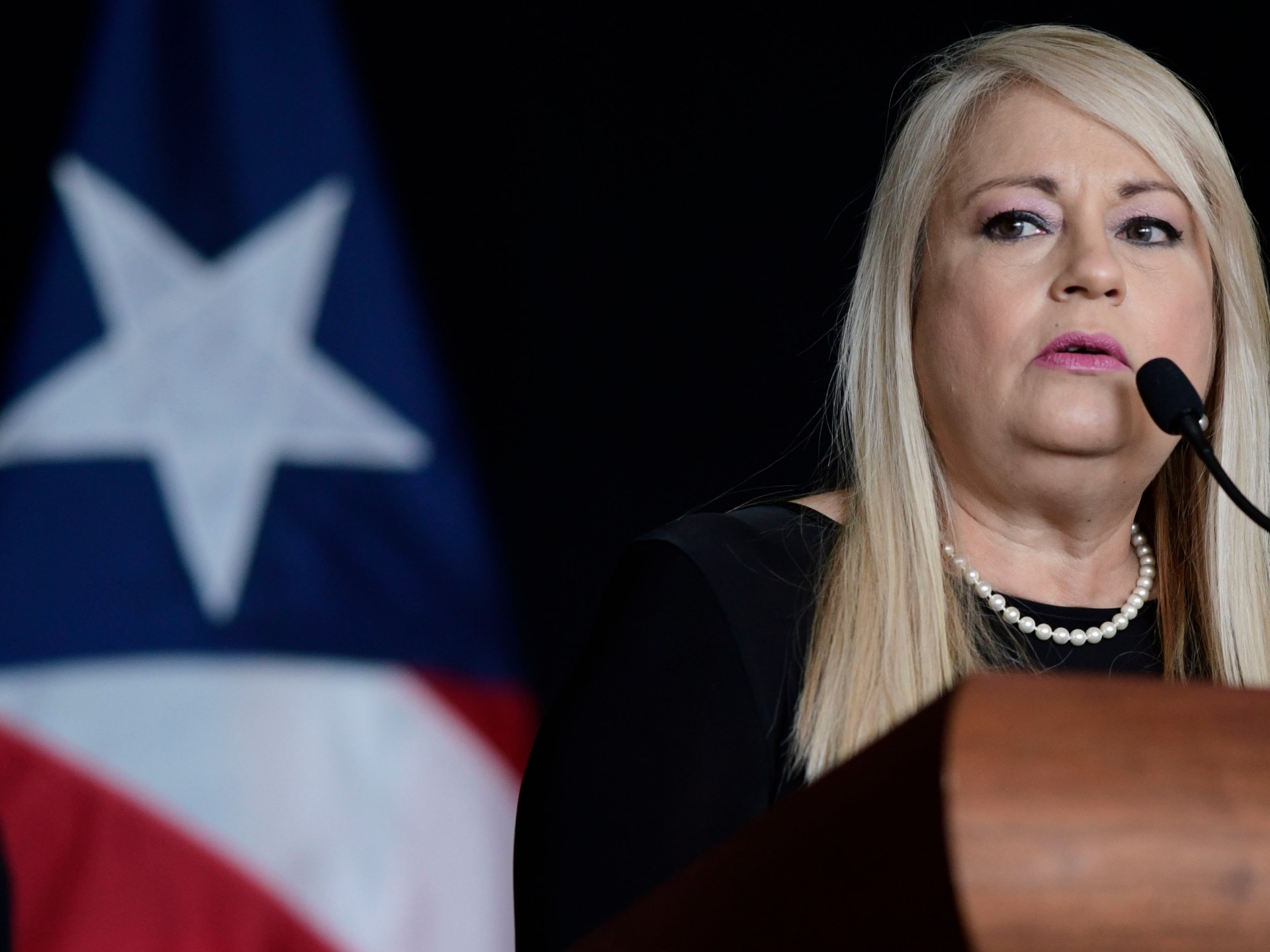
Trump to pardon former Puerto Rico Governor Wanda Vazquez after plea deal

The White House has confirmed to United States media that President Donald Trump plans to grant a pardon to a former governor of Puerto Rico, Wanda Vazquez Garced.

On Friday, CBS News broke the story that a pardon was imminent, and Trump administration officials have since tied the pardon to the president’s campaign against what he considers “lawfare”.

Recommended Stories

list of 3 itemsend of list

“This entire case is an example of political persecution,” a Trump official told the news agency Reuters, on condition of anonymity.

Trump has pardoned a string of right-wing officials and allies since returning to office for a second term, including former Honduran President Juan Orlando Hernandez – who was convicted of federal drug charges – and supporters who stormed the US Capitol on January 6, 2021, to protest his 2020 election defeat.

With more than 1,700 pardons and acts of clemency granted over the last year alone, Trump is on track to surpass his predecessor, Democrat Joe Biden, for the most pardons offered. Biden, over his four-year term, announced 4,245 acts of clemency, the most of any president in modern history.

But news of Vazquez’s pardon stirred dissent among Puerto Rico’s political opposition, including Pablo Jose Hernandez Rivera, who represents the island territory in the US House of Representatives.

“Impunity protects and promotes corruption,” Hernandez wrote on social media.

“The pardon granted to former governor Wanda Vazquez weakens public integrity, erodes trust in the justice system, and offends those of us who believe in honest government.”

Puerto Rico, as a territory, only has non-voting representation in the US Congress, and Trump has had a tumultuous relationship with the island.

In August, Trump removed the five Democratic members of Puerto Rico’s federal control board, which governs the island’s finances. And during his 2024 re-election campaign, Trump held a rally at Madison Square Garden in New York that featured a politician who called Puerto Rico a “floating island of garbage”.

But Trump has sought to protect political allies through his use of pardons, often accusing the US justice system of being unfairly biased against conservatives.

He has also denounced what he calls the “weaponisation” of the Justice Department under his Democratic predecessors. Trump himself faced four criminal indictments, two on the federal level, during the four years between his two terms.

Only one state-level indictment, in New York, resulted in a conviction and sentence.

Vazquez identifies as a Republican, and she is a member of the New Progressive Party, which advocates for US statehood for Puerto Rico.

She became governor of Puerto Rico after her predecessor, Ricardo Rosello, stepped down in 2019, and she served until January 2021.

Vazquez was arrested in 2022 after the US Justice Department accused her of participating in an act of corruption while in office, allegedly promising to fire a commissioner in exchange for a campaign contribution.

The bribery case focused on incidents that happened while she was in office between December 2019 and June 2020.

At the time, Puerto Rico’s Office of the Commissioner of Financial Institutions had been investigating a bank owned by the Venezuelan financier Julio Martin Herrera Velutini for suspicious transactions.

According to prosecutors, Vazquez agreed to call for the commissioner’s resignation in exchange for a promise of financial support in the 2020 gubernatorial election. She ultimately hired an associate of Herrera Velutini to replace the commissioner.

Herrera Velutini and Mark Rossini, a consultant and former agent with the Federal Bureau of Investigation (FBI), allegedly paid $300,000 to political consultants to boost Vazquez’s 2020 campaign. She went on to lose the primary, though.