Helen Flanagan ‘forced out of home by ex Scott Sinclair’ as feud reaches new low

Helen Flanagan is reportedly being forced out of her family home, which her ex-fiancé Scott Sinclair has been funding for her and their children since they split

Helen Flanagan’s ex-fiancé Scott Sinclair is reportedly forcing her out of her home. Helen, who found fame playing Rosie Webster on ITV’s Coronation Street, currently lives in a lavish six-bedroom home with her and Scott’s three children.

Helen and ex-Bristol Rovers ace Scott, 36, decided to split in 2022 after 13 years together. However, although the former couple never walked down the aisle together, Helen’s home near Bolton is in Scott’s name.

The lavish property was last year put on the market for a staggering £1.5million, but it was later reduced to £995,000. However, Scott is said to be keen for Helen to downsize and live in a smaller property, but sources claim that the 35-year-old actress will not be going quietly.

It’s said that the actress is a fan of the area where she currently lives, and she doesn’t want to disrupt her children and their education. Helen also lives in close proximity to her parents.

“Scott pays for the house and all the bills, and he’s decided a six-bedroom place is way too big for Helen on her own with the kids,” a source said. They went on to tell The Sun: “Helen doesn’t want to move and is digging her heels in. She loves the place, the kids are settled at the local school, and her mum and dad live around the corner.”

And reports claim that Scott has even offered to buy Helen a new home. They added: “Scott wants to buy Helen a four-bedroom home. He’s even offered to put it in her name, but wants to stop the maintenance payments.” However, the source went on to say that Helen added value to the property.

They claimed that Scott wanted to sell the home to “take the money out,” before adding that he was “not being reasonable.” But while the couple share three children, Matilda, ten, Delilah, seven, and son Charlie, four, their relationship is non-existent, and they’re reportedly no longer on talking terms. Instead, any communication is reportedly going through their relatives.

Over the Christmas period, Helen took aim at her ex-fiancé for failing to show up for their son’s nativity. Instead, Scott was at the Abu Dhabi Grand Prix. She fumed on social media: “You really are a piece of sh*t. How dare you not turn up to Charlie’s nativity.”

Scott had posted snaps of his weekend in the United Arab Emirates, where he saw British driver Lando Norris win the title. “What a weekend – Abu Dhabi F1,” he wrote. “Happy Days, blurry nights.”

However, Helen is said to be keen to put Scott firmly in the past as she moves on with her life and is setting her sights on finding love once again. “Helen is definitely ready for love,” a source told us. They added: “She loves being with someone and wants to meet a new partner that she can really trust and depend on. She likes feeling like part of a team with someone, and she’s determined that whoever she ends up with will be a guy who adores her three kids too, because they are her top priority.”

Article continues below

The Mirror has approached representatives for both Scott and Helen.

‘Mental strength therapy’ – Joshua returns to gym

Getty Images

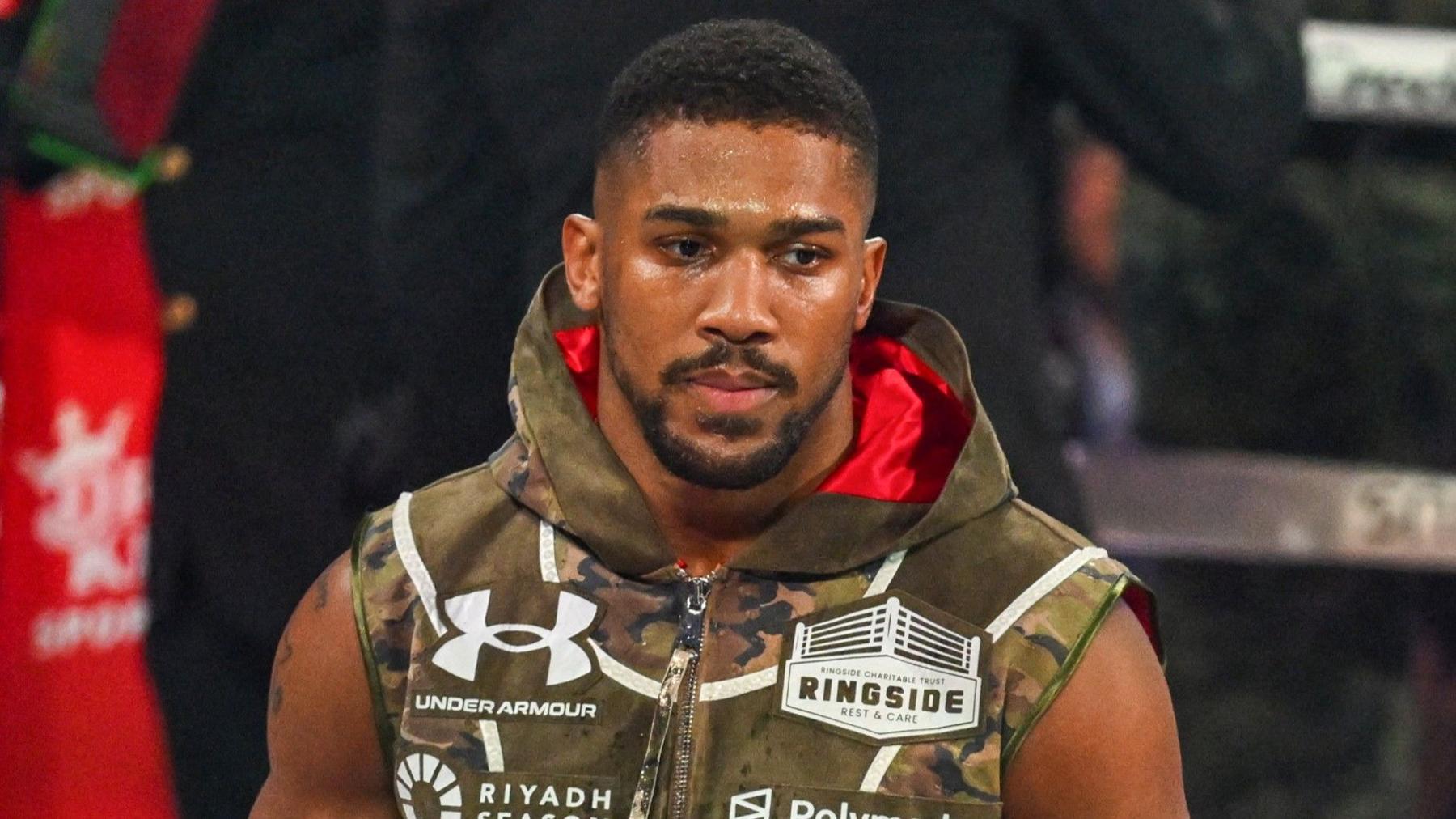
British heavyweight Anthony Joshua has returned to the gym following the recent car crash which killed two of his close friends and team members.

The former world heavyweight champion, 36, sustained minor injuries in the incident in Nigeria on 29 December.

Sina Ghami and Latif ‘Latz’ Ayodele died when their vehicle, in which Joshua was also a passenger, collided with a stationary truck on a major road near Lagos.

Nineteen days after the crash, Joshua has posted a video on Snapchat showing him hitting pads and working out, with the message “mental strength therapy” at the bottom of one clip.

He beat Jake Paul in Miami on 19 December, 10 days before the crash occurred while he was on holiday in Nigeria.

Last week he posted a tribute to his strength and conditioning coach Ghami and trainer Ayodele on Instagram.

“I didn’t even realise how special they are,” he wrote. “I’ll just be walking with them and cracking jokes with them, not even knowing God kept me in the presence of great men.

    • 8 January
Still image from Anthony Joshua video showing him back in the gym with caption 'mental strength therapy'Anthony Joshua

Promoter Eddie Hearn believes that Joshua will return to boxing “when the time is right”.

On Wednesday, Hearn told Sky Sports: “He will need his time physically, mentally, emotionally, spiritually before he makes a decision on his future.

“I do think he will want to return to boxing, but that will be his decision when the time is right.

“It is certainly not a conversation I’ll be having with him any time soon.

“The only conversation is ‘are you OK?’ and sometimes we find people will give that facade of being OK, but what happened to him is not normal and heartbreaking for all involved.

“When the time is right, I believe he will make his decision and you will hear it from him.

Related topics

  • Boxing
    • 3 days ago
    Leigh Wood and Josh Warrington go head-to-head for a face-off
    • 28 April 2024
    Split image of Claressa Shields, Paddy Pimblett and Chris Eubank Jr

More boxing from the BBC

    • 16 August 2025
    BBC Sport microphone and phone

Why access to Venezuela’s ‘heavy’ oil is ‘tremendous’ news for US refiners

The United States’ bid to control Venezuela’s oil sector after abducting Venezuelan President Nicolas Maduro has shone a spotlight on the type of crude held by the Latin American country.

Crude oil, which is produced by about 100 countries, comes in hundreds of varieties that differ by viscosity and sulfur content.

Recommended Stories

list of 4 itemsend of list

While all grades of crude oil are valuable, their differing properties make certain grades more sought after in some markets than others.

What is the difference between ‘heavy’ and ‘light’ grades of oil?

Crude oils are rated as “heavy” or “light” based on their viscosities, or “gravities”.

Crude is also classified by sulfur content, with high-sulfur grades called “sour” and lower-sulfur varieties referred to as “sweet”.

Heavy, sour grades are more difficult and costly to refine into petroleum products such as gasoline, diesel, kerosene and jet fuel.

Generally speaking, lighter and sweeter crude commands higher prices.

Some countries and regions primarily produce certain grades.

Canada mainly produces heavy, sour crude, for example, while African varieties tend to be lighter and sweeter.

Popular light, sweet varieties include Saudi Arabia’s Arabian Super Light, Iran’s South Pars Condensate, Malaysia’s Tapis Blend, and Australia’s Cossack.

Among the most traded heavy, sour varieties are China’s Shengli, the United Kingdom’s Kraken, Iraq’s Basra Heavy, and Iran’s Soroosh.

What type of oil does Venezuela have?

Venezuela has the world’s largest proven oil reserves, at an estimated 303 billion barrels.

Most of those reserves are made up of heavy, sour crude located in the Orinoco Oil Belt in the centre of the country.

The basin’s oil is especially dense and vicious, with a tar-like consistency that necessitates specialist methods such as steam injection and diluents for extraction.

Industry analysts say tapping the basin’s true potential will require huge investment due to the degraded state of the sector’s infrastructure and knowledge base, following late leader Hugo Chavez’s nationalisation of the industry and years of US sanctions that prevented Venezuela from accessing foreign capital and modern technology.

The Latin American country’s output was estimated at about 860,000 barrels per day (bpd) in November, less than 1 percent of the world’s total, a steep decline from its 1970s peak of about 3.5 million bpd.

Rystad Energy, a consultancy based in Oslo, Norway, has estimated that about $110bn in capital investment would be needed to return to the country’s late 2000s output of about 2 million bpd.

US President Donald Trump, whose decision to kidnap Maduro has been widely condemned as a violation of international law, has said US oil companies are prepared to invest billions of dollars to revive production.

Why is Venezuela’s heavy crude particularly attractive for the US?

Some industry analysts have expressed scepticism that US oil companies will be drawn to Venezuela – at least not without significant incentives and guarantees.

They point to the post-Maduro leadership uncertainty, Chavez’s past expropriation of company assets, and the excess supply of oil in the global market as reasons why firms may be hesitant to invest.

ExxonMobil and ConocoPhillips, two of the biggest US oil firms, pulled out of the country in 2007 following Chavez’s seizure of their facilities, and the two companies were later awarded large payouts in international arbitration.

At a meeting with Trump at the White House on Friday, ExxonMobil Chief Executive Officer Darren Woods described Venezuela as “uninvestable” in its current state and said “significant changes” would need to occur in the country to justify returning.

As the only major US oil producer in the country at present, Chevron, which operates under special exemption from Washington’s sanctions, is widely viewed as best positioned to profit on Trump’s plans.

While there are differing views on the business case for the major oil companies in Venezuela, analysts are in agreement that one group in particular stands to gain: US refineries.

While the US currently pumps more crude than any other country due to an explosion in drilling for lighter shale oil, most of the country’s refineries were built to process heavier grades.

Nearly 70 percent of US refining capacity is designed for heavier crude, according to the American Fuel and Petrochemical Manufacturers, a relic of heavy investment made before the more recent boom in shale drilling.

“You need what is referred to as a ‘complex’ refinery with deep conversion capacities. The Gulf Coast has multiple refineries like that,” Denton Cinquegrana, chief oil analyst at Oil Price Information Service, told Al Jazeera.

“The coker units that are key were built to take advantage of heavy crude not just from Venezuela, but also places like Mexico and other South American producers.”

Shon Hiatt, director of the Zage Business of Energy Initiative at the University of Southern California, said US refineries would benefit “tremendously” from a boost in exports of Venezuelan crude.

“Many of the US refineries along the coast – Texas and Louisiana – were built and designed to process Venezuela crude,” Hiatt told Al Jazeera.

“Venezuela has a history of exporting its oil to the US due to the fact that US oil companies were the first to go in, discover, pump, process, and export Venezuelan petroleum. Hence, refineries along the coast were built to handle this type of petroleum.”

While heavy Canadian crude has displaced imports from Venezuela over the years due to sanctions, that could change if Trump has his way, Hiatt said.

Will anyone stop Alcaraz and Sinner, and how far can Raducanu go at Aussie Open?

Getty Images

Comes around fast, doesn’t it?

After another off-season break deemed too short by some, the first Grand Slam of the year is about to begin.

    • 6 hours ago

Is anyone going to stop ‘Sincaraz’?

This is the question everyone has been asking.

Jannik Sinner and Carlos Alcaraz are not just the best two players on the ATP Tour – they are operating in a class of their own.

List of leading Australian Open men's seeds alongside picture of Carlos Alcaraz with a raised clenched fist. The list is [1] Carlos Alcaraz (Spa), [2] Jannik Sinner (Ita), [3] Sascha Zverev (Ger), [4] Novak Djokovic (Srb), [5] Lorenzo Musetti (Ita), [6] Alex de Minaur (Aus), [7] Felix A-Aliassime (Can), [8] Ben Shelton (US)

Sinner’s relentlessly metronomic baseline game marries perfectly with the medium-fast hard courts. The looser, more creative Alcaraz has not managed to master the Melbourne surface and has yet to go beyond the quarter-finals here.

That, however, is down to lack of rhythm at the start of the year, rather than a lack of adaptability.

If the 22-year-old Spaniard does hit the ground running – as he starts a new era without long-time coach Juan Carlos Ferrero – he will become the youngest man to complete the career Grand Slam.

What information do we collect from this quiz?

Can Swiatek complete career Slam?

Alcaraz is not the only player aiming to complete a clean sweep of Slam titles.

Like Alcaraz, Poland’s Iga Swiatek has six Grand Slam titles to her name, and the Australian Open is the missing piece of the jigsaw.

The 24-year-old has already cemented her place as a future great after a Wimbledon triumph last year which few predicted – including herself.

However, defeats by Coco Gauff and Belinda Bencic at the curtain-raising United Cup showed Swiatek will need to quickly iron a few things out in Melbourne.

Swiatek says she can “hear” the talk about the career Slam, but she is intent on shutting out any thoughts of achieving it.

Leading eight women's seeds alongside picture of Aryna Sabalenka with a raised clenched fist. The list is [1] Aryna Sabalenka, [2] Iga Swiatek (Pol), [3] Coco Gauff (US), [4] A. Anisimova {US), [5] Elena Rybakina [Kaz], [6] Jessica Pegula (US), [7] Jasmine Paolini (Ita), [8] Mirra Andreeva

Gauff joins Swiatek as part of a triumvirate who has won nine of the past 12 majors, but it is the third member – two-time Melbourne champion Aryna Sabalenka – who is the pre-tournament favourite.

World number one Sabalenka warmed up by winning the Brisbane title last week, although she believes that counts for little.

“It’s tennis – that’s why it’s so beautiful because you cannot predict anything,” said the 27-year-old Belarusian, who lost to Madison Keys in last year’s Australian Open final.

What information do we collect from this quiz?

How far will resurgent Raducanu go?

The problem with emerging as a teenage superstar is that expectations suddenly rocket and, in Emma Raducanu’s case, become almost unmanageable.

Now into the fifth season since her scarcely believable US Open triumph, there is no escaping that the 23-year-old needs to prove she belongs at the top of the WTA Tour.

The challenge for Raducanu this season is closing the gulf to the very best in terms of head-to-head results and ranking.

The signs last year were encouraging and regaining her place in the world’s top 30 means she will be seeded at the Australian Open – but the prospect of Sabalenka in the third round looms large.

Raducanu is one of seven British players in the men’s and women’s singles draws, and she is the highest-ranked following Jack Draper’s withdrawal with injury.

    • 1 day ago

Can ageing Djokovic bring out his best?

Australia has felt like a home away from home for Novak Djokovic for the majority of his career.

The Serb has won 10 of his 24 Grand Slam titles on Rod Laver Arena and the smart money goes on him winning again in Melbourne if he is to finally pull clear of Margaret Court with a standalone all-time record 25th.

There is no escaping that Father Time is catching up with the 38-year-old.

In the past two seasons he has struggled to match Alcaraz and Sinner physically over five sets, yet he remains the player most capable of beating them with his technical ability and single-mindedness.

Last season Djokovic reached the semi-finals of all four majors – a remarkable feat of consistency at the highest level.

Australian Open 2026

18 January-1 February

Listen on Sounds

Will Melbourne continue to be the ‘Happy Slam’?

A few factors have helped the Australian Open market itself as the ‘Happy Slam’.

Sun-soaked Melbourne summer days boost the dopamine levels, while the feelgood factor is helped by the party atmosphere around the grounds.

Superstar DJs, hot bands, hip restaurant link-ups and premium alcohol brands are available around the site, which is based in the heart of Melbourne’s central district.

Tournament director Craig Tiley understands the importance of closing the gap on Wimbledon, the French Open and US Open in terms of status and commercial pull.

Players talk glowingly about the event, with particular emphasis placed on the quality of facilities behind the scenes.

However, a group of leading players are said to be “disappointed” the organisers still don’t provide a greater share of the total revenue – even though a record prize pot of £55m is available this year.

Related topics

  • Tennis

More on this story

    • 6 hours ago
    Madison Keys poses with the Australian Open trophy after winning the 2025 title