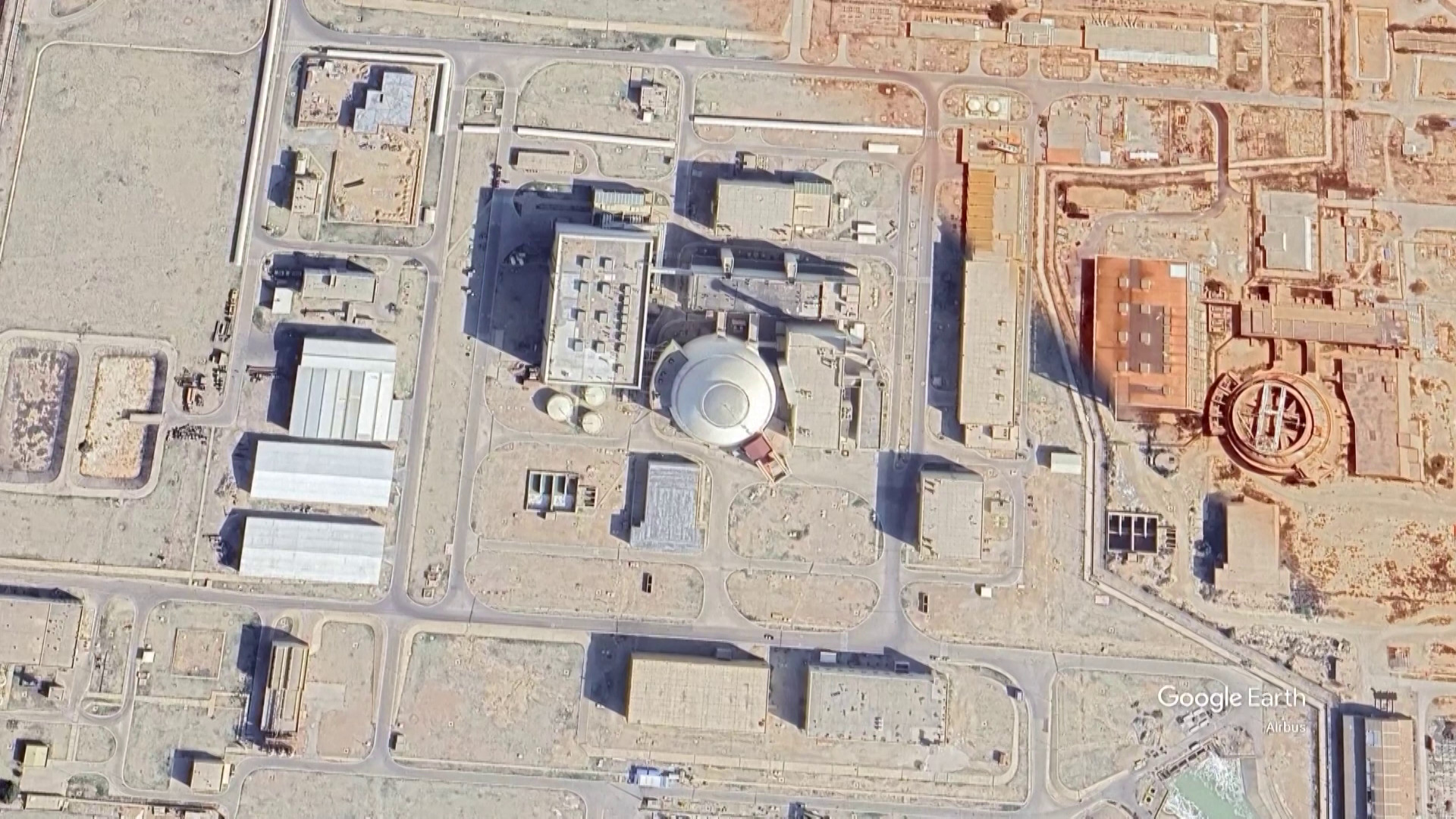
Russia’s foreign ministry has accused the US and Israel of deliberately trying to spark a nuclear disaster after a second strike near Iran’s Bushehr nuclear power plant. It’s forced Moscow to evacuate more staff from the joint Iranian-Russian built site.
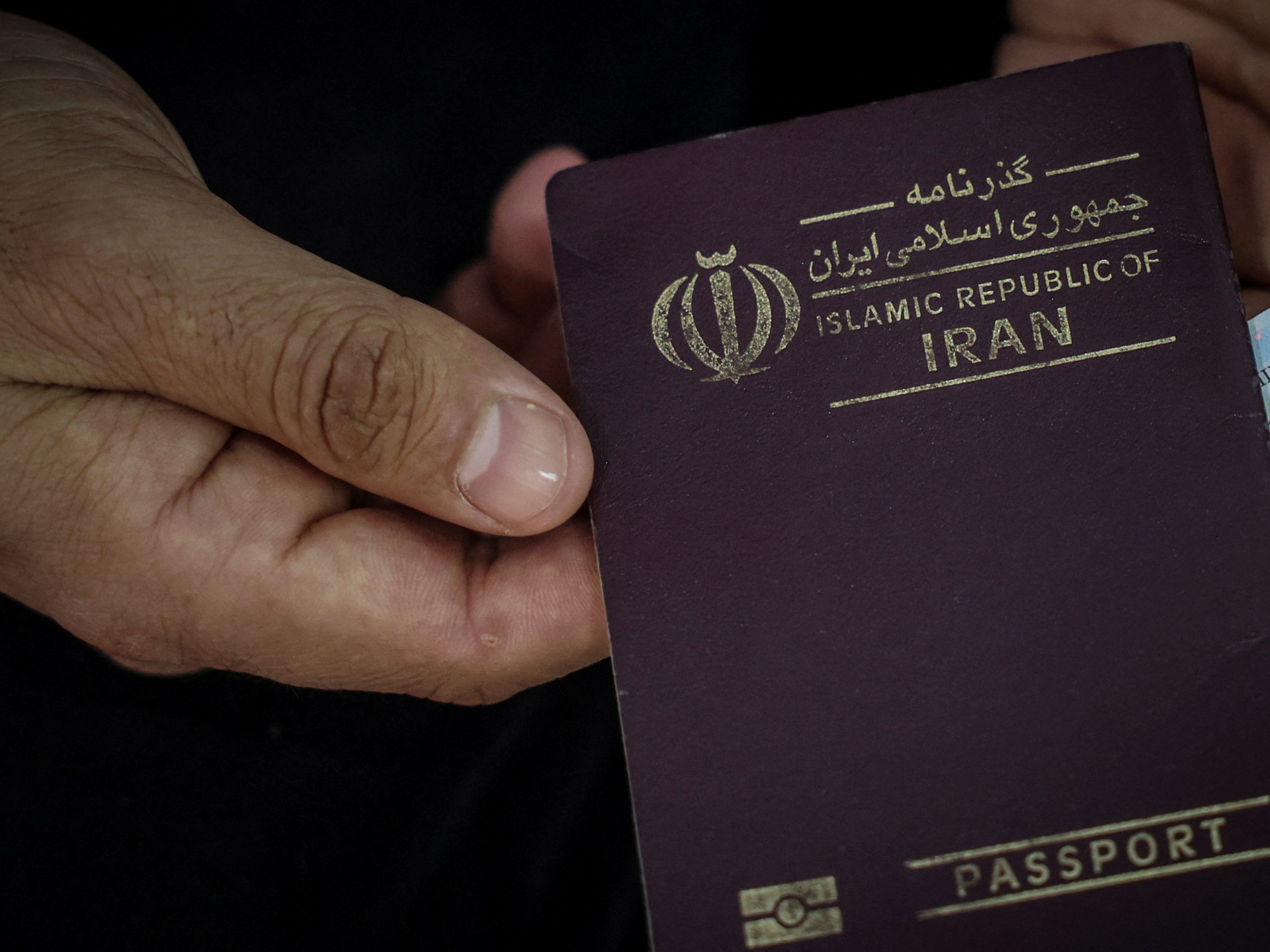
Australia has temporarily banned visitors from Iran, claiming that the United States-Israeli war on the country has increased the risk that Iranian passport holders could refuse or be unable to fly home once their short-term visitor visas expire.
Australia’s Department of Home Affairs said on Wednesday that the restrictions on Iranian visitors would be for a period of six months, describing the move as in the “national interest amid rapidly changing global conditions”.
Recommended Stories
list of 4 itemsend of list
“The conflict in Iran has increased the risk that some temporary visa holders may be unable or unlikely to depart Australia when their visas expire,” the Home Affairs Department said in a statement.
“This measure gives the Government time to assess the situation properly, while still allowing flexibility in limited cases,” it said.
The ban applies to Iranian citizens who are currently outside Australia – even if they have an Australian visitor visa for tourism or work.
Exceptions to the ban include Iranian citizens already in Australia, those currently in transit to Australia, spouses, de facto partners, or dependent children of Australian citizens, and those with permanent visas.
Exemptions will also be considered on a case-by-case basis, such as for the parents of Australian citizens, the department said.
Home Affairs Minister Tony Burke said decisions on who can remain permanently in Australia should be made by the government and should not be the “random consequence of who booked a holiday”.
“There are many visitor visas which were issued before the conflict in Iran that may not have been issued if they were applied for now,” he said.
Burke added that the government is monitoring developments and “will adjust settings as required to ensure Australia’s migration system remains orderly, fair and sustainable”.
The Sydney-based Asylum Seekers Centre said in a post on social media that the ban on Iranian visitors was the result of a “shameful new law” rushed through Australia’s parliament that “threatens the very foundations of Australia’s onshore protection programme” for those seeking safety.
“For years, politicians have been stressing the importance of seeking safety through so-called legal routes,” the group said.
“Now, in the face of an international humanitarian crisis, the government is slamming the door shut and blocking a key pathway for people seeking safety today and in the future,” it said.
Earlier this month, US President Donald Trump called on Australian Prime Minister Anthony Albanese to give the Iranian women’s football team asylum in Australia amid fears that players may face repercussions at home for failing to sing their national anthem before a Women’s Asian Cup 2026 match in Queensland.
Albanese later told reporters that five team members had sought assistance and “were safely located” by Australian authorities.
In total, seven players and officials were granted asylum in Australia, though five team members later reversed their decision to stay in Australia and chose to return home.
The Iranian team had arrived in Australia to participate in the football tournament before the US and Israel launched their attack on Iran on February 28.
A Los Angeles jury has found Alphabet’s Google and Meta liable for $6 million in damages in a landmark social media addiction lawsuit. The case involved a 20-year-old woman who said she became addicted to the apps at a young age due to their platform design. Meta says it plans to appeal the decision.
Kuala Lumpur, Malaysia – Until recently, Sanjeet, a business consultant from India, thought of Malaysia as home.
After living and working in the Southeast Asian nation for more than a decade, he had gotten comfortable with the climate, people and way of life.
Recommended Stories
list of 4 itemsend of list
“Once I had crossed the five-year mark, Malaysia seemed like an ideal long-term choice,” Sanjeet, who is in his 40s and asked to use a pseudonym, told Al Jazeera.
“One gets used to what Malaysia has to offer.”
But after a recent move by the Malaysian government to reduce the country’s reliance on foreign workers, Sanjeet’s plans – and those of thousands like him – have been plunged into doubt.
From June onwards, the minimum salary threshold for foreign workers to obtain a visa will be raised as much as two-fold, and workers’ length of stay will be capped at five or 10 years.
“What was surprising was that this came out of the blue,” Sanjeet said.
“It does leave room for doubt in terms of long-term plans, which include things like buying a house or car here.”
Malaysia, which transformed into one of Southeast Asia’s most developed economies after gaining independence from Britain in the 1960s, has been an attractive destination for foreign labour for decades.
Many of the 2.1 million documented foreign workers in the country take on manual labour for salaries of around the monthly minimum wage of 1,700 ringgit ($430).
A much smaller pool of foreign workers is employed in highly-paid specialised sectors such as finance, semiconductors, and oil and gas.
In 2024, Home Affairs Minister Saifuddin Nasution said the country’s highly-salaried expatriate population – estimated at about 140,000 people – pumped about 75 billion ringgit ($19bn) into the domestic economy and contributed about 100 million ringgit ($25m) in taxes each year.
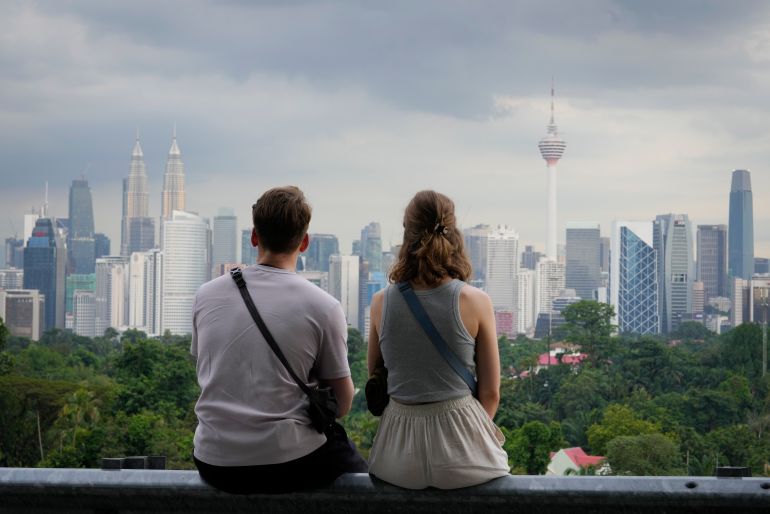
A couple enjoy the view of the skyline in Kuala Lumpur, Malaysia, on September 18, 2024 [Vincent Thian/AP]
Malaysia’s pool of foreign labour has been a focus of growing debate in the nation of 34 million people in recent years.
In the latest five-year national policy strategy released in 2025, the government warned that a “continuous reliance” on low-skilled foreign workers had hampered the adoption of critical technology in the economy.
“This issue induced a ripple effect in the labour market, including the dominance of low-skilled and (low)-wage jobs, wage distortions as well as slow productivity growth,” the authors of the 13th Malaysia Plan said.
As part of efforts to encourage the hiring of locals and boost incomes in a country where the average monthly wage is about $700, the government plans to slash the proportion of foreigners in the workforce from 14.1 percent in 2024 to 5 percent by 2035.
In January, the Ministry of Home Affairs said tighter requirements for foreign workers would be extended to higher-paid expatriates to “support sustainable economic growth while strengthening the development of local talents”.
Under the new rules, the minimum starting monthly salaries for three categories of work permit will be raised from 10,000 to 20,000 ringgit ($2,500 to $5,000), 5,000 to 10,000 ringgit ($1,260 to $2,520), and 3,000 to 5,000 ringgit ($760 to $1,260), respectively.
On top of the higher salary floors, expatriates’ duration of stay will be limited, and employers will need to put in place plans for recruiting local talent after their sojourn ends.
UK native Thomas Mead, who has been working in Malaysia since late 2022, said the government’s plans had left some expats feeling uncertain about their future.
“There have always been rules in place, including minimum salary requirements,” Mead, a 28-year-old wealth manager, told Al Jazeera.
“However, the jump from RM10,000 to RM20,000 was quite a shock.”
After falling in love with Malaysia’s culture and food as a student, Mead returned to the country to work, and recently bought a property in Kuala Lumpur with a view to putting down roots.
“I’ve heard some expatriates starting to talk about relocation options if they’re forced to,” he said, saying many would be “reluctant” to leave.
AirAsia planes on the tarmac at Kuala Lumpur International Airport Terminal 2 in Sepang, Malaysia, on January 21, 2026 [Hasnoor Hussain/Reuters]
Douglas Gan, the Singaporean founder of a venture capital fund with portfolio companies in Malaysia, said the changes would drive up expenses for companies previously drawn by the country’s affordable costs.
Gan said the new rules would be “challenging” for those recruiting overseas talent who currently qualify for visas under lower salary thresholds, giving the example of engineers from second-tier cities in China.
“If salaries increase to 10,000 ringgit, companies definitely won’t bring them here,” he told Al Jazeera.
Gan said he was not against moves to tighten the requirements for foreign labour, but expressed hope that the government would consider the impact on different industries instead of taking a “blanket approach”.
“For businesses already in Malaysia, we’re taking a wait-and-see approach,” he said.
Leonardo, an Indonesian who works in Malaysia in the computer games sector, said the changes would see him downgraded from the second to the third employment pass category.
He had hoped to settle down in Malaysia and eventually bring his mother to live in the country, but now wonders if that will be possible.
“My mum is alone and living in Indonesia. There was a thought that if I could settle here, I could bring her over,” he said.
Wan Suhaimie, head of economic research at Kenanga Investment Bank in Kuala Lumpur, said firms could only hire locals when workers with the necessary skills were available.
“The long-run gain depends less on blocking expats and more on whether Malaysia can actually supply the skills,” he told Al Jazeera.
He said the doubling of salary thresholds had come as a shock, and foreign workers on the second-tier employment pass were not extravagant hires but core managers, engineers and specialists.
“Tenure limits can work for skills transfer, but only if succession plans are real and not just paperwork,” he said.
A KL Monorail train approaches its station in downtown Kuala Lumpur, Malaysia, on February 8, 2022 [Mohd Rasfan/AFP]
Anthony Dass, the chief executive of FSG Advisory, a strategic advisory firm, said the new policy could increase costs for firms relying on mid-tier expat labour.
How Malaysians benefit will depend on the implementation of policies to develop the local workforce, Dass said.
“The measures are directionally consistent with strengthening the local talent pipeline, but complementary reforms in capability building and industry upgrading will determine the outcome,” he said.
Joshua Webley, a 33-year-old business manager from the UK who is married to a Malaysian citizen, said that while the higher bar would make it harder for some foreigners to relocate to the country, it would not stop those with the right skills.
“If you come here to Malaysia, you have to be skilled enough,” Webley told Al Jazeera.
“For those high-skilled workers, Malaysia will still be a shining light for relocation.
“For a few people, it might be a bad situation, but I think a year from now it will be perceived as normal,” he added.
Others, such as Sanjeet, are less sanguine.
“If Malaysia pursues these policies without a comprehensive rationale, then… people like me will look for alternatives such as Vietnam, Thailand and elsewhere, which have favourable policies for expats,” he said.
Ross Harrison, Senior Fellow at the Middle East Institute, says public talk of diplomacy between the US and Iran is hiding hardline positions, warning that despite the messaging, the situation is still likely heading toward military escalation.
A senior official in Tehran has warned that intelligence reports suggest that “Iran’s enemies” are planning to occupy an Iranian island with support from an unnamed country in the region.
Iran’s parliament speaker, Mohammad Bagher Ghalibaf, said on Wednesday that any such attempt would be met with targeted attacks on the “vital infrastructure” of the regional country – which he did not name – that assists in the operation.
Recommended Stories
list of 4 itemsend of list
“Iranian forces are monitoring enemy movements, and if they take any step, we will attack vital infrastructure in that regional country in continuous and relentless attacks,” Ghalibaf said in two separate posts on social media.
Ghalibaf’s warning comes as United States President Donald Trump continued to claim that the US was in negotiations with Iran to end the war – which Tehran has denied – while the White House also conveyed new threats against the Iranian leadership.
White House Press Secretary Karoline Leavitt said on Wednesday that Iran must accept defeat.
“If Iran fails to accept the reality of the current moment, if they fail to understand that they have been defeated militarily and will continue to be, President Trump will ensure they are hit harder than they have ever been hit before,” Leavitt said.
“President Trump does not bluff, and he is prepared to unleash hell,” Leavitt said.
Washington’s claims of peace talks while also threatening ever more punishing war against Iran come as the Pentagon sends thousands of airborne troops to the Gulf region, adding to two contingents of US Marines already on their way.
US media reports that approximately 2,000 soldiers from the US Army’s 82nd Airborne Division had been ordered to deploy to the region, while the first of two Marine Expeditionary Units – on board a huge amphibious assault ship – could arrive in the region in the next few days, according to reports.
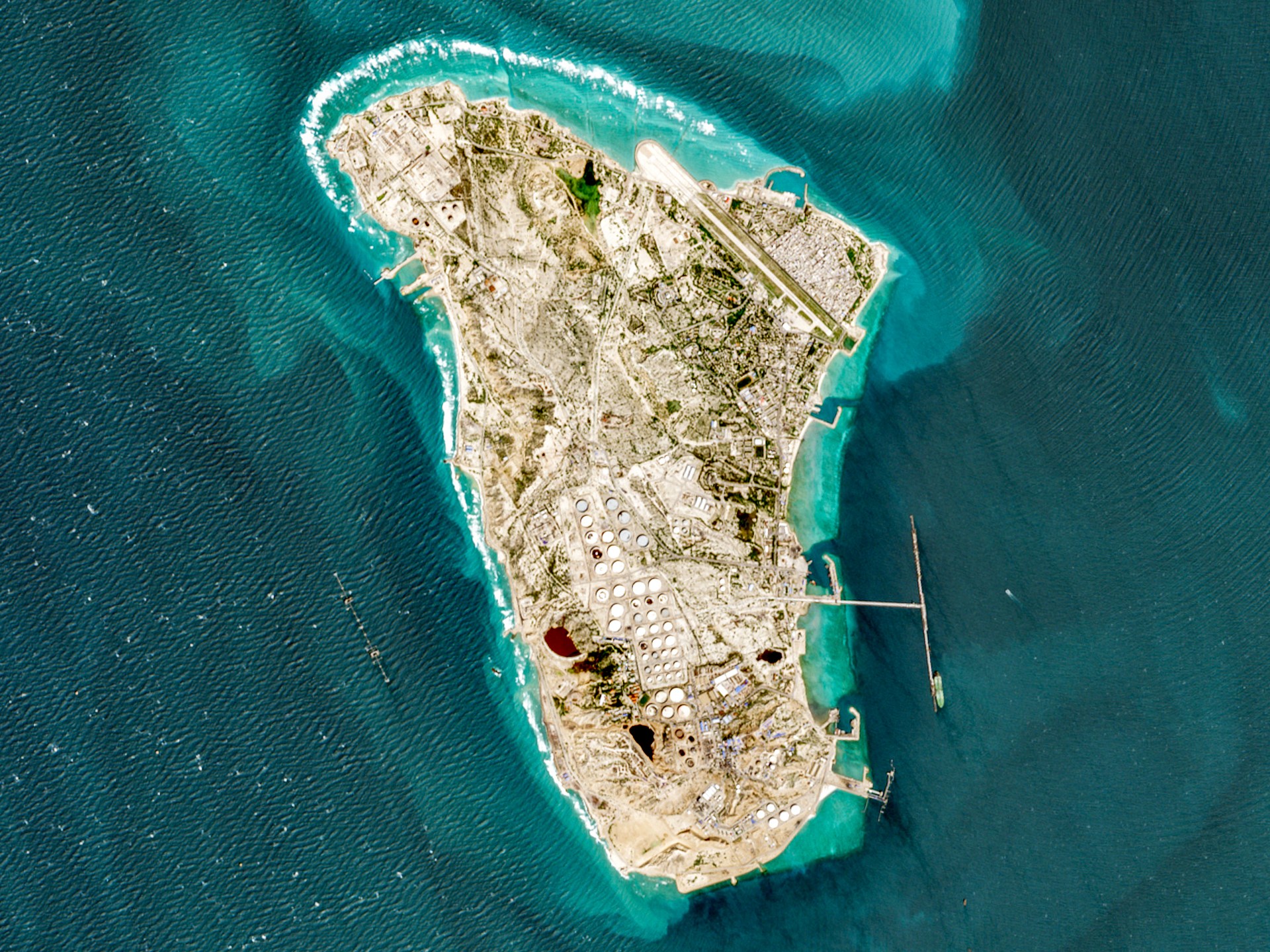
‘US eye on Kharg Island’
Al Jazeera’s Mohamed Vall, reporting from Tehran, said people in Iran are well aware of the continuing buildup of US ground troops and warships in the region, and “they know what it is going to lead to”.
“So right now, they are much more certain of a continuation of this war than an end to it, and they say they are preparing for it,” Vall said.
“They also are aware of the US eye on Kharg Island,” he said, adding that some believe that the parliamentary speaker’s earlier threat to a regional country – should it help in an island invasion – was aimed at the United Arab Emirates.
“According to some people explaining what he said, he’s referring here to the United Arab Emirates, that it might be cooperating with the US and encouraging it to take Kharg Island,” Vall said.
“Iranians over the last few days have been saying that they know that if this happens, they are sure that it will be very destructive to that country, the United Arab Emirates, and also the US troops,” he said.
“Kharg is a small, exposed island that is very close to the Iranian mainland. They are threatening that if US troops land on it, that will be the thing that [Iranians] are waiting for – and that it will be very detrimental to the safety of US troops,” he added.
Iran’s semi-official Tasnim news agency cited an unnamed military source as saying on Wednesday that Iran could open a new front at the mouth of the Red Sea if military action takes place on “Iranian islands or anywhere else in our lands”.
The source told Tasnim that Iran has the capability to pose a “credible threat” in the Bab al-Mandeb Strait, which lies between Yemen and Djibouti.
Tasnim later quoted an “informed source” claiming that Yemen’s Houthi rebels, who are backed by Iran, are prepared to play a role “if there is a need to control the Bab al-Mandeb Strait to further punish the enemy”.
Trump has in recent days repeatedly claimed progress in talks with Iran, and while Tehran has rejected that any negotiations with the US are taking place, there are signs of tentative diplomatic efforts, with mediators in the region saying work is ongoing behind the scenes to relay messages between the two sides.