Crowley stays present after reclaiming Ireland spot

Matt Gault

BBC Sport NI senior journalist

From Stuart McCloskey’s takedown of Marcus Smith to the coaching box’s delirious celebrations, Ireland’s resounding win over England conjured a series of enduring images.

McCloskey, who battered England with his buccaneering carries, was an obvious poster boy for the win. As were Rob Baloucoune, whose work at both ends of the field was lauded by head coach Andy Farrell, and Jamison Gibson-Park, who pulled the strings ingeniously in the record 42-21 win.

Given the intense scrutiny he has faced as one of the two key actors in Ireland’s fly-half debate, the headline-hogging endeavours of his team-mates would have suited Jack Crowley just fine.

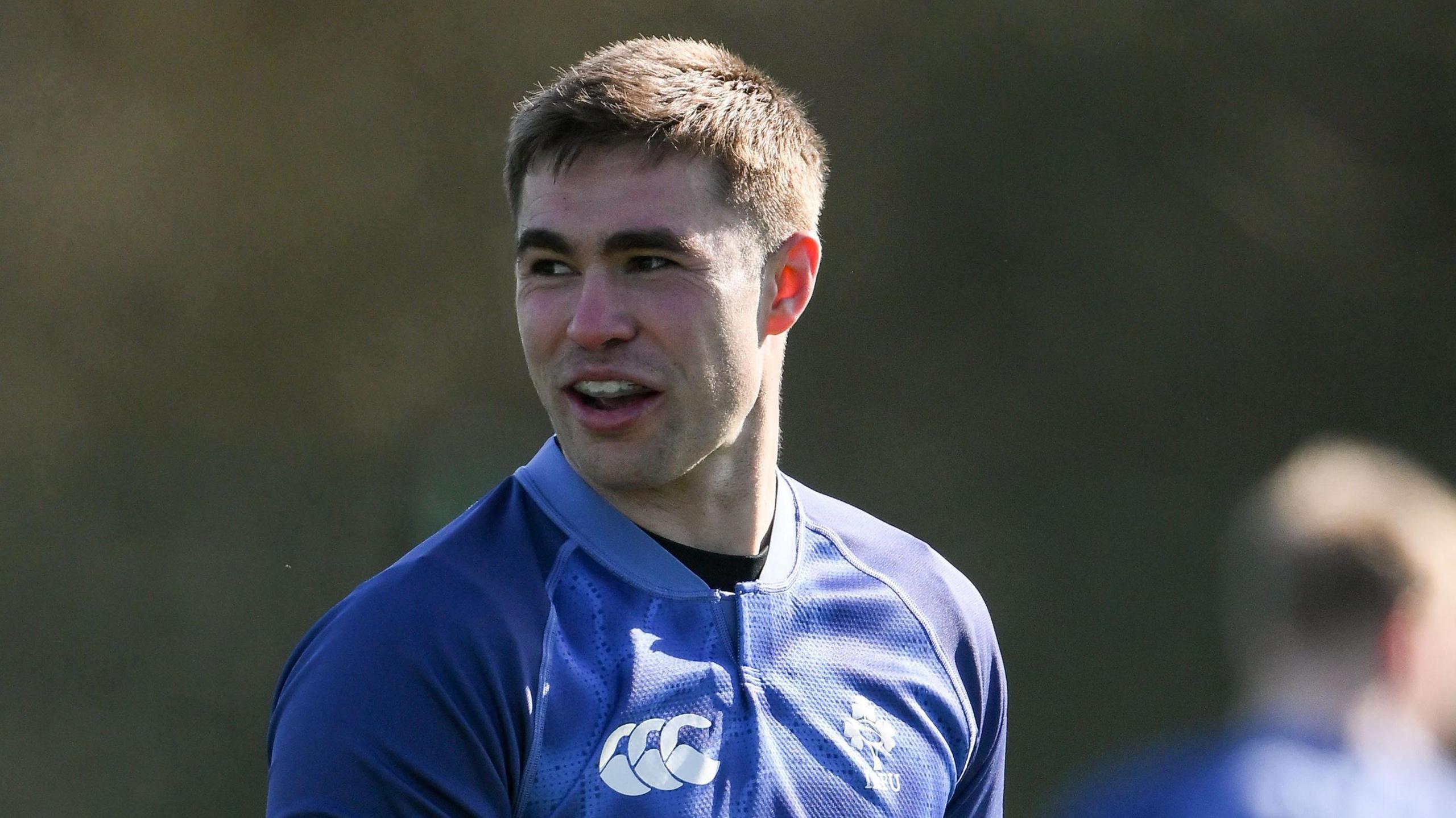
Reinstated to the Ireland line-up for the England game following Sam Prendergast’s indifferent start to the Six Nations, Crowley re-established himself as Ireland’s first-choice 10 with a quietly confident display.

    • 1 day ago
    • 3 days ago
    • 2 days ago

‘It wasn’t about proving a point’

It was an important game for Crowley. Having played second fiddle to Prendergast for much of last year’s Six Nations, his Munster form elevated him back to the line-up for Ireland’s Chicago reunion with the All Blacks in November.

He kept his place for the following week’s win over Japan but Prendergast was entrusted from the start for the last two November games – against Australia and South Africa – and the first two Six Nations fixtures with France and Italy.

And while Crowley made a significant impact off the bench against Italy, his day ended with a missed touch-finder that wrecked his side’s hopes of securing a bonus point.

Even with that, Crowley did not feel the England game was about “proving my point”.

“Being honest, no [there was no extra pressure],” said the 26-year-old, who is retained at fly-half for Friday’s game against Wales in Dublin (20:10 GMT).

Jamison Gibson-Park and Jack Crowley in action against EnglandGetty Images

The online debate surrounding Crowley and Prendergast moved Farrell to launch an impassioned plea for “keyboard warriors” to “cop on” following the Italy win.

It has been a constant discussion point ever since a then 21-year-old Prendergast was elevated to the starting line-up during the 2024 autumn internationals. That one plays for Leinster and the other Munster has only fanned the flames.

Having been through his own battle for the shirt with Ronan O’Gara, Johnny Sexton – now an Ireland assistant coach – last year revealed he told Crowley and Prendergast to delete their social media accounts.

But while online commentary had Farrell visibly irritated a few weeks ago, Crowley appeared unperturbed when the topic was raised before the Wales match.

“It is [easy] if you just if you just put it away, don’t engage with it,” he said.

“It’s like anything. You have a choice and you can choose to not engage. You can choose to engage. And it’s just like creating good habits day to day, like with your nutrition or diet or training performance, you make a choice and you commit to it.”

Social media comments are one thing but Crowley understands that the atmosphere during games can affect players too.

Against England, his opposite number George Ford was ironically cheered for finding touch after missing two earlier efforts.

“I think pre-empting situations where you’re going to be under pressure, whether it’s in play or whether it’s your individual technique,” he said when asked how to deal with a hostile environment.

“For us it might be kicking, but for line-out throwers, it might be the pressure that they could be getting in hostile environments. So during the week, just feeling what it might be like to be under a little bit of pressure.

Ireland v Wales, Aviva Stadium

2026 Six Nations

Watch on iPlayerListen on Sounds

With the shirt in his possession once more, the onus is now on Crowley to continue his solid form heading into a World Cup year.

For him, that means sticking to his process of trying to simplify in-game decisions in the face of the uncertainty and chaos that Test rugby brings.

“I’m not focusing too much on what’s going well and what’s not going well [in his own game], I’m just focusing on how I can bring my best day to day.

Related topics

  • Irish Rugby
  • Northern Ireland Sport
  • Rugby Union
  • Ireland Rugby Union

‘We should not have played’ – how tennis was caught in Middle East conflict

Jonathan Jurejko

BBC Sport tennis news reporter

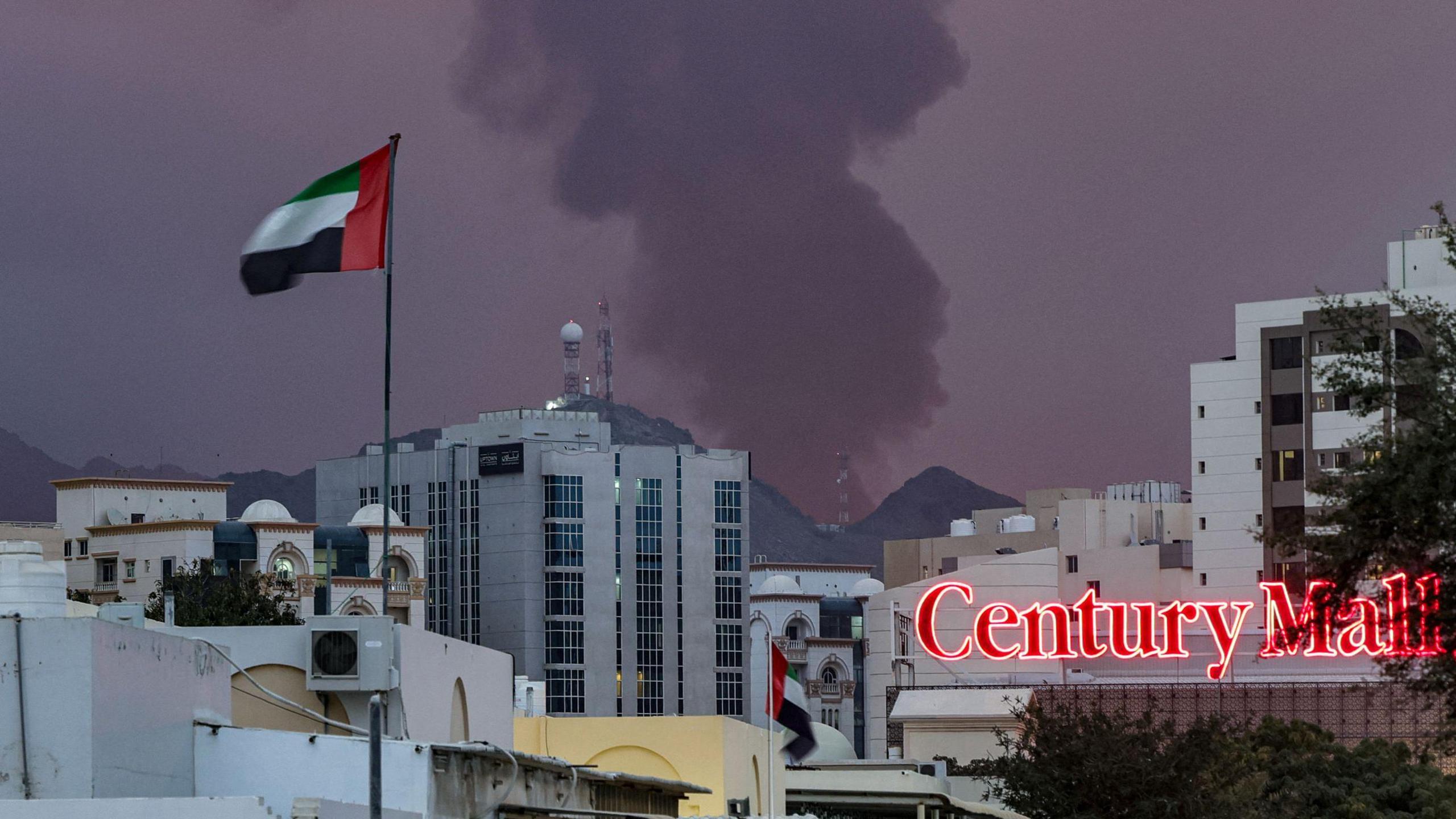
Explosions could be heard outside of the Dubai hotel.

With the United Arab Emirates coming under attack by Iranian missiles, the players who were there for an ATP Challenger tournament in nearby Fujairah did not expect to take to the court.

To their surprise, they were told it was safe to play in the port city about an hour’s drive east of Dubai, home to a key global oil storage and bunkering hub.

“We expected to stay in shelter because that’s what the governments were advising,” Australian player James McCabe, who was practising on court when he heard explosions and fighter jets overhead, told BBC Sport.

The UAE has come under attack after US-Israeli strikes on Iran, which began last Saturday, prompted retaliatory strikes across the region.

The ATP decided on Monday to proceed as planned with the tournament after holding discussions with the local government about its viability.

On Tuesday, players ran from the courts when a nearby oil terminal was set ablaze by debris from a drone attack.

The rest of the tournament was eventually cancelled, along with a second tournament at the same venue next week, leading to worried players desperately asking for support and scrambling for flights.

Two players – Russia’s Marat Sharipov and Uzbekistan’s Sergey Fomin – remain stranded in the UAE, along with their coaches. Everyone else has found a way to leave.

Players and officials run off court at the ATP Challenger event in FujairahATP

“A lot of the players didn’t want to play in Fujairah. But the ATP made the decision that it was safe to go.

“After the oil refinery was hit, it was still in the air that we could be going back on the court the next day – that was the scary part.

“It took them 10 hours to cancel the tournament. If the tournament had continued, I would have pulled out.”

The men’s governing body concluded it was safe to play following discussions with local government officials about the risk, with extra security measures put in place and the event being held behind closed doors.

All the players had already arrived in the UAE – meaning the draw was not affected by any travel disruptions – and that was highlighted as another factor in the decision.

But the knock-on effect has led to huge stress for the players, who are mainly ranked outside of the top 200 and far from financially secure as they try to make ends meet in their pursuit of reaching the main ATP Tour.

Costly demands & cancelled plans – how players tried to flee

Anger among the players reached boiling point when an ATP representative sent an email informing them that a chartered flight out of the Middle East was being arranged – but would cost them $5,000 (£3,750) each.

Prize money for winning the Fujairah tournament would have been almost $9,500 (£7,100). Losing in the first-round would have been $600 (£470).

After players made the situation public, the ATP said it would cover the cost of the chartered flight, which went to Milan via a stop in Egypt.

Sharipov was not able to fly to Italy because he does not have a European visa.

Disembarking in Egypt was an option, but meant leaving his luggage – including the racquets, kit and equipment which are his livelihood – with no guarantee when he would be reunited with it.

The 23-year-old felt he had no option but to stay in the UAE and search for alternatives.

“The ATP knew I could not travel to Europe so I think they should have said ‘we will sort something out for you’,” Sharipov told BBC Sport.

“They did not do this. They just said ‘there is a flight that you cannot make’. That’s really bad in my view.”

McCabe was able to leave on Tuesday, managing to book on to the first flight back to Sydney.

“It was a bit of a shock that the ATP didn’t support us with the flights getting out of there. We were left to our own devices,” said 22-year-old McCabe.

“As soon as we heard we needed to pay five grand everyone was pulling their hair out.”

The pair say those who arranged their own flights will not be reimbursed by the ATP. They have also been told players will receive no compensation in the absence of prize money.

Marat Sharipov celebrates with a trophyMarat Sharipov

McCabe said he was grateful to the Professional Tennis Players’ Association (PTPA) for offering $2,500 in support and also praised the UAE government for covering hotel costs for as long as players such as Sharipov need them.

Sharipov says he has spent $7,000 on four cancelled flights – on various routes from the region to Russia – because some airspace is still closed.

He continues to play the waiting game. He has a ticket booked to Armenia on Friday morning, but fears that will be cancelled too as many flights from Dubai continue to be grounded.

For the world’s best players, it was very different. Sharipov’s compatriots Daniil Medvedev, Andrey Rublev and Karen Khachanov were among a group also stuck in Dubai following the ATP 500 tournament there.

They were able to drive to Oman for a flight to Istanbul, then make the onward journey to California in time for the prestigious ATP 1000 tournament in Indian Wells.

“It’s not about the money in times like this,” said Sharipov, who was also entered the doubles with Fomin.

“But I think the ATP should help the players on the lower circuits like Challenger Tour more – because we don’t have that much.

Related topics

  • Tennis

More on this story

  • Some tennis balls
    • 16 August 2025
    BBC Sport microphone and phone

Fubara Pledges Support For Air Force To Boost Security In Rivers

Rivers State Governor Siminalayi Fubara has pledged continued collaboration with the Nigerian Air Force to strengthen security across the state, particularly in the fight against oil theft and other criminal activities.

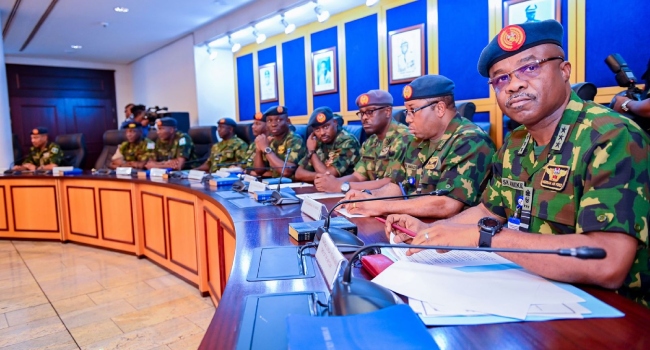
Governor Fubara made the pledge while receiving the Chief of the Air Staff, Air Marshal Sunday Aneke, during his first official visit to Rivers State.

The governor said the state government’s support for the Air Force, including the donation of an aircraft in 2025, was a deliberate decision taken at the State Executive Council meeting to enhance security operations.

According to him, the aircraft was donated because the state government was not making use of it, adding that it was better deployed to assist security agencies in tackling crime and oil theft.

Fubara explained that the upgrading of the Nigerian Air Force base in Port Harcourt would improve operational efficiency, as it would enable the Air Force to conduct air operations discreetly rather than relying on the international airport, where their strategies could be exposed.

READ ALSO: Why Rivers Introduced Mental Health Services At Primary Healthcare Level For Residents — Fubara

The governor noted that improved security would ultimately boost the state’s revenue.

He stressed that the protection of lives and property remains one of the core responsibilities of his government.

Governor Fubara also restated the state government’s commitment to support the Nigerian Air Force Officers’ Wives Association (NAFOWA) in building a school for children with special needs.

Responding to requests for the transfer of a public primary school located within the Air Force base in Port Harcourt, as well as the Mother and Child Hospital in the area, to the Air Force, the governor said the state government would make the necessary enquiries before making a decision.

The Rivers leader commended Air Force personnel for their service to the nation, noting that attaining high ranks in the military is a rare privilege achieved by only a few individuals.

The governor observed that the Rivers State Government and the Nigerian Air Force have maintained a strong partnership over the years, dating back to the administrations of previous governors.

The Chief of the Air Staff, Air Marshal Sunday Aneke and Governor Fubara. X @SimFubaraKSC

In his remarks, Aneke described Rivers State as strategically important to Nigeria due to its oil resources and the presence of key federal government facilities.

He assured that the Nigerian Air Force would continue to serve the interests of the state and the country.

Air Marshal Aneke commended the Rivers State Government for its numerous interventions in support of the Air Force, including the donation of an aircraft, provision of residential accommodation, and the resurfacing of the runway at the Nigerian Air Force base in Port Harcourt, which he described as meeting world-class standards.

He also acknowledged the governor’s promise to support the construction of a school for children with special needs, an initiative championed by the president of NAFOWA, who is his wife.

But he requested the transfer of the state primary school located within the air force base to the Nigerian Air Force.

Air Marshal Aneke also sought the transfer of the Mother and Child Healthcare facility near the base, noting that the Air Force could maximise its use to improve access to healthcare.

In addition, he called for collaboration with the state government in the area of security surveillance, suggesting that Rivers State could procure unmanned aerial vehicles (drones) to be operated by trained Air Force personnel.

According to him, drones and other air platforms have significantly changed modern warfare, stressing that effective security operations now depend more on technology and strategy than on the number of personnel.

More than 120 killed in Israel’s Lebanon attacks as Beirut, south, east hit

The death toll from Israeli attacks on Lebanon this week has risen to at least 123 people, the Lebanese Ministry of Public Health says, as a new wave of strikes pounded the country and Hezbollah warned Israeli residents to evacuate towns within 5km (3 miles) of their northern border, in one of the fiercest fronts in the wider United States-Israel war on Iran.

“The toll from the Israeli aggression on Monday … increased to 123 martyrs and 683 wounded,” a ministry statement said on Thursday.

Recommended Stories

list of 4 itemsend of list

Lebanese state media said early on Friday that Israel had launched air strikes on several towns in southern Lebanon.

“Enemy warplanes launched nighttime strikes on the towns of Srifa, Aita al-Shaab, Touline, as-Sawana and Majdal Selem,” the official National News Agency (NNA) reported.

Another strike hit the eastern Lebanese town of Douris at dawn, the NNA said.

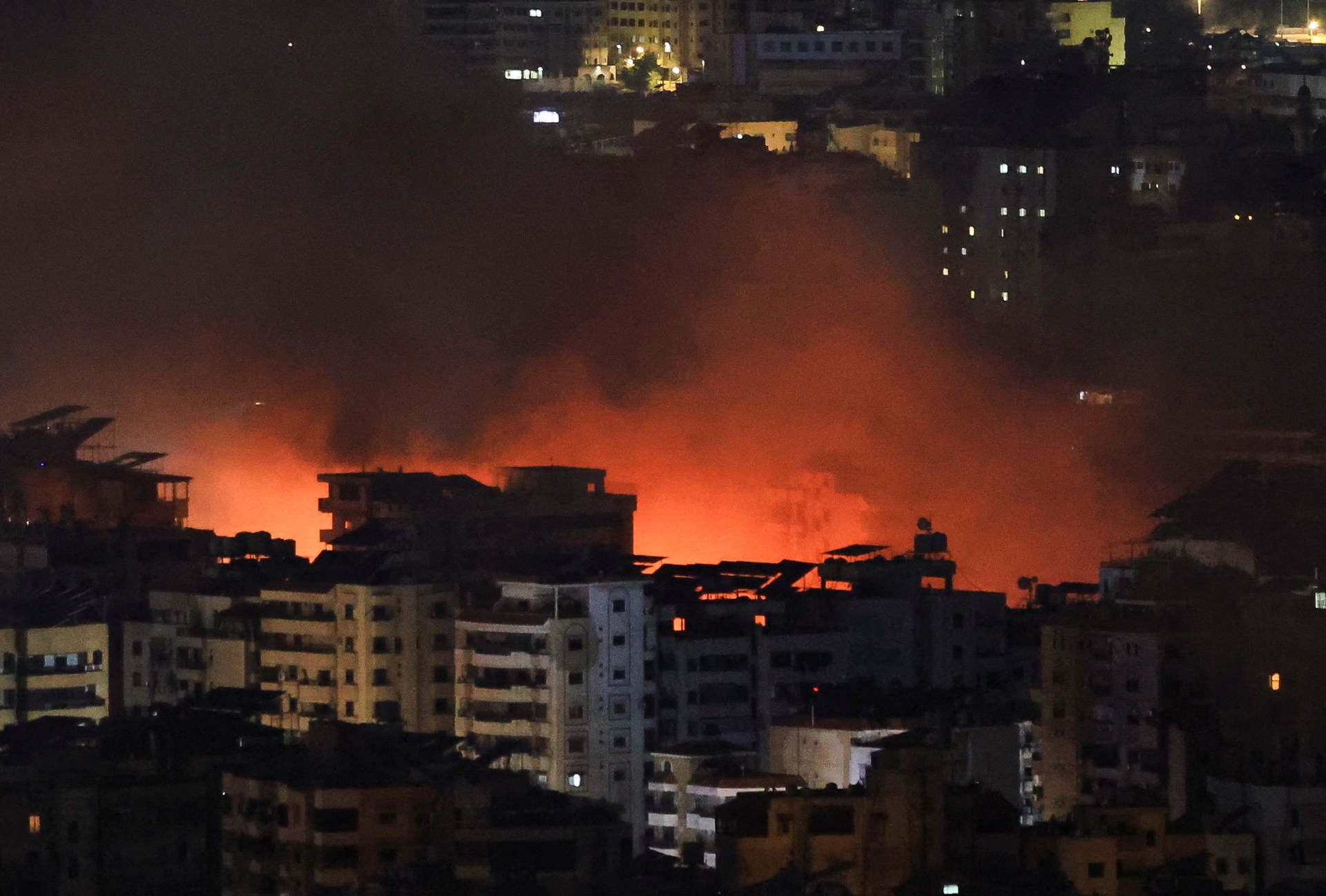
Hezbollah’s message to evacuate the border areas came less than a day after Israel threatened residents that they should leave Beirut’s southern suburbs, prompting a huge exodus from a swath of the capital’s densely populated area known as Dahiyeh, where some half a million people live.

The Israeli army said it has conducted 26 rounds of attacks in Dahiyeh. It claims to have hit various infrastructure used by Hezbollah, including the headquarters of the group’s Executive Council and a warehouse with drones.

“Your military’s aggression against Lebanese sovereignty and safe citizens, the destruction of civilian infrastructure and the expulsion campaign it is carrying out will not go unchallenged,” Hezbollah said.

Hezbollah claimed responsibility for a wave of attacks early on Friday on Israeli ground forces, including those who have entered Lebanon’s territory in recent days.

In a statement on Telegram, Hezbollah said its fighters had attacked Israeli forces in several areas, including Maroun al-Ras and Kfar Kila, within Lebanese territory.

Hezbollah also attacked Israel’s Yoav military camp in the occupied Golan Heights and a navy base in Israel’s Haifa port, the statement said.

There were no immediate reports of casualties.

Israel has said it will not evacuate its border towns and has sent more soldiers into Lebanon, claiming it was a defensive measure meant to protect its citizens who live nearby.

In contrast, tens of thousands of people in Lebanon have fled their homes after threats from Israel, with a mass exodus from Beirut’s southern suburbs leaving the area “almost empty”, the NNA said.

Hundreds of displaced families were left to seek shelter on a Beirut beach, where they waited despondently – many for the second time, after evacuating during a 2024 war between Israel and Hezbollah.

‘We are not animals’

Zeina Khodr, reporting from Beirut, said the humanitarian crisis is growing rapidly, as people seeking shelter can be seen “on the side of the roads on almost every corner”.

“There aren’t enough schools to shelter the hundreds of thousands of people who were forced to flee their homes after Israel’s forced displacement threat for Beirut’s southern suburbs yesterday,” she said.

“People are telling us: ‘We are not animals; we are human beings, our children are cold.’”

She noted that the Lebanese government has opened a number of shelters and told people to head to the north of the country.

Khodr added: “But many do not have any means of transport. It’s not just Lebanese who live in Beirut’s southern suburbs, but also Syrian refugees and Palestinian refugees.”

Lebanon was pulled into the war in the Middle East on Monday, as Hezbollah opened fire, prompting Israeli air strikes focused on Beirut’s southern suburbs and on southern and eastern Lebanon.

‘Howard Webb, where are you?’ – How we can stop VAR ruining football

  • 228 Comments

Set-plays have been in the headlines again this week, especially at corners with masses of players from both sides surrounding the six-yard box and the goalkeeper.

I watched and rewatched many of these incidents myself and witnessed defending players holding attacking players around the waist, and not even looking at the delivery. That’s a foul, and a penalty should be awarded.

In fact, we’re at the stage now where referees have to clamp down and give either penalties, or free-kicks to the defending team, if they see an offence.

Howard Webb, where are you, and what instructions are you actually giving out to your officials as the head of Professional Games Match Officials Limited (PGMOL)?

We are seeing players penalised outside the box for incidents that are nowhere near as blatant as the chaos we are witnessing in the six-yard box, and around the goalkeeper – so why is a foul in one part of the pitch, not a foul in this scenario?

One of the things this chaos has led to is teams not defending properly now. Why should they, when they can get away with not even watching the cross come in?

As a manager, I spent as much time working on defending crosses coming into our box as I did on us attacking crosses off set plays.

We are killing the art of good defending by allowing this to continue, and let me also say that set-play coaches should be ashamed at allowing their team to defend in this way.

Why I felt for Farke over his red card

Leeds boss Daniel Farke was shown a red card by referee Peter Bankes at the end of his side's 1-0 home defeat by Manchester City on SaturdayReuters

The chaos at corners was not the only thing I’ve watched this week when I’ve thought something has to change.

Leeds boss Daniel Farke was sent off for questioning the referee’s time-keeping at the end of Leeds’ 1-0 defeat by Manchester City.

I felt for him – for years and years, the managers of the so-called smaller Premier League clubs have had an inward belief that the top teams tend to get more decisions go their way than they do. I certainly did!

The time being added on at the end of a game is getting longer and longer, with both teams often complaining about the rationale of the referee’s decision.

I have always believed that every game should have a time-keeper working in unison with the referee, and showing everyone in the stadium, including supporters, when the clock is stopped and restarted.

Rugby union uses this method, and it works so well. With stoppages, like the types we see in football when injured goalkeepers go down, or for substitutions and any other significant breaks, we can see the clock stop and start by the referee’s signal, but the time-keeper is overseeing it all.

VAR has become a monster

Referee Stuart Attwell checks the VAR screen during the Premier League match between Leeds United and Sunderland on TuesdayGetty Images

Talking of Stockley Park, I can honestly say that place is having the biggest impact on professional football in my lifetime – and not, I may add, in a positive way.

Every week, I watch games with an open mouth, wondering how so-called refereeing experts can get so many decisions wrong.

The nature of football means subjective decision making is always going to be contested – handballs, penalties and what is or isn’t a booking. It’s impossible to agree on everything, and we have to understand that.

But red cards have to be given a more rigid framework for referees to work with, which would hopefully bring more consistency to decisions.

The laws around everything I have mentioned above in this column are far too ambiguous at the moment, and I think we have to remember what VAR was originally brought in for.

It was meant to protect and correct major or blatant wrong decisions – things like Thierry Henry’s handball versus the Republic of Ireland, Diego Maradona’s handball against England and Frank Lampard’s goal which crossed the line but wasn’t given against Germany, in the 2010 World Cup.

Incidents like that are examples of the kind of major wrong decisions which we can all agree on.

Unfortunately, VAR has become a monster, which is driving supporters away from the game, and things are getting worse – it seems to be involved more and more now, in every game I watch, and it is still not getting things right.

What grates with a lot of people in the game is that they are not asked what they think the problem is with VAR.

There are two other governing bodies of people in English football – the League Managers Association and the Professional Footballers’ Association – with members who have actually played the game or are currently playing and managing in it.

Even if the referees don’t want either of them involved in operating VAR, have they been asked how VAR could be improved – because they are the people it is affecting, not just the supporters.

Argentina's Diego Maradona outjumps Peter Shilton to score against England with his 'Hand of God' goal in the 1986 World Cup quarter-finalGetty Images

Let the game breathe properly again

Can I just emphasise that fans come to watch a football match and see their team’s players, not to be swamped by referees or VAR stopping games at every contentious moment.

These people must realise the effect they are having on our game. In my day as a player, referees were still judged on their performance but it was seen as a positive if they were not noticed.

Now, they are always noticed – but for all the wrong reasons.

Maybe it is time to remind our officials that the game is for the people, and not for them – referees should only be a part of the product when the game is going on, because people do not turn up to watch them.

Please, let’s get back to that, rather than being bombarded with the details of every decision. It is spoiling the game.

I appreciate that Howard Webb and his merry band of men have an enormously difficult job, but VAR has not helped them – instead, it has just exposed how inept they can be even with technology to help.

So, let’s get back to accepting that all referees make mistakes during games.

We should still correct them if they are major ones, but now it’s time to let the game breathe properly again – let’s give it back to the supporters, without this monster in the room ruining it any further.

Related topics

  • Football

From Rochdale to Premier League: the making of Mane

To play this video you need to enable JavaScript in your browser.

Nick Mashiter

Football reporter
  • 21 Comments

Mateus Mane is reminiscing about playing with older brother Marcos and his friends.

“They used to bully me off the ball. I feel that’s helped me a lot, especially playing on concrete,” says the Wolves forward.

“I wasn’t used to good pitches. That’s probably why I’ve got loads of scars.”

The 18-year-old started to develop his skills in Moston, a suburb four miles north east of Manchester, after moving to England with his mother from Portugal aged eight.

He knew no English, taking a year to understand the language, but playing with Marcos was the foundation for his rise to the Premier League.

Mane has been the brightest spot in Wolves’ bleak season, which will end in relegation with Rob Edwards’ side having won just twice this season.

In his breakthrough campaign, he has started every Premier League game since making his full debut against Liverpool at Anfield in December.

He faces the Reds again in the FA Cup on Friday at Molineux – three days after Tuesday’s dramatic 2-1 injury-time win in the Premier League.

Two years after being on the bench for Rochdale in the National League, Mane is already becoming a household name.

Soon after moving to England he started to admire Manchester City pair Sergio Aguero and David Silva and tried to copy Neymar after watching YouTube clips.

Having joined City Select Academy, Mane played for Manchester Cobras as a youngster as well as Moston Brook FC.

There was little time for much more, yet he still gave parents a run for their money.

“They’d say I was a bit cheeky as a child, but I was a young kid,” he said. “Every kid can be cheeky and I’ll say I was hard work for my parents. Most of the time I feel like I’ve grown up, I matured.”

Mane still goes home on a Sunday, when fixtures allow, to go to church and his maturity is showing on the pitch too after joining Rochdale’s academy in 2023 aged 15.

It was run then by Tony Ellis – now Wolves’ head of northern recruitment – with Mane asked to sign after his first training session.

“He lit the place up. He’s technical, his attributes were ridiculous for such a young boy,” recalled Ellis, who also recommended the frontman to Wolves.

“The way he received the ball, the way he drove, his decision-making. Just a technically good footballer.

“He was happy in the environment, always had a ball, always communicating with players and staff.

“When you’d finished the session, he’d be the first one to go and put the cones away or get the balls. He gained the trust of staff and players really, really quickly.”

Mateus Mane playing for EnglandGetty Images

It has been a steep curve since, with former boss Vitor Pereira handing him his debut against Brighton in May last year, while Wolves assistant Harry Watling quickly identified his talent after he and current manager Rob Edwards arrived in November to take charge.

Mane has blossomed and wants to look at his clips as soon as he is off the pitch, striking up a close relationship with Watling.

In return he has two goals in 20 appearances, including his first in Wolves’ long-awaited opening win of the season against West Ham in January.

Mane’s belief shines through as he added: “I’ve said to myself one day I’ll play in the Premier League, I’ll score goals in the Premier League.

“My plan was just work hard, keep going every day and it came sooner than I thought, I was grateful.

“Every young kids’ dream is to play in the Premier League. I jumped off my seat, took my bib off, ready to come on and when I came on, my nerves just started coming up.

“But when I won my first header, my nerves just went. I was like, ‘yeah, I deserve to be here. I want to be here’.

“I feel like, as a youngster coming into a team where there’s loads of senior and experienced players, it’s a bit hard. But if you earn your respect then you can tell him, ‘come on and keep going’.

To play this video you need to enable JavaScript in your browser.

International tug of war and ‘a lot of noise’

With Liverpool, Manchester United and Real Madrid among the clubs reportedly interested in a summer transfer, Mane’s confidence and form has also got Portugal and England battling over his international future.

Both countries have watched him, with Portugal boss Roberto Martinez close with Wolves technical director Matt Jackson – the pair having played together at Wigan.

England Under-21 boss Lee Carsley is also taking a keen interest and Mane, an England Under-18 international, will have a decision to make.

“He’s got a really high ceiling, I think because of his mentality, because of his quality and because he’s not finished developing yet,” said Wolves boss Edwards.

“He can go a long, long way. It’s been a really good start for him but that is all it is.

“He’s getting a lot of headlines and there’s a lot of noise about him, there’s not many 18-year-olds in the Premier League doing what he’s doing at the moment, especially in a team that’s been struggling this season.

Related topics

  • Premier League
  • Football
  • Wolverhampton Wanderers