Gaza will be in the shadow of famine as long as we cannot plant our land

Last week, a ceasefire was announced after two years of genocide in Gaza. The bombs have stopped falling, but the devastation remains. The majority of homes, schools, hospitals, universities, factories, and commercial buildings have been reduced to rubble. From above, Gaza looks like a grey desert of rubble, its vibrant urban spaces reduced to ghost towns, its lush agricultural land and greenery wiped out.

The occupier’s aim was not only to render the Palestinians of Gaza homeless but also unable to provide for themselves. Uprooting the dispossessed and impoverished, those who have lost their connection to the land, is of course much easier.

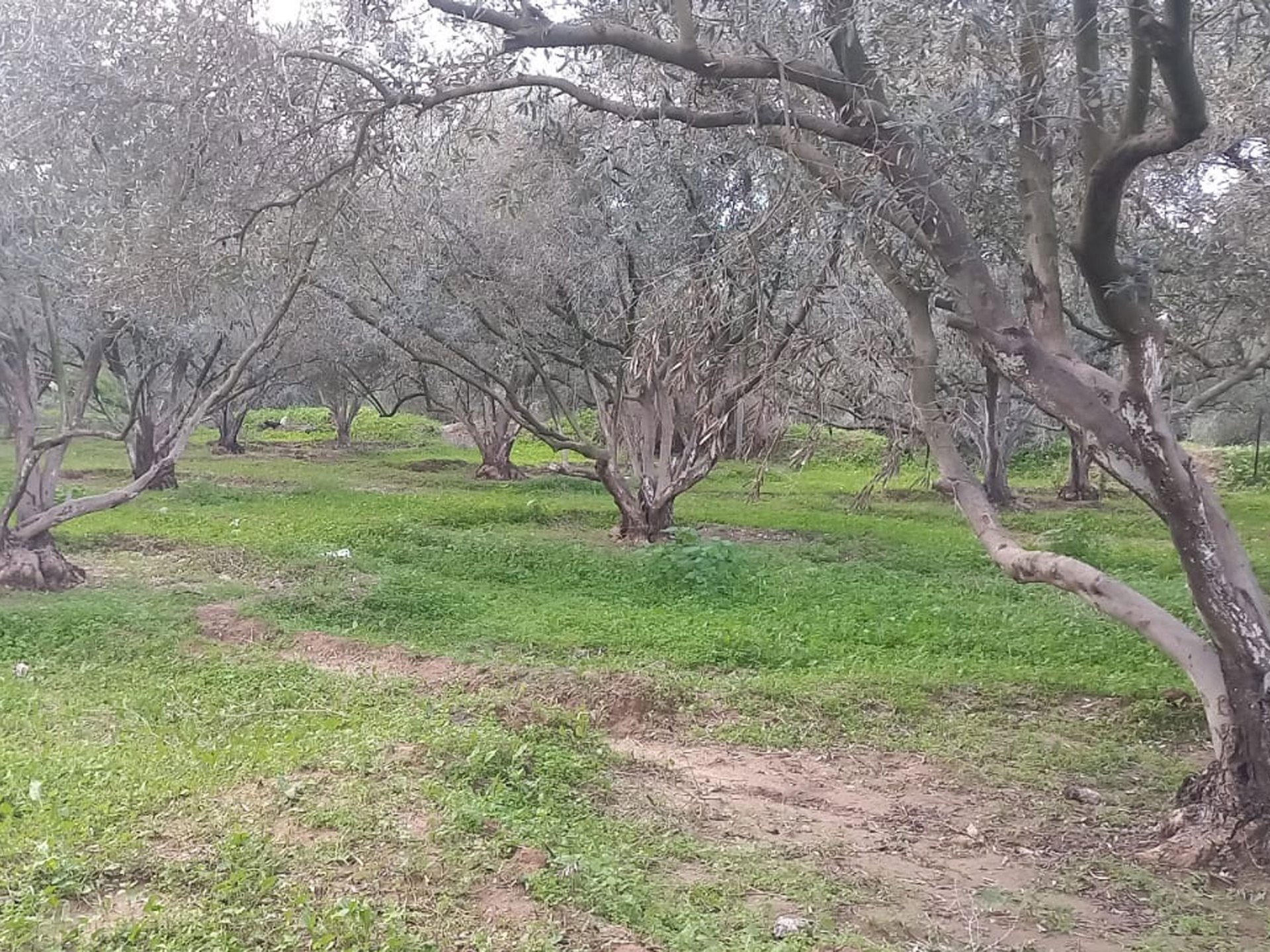
This was the goal when Israeli tanks and bulldozers entered my family’s plot of land in the eastern part of Maghazi refugee camp and uprooted 55 olive trees, 10 palms and five fig trees.

This plot of land was offered to my refugee grandfather, Ali Alsaloul, by its original owner as a place to shelter in during the Nakba of 1948. Ali, his wife, Ghalia, and their children had just fled their village, al-Maghar, as Zionist forces advanced on it. Al-Maghar, like Gaza today, was reduced to rubble; the Zionists who perpetrated the crime completed the erasure by establishing a national park on its ruins – “Mrar Hills National Park”.

Ali was a farmer and so were his ancestors; his livelihood had always come from the land. So when he settled in the new location, he was quick to plant it with olive trees, palms, figs and prickly pears. He built his house there and raised my father, uncles and aunts. My grandfather eventually bought the land from its generous owner, by paying in installments over many years. Thus, my family came into the possession of 2,000 square metres (half an acre) of land.

Although my father and his siblings married and moved out of their family home, this plot of land remained a favourite place to go, especially for me.

It was just two kilometres away from our house in Maghazi refugee camp. I enjoyed doing the 30-minute walk, part of which went through a complete “jungle”: a stretch of green populated with clover, sycamore, jujube and olive trees, colourful birds, foxes, leashed and unleashed dogs and many beehives.

Every autumn, in October, when the olive picking season began, my cousins, friends and I would gather to collect the olives. It was an occasion that brought us closer together. We would get the olives pressed and get 500 litres (130 gallons) of olive oil from the harvest. The figs and dates were made into jams to have for breakfast or for suhoor during Ramadan.

The rest of the year, I would often meet my friends Ibrahim and Mohammed between the olive trees. We would light a small fire and make a kettle of tea to enjoy under the moonlight, while we talked.

When the war started in 2023, our land became a dangerous place to go. The farms and olive groves around it were often bombed. Our plot was also hit twice at the beginning of the war. As a result, we could not harvest the olives in 2023 and then again in 2024.

When the famine took hold of Gaza in the summer, we started sneaking into the plot to get some fruit and some firewood for cooking, since a kilo of that cost $2. We knew that Israeli tanks might storm in at any moment, but we took the risk anyway.

Seven families – we, friends and neighbours – benefited from the fruit and wood of that land.

One day in late August, a friend of mine called me with a terrible rumour he had heard: the Israeli tanks and bulldozers had advanced into the eastern part of Maghazi and levelled it all, uprooting trees and burying them. I gasped; our lifeline was gone.

Days later, the rumour was confirmed. The Israeli army had uprooted more than 600 trees in the area, mostly olive trees. Those who had fled from the area shared what they had seen. What was once a lush green stretch of land had been bulldozed into a yellow, lifeless desert.

Earlier in August, the Food and Agriculture Organization of the United Nations (FAO) reported that 98.5 percent of Gaza’s agricultural land had been damaged or made inaccessible. I guess the destruction of our plot shrank that 1.5 percent remaining land even further.

As Israel was completing the erasure of Palestinian agricultural land, it started allowing commercial but not aid trucks into Gaza. The markets were flooded with products with packaging covered in Hebrew.

Israel was starving us, destroying our ability to grow our own food, and then making us buy their products at exorbitant prices.

Ninety percent of people in Gaza are unemployed and can’t afford to buy an Israeli egg for $5 or a kilo of dates for $13. It was yet another genocidal strategy that forced the two million starving Palestinians in Gaza to choose between two horrible options: dying from hunger or paying to support the Israeli economy.

Now, aid is finally supposed to start coming into Gaza under the ceasefire agreement. This may be a relief to many starving Palestinians, but it is not a solution. Israel has rendered us fully dependent on aid, and it is the sole power that determines if, when and how much of it enters Gaza. Per the Integrated Food Security Phase Classification, 100 percent of Palestinians in Gaza experience some level of food insecurity.

Much of Gaza’s agricultural land remains out of reach, as Israel has withdrawn from just a part of the Gaza Strip. My family will have to wait for the implementation of the third phase of the ceasefire deal – if Israel agrees to implement it at all – to see the Israeli army withdraw to the buffer zone and regain access our land.

We have now lost our land twice. Once in 1948 and now again in 2025. Israel wants to repeat history and dispossess us again. It must not be allowed to convert more Palestinian land into buffer zones and national parks.

Getting back our land, rehabilitating and planting it is crucial not just for our survival, but also for maintaining our connection to the land. We must resist uprooting.
Conflict sends 300,000 people fleeing from South Sudan in 2025: UN

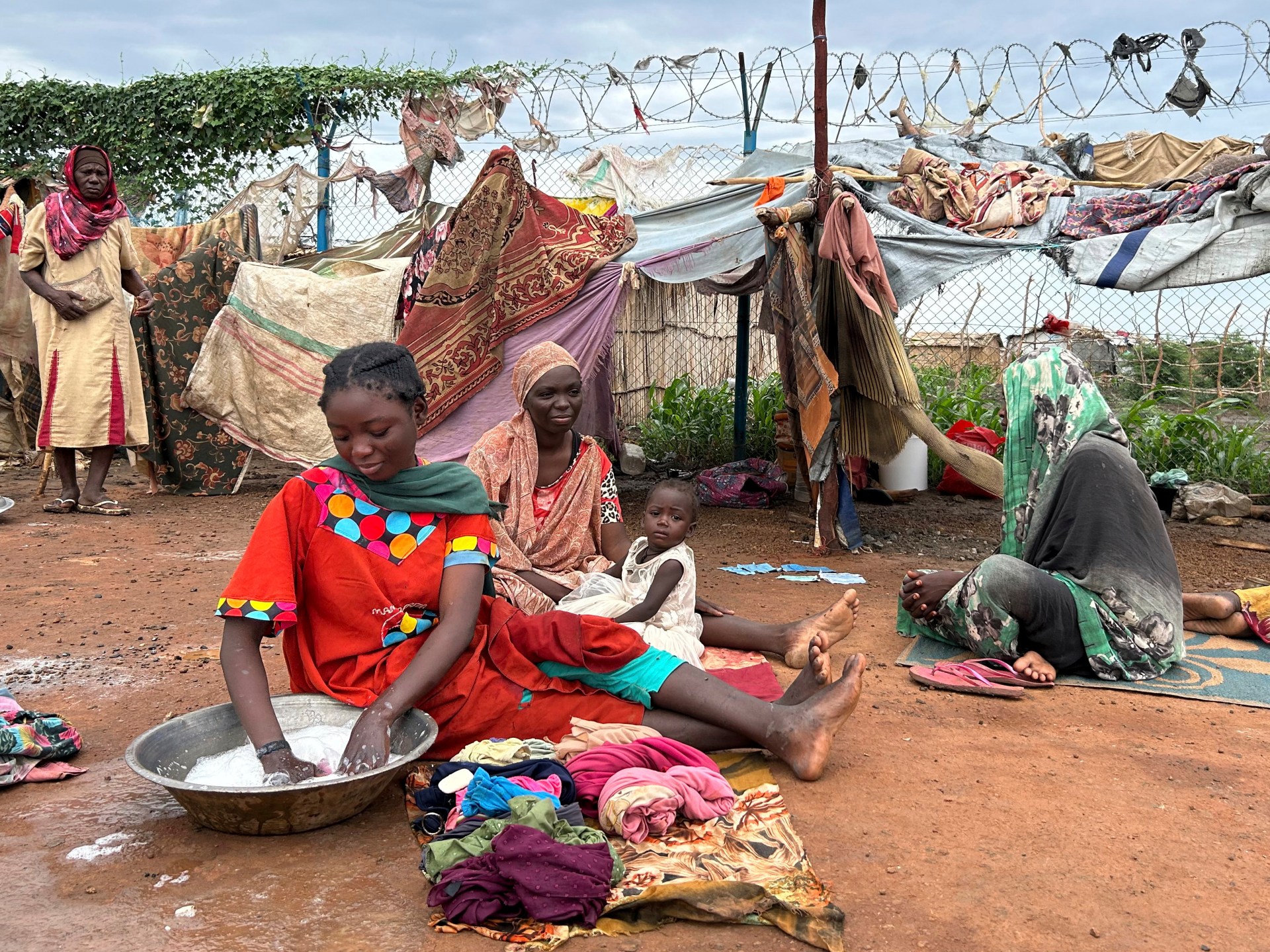
About 300,000 people have fled South Sudan so far in 2025 as armed conflict between rival leaders threatens civil war, the United Nations warns.

The mass displacement was reported on Monday by the UN Commission on Human Rights in South Sudan. The report cautioned that the conflict between President Salva Kiir and suspended First Vice President Riek Machar risks a return to full-scale war.

The commission’s report called for an urgent regional intervention to prevent the country from sliding towards such a tragic event.

South Sudan has been beset by political instability and ethnic violence since it gained independence from Sudan in 2011.

The country plunged into civil war in 2013 when Kiir dismissed Machar as vice president. The pair agreed a ceasefire in 2017, but their fragile power-sharing agreement has been unravelling for months and was suspended last month amid outbreaks of violence among forces loyal to each.

Machar was placed under house arrest in March after fighting between the military and an ethnic Nuer militia in the northeastern town of Nasir killed dozens of people and displaced more than 80,000.

He was charged with treason, murder and crimes against humanity in September although his lawyer argued the court lacked jurisdiction. Kiir suspended Machar from his position in early October.

Machar rejects the charges with his spokesman calling them a “political witch-hunt”.

Renewed clashes in South Sudan have driven almost 150,000 people to Sudan, where a civil war has raged for two years, and a similar number into neighbouring Uganda, Ethiopia and as far as Kenya.

More than 2.5 million South Sudanese refugees now live in neighbouring countries while two million remain internally displaced.

The commission linked the current crisis to corruption and lack of accountability among South Sudan’s leaders.

“The ongoing political crisis, increasing fighting and unchecked, systemic corruption are all symptoms of the failure of leadership,” Commissioner Barney Afako said.

“The crisis is the result of deliberate choices made by its leaders to put their interests above those of their people,” Commission Chairwoman Yasmin Sooka said.

A UN report in September detailed significant corruption, alleging that $1.7bn from an oil-for-roads programme remains unaccounted for while three-quarters of the country faces severe food shortages.

Commissioner Barney Afako warned that without immediate regional engagement, South Sudan risks catastrophic consequences.

Why Ryder Cup players get free pass to season-ending DP World Tour play-offs

Getty Images
  • 13 Comments

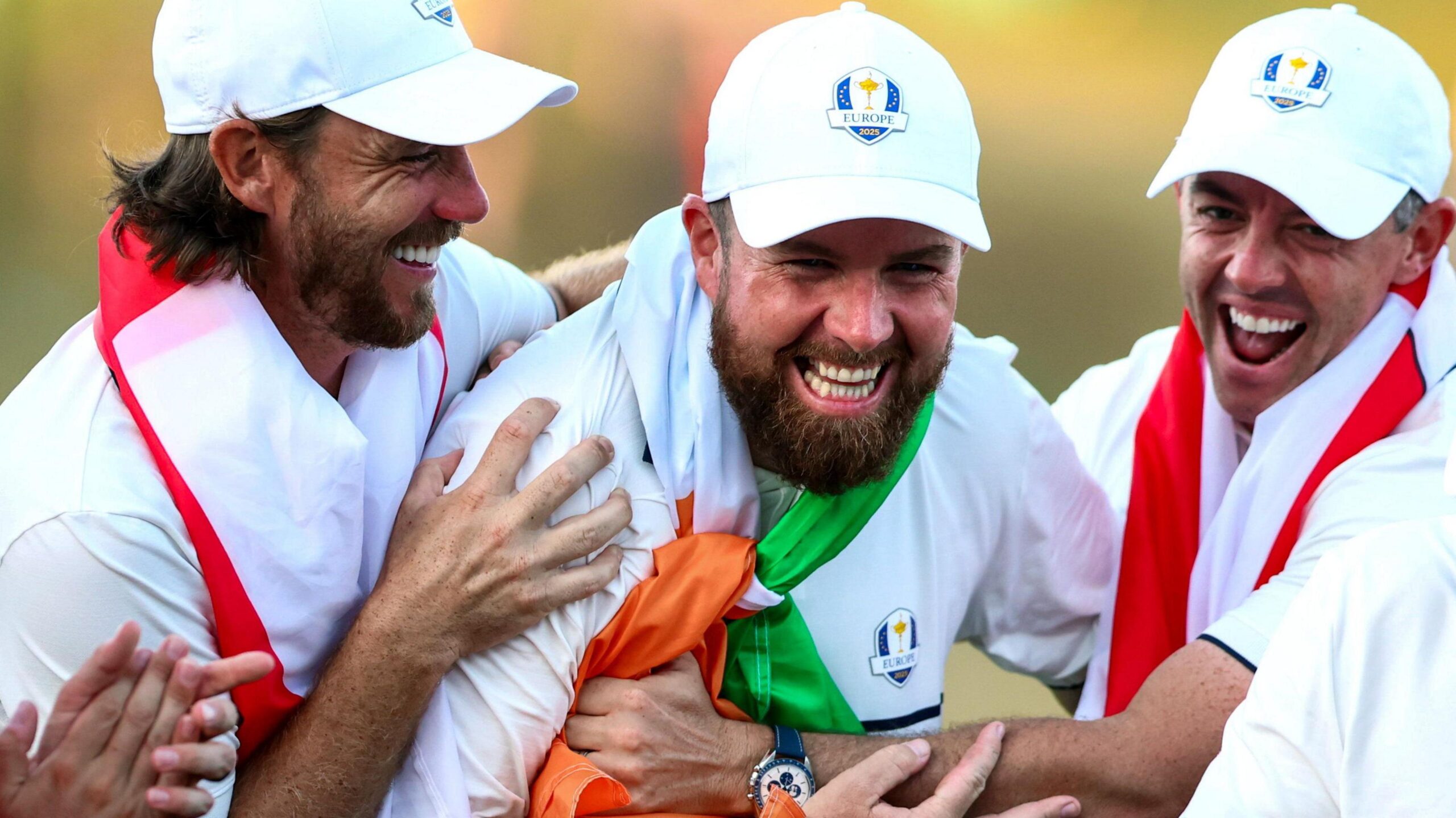
Rory McIlroy breaks new ground by playing in India this week as he returns to action for the first time since the Ryder Cup.

While the Northern Irishman widens his golfing horizons, the DP World Tour enters the final phase of this year’s Race to Dubai. McIlroy is in pole position to secure the season-long title for the fourth season running and seventh time overall.

There are only three more events following the India Championship; the following week’s Genesis Championship in South Korea – which concludes the ‘Back Nine’ phase of the schedule – and then the final two tournaments in the Middle East.

These big money ‘play-off’ events in Abu Dhabi and Dubai are reserved for the top 70 and then top 50 in the standings.

    • 3 days ago
    • 5 days ago
    • 7 days ago

Comfortably outside the top 70, at first glance it would appear both need high finishes from their trip to the Delhi Golf Club to keep alive their seasons. But, in fact, they are already assured of their places in Abu Dhabi and Dubai.

This is due to a little publicised but pragmatic loophole whereby members of Europe’s Ryder Cup team are also considered eligible for next month’s closing tournaments.

Fleetwood, who won the PGA Tour’s play-offs with his stirring victory at August’s Tour Championship in Atlanta, lies 94th in the European tour’s season-long table. Lowry, who sank the putt that retained the Ryder Cup, is 155th.

Other European team-mates who can potentially benefit are Ludvig Aberg (72nd) and Sepp Straka (147th).

This might question the integrity of a play-off system, which by definition is supposed to bring cut-throat competitive jeopardy, but this scenario also illustrates realities faced by the Wentworth-based DP World Tour.

They are reliant on big backers such as DP World, who are also the title sponsors of this week’s event in India. They need the biggest stars at their biggest events to justify the investment, which runs to millions of dollars.

Fleetwood has enjoyed one of his most successful seasons, capped by his first win on American soil at East Lake just under two months ago.

He is one of European golf’s superstars and, frankly, it would be unthinkable to stage the 2025 season finale without him.

Common sense trumps competitive integrity, even though the world number five – a Dubai resident – has reserved his best performances for events that do not count on his home tour.

Fleetwood has so far played only four DP World Tour events and failed to finish in the top 20 at any of them; the Dubai Desert Classic, Scottish Open, BMW PGA Championship or Alfred Dunhill Links Championship.

The majors also count on the Race to Dubai and his share of 16th at the Open was his only top 20 in the big four tournaments. But on the American-based circuit he enjoyed seven top-five finishes.

Fleetwood was also Europe’s top points scorer at Bethpage last month. It would be absurd for him not to be taking his place alongside the tour’s leading stars at the end of the season.

While in the past the PGA and European tours were deadly rivals they are now inextricably linked thanks to the strategic alliance that underpins DP World Tour prize funds.

While Marco Penge, last week’s winner of the Open De Espana, has moved into McIlroy’s wing mirrors as his closest rival at the top of the Race to Dubai, much of the interest for the rest of the season will have an American bias.

The narrative will be driven by the scramble for 10 places on the PGA Tour for those who do not already have playing rights in the US. Penge, with three DPWT wins, is assured of what is widely regarded as ‘promotion’ to the US circuit.

The Clitheroe-based pro, who also guaranteed invites to the Masters and Open with his Spanish success, is not in the India field but will mount a final push to try to overhaul McIlroy at the top of the standings.

And Dan Brown, the man Penge beat in the Madrid play-off, is one of four other Britons in the thick of the battle for a 2026 PGA card.

Yorkshireman John Parry and the Bath duo of Jordan Smith and Laurie Canter also currently occupy spots that would yield a golden ticket for next year.

Some observers see this scenario as evidence that the DP World Tour is now nothing more than a feeder for big brother on the other side of the pond.

But the DP World Tour argue it is a vital mechanism that underpins their schedule, a necessary and enticing element that maximises playing opportunities for its members.

Related topics

  • Golf

Williams, 50, becomes oldest ranking event winner

Getty Images

Mark Williams beat Shaun Murphy 10-3 in the Xi’an Grand Prix final to become the oldest winner of a ranking event.

Aged 50 years and 206 days, three-time world champion Williams eclipsed the record previously held by fellow Welshman Ray Reardon, who was 50 years and 14 days old when he won the Professional Players Tournament in 1982.

The left-hander’s 27th ranking title puts him one behind fifth-placed Steve Davis (28) in the all-time list, with Ronnie O’Sullivan leading the way on 41 ranking event wins.

    • 16 hours ago

Reigning Masters champion Murphy, 43, was aiming for back-to-back ranking tournament victories after winning last month’s British Open in Cheltenham.

The Englishman continued his excellent form in China to reach another final, but was punished for any errors he made during an opening session which his opponent dominated with ruthless efficiency.

Williams seized control by winning the first four frames, pinching the third and fourth frames with contributions of 56 and 68 respectively after Murphy had held significant leads in both.

A superb 127 break in frame eight, to go with his six earlier half-centuries, ensured Williams went into the concluding session 7-1 ahead.

Related topics

  • Snooker

Arsenal midfielder Odegaard out until mid-November

Getty Images

Arsenal captain Martin Odegaard is not expected to return from a knee injury until after the November international break.

The midfielder suffered a medial collateral ligament injury in the Gunners’ win over West Ham on 4 October and had to be replaced during the first half.

Arsenal released a statement the day after, confirming Odegaard would miss the current international window, but did not set a timeline for his recovery.

However, the 26-year-old is set to remain unavailable until after the next set of international fixtures in the middle of November.

    • 5 days ago

The news will come as a blow to manager Mikel Arteta given Odegaard’s importance to his team.

The start of Odegaard’s season has been plagued by injury problems, with the midfielder being forced off in the first half of three consecutive Premier League matches.

Arsenal face north London rivals Tottenham immediately after next month’s international break, and it remains to be seen whether Odegaard can recover in time for the derby on 23 November.

Norway took a significant step towards qualification for the 2026 World Cup on Saturday, beating Israel 5-0.

Related topics

  • Premier League
  • Arsenal
  • Football

More on this story

  • Arsenal logo
  • Ask Me Anything logo