The Nigerian Air Force says it would conduct its annual 10-kilometre Walk/Jog Exercise in Abuja as part of efforts to enhance the health, fitness and operational readiness of its personnel.
The Director of Public Relations and Information, Air Commodore Ehimen Ejodame, made this known in a statement on Friday in Abuja.
He said that the exercise underscored the importance of physical fitness to military efficiency and overall mission readiness.
The exercise, he stated, would commence by 6:00 am and end by 8:00 am and will take place along the service lane between Karu Bridge and Mogadishu Cantonment Bridge in the Abuja-Nyanya-Keffi expressway.
This, according to him, will lead to temporary closure of the road to vehicular movement during the period.
Ejodame said adequate arrangements had been made to ensure the safety of participants and residents, adding that normal traffic flow would resume immediately after the exercise.
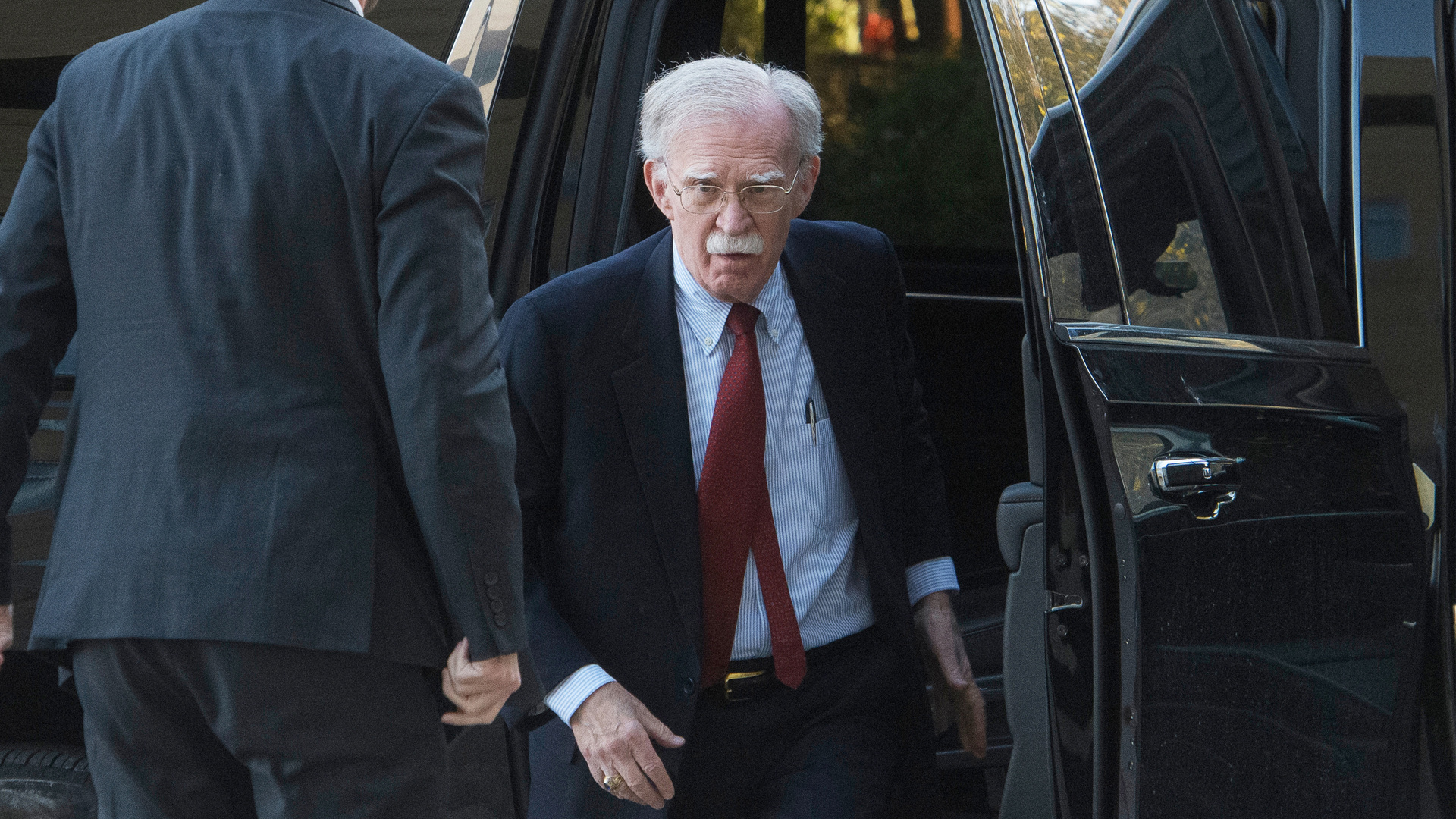
Former US National Security Adviser John Bolton is making an initial court appearance as he faces charges in an 18-count indictment of mishandling classified information. Bolton, who served under Donald Trump in his first term, has become a vocal critic of the US president.
Australia may have spotted a lucrative hole in the market for rare-earth metals, which are crucial for the defence industry and for manufacturing products necessary for the development of artificial intelligence (AI), such as semiconductors.
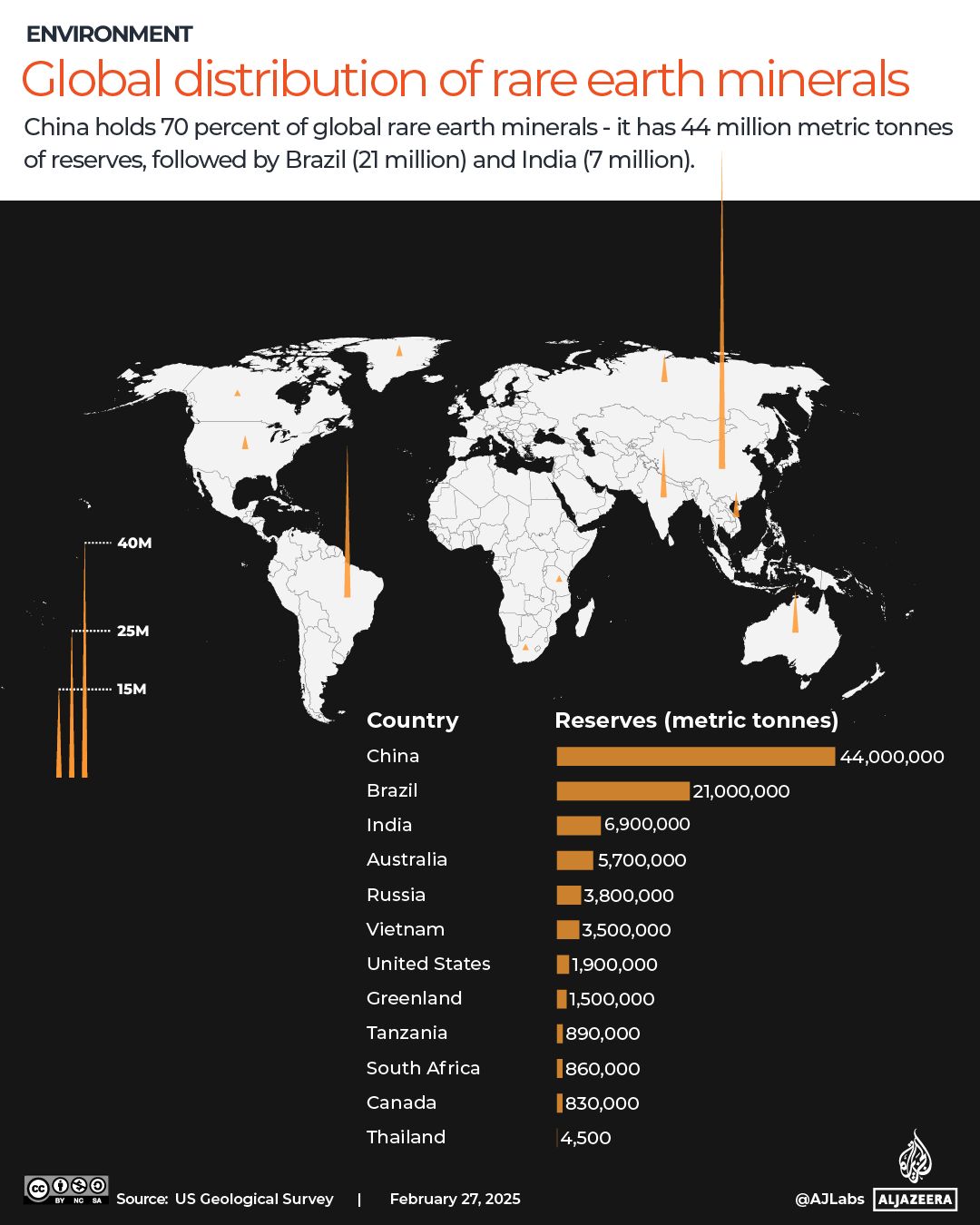
Last week, China, which has a stranglehold on the supply of these critical minerals, tightened its export controls over its rare-earth metals. It now restricts exports of 12 of the 17 rare-earth metals on the periodic table. Seventy percent of rare earths are mined in China, and 90 percent are processed there.
Recommended Stories
list of 4 itemsend of list
The United States is among many nations that urgently require these materials, and analysts have suggested that China is using access to them as leverage for its ongoing trade talks with the US. The announcement of the new restrictions came just weeks ahead of an expected meeting between Donald Trump and his Chinese counterpart, Xi Jinping, later this month.
But on Thursday, Australia appeared to be stepping into the breach, when Canberra’s Treasurer Jim Chalmers told reporters in Washington that “Australia is very well placed” to service the global need for rare earths instead.
“We will engage with our partners to make sure that we can be a very reliable supplier to meet the critical minerals needs of … the US and other markets,” he said, ahead of talks with Kevin Hassett, the director of the US National Economic Council.
On September 24, Australia’s trade minister, Don Farrell, met his US counterpart, Jamieson Greer, in Malaysia. According to ABC news, Farrell asked Greer, “How can we help America become great again?”
“Give us your critical minerals,” the US trade representative responded. Shortly afterwards, the White House confirmed that US President Donald Trump would meet Australian Prime Minister Anthony Albanese in the Oval Office on October 20.
Critical minerals look set to be an important talking point.
There are 17 rare earth metals – 15 lanthanides (metallic elements), as well as scandium and yttrium. They are vital for manufacturing magnets used in advanced technologies, from electric cars and semiconductors to modern military equipment.
Hayley Channer, director of the Sydney-based US Studies Centre (USSC) think tank, described next week’s meeting between Trump and Albanese as “critical”.
She told ABC News that the US has, for some time, been concerned about “Australian minerals always going through China”. For instance, “90 percent of Australia’s lithium goes to China for processing”, she said.
There is a good reason for that. Analysts and policymakers widely acknowledge that China has nurtured a vast pool talent – at universities and state-owned enterprises – in processing rare-earth minerals. Meanwhile, its research and development network is years ahead of other countries.
Canberra seems set on redressing the balance, however. Before this year’s parliamentary elections in May, Albanese announced plans for a $1.2bn critical minerals reserve to help develop the Australian sector, with a focus on processing techniques.
(Al Jazeera)
Which rare minerals does Australia have?
While Australia is home to some of the world’s most important rare-earth metals – like neodymium, which is used in magnets for wind turbines – its critical mineral reserves are roughly one-seventh the size of China’s, according to the US Geological Survey.
Still, some deals have been already struck. On October 8, the US firm Noveon Magnetics partnered with Lynas Rare Earths, Australia’s largest rare earths company, to supply magnets to US defence companies. The announcement sent Lynas’s share price to a 14-year high.
Last week, Beijing tightened export controls over its rare earths by adding five new metals (holmium, erbium, thulium, europium and ytterbium) to an existing list of seven, bringing the total number of metals under restrictions to 12.
In the future, foreign companies will have to obtain special approvals from China’s Commerce Ministry before they can buy rare-earth magnets and certain semiconductor materials that have at least 0.1 percent heavy rare-earth metals from China. To obtain these permits, they will have to detail exactly what the rare-earth metals or products will be used for.
China cited national security interests as the reason for these new restrictions.
“Rare-earth-related items have dual-use properties for both civilian and military applications. Implementing export controls on them is an international practice,” a Chinese Commerce Ministry spokesperson told reporters when the most recent restrictions were announced.
China has also placed limits on the export of specialist technological equipment used to refine these rare-earth metals. Most of these provisions will come into effect on December 1.
How has the US responded to China’s restrictions?
Donald Trump has threatened to impose an additional 100 percent tariff on Chinese exports from November 1. He said his decision was in retaliation to Beijing’s “very hostile” moves.
Trump’s announcement would bring tariffs on many Chinese goods to 130 percent. That would be a bit below the 145 percent level imposed earlier this year, before both countries ratcheted down their respective levies in May to allow time for trade talks.
But the latest spat over rare earths has raised the prospect of relighting the hazardous trade war between the world’s two largest economies.
In an interview with Fox Business on October 13, US Treasury Secretary Scott Bessent said: “This is China versus the world. They have pointed a bazooka at the supply chains and the industrial base of the entire free world, and we’re not going to have it.”
How are US-Australian relations?
During the Biden years, a “Critical Minerals Taskforce” was established between the US and Australia. However, economic relations between the two nations became strained earlier this year, when Trump imposed a 10 percent blanket tariff on most Australian exports.
Elsewhere, Australia’s relatively low level of expenditure as part of a trilateral security pact with the UK and US (known AUKUS) has come into question. Canberra spends roughly 2 percent of its GDP on defence, well short of the 3.5 percent target that Trump has called for from US allies.
Washington launched a review of the pact earlier this year, questioning if it aligns with “America First” priorities by diverting US military assets. The review is being led by Elbridge Colby, the under secretary of defence for policy, who has previously expressed scepticism about AUKUS.
That said, Albanese and Trump have a seemingly cordial relationship. Following his election in May, Albanese received a congratulatory phone call from the US president, and described their conversation as “very warm” and “constructive”.
For his part, Trump has called Albanese “very nice” and “very respectful”, stating, “I can only say that he’s been very good and a friend of mine.”
Which other countries is Trump trying to court for rare-earth minerals?
Since returning to office, President Trump has pursued several critical-minerals deals aimed at reducing US supply-chain dependence on China.
In Ukraine, Washington struck a minerals-for-reconstruction pact in April, granting US firms’ preferential access to rare earths and energy resources in exchange for investment once the war with Russia is over.
Meanwhile, ongoing talks with the Democratic Republic of the Congo are focused on cobalt and lithium extraction, with the US offering security guarantees in return for mining rights.
The US and Pakistan signed a $500m memorandum of understanding in September, under which the United States pledged to build a poly-metallic refinery and develop rare-earth deposits.
United States President Donald Trump and Russian President Vladimir Putin have agreed to hold another summit to discuss ending the war in Ukraine, after a high-stakes summit in Alaska in August failed to yield concrete results.
Following a two-hour call with Putin on Thursday – the first time the two leaders have spoken since Alaska – Trump said a meeting would take place within two weeks in Hungary’s capital, Budapest. The Kremlin has also confirmed the meeting.
Recommended Stories
list of 3 itemsend of list
Hungary has been chosen because it has declared that it is leaving the International Criminal Court (ICC), which issued an arrest warrant for Putin in 2023 over the war in Ukraine. Most other European Union nations are members of the court and thus compelled to arrest Putin if he sets foot on their territories, meaning Budapest is now one of the few safe locations he can go to on the continent.
“I just got off the phone with President Donald Trump. Preparations for the USA-Russia peace summit are under way. Hungary is the island of PEACE!” Hungarian Prime Minister Viktor Orban said on X late Thursday.
The meeting will be Putin’s first visit to an EU nation since the war in Ukraine began in 2022.
News of a new summit comes as Trump voices frustration with Russia’s lack of cooperation in peace talks as the war edges closer to its fourth anniversary.
On Sunday, on his way to Israel following a ceasefire announcement with Hamas in Gaza, Trump told reporters on Air Force One that he might tell Russia that, if “the war is not settled”, the US could send Tomahawk missiles to Ukraine. Tomahawk cruise missiles have a long range and would make strikes on Moscow and other key Russian cities possible.
“Do they [Russia] want Tomahawks going in their direction? I don’t think so,” the US president said. Kremlin spokesperson Dmitry Peskov told Russian media that this statement had caused “extreme concern”.
But after his call with Putin on Thursday, Trump appeared to backpedal on this when he told reporters who asked about Ukraine’s request for the missiles: “We need Tomahawks for the United States, too. We can’t deplete for our country.”
Trump and Ukraine’s President Volodymyr Zelenskyy are scheduled to meet at the White House in Washington on Friday, and the subject of military support for Kyiv is expected to be on the table.
So, will the US agree to supply Tomahawks to Ukraine after this meeting?
Here’s what we know:
Did Trump and Putin discuss Tomahawk missiles?
In a post on Truth Social following his telephone call with Putin on Thursday, Trump stated he had made “great progress” in the conversation, which he said centred on steps to bring the “inglorious” war between Russia and Ukraine to an end.
Meanwhile, Kremlin aide Yuri Ushakov told journalists in Russia that the call had been initiated by Moscow. He said Putin had raised the issue of Washington supplying Tomahawk missiles to Ukraine and added that the Russian president had warned Trump that such military support to Kyiv could harm US-Russia relations and also adversely affect any peace process.
The US president later told journalists at the White House that he had talked about Tomahawk missiles with Putin.
“I did actually say to him, ‘Would you mind if I gave a couple of thousands of Tomahawks to your opposition?’ I did say that to him,” Trump told reporters, adding that Putin did not appear to like that idea.
“What do you think he’s [Putin’s] going to say, ‘Please sell Tomahawks?’” Trump questioned. “No, he doesn’t want” Tomahawks to be supplied to Ukraine, he added.
What are Tomahawk missiles?
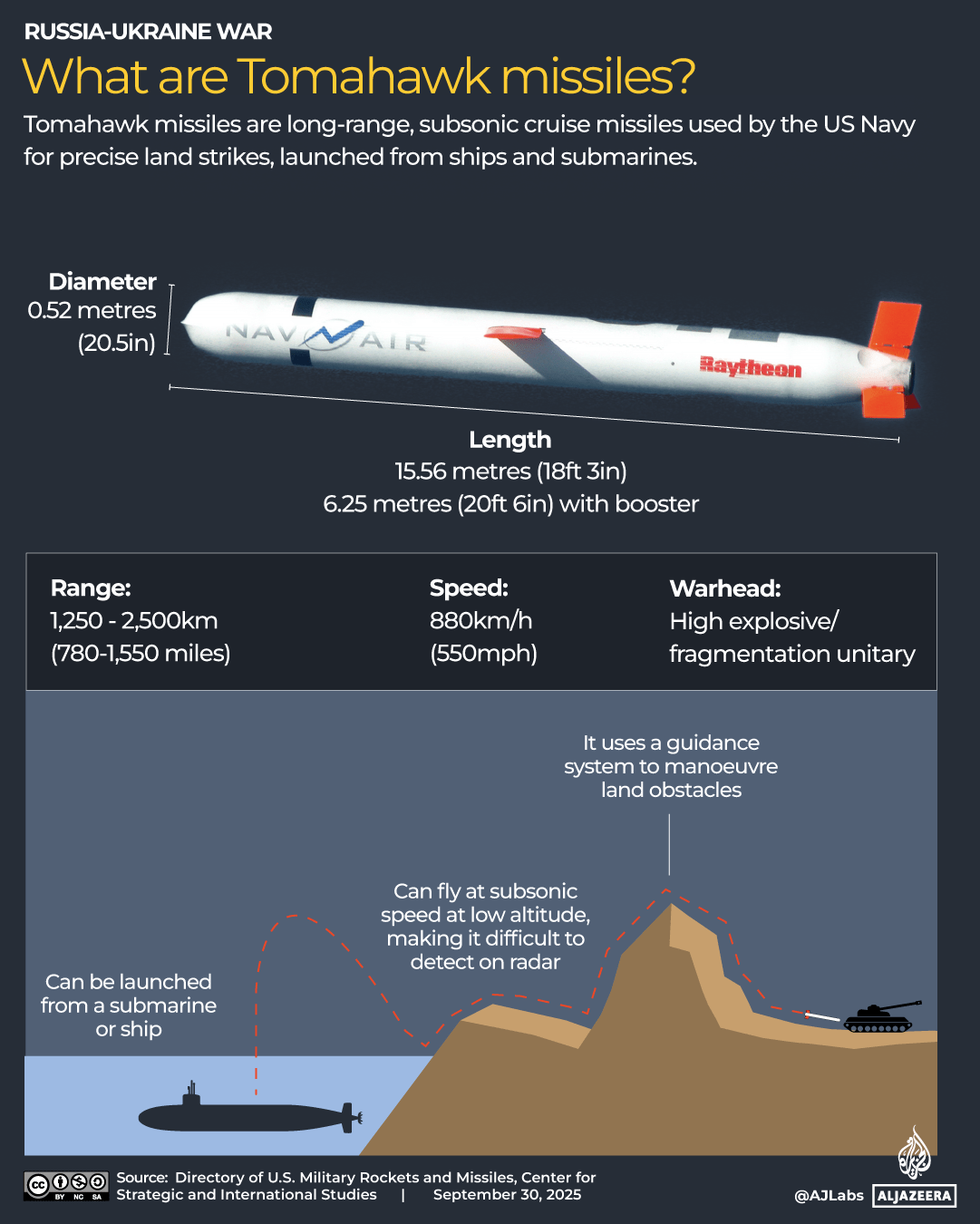
According to US defence information, Tomahawk missiles were developed in the 1970s. They are long-range cruise missiles which are launched from ships or submarines and are generally used for long-distance attacks.
According to the Pentagon’s budget documents, the missile can make “deep-strike” attacks on land and “uses a combination of inertial navigation, GPS, and terrain contour matching (TERCOM) or Digital Scene Matching Area Correlation (DSMAC) for precision guidance”.
They fly at supersonic speed at low altitudes – about 30 metres (100ft) off the ground – and have a range of more than 1,250-2,500km (780-1,550 miles). They usually carry conventional warheads but can also carry nuclear ones.
The US, United Kingdom, Netherlands and Australia have all used these missiles in combat.
So far, the US has launched more than 2,300 Tomahawks from its ships and submarines during operations in Syria and Libya, among others.
(Al Jazeera)
The US-based think tank, Institute for the Study of War (ISW), said in a statement on Thursday that “US Tomahawk missiles’ long-range capabilities and sizeable payload would enable the Ukrainian military to inflict substantial damage on key Russian military assets located deep within Russian territory, such as the Shahed drone factory in Yelabuga, Republic of Tatarstan, and the Engels-2 Air Base in Saratov Oblast, from which Russia sorties the strategic bombers that fire air-launched cruise missiles during Russian strikes on Ukraine.”
However, US defence officials told The Associated Press that Kyiv does not have ships capable of launching these missiles. They said the US army is in the process of developing a system which would enable troops to launch them from the ground as well as from the sea, though one official said this system is not ready even for US forces to use yet.
Will Trump and Zelenskyy discuss Tomahawks for Ukraine?
Ukraine has been lobbying its European and NATO allies to increase military support to Kyiv for months.
After he arrived in Washington late on Thursday, Zelenskyy wrote in a post on social media that he aims to discuss options to bolster Ukraine’s defence systems.
In his meeting with Trump at the White House on Friday, President Zelenskyy is also expected to press Trump to supply Tomahawks to Ukraine. Kyiv has been particularly eager to obtain these weapons due to their ability to strike long-range targets. Moscow is about 800km (500 miles) from Kyiv.
After suggesting to reporters on board Air Force One on Sunday that he might supply Tomahawks to Ukraine, the US President also said he wanted to know what Ukraine would do with them if he did approve that. In response, Zelenskyy told Fox News on Sunday that Ukraine would use long-range Tomahawk missiles only against Russian military targets.
“We never attacked their civilians. This is the big difference between Ukraine and Russia,” the Ukrainian leader said.
Later that day, in an evening address to his country, Zelenksyy said: “We see and hear Russia is afraid that the Americans may give us Tomahawks – that this kind of pressure may work for peace.”
Commenting on the upcoming Trump-Putin meeting, Zelenskyy added on Thursday: “Moscow is rushing to resume dialogue [with the US] as soon as it hears about Tomahawks.”
So will Ukraine get the missiles?
It is really not clear.
Russian officials have expressed deep concern over the notion of the US supplying Tomahawks to Ukraine. In an interview with the Russian daily, Kommersant, Foreign Minister Sergey Lavrov said supplying these missiles to Ukraine would cause colossal damage.
In any event, Ian Lesser, a distinguished fellow and head of The German Marshall Fund of the United States (GMF)’s Brussels office, said, “no decision will be taken on the Tomahawk question before the Trump-Putin meeting.
“It is likely that Washington is looking for good reasons to avoid going beyond the threat of transferring longer-range systems,” he told Al Jazeera.
The mere threat of sending them might be enough to keep Russia in check, analysts say. Harry Nedelcu, senior geopolitics director at Rasmussen Global in Brussels, said the fact that Trump had suggested sending weapons to Ukraine and that Russia had expressed concern was highly significant.
“You can already see the impact that these weapons have generated even without actually being deployed,” he told Al Jazeera. “So even if the Ukrainians do get the weapon, they don’t necessarily have to use it, giving them leverage over the Russians.”
Questions also remain about whether Russia will agree to negotiate a ceasefire with Ukraine at all, or whether Putin has only agreed to meet Trump in order to ensure that Ukraine does not get the West’s military support.
“I suspect both leaders [Trump and Putin] have their reasons for meeting,” Lesser said.
“Putin likely wants to play for more time and to defuse the growing hawkishness on Russia emanating from the White House. Trump, fresh from his diplomatic success in the Middle East, is probably looking to use this momentum to compel a ceasefire between Russia and Ukraine,” he added.
What else did Trump and Putin discuss in their phone call?
Besides discussing ending the war in Ukraine, Trump wrote on Truth Social on Thursday that he had spent a “great deal of time talking about trade between Russia and the United States”.
In 2024, the US and Russia traded goods and services worth about $5.2bn – 25.8 percent less than in 2023, according to data from the office of the US Trade Representative.
But Trump said formal trade talks would take place only once the war in Ukraine ends.
What happens next?
Next week, US officials led by Secretary of State Marco Rubio will hold high-level meetings with Russian officials to prepare for the president’s upcoming summit with Russia. The location for these meetings is unclear.
Nedelcu said the world will be watching Trump and Putin’s meeting in Budapest.
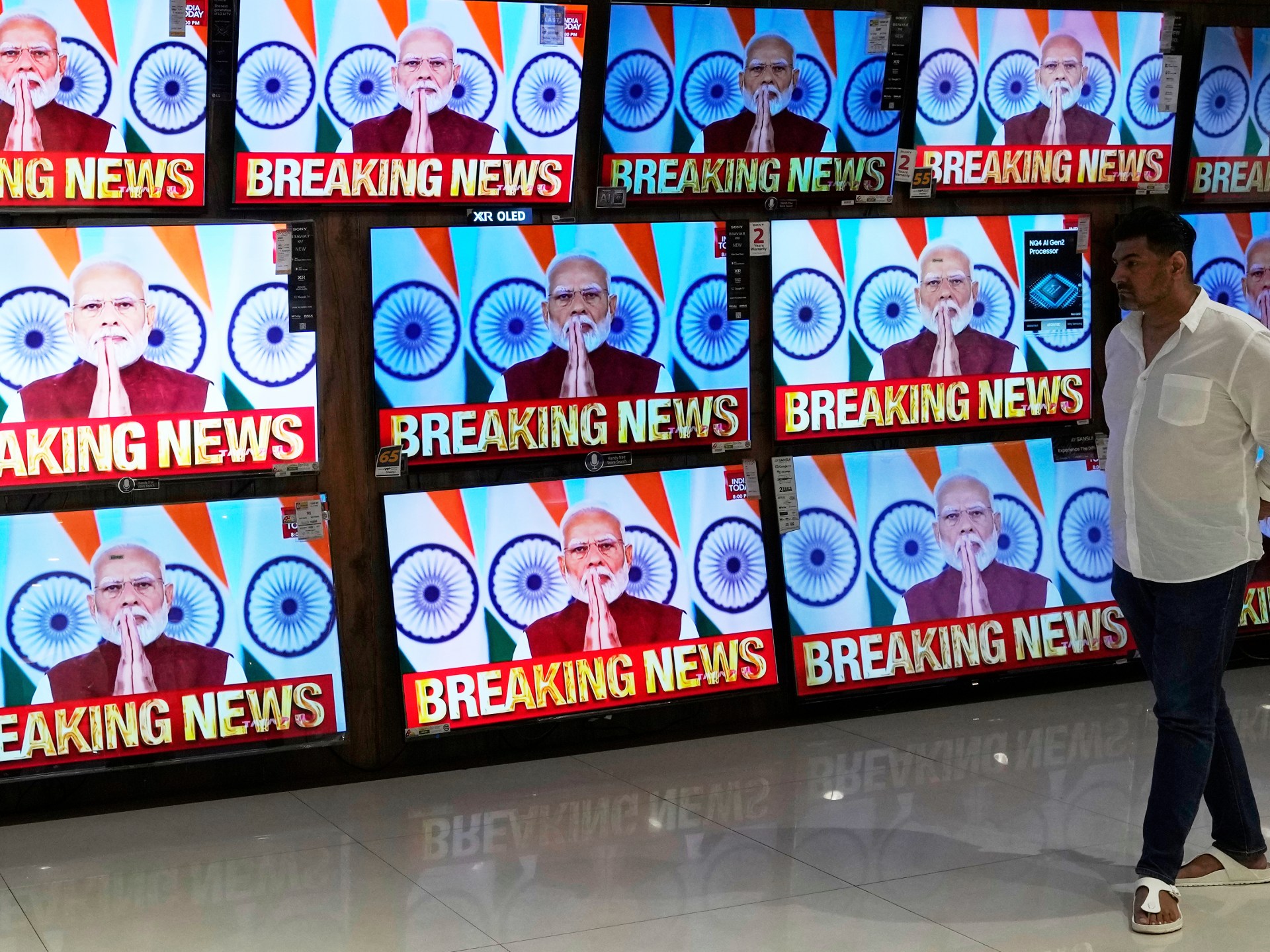
Every morning in today’s India begins with two parallel news cycles. One, broadcast on television screens, is carefully curated: Panel debates on Pakistan, Hindu pride, and endless theatre about a “new India”. The other, untelevised but deeply real, is the daily routine of Muslims being lynched, harassed, jailed, and demonised. Between the two, the message is chilling: Muslim suffering is either erased or turned into a spectacle, consumed like evening entertainment for the majority, while Muslims themselves are forced to live as if they are perpetual criminals, always accused, and never heard.
Take the killing of a seven-year-old Muslim boy in Azamgarh this September. His body, stuffed into a bag, was discovered with chilling indifference by neighbours who were later arrested. For a fleeting moment, local reports carried the story, but it quickly disappeared from prime-time television, replaced by fiery debates on “love jihad”, border tensions, or the India-Pakistan cricket match. A Muslim child’s death did not fit the script of national outrage. Instead, it became part of the silent archive of normalised violence. Sociologist Stanley Cohen once wrote about “states of denial”: Societies in which atrocities are not hidden but absorbed so routinely that they no longer shock. That is India today: Muslim killings happen in daylight, but the majority sees them as background noise.
At the same time, hate is not just silence; it is a performance. When Muslims in Kanpur raised placards saying “I love Muhammad”, the police responded not with protection but with FIRs against 1,300 Muslims and mass arrests. The act of love itself was criminalised. Yet when Hindutva mobs gather in Maharashtra or Madhya Pradesh, chanting open calls for genocide, television crews either glorify them or quietly look away. Violence against Muslims has become a kind of theatre, a script where Muslims are always on trial, and Hindutva forces play the role of guardians of civilisation.
This selective visibility is deliberate. The rise of “jihadi-mukt bazaars” in Indore, where Muslim traders were expelled overnight, is an economic lynching. Entire families lost their livelihoods, children were pulled out of school, and women were left to beg neighbours for food. Yet national media framed it as a “law and order adjustment”, barely noting the human cost. Hindutva groups celebrated on social media, turning the dispossession of Muslims into viral entertainment. What should have been a national scandal was packaged as routine “local tension”.
Chief Minister Yogi Adityanath embodies this culture of spectacle. From his official stage, he spews venom against Muslims, calling them “infiltrators” and “terror sympathisers”. These are not fringe voices; they are the ruling elite. And yet, the so-called opposition parties respond not with outrage but with their own diluted versions of Hindutva, competing to prove who can appear more “pro-Hindu” while Muslim fears are silenced. This bipartisan consensus has made it clear: Muslims are not political subjects in India any more; they are political props.
The toll of this is more than physical; it is psychological and existential. To live as a Muslim today is to live as a permanent suspect – watched in the mosque, judged in the market, doubted in the classroom. Every Friday prayer feels like a risk. Every loudspeaker call of the azaan feels like a provocation to some, even though it is the heartbeat of a community. The Urdu poet Sahir Ludhianvi once wrote, “jinhe naaz hai Hind par, woh kahan hain?” (“Where are those proud of India now?”). The question echoes today: If this is India’s greatness, why does it demand Muslim humiliation every day as proof?
The Ugandan-born Muslim scholar Mahmood Mamdani offers a framework that helps us name this reality. In his famous work Good Muslim, Bad Muslim, he explains how states and societies divide Muslims into two categories: The “acceptable” one who submits quietly, and the “dangerous” one who resists or even asserts dignity. In India, this division is weaponised daily. The Muslim who hides his faith, who stays invisible, is tolerated. But the Muslim who affirms his identity – who says “I love Muhammad” in public, who asks for equal rights, who resists erasure – is instantly cast as mujrim, the criminal. Mamdani reminds us that this is not about theology, it is about power: Who has the right to define legitimacy, and who must live under suspicion.
This is why lynching videos circulate on WhatsApp like memes, why anchors smirk when peddling conspiracy theories about “Muslim population explosion”, and why mobs laugh after torching shops. Hatred is not just politics any more; it has become collective leisure. When cruelty becomes comedy, when humiliation becomes a prime-time script, the line between democracy and fascism has already collapsed.
History warns us: Societies that turn minority suffering into entertainment do not remain immune from the rot. The silence of German liberals during Nazi rallies, the casual indifference of Americans during the lynching of Black people, and the cheering of Israeli crowds during bombings in Gaza all stand as reminders that entertainment built on hate eventually devours the society itself. India is not exempt.
So I return to the question: Are we Muslims or mujrim? Why must we live on trial every day while killers walk free? Why must our children’s deaths be erased while the state celebrates “Amrit Kaal”? The answer is not just for Muslims to give; it is for India’s majority to decide whether they will continue to watch hate as their favourite serial or finally switch off the screen.
Because the day hate becomes the only form of national entertainment, the credits will not just roll over Muslim corpses. They will roll over the death of the Republic itself. And history will not ask whether you were Hindu or Muslim, right-wing or liberal, it will ask only why a society that prided itself on civilisation turned cruelty into comedy and silence into consent. The question before India’s majority is no longer about tolerance or secularism; it is about whether they can still recognise the human in their neighbour.
If today you clap when the Muslim is punished as mujrim, tomorrow you will wake to find that the very nation you cheered for has turned into your prison, and by then, the laughter of hate will be the only sound left in this Republic.
JLo stars in new film Kiss of the Spider Woman – co-produced by ex-husband Ben Affleck – sporting striking platinum blonde hair that she admits she ‘didn’t think she could pull off’
View 3 Images
JLo posted a series of snaps of her new look in the movie(Image: INSTAGRAM)
We think that Jennifer Lopez could pull off just about any look, but apparently even she wasn’t convinced about her latest transformation.
In her latest role in new movie Kiss of the Spider Woman – for which she was recently seen amicably posing on the red carpet alongside ex-husband Ben Affleck, who co-produced the movie – JLo’s character sports a number of different hairstyles, including an ‘old Hollywood’ style platinum blonde ‘do – a huge change from her usual honey-brown balayage.
Speaking about the look, the 56 year old said in a recent interview with CBS Mornings, “I didn’t think that I was going to be able to [pull it off], but Bill [Condon, writer and director] was adamant that Aurora be a Hollywood blonde. I didn’t know how we were going to be able to do that but we figured it out.”
“It was [jarring at first],” she adds. “I felt like a totally different person. But I got very thin for the role and I wanted to embody what that kind of old Hollywood musical movie star was like.”
The actor and singer also posted some behind-the-scenes shots on her Instagram page showing her blonde hair, captioning the carousel: ‘I will forever cherish my Kiss family. See you this weekend at the theatre!”
The post has accumulated hundreds of comments from fans loving her new look.
“Marilyn Monroe vibes,” wrote one person.
“JLo with her hair blonde for this movie and her facial features reminds me of Gwen Stefani,” wrote another. “They could be twins.”
“Still caught in her web. What a dream creating these three stunning transformations with you,” wrote make-up artist Scott Barnes, who also worked on the movie.
This comes as Jennifer and Ben Affleck joined forces once again recently as they took to the red carpet for the movie’s premiere. The couple’s divorce was finalised last year after two years married, but they appeared to put their differences to one side as they stood side by side at the event in New York.
Ben, 53, was seen smiling as he wrapped his arm around the waist of his ex-wife. The pair looked in good mood as they posed for snaps and enjoyed intimate chat on their first return to a red carpet together since their split.
Article continues below
The duo had fans jumping for joy when they got back together and tied the knot in July 2022. It came decades after they first got engaged in 2022.