Cuban city of Havana: “I have two bits of news for you, one good and one bad.”
Elena Garcia, a 28-year-old web designer, heard those words when she awoke on January 3 from a military abduction that occurred just before Venezuelan President Nicolas Maduro and his wife Cilia Flores.
Her boyfriend continued, “The good news is that the water has arrived.” The bad news is that Maduro was kidnapped, which means blackouts will surely occur this year.
Almost all of Cuba is plagued by supply shortages. Fresh water deliveries to the Havana neighborhood where Garcia resides, Villa Panamericana, had not been made in a week.
The neighborhood is still relatively privileged in comparison to the rest of the city because it has fewer power outages than other locations.
Cuba has relied on Venezuela for support up until this month, including through fuel deliveries to support its electricity grid.
On January 3, that changed. With Maduro’s ouster, Cuba runs the risk of losing one of its closest allies in the Western Hemisphere.
Venezuela would no longer provide oil or money to Cuba as of January 11th, according to US President Donald Trump.
The Cuban economy is anticipated to be further devastated and unrested by the threat of ending Venezuela’s support.
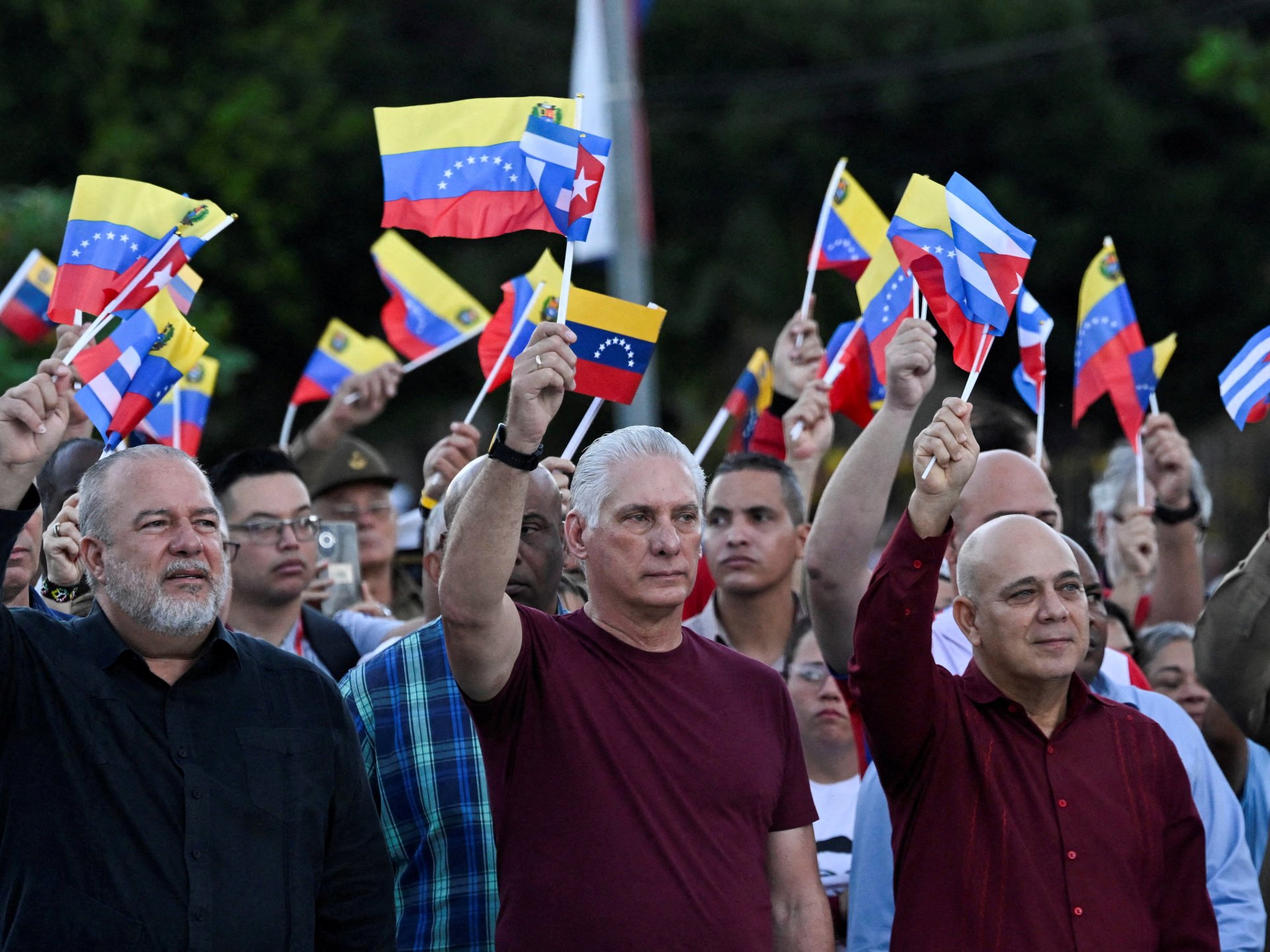
Havana’s streets have been peaceful so far since the US attack on Venezuela, and Cuba’s government has pledged to keep ties with Venezuela.
In contrast, as the US uses its might, social media debates are raging about what will happen next.
Amanda Terrero, a communications professor at the University of Havana, said there are both those who call for an invasion and those who fear it.
She explained that the country’s future is uncertain.
Source: Aljazeera

Leave a Reply