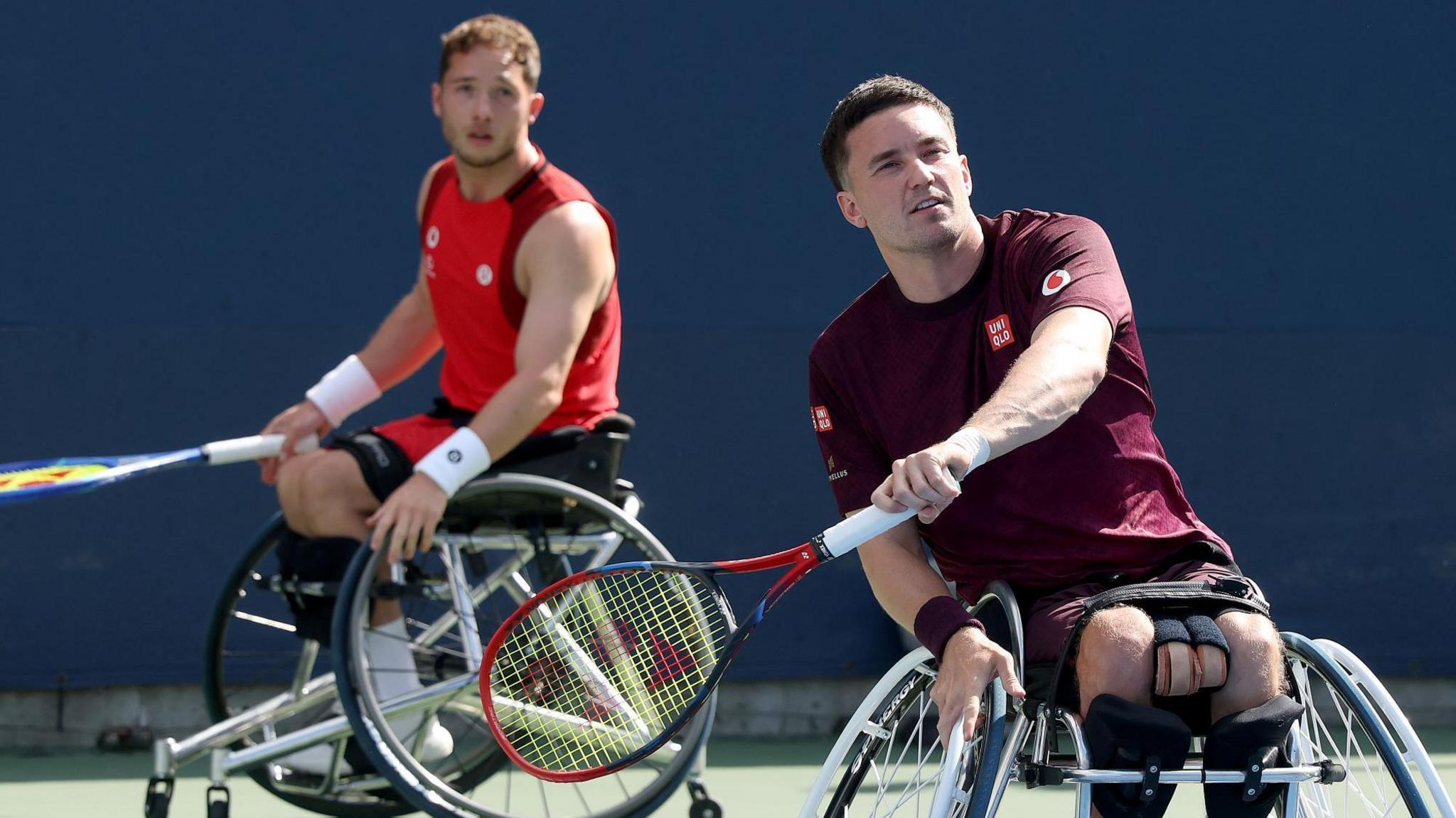
Great Britain’s Alfie Hewett and Gordon Reid both recorded victories to set up a quarter-final meeting in the Australian Open men’s wheelchair singles, before joining forces to reach the semi-finals of the doubles competition.
Defending champion Hewett took just 55 minutes to complete a 6-2 6-1 win over Japan’s Takuya Miki, while Reid beat Australian wildcard Anderson Parker 6-3 6-2.
Hewett and Reid then began their pursuit of a seventh successive wheelchair doubles title in Melbourne by defeating Miki and Dutchman Tom Egberink 6-0 6-4.
The pair have won 18 of the past 23 Grand Slam titles in the doubles format.
They will face either second seeds Martin de la Puente and Stephane Houdet or Tokito Oda and Gustavo Fernandez for a place in the final.
2 hours ago
1 hour ago
Skupski and Johnson in doubles contention
Britain will also have two representatives in the semi-finals of the men’s doubles event.
Sixth seeds Neal Skupski and American Christian Harrison won 6-2 6-3 against Czech pair Petr Nouza and Patrik Rikl.
Luke Johnson and Polish partner Jan Zielinski were 7-6 (7-5) 6-2 winners over fourth seeds Marcelo Arevalo, of El Salvador, and Croatia’s Mate Pavic.
Skupski and Harrison will play third seeds Marcel Granollers of Spain and Argentina Horacio Zeballos for a final place, with Johnson and Zielinski taking on Australian wildcards Jason Kubler and Marc Polmans in the other half of the draw.
Andy Lapthorne and Gregory Slade were beaten in their respective quad singles first-round matches.
Lapthorne lost 6-4 7-5 to Turkish fourth seed Ahmet Kaplan, while Slade was beaten 6-1 6-3 by Brazilian qualifier Leandro Pena.
Chokwe District, Mozambique – I have been reporting on climate change stories for nearly all of this month. It wasn’t planned – it just ended up like that. A routine deployment to Kenya saw me head to the Kenya-Somalia border in Mandera town for a drought story.
At the time, there was hardly any international news coverage on this drought in the Horn of Africa. I was not expecting anything dramatic. I was wrong. The drought is bad.
Recommended Stories
list of 3 itemsend of list
As soon as we drove to really remote parts of Mandera County, I started seeing signs that something was wrong.
The team drove past several dry riverbeds. The camels were thin. Then, we saw the communal graveyards where dead livestock had been dumped and burned.
I spoke to a local chief in Mandera, Adan Molu Kike. He was a quiet, unassuming elderly man who went out of his way to explain to me how devastating the recent drought is.
“Our animals started dying in July last year, and they are still dying,” he told me. Then, he asked what country I had come from. I told him Zimbabwe.
“Have you seen a drought this bad in your country?” he asked me.
We were moving with a team from the Kenya Red Cross Society. They were keen to show me more about how the drought was affecting communities.
Water was the biggest challenge. With several rivers dry, water had to be brought in every week from aid agencies. Some communities got water once a week. Others saw the water bowsers arrive twice a week.
There is usually a timetable. If you miss a delivery, that means no water until the next delivery. The water – brown in colour – also has to be shared with livestock.
I see pastoralist Mohamed Hussein dragging two containers of water he has just collected from the water bowser delivery truck. He looks tired and doesn’t look like he wants to chit-chat, but he indulges us.
“I had 100 animals, but now I have only 20 left … My crops in the field are dead,” he says.
We talk about the drought and water situation. He says three of his goats died the night before. He says it’s because of the drought.
Hussein insists on showing me the animals in his back yard. He drags one away and tosses the dead goat in a bush. I remember thinking that out here in the desert like Mandera, it’s survival of the fittest.
Yet, people can’t mourn for too long over dead livestock. He has to keep the few he has left alive or else his family goes hungry.
From extreme drought to massive floods
As journalists, we come into a country, file our reports and fly home. But some experiences stay with you. This drought story did.
I left Kenya and headed home, thinking my stint reporting on climate change stories was finished for at least a few months. I was wrong.
I got back home to learn that it’s been raining a lot. Some places in Harare, Zimbabwe, even had flash floods. I thought nothing of it – only that it was interesting coming from a very hot climate to a wet one.
Then, the next day, news started circulating about floods and very heavy rain in South Africa and Mozambique.
As journalists, we never really switch off, so I was keeping an eye on the floods in Southern Africa, but I didn’t expect to be deployed to another climate change crisis so soon.
A day or two later, the situation worsened, and I was heading to Mozambique.
Again, at the time, there wasn’t much in international media coverage about the floods in Mozambique. South Africa was getting more media attention at the time. So I had no idea of the scale of these floods.
I landed in Mozambique and went to a neighbourhood in the capital, Maputo, that was affected by floods.
I put on my gumboots and waded through dirty, smelly floodwaters in between people’s submerged homes. I was shocked – but nothing prepared me for what I later saw elsewhere in the country.
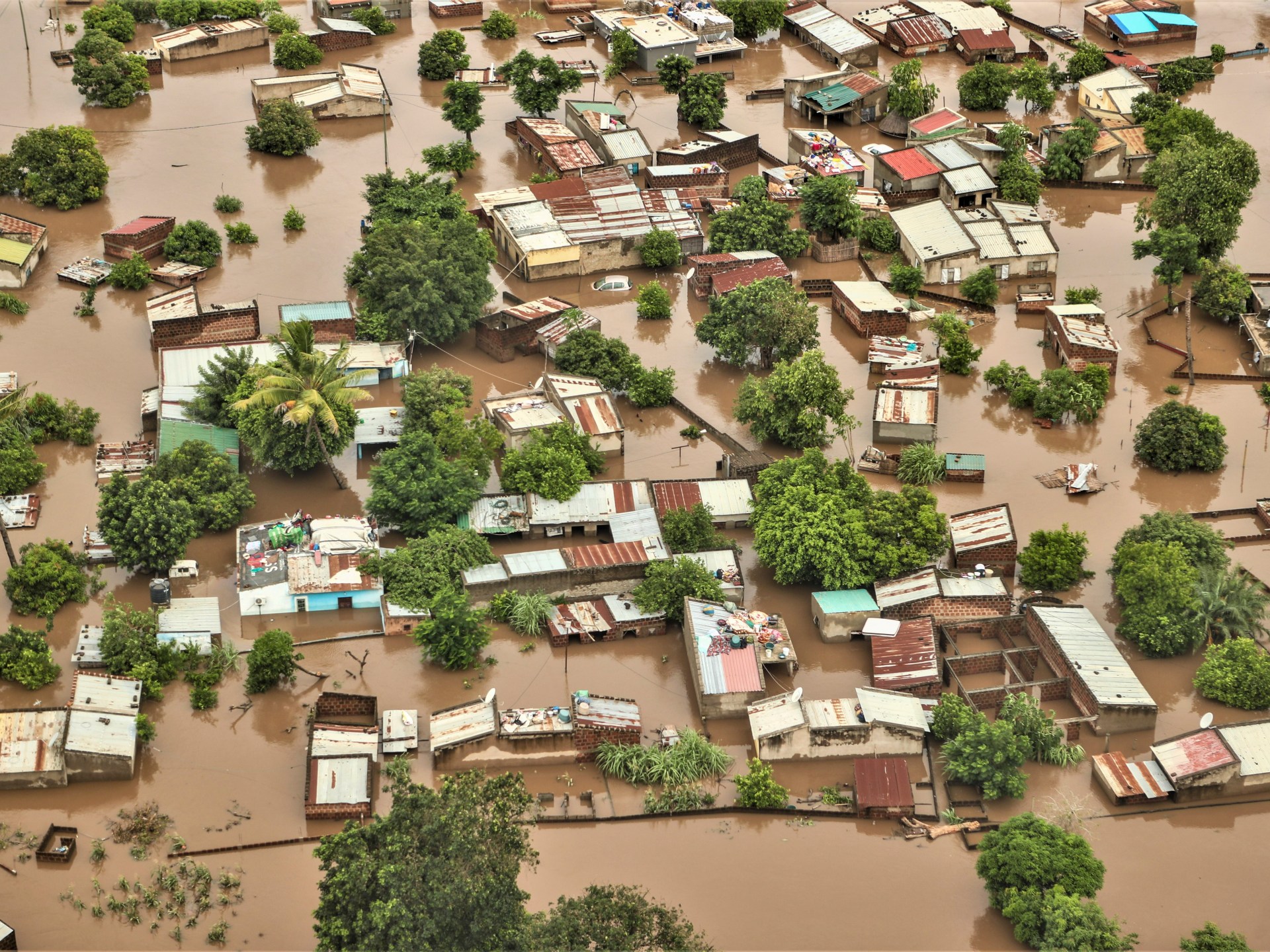
In Marracuene, I saw a huge toll gate submerged and road signs sticking out on top of the water along a major highway. The highway was now metres deep underwater.
Then, we got Xai Xai, the capital of Gaza province in the south. Swaths of agricultural land were underwater. Parts of Xai Xai city were submerged. Restaurants, shops and businesses in the city centre sat in water.
“Now, the water must go down first, and then, we must start cleaning,” Richard Sequeira, the boat captain who was showing me the devastation, said. “There are a lot of snakes and animals around. Maybe 45 days to two months, we will be out of our houses and living like this.”
He is right. It could be weeks before the water recedes and disappears. But there could be more flooding in the coming days or weeks.
Authorities in neighbouring South Africa’s Mpumalanga province have ordered people to evacuate from flood-prone areas immediately. The dam there is full and could start releasing water.
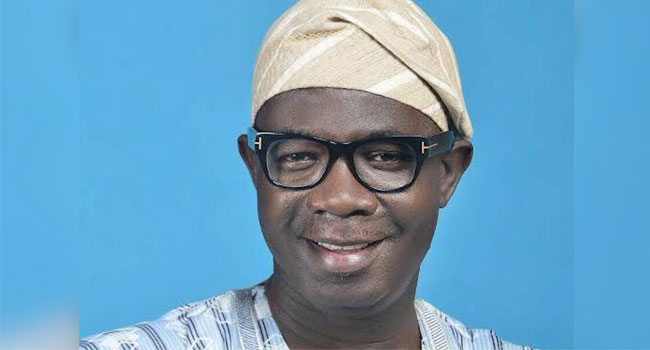
A former Deputy Governor of Ondo State and the Peoples Democratic Party (PDP) candidate in the November 2024 governorship election, Agboola Ajayi, has returned to the All Progressives Congress (APC).
Ajayi formally rejoined the ruling party on Tuesday at his hometown, Apoi Ward 2, Kiribo, in Ese Odo Local Government Area.
A former member of the House of Representatives, Ajayi had, in June 2020, resigned his membership of the APC and defected to the PDP, citing irreconcilable differences between him and the late Governor Oluwarotimi Akeredolu, under whom he served as deputy.
READ ALSO: Our Motive Is To Ensure Every Nigerian Becomes An APC Member— Nentawe Yilwatda
Speaking in Igbekebo, the headquarters of Ese Odo Local Government Area, Ajayi pledged full support for Governor Lucky Aiyedatiwa’s “EASE” agenda and President Bola Tinubu’s Renewed Hope Agenda ahead of the 2027 general elections.
He described his return as a move back to his original political home, which would enable him to actively participate in the party’s affairs and contribute to progressive development in the state.
According to him, “In politics, there could be disagreements, campaigns, propaganda and blackmail, but at the end of the day, the bigger picture is the Nigeria project. We must come together to add value to the system.
“Myself and Governor Lucky Aiyedatiwa have talked. We campaigned against each other, and during campaigns, blackmail and propaganda are not unusual. However, when we look beyond those things, we realise that the bigger picture is greater than all of us.
“This is about the Nigeria project. We should come together to see how we can add value to the system. I also want to commend Mr President for the bold steps and reforms he has introduced in the country.
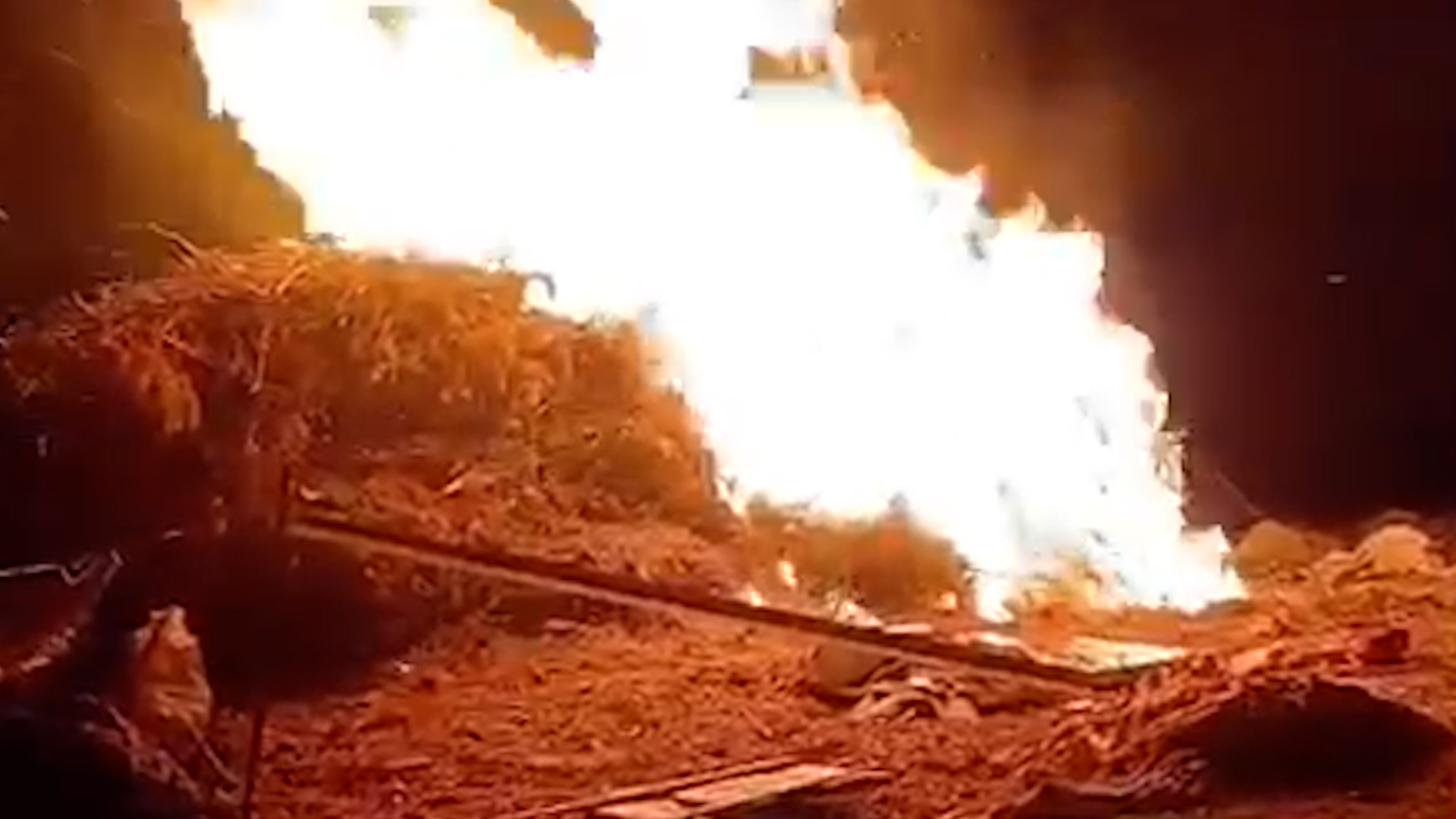
Israeli settlers in the occupied West Bank have set fire to three villages in Masafer Yatta in the occupied West Bank, where the UN says attacks against Palestinians and their property have reached unprecedented levels.
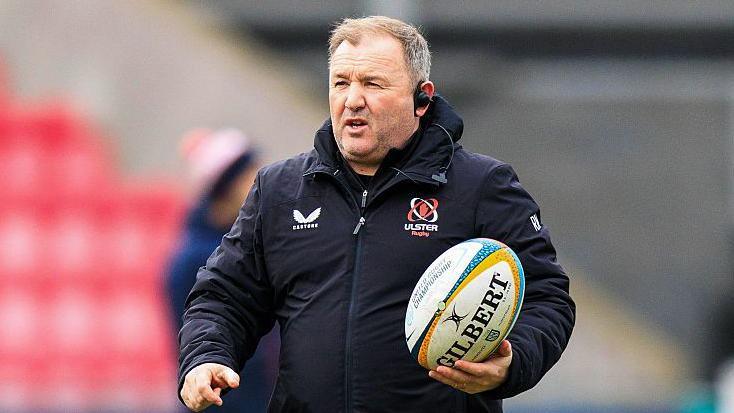
Ulster head coach Richie Murphy feels the province’s increased representation in Ireland’s Six Nations squad “shows we are progressing and moving in the right direction”.
Last year, just four Ulster men were selected, including development player James McNabney, but returning head coach Andy Farrell initially selected seven from the northern province with Cormac Izuchukwu called up at the weekend due to an injury to Munster’s Thomas Ahern.
Izuchukwu is the only Ulster player from 2025 to return, with fellow forwards Tom O’Toole, Tom Stewart and Nick Timoney making the cut this time, while Rob Baloucoune, Nathan Doak, Stuart McCloskey and Jacob Stockdale were named in the backs as Ireland prepare for their Six Nations opener against France in Paris on 5 February.
Murphy believes their inclusion is the result of improved performances by Ulster this season who currently sit sixth on the United Rugby Championship [URC] table, while topping their pool in the European Challenge Cup.
“One of the things we talked about earlier in the year was that if you perform well in the white jersey, the green one will look after itself,” Murphy told BBC Sport NI.
“Last year we had four in there, so to double that and have Bryn Ward away travelling with the team as a trainee is very positive.
“Fifteen between the two squads [Six Nations and Ireland XV] is where we want to be. There are one or two disappointed they didn’t get the call, but that’s the competition in Irish rugby.
‘We can build a team in Ulster that challenges for trophies’
Last week, Murphy and coaches Mark Sexton, Willie Faloon and Jimmy Duffy signed two-year contract extensions to keep them at Ulster until the summer of 2028 despite rumours of interest from other clubs.
However, the former Ireland U20 coach is happy to continue what he started.
“I’ve enjoyed my time here so far and to extend it for another two years is brilliant,” he added.
“It was March two years ago [2024] when I came in and there was a lot of transition with senior players leaving and a change in the coaching team.
“When you see the exciting young players who are around and you get a feeling we can add to that group by bringing in a couple of Irish guys and guys from overseas, we can build a really good URC team here that challenges at the top end, hopefully, and also in Europe.
South Sudan’s army, following territorial losses in recent weeks, has announced a major military operation against opposition forces, raising fears for civilian safety.
In a statement on Sunday, army spokesman Lul Ruai Koang said Operation Enduring Peace would commence as he ordered civilians to evacuate three counties in Jonglei state immediately. He directed aid groups to leave within 48 hours.
Recommended Stories
list of 3 itemsend of list
Koang told The Associated Press news agency on Monday that the operation aims to recapture towns recently seized by opposition forces and “re-establish law and order”.
“The country is not at war,” Information Minister Ateny Wek Ateny told reporters in Juba on Tuesday. “We are only stopping the advancement” of the opposition forces, he said.
However, this came days after a senior army commander was filmed urging his troops to kill civilians and destroy property in the Jonglei offensive, drawing rebuke from the United Nations and others.
“It is now indisputable: South Sudan has returned to war,” said Alan Boswell, the International Crisis Group’s project director for the Horn of Africa. “It is incredibly tragic for a country that only grows weaker and poorer.”
Here’s what to know about the resurgence of violence in South Sudan:
Government’s battlefield losses
Beginning in December, a coalition of opposition forces seized a string of government outposts in central Jonglei, a region that is the homeland of the Nuer ethnic group and an opposition stronghold.
Some of those forces are loyal to opposition leader Riek Machar, while others consider themselves part of an ethnic Nuer militia called the White Army. White Army fighters have historically fought alongside Machar but consider themselves a distinct group.
Machar, an ethnic Nuer, was made the most senior of five vice presidents under a 2018 peace agreement that ended fighting between his forces and those loyal to President Salva Kiir, an ethnic Dinka, the country’s largest group.
That five-year civil war was waged largely along ethnic lines, killing an estimated 400,000 people.
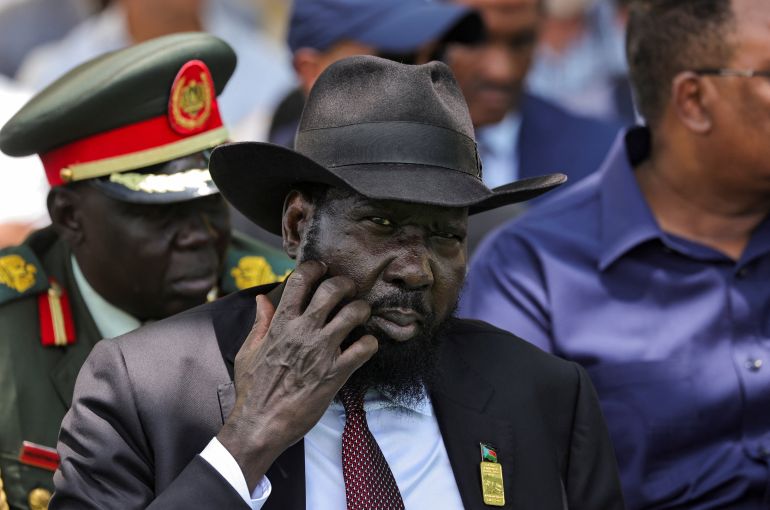
South Sudan President Salva Kiir [File: Tiksa Negeri/Reuters]
Suspension of government’s number two
There has been a resurgence of violence in the past year, with sporadic fighting.
Machar was suspended last year as South Sudan’s number two after White Army fighters overran a military garrison in the town of Nasir. He now faces treason and other charges over that attack, which authorities allege Machar helped orchestrate. But Machar’s allies and some international observers say the charges are politically motivated. He remains under house arrest while his trial unfolds slowly in the capital, Juba.
Machar’s trial is widely seen as a violation of the 2018 peace agreement. Yet Kiir and his allies say the agreement is still being implemented, pointing to a faction of the opposition still in the unity government.
Forces loyal to Machar have declared the agreement dead, and have since ratcheted up pressure on the army by seizing armouries and launching hit-and-run attacks on government positions. The government has relied largely on aerial bombardments to beat back a rebellion that analysts say is gaining momentum across multiple states.
After seizing the government outpost of Pajut in Jonglei on January 16, opposition forces threatened to advance towards Juba. The government has responded by amassing fighters in nearby Poktap, while several thousand Ugandan soldiers defend Juba.
Army chief Paul Nang gave his troops one week to “crush the rebellion” in Jonglei.
‘Spare no lives’
On Saturday, a day before the army announced its offensive, a senior military commander was filmed urging his forces to kill all civilians and destroy property during operations in Jonglei. It was not clear who took the video, which has been shared on social media.
“Spare no lives,” General Johnson Olony told forces in Duk county, not far from Pajut. “When we arrive there, don’t spare an elderly, don’t spare a chicken, don’t spare a house or anything.”
Armed groups in South Sudan, including the military, have repeatedly been implicated in civilian abuses, including sexual violence and forced recruitment.
Olony’s comments were particularly aggressive and drew concern. “We are shocked, we are disturbed, we are surprised,” said Edmund Yakani, a prominent civic leader.
His words showed that government troops were being “empowered to commit atrocities, to commit crimes against humanity, and, potentially, even to commit a genocide,” Yakani said.
South Sudan’s suspended First Vice President Riek Machar [File: Samir Bol/Reuters]
The UN Commission on Human Rights in South Sudan expressed “grave alarm” at developments that it said “significantly heighten the risk of mass violence against civilians”.
Machar’s political group said in a statement that Olony’s words were an “early indicator of genocidal intent”.
Speaking to the AP, government spokesman Ateny Wek Ateny called Olony’s comments “uncalled for” and “a slip of the tongue”.
But he also said while it was possible that Olony was “trying to boost the morale of his forces”, his words are not indicative of government policy.
Olony, appointed assistant chief of defence forces for mobilisation and disarmament a year ago, also leads a militia, known as the Agwelek, from his Shilluk tribe that agreed to integrate into the army last year.
The deployment of forces to Nuer communities by Olony is contentious because of a separate rivalry between the Shilluk and Nuer communities. In 2022, White Army fighters razed Shilluk villages and displaced thousands of civilians before the government intervened with attack helicopters.
Olony’s forces were also involved in military operations in other Nuer communities last year.