Archive January 28, 2026

Are we tennis players or zoo animals? – Swiatek on cameras

Six-time major champion Iga Swiatek says players are being watched “like animals in the zoo” by behind-the-scenes cameras at the Australian Open.

Coco Gauff was captured smashing her racquet in a corridor in the players’ area at Melbourne Park on Tuesday, leading the American to call for more privacy.

The Australian Open has shown footage from the players’ zone in the bowels of Rod Laver Arena – which includes the gym, warm-up area and the corridor from the locker room – since 2019.

Camera access is more restricted at the other majors.

“Are we tennis players, or are we animals in the zoo where they are observed even when they poop?” said Poland’s Swiatek, who lost in the quarter-finals on Wednesday.

Semi-finalist Jessica Pegula described the constant filming as an “invasion of privacy” that needs to be “cut back”.

“You just feel like you’re under a microscope constantly,” the American added.

Tournament organisers Tennis Australia told BBC Sport the cameras are used to help create a “deeper connection” between fans and players.

    • 3 hours ago
    • 5 hours ago

Pegula, who is member of the WTA players’ council, says the issue will “be highlighted again” in post-tournament discussions with the Australian Open.

“I saw online people were zooming in on players’ phones and stuff like that. That’s so unnecessary,” Pegula said.

“The only time you’re not being recorded is when you are going to shower and go to the bathroom.

“It seems to be worse here than maybe other years, so I think now it’s going to definitely be talked about and highlighted again moving forward.”

Asked whether she had ever approached organisers about it, Swiatek replied: “What’s the point?”

World number one Aryna Sabalenka was previously captured destroying a racquet by a similar camera after losing the 2023 US Open final.

Former world number one Andy Roddick previously said there should be a “zone” for players to “detonate” after tough defeats.

American fourth seed Amanda Anisimova says she felt conscious about the cameras following her defeat by Pegula in Wednesday’s quarter-finals.

“I knew [they] were there, so I just kept my head down and went to the locker room,” she said.

Anisimova did, however, point to the cameras also picking out “good moments” for fans to see.

Plenty of lighter moments have been caught over the years, including the likes of Swiatek, Rafael Nadal and Roger Federer being asked for their ID passes – but Swiatek feels that too is intrusive.

“We’re tennis players. We’re meant to be watched on the court and in the press,” Swiatek added.

To play this video you need to enable JavaScript in your browser.

Cameras here to stay whether stars like it or not – analysis

Many leaders in tennis are fully aware how it must adapt and thrive in an ever-competitive sports market.

Seeing other sports show a more human side to their athletes – with Formula 1 documentary Drive To Survive regularly heralded as the gold standard – has forced tennis to think more creatively.

Netflix’s documentary series Break Point did not engage fans in the same way, but providing behind-the-scenes content at tournaments feels like an easy win to deepen connections with fans.

When the Australian Open became the first major to bring cameras into player areas in 2019, Djokovic described it as ‘Big Brother’.

The reality television show has continued to grow – potentially, now, to tipping point.

It might be scaled back, given the frustrations of the players, but it will not disappear. Tennis needs the eyeballs.

The US Open has followed suit in recent years – unsurprising given the access-all-areas demands of the American audience across the NBA, MLB and NFL.

Providing fans with deep insight of locker room culture, and what it really takes to be among the world’s best, is more crucial than ever.

Related topics

  • Tennis

More on this story

  • Some tennis balls
    • 16 August 2025
    BBC Sport microphone and phone

France prop Atonio retires after ‘cardiac event’

France prop Uini Atonio has been forced to retire after he was admitted to an intensive care unit following a “cardiac event”.

The 35-year-old was taken to a hospital in La Rochelle on Tuesday with his club saying he suffered a suspected heart problem and is now in a stable condition.

“Following his hospitalisation, Uini will have to undergo a long period of recovery,” said French Top 14 side La Rochelle, his team since 2011.

Atonio, who was born in New Zealand, qualified to play for France through residency and made 68 appearances for his adoptive country.

He started all five games as France regained the Six Nations in 2025, and was selected in their provisional squad for this year’s tournament.

However, he withdrew from the party this week, with France Rugby yet to confirm the reason for Atonio’s departure.

Having been spotted at a rugby 10s tournament in Hong Kong, Atonio signed for La Rochelle for the 2011-12 season and remained with the club for his entire career.

He helped his side win promotion to the Top 14 in 2014, and was part of a squad that reached three successive Champions Cup finals between 2021 and 2023, winning the title in the latter two years.

Atonio played six times this season, with his first appearance coming in early December and the last against Harlequins in the Champions Cup on 18 January.

Related topics

  • Rugby Union

More on this story

    • 16 March 2022
    Uini Atonio and Antoine Dupont

Tens of thousands flee northwest Pakistan’s Tirah over fears

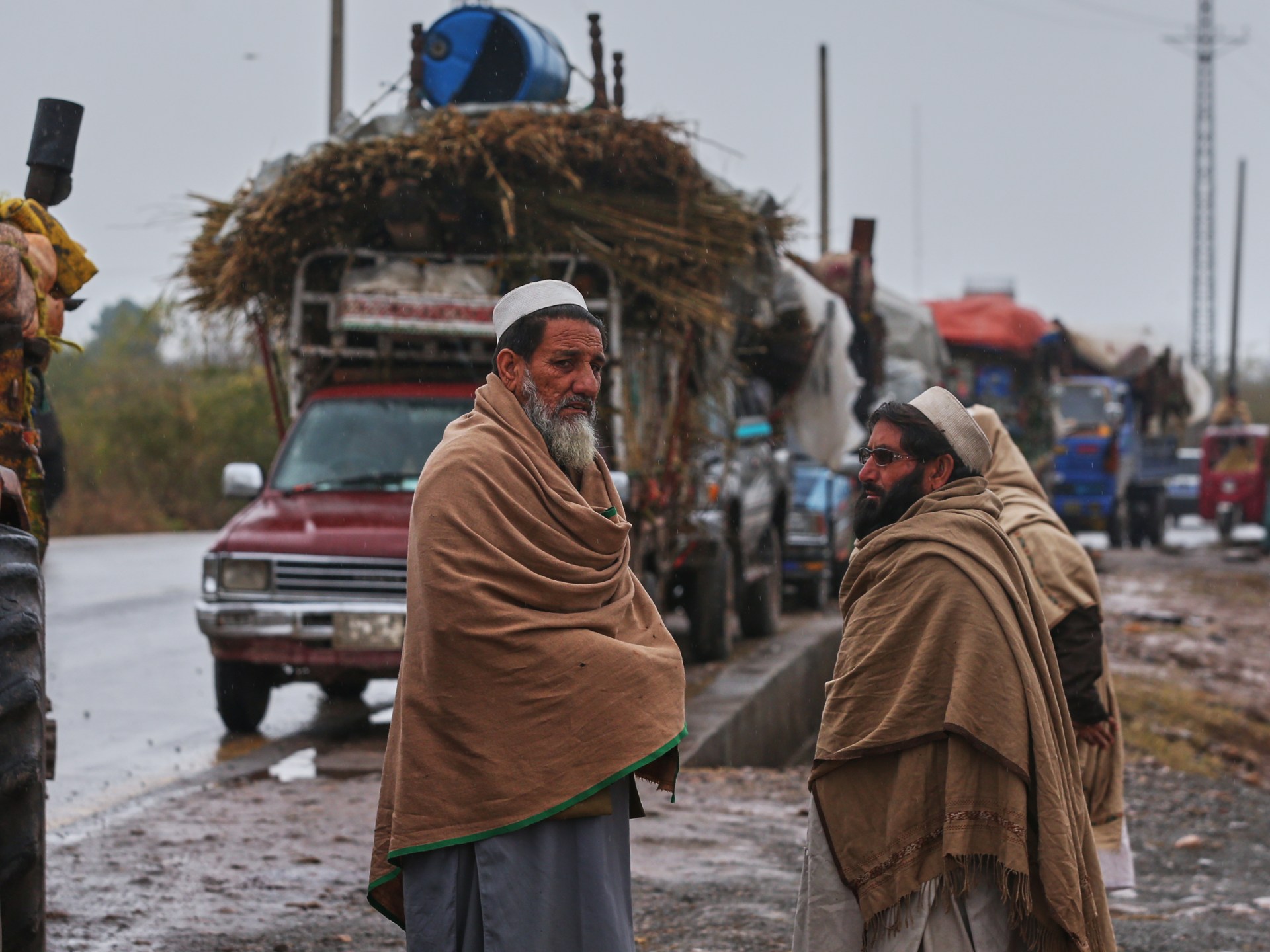
More than 70,000 people, mostly women and children, have fled from Tirah, a remote region in northwestern Pakistan bordering Afghanistan, as fears grow of an imminent military offensive against the Pakistan Taliban, according to local residents and officials.

Pakistan’s Defence Minister Khawaja Muhammad Asif has contradicted claims made by locals and provincial authorities, insisting no military operation is occurring or planned in the Khyber Pakhtunkhwa province town.

During an Islamabad news conference, he attributed the mass migration to harsh weather conditions rather than military actions, despite residents fleeing for weeks over fears of an impending army operation.

The exodus began after mosque announcements in December last year urged residents to vacate Tirah by January 23 to avoid possible conflict. This follows Pakistan’s August military campaign against Taliban forces in the northwestern Bajaur district, which displaced hundreds of thousands.

Shafi Jan, a provincial government spokesman, blamed federal authorities via social media for the displaced people’s hardships, accusing the Islamabad government of changing its position regarding military operations.

Meanwhile, Khyber Pakhtunkhwa Chief Minister Sohail Afridi, from imprisoned former Prime Minister Imran Khan’s party, has opposed military intervention and pledged to prevent a full-scale operation in Tirah.

Military officials maintain they will continue targeted intelligence operations against Tehrik-e-Taliban Pakistan (TTP). They claim many TTP fighters have found refuge in Afghanistan since the Afghan Taliban’s 2021 return to power, with hundreds crossing into Tirah and using residents as human shields during raids.

Nearly half of population

Local government administrator Talha Rafiq Alam reported that approximately 10,000 families – about 70,000 people – from Tirah’s 150,000 population have registered as displaced. The registration deadline has been extended from January 23 to February 5, with assurances that residents can return once security improves.

Zar Badshah, 35, who fled with his family, said mortar explosions in villages recently killed one woman and injured four children in his community. “Community elders told us to leave. They instructed us to evacuate to safer places,” he said.

At a Bara government school, hundreds waited in registration lines for government assistance, many complaining about slow processing. Narendra Singh, 27, explained that members of the Sikh minority also fled Tirah due to food shortages worsened by heavy snowfall and security concerns.

Rivers Problems Are For Fubara, Not Wike’s, To Solve — Aide

image

Lere Olayinka, the spokesperson to the Federal Capital Territory (FCT) Minister, Nyesom Wike, says the problems of Rivers State is for Governor Siminalayi Fubara to address and not his principal.

Olayinka said this on Wednesday during an interview on Channels Television’s The Morning Brief, saying Wike is not the governor of the coastal state.

“The problem of Rivers state is for the Governor to solve. He is the one that can solve his problem,” Olayinka said.

His comment followed an impeachment move on the governor by members of the Rivers State House of Assembly.

According to him, Fubara should liaise with the lawmakers to resolve the political crisis.

“if I’m a governor, I will go to the house of those lawmakers, re-interact with them and talk to them as colleagues and don’t forget that some of this House of Assembly members are even his seniors politically,” he said.

“There are political seniors, so to relate with them, you have to bring yourself down. Like the former governor of Ekiti state, Ayo Fayose said, this person should bring himself down from his political horse of arrogance,” the media aide to Wike said.

However, he said “he (Wike) has to be involved. Is he not from Rivers state?”

READ ALSO: Rivers Impeachment Suit Put On Hold As Court Adjourns Indefinitely

Lingering Crisis

The political crisis in the oil-rich state has continued to linger despite the declaration of the end of the emergency rule by President Bola Tinubu in September, 2025.

A few weeks ago, the Rivers State House of Assembly began an impeachment process against Fubara and his deputy, Ngozi Odu, over alleged gross misconduct.

The lawmakers had passed a resolution calling on the Chief Judge of the state, Simeon Amadi, to constitute a panel to probe the allegations against the governor.

But Amadi declined, citing court orders.

Justice Amadi’s position was conveyed in a formal letter addressed to the Speaker of the Rivers State House of Assembly, Martin Amaewhule, acknowledging receipt of two separate requests from the legislature dated January 16, 2026.

The requests were made pursuant to Sections 188(4) and 188(5) of the 1999 Constitution (as amended), following resolutions of the House to initiate impeachment proceedings against the governor and his deputy.

But said, “By the doctrine of ‘lis pendens’, parties and the court have to await the outcome of the appeal,” the letter read in part.

“In view of the foregoing, my hand is fettered, as there are subsisting interim orders of injunction and appeal against the said orders. I am therefore legally disabled at this point from exercising my duties under Section 188(5) of the Constitution in the instant.”

An Oyigbo High Court of Rivers State in Port Harcourt has adjourned indefinitely the suit filed by Governor Siminalayi Fubara and his deputy, Ngozi Odu, challenging the impeachment process initiated against them by the Rivers State House of Assembly.

Justice Florence Fiberesima of the Oyigbo High Court took the decision after being informed that two separate appeals had been entered in respect of the matter.

The adjournment, the court held, would allow the Court of Appeal to first determine the issues before it.

At the resumed hearing, counsel to the Speaker of the House, Martin Amaewhule, and 27 lawmakers, S.I. Amen, (SAN), notified the court of the pending appeals and applied orally for a stay of proceedings.

The application was not opposed by counsel to the claimants, Paul Orikoro (SAN), nor by Lawrence Oko-Jaja (SAN), who represents Victor Oko-Jumbo, Orubienimigha Timothy, and Sokari Goodboy, the other defendants in the suit.

Oxfam refuses to provide Israel with details of Palestinian staff in Gaza

Oxfam says it will not disclose the personal details of its Palestinian staff to Israel, citing its army’s deadly attacks in Gaza that have killed hundreds of aid workers.

As part of a crackdown on NGOs providing life-saving aid to Palestinians, Israel last year demanded that some of the world’s best-known charities working in Gaza, the occupied West Bank and occupied East Jerusalem hand over detailed information about their Palestinian and international staff, operations and funding.

Recommended Stories

list of 4 itemsend of list

On January 1, Israel withdrew the licences of 37 aid groups, including the Norwegian Refugee Council, International Rescue Committee and Oxfam, saying they failed to adhere to the new “security and transparency standards”.

But Oxfam has said it will not share data about its Palestinian employees.

“We will not transfer sensitive personal data to a party to the conflict since this would breach humanitarian principles, duty of care and data protection obligations,” an Oxfam spokesperson told Al Jazeera. “More than 500 humanitarian workers have been killed since October 7, 2023.”

“We call on the government of Israel to immediately halt deregistration proceedings and lift measures obstructing humanitarian assistance,” the spokesperson said. “We urge donor governments to use all available leverage to secure the suspension and reversal of these actions.”

According to rules set out by Israel’s Ministry for Diaspora Affairs, the information to be handed over includes passport copies, resumes and names of family members, including children. It said it would reject organisations it suspected of inciting racism, denying the state of Israel’s existence or the holocaust. It would also ban those it deems as supporting “an armed struggle by an enemy state or a terrorist organisation against the State of Israel”.

Israel says 23 organisations have agreed to the new registration rules. The others are understood to have refused or are weighing their decisions.

The Palestinian NGOs Network (PNGO) condemned the organisations that have adhered to Israel’s demands.

“PNGO underscores the grave risks inherent in this measure, which constitutes a clear violation of the principles of international humanitarian law and established humanitarian work standards,” it said, adding that complying with Israel’s order poses a “direct threat” to the safety and security of local staff.

On Saturday, Doctors Without Borders, known by its French initials MSF, said it was prepared to share a “defined list of Palestinian and international staff names, subject to clear parameters with staff safety at its core” to Israel, while acknowledging that the demands were “unreasonable”.

MSF’s decision was condemned by some doctors, activists and campaigners, saying it could endanger Palestinians, given Israel has targeted aid workers throughout the genocide in Gaza.

A former MSF employee, requesting anonymity, told Al Jazeera, “It is extremely concerning … that MSF would make a decision like this.

“MSF faces profoundly difficult decisions – concede to the demands of a genocidal regime, or refuse and face complete expulsion and an abrupt end to all health activities in the coming weeks. But what is humanitarianism under genocide? There must be alternatives – alternatives that demand a much bolder and more disruptive approach to humanitarianism amid such brutal political decline.”