Archive January 24, 2026

Surviving bombs and hunger to become a professional tennis player


Let’s face it, you need a heap of cash to make it as a professional tennis player.

The cost of equipment, coaching and travel is astronomical and it can be difficult to fulfill potential depending on your circumstances.

Growing up in a country ravaged by war only further stacks the odds against you.

After playing in her first Grand Slam main draw at the Australian Open, Ukraine’s Oleksandra Oliynykova laid bare the obstacles she has faced on the way to the top.

The 25-year-old left Ukraine as a child because of her father’s opposition to the country’s pro-Russian president Viktor Yanukovych, but is back living there in spite of the ongoing full-scale invasion by Russia.

Now a top-100 player, it is not so long ago that Oliynykova was eating only sandwiches at tournaments to save money.

Under the omnipresent threat of missiles, Oliynykova had no electricity or water in her Kyiv apartment as she trained for the season-opening major.

“A drone hit the home across the road. My apartment was literally shaking because of the explosion,” she said.

The A$150,000 (£75,757) she earned for her first-round appearance at the Australian Open will help Oliynykova both on and off the court. Helping cash trickle further down the ladder is one of the reasons leading players are campaigning for the Grand Slams to offer more prize money.

“Oliynykova’s story is on another level. It is so inspiring and sad, but I hope every single player listens to it,” Slovakian former world number five Daniela Hantuchova told BBC Sport.

“Players are talking about prize money – when I won my first 25k tournament it was the first time we, as a family, could afford to have pizza with seafood on.

Oleksandra Oliynykova hits a serve at the 2026 Australian OpenGetty Images

Damir Dzumhur, a fixture in the men’s top 100 over the past decade, was born in Sarajevo while missiles rained down on the Bosnia-Herzegovina capital in 1992 as the former Yugoslavia dissolved.

Two days after Dzumhur and his mother were collected from the maternity ward, the hospital was bombed.

When Dzumhur was old enough to pick up a racquet, there were very few courts available. Most had been bombed.

“My first steps on the court were in a small school gym, which was used for football and basketball, not tennis,” the world number 66 told BBC Sport.

“They just put the net in the middle and that’s where I started playing.

“I didn’t play on a proper hard court until I was 12 at a junior tournament in France.”

Being born in a country without tennis pedigree means there is usually a lack of financial support from their federation and fewer role models to follow into the game.

Hantuchova believes players who have come from humble beginnings develop a resilience, discipline and mentality that is “not seen that often these days”.

“When I decided I wanted to play tennis, I asked my parents if – one day – I could have a chance of getting a racquet,” said Hantuchova, who describes her Bratislava upbringing as “simple”.

“I knew I had to wait until their monthly salary allowed them to do so.”

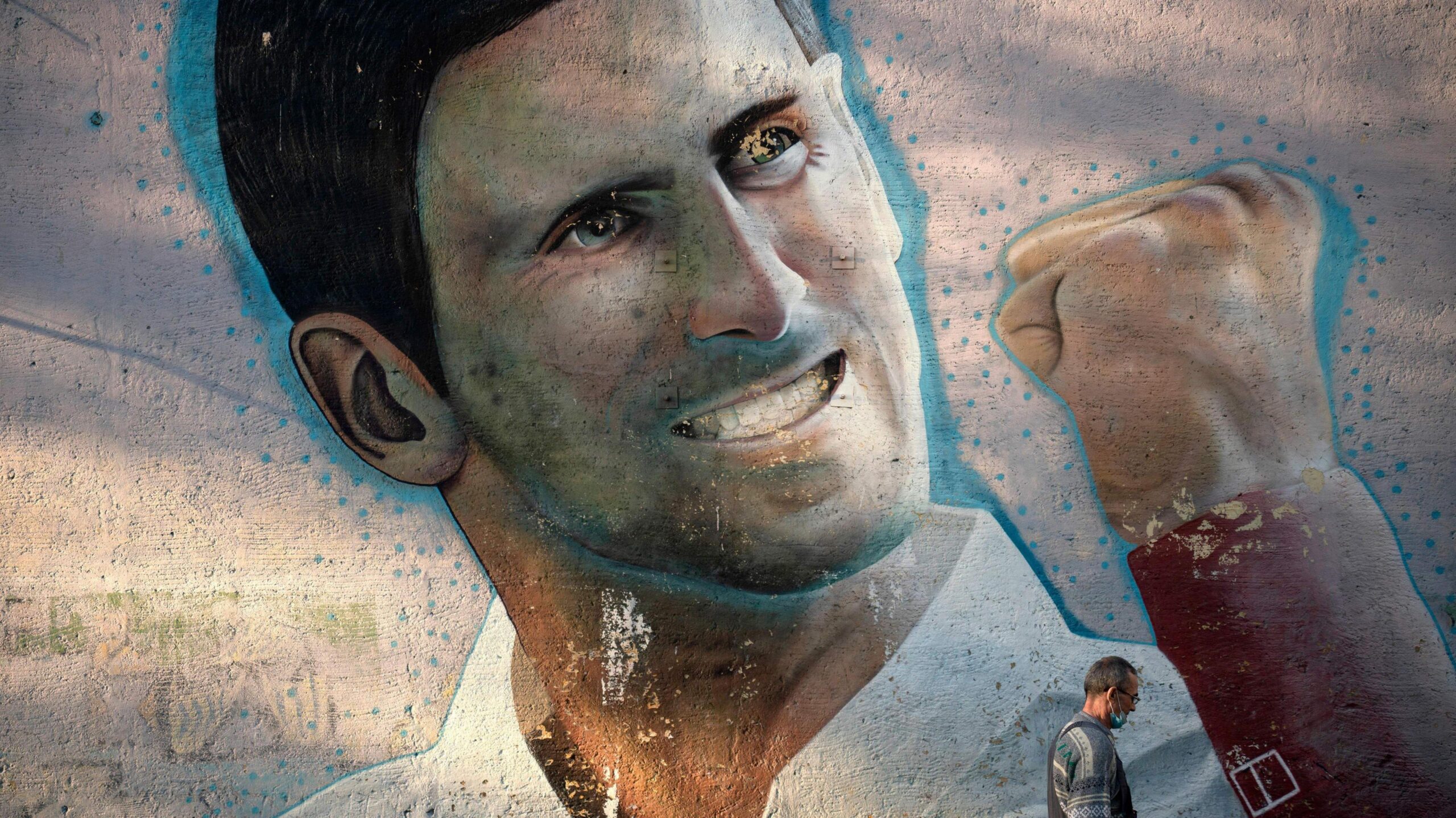
Novak Djokovic, considered by many as the greatest player of all time after winning 24 major titles, has blazed a trail for Serbia.

As a child, Djokovic was forced to take shelter in Belgrade as Nato bombed the Serbian capital between March and June 1999.

“My upbringing during several wars in the 90s was a difficult time,” the 38-year-old said in 2020.

    • 14 July 2019
    • 20 January 2019

American Frances Tiafoe is another player who built his career from scratch.

The son of parents who fled Sierra Leone’s civil war in the 1990s, Tiafoe used to sleep on the floor at a plush Maryland tennis centre where his father was a janitor.

The two-time US Open semi-finalist stayed there while his mother Alphina worked night shifts as a nurse.

The benefit of Tiafoe’s situation was access to top-quality tuition, while Djokovic is eternally grateful for being nurtured by Jelena Gencic, who ran a tennis camp and developed his talent.

Ukraine’s Elina Svitolina had her potential recognised by businessman Yuriy Sapronov. He sponsored her move to Kharkiv – 420 miles from her home – so she could receive professional coaching as a 12-year-old.

Initially, Sapronov struck a deal to receive a cut of her future earnings, but waived his percentage in exchange for Svitolina becoming an ambassador for his companies.

“I don’t know how my career would have developed without his support, but I’m very thankful to him,” Svitolina added.

“It’s part of tennis life that you need a lot of investment to get results.”

Djokovic and Svitolina have become symbols of their nations, seen by many compatriots as providing a voice for them on the international stage.

They and other players have set up charitable foundations to give something back to the countries and people that shaped them – something particularly welcomed in times of hardship.

“When the war in Ukraine started, setting up a foundation was a natural instinct to help people who are in need,” world number 20 Marta Kostyuk told BBC Sport.

“The focus was kids affected by war, but I realised I can have more impact and make more difference by popularising tennis as a sport and physical activity in Ukraine.

Related topics

  • Tennis

More on this story

  • Some tennis balls
    • 16 August 2025
    BBC Sport microphone and phone

Surviving bombs and hunger to become a professional tennis player


Let’s face it, you need a heap of cash to make it as a professional tennis player.

The cost of equipment, coaching and travel is astronomical and it can be difficult to fulfill potential depending on your circumstances.

Growing up in a country ravaged by war only further stacks the odds against you.

After playing in her first Grand Slam main draw at the Australian Open, Ukraine’s Oleksandra Oliynykova laid bare the obstacles she has faced on the way to the top.

The 25-year-old left Ukraine as a child because of her father’s opposition to the country’s pro-Russian president Viktor Yanukovych, but is back living there in spite of the ongoing full-scale invasion by Russia.

Now a top-100 player, it is not so long ago that Oliynykova was eating only sandwiches at tournaments to save money.

Under the omnipresent threat of missiles, Oliynykova had no electricity or water in her Kyiv apartment as she trained for the season-opening major.

“A drone hit the home across the road. My apartment was literally shaking because of the explosion,” she said.

The A$150,000 (£75,757) she earned for her first-round appearance at the Australian Open will help Oliynykova both on and off the court. Helping cash trickle further down the ladder is one of the reasons leading players are campaigning for the Grand Slams to offer more prize money.

“Oliynykova’s story is on another level. It is so inspiring and sad, but I hope every single player listens to it,” Slovakian former world number five Daniela Hantuchova told BBC Sport.

“Players are talking about prize money – when I won my first 25k tournament it was the first time we, as a family, could afford to have pizza with seafood on.

Oleksandra Oliynykova hits a serve at the 2026 Australian OpenGetty Images

Damir Dzumhur, a fixture in the men’s top 100 over the past decade, was born in Sarajevo while missiles rained down on the Bosnia-Herzegovina capital in 1992 as the former Yugoslavia dissolved.

Two days after Dzumhur and his mother were collected from the maternity ward, the hospital was bombed.

When Dzumhur was old enough to pick up a racquet, there were very few courts available. Most had been bombed.

“My first steps on the court were in a small school gym, which was used for football and basketball, not tennis,” the world number 66 told BBC Sport.

“They just put the net in the middle and that’s where I started playing.

“I didn’t play on a proper hard court until I was 12 at a junior tournament in France.”

Being born in a country without tennis pedigree means there is usually a lack of financial support from their federation and fewer role models to follow into the game.

Hantuchova believes players who have come from humble beginnings develop a resilience, discipline and mentality that is “not seen that often these days”.

“When I decided I wanted to play tennis, I asked my parents if – one day – I could have a chance of getting a racquet,” said Hantuchova, who describes her Bratislava upbringing as “simple”.

“I knew I had to wait until their monthly salary allowed them to do so.”

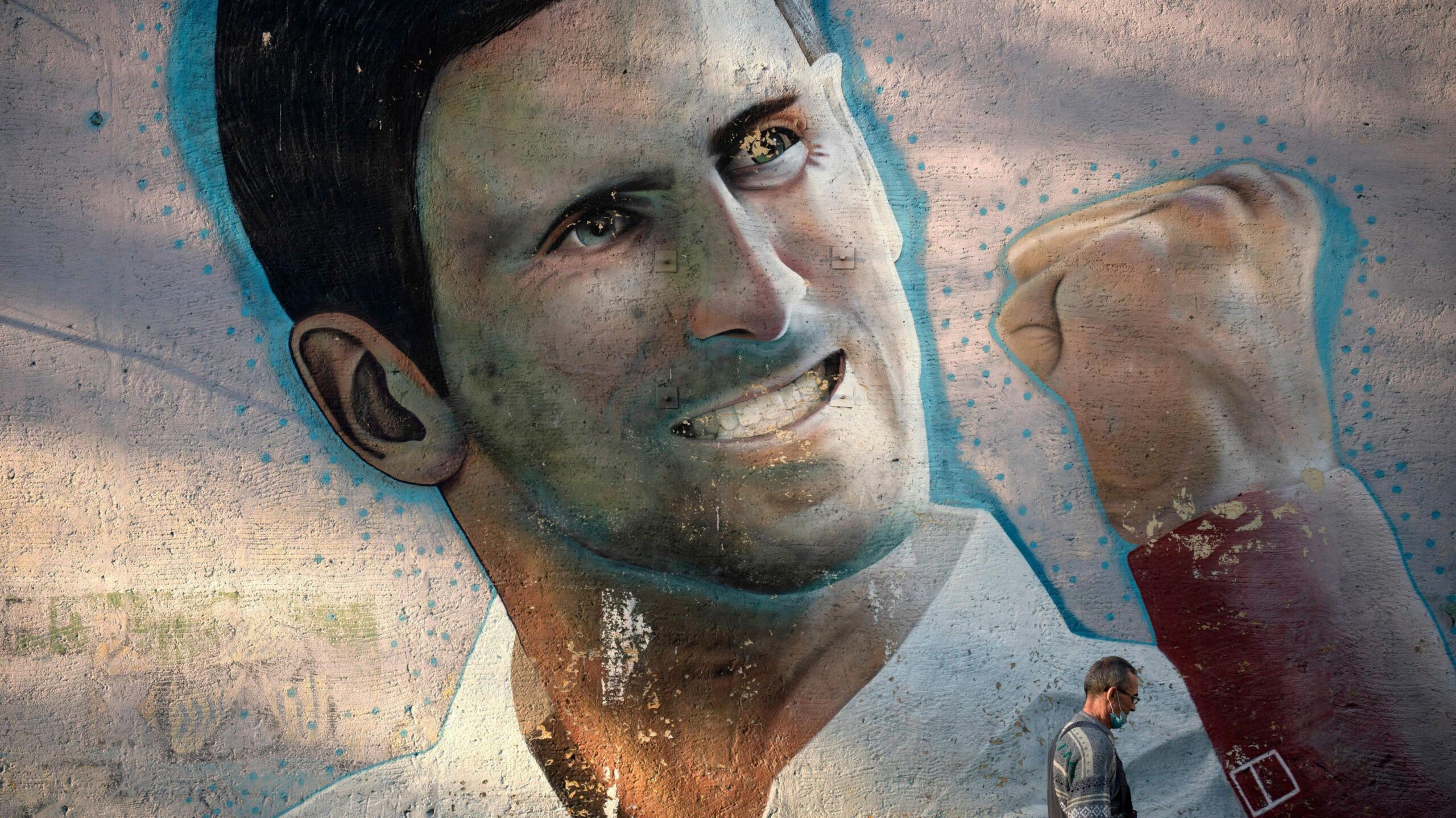
Novak Djokovic, considered by many as the greatest player of all time after winning 24 major titles, has blazed a trail for Serbia.

As a child, Djokovic was forced to take shelter in Belgrade as Nato bombed the Serbian capital between March and June 1999.

“My upbringing during several wars in the 90s was a difficult time,” the 38-year-old said in 2020.

    • 14 July 2019
    • 20 January 2019

American Frances Tiafoe is another player who built his career from scratch.

The son of parents who fled Sierra Leone’s civil war in the 1990s, Tiafoe used to sleep on the floor at a plush Maryland tennis centre where his father was a janitor.

The two-time US Open semi-finalist stayed there while his mother Alphina worked night shifts as a nurse.

The benefit of Tiafoe’s situation was access to top-quality tuition, while Djokovic is eternally grateful for being nurtured by Jelena Gencic, who ran a tennis camp and developed his talent.

Ukraine’s Elina Svitolina had her potential recognised by businessman Yuriy Sapronov. He sponsored her move to Kharkiv – 420 miles from her home – so she could receive professional coaching as a 12-year-old.

Initially, Sapronov struck a deal to receive a cut of her future earnings, but waived his percentage in exchange for Svitolina becoming an ambassador for his companies.

“I don’t know how my career would have developed without his support, but I’m very thankful to him,” Svitolina added.

“It’s part of tennis life that you need a lot of investment to get results.”

Djokovic and Svitolina have become symbols of their nations, seen by many compatriots as providing a voice for them on the international stage.

They and other players have set up charitable foundations to give something back to the countries and people that shaped them – something particularly welcomed in times of hardship.

“When the war in Ukraine started, setting up a foundation was a natural instinct to help people who are in need,” world number 20 Marta Kostyuk told BBC Sport.

“The focus was kids affected by war, but I realised I can have more impact and make more difference by popularising tennis as a sport and physical activity in Ukraine.

Related topics

  • Tennis

More on this story

  • Some tennis balls
    • 16 August 2025
    BBC Sport microphone and phone

Coronation Street’s Beverley Callard issues worrying health update days after soap return

Beverley Callard, who previously appeared on Coronation Street, is currently filming new scenes for a rival soap.

Coronation Street legend Beverley Callard has been supported by fans after she issued an update on how she is doing in her new soap job.

The actress, 68, became a household name back in the ‘80s playing Liz McDonald on the ITV soap. Liz rocked up to the cobbles with the rest of the McDonald clan, including son Steve (Simon Gregson) in 1989.

And for 30 years, she was a regular contributor to a number of significant storylines. Liz’s time on the soap was filled with drama, from saucy flings to blazing feuds.

But in 2019, Beverley left soap fans gutted when she confirmed she was leaving. The iconic character then said her goodbyes to soap a year later.

Since then, Beverley has kept herself busy. In 2020, she appeared on I’m A Celebrity… Get Me Out of Here!, and she also landed a spin-off travel show with IAC co-star Jordan North.

What’s more, Beverley made her soap return recently after landing a role in Irish soap Fair City. Beverley is playing the role of Lily, who is the long-lost mother of character Gwen.

The actress is currently over in Ireland filming the soap and has been keeping fans updated on Instagram. However, this week, Beverley took to her Instagram to issue an update, revealing she is feeling under the weather.

Without prior authorization, content cannot be displayed.

Beverley stated in a video that she is working extremely hard in Dublin and that she is having the best time there. I absolutely adore the back-to-back studio scenes, the cast is fantastic, and everyone is fantastic. However, there is only one major issue.

You’ll make fun of me because I have a cold and am completely dehydrated, and I’m certain it’s because of a lack of it. A box of Yorkshire Tea bags was then displayed by Beverly.

She continued, “I’m not doing any advertising, but I can’t get enough of Yorkshire tea.” And they don’t use it at the office. Then, Beverley retorted, “I have two tea bags left, so that’s making me have a cold!” Please tell me where in Dublin I can buy Yorkshire tea. !

Having the best time in Dublin, but I’m cold and in need of a cuppa, Beverley wrote in the caption! Why is there no place where I can buy Yorkshire tea? !

Fans eluded the comments section and pleaded with “Oh dear, I hope you feel better soon.” Another remarked, “Love will improve soon.” “Enjoy darling hope it clears up,” is a third phrase.

Continue reading the article.

Exclusive: Peter Obi Under Fire as APC Rep Questions His Political Credentials

The vocal Akwa Ibom House of Representatives member Clement Jimbo has questioned Peter Obi’s presidential ambitions, calling him unfit for office as a result of his “leadership deficit.”

Jimbo described Obi’s frequent criticisms as “unpatriotic” rather than “conceptual opposition” in an exclusive interview with Persecondnews in Abuja that will air on YouTube this Friday.

With his sincere assessment, the lawmaker, who represents the Abak/Etim Ekpo/Ika Federal Constituency, has sparked significant discussion ahead of the 2027 elections.

He remarked, “You cannot continue to lead the country on every platform available.” With all the advantages of this administration, he consistently portrays the nation negatively rather than as an opposition.

Can you give me one good idea or suggestion for promoting the nation? You can’t criticize if you don’t contribute.

Jimbo argued that President Tinubu will be “unopposable” or virtually unbeatable in 2027 based on his experience as a candidate for the 2019 SDP presidential election.

He praised the President’s leadership, saying, “It’s clear that the man knows what to do.

Jimbo praised the direction of the Tinubu administration.

Tinubu, the leader of the APC, has excellent leadership skills in the role of president and leader.

“Watch the recovery of the economy. When he took office, the governors we had and now are incredible, and when you go to the 10th Assembly, we are also leading in terms of governors.

The federal lawmaker told Persecondnews, “This is something you can’t say about Peter Obi because he has transitioned from the APGA to PDP, LP, and now in ADC,” the federal lawmaker said.

Jimbo envisions a “seismic shift” in a bold forecast that could undermine the South East’s support for the Labour Party.

Jimbo believes the election is moving forward despite the staggering 90% of votes cast by Obi in 2023 (1.96 million votes, compared to 127, 605).

The lawmaker points to Gov. Gov.’s strategic leadership as evidence of his steadfast commitment to APC. Hope that the Uzodimma will be the regional hero.

CLICK HERE TO VIEW FULL VIDEO

Jimbo claims that “the winds of change are blowing” and that the following cycle will result in a significantly different outcome.

It’s a game-changer for our party because of the man of substance that leads the pack of APC governors.

Jimbo has a clear sense of confidence in Uzodimma, who is the director-general of APC Outreach, Engagement, and Mobilization.

We are fighting to reclaim our place in the sun by declaring, “We are not just fighting for victory.”

The governor of Enugu state is regarded as one of the best-performing governors in the state, all due to the current administration’s leadership dynamics. For the first time, there is a significant infrastructure turnaround in Abia state.

“This is primarily attributable to the 36 state governors’ robust financial disbursements, which have been facilitated by fiscal reforms, such as the elimination of fuel subsidies.

He continued, “Total allocations to the 36 states reportedly increased from 3.8 trillion to 7.1 trillion over the period of 2024 to 2025.”

Jimbo cited a $ 570 billion release for citizen support from the federal government, which aims to reduce economic strain.

The lawmaker insists the impact is still significant despite the opposition from governors who have criticized the legislation by labeling the funds as NG-CARES reimbursements rather than federal aid.

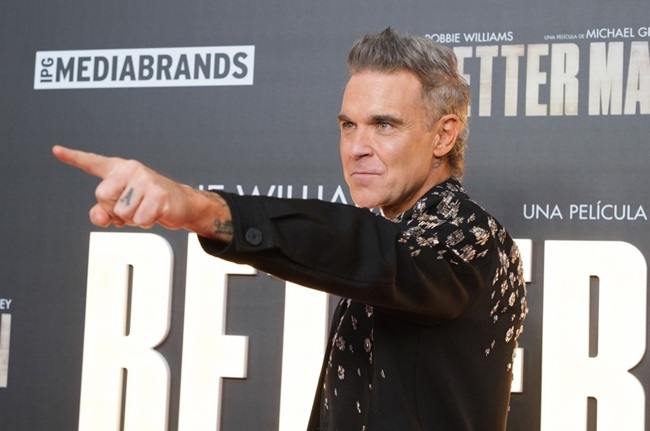
Robbie Williams Tops Beatles For Most Number One Albums In UK

Sales experts reported Friday that pop superstar Robbie Williams has the most successful albums in British history, surpassing the Beatles.

Williams’ “Britpop,” now his 16th UK chart-topping album, was the subject of the news a week after his release.

“He’s the one”! According to the Official Charts Company, the former Take That frontman’s hit song “She’s the One” from 1998 was referenced.

He has sold an estimated 20 million albums in the UK since Williams, 51, began his chart-topping career with his 1997 solo album “Life Thru a Lens.”

His first album in seven years is “Britpop.”

Official Charts’ executive, Martin Talbot, said in a statement that “not even the confident young Stoke-on-Trent teenager would have believed this were possible when he joined Take That back in 1990.”

However, he is the best album artist in history, ranking first in the world among all time!

Williams has sold 80 million albums worldwide in his 35 years of music.

Kudirat Abiola’s Murder Case Closed: Supreme Court Dismisses Charges Against Al-Mustapha

The military junta’s infamous “ahaja kudirat abiola” murder trial has come to an end after decades of legal tigers in Lagos.

The Lagos State government attempted to prosecute Hamza Al-Mustapha, the former chief security officer of the late military dictator Sani Abacha, but the court rejected that effort.

The government’s delay was criticized by the justices, who noted that the state had not done anything for nine years even after receiving the order to reopen the case in 2014.

According to Persecondnews, Al-Mustapha was the main suspect in the 1993 presidential election winner’s wife, Chief MKO Abiola, who was killed in 1996.

The state’s failure to proceed with the appeal was described as “inexcusable” by Justice Uwani Aba-Aji, who delivered the lead judgment.

The court upheld Al-Mustapha’s previous acquittal as a result of this “inexcusable” negligence, putting an end to the scandalous case.

Mr. Paul Daudu (SAN), Al-Mustapha’s attorney, told the court that Lagos State had not yet submitted an appeal or put any steps in place to implement the order that was given to it over nine years ago.

Daudu argued that the state’s failure to file an appeal in 2014 clearly demonstrated a lack of interest in the case’s development.

He pleaded with the judge to dismiss the appeal entirely on abandonment grounds.

Justice Aba-Aji confirmed from the court registrar that Lagos State had received hearing notices but did not appear or provide any justification.

The court determined in a quick decision that the appellant had more than enough time to file the necessary paperwork in nine years.

Despite being aware of the proceedings since 2020, the state government hasn’t made an appearance or spoken with the court, causing the panel to complain.

The appeal with the SC/CR/45/2014 mark was therefore dismissed.

On the same grounds, the Lagos State Government’s SC/CR/6/2014 appeal was also rejected.

The Supreme Court granted Lagos State the right to challenge the Court of Appeal’s judgment on July 12, 2013, which found Al-Mustapha innocent and discharged.

Lagos State was required to submit its notice of appeal within 30 days by a seven-member panel led by Justice Walter Onnoghen, the then-Acting Chief Justice of Nigeria.

The state argued that the case needed to be reviewed and that the Court of Appeal’s finding that Al-Mustapha’s evidence was insufficient.

Persecondnews also recalls that a Lagos High Court sentenced Lateef Shofolahan, Mohammed Abacha, and Al-Mustafah to death by hanging for conspiracy and murder on January 30, 2012.