Afrobeats star Davido’s father, Adedeji Adeleke, has disputed paternity claims made by his son and claims DNA test results show that 12-year-old Anuoluwapo is not the singer’s child.  ,
Anu deserves to know her father, according to Mr. Adeleke, who made the remarks at a press conference in Lagos on Wednesday.
He claims that five DNA tests have been conducted to disprove the paternity claim, but none have actually demonstrated otherwise.
The singer has never denied having a child, according to Davido’s father, who spoke to the audience.
He recalled how he supported her despite the findings that showed that Anu wasn’t Davido’s child.
He claims to frequently send money to pay for Anu’s education and care. Mr. Adedeji explained that whenever money came in, the aunt would return receipts to him along with items that had been purchased for the 12-year-old.
The Osun-born businessman claims to have managed the school costs up until last year while maintaining contact with Anu’s aunt. He claimed that Davido was unaware of this.
He claimed, “I did not talk about it with David or anyone else.”
Ayra Starr, Davido, Wizkid, and Tiwa Savage are also nominated for the 2026 MOBO Awards.
In the middle of January, Davido and Anuoluwapo’s long-running paternity dispute resurfaced.
She posted a request for a new DNA test on Instagram. The teenager cited classmates’ years of bullying, mockery, and mental distress as evidence against claims that Davido is her father.
Davido has, however, denied paternity by claiming that five DNA tests at various hospitals have negative results.
If Davido’s allegations aren’t removed, the singer threatened to file legal action and imprison her mother in a leaked chat.
Davido claimed that Davido’s father demanded that the DNA samples be screened for accuracy.
Ayotomide Labinjoh, Anu’s mother, has refuted Davido’s claims that he had taken multiple tests.
Only one DNA test was conducted, Labinjoh claimed.
Julius Abure was appointed as the party’s national leader by a Federal High Court in Abuja, and Esther Nenadi Usman has been confirmed as the party’s legitimate leader.
A Supreme Court ruling from April 4, 2025, which established Abure’s tenure had expired, served as Justice Peter Lifu, who delivered the judgment.
In a matter of days, the court ordered the United States’ Independent National Electoral Commission (INEC) to recognize the Usman-led Caretaker Committee as the only legitimate representative of the Labour Party.
Sen. Usman filed a lawsuit challenging Abure’s leadership, and this decision was made.
Abure’s removal from the National Executive Committee (NEC) was the result of a leadership disagreement with the organization.
In order to fill the leadership void, the party established a 29-member caretaker committee, with Usman serving as chairman.
Persecondnews recalls that the Supreme Court had previously ruled that Abure was the LP chairman, citing the fact that the case was a matter of internal party intrigue and not justiciable.
Political parties must adhere to their rules and regulations, according to the court.
After her eldest son, Brooklyn, furiously took to social media to post a number of allegations against his family, which he claims are “controlling,” Victoria Beckham is reportedly “in bits.”
Assistant Celebrity and Entertainment Editor, Daniel Bird
5 images to be viewed
After Brooklyn’s vile comments, Victoria Beckham is allegedly “side of herself” (Photo: Getty Images for SiriusXM).
After Brooklyn’s vile allegations against his family, Victoria Beckham is “in bits.” The aspiring chef claimed his family had been “controlling” the narrative surrounding his family in a wacky social media post.
He also alleged that his family had attempted to force him to sign the rights to his name over in the lead-up to his 2022 wedding to billionaire Nicola Peltz. He said: “Weeks before our big day, my parents repeatedly pressured and attempted to bribe me into signing away the rights to my name, which would have affected me, my wife, and our future children.” Brooklyn, 26, also claimed that his famous family – including mum, Lady Beckham, and dad Sir David Beckham- had attempted to “ruin” his relationship with Peltz.
However, sources close to the Beckhams have told the Mirror that Victoria has been left heartbroken by their son’s actions despite his family’s continuing silence. Victoria is “shocked to pieces” by her son’s actions, according to a source.
OUR LIVE UPDATES ARE HERE.
READ MORE: Victoria and David Beckham’s ‘humiliating’ acts that led to Brooklyn’s bombshell outburstREAD MORE: Brooklyn Beckham’s biggest bombshells – ‘evil’ swipe and ‘forced to sign name over’
Everyone is shocked, they continued. However, Victoria is completely unmoved by this. She and David are concerned that Brand Beckham’s career will end with the accusations of falsehood and pretended relationships, but they are also concerned about what other material he will release.
They continue to blame Nicola because they believe she put him up for this, and it’s all because of her. However, as Brooklyn put it, this was required. He dislikes how their narratives control him. He wrote legal letters to the defendants to warn them against discussing their wedding dresses and making it clear that Nicola didn’t want to wear her dress.
Before the wedding, Victoria had promised to make Nicola’s dress, but things quickly turned out sour and Nicola was forced to look for a new designer at the last minute.
Nicola became enraged as Victoria “pulled out of the fray.” Our source claimed that Victoria inappropriately “danced on him at his wedding” and that it was “highly embarrassing.”
There was “more to come,” but Victoria is” beside herself in pieces, according to our source, “while David is” angry””. He may have just received the knight’s cross, but the family is being accused of being a fraud, they continued. Brooklyn asserted on social media that his family treated both their online and online fans favorably.
He blabbed, “My parents have controlled narratives about our family in the media for their entire lives. I was born into a life filled with performative social media posts, family events, and fake relationships. Recently, I’ve seen with my own eyes how frequently they lie in the media, largely at the expense of innocent people, to maintain their own image. But I think truth always emerges.
Our source continued: “It’s bad, it’s really bad – they’re saying this is like Prince Harry 2.0 coming out, rebelling against the family, but there’s more to come.
“Brooklyn has had enough, but Nicola is still to blame,” he said. In response to Brooklyn’s vile allegations, the Beckhams are reportedly now limiting damages. And while Nicola’s family is allegedly blaming him, Brooklyn-based sources have previously refuted these claims.
He did not support his wife being denigrated in this way, they said, “because this story is so sexist and misogynistic.” The woman should be held accountable for the man’s actions, according to a tale that is as old as time. It’s just incredibly insulting, according to a source. Instead, insiders claim that Brooklyn is “very much his own man.”
In a statement shared on his Instagram page, Brooklyn said: “I have been silent for years and made every effort to keep these matters private. Unfortunately, my parents and their team have continued to go to the press, leaving me with no choice but to speak for myself and tell the truth about only some of the lies that have been printed.”
Although it has been reported that the aspiring chef had been thinking about reaching out to his family, he couldn’t be more wrong. He continued, “My family and I do not want to reconcile.” For the first time in my life, I’m standing up for myself instead of being controlled.
My parents have controlled the stories about our family that have been published in the press for my entire life. I was born into a life filled with performative social media posts, family events, and fake relationships. Recently, I’ve seen with my own eyes how frequently they lie in the media, largely at the expense of innocent people, to maintain their own image. But I think truth always emerges.
Continue reading the article.
Victoria’s team has been contacted for comment by The Mirror.
A young Igor Thiago could not have known he would one day break the record for the most goals by a Brazilian player in a Premier League season.
But the Brentford forward has always had one thing clear in his mind – nothing would stop him from becoming a professional footballer.
That is the promise he made to his mother Maria Diva when he was growing up in Cidade Ocidental, a small town in central Brazil.
He has never forgotten the day they went to a family meal where everyone was supposed to bring a dish.
Raising four children on her own and working as a refuse collector on a minimum wage, Diva did not have it easy and arrived empty-handed.
It was then that Thiago heard a close relative say she would only take her children out to eat at other people’s expense. Diva felt humiliated and left in tears.
“From today on, no-one in this life is going to humiliate you any more,” Thiago told her on the way home.
“I’m going to become a footballer, you’ll see. Everyone will know me one day.”
His mother may have thought he did not really know what he was talking about. But he knew.
However, his path to success has not been straightforward.
He had to wait until he was 17 to sign for a club, having faced several rejections at trials around Brazil.
“Thiago would call me late at night in tears to say that football wasn’t for him,” Sergio Goncalves, his mentor from his early years at Gremio Ocidental, a local community football initiative, tells BBC Sport. “But he was born to score goals.”
The 24-year-old has found the back of the net 16 times in the Premier League this season.
He is on target to reach the 20-goal mark once again in his career – having done so in three of his four seasons in Europe, the only exception being his debut campaign with Brentford, which was disrupted by a serious injury.
‘I don’t want to know about football any more’
Having lost his father prematurely, Thiago found a paternal figure in Goncalves, who mentored him between the ages of eight and 16 – before the striker joined Vere in 2018 then moved to Brazilian giants Cruzeiro a year later.
“People look at him, see how big he is, and think he’s that kind of static centre-forward. But he has a lot to his game because of the time he spent in futsal,” Goncalves says.
“Thiago was born in futsal. It gives you so much dynamism, such quick thinking. A lot of scouts who came through here now call me to say ‘Sergio, I missed out on Thiago’.”
Thiago did not take long to make an impact for Cruzeiro, going on to score in his senior debut in Belo Horizonte. But that was it.
He probably could not have had a more challenging first-team experience.
That side is remembered as the worst Cruzeiro team ever – they finished their Serie B campaigns in 11th and 14th place in 2020 and 2021.
“The pressure was everywhere – it affected all the players and the coaching staff. It was a very difficult period for the club – delays in paying wages, problems with transfer ban,” former Brazil international Mozart Santos, who had a brief spell as head coach, says.
“Younger players tend to feel it more. So one of the reasons Thiago maybe didn’t perform better in Brazil was this turbulence.”
Such was the situation that Thiago fell into depression, questioning himself and even whether he should continue as a professional footballer.
“There are things no-one knows that I went through. I went through a period of depression,” he said in an interview with Futebol no Mundo podcast from ESPN.
“There were nights when I thought about giving up. Even though I was already a professional at Cruzeiro, I didn’t want to know about football any more.
‘The sky’s the limit’
At the start of 2022, Thiago told his agents it was time to move elsewhere.
Bulgarian champions Ludogorets, who had tried to sign him the season before, returned with another offer and secured a deal.
“In football, a lot of people try to define paths and limits for others. You often see a player going through a difficult period and being labelled as a certain type of player and that label becomes a kind of ceiling. I fight strongly against that,” former Ludogorets assistant coach Rafael Ferreira, currently at Atromitos in Greece, said.
“I believe everyone has room to grow as long as they’re in an environment that allows it. And Igor Thiago fits into a very interesting profile because he has a very strong mentality.
“In his early period, he didn’t get many minutes. And what does he do? He asks to play for the second team. He wants to play. That shows you his mentality – not sulking because he isn’t playing but looking for alternatives. When you work with that type of player, we usually say the sky’s the limit.”
Thiago’s mentality also stands out with his team-mates.
“What I really liked about him was that when he arrived, he was always asking the older players what they thought he could improve. That’s what I found different about him, special even,” says Cauly, a former Ludogorets midfielder who now plays for Bahia in Brazil.
“He already had that worker’s mentality, that desire to keep improving. And a player with his physical attributes… we already knew that, one way or another, it had to work out for him as a striker.”
It was no surprise that, following only one full season and 20 goals later, he was on his way to Club Brugge in Belgium.
Sergio Goncalves
‘His dream was to play in the Premier League’
Thiago scored 29 goals in his first and only season with Club Brugge.
Brentford then anticipated competition for his signing and paid a club record £30m for him. The forward arrived as a replacement for Ivan Toney, who was sold to Saudi club Al-Ahli.
“I remember he always said his dream was to play in the Premier League. He was always speaking very highly of Erling Haaland. And now, today, he’s competing with him for the Premier League’s top scorer,” Cauly says.
“That makes me really happy to see. I’m proud of him. He’s someone who truly deserves it – a genuinely good person, with a big heart, and he deserves to be where he is.”
With Brazil desperately looking for a number nine before the summer’s World Cup, there is a growing expectation head coach Carlo Ancelotti will include him in his March squad.
“For me, in this next list – which is the last one before the tournament – he has to be in. If he isn’t, then it won’t be justice,” Goncalves says.
“Brazil is missing a proper striker, and I believe this is his moment. And when he gets there, I think he’ll make the difference.
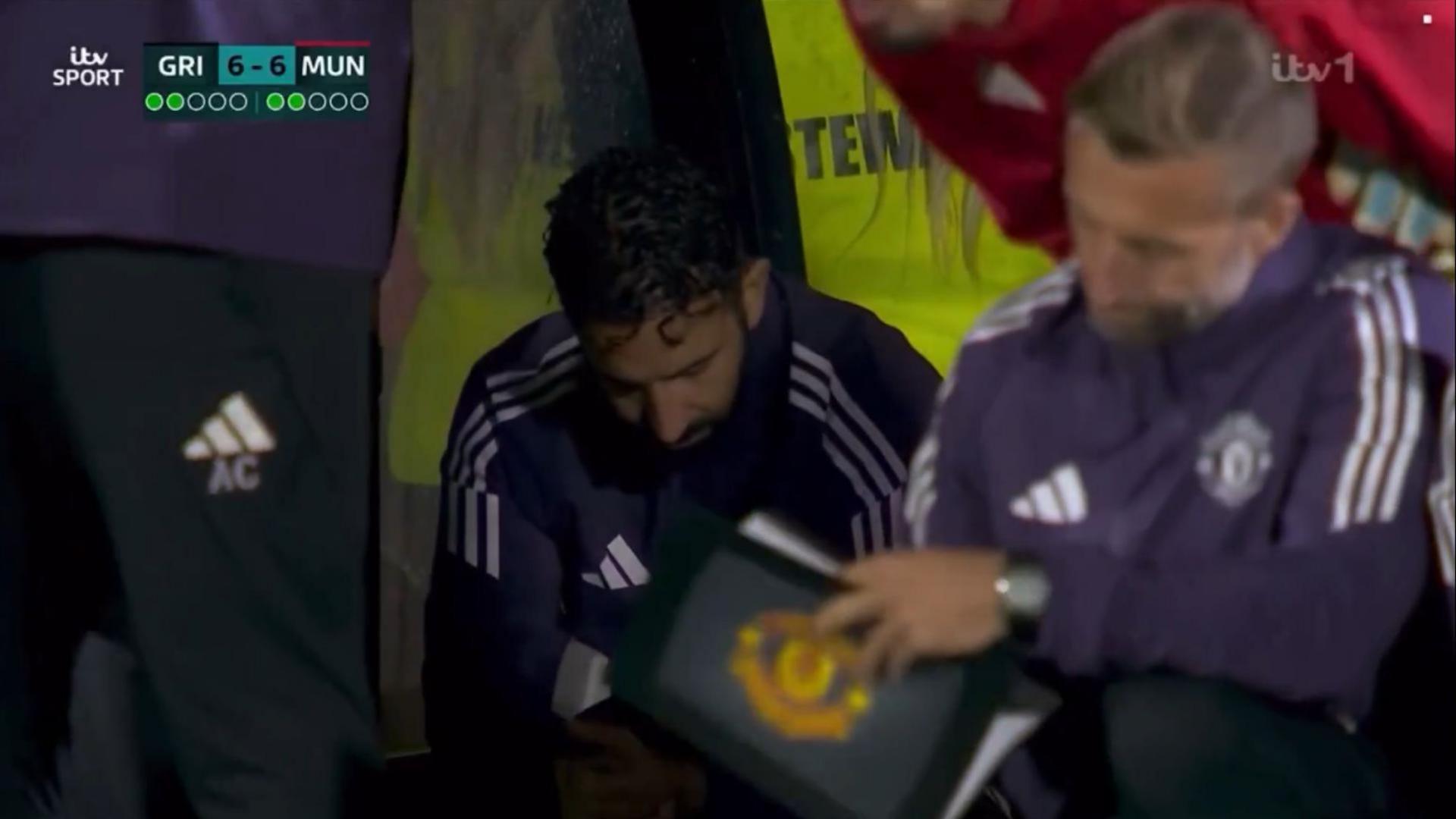
The enduring image of Ruben Amorim’s 14-month tenure at Manchester United may well be the one of him cowering in the dugout at Grimsby.
It came during an August trip to the seaside for a Carabao Cup match that went horribly wrong for United – an embarrassing 12-11 defeat on penalties the first time in the club’s history they had been beaten by a team in the fourth tier.
Amorim’s post-match comments smacked of someone who was about to admit the job was too much for him, only to climb down a couple of days later when he said emotions frequently get the better of him and had led him to saying unwise things in public.
He wasn’t going to stop, though. As with many aspects of his personality, once Amorim is on a set course, he will not change. It is something that would contribute to his downfall.
One critic close to the dressing room said privately that while Amorim was enthralling when he spoke to the media, it was all he was actually good at. A damning assessment, but harsh too.
Amorim’s last match was a 1-1 draw with Leeds – a result that leaves them a creditable sixth in the Premier League, but one sandwiched by headline-grabbing comments made to journalists.
His first interaction with the media on Friday included a thinly disguised admission there were splits behind the scenes. After the game, he launched his final broadside in his last answer, which included the statement he “would not quit”.
That, effectively, meant United had to either back Amorim or sack him.
With his tactics an ongoing concern and the hierarchy already distinctly unimpressed by his brutal dismissal of academy players – as well as criticism of senior members of the squad – they were always likely to choose the second option.
The Pope, the formation and the beginning of the end
Amorim’s appointment was viewed as a progressive move – the club bringing in someone who would work in a modern structure and develop as he went along.
But with the 40-year-old came a specific style of play – and 3-4-3 formation – he had used at Sporting.
The more Amorim was asked about it, the more he doubled down on his belief that to change would undermine him in the eyes of his players, and make them think he was not committed to his own messaging.
While he was certain of his methods – once suggesting even the Pope couldn’t persuade him to change – he admitted in October he had to tell his players to ignore external voices repeatedly saying the system had to be scrapped.
“Is the media going to dictate what I’m going to do?” he told journalists. “It cannot be. It’s not possible to sustain that.
“But my players, I guarantee you, they are listening to you and they are putting that inside because we are not winning games.
“They have to believe in me because I watch more games than you guys combined.”
This was all brought into sharp focus on 30 December when – four days after eventually reverting to a back four for the first time in the 1-0 win over Newcastle – he immediately went back to a three-man defence against Wolves.
It meant moving Patrick Dorgu from a right-sided attacking role, where he had been so effective on 26 December, to left wing-back.
By that point, United had already tried to persuade long-term target Antoine Semenyo to join them from Bournemouth by telling him he would play on the left wing.
That was a clear sign the club viewed the future as being something different to 3-4-3, given they had already spent in excess of £200m on attacking players.
It is no surprise, therefore, the formation against Wolves and subsequent result – a 1-1 draw against a side that had collected just two points all season and led to the team being booed off – was viewed extremely negatively internally at the club.
Technical director Jason Wilcox spoke to Amorim privately afterwards, encouraging greater tactical flexibility.
United continued with their back three at Leeds.
It was another massive backward step in Amorim’s relationship with his bosses, and his continued criticism just heightened that situation.
Amorim wanted to be left alone to do his job, free from the unwanted influence of Wilcox.
But what Amorim felt was interference, United believed was normal feedback, which had been repeatedly resisted.
The situation had become untenable. Yes, United are sixth – in line with pre-season expectations – but they have a squad many believe could, with a few simple tactical tweaks, deliver much better results.
5 January
5 January
5 January
5 January
The preparation – and the quirks
While results were not always good, players remained onside – at least those who were not in the ‘bomb squad’ exiled at the start of pre-season training.
Speaking to players publicly and privately during United’s summer trip to the United States, there was genuine enthusiasm for the season that lay ahead.
Amorim had a few quirks, but most coaches do.
When United opened their doors for the first 15 minutes of training the day before European games, it was strange to see Amorim watch the sprints and rondos on a different pitch – sometimes 50 yards away, and far removed from his coaching staff.
He was far more involved – whistle in hand – when the sessions began, though he wasn’t keen to let the media into those.
There was a full open session in Malaysia on United’s post-season trip in May, but that whole expedition was not run on fully professional lines given the amount of downtime that was allowed.
Once United arrived at their training base in Chicago in July, access was limited. The candour of Amorim’s media conferences was not matched by his openness with training.
He was meticulous in his preparation, though.
Footage of his first training session at United showed him explaining to midfielder Kobbie Mainoo exactly how many strides he needed to move after laying off a pass, then where to open out his body to create maximum passing angles.
In the summer, he had two players taking up the same positions in training, then ran through different scenarios to ensure they moved into the right area of the pitch.
While this may seem peculiar – and would have looked so had anyone witnessed it -it does make sense given individuals were allocated positions and a hierarchy installed.
The theory and practice is good. But events in actual matches take their course.
5 January
5 January
How it all started for Amorim
We tend not to find out about discussions that have taken place around the appointment of a manager until long after the event.
But we know this time.
We know because five months after United hired Dan Ashworth as a “best in class” sporting director in July 2024, he left after his suggestions for potential replacements for Erik ten Hag were deemed to not be imaginative enough.
Instead, Berrada lured Amorim from Sporting, telling the Portuguese it was ‘now or never’ when he asked if his appointment could be delayed from November until the end of the season.
At the time, in addition to Berrada, United had Wilcox as technical director, Christopher Vivell as an interim director of recruitment and Ratcliffe’s right-hand man Sir Dave Brailsford as a football club director.
The first three remain integral figures in United’s recruitment team, Wilcox has more responsibility, and Vivell has been installed on a permanent basis. Brailsford has backed away, though, and is concentrating on his wider role as Ineos’ head of sport.
Picking through the wreckage of another failed managerial appointment, the spotlight is on them as much as Amorim.
They knew he was wedded to a certain formation, which he was not willing to change no matter how much external criticism he received.
The players exiled and the players signed
Under Amorim, United have plumbed depths that should not be possible the way football’s finances are arranged these days.
The fourth richest club in the world, according to Deloitte’s 2025 rankings, have struggled – for the most part – to compete with well-run smaller rivals like Brentford, Bournemouth and Brighton, finished last season behind West Ham, and were level on points with Wolves.
Amorim went into the summer promising this season would be better. It has been – to an extent – but is it right to measure a United manager against a 15th-place finish?
The spotlight, though, cannot just be on the coach.
United knew what they were getting into. Does Ratcliffe’s “best in class” apply to Berrada? Or Wilcox, whose experience as a technical director was limited to 15 months at Southampton before he accepted the United job?
In going for Amorim and delivering their ‘now or never’ ultimatum, United’s hierarchy must have known the squad being inherited did not fit the coach’s style. They backed him to the tune of more than £200m in the summer and also signed off his decision to exile Marcus Rashford, Jadon Sancho, Antony and Alejandro Garnacho.
Maybe there was unease at Amorim’s method of dismissing Garnacho, which effectively reduced his value in a market the player himself cut to one by sticking to his desire to join Chelsea.
Where they drew a line was Emiliano Martinez.
Amorim wanted Aston Villa’s World Cup-winning goalkeeper. United’s powerbrokers refused to sanction that, preferring to invest in the youth of Senne Lammens – on a much lower salary. Data analysis concurs with objective judgement Lammens has the capability to become of one Europe’s best goalkeepers at some point – and United officials say they remain comfortable with their choice.
Instead, United prioritised their hefty investment towards the forward positions with a view to greater return on investment.
But heads are still scratched over the wisdom of selling McTominay, then spending far more on Uruguay international Manuel Ugarte, who played no role in the Europa League final Casemiro started.
Recruitment is a collective failing – and predates Amorim by a long way. The failed pursuit of Semenyo is proof United are no longer the draw they once were.
Amorim is yesterday’s man now, just as David Moyes, Louis van Gaal, Jose Mourinho, Ole Gunnar Solskjaer, Ralf Rangnick and Ten Hag were before him.
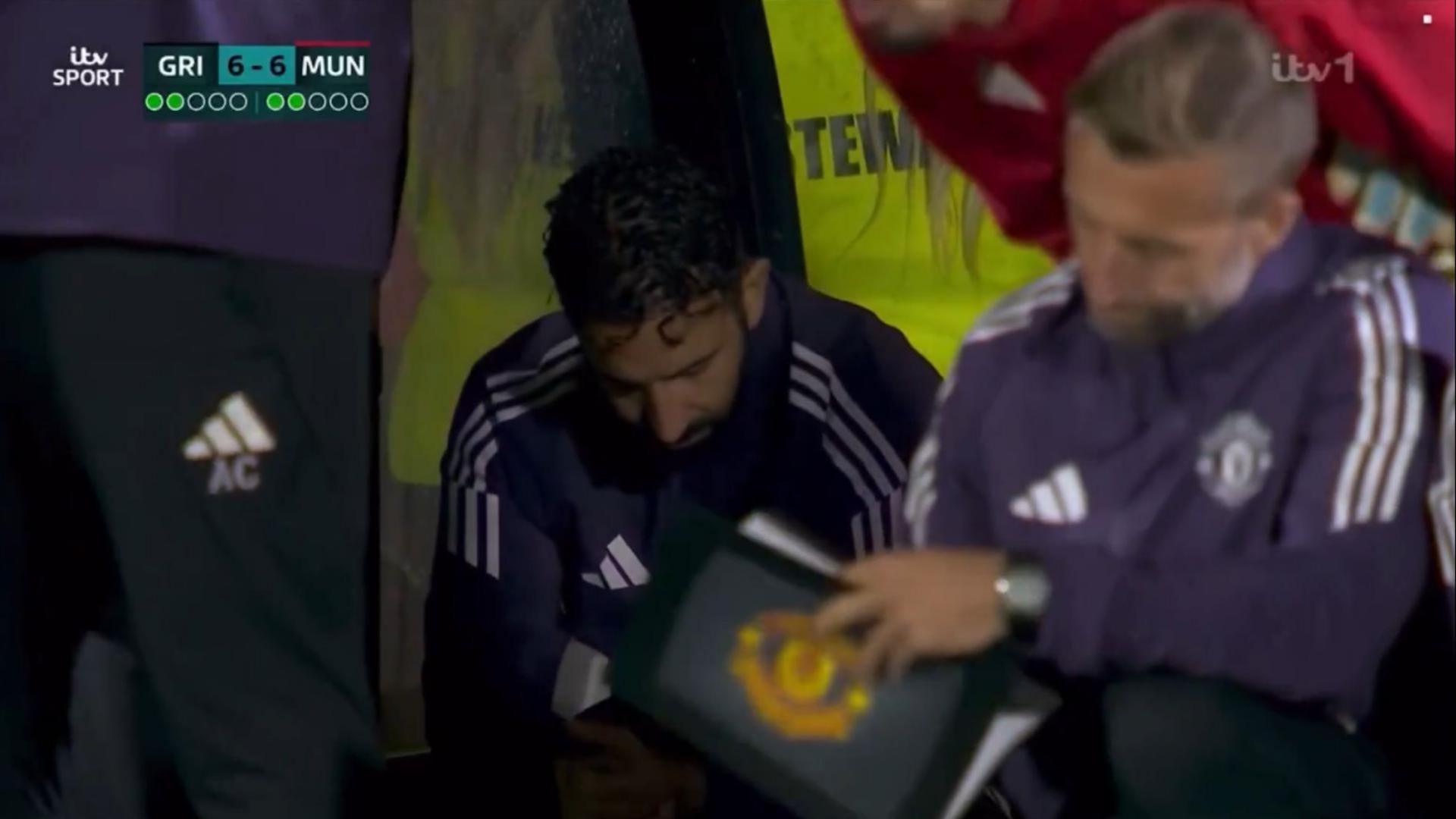
The enduring image of Ruben Amorim’s 14-month tenure at Manchester United may well be the one of him cowering in the dugout at Grimsby.
It came during an August trip to the seaside for a Carabao Cup match that went horribly wrong for United – an embarrassing 12-11 defeat on penalties the first time in the club’s history they had been beaten by a team in the fourth tier.
Amorim’s post-match comments smacked of someone who was about to admit the job was too much for him, only to climb down a couple of days later when he said emotions frequently get the better of him and had led him to saying unwise things in public.
He wasn’t going to stop, though. As with many aspects of his personality, once Amorim is on a set course, he will not change. It is something that would contribute to his downfall.
One critic close to the dressing room said privately that while Amorim was enthralling when he spoke to the media, it was all he was actually good at. A damning assessment, but harsh too.
Amorim’s last match was a 1-1 draw with Leeds – a result that leaves them a creditable sixth in the Premier League, but one sandwiched by headline-grabbing comments made to journalists.
His first interaction with the media on Friday included a thinly disguised admission there were splits behind the scenes. After the game, he launched his final broadside in his last answer, which included the statement he “would not quit”.
That, effectively, meant United had to either back Amorim or sack him.
With his tactics an ongoing concern and the hierarchy already distinctly unimpressed by his brutal dismissal of academy players – as well as criticism of senior members of the squad – they were always likely to choose the second option.
The Pope, the formation and the beginning of the end
Amorim’s appointment was viewed as a progressive move – the club bringing in someone who would work in a modern structure and develop as he went along.
But with the 40-year-old came a specific style of play – and 3-4-3 formation – he had used at Sporting.
The more Amorim was asked about it, the more he doubled down on his belief that to change would undermine him in the eyes of his players, and make them think he was not committed to his own messaging.
While he was certain of his methods – once suggesting even the Pope couldn’t persuade him to change – he admitted in October he had to tell his players to ignore external voices repeatedly saying the system had to be scrapped.
“Is the media going to dictate what I’m going to do?” he told journalists. “It cannot be. It’s not possible to sustain that.
“But my players, I guarantee you, they are listening to you and they are putting that inside because we are not winning games.
“They have to believe in me because I watch more games than you guys combined.”
This was all brought into sharp focus on 30 December when – four days after eventually reverting to a back four for the first time in the 1-0 win over Newcastle – he immediately went back to a three-man defence against Wolves.
It meant moving Patrick Dorgu from a right-sided attacking role, where he had been so effective on 26 December, to left wing-back.
By that point, United had already tried to persuade long-term target Antoine Semenyo to join them from Bournemouth by telling him he would play on the left wing.
That was a clear sign the club viewed the future as being something different to 3-4-3, given they had already spent in excess of £200m on attacking players.
It is no surprise, therefore, the formation against Wolves and subsequent result – a 1-1 draw against a side that had collected just two points all season and led to the team being booed off – was viewed extremely negatively internally at the club.
Technical director Jason Wilcox spoke to Amorim privately afterwards, encouraging greater tactical flexibility.
United continued with their back three at Leeds.
It was another massive backward step in Amorim’s relationship with his bosses, and his continued criticism just heightened that situation.
Amorim wanted to be left alone to do his job, free from the unwanted influence of Wilcox.
But what Amorim felt was interference, United believed was normal feedback, which had been repeatedly resisted.
The situation had become untenable. Yes, United are sixth – in line with pre-season expectations – but they have a squad many believe could, with a few simple tactical tweaks, deliver much better results.
5 January
5 January
5 January
5 January
The preparation – and the quirks
While results were not always good, players remained onside – at least those who were not in the ‘bomb squad’ exiled at the start of pre-season training.
Speaking to players publicly and privately during United’s summer trip to the United States, there was genuine enthusiasm for the season that lay ahead.
Amorim had a few quirks, but most coaches do.
When United opened their doors for the first 15 minutes of training the day before European games, it was strange to see Amorim watch the sprints and rondos on a different pitch – sometimes 50 yards away, and far removed from his coaching staff.
He was far more involved – whistle in hand – when the sessions began, though he wasn’t keen to let the media into those.
There was a full open session in Malaysia on United’s post-season trip in May, but that whole expedition was not run on fully professional lines given the amount of downtime that was allowed.
Once United arrived at their training base in Chicago in July, access was limited. The candour of Amorim’s media conferences was not matched by his openness with training.
He was meticulous in his preparation, though.
Footage of his first training session at United showed him explaining to midfielder Kobbie Mainoo exactly how many strides he needed to move after laying off a pass, then where to open out his body to create maximum passing angles.
In the summer, he had two players taking up the same positions in training, then ran through different scenarios to ensure they moved into the right area of the pitch.
While this may seem peculiar – and would have looked so had anyone witnessed it -it does make sense given individuals were allocated positions and a hierarchy installed.
The theory and practice is good. But events in actual matches take their course.
5 January
5 January
How it all started for Amorim
We tend not to find out about discussions that have taken place around the appointment of a manager until long after the event.
But we know this time.
We know because five months after United hired Dan Ashworth as a “best in class” sporting director in July 2024, he left after his suggestions for potential replacements for Erik ten Hag were deemed to not be imaginative enough.
Instead, Berrada lured Amorim from Sporting, telling the Portuguese it was ‘now or never’ when he asked if his appointment could be delayed from November until the end of the season.
At the time, in addition to Berrada, United had Wilcox as technical director, Christopher Vivell as an interim director of recruitment and Ratcliffe’s right-hand man Sir Dave Brailsford as a football club director.
The first three remain integral figures in United’s recruitment team, Wilcox has more responsibility, and Vivell has been installed on a permanent basis. Brailsford has backed away, though, and is concentrating on his wider role as Ineos’ head of sport.
Picking through the wreckage of another failed managerial appointment, the spotlight is on them as much as Amorim.
They knew he was wedded to a certain formation, which he was not willing to change no matter how much external criticism he received.
The players exiled and the players signed
Under Amorim, United have plumbed depths that should not be possible the way football’s finances are arranged these days.
The fourth richest club in the world, according to Deloitte’s 2025 rankings, have struggled – for the most part – to compete with well-run smaller rivals like Brentford, Bournemouth and Brighton, finished last season behind West Ham, and were level on points with Wolves.
Amorim went into the summer promising this season would be better. It has been – to an extent – but is it right to measure a United manager against a 15th-place finish?
The spotlight, though, cannot just be on the coach.
United knew what they were getting into. Does Ratcliffe’s “best in class” apply to Berrada? Or Wilcox, whose experience as a technical director was limited to 15 months at Southampton before he accepted the United job?
In going for Amorim and delivering their ‘now or never’ ultimatum, United’s hierarchy must have known the squad being inherited did not fit the coach’s style. They backed him to the tune of more than £200m in the summer and also signed off his decision to exile Marcus Rashford, Jadon Sancho, Antony and Alejandro Garnacho.
Maybe there was unease at Amorim’s method of dismissing Garnacho, which effectively reduced his value in a market the player himself cut to one by sticking to his desire to join Chelsea.
Where they drew a line was Emiliano Martinez.
Amorim wanted Aston Villa’s World Cup-winning goalkeeper. United’s powerbrokers refused to sanction that, preferring to invest in the youth of Senne Lammens – on a much lower salary. Data analysis concurs with objective judgement Lammens has the capability to become of one Europe’s best goalkeepers at some point – and United officials say they remain comfortable with their choice.
Instead, United prioritised their hefty investment towards the forward positions with a view to greater return on investment.
But heads are still scratched over the wisdom of selling McTominay, then spending far more on Uruguay international Manuel Ugarte, who played no role in the Europa League final Casemiro started.
Recruitment is a collective failing – and predates Amorim by a long way. The failed pursuit of Semenyo is proof United are no longer the draw they once were.
Amorim is yesterday’s man now, just as David Moyes, Louis van Gaal, Jose Mourinho, Ole Gunnar Solskjaer, Ralf Rangnick and Ten Hag were before him.