Archive February 1, 2026

Why 2026 could be GB’s most successful Winter Olympics

Could it be that Great Britain – a land of no ice track, Eddie the Eagle and an average of 13 days of snow per year – is becoming a winter sports nation?

Whisper it quietly, but the next three weeks could prove it so.

The Milan-Cortina Winter Olympics officially get under way on Friday, and the Team GB squad bound for Italy have world champions, X Games gold medallists and World Cup podium athletes in their midst.

Britain’s best medal haul from a Winter Games is five – at Sochi 2014 and Pyeongchang 2018 – but UK Sport says up to eight medals could be won.

Among their number in Italy, Team GB have two of the best men’s skeleton athletes in world champion Matt Weston and Marcus Wyatt.

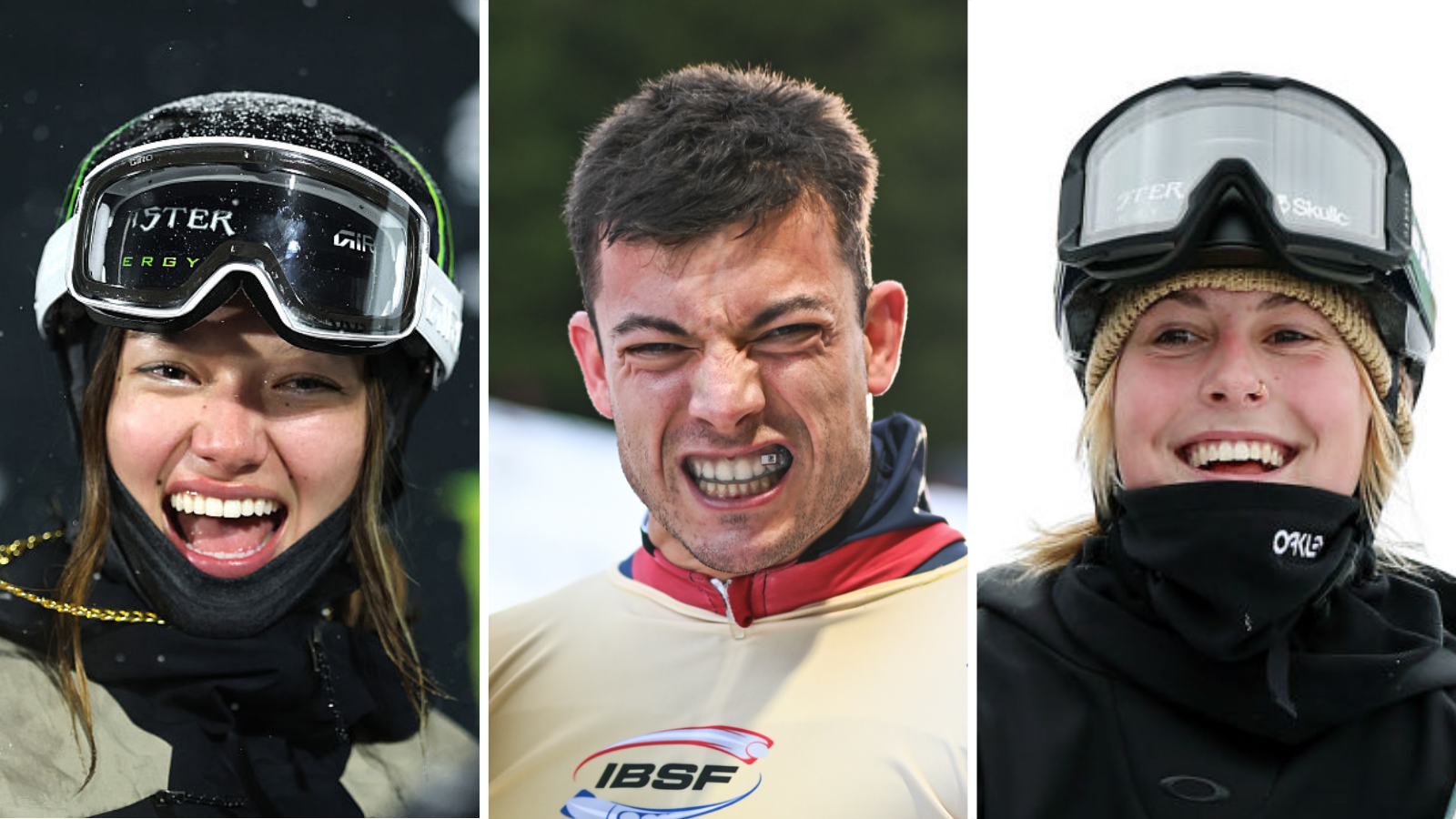
Take your pick of Mia Brookes, Kirsty Muir, Zoe Atkin or Charlotte Bankes as to who could win the nation’s first Olympic gold or silver medal on snow.

But such optimism comes with a word of caution, given the Beijing Olympics four years ago.

With a target of three to seven medals, Team GB were left to “lick their wounds” after ending the Games with only two curling medals – won on the last two days of competition – to show for a fortnight of upsets and near-misses.

GB Snowsport chief executive Vicky Gosling later told BBC Sport that athletes had flown to China with a “slight arrogance”.

Speaking before the 2026 Games, she said: “We’ve always got it in the back of our minds.

“We can’t bank on anything because literally anything can happen. There’s that sense of jeopardy.”

Team GB chef de mission Eve Muirhead added: “What a great opportunity we have, but we’ve also got to take into account the high risk of winter sport – and that’s why everyone loves it.”

But this time it does feel different.

Take the 2024-25 season, for example. Britain’s winter athletes won nine World Championship medals across the sports.

British skiers and snowboarders achieved 28 major podiums in Olympic disciplines, won three Crystal Globes (overall World Cup titles) and one World Championship title for Atkin.

In skeleton, British athletes won three World Championship medals and 19 on the World Cup circuit – seven of which were gold – while Weston and Wyatt secured a one-two in the overall rankings.

Despite injuries threatening to derail some athletes’ march towards the Olympics, such widespread success has continued into the current season.

At the X Games, in which the world’s best freestyle skiers and snowboarders are invited to compete, Brookes, Atkin and Muir came away with five medals between them – three of them gold – in a statement performance only two weeks before Milan-Cortina.

And in men’s skeleton, Weston won five of the seven World Cup races this season and Wyatt won the other two.

“I’m really excited,” said Gosling. “When you look at the strength in depth of the team that we have, we couldn’t be in a better place.

“We’ve punched way above our weight.”

Over the four-year cycle leading into the Milan-Cortina Games, UK Sport has ploughed £25.5m into winter sports on the Olympic programme, up from £22.2m for the Beijing cycle.

The 2022 figure was almost double the investment for Sochi 2014.

However, Olympic winter sports federations in the US received about £24m for the year of 2022 alone from the US Olympic Committee.

“We’ve gone from a nation happy to be at the start line to a nation that’s truly capable of winning,” said Gosling.

“Not only do we expect to be on the start line, but we expect a medal.

Who are GB’s best medal hopes?

Matt Weston

Matt WestonGetty Images

Sport: Skeleton

Key achievements: Weston is a two-time world champion and won three successive overall World Cup titles between 2023 and 2026. He won five of seven World Cup golds this season, picking up silver behind team-mate Wyatt in the other two.

Zoe Atkin

Zoe AtkinGetty Images

Sport: Freestyle skiing (halfpipe)

Key achievements: The current halfpipe world champion, Atkin has achieved three podium finishes from three starts on the World Cup circuit this season, including a gold. She also won gold at the recent X Games.

Charlotte Bankes

Charlotte BankesGetty Images

Sport: Snowboarding (snowboard cross)

Key achievements: Bankes was crowned world champion in 2021 and won the mixed team title two years later with British team-mate Huw Nightingale. Bankes has twice won the Crystal Globe – overall World Cup title – and finished second in the standings in 2024 and 2025, the latter season curtailed by a broken collarbone. She won her first race since returning from injury in January.

Mia Brookes

Mia BrookesGetty Images

Sport: Snowboarding (big air, slopestyle)

Key achievements: In 2023 Brookes became the youngest world champion in snowboarding history at the age of 16 with slopestyle gold. She has won back-to-back big air Crystal Globes and won World Cup gold in December, as well as slopestyle gold and big air bronze at the recent X Games.

Kirsty Muir

Kirsty MuirGetty Images

Sport: Freestyle skiing (big air, slopestyle)

Key achievements: Muir is a two-time World Cup gold medallist, having won slopestyle gold in Tignes last season and the big air title in Secret Garden, China, in November. At the recent X Games in Aspen she won slopestyle gold and big air silver.

Lilah Fear & Lewis Gibson

Lilah Fear and Lewis GibsonGetty Images

Sport: Figure skating (ice dance)

Key achievements: In March Fear and Gibson became the first British figure skaters to win a World Championship medal since Jayne Torvill and Christopher Dean in 1984 with their bronze in Boston. Fear and Gibson have also won four European medals and are two-time Grand Prix Final bronze medallists.

Team Mouat

Hammy McMillan Jr, Bobby Lammie, Grant Hardie, Kyle Waddell, Bruce MouatTeam GB

Sport: Curling

Key achievements: Bruce Mouat’s men’s rink are the curling world champions, having also won the title in 2023. They won three successive European crowns between 2021 and 2023, and silver at the 2022 Winter Olympics.

Who else?

Marcus Wyatt is a hot favourite to join Weston on the men’s skeleton podium, having won World Championship silver behind his team-mate last year, while Weston and Tabby Stoecker will team up in the mixed team event.

Also on the Cortina track, keep an eye out for Brad Hall’s two-man and four-man sleds in the men’s bobsleigh. They have been no stranger to World Cup podiums in recent years.

Related topics

  • Winter Sports
  • Winter Olympics

A vote for continuity? What to know for Costa Rica’s presidential election

The ruling party of Costa Rica is hoping to extend its control of the presidency for another four years in the country’s upcoming election, as voters express apathy about their options and opposition parties struggle to mobilise support.

On Sunday, millions of Costa Ricans will head to the polls to vote. But while the forecast looks promising for the centre-right populist movement championed by outgoing President Rodrigo Chaves, the election conceals a wild card: a large number of undecided voters.

Recommended Stories

list of 3 itemsend of list

As many as a third of Costa Ricans have yet to settle on a presidential candidate.

Still, Chaves’s movement appears on track to secure enough votes to avoid a run-off. Its prospects have been bolstered by a splintered opposition and waning support for centre-left groups like the National Liberation Party and Citizens’ Action, both of which held the presidency before Chaves.

Just as voter support has shifted, so too have voter priorities: Polls show more Costa Ricans are concerned with security than the economy in the upcoming election.

“Costa Rica is moving towards a political realignment,” said Ronald Alfaro, the coordinator of the Public Opinion and Political Culture Unit at the University of Costa Rica.

Who are the candidates? Which issues are top of mind for voters? We answer these questions and more in this brief explainer.

When is the election?

Voting is scheduled to take place over a 12-hour period on February 1, with the presidency, the two vice presidential positions and all 57 seats of the country’s legislature up for grabs.

What happens if no candidate wins the first round outright?

If no presidential hopeful crosses the 40 percent threshold necessary to avoid a run-off, the two top candidates will face off in another round of voting on April 5.

Is voting mandatory in Costa Rica?

While Costa Rica’s constitution states that voting is a “compulsory civic function”, there are no penalties for those who don’t participate.

More than 3.7 million Costa Ricans are eligible to vote. But many have expressed indifference to this year’s election cycle.

A January 21 poll from the University of Costa Rica’s Centre for Political Research and Studies (CIEP) found that nearly 79 percent of respondents said they felt little or no enthusiasm about the campaigns.

But the respondents had a range of responses when asked about their willingness to actually cast a ballot. More than 57 percent answered they felt motivated to vote. Only 19.5 percent said they had no desire to participate in the election.

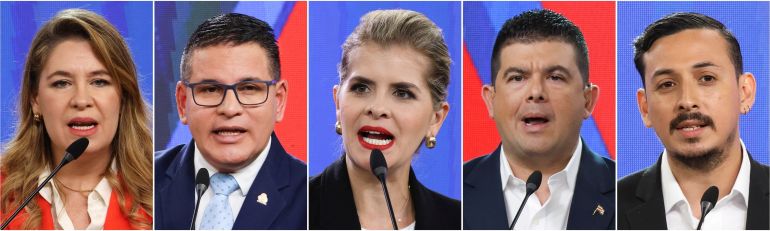
A photo that shows five Costa Rican presidential candidates.
Candidates include, from left, Claudia Dobles, Fabricio Alvarado, Laura Fernandez, Alvaro Ramos and Ariel Robles [Mayela Lopez/Reuters]

Who are the candidates?

Former government minister Laura Fernandez is running with the Sovereign People Party (PPSO) to succeed President Chaves, promising continuity with his leadership.

Chaves remains popular in Costa Rica and has built a reputation for railing against what he defines as a corrupt status quo.

But presidents are restricted from running for back-to-back terms, and Fernandez has campaigned on her work within Chaves’s government, including as his chief of staff and minister for national planning and economic policy.

She has also pledged to appoint Chaves to her cabinet if elected as president.

The opposition to Chaves, meanwhile, has yet to consolidate around a single candidate.

Alvaro Ramos, an economist and the administrator of Costa Rica’s healthcare and pension systems, is running as the candidate for the centre-left National Liberation Party, a once-dominant force in the country’s politics.

But he faces competition on the left from former First Lady Claudia Dobles, whose husband Carlos Alvarado Quesada served as president from 2018 to 2022.

An urban planner, Dobles will be representing the Citizen Agenda Coalition (CAC), a group made up of two left-wing forces: the Citizens’ Action Party and the National Democratic Agenda.

Further splitting the opposition vote is 34-year-old legislator Ariel Robles of the left-leaning Broad Front Party (FA). He hopes to galvanise dissatisfaction with the status quo from the left.

Where do the candidates rank in the polls?

The latest poll from CIEP, published on January 28, found that about 43.8 percent of respondents expect to vote for Fernandez. That level of support would be enough to avoid a runoff.

Ramos polls in a distant second with 9.2 percent, and Dobles is close behind with 8.6 percent. Robles, meanwhile, is in fourth place with 3.8 percent support.

About 26 percent of respondents said they had not decided on who they would vote for, down from 32 percent the week before.

Fernandez appears well-positioned to secure a first-round win, something uncommon in the country’s recent history. But analysts say that another candidate could still outperform expectations, given the collapse of traditional political blocs and the large number of undecided voters.

Upsets are not uncommon in Costa Rica’s presidential elections. A poll before the 2022 race found Chaves drawing only 7 percent support, but he still went on to win the presidency.

“In the last three elections, we have seen an underdog who nobody was thinking about see a big jump,” said Alfaro. “Are there conditions for that? Perhaps, in the past, they were higher, but there is still a chance.”

Laura Fernandez
Costa Rican presidential candidate Laura Fernandez has promised continuity with the outgoing president [File: Mayela Lopez/Reuters]

What issues are front and centre?

National security has been a top issue in this year’s election cycle, with nearly all candidates embracing tough policies to combat crime.

Fernandez, for instance, has proposed in her platform to complete the maximum-security mega-prison that Chaves started to build in August.

The completed prison, under Fernandez’s plan, would “isolate leaders of organised crime”, cutting them off from the outside world. She has also advocated for mandatory prison labour and stricter criminal sentencing.

While Costa Rica was once known for its relative stability, homicides and organised crime have risen in the country.

Preliminary government figures for 2025 show that 873 homicides were reported in the country, down slightly from a high of 907 in 2023 and on par with 2024.

Right-wing candidates have successfully capitalised on similar concerns in other Latin American countries such as El Salvador, Ecuador and Chile.

In the final weeks before Sunday’s vote, Chaves invited El Salvador’s President Nayib Bukele – known for “mano dura” or “iron-fisted” approach to security – to tour the new mega-prison site. His government also accused a human rights activist of seeking his assassination.

The activist has denied the allegations, calling them politically motivated. But experts say such accusations can help heighten voter fears ahead of a pivotal vote.

Rodrigo Chaves and Nayib Bukele wave from the construction site of a prison
President Rodrigo Chaves Robles poses with El Salvador’s leader Nayib Bukele at the site of a future mega-prison in Alajuela, Costa Rica, on January 14 [Mayela Lopez/Reuters]

What role is President Chaves playing?

More than any particular policy issue, Alfaro says that the current election is a referendum on the Chaves presidency and dissatisfaction with the traditional opposition parties.

The current president is not on the ballot, but he has also played an outsized role in the lead-up to the election.

Chaves has also faced numerous allegations of illegal campaign interference, and the head of the Supreme Electoral Tribunal (TSE) has accused him of “threatening the peace and political stability of the country”.

Analysts say that his efforts to influence the race are unusual in Costa Rica and have alarmed observers who see it as evidence of his personalistic style of politics.

Ospreys fans ramp up protest against WRU and Y11

  • Comments

“WRU, shame on you” came the cry from hundreds of Ospreys fans protesting against moves that could see their region disappear as a professional side in little more than a year’s time.

They gathered at the mural of legendary Bridgend, Wales and British and Irish Lions full-back JPR Williams before the United Rugby Championship (URC) 19-13 home derby win against Dragons at Bridgend’s Brewery Field.

Fans and former Ospreys players spoke out against the regions owners, Y11 Sport and Media, who are the Welsh Rugby Union’s (WRU) preferred bidder to take over Cardiff against the backdrop of plans to shrink the number of professional men’s teams in Wales.

Ospreys Supporters Club (OSC) chair Sarah Collins-Davies said by staging the protest they wanted to show the rugby world how much the region meant to them.

“We’re not going to go gently, we are not going down without a fight, we will fight to the end, we never give up,” Collins-Davies told BBC Radio Wales Sport.

Feelings having been running high for several weeks among Ospreys supporters – and placards and banners at Saturday’s protest criticised Y11 Sport, the WRU and the potential deal to buy Cardiff who were saved by the Union after going into administration in April 2025.

Should the deal go through, Ospreys and Cardiff will initially continue as separate sides but both be owned by Y11.

However, the future looks bleak for Ospreys, who have only been given playing guarantees as a professional side until the end of the 2026-27 season.

The WRU are determined to reduce the number of men’s regions from four to three and this presents the ideal opportunity to realise their ambition.

‘Our blood is black’

Ospreys supporters have been protesting against Welsh Rugby UnionHuw Evans Picture Agency

OSC secretary Keith Collins said Welsh rugby without Ospreys was “inconceivable”, highlighting the fact they have been the most successful side since the inception of regional rugby in 2003.

Supporters lined up to warn they would walk away from Welsh rugby if the Ospreys were culled as a professional team, with some loyal fans bordering on tears as emotions ran high.

Former players Gough and Shane Williams took to the microphone to address the crowd, promising they will not give up.

Williams reminded the supporters of the Ospreys slogan “our blood is black” which originated from an interview he gave in 2012, the year the side won the last of its four league titles.

Y11 were criticised with shouts for them to “get out of our club”, while questions were raised about the whereabouts and visibility of owner James Davies Yandle, who is based in South Asia.

Ospreys fans are trying to come to terms with what some see as their owners trying to buy a Welsh rival in order to effectively close down the side they already run.

WRU chair Richard Collier-Keywood, chief executive Abi Tierney and director of rugby Dave Reddin were targeted, while board member Jamie Roberts, who was at the ground commentating on the game, also came in for stick.

Former Wales centre Roberts was part of the WRU board who agreed to cut the number of sides from four to three and then later rubber-stamped Y11 as the preferred Cardiff bidder.

Roberts was live on television when he stood alongside former Dragons and Wales lock Andrew Coombs who said it was “the worst possible decision to hand the Cardiff keys to Y11”.

Roberts responded by saying “it is a really difficult situation for coaches, players and more importantly fans” and praised a pre-match interview given by Ospreys head coach Mark Jones, who stated “the reality is hitting home now how seismic this could be”.

    • 2 days ago
    • 2 days ago
    • 4 days ago

Former players unite in support of Ospreys

Ian Gough, who is a former Ospreys and Wales lock, with the microphone in his handHuw Evans Picture Agency

Former players, including Alun Wyn Jones, Williams, James Hook, Gavin Henson and Ryan Jones, signed a letter last week, along with old coaches and staff members, insisting Ospreys must remain as a professional entity and four regions must be protected.

Collins-Davies said it echoes the views of the fans.

“That’s the attitude from all the supporters and what has really galvanised everybody this week was all the backing of the ex-players,” she said.

“We can’t thank them enough for what they have done, it’s been invaluable.”

Gough says the former players came together to try and help.

“There have been some amazing players coming through the Ospreys and it holds a special place in my heart,” said Gough.

“We always fought in every game we went into, whether we won, lost or drew.

Petition calls for WRU to keep sides at four

Ospreys are playing at Bridgend for the 2025-26 seasonGetty Images

There has also been a petition organised by the official supporters groups of Ospreys, Cardiff and Dragons calling on the WRU to stop its plans of cutting a side.

“This week is the resurgence of fans from all over Wales, the other regions joining as well as they realise how badly the Ospreys have been treated,” said Gough.

“The transparency hasn’t been there. Other fans have realised that could happen to them as easily and as quickly in the manner which it has been done to Ospreys.

“It has been the realisation of what was going on. We’ve been kept in the dark.

“There is unrest among Cardiff supporters, they’re not happy about how this has been handled and the implications.

“That has brought a sense that none of us are safe.”

Gough also highlighted the human element.

“This has been done in such a brutal manner, you have to think of people’s families and livelihoods and their mental state,” said Gough.

“It affects everything and galvanised people against the WRU. It’s the Welsh village mentality that has brought us together with a common cause.”

Not all Welsh fans have backed the petition, which has not been supported by “Crys 16”, the self-styled official supporters trust of the Scarlets who have a seat on the board of the organisation.

Another fans body, calling themselves the Scarlets official supporters group, has urged people to sign the petition.

This highlights the divide between the Scarlets fans because if the Ospreys somehow survived but WRU still wanted to cut a team, it would likely to be a straight shootout between Ospreys and Scarlets for the west licence in a possible tender process.

So as Welsh rugby often encourages, even demands, self-preservation is the key.

If the Ospreys are preserved as a professional side beyond 2027, with the preferred option for the WRU they are not, remains to be seen.

To play this video you need to enable JavaScript in your browser.

Related topics

  • Welsh Rugby
  • Cardiff
  • Ospreys
  • Rugby Union

Fela Kuti becomes first African to get Grammys Lifetime Achievement Award

Three decades after his death, the ‘father of Afrobeat’ Fela Kuti has made history by becoming the first African to get a Lifetime Achievement Award at the Grammys.

The Nigerian musician, who died in 1997, posthumously received the commendation along with several other artists at a ceremony in Los Angeles on Saturday, on the eve of the 68th Annual Grammy Awards.

Recommended Stories

list of 3 itemsend of list

For his family and friends – some of whom were in attendance – it is an honour they hope will help amplify Fela’s music, and ideology, among a new generation of musicians and music lovers. But it is an acknowledgement they also admit has come quite late.

“The family is happy about it. And we’re excited that he’s finally being recognised,” Yeni Kuti, Fela’s daughter, told Al Jazeera before the ceremony. “But Fela was never nominated [for a Grammy] in his lifetime,” she lamented.

The recognition is “better late than never”, she said, but “we still have a way to go” in fairly recognising musicians and artists from across the African continent.

Lemi Ghariokwu, a renowned Nigerian artist and the designer behind 26 of Fela’s iconic album covers, says the fact that this is the first time an African musician gets this honour “just shows that whatever we as Africans need to do, we need to do it five times more.”

Ghariokwu said he feels “privileged” to witness this moment for Fela. “It’s good to have one of us represented in that category, at that level. So, I’m excited. I’m happy about it,” he told Al Jazeera.

But he admits he was also “surprised” when he first heard the news.

“Fela was totally anti-establishment. And now, the establishment is recognising him,” Ghariokwu said.

Fela Kuti
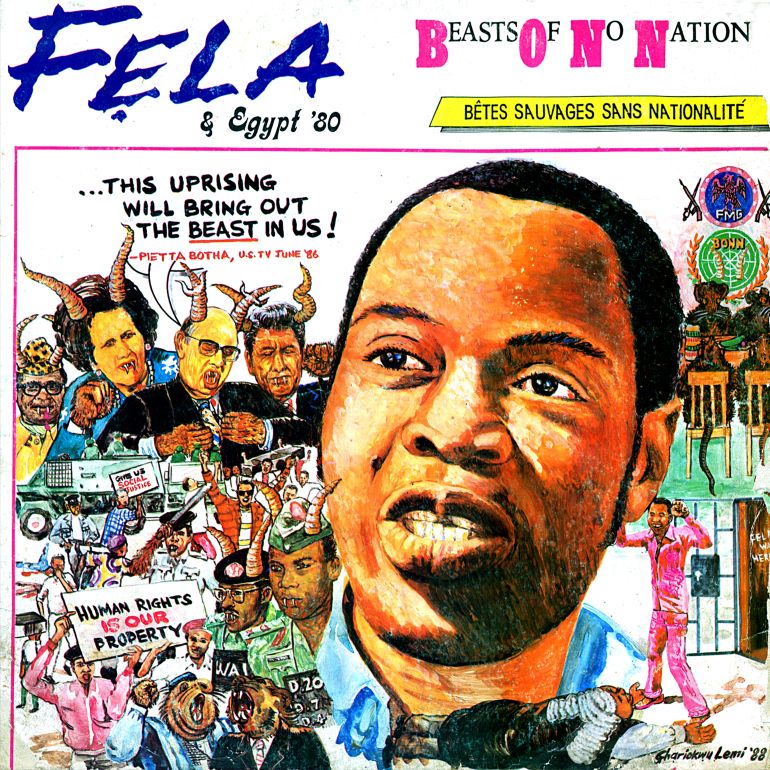
The front cover of Fela Kuti’s Beasts of No Nation, designed by Lemi Ghariokwu [Courtesy of Lemi Ghariokwu]

On what Fela’s reaction to the award would have been if he were alive, Ghariokwu says he imagines he would be happy. “I can even picture him raising his fist and saying: ‘You see, I got them now, I got their attention!’”

But Yeni feels her father would have been largely unfazed.

“He didn’t at all [care about awards]. He didn’t even think about it,” she said. “He played music because he loved music. It was to be acknowledged by his people – by human beings, by fellow artists – that made him happy.”

Yemisi Ransome-Kuti, Fela’s cousin and head of the Kuti family, agrees. “Knowing him, he might have said, you know, thanks but no thanks or something like that.” She laughs.

“He really wasn’t interested in the popular view. He wasn’t driven by what others thought of him or his music. He was more focused on his own understanding of how he should impact his profession, his community, his continent.”

Though she believes the award may not have meant much to him personally, she told Al Jazeera that he would have recognised its overall value.

“He would recognise the fact that it’s a good thing for such establishments to begin the process of giving honour where it’s due across the continent,” Ransome-Kuti said.

“There are many great philosophers, musicians, historians – African ones – that haven’t been brought into the forefront, into the limelight as they should be. So I think he would have said, ‘OK, good, but what happens next?’”

Fela Kuti
Fela Kuti performs on March 16, 1981, with his band “Africa 70” at the Hippodrome in Paris, France [File: Herve Merliac/AP]

‘Fela’s influence spans generations’

Fela was born in Nigeria’s Ogun State in 1938 as Olufela Olusegun Oludotun Ransome-Kuti (later renaming himself to Fela Anikulapo Kuti), to an Anglican minister and school principal father and an activist mother.

In 1958, he went to London to study medicine, but instead enrolled at Trinity College of Music, where he formed a band that played a blend of jazz and highlife.

After returning to Nigeria in the 1960s, he went on to create the Afrobeat genre that fused highlife and Yoruba music with American jazz, funk, and soul. That has laid the groundwork for Afrobeats – a later genre blending traditional African rhythms with contemporary pop.

“Fela’s influence spans generations, inspiring artists such as Beyonce, Paul McCartney and Thom Yorke, and shaping modern Nigerian Afrobeats,” reads the citation on the Grammys list of this year’s Special Merit Award Honorees.

But beyond music, he was also a “political radical [and] outlaw”, the citation adds.

By the 1970s, Fela’s music had become a vehicle for fierce criticism of military rule, corruption, and social injustice in Nigeria. He declared his Lagos commune, the Kalakuta Republic, independent from the state – symbolically rejecting Nigerian authority – and in 1977 released the scathing album, Zombie, with lyrics that painted soldiers as mindless zombies with no free will. In the aftermath, troops raided Kalakuta, brutally assaulting its residents and causing injuries that led to Fela’s mother’s death.

Frequently arrested and harassed during his life, Fela became an international symbol of artistic resistance, with Amnesty International later recognising him as a prisoner of conscience after a politically motivated imprisonment. When he died in 1997 at age 58 from an illness, an estimated one million people attended his funeral in Lagos.

Fela
Portraits of Late Afrobeat Legend Fela Kuti, on display at Kalakuta Museum in Lagos, Nigeria [File: Sunday Alamba/AP]

Yeni – together with her siblings – is now custodian of her father’s work and legacy. She runs Afrobeat hub,

the New Afrika Shrine in Ikeja, Lagos and hosts an annual celebration in Fela’s honour called “Felabration”.

She remembers growing up with her larger-than-life father as something that felt “normal”, as it was all she knew. But “I was in awe of him”, she also says – as an artist and a thinker.

“I really, really admired his ideologies. The most important one for me was African unity … He totally worshipped and admired [former Ghanaian President] Dr Kwame Nkrumah, who was fighting for African unity. And I always think to myself, can you imagine if Africa was united? How far we would be; how progressive we would be.”

Reflecting on Fela’s legacy, artist Ghariokwu says most big Afrobeats musicians today have been influenced and inspired by Fela’s music and fashion.

But he laments that most have “never really sat down with the ideological part of Fela – the pan-Africanism – they never really checked it out”.

For him, Fela’s Grammy recognition should say to young artists, “If someone [like Fela] who was totally anti-establishment can be recognised this way, maybe I can express myself too without too much fear.”

Yeni says that through Fela’s work and life philosophy, he wanted to pass a message of African unity and political consciousness on to young people.