Archive February 1, 2026

Rose six clear as he chases 13th PGA Tour win

  • 13 Comments

Farmers Insurance Open – third-round leaderboard

-21J Rose (Eng), -15 J Dahmen (US), -13 S-Woo Kim (Kor), R Hisatsune (Jpn), -12 M McGreevy (US), -11 M McNealy (US), S Power (Ire), S Jaeger (Ger). Selected others: -2 B Koepka (US)

England’s Justin Rose is in a strong position to secure a 13th PGA Tour win after extending his lead to six shots at the Farmers Insurance Open on Saturday.

The 45-year-old, who led by four shots after the second round, recorded seven birdies in an impressive four-under-par 68 on Torrey Pines’ formidable South Course to lie 21-under for the tournament.

American Joel Dahmen, who had five birdies and a bogey in a round of 68, is two shots clear in second.

Rose has led from the first round and has the largest 54-hole lead at the tournament since Tiger Woods led by eight in 2008.

The best winning score in the tournament’s history is 22 under – by Woods in 1999 and George Burns in 1987.

“My only hope is if he doesn’t set his alarm or he somehow starts hitting in the rough on the back nine maybe,” Dahmen told PGA Golf.

“The way he’s playing and what he’s doing, I would be pleased with second place.”

Rose, who was runner-up in the 2025 Masters, claimed his last PGA Tour win in August, winning the FedEx St Jude Championship.

Having shot rounds of 62 and 65, Rose was in total control until bogeys on the 11th, 12th and 16th trimmed what had been an eight-shot lead.

“It’s another great round in good weather on an awesome golf course,” Rose told PGA Golf.

“There’s never going to be any complacency.

“I think there’s always enough respect for the game of golf in the back of your mind that you’ve got to do everything right tomorrow. You’re going to come out, have to be focused, have to play well.”

Five-time major winner Brooks Koepka, in his first tournament back on the PGA Tour since leaving LIV Golf, shot a one-over-par 73 to head into the final round in a tie for 61st.

Related topics

  • Golf

‘Trauma does not define us’: Living with loss in wartime Ukraine

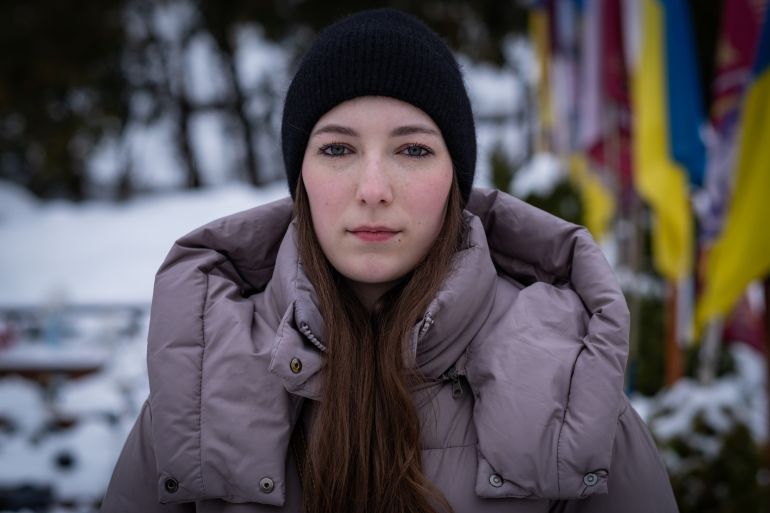
Lviv, Ukraine – Anastasiya Buchkouska, a 20-year-old student from western Ukraine, gently brushes away layers of snow and ice from her father’s grave.

She pauses, looking up at the photograph fixed to the gravestone. His face bears a striking resemblance to hers.

Recommended Stories

list of 4 itemsend of list

When her father was younger, he had served in the military. When Russia launched its full-scale invasion of Ukraine on February 24, 2022, he was called up almost immediately and sent to the front line.

Contact with the family was sporadic at best. They clung to brief messages and fleeting signs of life until one day in September 2022, everything fell silent.

For seven months, he was officially listed as missing. Buchkouska said she held on to hope, though deep down she feared the worst.

When confirmation of his death finally came, grief hit hard, but amid the demands of war, she said she had little choice but to “deal with it”.

Ukraine
Anastasiya Buchkouska in Lviv, Ukraine, January 26, 2026 [Nils Adler/Al Jazeera]

Her uncle was killed around the same time.

She focused on caring for her grandmother, who was often inconsolable, inventing topics of conversation and small activities to distract her.

In quieter moments, Buchkouska broke down into tears but tried to remind herself not to “overthink things”. This was war, she thought, and it would do her no good to wallow in grief.

The human toll

At Lychakiv Cemetery in the western city of Lviv, where Buchkouska’s father is buried, the surge in deaths in early 2022 forced authorities to allocate additional space beyond the cemetery’s walls – an area that is now itself running out of room.

Exact figures for how many people have been killed in the Russia-Ukraine war are difficult to verify. The United Nations Human Rights Monitoring Mission in Ukraine (HRMMU) confirmed that conflict-related violence killed 2,514 civilians and injured 12,142 others in the country in 2025 alone.

Nadia Zvonok in Nikita’s room. ‘I felt complete emptiness,’ says Nikolay, recalling the moment he saw the body of Olesya, his wife who went missing on March 11
Nadia Zvonok wipes away tears as she recalls how her granddaughter went missing during Russia’s occupation of Bucha in 2022 [File: Nils Adler/Al Jazeera]

According to a report by the Center for Strategic and International Studies, a  Washington, DC-based think tank, nearly two million Ukrainian and Russian soldiers are estimated to have been killed, wounded, or gone missing since the start of Russia’s full-scale invasion.

Russia alone is estimated to have suffered almost 1.2 million casualties, including at least 325,000 deaths.

The report says Russia’s losses exceed those endured by any major power since World War II, while Ukraine’s military casualties are estimated at between 500,000 and 600,000.

Al Jazeera is unable to verify the figures independently.

‘Everybody who lives in Ukraine has some mental health issue’

For many Ukrainians, loss is coupled with a sense of anxiety about what comes next.

“No one can predict how we will live after the war,” Kseniia Voznitsyna, a neurologist and founder of the first mental health rehabilitation centre for veterans in Ukraine, told Al Jazeera.

The human toll is already visible.

“Many people have been killed, many people live with amputations and psychological trauma,” Voznitsyna said.

A photo of Oleksandr Bugeruk looking on as his mother's body is placed on the ground.
Oleksandr Bugeruk looks on as his mother’s body is exhumed after Russian forces retreated from an area of central Ukraine in 2022 [File: Nils Adler/Al Jazeera]

“How the economy will hold up” remains uncertain, she said. “Whether people will have jobs with decent pay – these are open questions.”

For Oleksandra Matviichuk of the Center for Civil Liberties, a Kyiv-based human rights group and Nobel Peace Prize winner, the psychological weight of war is felt most sharply in everyday life.

“Living during a war means living in complete uncertainty,” Matviichuk said, adding, “We cannot plan not only our day, but also the next few hours.”

The constant fear for loved ones has become a defining feature of daily existence.

“There is no safe place in Ukraine where you can hide from Russian missiles,” said Matviichuk.

In late 2025, the UN Women’s representative in Ukraine, Sabine Freizer Gune, said “pretty much everybody” in the country “has some mental health issue”.

Oleksandra Matviichuk
Oleksandra Matviichuk [File: Nils Adler/Al Jazeera]

People, especially in eastern Ukraine or big cities such as Kyiv, Kharkiv in the northeast, or Odesa in the south, are regularly woken up to mass strikes by Russia.

In winter months, Russian forces often target infrastructure, leaving millions without electricity, heat or a reliable water supply.

As Buchkouska stood at her father’s grave, her words were stoic, but her eyes had the faint sign of tears.

If the war ends, “we will all be happy”, she said matter-of-factly, “but we cannot do anything about the people who died, we cannot make them come back to life”.

She pointed to a resilience forged under pressure.

Volkanovski outclasses Lopes to tie Aldo’s record

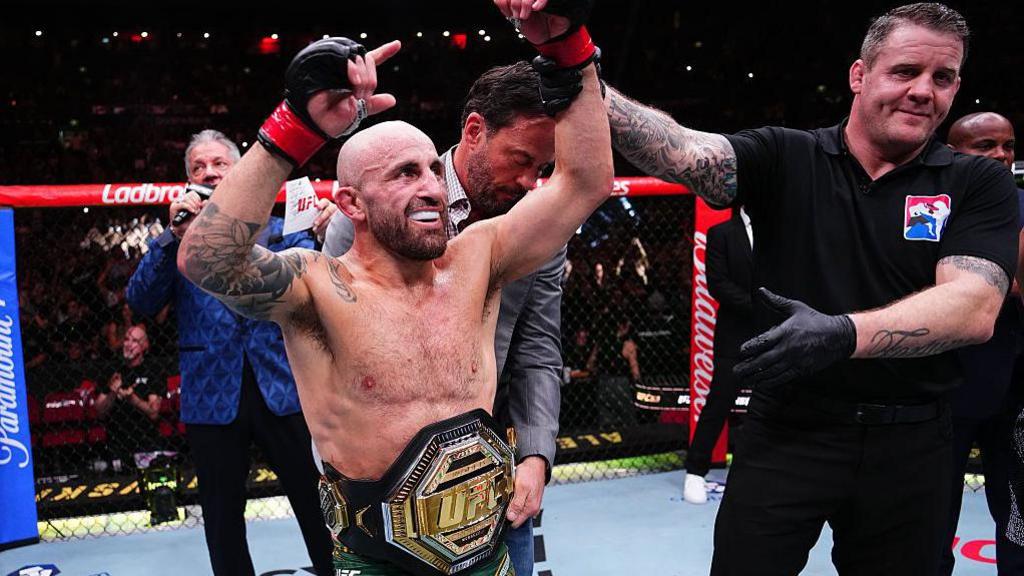
Alexander Volkanovski outclassed Diego Lopes in a vintage performance to win by unanimous decision and retain his featherweight title at UFC 325 in Sydney, Australia.

Two-time champion Volkanovski landed the more impactful shots among five rounds of slick movement and control as the 37-year-old won 49-46, 49-46, 50-45 on the judges’ scorecards.

The victory in front of his home fans saw Volkanovski conclude his rivalry with Brazil’s Lopes after beating the 31-year-old for the vacant belt in April.

It was Volkanovski’s eighth victory in UFC featherweight title fights as he tied Brazil’s Jose Aldo at the top of the all-time list.

“When they’re doing the right stuff I make the adjustments, that’s what makes a true champion,” said Volkanovski.

“Grit, determination, hard work, sacrifices. I make adjustments on the fly, stay composed under fire, I have them all and I couldn’t have done it without you – thank you, Sydney.”

After Volkanovski lost the featherweight title to Ilia Topuria in 2024, pundits and fans wondered if the Australian – widely considered one of the greatest UFC fighters of all time – was on the decline.

After a smiling Lopes made his walkout, Volkanovski, who was carrying the Australian flag above his head, was serenaded towards the octagon in a party-like atmosphere by exuberant fans at the Qudos Bank Arena in Western Sydney.

Volkanovski oozed calmness and took control from the opening bell with his footwork and distance management.

Although the pair traded leg kicks in early rounds, it was Volkanovski who landed the more telling shots as he stung Lopes intermittently with his right hand.

Lopes briefly knocked down Volkanovski with a right hook in the third round, but he bounced straight back up to regain control of the encounter.

It was a brief moment of success for Lopes, who struggled to land meaningful shots on the evasive Volkanovski for the majority of the encounter.

Fearing Lopes was nearing defeat, his team told him “you’ve got to go all out” before the final round, and although he threatened with submissions, Volkanovski defended stoutly.

The fight ended with Volkanovski geeing up cheering fans in the closing stages as he stamped his authority on the encounter by finishing in top position on the ground.

Victory marked Volkanovski’s 13th win in the UFC and sixth title defence across two reigns.

Although he twice failed to beat former lightweight champion Islam Makhachev in 2023 to become a two-division champion, Volkanovski’s magnificent featherweight record means his place among the sport’s greats is already cemented.

After the fight, he pointed to Britain’s fourth-ranked featherweight Lerone Murphy or Russia’s Movsar Evloev, who is ranked first, as potential next opponents.

There is speculation the pair will fight at UFC London on 21 March, but there has been no confirmation from the promotion.

Elliott suffers second straight defeat

Oban Elliott in action against Jonathan MicallefGetty Images

On the prelims, Welsh welterweight Oban Elliott was submitted by Australia’s Jonathan Micallef in the second round.

Elliott, 28, started strongly as he pushed forward and landed a number of strikes and ended the round on top with Micallef sporting a cut on his right cheek.

After hurting Micallef in the second round, Elliott made a costly error as the Australian stifled his momentum against the cage, before dragging him down and winning back control.

From there Micallef locked in a rear-naked choke and submitted Elliott for the 26-year-old’s second win in the UFC.

Related topics

  • Mixed Martial Arts
    • 2 days ago
    Max Holloway and Charles Oliveira face off
    • 28 April 2024
    Split image of Claressa Shields, Paddy Pimblett and Chris Eubank Jr

More MMA from the BBC

    • 16 August 2025
    BBC Sport microphone and phone

‘Deeply insecure’: Why Bangladeshi minorities are scared ahead of elections

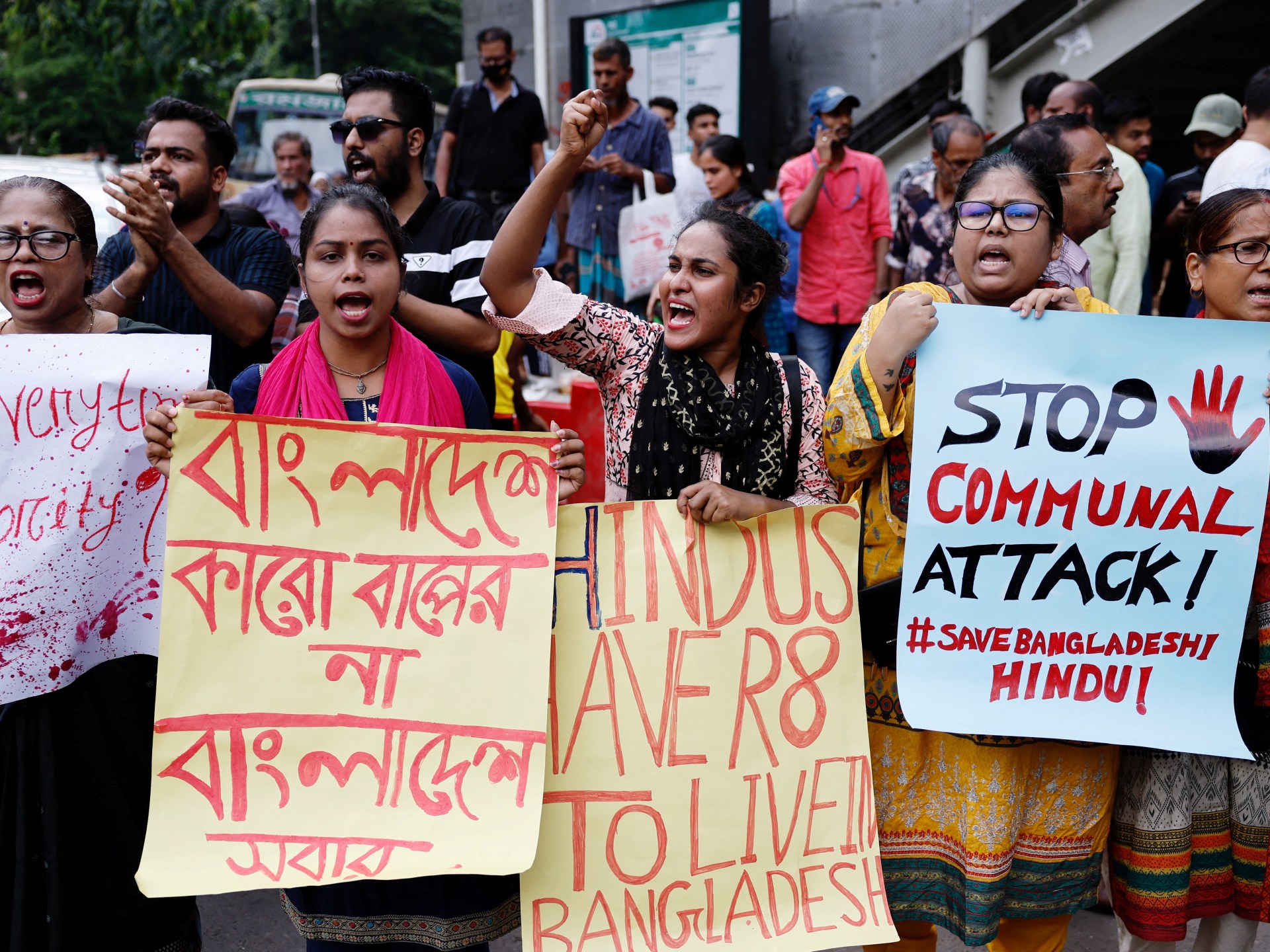
Dhaka, Bangladesh — Sukumar Pramanik, a Hindu teacher in Rajshahi city – about 250km (155 miles) from Bangladesh’s capital, Dhaka – says the country’s upcoming national election could be his final test of trust in politics.

Electoral periods in Bangladesh have seen spikes in communal and political violence throughout the country’s history, with religious minorities often bearing the brunt amid intense political competition and social tension.

Recommended Stories

list of 4 itemsend of list

But since August 2024, and the end of former Prime Minister Sheikh Hasina’s rule, minorities in Bangladesh have felt under siege, with reports of attacks, killings and arson against their property, even though the government insists that most incidents were not motivated by religious hate.

That backdrop has intensified fears ahead of the February 12 election, despite efforts by leading political parties to reach out to minority communities. “The leaders of major parties have assured us that we will be safe before and after the vote,” Pramanik said, but faith in politicians runs low in his community at the moment.

After the August 2024 uprising that led to Hasina’s ouster, mobs in several parts of the country targeted the Hindu community, many of whose members had historically voted for Hasina’s Awami League, which has long tried to claim a “secular” mantle — even though critics have accused the party of failing to prevent attacks on minorities during its long years in power, and indulging in scaremongering.

Pramanik said a mob from his village attacked the Hindu community in Rajshahi’s Bidyadharpur, beating him and breaking his hand. He required surgery and spent days in hospital. “I stood in front of the mob believing they knew me and would not attack me,” he said. “They broke my hand – but more than that, they broke my heart and my trust. I had never experienced anything like this before.”

‘No proper justice’

Hindus form about 8 percent of the population in Muslim-majority Bangladesh, with Christians, Buddhists and other minorities present in much smaller numbers.

Through Bangladesh’s history, say experts and minority leaders, political actors and their supporters have at times exploited religious identities to intimidate voters or settle local disputes, leading to targeted attacks on minority homes, places of worship and individuals.

“If you look at elections in the past – even during the Awami League’s tenure – oppression and persecution of minorities never truly stopped,” Manindra Kumar Nath, acting general secretary of the Bangladesh Hindu Buddhist Christian Unity Council (BHBCUC), an umbrella group representing these minority communities, told Al Jazeera. “It happened before elections and after elections.” But what made things worse, he said, was that “there has been no proper justice”.

Not after Hindus were attacked following the 2001 election that former Prime Minister Khaleda Zia and her Bangladesh Nationalist Party (BNP) won, and not after later attacks against Hindus in subsequent years.

Now, sporadic attacks in recent months ahead of the election have revived those fears. According to the BHBCUC, at least 522 communal attacks were recorded in 2025, including 61 killings. The group says 2,184 incidents took place in 2024 following Hasina’s removal in August that year.

Minorities are now “deeply insecure” ahead of the election, Nath said. “There is fear among everyone,” he added.

The Bangladesh government disputes claims of widespread communal violence. According to official data, in 2025, authorities recorded 645 incidents involving members of minority communities. Of these, the government says, only 71 had “communal elements”, while the remainder were classified as general criminal acts. Officials argue the figures show that most incidents involving minorities were not driven by religious hostility, stressing the need to distinguish communal violence from broader law-and-order crimes.

At a national level, Bangladesh faces persistent law-and-order challenges, with an average of 3,000 to 3,500 violent crime deaths each year, according to official figures.

The government has also suggested that the issue has been politicised internationally, particularly by the Indian media and officials, since the fall of Hasina’s government.

Rights groups, however, present different data. Ain o Salish Kendra, a prominent human rights organisation, documented 221 incidents of communal violence in 2025, including one death and 17 injuries — lower than the BHBCUC’s count, but higher than the government’s data.

And the differing numbers notwithstanding, interviews with minority communities point to deep anxiety shaped by recent lived experience.

‘Not another mental trauma’

Shefali Sarkar, a homemaker in Bidyadharpur in Rajshahi, saw her life turn upside down on the afternoon of August 5, 2024 — the day Hasina fled, seeking exile in India.

As fears of an attack spread, most men in the community fled, leaving the women behind in their homes. Mobs primarily targeted men in the aftermath of Hasina’s ouster.

“They started vandalising our house. I thought this was it – that we were going to die,” Shefali said, still visibly shaken when recalling the day. “It left a deep scar in my mind, and I have needed mental health treatment after this.”

With elections approaching, Shefali said her anxiety has returned, fearing that any fresh unrest could once again make her community a target. “I cannot go through another mental trauma,” she said.

Her husband, Narayan Sarkar, said the area has remained calm since the attack and that local Muslim residents and political leaders have assured them of protection. “But the fear always remains – peace can be taken away at any time,” he said.

‘Unrest might spread’

Not everyone is as worried.

Shaymol Karmokar, from central Bangladesh’s Faridpur district, is the secretary of the local Durga Puja celebration committee. Durga Puja is a major Hindu Bengali festival, celebrated in Bangladesh and the Indian state of West Bengal.

“We have traditionally maintained strong communal harmony here over the years,” Karmokar said. “Many areas reported attacks during the uprising, but nothing happened in our locality.”

He added that political leaders had actively sought minority votes and promised to ensure their safety. “We will vote and expect a peaceful election,” he said.

Indeed, BNP leader Tarique Rahman — former PM Khaleda Zia’s son — has spoken of his desire to build an inclusive Bangladesh where all communities, irrespective of faith, feel safe and secure.

And the Jamaat-e-Islami, the BNP’s principal challenger in the elections, has for the first time nominated a Hindu candidate, from the city of Khulna, as part of its outreach to the community.

Still, in Gopalganj, where about a quarter of voters are Hindu, worries about election violence are high.

In one heavily Hindu-populated constituency of the district — which is also Hasina’s birthplace — Govinda Pramanik, secretary-general of the Bangladesh Jatiya Hindu Mohajote [Bangladesh National Hindu Grand Alliance] and an independent candidate, said he was scared that “unrest might spread around this election”, he said.

BHBCUC’s Nath said the government and election authorities could have done more to assuage concerns of minorities. “Even now, as the Election Commission operates, it has not once asked religious minorities what problems they are facing or what support they need,” he said.

Shafiqul Alam, press secretary to Muhammad Yunus, head of Bangladesh’s interim government, however, said authorities have taken steps to protect minorities and ensure a safe election. “We have taken adequate measures so that people of all communities – minorities and majorities, followers of all faiths and identities – can vote in a festive atmosphere,” Alam told Al Jazeera. “They could not vote freely under Sheikh Hasina over the last 15 years, as the elections were rigged.”

“Our priority is to ensure that everyone can vote this time,” he added, insisting that the government had consulted minority communities and addressed their concerns.

Wales’ Prem talent has England ‘scratching heads’

  • 11 Comments

Leicester prop Nicky Smith says Wales’ Prem talent has England players “scratching heads” over Welsh international struggles.

Steve Tandy’s side hunt their first Six Nations win since March 2023 when they take on England in London on Saturday (16:40 GMT).

Wales have had a torrid time on the Test stage since the 2023 World Cup, winning just two of their past 23 fixtures and enduring two successive Six Nations whitewashes.

Sale-bound Smith is one of 11 Wales players who play their club rugby over the border, among them Bristol wing Louis Rees-Zammit and influential Exeter lock Dafydd Jenkins.

“I can see enough quality to know that we have nothing to fear,” said the 31-year-old loose-head who was named in last season’s Prem team of the year along with Gloucester’s Tomos Williams, who won player of the season.

“If we put our best foot forward then I am full of confidence that we can get a positive result.

    • 3 days ago
    • 22 hours ago

Tigers go toe-to-toe

England prop Joe Heyes and Wales' Nicky Smith talk on the pitch at Principality StadiumHuw Evans Agency

There is also the prospect of a Tigers duel at Twickenham’s Allianz Stadium with Smith – who is battling Rhys Carre and Gareth Thomas for Wales’ loose-head jersey – facing a potential scrum showdown with clubmate Joe Heyes.

The Leicester tight-head enjoyed a breakthrough 2025 in international rugby and is a vital figure for England in the absence of the injured Will Stuart and Asher Opoku-Fordjour.

“Over the last 18 months he has been one of the in-form tight-heads in the world,” said Smith about his friend.

“He has been unbelievable with his work for Tigers and England – around the park he is an absolute nuisance at the ruck, he is good with ball in hand and with his tackling and physicality.

To play this video you need to enable JavaScript in your browser.

It will be a first Six Nations as boss for Tandy, who left his role as Scotland defence coach last summer to return to Wales.

There were flashes of encouragement in what was ultimately a tough autumn campaign that featured heavy losses to Argentina, New Zealand and South Africa and a last-kick win against Japan.

Smith insists that brighter times are ahead, saying “the sky is the limit”, but that starts by being consistently competitive against European rivals.

“In the autumn, let’s not beat around the bush, the results weren’t good enough, but there were moments where the boys shone and showed what we can do,” said the former Osprey.

“Can we repeat that? Can we do it again and again? With a new coaching set-up and boys coming in, we were getting aligned and we are certainly going in the right direction.”

Wales ended last season’s dismal Six Nations campaign with a record 68-14 defeat to England in Cardiff but Smith insists this year’s opener in London is not a foregone conclusion.

“We want to hit the ground running in the Six Nations and get back to being in games.

Related topics

  • Welsh Rugby
  • England Rugby Union
  • Wales Rugby Union
  • Ospreys
  • Rugby Union
  • Leicester Tigers