Football agent Rafaela Pimenta says the transfer system needs to change as clubs have too much power and are treating their players as “assets in a business”, not as “humans”.
‘Someone will cry’ – do clubs hold the power in the transfer market?
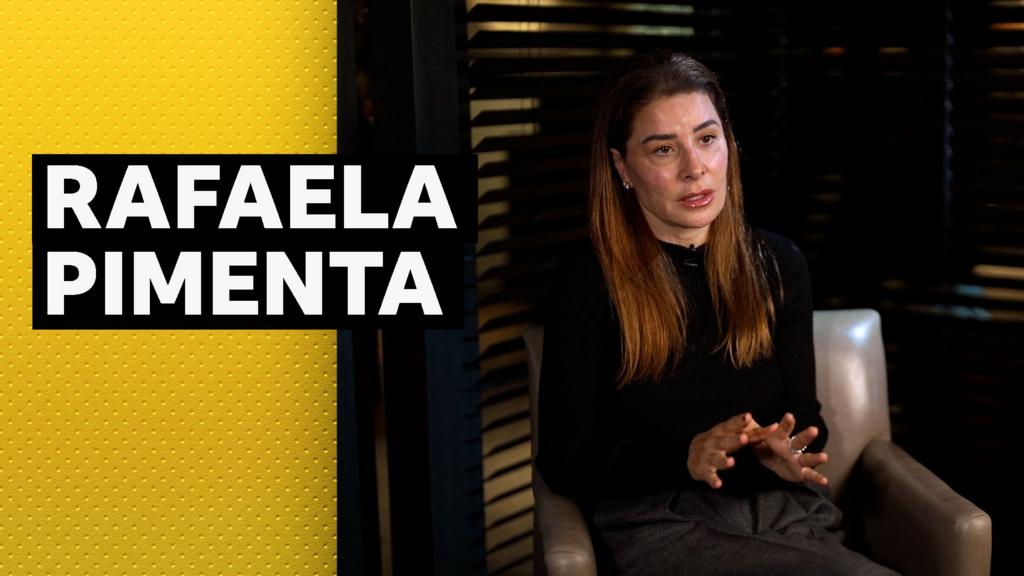
Football agent Rafaela Pimenta says the transfer system needs to change as clubs have too much power and are treating their players as “assets in a business”, not as “humans”.

The Football Focus team preview Sunday’s game between Tottenham and Manchester City, joined by BBC senior football correspondent Sami Mokbel to debate whether Spurs boss Thomas Frank will be able to navigate this challenging period.
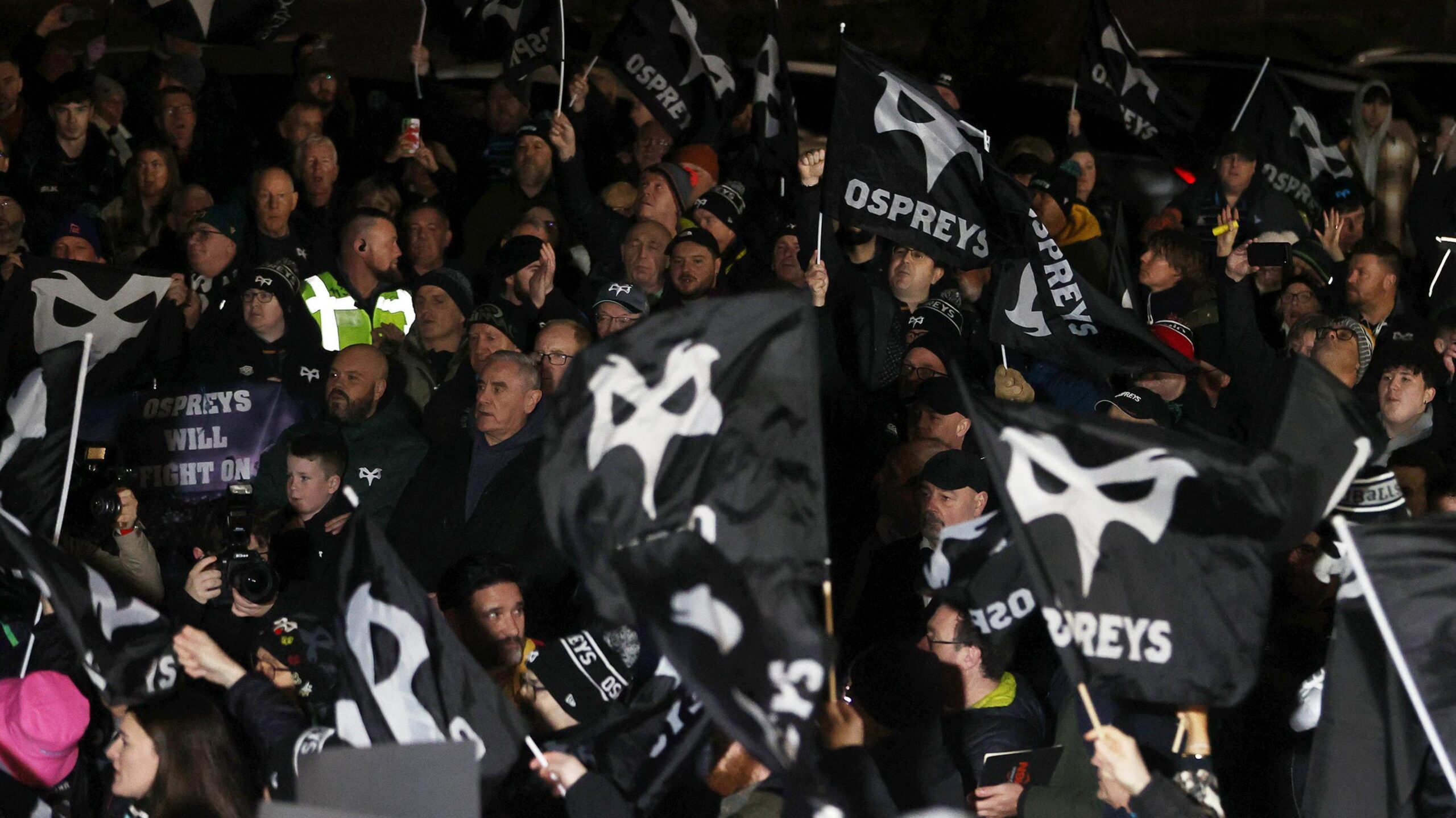
“WRU, shame on you” came the cry from hundreds of Ospreys fans protesting against moves that could see their region disappear as a professional side in little more than a year’s time.
They gathered at the mural of legendary Bridgend, Wales and British and Irish Lions full-back JPR Williams before the United Rugby Championship (URC) 19-13 home derby win against Dragons at Bridgend’s Brewery Field.
Fans and former Ospreys players spoke out against the regions owners, Y11 Sport and Media, who are the Welsh Rugby Union’s (WRU) preferred bidder to take over Cardiff against the backdrop of plans to shrink the number of professional men’s teams in Wales.
Ospreys Supporters Club (OSC) chair Sarah Collins-Davies said by staging the protest they wanted to show the rugby world how much the region meant to them.
“We’re not going to go gently, we are not going down without a fight, we will fight to the end, we never give up,” Collins-Davies told BBC Radio Wales Sport.
Feelings having been running high for several weeks among Ospreys supporters – and placards and banners at Saturday’s protest criticised Y11 Sport, the WRU and the potential deal to buy Cardiff who were saved by the Union after going into administration in April 2025.
Should the deal go through, Ospreys and Cardiff will initially continue as separate sides but both be owned by Y11.
However, the future looks bleak for Ospreys, who have only been given playing guarantees as a professional side until the end of the 2026-27 season.
The WRU are determined to reduce the number of men’s regions from four to three and this presents the ideal opportunity to realise their ambition.
 Huw Evans Picture Agency
OSC secretary Keith Collins said Welsh rugby without Ospreys was “inconceivable”, highlighting the fact they have been the most successful side since the inception of regional rugby in 2003.
Supporters lined up to warn they would walk away from Welsh rugby if the Ospreys were culled as a professional team, with some loyal fans bordering on tears as emotions ran high.
Former players Gough and Shane Williams took to the microphone to address the crowd, promising they will not give up.
Williams reminded the supporters of the Ospreys slogan “our blood is black” which originated from an interview he gave in 2012, the year the side won the last of its four league titles.
Y11 were criticised with shouts for them to “get out of our club”, while questions were raised about the whereabouts and visibility of owner James Davies Yandle, who is based in South Asia.
Ospreys fans are trying to come to terms with what some see as their owners trying to buy a Welsh rival in order to effectively close down the side they already run.
WRU chair Richard Collier-Keywood, chief executive Abi Tierney and director of rugby Dave Reddin were targeted, while board member Jamie Roberts, who was at the ground commentating on the game, also came in for stick.
Former Wales centre Roberts was part of the WRU board who agreed to cut the number of sides from four to three and then later rubber-stamped Y11 as the preferred Cardiff bidder.
Roberts was live on television when he stood alongside former Dragons and Wales lock Andrew Coombs who said it was “the worst possible decision to hand the Cardiff keys to Y11”.
Roberts responded by saying “it is a really difficult situation for coaches, players and more importantly fans” and praised a pre-match interview given by Ospreys head coach Mark Jones, who stated “the reality is hitting home now how seismic this could be”.
 Huw Evans Picture Agency
Former players, including Alun Wyn Jones, Williams, James Hook, Gavin Henson and Ryan Jones, signed a letter last week, along with old coaches and staff members, insisting Ospreys must remain as a professional entity and four regions must be protected.
Collins-Davies said it echoes the views of the fans.
“That’s the attitude from all the supporters and what has really galvanised everybody this week was all the backing of the ex-players,” she said.
“We can’t thank them enough for what they have done, it’s been invaluable.”
Gough says the former players came together to try and help.
“There have been some amazing players coming through the Ospreys and it holds a special place in my heart,” said Gough.
“We always fought in every game we went into, whether we won, lost or drew.
 Getty Images
There has also been a petition organised by the official supporters groups of Ospreys, Cardiff and Dragons calling on the WRU to stop its plans of cutting a side.
“This week is the resurgence of fans from all over Wales, the other regions joining as well as they realise how badly the Ospreys have been treated,” said Gough.
“The transparency hasn’t been there. Other fans have realised that could happen to them as easily and as quickly in the manner which it has been done to Ospreys.
“It has been the realisation of what was going on. We’ve been kept in the dark.
“There is unrest among Cardiff supporters, they’re not happy about how this has been handled and the implications.
“That has brought a sense that none of us are safe.”
Gough also highlighted the human element.
“This has been done in such a brutal manner, you have to think of people’s families and livelihoods and their mental state,” said Gough.
“It affects everything and galvanised people against the WRU. It’s the Welsh village mentality that has brought us together with a common cause.”
Not all Welsh fans have backed the petition, which has not been supported by “Crys 16”, the self-styled official supporters trust of the Scarlets who have a seat on the board of the organisation.
Another fans body, calling themselves the Scarlets official supporters group, has urged people to sign the petition.
This highlights the divide between the Scarlets fans because if the Ospreys somehow survived but WRU still wanted to cut a team, it would likely to be a straight shootout between Ospreys and Scarlets for the west licence in a possible tender process.
So as Welsh rugby often encourages, even demands, self-preservation is the key.
If the Ospreys are preserved as a professional side beyond 2027, with the preferred option for the WRU they are not, remains to be seen.
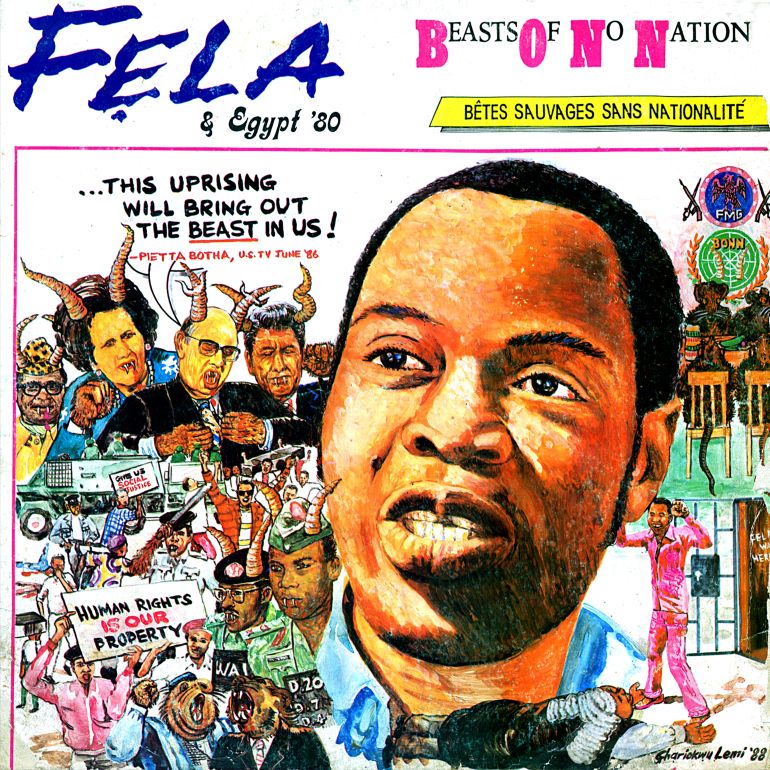
Three decades after his death, the ‘father of Afrobeat’ Fela Kuti has made history by becoming the first African to get a Lifetime Achievement Award at the Grammys.
The Nigerian musician, who died in 1997, posthumously received the commendation along with several other artists at a ceremony in Los Angeles on Saturday, on the eve of the 68th Annual Grammy Awards.
list of 3 itemsend of list
For his family and friends – some of whom were in attendance – it is an honour they hope will help amplify Fela’s music, and ideology, among a new generation of musicians and music lovers. But it is an acknowledgement they also admit has come quite late.
“The family is happy about it. And we’re excited that he’s finally being recognised,” Yeni Kuti, Fela’s daughter, told Al Jazeera before the ceremony. “But Fela was never nominated [for a Grammy] in his lifetime,” she lamented.
The recognition is “better late than never”, she said, but “we still have a way to go” in fairly recognising musicians and artists from across the African continent.
Lemi Ghariokwu, a renowned Nigerian artist and the designer behind 26 of Fela’s iconic album covers, says the fact that this is the first time an African musician gets this honour “just shows that whatever we as Africans need to do, we need to do it five times more.”
Ghariokwu said he feels “privileged” to witness this moment for Fela. “It’s good to have one of us represented in that category, at that level. So, I’m excited. I’m happy about it,” he told Al Jazeera.
But he admits he was also “surprised” when he first heard the news.
“Fela was totally anti-establishment. And now, the establishment is recognising him,” Ghariokwu said.

On what Fela’s reaction to the award would have been if he were alive, Ghariokwu says he imagines he would be happy. “I can even picture him raising his fist and saying: ‘You see, I got them now, I got their attention!’”
But Yeni feels her father would have been largely unfazed.
“He didn’t at all [care about awards]. He didn’t even think about it,” she said. “He played music because he loved music. It was to be acknowledged by his people – by human beings, by fellow artists – that made him happy.”
Yemisi Ransome-Kuti, Fela’s cousin and head of the Kuti family, agrees. “Knowing him, he might have said, you know, thanks but no thanks or something like that.” She laughs.
“He really wasn’t interested in the popular view. He wasn’t driven by what others thought of him or his music. He was more focused on his own understanding of how he should impact his profession, his community, his continent.”
Though she believes the award may not have meant much to him personally, she told Al Jazeera that he would have recognised its overall value.
“He would recognise the fact that it’s a good thing for such establishments to begin the process of giving honour where it’s due across the continent,” Ransome-Kuti said.
“There are many great philosophers, musicians, historians – African ones – that haven’t been brought into the forefront, into the limelight as they should be. So I think he would have said, ‘OK, good, but what happens next?’”

Fela was born in Nigeria’s Ogun State in 1938 as Olufela Olusegun Oludotun Ransome-Kuti (later renaming himself to Fela Anikulapo Kuti), to an Anglican minister and school principal father and an activist mother.
In 1958, he went to London to study medicine, but instead enrolled at Trinity College of Music, where he formed a band that played a blend of jazz and highlife.
After returning to Nigeria in the 1960s, he went on to create the Afrobeat genre that fused highlife and Yoruba music with American jazz, funk, and soul. That has laid the groundwork for Afrobeats – a later genre blending traditional African rhythms with contemporary pop.
“Fela’s influence spans generations, inspiring artists such as Beyonce, Paul McCartney and Thom Yorke, and shaping modern Nigerian Afrobeats,” reads the citation on the Grammys list of this year’s Special Merit Award Honorees.
But beyond music, he was also a “political radical [and] outlaw”, the citation adds.
By the 1970s, Fela’s music had become a vehicle for fierce criticism of military rule, corruption, and social injustice in Nigeria. He declared his Lagos commune, the Kalakuta Republic, independent from the state – symbolically rejecting Nigerian authority – and in 1977 released the scathing album, Zombie, with lyrics that painted soldiers as mindless zombies with no free will. In the aftermath, troops raided Kalakuta, brutally assaulting its residents and causing injuries that led to Fela’s mother’s death.
Frequently arrested and harassed during his life, Fela became an international symbol of artistic resistance, with Amnesty International later recognising him as a prisoner of conscience after a politically motivated imprisonment. When he died in 1997 at age 58 from an illness, an estimated one million people attended his funeral in Lagos.

Yeni – together with her siblings – is now custodian of her father’s work and legacy. She runs Afrobeat hub,
the New Afrika Shrine in Ikeja, Lagos and hosts an annual celebration in Fela’s honour called “Felabration”.
She remembers growing up with her larger-than-life father as something that felt “normal”, as it was all she knew. But “I was in awe of him”, she also says – as an artist and a thinker.
“I really, really admired his ideologies. The most important one for me was African unity … He totally worshipped and admired [former Ghanaian President] Dr Kwame Nkrumah, who was fighting for African unity. And I always think to myself, can you imagine if Africa was united? How far we would be; how progressive we would be.”
Reflecting on Fela’s legacy, artist Ghariokwu says most big Afrobeats musicians today have been influenced and inspired by Fela’s music and fashion.
But he laments that most have “never really sat down with the ideological part of Fela – the pan-Africanism – they never really checked it out”.
For him, Fela’s Grammy recognition should say to young artists, “If someone [like Fela] who was totally anti-establishment can be recognised this way, maybe I can express myself too without too much fear.”
Yeni says that through Fela’s work and life philosophy, he wanted to pass a message of African unity and political consciousness on to young people.
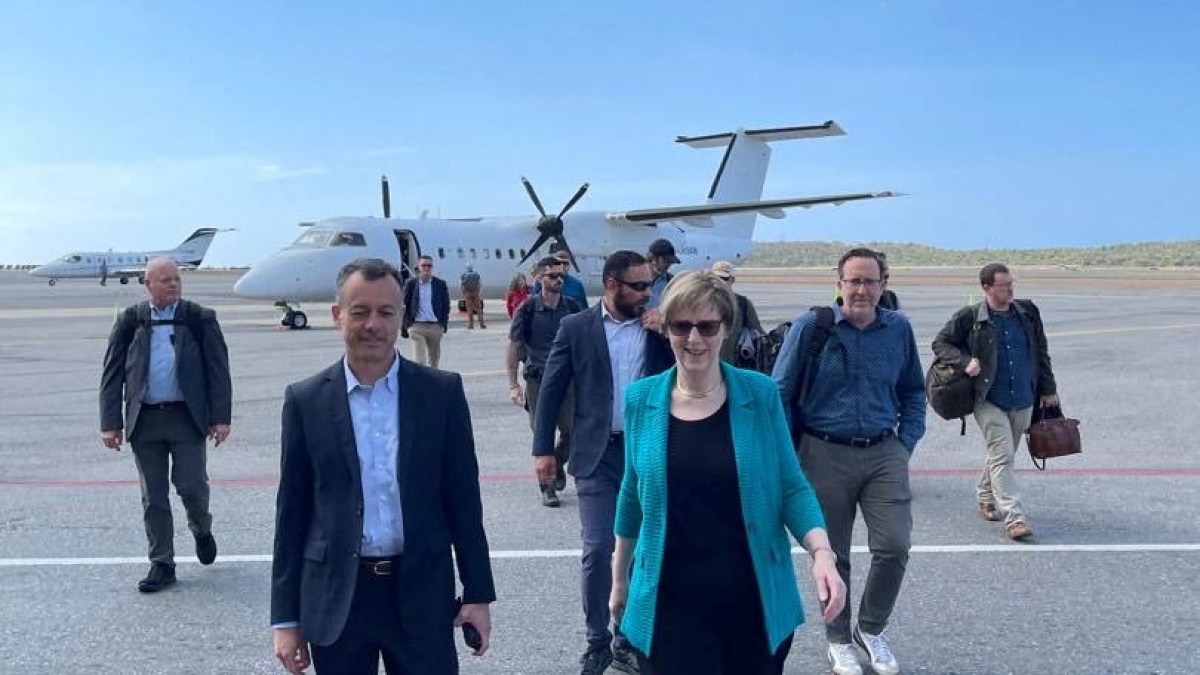
The top United States envoy for Venezuela has arrived in Caracas to reopen a US diplomatic mission seven years after ties were severed.
Laura Dogu announced her arrival in a post on X on Saturday, saying, “My team and I are ready to work.”
list of 4 itemsend of list
The move comes almost one month after US forces abducted Venezuela’s then-president, Nicolas Maduro, from the presidential palace in Caracas, on the orders of US President Donald Trump.
Maduro was then taken to a prison in New York, and is facing drug trafficking and narcoterrorism conspiracy charges.
The move has been widely criticised as a violation of international law.
Venezuelan Minister of Foreign Affairs Yvan Gil wrote on Telegram that he had received Dogu, and that talks would centre on creating a “roadmap on matters of bilateral interest” as well as “addressing and resolving existing differences through diplomatic dialogue and on the basis of mutual respect and international law”.
Dogu, who previously served as US ambassador to Honduras and Nicaragua, was appointed to the role of charge d’affaires to the Venezuela Affairs Unit, based out of the US Embassy in Bogota, Colombia.
Venezuela and the US broke off diplomatic relations in February 2019, in a decision by Maduro after Trump gave public support to Venezuelan lawmaker Juan Guaido, who claimed to be the nation’s interim president in January that year.
Minister of the Popular Power for Interior Diosdado Cabello, one of Venezuela’s most powerful politicians and a Maduro loyalist, said earlier in January that reopening the US embassy in Caracas would give the Venezuelan government a way to oversee the treatment of the deposed president.
Although the Trump administration has claimed that Maduro’s abduction was necessary for security reasons, officials have also repeatedly framed their interests in Venezuela around controlling its vast oil reserves, which are the largest in the world.
Since the abduction, Trump has pressured Interim President Delcy Rodriguez to open the country’s nationalised oil sector to US firms.
The two countries have reached a deal to export up to $2bn worth of Venezuelan crude to the US, and on Thursday, Rodriguez signed into law a reform bill that will pave the way for increased privatisation.
The legislation gives private firms control over the sale and production of Venezuelan oil, and requires legal disputes to be resolved outside of Venezuelan courts, a change long sought by foreign companies, which argue that the judicial system in the country is dominated by the governing socialist party.
The bill would also cap royalties collected by the government at 30 percent.
The Trump administration said on the same day that it would loosen some sanctions on Venezuela’s oil sector, and allow limited transactions by the country’s government and the state oil company PDVSA that were necessary for a laundry list of export-related activities involving an “established US entity”.
Trump has announced that he ordered the reopening of Venezuela’s commercial airspace and “informed” Rodriguez that US oil companies would soon arrive to explore potential projects in the country.
On Friday, Rodriguez announced an amnesty bill aimed at releasing hundreds of prisoners in the country, and said she would shut down El Helicoide, an infamous secret service prison in Caracas, to be replaced with a sports and cultural centre.
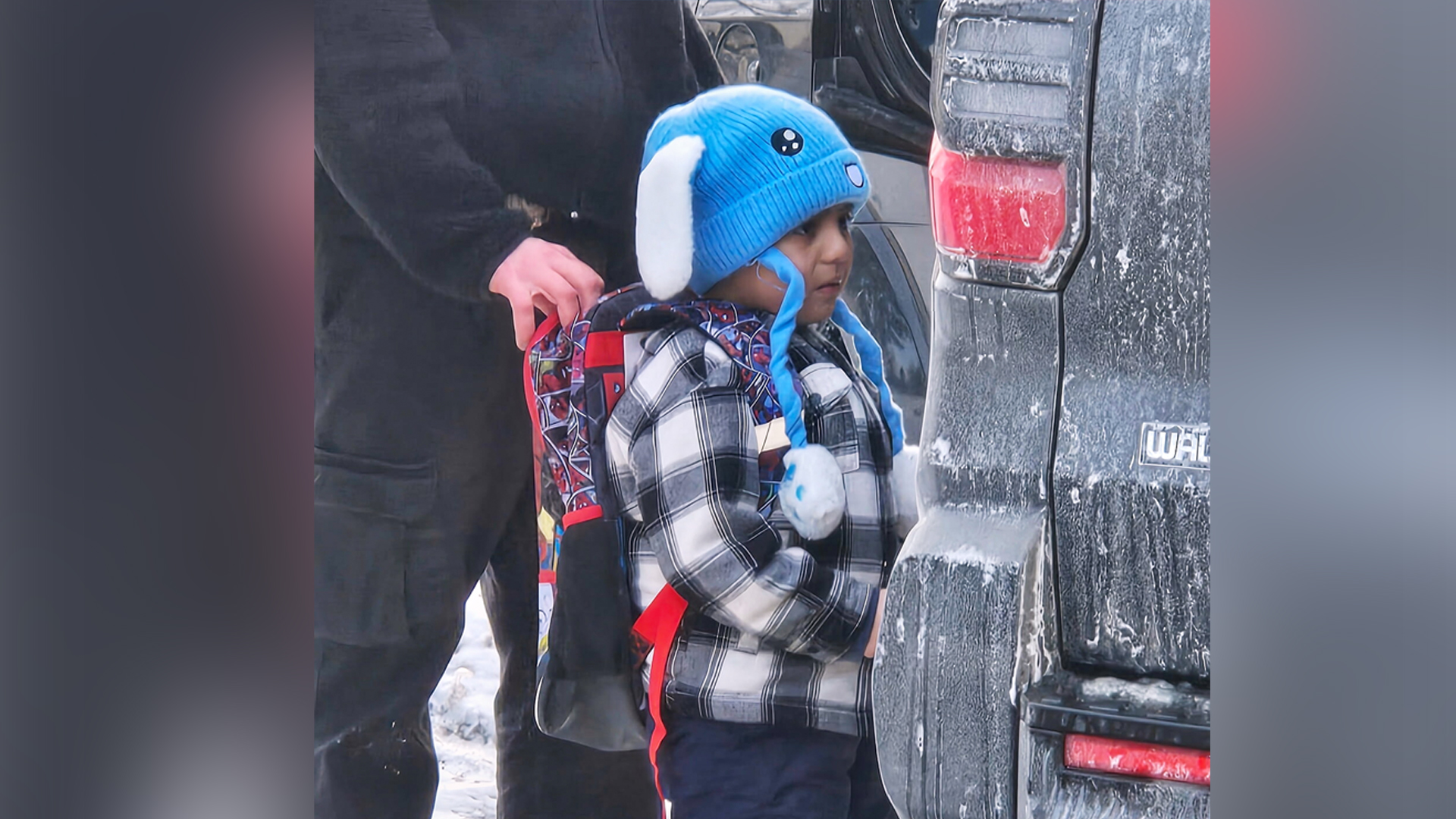
A federal judge in the United States has ordered the release of a five-year-old boy and his father from a facility in Texas amid an outcry over their detention during an immigration raid in Minnesota.
In a decision on Saturday, US District Judge Fred Biery ruled Liam Conejo Ramos’s detention as illegal, while also condemning “the perfidious lust for unbridled power” and “the imposition of cruelty” by “some among us”.
list of 4 itemsend of list
The scathing opinion came as photos of the boy – clad in a blue bunny hat and Spider-Man backpack as Immigration and Customs Enforcement (ICE) officers took him away in a suburb of the city of Minneapolis – became a symbol of the immigration crackdown launched by President Donald Trump’s administration.
“The case has its genesis in the ill-conceived and incompetently-implemented government pursuit of daily deportation quotas, apparently even if it requires traumatizing children,” Biery wrote in his ruling.
“Ultimately, Petitioners may, because of the arcane United States immigration system, return to their home country, involuntarily or by self-deportation. But that result should occur through a more orderly and humane policy than currently in place.”
The judge did not specify the deportation quota he was referring to, but Stephen Miller, the White House chief of staff for policy, has previously said there was a target of 3,000 immigration arrests a day.
The ongoing crackdown in the state of Minnesota is the largest federal immigration enforcement operation ever carried out, according to federal officials, with some 3,000 agents deployed. The surge has prompted daily clashes between activists and immigration officers, and led to the killings of two American citizens by federal agents.
The deadly operation has sparked nationwide protests as well as mass mobilisation efforts and demonstrations in Minnesota.
According to the Columbia Heights Public School District in Minneapolis, Liam was one of at least four students detained by immigration officials in the suburb this month.
Columbia Heights Public Schools Superintendent Zena Stenvik said ICE agents took the child from a running car in the family’s driveway on January 20, and told him to knock on the door of his home, a tactic that she said amounted to using him as “bait” for other family members.
The government has denied that account, with Department of Homeland Security (DHS) spokesperson Tricia McLaughlin claiming that an ICE officer remained with Liam “for the child’s safety” while other officers apprehended his father.
Vice President JD Vance, who has vigorously defended ICE’s tactics in Minnesota, told a news conference that although such arrests were “traumatic” for children, “just because you’re a parent, doesn’t mean that you get complete immunity from law enforcement”.
The Trump administration has said that Conejo Arias arrived in the US illegally in December 2024 from Ecuador, but the family’s lawyer says they have an active asylum claim that allows them to remain in the country legally.
Following their detention, the boy and his father were sent to a facility in Dilley in Texas, where advocacy groups and politicians have reported deplorable conditions, including illnesses, malnourishment and a fast-growing number of detained children.
Texas Representatives Joaquin Castro and Jasmine Crockett visited the site earlier this week. Liam slept throughout the 30-minute visit, Castro said, and his father reported that he was “depressed and sad”.
Biery’s ruling on Saturday included a photo of the boy, as well as several Bible quotes: “Jesus said, ‘Let the little children come to me, and do not hinder them, for the kingdom of heaven belongs to such as these’,” and “Jesus wept”.
The episode, Biery wrote, made apparent “the government’s ignorance of an American historical document called the Declaration of Independence”. Biery drew a comparison between Trump’s administration and the wrongdoings that then-author, future President Thomas Jefferson, mounted against England’s King George, including sending “Swarms of Officers to harass our People” and creating “domestic Insurrection”.
There was no immediate comment from the Department of Justice and DHS.
The Law Firm of Jennifer Scarborough, which is representing Liam and his father, Adrian Conejo Arias, said in a statement that the pair will soon be able to reunite with the rest of their family.
“We are pleased that the family will now be able to focus on being together and finding some peace after this traumatic ordeal,” the statement said.
Minnesota officials have been calling on the Trump administration to end its immigration crackdown in the state. But a federal judge on Saturday denied a request from Minnesota Attorney General Keith Ellison and other officials to issue a preliminary injunction that would have halted the federal operation.