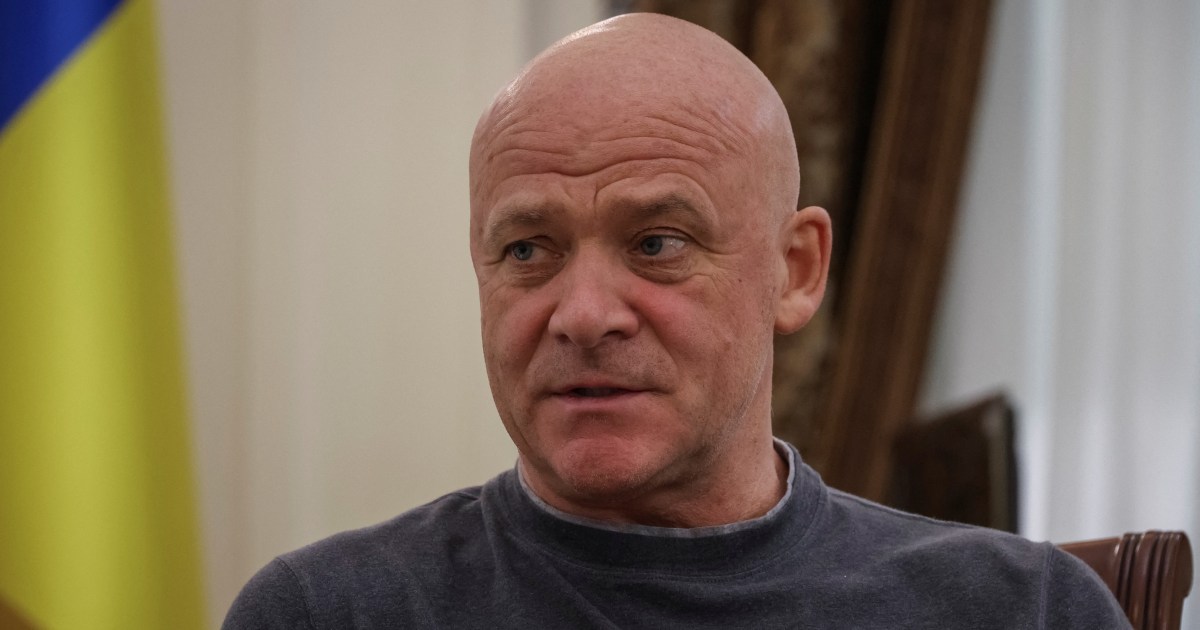
Ukrainian President Volodymyr Zelenskyy has stripped the mayor of Odesa, Gennadiy Trukhanov, of Ukrainian citizenship over allegations that he possesses a Russian passport.
The Ukrainian leader has instead appointed a military administration to run the country’s biggest port city on the Black Sea, with a population of about 1 million.
Recommended Stories
list of 4 itemsend of list
“The Ukrainian citizenship of the mayor of Odesa, Gennadiy Trukhanov, has been suspended,” Ukraine’s SBU security service announced on the Telegram messaging app on Tuesday, citing a decree signed by Zelenskyy.
The SBU accused the mayor of “possessing a valid international passport from the aggressor country”.
Ukraine prohibits its citizens from also holding citizenship in Russia, which launched a full-scale invasion of Ukraine in 2022, and the move against Trukhanov could see him deported from the country.
In a post on social media, Zelenskyy said he had held a meeting with the head of the SBU, which had reported on “countering Russian agent networks and collaborators in the front-line and border regions, as well as in the south of our country”.
The SBU chief “confirmed… the fact that certain individuals hold Russian citizenship – relevant decisions regarding them have been prepared. I have signed the decree”, Zelenskyy said.
I held a meeting on the security situation in some of our regions – these are matters of principle.
Head of the Security Service of Ukraine Vasyl Maliuk reported on countering Russian agent networks and collaborators in the frontline and border regions, as well as in the south… pic.twitter.com/MxKyKjPYc9
“Far too many security issues in Odesa have remained unanswered for far too long,” the president also said, according to reports, without providing specific details.
A former member of parliament, Trukhanov has been the mayor of Odesa since 2014. He has consistently denied accusations of holding Russian citizenship, an allegation that has dogged him throughout his political career.
“I have never received a Russian passport. I am a Ukrainian citizen,” Trukhanov stressed in a video message posted on Telegram following the announcement of his citizenship revocation.
Trukhanov said he would “continue to perform the duties of elected mayor” as long as possible and that he would take the case to court.
Images of a Russian passport allegedly belonging to Trukhanov have been shared widely on social media in Ukraine.
SBU says: pic.twitter.com/fcRe8acOgo
Once considered a politician with pro-Russian leanings, Trukhanov pivoted after Russia’s full-scale invasion of Ukraine in 2022, and has publicly condemned Moscow while focusing on defending Odesa and aiding the Ukrainian army.
A source familiar with the matter told the Reuters news agency that Zelenskyy had also removed the Ukrainian citizenships of two other people.
Local media outlet The Kyiv Independent identified the two as Ukrainian ballet dancer Sergei Polunin, a vocal supporter of Russian President Vladimir Putin, and former Ukrainian politician and now alleged Russian collaborator Oleg Tsaryov.
Polunin, who sports a large tattoo of Putin on his chest, was born in southern Ukraine but obtained Russian citizenship in 2018. He supported Russia’s 2022 invasion and, earlier in 2014, backed Russia’s annexation of Crimea, where he lived and worked.
Today’s horoscope for October 15 sees one star sign’s thoughts lead to some tension, while another will see advantages from their studies
View Image
Find out what’s written in the stars with our astrologer Russell Grant(Image: Daily Record/GettyImages)
It’s Wednesday, October 15, and falling head over heels in love is not out of the question for one star sign.
There are 12 zodiac signs – Aries, Taurus, Gemini, Cancer, Leo, Virgo, Libra, Scorpio, Sagittarius, Capricorn, Aquarius, and Pisces – and the horoscopes for each can give you the lowdown on what your future holds, be it in work, your love life, your friends and family or more.
These daily forecasts have been compiled by astrologer Russell Grant, who has been reading star signs for over 50 years. From Aries through to Pisces, here’s what today could bring for your horoscope – and what you can do to be prepared.
Aries (Mar 21 – Apr 20)
A friend or colleague will motivate you to explore new ideas. By taking cues from them you will discover a passion that fills you with anticipation. It’s comforting to be with someone who shares your adventurous spirit. Together you make an amazing duo.
Taurus (Apr 21 – May 21)
You’re struggling to adapt to new social norms. This is quite a challenging situation for someone with traditional values like yourself. Being expected to remain silent in the face of abuse seems confusing to you. Keep voicing your thoughts, even if this does lead to some tension.
Gemini (May 22 – June 21)
It’s always worth spending time nurturing your brilliant ideas. You will enjoy a writing, artistic or musical project. The key to your achievement lies in your readiness to venture into unchartered areas. Sharing bold viewpoints and presenting innovative perspectives will bring you fame and acclaim.
Cancer (June 22 – July 23)
Building financial security is a labour of love. While it is true you have a deep appreciation for luxury, this does not imply you are careless with your spending. In fact, you feel most happy and secure when you have a substantial amount in your bank account.
Leo (July 24 – Aug 23)
Accepting a job, role or position that showcases your kind and giving nature will be fulfilling. It brings you happiness to help bring comfort into other people’s lives. If you are thinking about a career change, look into areas that focus on offering comfort and care to clients.
Virgo (Aug 24 – Sept 23)
Your health is improving. You will recognise the sense of getting into a regular diet and exercise routine. Rather than falling into bed exhausted each day after work, you want to make more time to socialise with friends and enjoy your favourite pastimes. It’s good to have a healthy work/life balance.
Libra (Sept 24 – Oct 23)
Meaningful experiences shared with friends is a strong possibility. Are you single? Falling head over heels in love is not out of the question. It will be hard to ignore the charm of someone with a soothing voice who brings joy to your life.
Scorpio (Oct 24 – Nov 22)
Those in high places are impressed by your ambition and determination. Many people around you are struggling to find jobs. You seem to have the luxury of being able to choose from a variety of opportunities. A key factor that makes you such a sought-after candidate is your strong personality.
Sagittarius (Nov 23 – Dec 21)
You find yourself standing at a crossroads. It is great to realise that once you’ve decided on what you want to do you won’t have to face this situation again. Instead of focusing on what you are leaving behind, think about the positive things this transition can offer.
Capricorn (Dec 22 – Jan 20)
Don’t lose hope if the first response to a proposal you put to someone isn’t favourable. Hold firm in your beliefs. Very soon, others will see the value in your ideas. When all other options have been explored and dismissed, yours will shine through as the successful one.
Aquarius (Jan 21 – Feb 19)
Investing time in a course of study will bring a number of long-term advantages. By immersing yourself in a specialised subject, you will attain expert status. Before long you will receive a variety of job offers. Choose the one that allows you to travel the globe.
Article continues below
Pisces (Feb 20 – Mar 20)
Finding yourself having to manage someone else’s finances will feel overwhelming. Think about finding another person who might agree to take on these duties. You already put in a lot of effort to keep your family happy. It is time you allowed yourself more freedom.
READ MORE: Tesco’s £36 version of H&M’s viral sequin party dress is about to fly off shelves
Islamabad, Pakistan – When Pakistan’s foreign minister, Ishaq Dar, visited Kabul in April and met his Afghan Taliban counterpart, Amir Khan Muttaqi, analysts viewed the occasion as marking a reset of relations amid the increasing hostilities between the two former allies.
Subsequent meetings between the two in May and August, brokered by China, reinforced that sentiment.
Recommended Stories
list of 4 itemsend of list
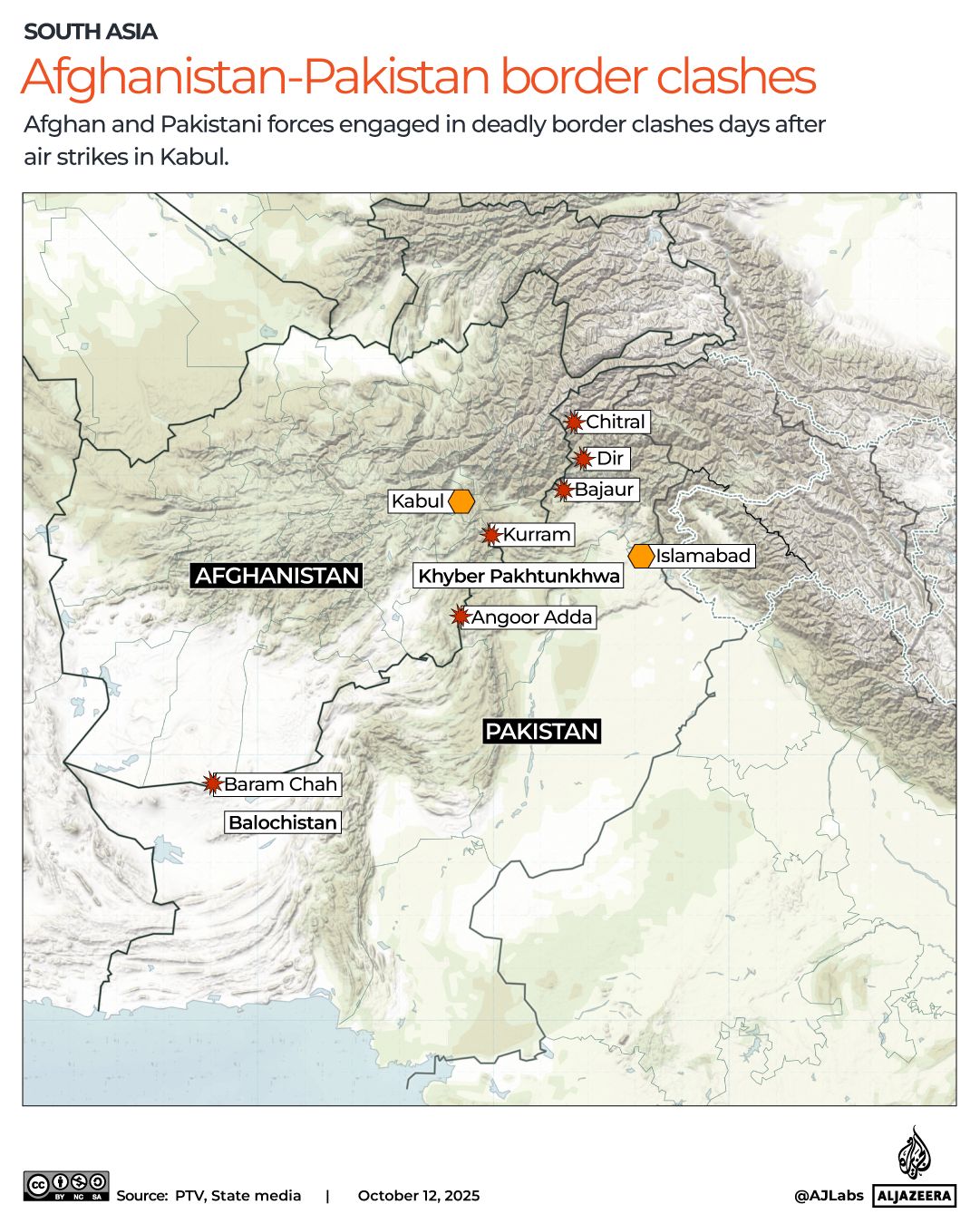
But a deadly weekend of clashes along the countries’ porous border has put those diplomatic overtures on hold. Islamabad says it killed more than 200 Taliban fighters; the Taliban government says 58 Pakistani soldiers were killed. The death toll on both sides underscores how fragile the détente earlier in the year was.
Pakistan, which has been grappling with a dramatic surge in attacks – especially in the northwestern Khyber Pakhtunkhwa province, where dozens of military personnel have died – accuses the Taliban of giving sanctuary to armed groups that launch cross-border attacks.
The Taliban denies those charges. But on Thursday night, Kabul was rocked by explosions and gunfire. Pakistan neither confirmed nor denied involvement, but the Taliban government said Pakistan had been behind the attacks in Kabul and in an eastern Afghan province, and promised retaliation.
Fighting flared again on Saturday night. Pakistan acknowledged that the clashes left at least 23 of its soldiers dead and another 29 injured, and said its forces had taken control of more than 21 posts on Afghan territory. Kabul has not confirmed the Taliban’s casualty figures.
That immediate military escalation has passed, but the clashes have evoked parallels with Pakistan’s tense new equation with its eastern neighbour, India, after New Delhi blamed Islamabad for the killing of 26 civilians in Indian-administered Kashmir in April.
Like the Taliban’s position on anti-Pakistan armed groups ostensibly operating from Afghan soil, Islamabad, too, rejected any link with the attackers in Indian-administered Kashmir. But just as Islamabad has long accused the Taliban of sheltering groups that attack Pakistan, India has, for decades, alleged that Pakistan supports and sponsors “terrorist” groups that target its territory.
Now, some analysts say, Pakistan is trying to establish a “new normal” with the Taliban, by making clear that future attacks on its soil could invite retribution inside Afghanistan. The stance mirrors a position India’s Narendra Modi government took against Pakistan in April, and that Islamabad protested against at the time.
India launched strikes inside Pakistani territory in May, resulting in a four-day-long conflict, with both sides using missiles, drones and artillery to attack each other.
This shifting landscape between Pakistan and Afghanistan suggests, analysts say, that while the fighting over the weekend might have eased, tensions are likely to simmer in the coming weeks, and a lasting breakthrough remains elusive.
Trigger behind the border clashes
Out of the various armed groups reportedly operating from Afghanistan, Pakistani authorities regard the Tehreek-e-Taliban Pakistan (TTP) as the biggest threat. The TTP emerged in 2007 amid the United States-led, so-called “war on terror”, and has for years waged an armed campaign against Islamabad.
It seeks to implement strict Islamic law, has demanded the release of imprisoned members, and calls for a reversal of the merger of Pakistan’s former tribal areas with the Khyber Pakhtunkhwa province.
The TTP is independent of Afghanistan’s Taliban, but the two groups are ideologically aligned.
Islamabad blames Kabul for allowing sanctuary for the TTP, as well as other groups such as the Balochistan Liberation Army (BLA) and Islamic State Khorasan Province (ISKP).
TTP attacks have increased sharply since the Taliban returned to power in Afghanistan in August 2021, and numbers highlight the increasing trend.
“Our data show that the TTP engaged in at least 600 attacks against, or clashes with, security forces in the past year alone. Its activity in 2025 so far already exceeds that seen in all of 2024,” a recent report by the US-based Armed Conflict Location & Event Data (ACLED) project said.
In the last few days, several attacks have killed more than two dozen Pakistani soldiers, including officers, with the latest such incident on October 8.
Regional powers – including China, Iran and Russia – have repeatedly urged the Taliban to eliminate the TTP and other armed groups operating from Afghanistan. That call was renewed at the Moscow Format consultation in early October, which was also attended by Muttaqi, the Taliban foreign minister.
Abdul Basit, a scholar of militancy and a research fellow at Singapore’s S Rajaratnam School of International Studies, said he expects more diplomacy in the coming days, led by countries that have strong ties with both the Taliban and Pakistan, such as Gulf nations or China.
“I think it is plausible that Islamabad and Kabul will hold another round of meetings in some third country to re-engage in dialogue, but I believe that tensions will continue to simmer, sometimes going up or sometimes going down. We certainly cannot rule out another round of hostilities at the border,” he told Al Jazeera.
Seema Ilahi Baloch, a former Pakistani ambassador who has been involved in informal Pakistan-Afghanistan talks in the past, said that Islamabad had so far failed to persuade the Taliban to prevent Afghanistan from being used as a base for attacks against Pakistan.
“Both sides must realise that such conflicts undermine bilateral cooperation and negatively impact regional stability,” she said. “China, which has influence in both Pakistan and Afghanistan, can be the interlocutor to mend fences between the two through diplomacy,” she added.
(Al Jazeera)
Islamabad’s new normal?
Still, analysts say it is becoming increasingly difficult for Pakistan’s officials to ignore the mounting death toll in the country from attacks that Islamabad alleges have originated in Afghanistan.
The Centre for Research and Security Studies (CRSS), an Islamabad-based think tank, put the number of deaths of Pakistan’s security personnel at more than 2,400 in the first three quarters of this year, which is on track to become the deadliest year in a decade.
Basit said that Islamabad is trying to define a new normal in which any attack believed to have originated in Afghanistan – whether by the TTP or another group – will carry a cost for Kabul.
“Any attack which emanates from Afghanistan will be responded [to] with [the] same ferocity on their territory, with Pakistan implying that Afghan Taliban are facilitating such attacks in Pakistan, and thus are legitimate targets,” he said.
Basit acknowledged that Pakistan’s new approach appears similar to what New Delhi adopted against Islamabad after the April attack in Indian-administered Kashmir, but said there was a key difference. Regardless of the casualties on both sides of the Afghanistan-Pakistan border during the past weekend’s clashes, the military asymmetry between the two sides is significant, unlike the scenario between India and Pakistan.
He pointed to Pakistan’s ability to hit back against India’s attacks in May: Pakistan was able to shoot down several Indian jets in the process. The Taliban, however, though battle-hardened fighters who have a long history of repelling foreign powers, do not have the equipment and training that Pakistan’s professional army does. “There is a difference,” Basit said.
Aamer Raza, an assistant professor of political science at the University of Peshawar, said there was a growing feeling within Pakistani policy circles that patience with Afghanistan was wearing thin in the Pakistani establishment.
“Although some engagement is inevitable, major breakthroughs shouldn’t immediately be expected. With Pakistan’s clear superiority in air and projectile warfare, even in the last clashes, it could have inflicted greater damage on Afghanistan, but it largely refrained,” he told Al Jazeera.
After the weekend clashes, Pakistan’s Ministry of Foreign Affairs, for the first time, also questioned the legitimacy of the Taliban government itself, even though Islamabad was the movement’s chief patron for a quarter of a century.
Pakistan demanded “concrete and verifiable actions against these terrorist elements by the Taliban regime” and urged a more inclusive government. “We also hope that one day, the Afghan people would be emancipated, and they would be governed by a true representative government,” the statement read.
Baloch, the diplomat, downplayed that language, suggesting that Islamabad was merely calling for elections in Afghanistan.
Basit, however, argued that the wording was significant. “This language of the statement also hints that Pakistan might be open to the idea of throwing its support behind anti-Taliban groups if the current regime continues to ignore Pakistan’s legitimate security concerns,” he said.
The New Delhi factor
The weekend’s clashes also coincided with Muttaqi’s first visit to India. He is, in fact, the first senior Taliban leader to travel to New Delhi since the group took control of Afghanistan four years ago.
Muttaqi received a temporary United Nations-sanctions exemption to travel for a week, from October 9 to 16, and met Indian Minister of External Affairs S Jaishankar.
Afghanistan’s interim foreign minister, Amir Khan Muttaqi is visiting India from October 9 to 16 for his maiden visit to the country after the Taliban took over the country in August 2021 [Elke Scholiers/Getty Images]
Kabul’s moves towards New Delhi also represent the culmination of months of diplomacy that Pakistan has watched closely.
From the mid-1990s until a few years ago, India viewed the Taliban as a proxy for Pakistan’s intelligence agencies, and accused the group and its allies of deadly attacks on its diplomatic missions in Afghanistan.
But since the group returned to power in Afghanistan, and amid rising Taliban-Pakistan tensions, India has engaged in a series of outreach efforts with Kabul’s new leaders, leading to Muttaqi’s visit.
Islamabad continues to allege that New Delhi is fomenting trouble in Pakistan’s Khyber Pakhtunkhwa and Balochistan provinces, and that some groups are funded or supported by New Delhi from Afghan territory, charges that India has consistently rejected.
Now, with tensions on both its western and eastern fronts, Islamabad needs to stay cautious, said Baloch, the former ambassador.
“No country can afford to open war fronts on all its borders, and that goes for Pakistan also,” she said.
Meanwhile, some analysts have questioned Pakistan’s posture of neither accepting responsibility for last Thursday’s explosions in Afghanistan, nor denying a role.
This could damage Pakistan’s credibility if groups based in Afghanistan attack Pakistan again, suggested Fahad Nabeel, who leads the Islamabad-based research consultancy Geopolitical Insights.
“The main question will be why Pakistani officials did not claim responsibility for the past alleged strikes [in Afghanistan, in response to attacks in Pakistan]. If Pakistan merely uses the terrorism-threat narrative, critics will ask why it did not take such actions in the past decade,” Nabeel told Al Jazeera.
However, Nabeel said that he did not see major parallels between India’s response to the April attack and Pakistan’s recent approach towards the Taliban. “The only commonalities,” he said, lay in both India and Pakistan accusing its neighbours, Pakistan and Afghanistan, of not doing enough to stop UN-sanctioned individuals and groups from using their soil to attack others.
Singapore-based Basit said that Pakistan’s air strikes during Muttaqi’s visit were likely intended to send a message: that “Islamabad will not hesitate to use force if it perceives collusion between Kabul and New Delhi to undermine Pakistani security”.
However, like Baloch, Basit also acknowledged the limits of that posture. “No country can afford a two-front war,” he said.
Basit also said that bigger questions about Islamabad’s approach remained unanswered.
“What really is the end game here?” he asked.
“Are these strikes going to change the calculus of [the] Afghan Taliban to pushing them into action against the TTP, or will it drive them to forge a closer nexus with [the] TTP?” he asked.
Insiders say Meghan Markle is preparing for “yet another relaunch” in the world of business – in either the fashion or cosmetic industry – despite challenges with her film and television projects
View 3 Images
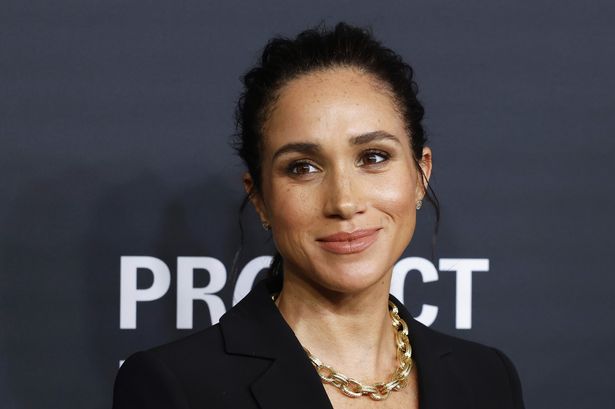
Meghan Markle is predicted to explore the fashion or cosmetic industries(Image: John Angelillo/UPI/Shutterstock)
Meghan Markle’s trip to Paris – her first visit to Europe in two years – has been today celebrated as her “first positive PR” in some time.
The tag comes despite uproar around Meghan, 44, using the same route Diana, Princess of Wales was driven moments before her tragic crash in August 1997. The Duchess of Sussex was seen in footage with her feet up on the chair in the car, just moments from the infamous Pont d’Alma tunnel.
It was also claimed Meghan flouted a “blanket ban” Harry had imposed on Paris due to the association with his mum. However, the Duchess told critics she went to Paris Fashion Week because of her huge admiration for Pierpaolo Piccioli, one of the industry’s new kings. Insiders now believe Meghan will exploit contacts in this industry to develop her career in couture, following short-lived ventures in other fields.
An industry expert has said: “Paris was a ‘moment’ for her. It’s the first positive PR she’s had in years. Fashion is where she will aim her focus now.”
READ MORE: Kate Middleton shares candid loved-up moment with Prince William that melts heartsREAD MORE: Meghan Markle shares cryptic message on the future of Netflix programme
But Meghan, a mother of two, had to ask Balenciaga for an invite to Paris Fashion Week, which ran from Monday September 29 to Tuesday October 7 this year. The former actress has admired the “craftsmanship and modern elegance” of Mr Piccioli, 58, for several years and he became Creative Director of Balenciaga in May.
Since Paris Fashion Week, the Duchess of Sussex has made further high-profile appearances – again solo without Prince Harry – including at a ceremony in Washington DC, where she lectured as a “high-profile business founder”. This is despite a challenging 2025, during which her and Harry’s Netflix contract was not renewed and she appeared to close down an online marketplace.
READ MORE: Prince William’s thinly veiled swipe at Harry as he jokes about ‘mixed bag’ family
Referring to the flurry of engagements recently, one leading PR guru with clients in the US and UK told the Daily Mail: “It’s Meghan 3.0. She’s on manoeuvres and looking for yet another relaunch.”
Article continues below
They also alluded to a clip Meghan posted online, which gives fans a behind-the-scenes look at her whirlwind trip to New York City – again squeezed into the series of functions in October. The footage features racks of designer clothes and shoes, and a cameo from a surprise A-lister during the trip – this time completed with her 41-year-old husband Harry.
Here is how things stand on Wednesday, October 15, 2025:
Fighting
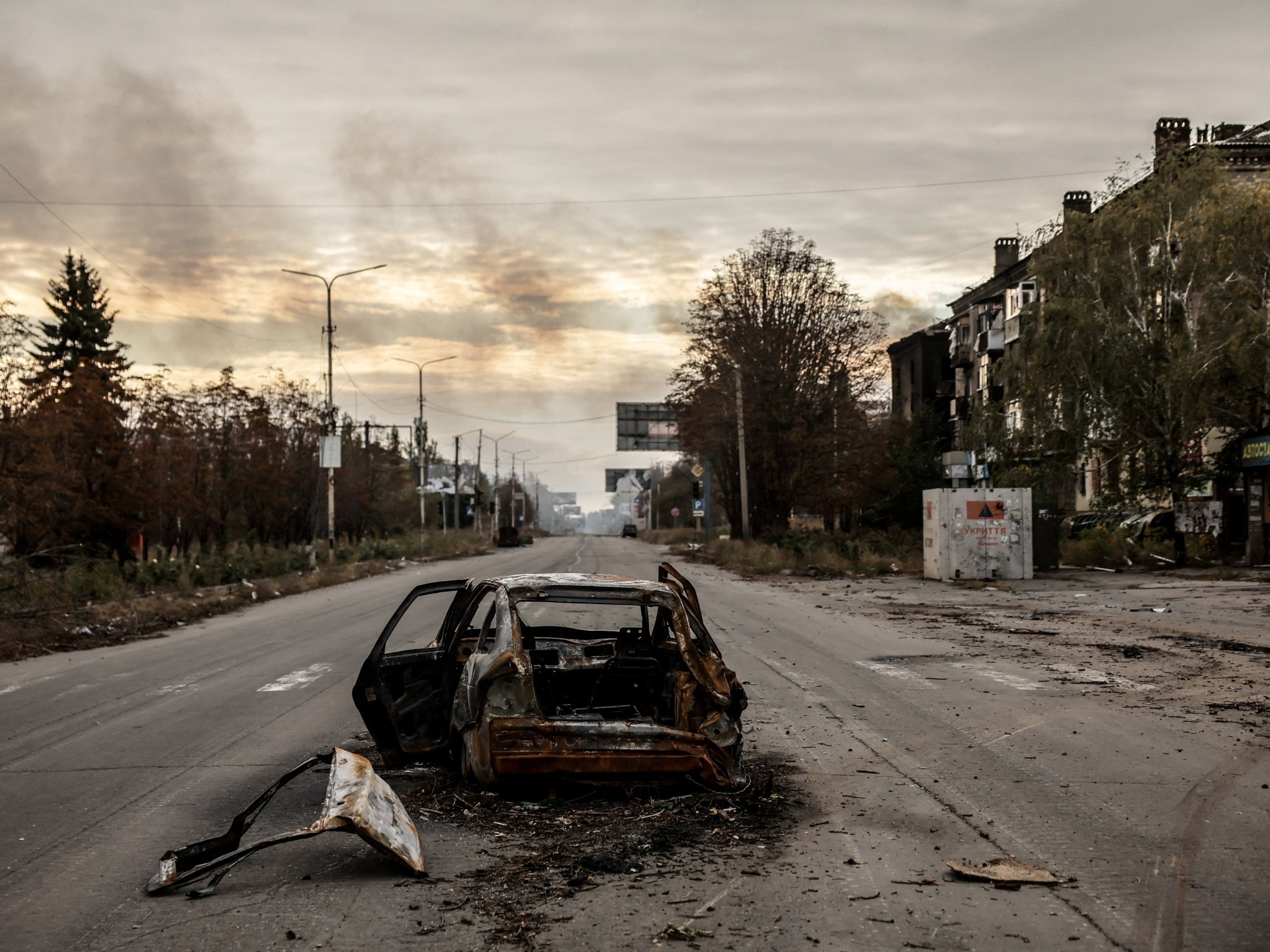
Russian forces launched powerful glide bombs and drones against Ukraine’s second-largest city, Kharkiv, in overnight attacks, hitting the city’s main hospital, wounding seven people, and forcing the evacuation of 50 patients, Governor Oleh Syniehubov said.
Russia’s Ministry of Defence said that its forces have taken control of the village of Balahan in the Donetsk region in eastern Ukraine.
A convoy of United Nations vehicles carrying aid supplies came under fire from Russian forces near the town of Bilozerka in the Kherson region, the UN’s Office for the Coordination of Humanitarian Affairs (OCHA) said, describing the attack as “utterly unacceptable”. There were no injuries in the attack on four UN trucks, two of which were set on fire by remote-controlled drones.
Local authorities have ordered the evacuation of families from dozens of villages near the all-but-destroyed northeastern Ukrainian city of Kupiansk, citing the “worsening security situation”.
Oleh Syniehubov, governor of Ukraine’s northeastern Kharkiv region, said that a total of 409 families with 601 children were told to leave 27 localities. Another official in the affected area later told public broadcaster Suspilne that the list of localities to be evacuated by families had been expanded to 40.
Russia will be able to deploy about 2 million military reservists to fight in Ukraine if needed under amendments to a law likely to be backed by the Russian parliament, according to reports.
Power outages were reported in the Ukrainian capital and other regions late on Tuesday due to a network overload and the aftermath of Russian attacks, the Kyiv City State Administration said. Power was cut in three central Kyiv districts on the west bank of the Dnipro River running through the city. Ukrenergo, which operates Ukraine’s high-voltage lines, said that lingering problems from Russian attacks on the country’s energy system had triggered outages in regions across northern, central and southeastern Ukraine.
Work is to begin this week to restore external power links to the Russian-held Zaporizhzhia nuclear power station, which has been running on emergency diesel generators for three weeks. Mikhail Ulyanov, Russia’s permanent representative to international organisation based in Vienna, told the Russian state news agency RIA that it was “vital to agree on a local ceasefire in areas where the repair work is to be carried out”.
Military aid
NATO defence ministers will meet on Wednesday to try to drum up more military support for Ukraine amid a sharp drop in deliveries of weapons and ammunition to the war-ravaged country in recent months.
European military aid to Ukraine declined sharply this summer, despite a recent NATO initiative in which member countries bought US weapons and transferred them to Kyiv, the Kiel Institute for the World Economy said.
The United Kingdom has delivered more than 85,000 military drones to Ukraine over the last six months, Secretary of State for Defence John Healey has said, according to the Press Association.
German Federal Minister of Finance Lars Klingbeil said his country would continue to “financially secure Ukraine’s defence capabilities for the next few years”, while also working with the US to “massively increase pressure on [Russian President Vladimir] Putin to end his brutal war of aggression”.
Politics and diplomacy
Ukrainian President Volodymyr Zelenskyy has stripped the mayor of the port city of Odesa, Gennadiy Trukhanov, of his Ukrainian citizenship after it was discovered he held Russian citizenship. Trukhanov could now face deportation. Trukhanov denied the claim, saying, “I am a citizen of Ukraine”, and said he would challenge the decision in Ukraine’s Supreme Court and, if necessary, the European Court of Human Rights.
Zelenskyy said he would appoint a military administration to govern Odesa, citing unresolved security concerns. Ukraine prohibits dual citizenship with Russia, and Trukhanov has long faced allegations of holding both.
A Kyiv government source told the AFP news agency that Ukrainian ballet dancer Sergei Polunin had also been stripped of citizenship. Polunin has been a vocal supporter of the Russian president. Pro-Kremlin politician Oleg Tsaryov, who survived an assassination attempt in 2023, was also among those who had their Ukrainian citizenship revoked, according to AFP.
United States President Donald Trump said he was “very disappointed” with Russian leader Putin in advance of a planned visit by Zelenskyy to Washington, DC, later this week. “I don’t know why he continues with this war,” Trump said of Putin.
Zelenskyy is set to meet Trump in Washington, DC, on Friday, where the two will discuss Ukraine’s air defence and long-range strike capabilities.
Ukrainian Prime Minister Yulia Svyrydenko said she was focusing on Russian attacks on her country’s energy grid in talks this week with US officials.
Svyrydenko described the priorities of her visit to Washington, DC, as “energy, sanctions and the development of cooperation with the USA in new ways that can strengthen both our countries”.
Russia’s Federal Security Service (FSB) said it had opened a criminal case against exiled Russian businessman Mikhail Khodorkovsky and other prominent Kremlin critics, accusing them of plotting to violently seize power. The FSB said it was investigating all 22 members of the Russian Antiwar Committee – a group of Russian politicians, businesspeople, journalists, lawyers, artists and academics all based outside the country, who oppose Russia’s war on Ukraine.
Regional security
Polish Minister of Foreign Affairs Radoslaw Sikorski warned that Europe must be prepared for Russia to strike deep into the region, calling it “irresponsible” not to build defences such as a “drone wall” on its eastern flank.
German Foreign Minister Johann Wadephul has accused China of undermining the international rules-based order through its increasingly aggressive policies in Asia and its support for Russia.
Wadephul also criticised Russia, saying Moscow is testing NATO’s resolve, violating European Union and NATO airspace, spying on Germany’s critical infrastructure and seeking to influence public discourse with propaganda and disinformation.
Trump threatened trade penalties, including tariffs, against Spain, saying he was unhappy with its refusal to raise defence spending to 5 percent of gross domestic product (GDP) and calling the move disrespectful to NATO.
Pro-Russian hackers brought down the German government’s public procurement portal, the Sddeutsche Zeitung (SZ) newspaper reported on Tuesday. The cyberattack rendered this important interface between the state and businesses inaccessible for almost a week, the report said.
Sweden will set up its first emergency grain stocks in the north of the country, a region that risks being isolated in a conflict, the government said. In its 2026 budget, Stockholm plans to invest 575 million kronor ($60m) to set up the grain reserves. Sweden revived its “total defence” strategy in 2015 following Russia’s annexation of Crimea, and more measures were introduced after Moscow’s full-scale invasion of Ukraine in 2022.
Trade
Russia’s war in Ukraine is bad for US businesses, which have heavily invested in Europe and whose profits are affected by the uncertainty that Moscow’s aggression creates, European Economic Commissioner Valdis Dombrovskis said. Dombrovskis said that in 2023, US-owned assets in Europe were worth an estimated $19.2 trillion, or roughly 64 percent of all US corporate foreign assets globally.
Harvey Price, who is autistic and has Prader-Willi syndrome, accidentally took two of mum Katie Price’s CBD gummies and they reportedly made him “nice and chilled”
View 3 Images
Katie Price said she intends to give Harvey CBD gummies as she believes it’ll help manage difficulties associated with his Prader-Willi syndrome
Katie Price has told how she has decided to give her son Harvey CBD gummies – after he accidentally took two and became “nice and chilled”.
The media personality, 47, explained she was pleasantly surprised about the effect the gummies had on her son, who is autistic, has Prader-Willi syndrome and vision-impairing Septo-optic dysplasia. Katie insisted she hadn’t tried anything with Harvey that hadn’t been medically prescribed, but he’d been “nice and chilled” after taking the CBD and that it had “taken the edge off” his anxiety.
The mum made the disclosure in a video she posted on Instagram, in which she talks to friend Serena Stregapede. The clip promotes Olympic boxer Anthony Fowler’s company, Supreme CBD, which manufactures various products including the gummies in question.
Katie tells Serena, who is Anthony’s girlfriend: “Because Harvey, he’s got ADHD, behaviour problems all of that. He took a couple. And I’m like Harv! But then I thought, you know what? Just see what it does to him, because he’s got all his medical problems. And he was just nice and chilled.
“When I say chilled, normally he gets a bit of anxiety, especially if I’m taking him out somewhere, then he starts talking, talking more. And I thought why not give him two?”
READ MORE: Frail Katie Price showcases surgically enhanced figure after weight loss concernREAD MORE: Katie Price’s boyfriend JJ Slater spotted spending quality boys time with Harvey
Only around 2,000 people in the UK have Prader-Willi syndrome, a genetic disorder which causes a wide range of physical symptoms, learning difficulties and behavioural challenges. Little research has been carried out into it, and so management typically involves addressing the symptoms and associated difficulties.
Recalling Harvey’s accidental use of the CBD, Katie, from Brighton, East Sussex, continued: “Because he saw them in the jar, when I went ‘No, you can’t have them, they’re mummy’s’ and he’s like, ‘No I want one!’ So I said you can have two and he took the green ones because he loves green.
‘And I said, ‘Do you like them?’ and he said, ‘Yeah, can I have more?’ and I went, ‘No, we’ll have two later when you come back.’… And then yeah, it calmed him down as well.So he’s on all the proper medicationsfor behaviour and stuff and I gave him two of them because he’s like 28 stone, so I thought it’s be all right to have two. And it just chilled him.
“I’ve never ever gone out the box of tryinganything else than what he’s been prescribed and because I know it’s not a drug, I just gave him two green ones and it just slightly took the edge off for him. So I was really surprised.”
There is no published research that CBD helps manage difficulties associated with disorders like Prader-Willi syndrome. Supreme CBD products can be bought over the counter at shops, pharmacies and online, amd so Katie now intends to give her son the gummies regularly.
But the NHS says there is no guarantee that even such products sold in health stores will be of “good quality”. Moreover, the oil can affect how other medicines work, meaning a specialist should always be consulted about using it in conjunction with other treatments, while doctors should monitor users regularly because it can affect the liver.
Yet, captioning the video on her social media, Katie insisted: “I would only ever recommend stuff that works to you all and I would only ever give Harv the gummies after trying them myself and seeing how much of a difference they have made for me.”