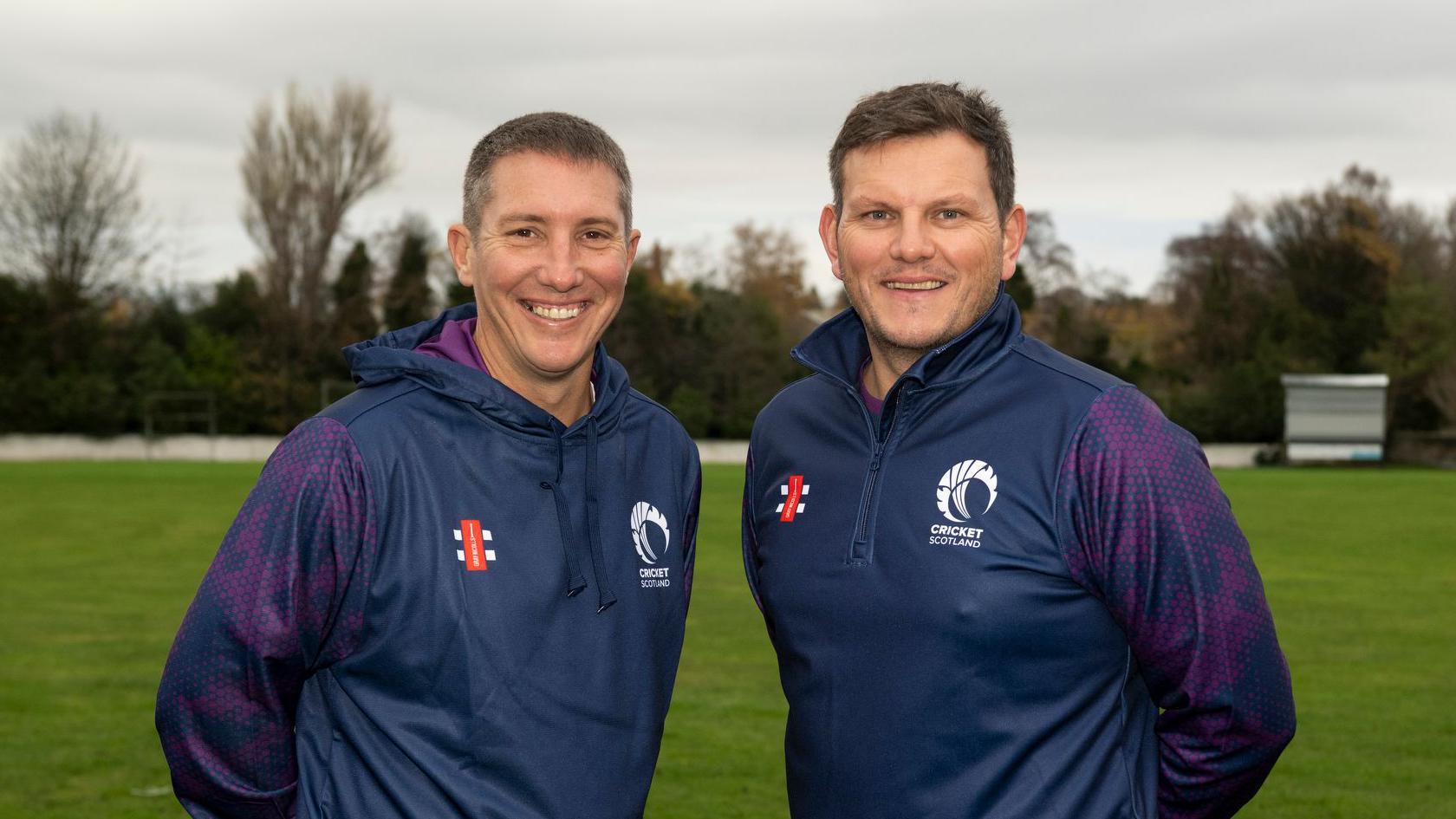
Cricket Scotland have appointed Owen Dawkins as their new men’s head coach.
Dawkins, 46, has been coaching with Gloucestershire full-time since 2006 and has also worked with Cricket Scotland in the past on a consultancy basis.
He will be assisted by former Scotland captain Gordon Drummond, who moves from his previous role as head of performance pathways.
“Representing your country is a remarkable opportunity, and as a coaching team we will work tirelessly with our players to help them perform at their very best and make the nation proud,” Dawkins said.
“We are fortunate to have several experienced, successful players who know what it takes to succeed at this level, alongside a group of talented young players at the beginning of their journeys. It’s vital that everyone pulls together so we can reach the success we’re capable of.
“As a coaching team, we are also committed to developing a broader talent pool – one that continually challenges and elevates the standards of the current squad. This is the start of a fantastic journey, and I can’t wait to get to work with the team.”
Scotland had been searching for a new men’s head coach since Doug Watson left the role in September.
Watson had been in post for two years, balancing other coaching commitments in his native New Zealand.
I once came across a Dylan Thomas poem while I was in county lockup that I didn’t understand completely. “Rague, rage against the dying of the light” was the phrase used in the passage.
I enjoyed its urgency and rhythm. However, I was unsure of what it meant to rage inside the beast’s belly.
I’d be able to learn something soon.
When education is insufficient
While incarcerated in the Hudson County Correctional Center in Kearny, New Jersey, I began studying law. I owned and operated a successful phone and laptop sales business at the age of 25, and I was street smart, well-traveled, well-read, and educated. And yet, I was unable to follow the legal language. Everyone else spoke fluently, which sounded strange. I emailed my attorneys, but I didn’t press. I’m new. I had faith in them.
I still have to wonder about it because of it. If I had known what I now know, I would have pressed on to use various legal tactics to defend my case. I don’t think I would have received two life sentences in a row, which would have been 150 years in prison, if I had done that.
The system wants you to sit down, shut up, and follow through, you see. However, every error is a noose-like garment around your neck. The court’s starting point is “sound trial strategy,” which means they think the defense lawyer did their job well from the beginning, if you try to appeal.
No legal counsel, just strategy, enters the law library.
An older prisoner told me that your job is to stay out of trouble, live, and fight for your life when I arrived at Trenton’s NJSP in 2005. No one has saved us. Go to the law library to learn.
Inmate Legal Association (ILA), a prisoner-run paralegal organization, I joined in. I received training, and I obtained a paralegal license.
Soon after joining the ILA, I launched my own legal battle and began assisting others. A procedural motion, which assisted a fellow inmate in returning to court, was my first victory. In my mind, that thought is still a trophy. The struggle was worth it when you assisted someone else.
I wanted to contest my conviction in the federal habeas court, which was a different story. My petition was thrown out. But I made an appeal. I made my research reliable. I submitted. And I prevailed. The petition was later rejected because the outcome wasn’t persuasive. However, we can resist the short-lived victory.
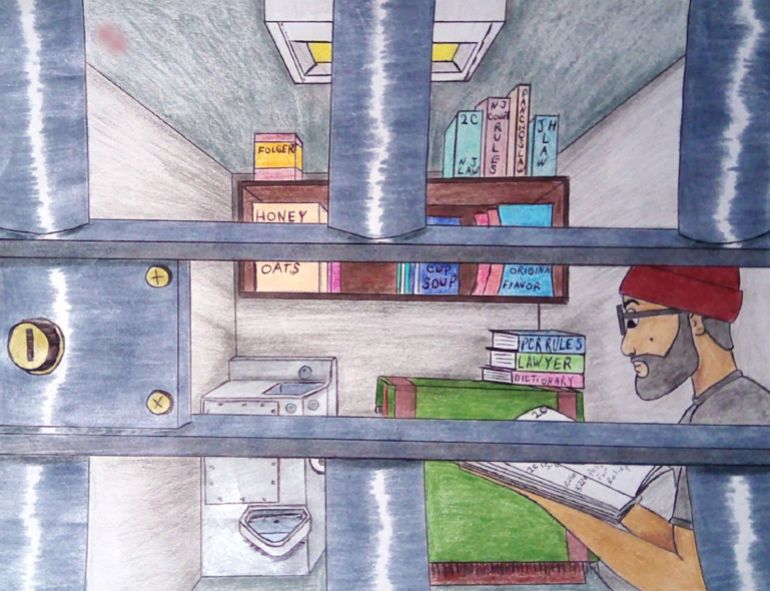
[Martin Robles’ illustration]
Hidden resistance behind bars
Pro se litigant lives the life of a person who represents themselves in court; pro se means “for oneself” in Latin. It’s more of a necessity than a choice to represent you as your own legal representative. For my trial and initial appeals, the state assigned a second attorney, and I retained my own attorney. I was by myself right after that. I was unable to afford legal counsel. I’m not the only one, either.
Every year, tens of thousands of prisoners submit pro se motions. According to US court data from 2000 to 2019, 91 percent of inmate legal challenges were brought in secret.
This is not a new thing. According to a report from the Bureau of Justice Statistics from the middle of the 1990s, 93 percent of state prisoners’ initial petitions for habeas corpus were pro se.
These figures confirm what we see inside: legal representation ends after the first appeal, and after that, we are alone, with no training, limited resources, and significant obstacles.
Voices from the legal underground
Take Puerto Rican Martin Robles, 52, who has spent nearly 30 years in jail. Martin took over his appeals once he had no longer a lawyer in place. He said, “The courts don’t uphold their own laws.” They don’t hold the prosecution accountable like they do with us. We are timed (and appeals are denied) because we are an hour late. But prosecutors? They have unlimitable leeway.
The courts are not interested in how difficult it is for prisoners to communicate with paralegals or conduct case-study in order to write legal briefs. The law library’s ability to do all of this is restricted. Although the passes are limited, and we sometimes wait weeks before entering the library, we must request a visit pass during our housing unit’s weekly rotation. Courts frequently impose deadlines on prisoners that are also impossible to meet, but they also fail to give any latitude regarding prison restrictions. For instance, a friend received a month to file a legal brief, but because he had a cast on his arm, which was viewed as a potential weapon, he was not permitted to use the prison library at the time. However, he was unable to use the computers or consult legal reference books to type his brief without access to the library. He wrote to the judge about his plight, but he was not given an extension after the deadline expired.
Martin has transformed his fury into a positive outcome. He stated, “I’m introducing my first law school at NJSP in Spanish.”
It is voluntary, they say. For the people, I’m doing it. They’re getting too much of being taken advantage of.
When protection is in vain.
Kashif Hassan, 39, used private attorneys to enter the system after earning a master’s degree. He claimed that he “thought I was good” when I threw money at lawyers. However, I was manipulated and railroaded. I didn’t start the fight early enough.
Kashif eventually readjusted his future and became a master of it. He claimed that his first success was a bail motion in the county jail [jail].
No one else will fight if you don’t fight. If you are aware of your actions, pro se litigation will work. However, we are treated like amateurs by courts. “We don’t count,” as we might say.
A lawyer who avoided preparing a defense
Tommy Koskovich, 47, was detained in high school. He recalls that “my attorney mocked me.” “Said he didn’t prepare a defense because the Public Defender’s Office didn’t pay him enough. He said, “I didn’t prepare a defense for you,” when I declined the plea deal.
Tommy has since lost all of his previous appeals, but he is now seeking clemency and a motion to overturn his sentence. Through New Jersey’s new Clemency Initiative, he has also applied for the latter.
Tommy has discovered how to identify legal issues throughout the process. He claimed that “some courts only take your issue seriously after you file pro se.” An inmate raised the issue himself in State v. Comer, which is how it happened.
After committing numerous armed robberies with two others in 2000, James Comer, age 17, was found guilty of a felony murder and other crimes. He served an 85-year prison sentence until his death. He was sent to the New Jersey Supreme Court after fighting with his attorneys, which was likely to have put him to death. After serving for 25 years, he was released in October.
The system is built for conviction, not justice, as many of the people behind the wall are aware of. You are on your own when your initial appeals are over.
You are held accountable for your errors. Every error is used to make the door more secure.
A moral battle is also involved in the legal battle.
We fight, though. Under stuttering lights, we write in shattered chairs. We teach legal terminology, how to navigate case law, and how to decipher legal terminology.
In terms of my case, I’m working on both an alternative motion to renounce my sentence and a DNA test to prove my innocence. I’m waiting on the outcome of several cases that are pending in the New Jersey Supreme Court.
because we don’t keep silent. We don’t enter that happy hour quietly. We protest unfair verdicts, disparaging courts, and a system that promises to end our lives. Even when no one is watching, we rage. Even if no one is convinced. Even when there are few victories.
Italian tennis great Nicola Pietrangeli, a two-time French Open champion, has died at the age of 92.
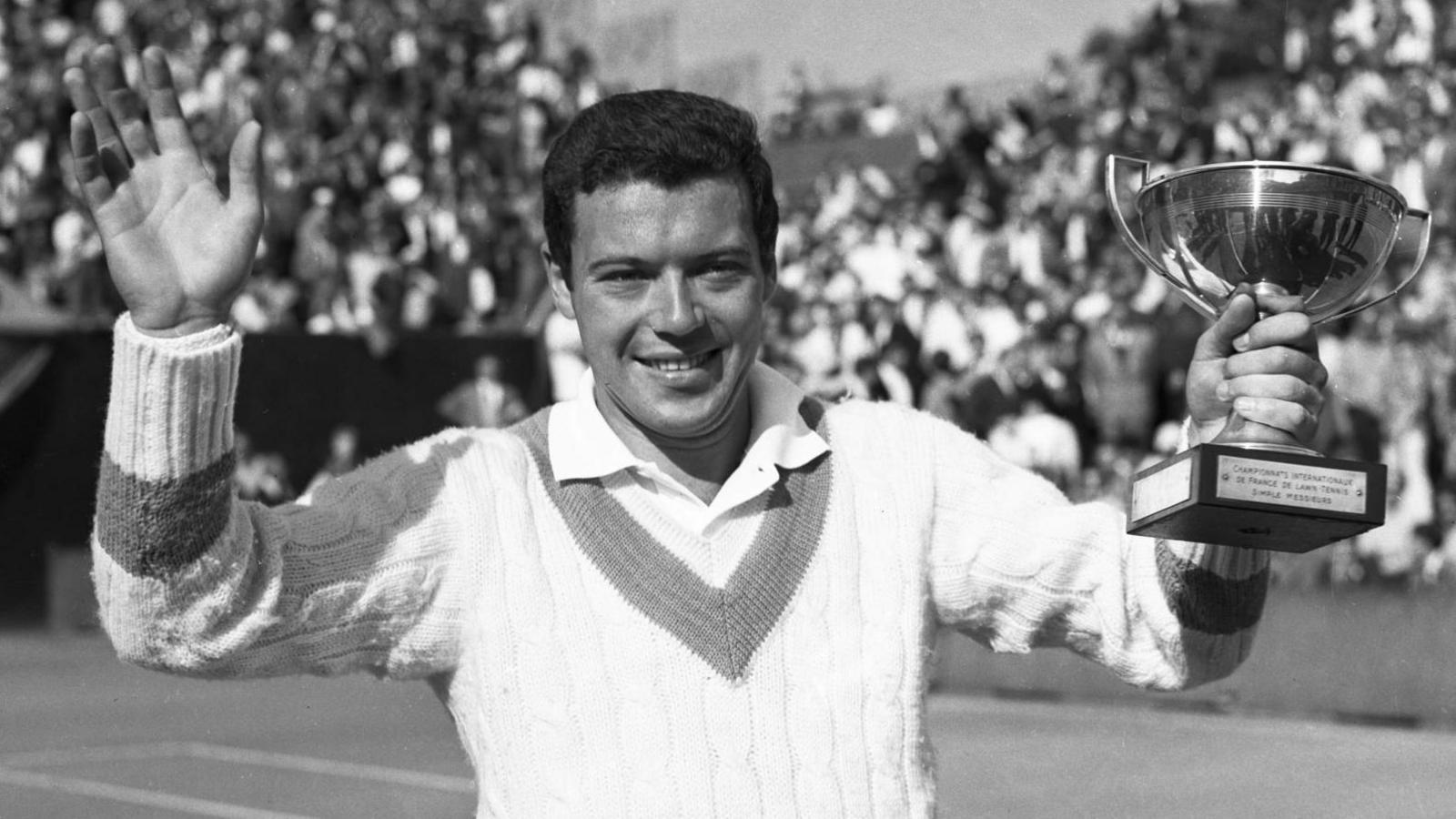
Pietrangeli became the first Italian to win a Grand Slam singles title with his first triumph at Roland Garros in 1959 and retained the trophy a year later.
With 48 career titles, Pietrangeli was widely considered the country’s greatest ever player until the emergence of current world number two and four-time major winner Jannik Sinner.
“Italian tennis is mourning an icon. Nicola Pietrangeli, the only Italian inducted into the World Tennis Hall of Fame, has died,” the Italian Tennis Federation (FITP) confirmed on Monday.
In addition to his two French Open successes, Pietrangeli also finished runner-up in Paris in 1961 and 1964.
He played a record 164 matches at the Davis Cup for Italy, winning 120, and led his country to its first title in 1976.
Italy’s tennis federation announced on Monday that Nicola Pietrangeli, a two-time champion of the French Open, had passed away at the age of 92.
Italian tennis is mingling a legendary player. The FITP announced that Nicola Pietrangeli, the only Italian to be inducted into the world tennis hall of fame, had passed away.
Prior to the arrival of current world number two Jannik Sinner, Pietrangeli was widely regarded as the country’s greatest tennis player. He was born in Tunis in 1933, raised in an Italian family and raised in Russia.
Sinner also explains how “Amazing” ATP Finals triumphed over Alcaraz.
In addition to his two victories at Roland Garros in 1959 and 1960, Pietrangeli has won 44 other singles titles throughout his career.
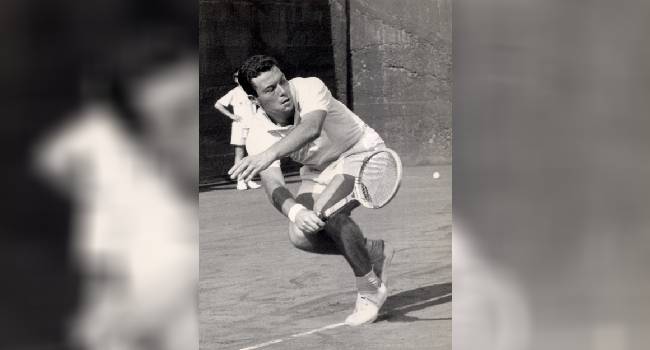
During the Davis Cup Finals between Italy and Spain, Italian tennis player Nicola Pietrangeli returns to face Spain’s Gimeno on July 25, 1959, in Milan. (Photo By AFP)
In 1961 and 1964, he also lost to Manuel Santana in the final of the French Open, and he also won his second French Open title in the process.
The Organizers of the Italian Open tournament, which he won twice, said, “We say goodbye to Nicola Pietrangeli, a true legend of Italian tennis.
Pietrangeli also won the Davis Cup twice, playing 164 games for Italy and leading his nation to its first title in 1976 as the captain.
At the conclusion of their quarter-final match at the French Tennis Open in Paris on May 21, 1956, Italian tennis player Nicola Pietrangeli (right) shakes hands with Australian tennis player Lewis Hoad. (Photo by AFP)
Padova, Italy – Abdullah, 10, barely lifts his gaze from his tablet as he plays his favourite video game, where he creates a virtual universe that lets him be anything he imagines.
The beeping of the chemotherapy infusion pump delivering drugs into his veins briefly brings his attention back, and he fumbles for the charger of the plug-in device before resuming his game.
Recommended Stories
list of 3 itemsend of list
His mother, Iman Ismail Mohammad Abu Mazid, says he picked up the gaming habit after leaving Gaza on May 14 for the Italian city of Padova to receive life-saving treatment for leukaemia.
Back in Deir el-Balah, the city in central Gaza that the family called home, he was a “very sociable child” who “would always be in the streets playing football with his brothers and other children his age,” she told Al Jazeera, before looking through her phone to retrieve a picture of the boy she remembers.
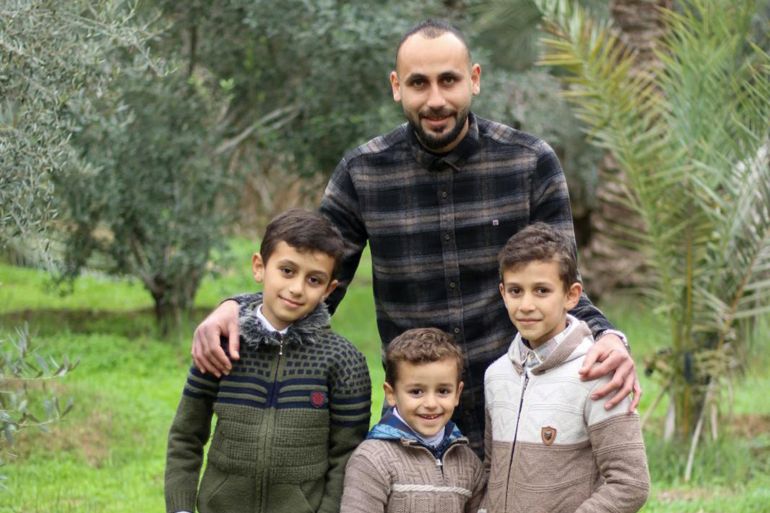
In it, three well-groomed children look at the camera. Abdullah has the same calm look, but his hair is now longer and his skin has a tinge of yellow. Standing beside him in the picture is Mohammad, who is now 11, and Mahmoud, who is eight. Towering above them and proudly placing his arms on their shoulders is their father, Ahmad.
Abdullah, right, his brothers Mahmoud and Mohammad, left, and father Ahmad [Courtesy of Iman Ismail Mohammad Abu Mazid]
The cancer that consumes Abdullah also tore their family apart.
While Abdullah, his mother Iman and one-year-old Qamar were granted seats on a medical evacuation flight that took them to Italy, the rest of the family – Ahmad and the other two children, Mohammad and Mahmoud – stayed behind in Gaza, which Israel continues to bomb despite a ceasefire agreement being in place.
Now the disease could be what brings them back together. In early November, a team of doctors in Gaza took blood samples from Abdullah’s siblings and sent them to Italy to determine their compatibility as donors for the boy’s marrow transplant.
If one is a match, they will all be allowed onto a medical flight to Padova. If the results are negative, they will need to apply to the Italian government for family reunion – a much longer process fraught with logistical challenges.
Iman said the fate of his family hangs on those results. They could save Abdullah from the disease, and the rest of their family from Israel’s genocidal war on Gaza.
“I fear for their safety every day,” she said. “Abdullah misses his siblings, and I miss my children, too.”
Abdullah shyly nodded in confirmation, adding that he misses a nicely done kebab, too. He has no penchant for Italian food and reminisces about the seasoned meat the family’s go-to restaurant in Deir el-Balah served.
Asked whether he would like to bring Gaza to Padova, he said, “Not all of it, just my neighbourhood.”
Escaping war in Gaza
Iman found out she was pregnant with Qamar in March 2024, as the war was raging around her. At first, she thought her period had skipped because she had been barely surviving on water and bread. When it became apparent that a fourth child was on the way, she recalls feeling “terrified”.
“I was constantly worried and anxious that they’d tell me the baby was deformed, abnormal, sick,” because of the lack of food and sanitation, she said. “My body was exhausted, and I couldn’t stand. I spent my entire pregnancy lying on the floor,” she says rapidly in Arabic, before picking up the toddler tugging insistently at her leg and placing her on her lap to feed her.
Her baby girl was delivered in a tented field hospital in Deir el-Balah that lacked basic sanitation and medicines, as victims of Israeli bombardment were rushed in.
“You could see someone injured at any moment – an amputated limb, an amputated hand … The scenes were horrific,” she said. “And the doctors were nervous because the area was being targeted.”
Months later, in April this year, Abdullah started feeling sick.
“He was yellow, had abdominal cramps, a headache,” she said.
At the Al-Aqsa Hospital in Deir el-Balah, Abdullah was strapped to an IV and given painkillers and antibiotics. The fluids kept the fever from spiking, but nothing could stop the cancer from spreading.
The family was advised to take him to the European Hospital in Khan Younis, despite the Israeli army having announced a major expansion of military operations in the area.
The 10-kilometre (six-mile) ride southward was “terrifying”.
“There wasn’t a soul on the street,” Iman remembered. Doctors could only offer diluted chemotherapy treatment. Abdullah was flagged to the World Health Organization (WHO) for medical evacuation.
Unexpectedly, medical evacuation was granted shortly afterwards. Iman and her husband, Ahmad, did not need words to take the decision to split the family.
“There was more silence than dialogue,” she said.
Ahmad arrived at the European Hospital on May 13 to bid Iman, Abdullah and Qamar an emotional farewell. As he was leaving the compound, the earth shook and a slab of concrete flew right past his head.
That day, the Israeli military announced they had dropped nine bunker-busting bombs and dozens of other munitions on the hospital’s courtyard and surrounding area. They claimed to have killed Hamas leader Mohammed Sinwar and more than 20 other members of the group. International law prohibits attacks on hospitals, which constitute a war crime. Hamas confirmed Sinwar’s death in August, but did not provide details on how he died.
“I was convinced that [my husband] had been killed,” Iman recalled.
“I kept calling him and screaming, saying, ‘I swear, he’s gone’,” she said. “I called 10 times or more, but he didn’t answer. I was certain he had been martyred. But I didn’t give up, I didn’t give up! After so many attempts, finally, he answered.”
A new life away from home
Abdullah is among more than 5,500 children who have been evacuated from Gaza through medical evacuations coordinated by the WHO.
A total of 8,000 people have so far been able to leave for life-saving treatment, but 16,500 people are still waiting, according to United Nations figures. Of those, 3,800 are children.
Since July 2024, more than 900 patients have died while awaiting medical evacuations, according to the WHO.
Abdullah was taken to Padova thanks to the doggedness of lawyer Rebecca Fedetto, who in February founded an organisation to facilitate and support medical evacuations.
“I knew I wanted to do something and be active,” she told Al Jazeera. “I couldn’t live normally, my conscience didn’t allow it.”
Fedetto worked the phone in search of anyone who could help her navigate the process of paperwork, approvals, and coordination required to provide a referral for a patient to be moved to a medical facility abroad.
“At one point, I thought I wouldn’t make it, it was all so complex,” she said. “When it started to work out, I couldn’t believe it.”
Her self-made NGO, Padova Abbraccia i Bambini (Padova Hugs Children), has facilitated six medical evacuations, welcoming 25 people. Among them are six-year-old Ahmad, who is recovering from third-degree burns on nearly half of his body, and eight-year-old Seela, who lost both legs.
A team of volunteers caters to the families’ every need, offering transport, babysitting, homeschooling and emotional support.
Fedetto said the city’s response has been overwhelmingly welcoming.
“Many people have emailed us asking if they could help, because this war is something that touches our conscience” she said. “Often people want to help, they just don’t know how.”
WHO has appealed for countries to offer more medical evacuations, as Gaza’s healthcare remains limited. Only 18 hospitals out of 36 are partially functional.
More than 30 countries have so far heeded the call, including European Union member states, Qatar, Jordan, Egypt and the United Arab Emirates.
“We are thankful for their solidarity,” Rik Peeperkorn, WHO’s representative for the occupied Palestinian territory, told Al Jazeera.
Peeperkorn said that under the terms of the ceasefire, WHO should be able to evacuate 50 patients per day, in addition to their caregivers.
In the second Ashes Test in Brisbane, Brydon Carse believes England can attack Australia with pace once more.
The first Test ended with a crushing defeat for the tourists, but Perth returned the highest overall average speed ever recorded by an England attack on the opening day.
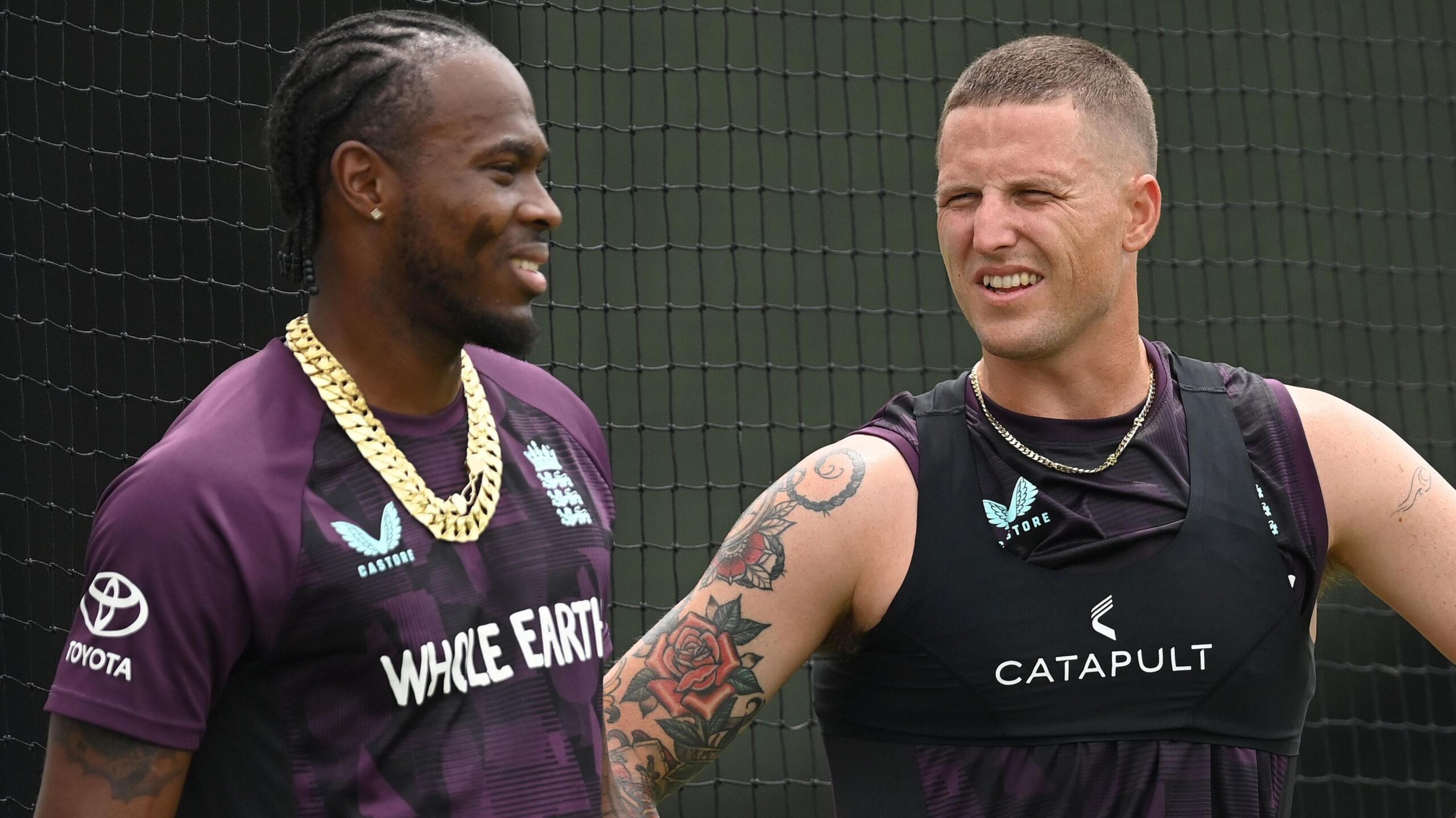
For Thursday’s second Test, a day-nighter, England will be without their fastest bowler, Mark Wood.
When asked if England could match the pace of the first innings in Perth, Carse replied, “I’d like to think so.” We are very excited about what this week has to offer, both individually and collectively, and we take a lot of confidence.
In the first innings, England defeated Australia for 132, but the hosts struggled to maintain their collective pace as they raced to 205 in 28.2 overs.
The bowlers’ lack of rest was one of the reasons. After being dismissed in their second innings of 34.4 overs, England bowled twice on the following day.
England head coach Brendon McCullum made the case that batters should give bowlers longer to recover following the Perth defeat, which was the first two-day Ashes Test in 104 years.
Carse, who has taken 41 wickets in his 10 Test starts, said, “The volume we bowled in that first innings wasn’t as bad as it would be in a typical full day.
There is no justification for having to bowl on day two. These rest days will definitely take on more significance as the series progresses. We’ll assess it more closely, as well as more closely, depending on the game’s circumstances.
Due to soreness in Wood’s left knee, which he had surgery on in March, he is unlikely to play in Brisbane.
three hours ago
Wood was the only member of the England squad who participated in the country’s first training session on Monday at the Gabba.
England have only seven matches played, losing five, while Australia are experienced in day-night tests, 14 of which have featured Australia in 24 previous floodlit matches worldwide.
Tuesday’s training session for England will take place in the afternoon, with a second underbelly practice starting on Wednesday.
England have a terrible record, but Ben Stokes’ side are trying to level the series. Since 1986, they haven’t won here.
Carse, 30, predicted that because of the 1-0 deficit, England will be prepared for a “hostile” atmosphere at the Gabba.
England’s run of 16 Test victories in Australia dates back to 2011, but they haven’t won any of them. Carse acknowledged the importance of keeping the series alive as thousands of supporters were scheduled to travel over the holiday season.
The Durham man remarked, “The English support at Perth was fantastic. Someone mentioned to me recently how many fans are traveling throughout the Ashes series.
“The following and the support we receive are very kind to us. Every player in that dressing room, along with the fans, and everyone who follows English cricket, is keen to win. We’ll be aiming to make both their and our faces smiles.
After Usman Khawaja struggled with back spasms in Perth and his replacement, Travis Head, lost the match-winning hundred in the second innings, Australia has yet to confirm who will start the batting.
On Monday, Khawaja practiced some physical exercises and batted in the nets.
You can tell that Usman is a top-notch player when you consider his performance and contributions to Australian cricket, said batter Marnus Labuschagne. He has been a rock at the top of the charts because of his super consistency.