Archive December 8, 2025

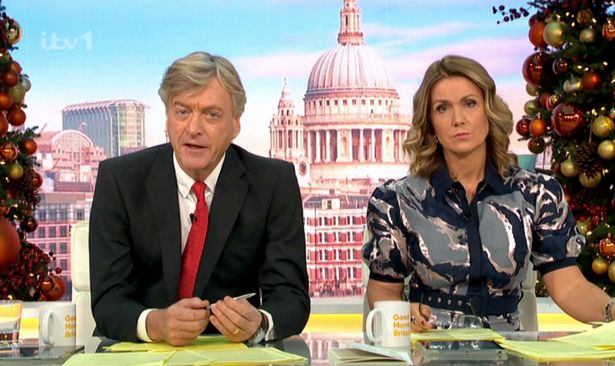
Richard Madeley halts Good Morning Britain with huge Prince Harry bombshell

Good Morning Britain was halted as Richard Madeley shared a huge Prince Harry update. It comes after the Duke of Sussex is believed to have won a government review into his demand for armed security when he visits the United Kingdom.

Before Harry and his wife, Meghan, left the UK for a life in California, the Duke had round-the-clock armed security due to being a senior member of the Royal Family. And while his father is the King, Harry’s armed protection was removed after he stepped down as a working royal.

An assessment in February 2020 stated that his risk had significantly lowered. The Duke, who served in Afghanistan, was previously one of the most at-risk public figures, alongside his late grandmother, Queen Elizabeth and the Prime Minister. But during Monday’s episode of GMB, anchor Richard delivered huge news to viewers.


Richard Madeley halted Good Morning Britain to deliver huge Prince Harry news

The broadcaster revealed that he had “breaking news” regarding Harry’s battle with the Home Office to have his armed security reinstated when he is in the UK.

Richard said: “Breaking news this morning that Prince Harry may get his armed protection back when he comes to the UK. It could mean that the King is reunited with his grandchildren for the first time in three years.” Prior to Richard’s news, Ranvir Singh spoke to correspondent Richard Gaisford, who explained that reviews are often carried out on a regular basis for high-profile individuals.

Gaisford explained: “It may be that word has come down that relations are thawing amongst members of the Royal Family, and it would be useful to have Prince Harry back with his family as well.” He also believes that the review could mean a reunion for the Duke and his father, the King, as well as his extended family.


Richard explained that the decision could see Harry reunited with his father, King Charles


Richard explained that the decision could see Harry reunited with his father, King Charles

Harry has previously said that he feels it is not safe to bring his wife and their two children, Prince Archie, six, and Princess Lilbet, four, to the country he grew up in due to the security threat he faced.

The Duke has battled the High Court and Home Office to have his security reinstated due to the risk he faces on a regular basis, but claimed it was an “establishment stitch-up” when he previously lost the court battle.

But The Sun has claimed that The Royal and VIP Executive Committee (Ravec) has now instructed its Risk Management Board to reassess Harry’s risk. It’s claimed that the process is currently underway, and evidence has been taken from the government, the police and Prince Harry’s staff.


The Duke of Sussex had his automatic armed protection removed when he stepped down as a senior working royal in 2020


The Duke of Sussex had his automatic armed protection removed when he stepped down as a senior working royal in 2020
(
Variety via Getty Images)

The decision is expected to be delivered next month. Should Harry’s risk assessment state that he faces a significant risk, it would mean that Brits would pay for the security whenever he returns to the UK.

Currently, if Harry plans to return to the UK, he has to give London’s Metropolitan Police 30 days’ notice so they can run a case-by-case assessment on the Duke’s security and risk. After the High Court decided not to reinstate Harry’s automatic protection, the Home Office said it was “pleased” by the outcome.

But Harry was far from pleased, saying: “The other side have won in keeping me unsafe. I can’t see a world in which I will be bringing my wife and children back at this point.”

Since Harry quit his life in the UK, he lost his home, Frogmore Cottage on the Windsor Castle estate. He has only returned to the UK a handful of times on his own, but his family have returned on just a few occasions – for the Platinum Jubilee of the late Queen, but Archie and Lilibet remained in California when Harry and Meghan were in the UK when his grandmother died and for her funeral.

A spokesperson for the government said: “The UK government’s protective security system is rigorous and proportionate. It is our long-standing policy not to provide detailed information on those arrangements, as doing so could compromise their integrity and affect individuals’ security.”

Like this story? For more of the latest showbiz news and gossip, follow Mirror Celebs onTikTok,Snapchat,Instagram,Twitter,Facebook,YouTubeandThreads.
Jessie J shares cancer update and reveals ‘it could come back’

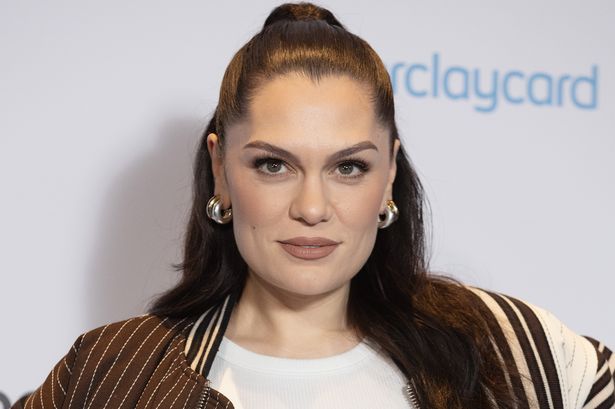
Jessie J has opened up about her cancer diagnosis, after originally finding a lump in her right breast this summer, which was removed after she underwent a mastectomy

Jessie J has revealed that there’s a chance her cancer “could come back”. The musician announced earlier this year that she had been diagnosed with breast cancer and was undergoing treatment.

At the time, the 37-year-old remained positive after the disease was caught in the earlier stages, and it wasn’t an invasive form of the disease. But now, the Think About That hitmaker has revealed that despite undergoing treatment, there is a chance that the cancer could return in the future.

Jessie previously underwent a mastectomy as well as a second operation, which resulted in the hitmaker being forced to postpone her tour due to the complexities of her operation. Now, in a new interview, Jessie admits that while she understands there is a chance it could return, she’s not letting this slow her down.

Jessie, who recently performed at the Capital FM Jingle Bell Ball with Barclaycard, admits that when she was first diagnosed, she “wasn’t scared,” but felt “out of control.” But while most people would instantly bottle things up, Jessie revealed that she’s a “sharer” and had no intentions of sitting at home. Instead, her diagnosis gave her a completely new outlook on life.

“I’ve been really lucky, super lucky to find it so early,” she told ABC News. She added: “It wasn’t invasive, thank God. I know there’s a chance it could come back, but until then, we’re living life.” Sharing her news so publicly was a huge decision as she wanted to break down the barriers surrounding the topic.

It comes after Jessie had an emotional conversation with Catherine, Princess of Wales, at the Royal Variety Performance, where the pair both spoke about their experiences with the cruel disease. Speaking of her conversation with the future Queen, Jessie said: “I hugged the Princess!”

She told the Mirror: “It was lovely, honestly. I think the whole feeling for me was obviously so personal. I felt that I was Jessica. I wasn’t Jessie J. I was just purely there to, like, represent the people that feel lost and lonely and scared, and that’s why I wore the sweatsuit to represent the people that are on the sofa feeling scared and alone and depressed, and it’s so beautiful what they’re doing.

“Kate and women just show they’re actually speaking up for people that feel suicidal and alone. And obviously, mum to mum, with breast cancer in the public eye, I wanted to acknowledge that. It wasn’t a moment that I even thought that people would even see, I was with her in that moment. It was lovely to have a second to just, honestly, give another mama a hug, see you.”

Jessie postponed her No Secrets Tour across the UK and Europe until next year while she awaits another operation. Speaking previously about her diagnosis, the singer said: “I’m just grateful for the lessons and grateful, honestly, for the connectivity that has given me with so many people having cancer.

“I wouldn’t have had the beautiful conversations that I’ve had. And I’ve been a better parent, I’ve been a better person. I’ve honestly not sweated the small stuff. Some things that used to stress me out don’t any more, because when life turns into something that you feel like you can’t control, you just gotta sit the f*** down.”

Article continues below

If you have been affected by this story, advice and support can be found at Breast Cancer Support.

How many Syrians have returned home one year since the fall of al-Assad?

December 8 marks one year since the al-Assad dynasty, which lasted 54 years, was removed from power by a rebel offensive.

The 14-year-long war led to one of the world’s largest migration crises, with some 6.8 million Syrians, about a third of the population, fleeing the country at the war’s peak in 2021, seeking refuge wherever they could find it.

More than half of these refugees, about 3.74 million, settled in neighbouring Turkiye, while 840,000 found refuge in Lebanon and 672,000 in Jordan.

The animation below shows the number of Syrian refugees who fled from 2011 to 2025, highlighting the top 10 countries that hosted them.

Now, as Syria is entering a new chapter, millions of refugees and members of the diaspora are weighing the decision to return home and rebuild their lives.

‘The feeling of belonging’

Khalid al-Shatta, a 41-year-old management administration professional from Damascus, decided to return to Syria after fleeing the country in September 2012.

Al-Shatta, along with his wife and one-year-old son, first fled to Jordan by car before flying to Turkiye, which became their temporary home.

Al-Shatta recalls the anticipation surrounding al-Assad’s fall. On the night it happened, he said, everyone stayed up to watch the news.

“The moment Syria was liberated, we made our decision,” he told Al Jazeera. “My family and I came to the conclusion that we have to return to Syria, and be part of its future,” he explained.

Al-Shatta describes returning to Syria for the first time in 13 years and feeling “like I have never left Syria before, with one difference, the feeling of belonging to this country, to this nation, this land”.

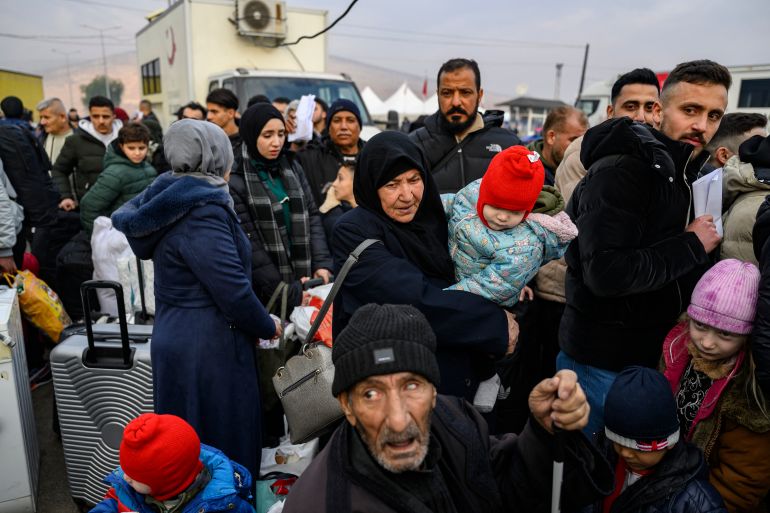
Syrian refugees living in Turkiye wait to enter Syria at the Cilvegozu border crossing gate in Reyhanli on December 12, 2024, following the toppling of Bashar al-Assad [Yasin Akgul/AFP]

How many Syrians have returned from abroad?

Al-Shatta and his family are among the more than 782,000 Syrians documented by the International Organization for Migration (IOM) who have returned to Syria from other countries over the past year.

Of those who have arrived from abroad, 170,000 have returned to Aleppo, 134,000 to Homs and 124,000 to rural Damascus.

INTERACTIVE-Syrians returning from abroad-1765088067
(Al Jazeera)

Since returning to Damascus, al-Shatta has opened his own business, focused on power solutions. However, he says many returnees are struggling to find work with suitable salaries.

“Syria is not cheap [to live] compared with the average salaries; there are job opportunities, yet the salaries are challenging,” he says.

He explains how the quality of life varies greatly for Syria’s population, which now stands at 26.9 million. “Some families are living on $150 to $200 per month, while others live on $1,500 to $2,000, and some earn even more,” he explains.

Despite the rise in returns, limited job opportunities and high living costs continue to undermine long-term resettling. Housing remains unaffordable for many, leaving returnees in damaged homes or expensive rental units.

According to the IOM, while 69 percent of Syrians still own their property, 19 percent are renting, 11 percent are being hosted for free, and 1 percent are squatting.

INTERACTIVE-Population distribution across Syria-1765088062
(Al Jazeera)

New EU asylum guidelines

In the days following the fall of al-Assad, several European countries – including Austria, Belgium, Denmark, Germany, Greece, Italy, Sweden, and the United Kingdom – announced plans to pause asylum applications from Syrians.

The freeze applied to both new applications and those already in process, leaving many Syrians in limbo about whether they would be accepted, rejected or deported.

As of mid-2025, total asylum applications across the EU+ – European Union countries plus Norway and Switzerland – fell by 23 percent compared with the first half of 2024.

The decline was driven mainly by a steep drop in Syrian applications. Syrians lodged about 25,000 applications in the first half of 2025, a two-thirds decrease from a year earlier.

For the first time in more than a decade, Syrians are no longer the largest nationality group seeking asylum in Europe.

On December 3, the EU issued updated guidance for Syrian asylum applicants, saying opponents of al-Assad and military service evaders “are no longer at risk of persecution”.

Between 2012 and June 2025, EU+ states granted refugee status to approximately 705,000 Syrian applicants, according to the European asylum agency.

Syrians celebrate the first anniversary of the ousting of the Bashar Assad regime in Damascus, Syria, early Saturday, Dec. 6, 2025. (AP Photo/Ghaith Alsayed)
Syrians celebrate the first anniversary of the toppling of the Bashar al-Assad regime in Damascus, Syria, early on December 6, 2025 [Ghaith Alsayed/AP]

Returning to ‘destroyed and demolished’ homes

In addition to the 782,000 Syrians returning from abroad, the IOM has documented nearly 1.8 million internally displaced Syrians returning to their towns over the past year.

This brings the total number of Syrian refugees and IDPs who have returned home over the past year to 2.6 million. Of those internally displaced, 471,000 have returned to Aleppo, nearly 460,000 to Idlib, and 314,000 to Hama.

INTERACTIVE-Returns of internal displaced Syrians-1765088064
(Al Jazeera)

Talal Nader al-Abdo, 42, from Maaret al-Numan in southern Idlib, was one of the internally displaced Syrians who returned home from a tent where he and his family had been living.

“I was one of the victims of [Bashar al-Assad’s] brutality,” al-Abdo told Al Jazeera.

His family had been internally displaced multiple times, first from Maaret al-Numan, then to Ariha, then to Idlib, and finally to the border camps Kafr Jalis and Harbanoush of northern Syria, where al-Abdo recalls the harsh days they spent in the extreme cold and intense heat.

“When the regime fell, I knew that relief had come, the bombing had ended, and the time was near for us to return to our homes, even though they were destroyed and demolished. We would return and rebuild them,” al-Abdo added.

Throughout the war, al-Abdo, together with his wife, three sons, daughter, and elderly mother, stayed in northwestern Syria “because we had great faith that one day God would grant us relief and we would return home”.

Bullet holes deface a mural depicting the toppled Syrian president Bashar al-Assad in Adra town on the northeastern outskirts of Damascus on December 25, 2024. [Sameer Al-Doumy / AFP]
Bullet holes deface a mural depicting toppled Syrian President Bashar al-Assad, in Adra town on the northeastern outskirts of Damascus, December 25, 2024 [Sameer Al-Doumy/AFP]

Despite many returning home, there are still more than six million Syrians who remain internally displaced, according to the IOM.

The largest share of those are living in rural Damascus (1.99 million), followed by Aleppo (1.33 million) and Idlib (993,000).

INTERACTIVE-Internally displaced people-1765088059
(Al Jazeera)

UN faces ‘brutal choices’ as it launches 2026 aid appeal

The United Nations has launched its 2026 appeal for aid by asking for just half the amount it says it needs, despite humanitarian needs globally being at an all-time high.

The international institution appealed for $23bn on Monday, while acknowledging that, due to a plunge in donor funding, the figure would shut out tens of millions of people in urgent need of help.

Recommended Stories

list of 4 itemsend of list

The UN had originally sought $47bn for 2025, but later revised the figure as aid cuts by the new administration in the United States and followed by other major Western donors, including Germany, became clear.

By November, it had received just $12bn – the lowest in a decade – covering just more than a quarter of its stated needs, leading it to prioritise only the most desperate.

The UN said the situation remains desperate amid increased instability and conflict across the globe.

‘Overstretched, underfunded, and under attack’

Aid agencies are also facing security risks in conflict zones in addition to the funding cuts, warned UN aid chief Tom Fletcher.

“We are overstretched, underfunded, and under attack,” he said. “And we drive the ambulance towards the fire. On your behalf. But we are also now being asked to put the fire out. And there is not enough water in the tank. And we’re being shot at.”

Fletcher chided international “apathy” despite the widespread suffering he had seen on the ground in 2025, and said the institution faces “brutal choices”.

The UN’s plan for 2026 identifies 87 million people deemed as priority cases whose lives are on the line.

Yet the institution says about a quarter of a billion need urgent assistance. It said it will aim to help 135 million people at a cost of $33bn – should it have the means.

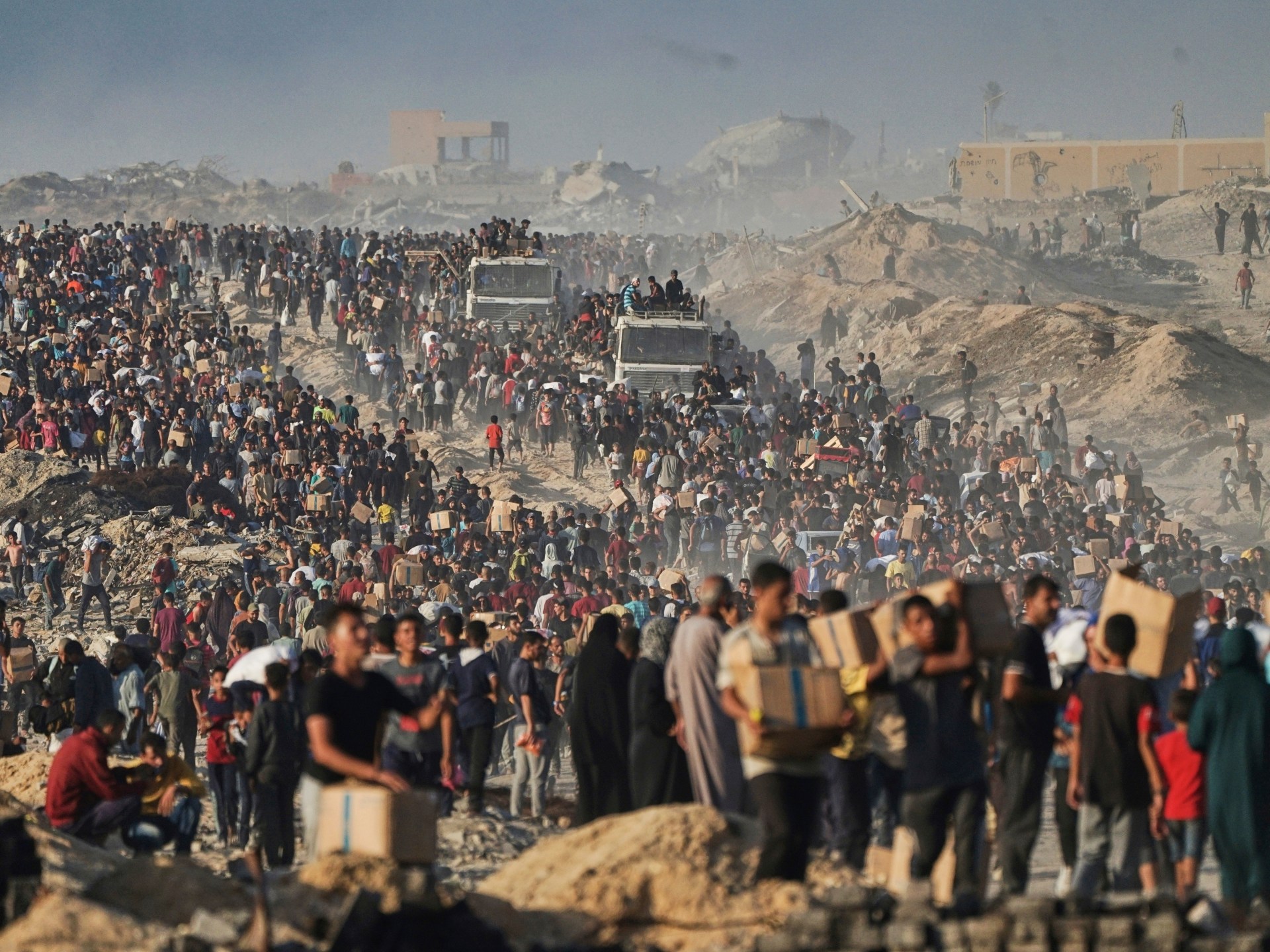
The biggest single appeal of $4bn is aimed at the occupied Palestinian territory. Most of that sum is tagged for Gaza, devastated by Israel’s genocidal war, which has left nearly all of its 2.3 million inhabitants homeless and dependent on aid.

The second priority is Sudan, followed by Syria.

“(The appeal) is laser-focused on saving lives where the shocks hit hardest: Wars, climate disasters, earthquakes, epidemics, crop failures,” said Fletcher.

The world body estimates that 240 million people in conflict zones, suffering from epidemics, or victims of natural disasters and climate change are in need of emergency aid.

If the UN comes up short on funding again, Fletcher predicts it will widen the campaign to appeal to civil society, the corporate world and the public at large.

UN humanitarian agencies are overwhelmingly reliant on voluntary donations by Western donors, with the US by far the top historical donor.

Troops Foil Robbery, Rescue Abducted Victims In Taraba

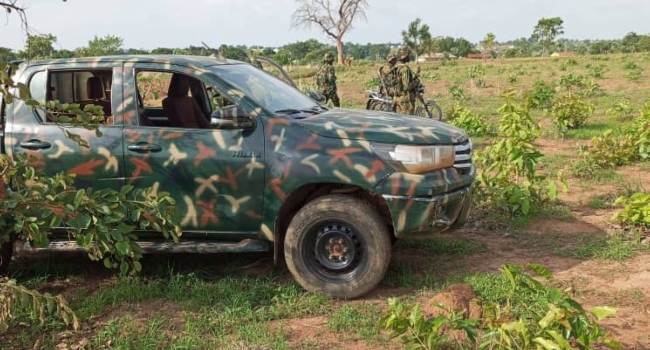
Troops of the 6 Brigade, Nigerian Army/Sector 3 Operation Whirl Stroke, have recorded multiple operational breakthroughs across Taraba State.

Disclosing this in a statement on Monday, the spokesperson of 6 Brigade, Lieutenant Umar Muhammad, said troops deployed at Manya responded swiftly to a distress call on December 6 after armed robbers mounted a blockade along the Manya–Takum Road.

“On sighting the troops, the criminals fled and abandoned their weapons,” Muhammad said.

During a search of the area, troops recovered “one AK-47 rifle, a magazine, and three rounds of 7.62mm ammunition,” restoring safe movement along the route.

In another operation on December 7, troops at Kufai Amadu received information that four travellers from Bauchi State had been abducted inside Amadu Town while heading to Baissa in Kurmi Local Government Area.

READ ALSO: Troops Rescue Five Kidnap Victims In Kogi

According to the statement, preliminary findings showed the men, unfamiliar with the area, had stopped to ask for directions when two of them, identified as Musa Danji and Yusuf, were seized and taken towards New City.

“A search-and-rescue mission was immediately launched,” Muhammad said.

He disclosed that during coordinated bush clearance, troops rescued two of the victims, Yusuf Musa and Muhammed Umar, who had managed to escape.

“Search efforts are ongoing to locate the remaining hostages, and operations have been intensified to apprehend the perpetrators,” he added.

Troops also conducted an intelligence-led operation at Garin Sambo, Tau Village, Ardo Kola LGA, on 6 December, where they recovered “two pump-action guns, 13 cartridges, two motorcycles and four mobile phones.”