Archive December 9, 2025

Richard Osman reveals new Netflix deal for next whodunnit book proves crime does pay

Crime definitely pays for former Pointless star RIchard Osman, as Netflix signs the second of his whodunnit novels.

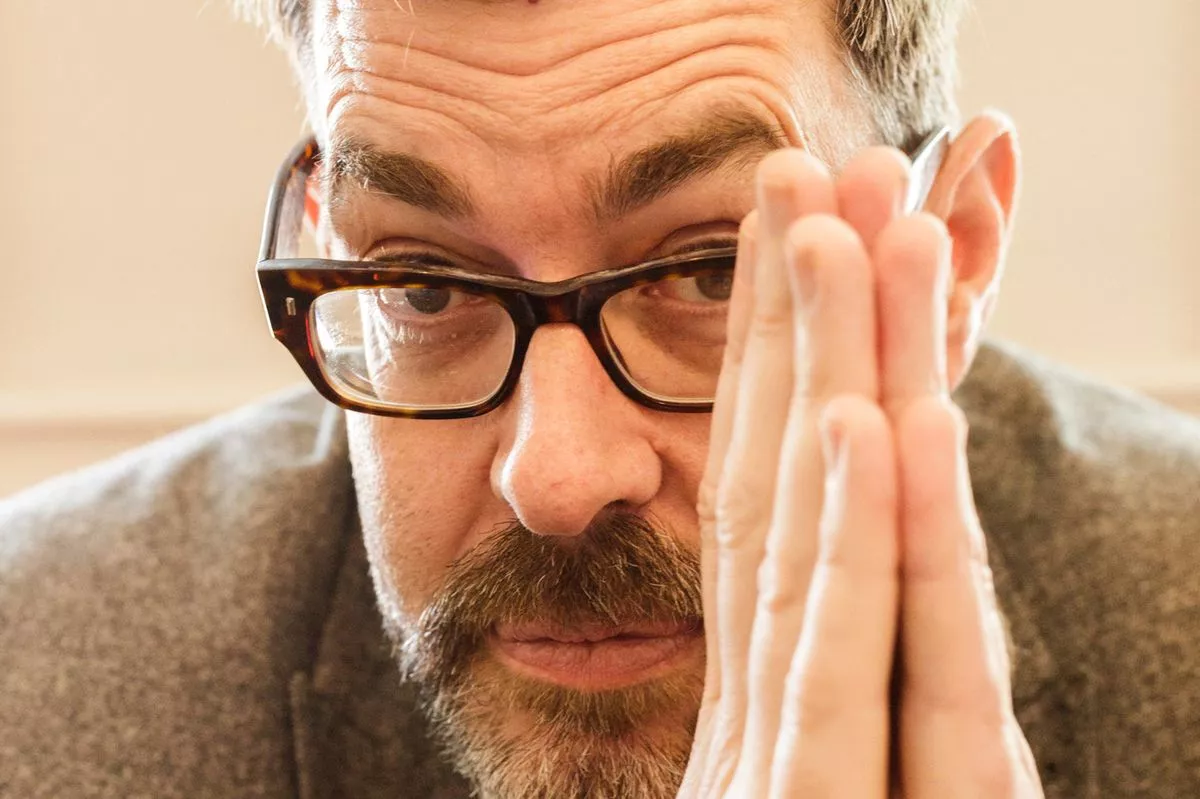
TV star and author of The Thursday Murder Club, Richard Osman

Fresh from the success of The Thursday Murder Club movie, released in August, US streaming giant Netflix is turning his We Solve Murders novel into a full-length drama series. This is despite the fact he hasn’t even finished writing the story about retired cat loving cop Steve Wheeler and his bodyguard daughter-in-law Amy, who tackle crime together on a global scale. “I am really a long way behind,” Richard confesses. “I am stressed about it, if I am honest. But it will be interesting. We sold Thursday Murder Club before the first book had come out!”

The Thursday Murder Club – which saw acting greats Dame Helen Mirren, Pierce Brosnan, Dame Celia Imrie and Sir Ben Kingsley play four retirement home sleuths – was filmed in the English countryside. But Richard, 55, stayed away from filming, saying: “I only went down to the set a couple of times. I was never going to get involved. I like writing and I am aware of the bits of the industry I enjoy.”

READ MORE: Richard Osman admits he made a demand to BBC after being offered iconic show

Describing the film industry as “crazy” there were still some enjoyable times for the author. “I got to hang out with the director Chris Columbus,” he smiles. A fan of Celia Imrie, he describes her as “great and naughty” – praising everyone involved in filming. “The premiere was great, but like a grandfather with a child, I was able to hand it back at the end of the day,” he says. “Honestly, I had the most wonderful experience with that whole gang.”

The Thursday Murder Club
The Thursday Murder Club(Image: Cr. Giles Keyte / Courtesy of Netflix)

As well as his Netflix success, he is co-writing a new Thursday Murder Club play with Tom Basden, creator of the ITV2 comedy series Plebs. Richard continues: “I am doing the play with the brilliant Tom. His movie The Ballad of Wallis Island is such an amazing film isn’t it? I asked him to do the play before Wallis Island came out, so it makes me look good and he can’t get out of it! It doesn’t matter how many calls he is getting from Hollywood, he is contractually obliged to finish the play.”

Richard, who began his career as a producer on Channel 4 shows such as 8 Out of 10 Cats and the satirical comedy 10 O’Clock Live, has seen his adventures in entertainment change direction many times over the years. As well as a spell as creative director for media company Endemol UK, Richard helped make the short-lived ITV gameshow Prize Island, was script editor and producer on Whose Line Is It Anyway?, developed Total Wipeout for the BBC and created the game show 24 Hour Quiz for ITV. But it was co-presenting BBC1 quiz show Pointless from 2009 until 2022, alongside Alexander Armstrong, who he first met at Cambridge University, that made him a household name.

Nowadays, Richard watches the show at home just to see who he thinks his former uni chum – who he nicknames Zander – truly gets along with. He says: “I did Pointless for years. I have done a lot of them, like 2,000 episodes. I watch it now and I can play along. Before, I always wondered why people liked it, but I had all the answers written down. “I like to see if Zander likes his co-host. I can always tell as I know him very, very well. I can tell exactly what he thinks about his co-host at any given time.”

Alexander Armstrong, Richard Osman
Alexander Armstrong, Richard Osman(Image: BBC/Endemol Shine UK Ltd/a Remarkable Television Production)

Richard is still a quizmaster for the daily BBC2 early evening show House of Games, on which celebrities tackle a range of wacky questions. “We record five shows a day,” he says. “It is not the most arduous day and the prizes are meaningless. I can hand out points wherever I like. It is always worth watching the one that goes out on a Thursday, as that is the one where everybody is at their weakest, me included. “The fourth one is the one to watch. If you are a good quizzer it is quite hard to not win. It is a fun show though. People always come back.”

House of Games was also the unlikely setting for romance for the host, who met his wife, former Doctor Who actress Ingrid Oliver when she was a contestant in 2020. They soon became close and fell in love during lockdown – before getting married in December 2022. Richard says: “I was doing a book event in Cheltenham recently and one of the questions was ‘who is your favourite ever contestant on House of Games?’ I was like ‘you do know I married one of them?I am not going to say Steve Pemberton!”

But, despite enjoying a diverse career, Richard is not about to follow Ingrid into acting. “I have tried to act and it is really hard. I can’t do it at all. I am so bad,” he says. “When I read with her, she does her bit and I am like an air traffic controller. and she tells me I don’t have to do the accent. We listen to it back and it is weird. How do people act? I had to play myself once on the sitcom Not Going Out. That should be easy, but it was even harder. I was even playing myself on Pointless. Sometimes I see newsreaders and I think they would make great actors, but nobody has ever said that to me.”

Ingrid Oliver and Richard Osman
Ingrid Oliver and Richard Osman(Image: PA)

One certainty is that Richard will remain on TV and his books will be on our shelves for the foreseeable future. Well known for his openness regarding health problems, like an eye disorder called Nystagmus and his ongoing battle with food addiction, Richard confesses he has no desire to live forever – and thinks those who do are odd. He says: “All these people who want to live until they are 150. That seems weird to me.

“Like Putin and (Chinese President) Xi Jinping. They are obsessed with getting their organs and blood replaced. Like what is it they enjoy about life where they say ‘I can do another 75 years of this?’ A lot of them are planning nuclear wars and that feels kinda counter productive. You can drink as many kale smoothies as you like, but as soon as a ballistic missile lands on the Kremlin…”

Speaking at a recording for a 2026 podcast episode with comic Richard Herring, he continues: “How old do I want to be? The average age is 87. I don’t know, maybe 91. As long as you can keep your brain active, so long as your brain is enjoying it…stick around, right? You see 23-year-olds having fillers and you think ‘where are you going to go at 49 or 55?’ If I have my knees replaced, I could stick around until I am 100.”

Article continues below

Since his fame has gone global, Richard has found himself having to hide from over eager fans – which can be difficult, considering his 6ft 7in stature. He laughs: “I tend to go into a cubicle if there is one free since I have become more recognisable. When you are tall people always “sneak a peek”. I would usually go and have some peace in a cubicle. But I guess everyone looks the same height to me…everyone looks 5ft 7. It is all about perspective innit? If I write my autobiography it’s going to be called “Perspective Innit”?

READ MORE: Pierce Brosnan hints at return to James Bond but with major twist
Chelsea ‘not in crisis’, says defiant Bright

Getty Images
  • 2 Comments

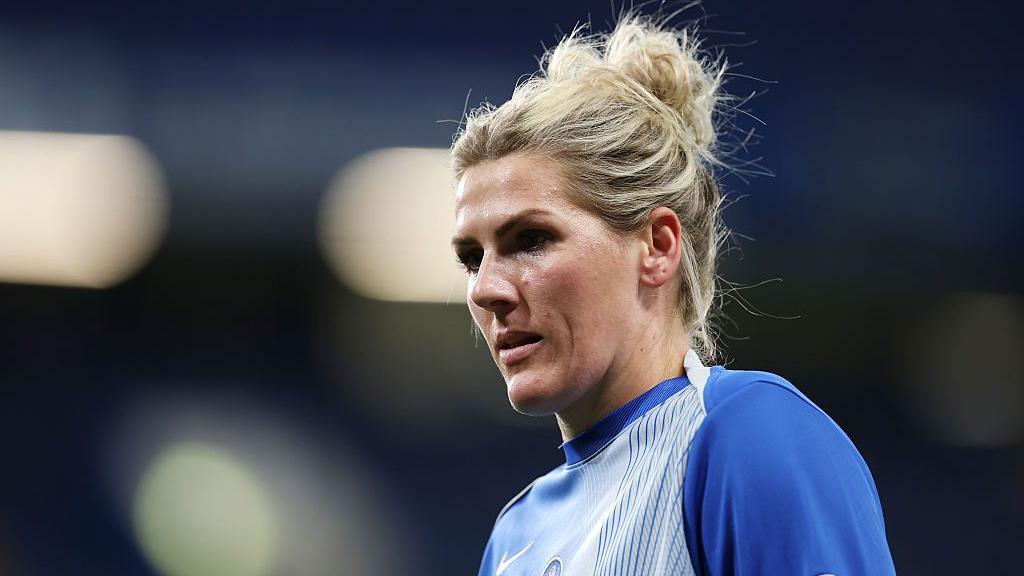
Chelsea captain Millie Bright says the defending Women’s Super League champions are not facing “a crisis” after Sunday’s 1-0 loss to Everton.

A first league defeat in 585 days – since 1 May, 2024 and first under manager Sonia Bompastor – extended the Blues’ WSL winless run to three games, following 1-1 draws with Arsenal and Liverpool.

Those results left them six points behind leaders Manchester City after 10 matches.

Chelsea host Roma in the Women’s Champions League on Wednesday and Bright said: “It’s not a crisis, so we don’t behave in any other way than if we’d won the game.

“We go back out there, get training again, keep the morale up and stick together and bounce back. There’s no time to dwell because we play in the Champions League.”

Europe could prove a welcome distraction for Bright’s side, although they still have work to do to qualify for the knockout rounds after winning two and drawing two of their four league phase games.

They are currently in sixth place in the standings, outside the top four by a point, with winless Roma third from bottom.

“There has probably been more noise from the outside like, ‘wow, Chelsea lost a game’, than from the inside,” added Bright.

“We know where we are at, what we stand for and the qualities we have. We are all human.

“The games are getting harder and harder. Sometimes you have to give the opposition more credit, teams are getting better and it’s harder to score, keep clean sheets and win. The gaps are getting closer and closer.

    • 1 day ago

‘No-one’s position is secure’

Defender Bright, who retired from international duty with England in October, has been an unused substitute in three of Chelsea’s last four games and was substituted at half-time in the other.

“No-one is going to enjoy spectating, it’s not where you want to be as players,” said the 32-year-old, when asked about watching games from the sidelines.

“It’s a team sport, we have a very big squad with a lot of talent and depth. Everyone is fighting for their position, it’s no different for any other individual.

“I know where I stand. That’s the price you pay for playing for a top club with world-class players around you. Everyone is competing, no-one’s position is secure, no matter what your role is in the team.

“With or without the [captain’s] armband I will remain the same. My role doesn’t change, coming in every day, my mentality to train. I want the team and my players to succeed. You have to do your duties, and I would do that, with or without the armband, anyway.”

Ellen White, Jen Beattie and Ben Haines

Related topics

  • Football
  • Women’s Super League
  • Women’s Football

More on this story

Inside Bonnie Blue’s life in jail from ‘unsanitary’ conditions to ‘overcrowded cells’

Adult star Bonnie Blue could be facing up to 15 years behind bars in an Indonesian prison after being arrested in Bali – but with ‘harsher’ jail conditions than in the UK, it may be a tricky time for her to endure

Bonnie Blue could spend up to 15 years behind bars in Bali

Bonnie Blue is set to face up to 15 years in a Bali prison for violating strict Indonesian anti-pornography laws. The 26-year-old was arrested on Friday after officials were tipped off about the X-rated star allegedly making pornographic content in a studio on the island.

Bonnie, whose real name is Tia Billinger was arrested alongside around 20 Australian and British nationals – as police also seized items such as contraception, cameras, erectile drugs and her infamous “Bonnie Blue Bangbus” truck that was also untaxed.

It means the adult star may be held in Bali for up to 15 years and a fine of up to 6 billion rupiah – about $541,000 Australian dollars. But if she does end up behind bars in Bali, it’s not going to be as glam as what the star is accustomed to normally.

With overcrowded cells, unsanitary digs and harsher conditions than the UK, the prison sentence may be a bleak one for her to endure.

READ MORE: Bonnie Blue’s ‘squalid sex studio’ as cops find viagra, lube and obscene outfitsREAD MORE: ‘I’ve spent over £67k on cosmetic surgery – and there’s still more I want to get done’

Bonnie Blue was arrested in Bali for breaking strict anti-pornography laws after police were tipped off
Bonnie Blue was arrested in Bali for breaking strict anti-pornography laws after police were tipped off (Image: TikTok)

It’s been reported Bonnie will have an interview with Bali immigration officials within the next 48 hours as Indonesian authorities decide how to proceed with her case. According to Michael Buehler Associate Professor in Comparative Politics, cases tend to move much faster once there is publicity, a complaint, or political pressure to “make an example,” whereas similar conduct can be ignored when it remains out of view.

He further told Daily Mirror that if authorities treat this as a criminal matter rather than purely an immigration issue, it “typically moves from police questioning/investigation to a prosecutorial decision, and then potentially a court process”.

However as a foreign national, the expert said she would normally be able to request “consular access from the UK” – consular officials can help with practicalities (contacts, welfare checks, finding lawyers) but they cannot intervene in Indonesian legal proceedings.

Indonesian prisons can be overcrowded and conditions can be harsher than UK prisons
Indonesian prisons can be overcrowded and conditions can be harsher than UK prisons(Image: AFP via Getty Images)

But for the conditions in prison, if she was to be put behind bars, Indonesian prisons are widely reported to be overcrowded and under-resourced, with sanitation, healthcare access, and general living conditions often significantly worse than in the UK.

He added: “Prison conditions in Indonesia vary, but overcrowding and under-resourcing are persistent problems, and in many facilities conditions can be markedly harsher than in the UK,” and that the quality of treatment can also be “highly uneven, and informal payments/corruption can shape inmates’ day-to-day experience.”

It’s believed she had entered Bali on a tourist visa and had advertised her trip on her social media as a ‘meet-and-greet opportunity’ for recently graduated Australians attending Schoolies events in Bali.

Article continues below

UK’s MI5 protected IRA agent who committed murders, police report finds

The United Kingdom’s domestic intelligence agency MI5 protected an IRA double agent who committed murders during Northern Ireland’s Troubles and later avoided prosecution, a major investigation has found.

The findings are from Operation Kenova, a nearly decade-long police probe into “Stakeknife” – the codename for a senior IRA figure who also worked as an informant for British security services.

Recommended Stories

list of 4 itemsend of list

He operated during The Troubles, the conflict in Northern Ireland between Irish republicans seeking a united Ireland and British forces and unionist paramilitaries who wanted to remain in the UK.

About 3,500 people were killed in the violence before it ended with the 1998 Good Friday Agreement.

Stakeknife led the IRA’s internal security unit, which abducted, interrogated and killed people suspected of informing – while secretly passing intelligence to the British.

Investigators said MI5 allowed the agent to continue committing serious crimes, blaming a “perverse sense of loyalty” that meant he was never held to account.

The report said MI5 even twice removed the agent from Northern Ireland on “holidays” despite knowing he was wanted by police for conspiracy to murder and false imprisonment.

Stakeknife has never been formally identified, but he is widely believed to have been Belfast man Freddie Scappaticci.

He has been linked to 14 murders and 15 abductions. Scappaticci died in 2023. He admitted being in the IRA but denied working for British intelligence.

Operation Kenova also criticised MI5 for delaying the release of key documents, saying several incidents could be seen as attempts to “restrict the investigation, run down the clock, avoid any prosecutions … and conceal the truth”.

MI5 Director General Ken McCallum apologised for the late disclosure and offered sympathies to victims and their families.

The report said there is a “compelling ethical case” to publicly name Stakeknife and called on the UK government to apologise to bereaved families and survivors.

The 40-million-pound ($53m) investigation examined 101 murders and abductions linked to the unit.

‘They broke his neck’: Families of Syria’s disappeared still seek closure

A nation still searching

A year after Bashar al-Assad’s regime fell on December 8, 2024, Syrians are still searching for the truth.

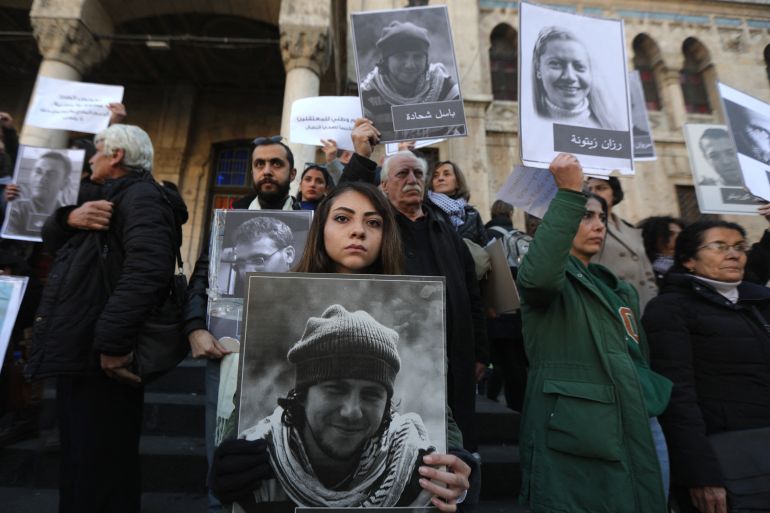
The portraits that hung from lampposts have been replaced by the faces of the missing, photocopied pictures taped to shopfronts and walls. Families have searched graveyards and abandoned prisons, hoping a scrap of fabric or a piece of paper might give them answers.

People hold pictures of Syrian missing persons at a protest outside the Hijaz train station in Damascus on December 15, 2024, demanding accountability [Bakr Alkasem/AFP]

Over 13 years of war, which killed more than half a million people and displaced half the country, the regime and its allies disappeared between 120,000 and 300,000 people, according to the government’s National Commission for the Missing.

The system that disappeared them was deliberate – a web of informants, secret police, files and fear. Arrests were made without warrants, over a neighbour’s grudge, a relative’s rumour, or a bribe.

In the days after the regime’s collapse, some Syrians celebrated. Others ran to the prisons. At Sednaya Prison, people grabbed whatever documents they could, as papers were trampled into the ground and crucial evidence disappeared underfoot. Families searched for loved ones, even beneath the floors – what they found were ropes, chains, and electric cables.

Only a few families were reunited after al-Assad’s fall.

For the rest, grief and hope coexist as the whereabouts of the disappeared remain unknown.

The new government, led by President Ahmed al-Sharaa, has pledged to uncover the truth. In May 2025, decrees created the National Commission for the Missing and the National Commission for Transitional Justice. Advisory boards have been appointed, and legislation is being drafted.

But progress is slow in a nation stripped of laboratories, specialists, and funds. Officials admit they face a mammoth task: building a national database, recruiting forensic experts, establishing DNA capacity – and finding the dead before time and decay erase them.

Families search Syria’s Sednaya Prison for loved ones
Syrians dig after rumour spread of underground cells beneath Sednaya Prison, infamous for torture under the toppled al-Assad regime [File: Emin Sansar/Anadolu Agency]

On the ground, the work has fallen largely on those who once pulled survivors from rubble, the White Helmets, volunteers for the Syria Civil Defence (SCD).

They photograph and document, noting fragments of identity like clothing, teeth, bones. Each set of remains is boxed and sent to an identification centre. There, the process stops. The boxes of bones stay sealed. According to the White Helmets, no family has been reunited with the remains of the disappeared.

Officials and humanitarian workers say that without DNA laboratories, forensic specialists, or a functioning identification system, the bones can only be stored, even when families are sure they know who they are.

On November 5, the National Commission for the Missing signed a cooperation agreement with the International Commission on Missing Persons (ICMP), the Independent Institution on Missing Persons in Syria (IIMP), and the International Committee of the Red Cross (ICRC).

Officials say these institutions will investigate past crimes, build a national database of the missing, support families, and, eventually, identify and return remains.

The cooperation agreement was billed as the start of a comprehensive national process for truth and justice, committing all parties to share expertise and help build the backbone of an identification system.

The task is vast. There are no reliable official figures; estimates of the disappeared range from 120,000 to 300,000 people, numbers compiled from various sources without a unified database.

Before anyone can be identified, the state must gather what already exists – detention registers, civil documents, military files, and lists held by opposition groups and by survivor associations like the Caesar Families, Families for Freedom and the Sednaya Association.

Then they must collect testimonies from survivors and families, and coax information from former officials and guards who may know where people were taken or buried. All this must be uploaded into a central database that has not yet been built.

“You cannot start immediately searching, looking for answers,” says Zeina Shahla, a member of the government’s National Commission for the Missing. “You need to set up the ground.”

Right now, Syria has only a single identification centre in Damascus, set up with the ICRC, but no dedicated DNA laboratory. Offices in other cities are promised, but not yet open.

“We have huge needs – technical needs, financial needs, human resources,” Shahla says.

“Most of them are not available in Syria, especially the … scientific resources. We don’t have DNA labs. We don’t have the forensic labs. We don’t have the doctors. So we need a lot of resources.

“And of course, this fight is too complicated because it’s affecting millions of people. We need to work fast, but at the same time, we cannot work fast.”

A Syrian woman holds up posters showing her missing sons.
Ibtissam al-Nadaf, who said she is still mourning two sons, one killed by a sniper during the siege of al-Assali, the other disappeared into Sednaya Prison in 2018, holds her sons’ photos at Marjeh Square in Damascus, Syria [File: Reuters/Zohra Bensemra]

The officials point to the scale of the wreckage. Thirteen years of war, hundreds of thousands missing, institutions hollowed out by sanctions.

Many have not even reported their missing, still afraid of what doing so might invite. Around one in five Syrians now lives abroad, scattering the reference samples needed to match the dead to the living.

Some families of the disappeared feel they are at the bottom of the state’s list of priorities. Others, like the Caesar Families Association, understand this process takes time.