As Barbara Windsor’s widower, Scott Mitchell reflects on the incredible life and legacy of his late wife, he reveals sadly that not everyone was happy for him when he found love again
Scott found love again after losing Barbara – but will never forget her(Image: Getty Images)
On the fifth anniversary of the iconic star’s death, Barbara Windsor’s widower, acting agent Scott Mitchell, has revealed that sadly, when he found love again, not everyone was happy for him.
The 62-year-old dementia campaigner revealed during an exclusive chat with the Mirror that after going public last year on his romance with former EastEnders star Tanya Frank, 58, who played Rainie Cross in the soap, some nasty keyboard warriors just had to have their say.
He said, “There’s always that person that says, ‘That was quick’. It’s easy to sit on the sidelines and cast judgement – especially with social media. These people forget that their words can really hurt.”
READ MORE: ‘I tested Christmas dinner boxes from Aldi, Iceland, and Sainsbury’s – there’s one clear winner’
Scott admitted there’s always someone to comment ‘That was quick!’ when you move on(Image: Ken McKay/ITV/REX/Shutterstock)
Scott and Tanya first became friends as they trained for the London marathon as part of ‘Bab’s Army’(Image: NurPhoto via Getty Images)
Opening up on his ‘wonderful’ relationship with Tanya, Scott said that she is very accepting of what a huge presence Barbara still is in his life – and has her own vested interest in dementia awareness, after her step-father Derek died of the devastating disease last year, following an 11-year battle.
Scott said: “Tanya allows me to talk about Barbara any time I need to. In the same way she can with me. I’m never second-guessing if the moment’s right. If I thought any of it hurt her, I wouldn’t do it.”
Tanya also often accompanies Scott to his regular talks about the lived experience of caring for someone with Alzheimer’s. He said, “The first thing I do is introduce Tanya and say, ‘Before we start I’d like to acknowledge my partner Tanya is here – and thank her for allowing me to share my story.”
He also confessed that, though their time on EastEnders didn’t cross, Barbara ‘liked’ Tanya when they met – as she knew her stuff when it came to the acting world. “The team used to come to our house,” explained Scott, “and Tanya and Barbara got on really well. Barbara liked Tanya – she’d say, ‘She asks sensible questions about acting!’
“Tanya wanted to know all about theatre director Joan Littlewood, she knew her stuff and that meant a lot to Barbara. It was lovely that they did meet.”
Scott and Tanya became friends as they worked together and ran the London Marathon, along with other EastEnders colleagues, later as part of ‘Bab’s Army’, before their friendship some years on, blossomed into love. He revealed that the pair will be spending Christmas together with their families – but won’t forget those that are missing, admitting, “There are always empty chairs at Christmas. And we will be remembering our loved ones – as it should be.”
Elsewhere, Scott praised the amazing legacy of his late wife, as he remembered her at her best. “Certain people truly earn the title of national treasure – Barbara was one of them. But for me, I’ll simply remember how she was, how loving she was with me. She made me laugh so much – she was true to herself, honest about her flaws and her past.
“She taught me a lot about getting rid of ego – I wasn’t as good at that in my younger days. People laughed when we first got together, but we lasted the course – it was unconditional love.”
Article continues below
He added, “It took us forever to go anywhere, she’d talk to everyone. It was like walking down the street with Tinkerbell. She loved other people and their stories – she would sprinkle her special fairy dust on everyone.”
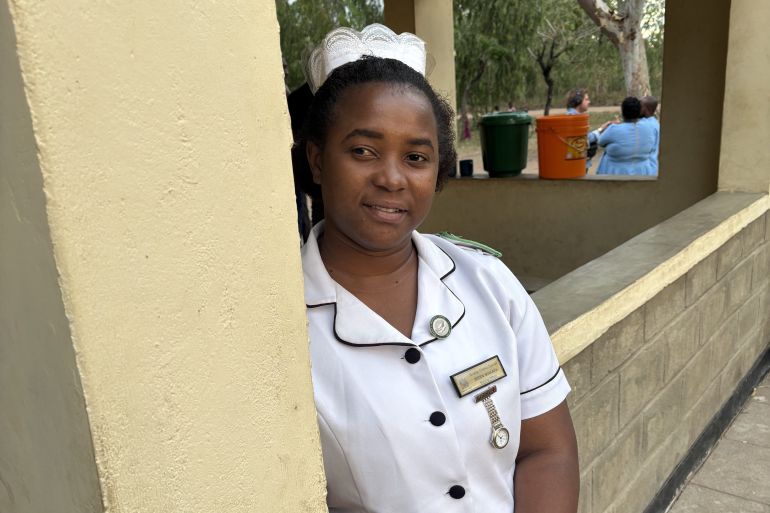
Mulanje and Lilongwe, Malawi — Ireen Makata sits in her white nursing uniform on a weathered bench at a health post in Malawi’s southern Mulanje district.
The facility is one of 13 in the district, located within a seminomadic, predominantly agricultural community 65km (40 miles) east of Blantyre, Malawi’s commercial capital, near the Mulanje mountain range.
Recommended Stories
list of 3 itemsend of list
The beige-painted facility stands out from the dozens of huts around it made of red bricks, with straw roofs. To the right of the main entrance is a supply room with diminishing medical supplies. On the other side is an ambulance that Makata says is now rarely used.
Health posts like this were set up to serve remote communities and alleviate pressure on district hospitals. They were crucial in providing communities with basic healthcare, antenatal care, family planning and vaccines.
The clinic in Mulanje used to see dozens of women a day, providing maternal care, including helping women give birth, dispensing medicines and, when needed, transport to the hospital. But now, since funds were cut, it is open only around once every two weeks, stretching its supplies for as long as it can and unable to regularly transport visiting healthcare workers.
Health posts like this are facing closure – 20 have already shuttered in the country – due to the Trump administration cutting United States Agency for International Development (USAID) funding in February. This is forcing the country’s health system to withdraw critical services, placing further stress on hospitals, and leaving thousands of women and children without needed care in a region burdened by poverty and long distances to hospitals.
Makata, a nursing officer specialising in maternal and newborn care, usually based at the district hospital, says she used to visit the post two or three times a week. Now she rarely comes and no longer sees most of the patients she used to care for.
“Most of the women who relied on this post now find the distance to access a district hospital too far,” she tells Al Jazeera.
It would take a large chunk of a day, travelling on the bumpy dirt roads of Mulanje district, to reach one. That long visit “takes them away from their day-to-day activities, which bring income or food to their table,” she explains.
Many cannot afford to do that and now go without care.
“They are failing to get the ideal treatment for antenatal care services, especially during the first trimester of pregnancy,” Makata says.
Ireen Makata, a nursing officer and safe motherhood coordinator at Musa Community Health Post in Mulanje [Imran-Ullah Khan/Al Jazeera]
‘Baby and mother in jeopardy’
USAID funding was all-encompassing. It funded remote medical outposts, covering everything from the training of new staff and the provision of drugs and supplies for pregnant women to petrol for ambulances.
The US government provided close to 32 percent of Malawi’s total health budget before the cuts.
USAID funded the health posts through a programme called MOMENTUM in 14 of Malawi’s 28 districts, starting in 2022, helping strengthen existing clinics and set up new ones. As of 2024, there were 249 posts. The programme also provided medical outreach to communities and equipment. About $80m was being invested in the programme by Washington.
Early this year, US President Donald Trump issued stop-work orders on USAID-funded programmes as part of an executive order to pause and re-evaluate foreign aid.
With that move, MOMENTUM was shelved, and the two dozen mobile posts were shuttered as a result. Medical trainees were left in limbo, and life-saving equipment was sold off in fire sales by Washington.
The United Nations Population Fund (UNFPA) still provides technical and financial support to several remote districts for maternal and newborn health, but the available resources are not enough to cover the sites funded by MOMENTUM. There are fears that the UNFPA sites will run out of resources and supplies in the coming months.
In the wake of Trump’s funding cuts, health experts in Malawi have raised urgent concerns that new mothers and children will face the greatest impact, with many lives potentially lost as a result.
Makata has set up a WhatsApp group for women to contact her with concerns and questions, but she is frustrated that she cannot work as she used to.
“We would go to where people resided and give them permanent and long-term care,” she says, referring to the posts. “It’s not easy for me to see this. We can’t help those who need the services the most.”
Massitive Matekenya, a community leader for the Musa community in Mulanje district, dressed in a black blazer and oversized chequered-green tie, is at the vacant Mulanje health post.
These days, he says, it is hard to put on a brave face for the people he represents.
“Women in our community are now giving birth on the way to the district hospital since it’s such a long distance away,” says Matekenya. “That puts baby and mother in jeopardy with the potential of the mother bleeding out.”
Matekenya struggles to boost morale as he is constantly faced with community anger over the fact that medical outreach has ended.
He says a 40-year-old woman from his community recently died from malaria. “She had no quick referral to the nearest health facility due to issues of transport,” Matekenya says, noting that the community reached out to a politician but that his assistance came too late.
“I’m worried,” he says. “With family planning services not being offered any more, we are expecting to see a spike in pregnancies, and we are anticipating a possible rise in maternal deaths.”
Female patients recovering or awaiting treatment for obstetric fistula at the Bwaila Fistula Centre in Lilongwe [Imran-Ullah Khan/Al Jazeera]
Impact on fistula care
In a health clinic in Malawi’s capital, Lilongwe, a woman dressed in black with a golden brooch shuffles from hall to hall. Margaret Moyo is tending to her daily responsibilities as head coordinator at the Bwaila Fistula Centre.
Obstetric fistula occurs when a hole between the birth canal and bladder or rectum is formed during an obstructed and extended labour. Women who do not receive medical treatment can be left incontinent.
Beyond the physical pain, women suffering from obstetric fistula also face social stigma due to the constant leaking and are often ostracised from their communities.
The Bwaila Fistula Centre receives more than 400 patients a year from all over the country, as well as from districts in neighbouring Mozambique. It has 45 beds, one doctor and 14 specialised nurses, and some 30 patients were at the centre when Al Jazeera visited in August.
With fewer resources, individuals will not be seen as often during pregnancy, which could lead to undetected maternal health issues, including more cases of fistula, Moyo argues. She is also concerned that conversations around prevention and education will take a backseat.
“The focus should be on training midwives, access to care and education to delay pregnancy in younger women since they are often most at risk of fistula,” says Moyo.
Before the USAID cuts, Malawi’s government had already forecast a $23m shortfall for reproductive, maternal, and newborn health funding for 2025 owing to drops in foreign aid.
Margaret Moyo, head coordinator at the Bwaila Fistula Centre in Lilongwe [Imran-Ullah Khan/Al Jazeera]
‘I am able to help them’
For the past five years, Moyo has been running what she calls an “ambassador” programme at her facility. Patients who undergo successful fistula repair and are reintegrated into their communities are trained and sent out into their communities.
So far, 120 fistula survivors have become patient ambassadors who educate through community outreach to bring in new patients for treatment.
One such ambassador is Alefa Jeffrey. Wearing a grey “Freedom from Fistula Foundation” T-shirt, the 36-year-old mother of four crosses her arms and gazes towards the floor as she talks about being ostracised after she gave birth and developed a fistula.
“I wasn’t allowed to go to church because the other girls made fun of me and said I smelled bad because I was leaking urine and stool,” she says. “My family told me to go to a traditional healer, but he wasn’t able to help.”
Jeffrey could deal with the physical pain, but she was tormented by the negative interactions with friends and family.
“I got used to dealing with fistula, but it was what people were saying that was giving me the most pain,” recounts Jeffrey, who says she even contemplated suicide.
But she also started looking for answers, asking the traditional healer and then eventually meeting an ambassador who came to her community to speak to women.
Having successfully undergone treatment, involving surgery and follow-up patient and educational care, Jeffrey now advocates for fistula education.
She has set up a WhatsApp group for people to chat with her for information about the condition. She has also brought in 39 mothers from her community to the clinic.
“I’m an expert now. I’m able to convince people to come, which isn’t easy,” says Jeffrey. “Some women have lived with a fistula for so long they don’t believe they can be repaired, and they have already given up, but I am able to help them.”
Patients await treatment for various ailments at the Nsanje District Hospital [Imran-Ullah Khan/Al Jazeera]
Lessons from the past: ‘We didn’t panic’
Although health experts are worried about the future of a system without USAID in a country where more than 70 percent of the population lives below the poverty line, government leaders say they have been there before.
Back in 2017, during his first presidency, Trump halted funding for the UNFPA and several groups that provided family planning. Malawi’s government approached NGOs and other countries to alleviate the gaps in funding.
Through community and grassroots innovations, they believe they can weather the storm again.
“We didn’t panic when we heard about the USAID cuts,” says Dr Samson Mndolo, Malawi’s secretary of health. “Instead, we looked at how to be more efficient and get more services for our money.
“We looked at areas where we could maximise resources, so for example if an officer goes to a community to do immunisations, they can now provide family planning services in the same trip too.”
Sitting in his office in the Lilongwe City Council building behind an organised desk, Mndolo discusses the challenges.
“As soon as the stop-work orders came out, we lost close to 5,000 health workers. The majority of these are what we call HIV diagnostic assistants,” he says, referring to the fallout from the USAID cuts. “We are looking now to push towards a health system that is more community-based and not necessarily hospital-based.” In such a system, doctors and health workers from central hospitals would be dispatched more to remote communities, and regular community outreach would become part of their remit, requiring them to perform a wider array of services.
Mndolo and his colleagues are setting up online initiatives and WhatsApp chat groups to field questions from remote patients. He remains optimistic about Malawi’s health system and says the worst thing the country can do now is to lose hope.
“Each crisis is an opportunity. This gives us a chance to strengthen the system and retrain our workforce and digital health systems,” he says.
“We are not naive. This will take some time, but once we get a hold of that as a nation, we can be better with time; that is the opportunity that is there for us.”
Despite such reassurance, those in remote communities say they feel isolated.
Tendai Kausi, a 22-year-old mother from the Musa community in the Mulanje district, still goes to the remote health post for help with her four-year-old son, Saxton. But because of the cuts and closures, many women from her community do not, and she has seen new mothers carry pregnancies in their isolated villages – far from healthcare and without routine checks.
“This is not good for the development of our country,” she says.
“My child will be affected because the services here will not get better,” Kausi says. “I feel very sad for my community.”
Patients at the Bwaila Fistula Centre [Imran-Ullah Khan/Al Jazeera]
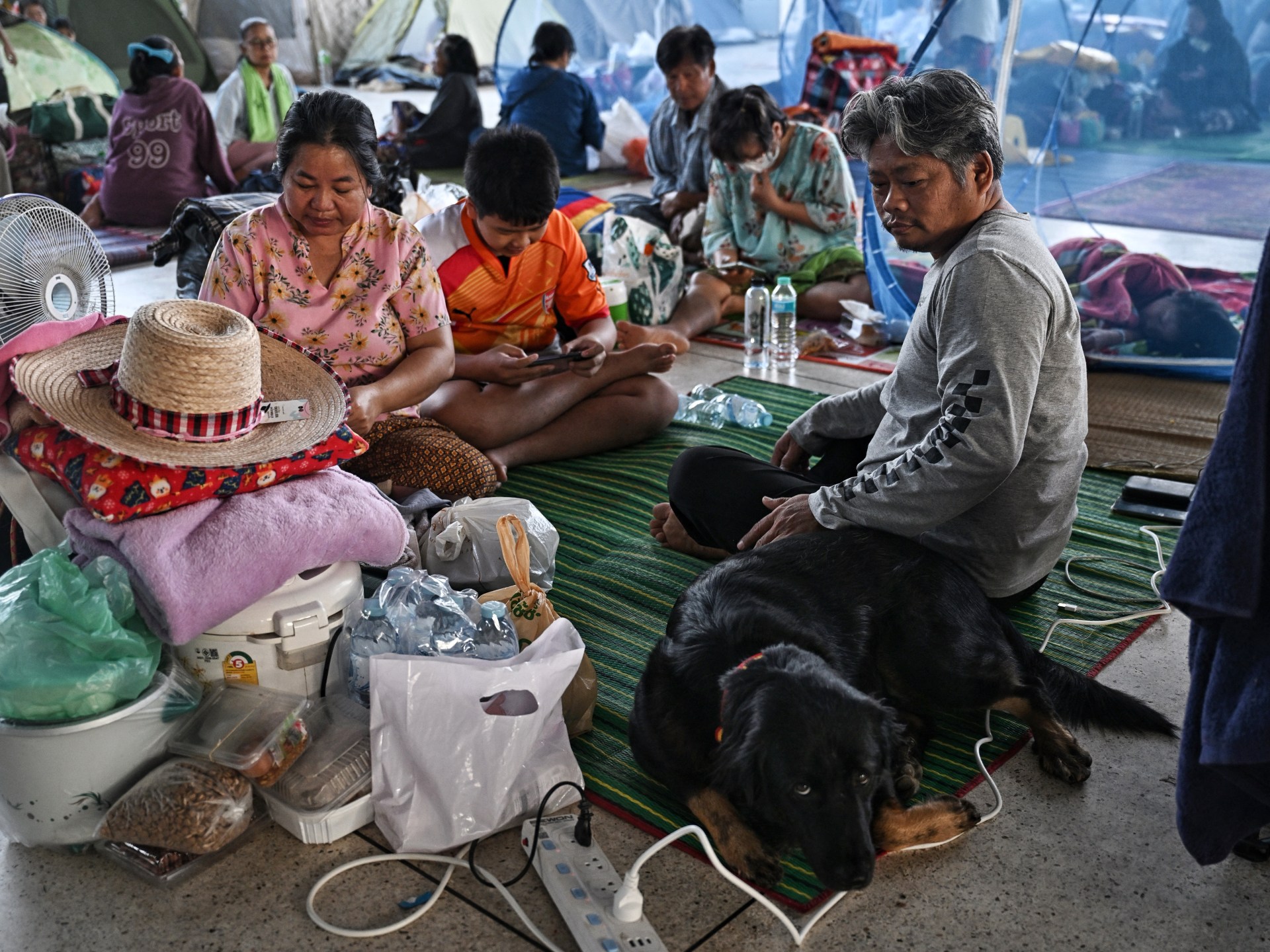
Half a million evacuees in Cambodia and Thailand are sheltering in pagodas, schools and other safe havens after fleeing a renewed eruption of fighting in a century-old border dispute.
At least 13 people, including Thai soldiers and Cambodian civilians, have been killed in the latest spate of fighting, now in its third day on Wednesday, officials said, while more than 500,000 have fled border regions where jets, tanks and drones are waging battle.
The Southeast Asian neighbours dispute the colonial-era demarcation of their 800-kilometre (500-mile) frontier, where competing claims to historic temples have spilled over into armed conflict.
This week’s clashes are the deadliest since five days of fighting in July, which killed dozens and displaced about 300,000 people before a shaky truce was agreed.
Both sides blame each other for instigating the renewed conflict, which on Tuesday expanded to five provinces in both Thailand and Cambodia.
If you still need to get a fun festive outfit or get your hands on a cosy Christmas jumper, then now is the time as one major supermarket slashes them by 20% for just 3 days
This article contains affiliate links, we will receive a commission on any sales we generate from it. Learn more
Asda has launched a 20% off sale on its festive clothing(Image: Getty Images)
December is the ultimate time of year for bringing a little bit of fun, joy and silliness to your outfits. Whether it’s a playful Christmas jumper or finding a way to wear something sparkly with every outfit, it’s the season to fully commit to a look, no matter what it is.
But if you’ve still not quite found that perfect piece to bring the festive cheer, then you might want to take advantage of George at Asda’s latest offer. From today until Saturday 13 December, you’ll be able to save a huge 20% on selected novelty Christmas clothing, letting you bring some festive charm to your wardrobe this December without breaking the bank.
READ MORE: Get M&S’ afternoon tea that fits through your letterbox for under £5
READ MORE: ‘Great quality’ £3k diamond watch that’s ‘almost identical to Cartier’ is now under £200
The offer is an online exclusive, so you can only shop these deals on the George website which makes it easier to pick which pieces you want. The sale applies to everything from festive jumpers and cardigans, to men’s shirts, Christmas-print dresses and accessories like beanie hats shaped like Christmas puddings.
Shop everything from women’s dresses to children’s clothes(Image: George at Asda)
You can also snap up sweatshirts with favourite movie franchise characters on such as Star Wars and The Muppets for adults, whilst kids’ sweatshirts feature designs from the likes of Hello Kitty and Bluey. For music lovers, there’s even Christmas jumpers inspired by favourite artists such as AC/DC and Guns ‘N’ Roses.
As well as the more playful novelty clothing , you can also pick up some classic styles too. There is adorable childrenswear that would be perfect for Christmas Day outfits, and adults jumpers and cardigans that would be great with everything from jeans to worn over a midi dress.
You can also shop great novelty sweaters(Image: George at Asda)
Of course, George isn’t the only place you can snap up some festive fashion. Marks & Spencer has a whole range of Christmas sweaters to shop, whether you want classic festive scenes or more timeless prints like fair isle and argyle. There are styles for the whole family from babies to adults, and you can even pick up matching jumpers, or pieces from big name brands.
Article continues below
Meanwhile Tu at Sainsbury’s is running some festive deals of its own, which sees plenty of Christmas clothing slashed in price. Some items are already discounted, whilst others can be reduced when you use the code TU10 to save yourself 10% on plenty of colourful and cosy knits, as well as designs featuring characters like The Grinch and The BFG.
While the future of Mohamed Salah at Liverpool hangs in the balance, Egypt teammates have rallied behind the national team captain ahead of the 2025 Africa Cup of Nations in Morocco.
The record seven-time continental champions are in Group B with Angola, South Africa, and Zimbabwe, and will be based in the southern coastal city of Agadir throughout the first round.
“Players like him do not get benched,” said striker Ahmed “Kouka” Hassan on social media, referring to Salah being a substitute in the last three Liverpool fixtures, and coming on only once.
“If he starts on the bench, you must make sure he is the first to come on, after 60 minutes, 65 at the latest.
“Mo is not just a teammate, he is a leader, a legend for club and country. Keep working hard, brother. Every situation in life is temporary; moments like this pass, what stays is your greatness.”
Head coach and former star Hossam Hassan posted a photograph of himself and Salah and a message: “Always a symbol of perseverance and strength.”
“The greatest Liverpool legend of all time,” wrote winger Ahmed “Zizo” El Sayed. Goalkeeper Mohamed Sobhy called Salah “always the best”.
Liverpool have struggled in their title defence this season and lie 10th after 15 rounds, 10 points behind leaders Arsenal. Salah has also battled with just four goals in 13 top-flight appearances.
After twice surrendering the lead in a 3-3 draw at Leeds United last Saturday, Salah told reporters, “It seems like the club has thrown me under the bus”.
“I think it is very clear that someone wanted me to get all of the blame (for the slump)… someone does not want me in the club.”
Salah was omitted from the squad that travelled to Milan for a Champions League clash with Inter on Tuesday and has hinted that he may not play for Liverpool again.
READ ALSO: World Record Winning Streak Sets Up Morocco For AFCON Challenge
Saudi Arabia says it will do “whatever it can” to recruit Salah during the mid-season transfer window, a Public Investment Fund (PIF) source in the kingdom told AFP.
Although Egypt last won the AFCON 15 years ago in Luanda, Salah, 33, believes they will lift the trophy again before he retires.
“It will happen — that is what I believe. It is a great feeling every time you step on the field wearing the Egyptian colours.”
Salah has suffered much heartbreak in four AFCON tournaments as Egypt twice finished runners-up and twice exited in the round of 16.
He created the goal that put the Pharaohs ahead in the 2017 final, but Cameroon clawed back to win 2-1 in Libreville.
Hosts and title favourites Egypt were stunned by South Africa in the first knockout round two years later, conceding a late goal to lose 1-0.
Egypt reached the final again in 2022, only to lose on penalties to Senegal after 120 goalless minutes in Yaounde.
In the Ivory Coast last year, Salah suffered a hamstring injury against Ghana and took no further part in the tournament. Egypt lost on penalties to the Democratic Republic of Congo in a last-16 clash.
This year, Egypt boast an array of attacking talent with Salah, Omar Marmoush from Manchester City, Mostafa Mohamed of Nantes, and Mahmoud ‘Trezeguet’ Hassan and Zizo from Cairo giants Al Ahly.
Group B is the only one of the six in Morocco featuring two qualifiers for the 2026 World Cup, with Egypt and South Africa heading to the global showpiece in North America.
South Africa exceeded expectations by finishing third at the 2024 AFCON, but Belgian coach Hugo Broos expects a tougher campaign in a tournament that kicks off on December 21.
“It will be harder because every opponent will be more motivated to beat us after our bronze medals,” said the tactician who guided Cameroon to the 2017 AFCON title.
Angola and Zimbabwe recently changed coaches, with France-born Patrice Beaumelle and Romanian Mario Marinica hired.
The Angolans have reached the quarter-finals three times, including last year, while the Zimbabweans have never gone beyond the first round.