Archive December 10, 2025

What is Gracie Mansion and why is Zohran Mamdani moving in?

When New York mayor-elect Zohran Mamdani moves into Gracie Mansion, the elegant 18th-century house long associated with New York’s political elite on Manhattan’s Upper East Side in January, he will leave behind the rather more modest, rent-controlled Queens apartment he has lived in for several years.

For a democratic socialist who has been elected by New Yorkers on a housing justice ticket, the contrast may seem striking to observers.

Recommended Stories

list of 3 itemsend of list

Mamdani won last month’s New York mayoral election, in part because the city is facing a severe housing crisis, with record-high rents and one of the lowest property vacancy rates in the country. Mamdani built his campaign around freezing rents and expanding affordable housing.

So what exactly is Gracie Mansion, and why does it matter in a city where housing has become a key political issue?

What is Gracie Mansion?

Gracie Mansion has been the official residence of the mayor of New York City since 1942. A yellow-painted, Federal-style wooden house built in 1799, it is located inside Carl Schurz Park on Manhattan’s Upper East Side.

According to the Historic House Trust, which oversees the city’s historic homes, it was originally designed as a two-storey country villa overlooking the East River.

The main house reportedly has five bedrooms and five bathrooms, with period fireplaces and high ceilings.

The residence today includes the original two-storey structure plus an events wing, which was added in the 1960s. According to the New York City Parks and Recreation Department, the combined complex now measures roughly 12,000 to 13,000 square feet (1,200 square metres), accommodating formal sitting rooms, dining rooms, bedrooms and spaces for official functions.

The building is maintained as a city-owned asset and is made available to each incoming mayor as their official home.

Why is it called Gracie Mansion?

The house takes its name from Archibald Gracie, a Scottish-American shipping merchant who constructed it in 1799 within an estate to be his family’s country seat. At the time, it was some distance outside the city limits.

Although Gracie later lost the property due to financial hardship, his name remained attached to the estate in subsequent decades, and the city retained it when it took ownership at the end of the 19th century.

New York City acquired the property in 1896, incorporating the surrounding estate into what would become Carl Schurz Park. According to the Historic House Trust and the Gracie Mansion Conservancy, the building served a series of public uses during the following few decades, including as temporary quarters for the Museum of the City of New York.

In 1942, New York City Parks Commissioner Robert Moses urged Mayor Fiorello La Guardia to designate the house as the city’s official mayoral residence. At the time, the city lacked any formal mayoral home.

Moses saw this as an opportunity to create a dignified civic residence that would mirror the executive mansions used in other major American cities.

In 1966, the city added the Susan E Wagner Wing, a modernist extension designed to accommodate receptions and large meetings.

Since 1981, the house has been maintained by a public-private partnership, which funds its conservation and oversees public tours.

In 2002, Mayor Michael Bloomberg updated the interior and exterior of the building and increased accessibility to the public.

It has since been known as the “People’s House”.

Have mayors always lived at Gracie Mansion?

Gracie Mansion did not become the official mayoral residence until 1942, when La Guardia moved in following the city’s decision to assign the house to the mayor’s office.

Since 1942, most mayors have lived there, including Ed Koch, David Dinkins, Bill de Blasio and Eric Adams.

The most notable exception was Michael Bloomberg, who chose to remain in his private townhouse on the Upper East Side for the duration of his three terms as mayor. Bloomberg used Gracie Mansion only for events, according to US media reports.

Some mayors have divided their time between Gracie Mansion and their private residences, including Ed Koch, who kept his Greenwich Village apartment, and Rudy Giuliani’s family, who remained partly based in their East Side home.

When is Zohran Mamdani moving in?

Mamdani, 34, will take office in January. He has said he and his wife, the illustrator Rama Duwaji, will leave the rent-stabilised Astoria, Queens apartment he has lived in since 2018 and move into Gracie Mansion. The couple do not have children.

In a statement, Mamdani said his decision to move into the mansion – described by US media as being worth $100m – had been driven by safety considerations for his family and the need to focus fully on implementing the “affordability agenda” that shaped his campaign.

He also described the move as using the residence in the way it was intended – a civic resource provided so the mayor can perform official duties more effectively.

The move has raised questions about how this aligns with his tenants’ rights and affordability agenda, however, as he had previously tied the fact that he lived in a rent-controlled apartment to his campaign agenda of more affordable housing for New Yorkers.

“To Astoria: thank you for showing us the best of New York City,” Mamdani said in a statement on Wednesday. “While I may no longer live in Astoria, Astoria will always live inside me and the work I do.”

Why else is Gracie Mansion significant?

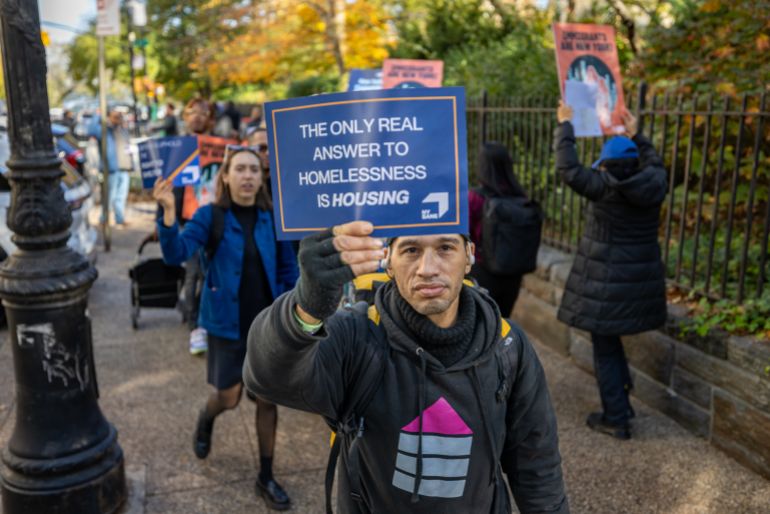
The mansion has been the site of many protests – many of them revolving around housing rights, particularly for asylum seekers and migrants. In August 2023, for example, an anti-immigration rally clashed with migrants’ rights counterprotesters on the doorstep.

People marching in the rally shouted slogans such as, “No migrants on Long Island! We pay a lot of property taxes!”

When the current New York mayor, Eric Adams, sought to remove New York City’s “right to shelter” law, which guarantees shelter with basic standards for homeless people, that year, a major protest and “sleep-in” took place outside Gracie Mansion in November.

In March 2024, Adams reached a legal agreement with homeless rights advocates allowing homeless migrants and asylum seekers to stay for only a maximum of 30 days in a shelter.

Protesters march during a rally and ‘sleep-in’ outside Gracie Mansion, New York City Mayor Eric Adams’s official residence, urging him to stop attacking the city’s right-to-shelter policy [Michael Nigro/Pacific Press/LightRocket via Getty Images]

How severe is New York City’s housing crisis?

Housing policy was the centrepiece of Mamdani’s mayoral campaign.

He has pushed for a multi-year rent freeze on the city’s roughly one million rent-stabilised apartments, along with stronger tenant protections, more social housing and limits on speculative buying by landlords.

The city’s Housing and Vacancy Survey, cited in the city’s Rent Guidelines Board’s 2025 report, put the rental vacancy rate at just 1.41 percent, far below the 5 percent level that triggers rent-regulation powers in New York State.

“This translates into the availability of just 33,000 vacant units out of almost 2.4 million rental units Citywide,” the report reads.

Separately, market data shows how high New York rents have become.

Realtor.com’s 2025 quarterly report put the citywide median asking rent at about $3,600 a month. Meanwhile, Douglas Elliman’s August 2025 rental market report shows that two-bedroom units routinely list for $5,000 to more than $5,500 in Manhattan and $3,200 to $4,000 in many Brooklyn and Queens neighbourhoods.

In each of the five boroughs of New York City, average rents make up a high proportion of average incomes.

In Manhattan, where the average income is about $5,100 per month, the average rent for a one-bedroom apartment is $4,200. In Brooklyn, the average income is about $3,400, compared with the average rent on a one-bedroom apartment of $2,800.

Interactive_NYC_Mayor_Oct30_2025-NYC AT A GLANCE
(Al Jazeera)

In contrast, cities which prioritise affordable housing, like Vienna, Austria, take a very different approach. The city owns and manages hundreds of thousands of apartments and keeps rents far below market levels.
BBC or ITV? Inside how World Cup broadcast picks are made

Getty Images

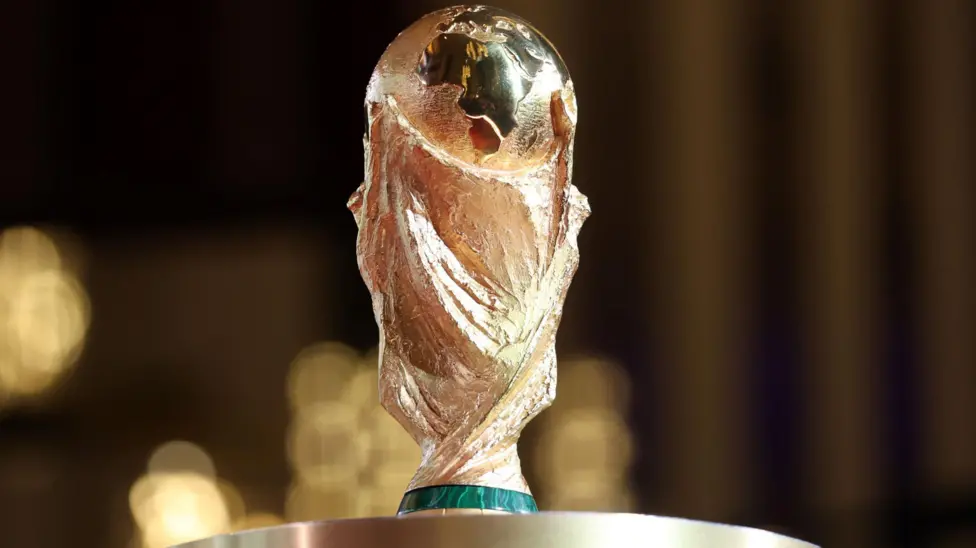
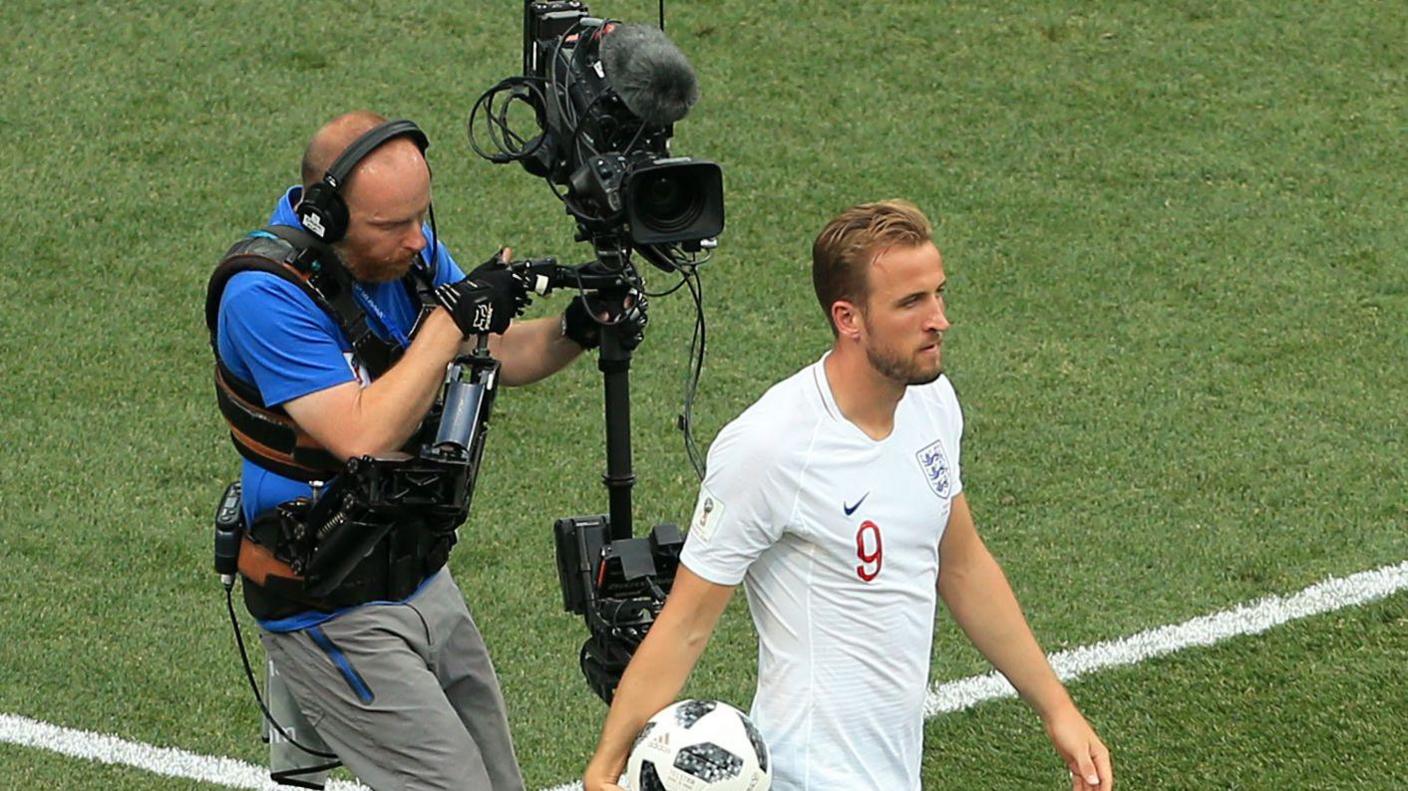
The countdown to the men’s Fifa World Cup is on and we now know the fixture schedule as well as the broadcast picks.

But it is not an easy process for TV executives tasked with the job of working out who televises each game.

In the UK, the BBC and ITV have screened football’s global showpiece together since 1966. Last year they agreed a deal to share live coverage again in 2026 and 2030, ensuring the World Cup remained on free-to-air television.

The two broadcasters will share the rights equally for the 2026 tournament, splitting matches between them, including a shared final.

‘An even split’

Executive producer Phil Bigwood knows exactly how it all works behind the scenes. He’s been part of the BBC’s World Cup team for more than 20 years.

The process – or ‘split’ as Phil calls it is simple: The BBC and ITV take it in turns to have the first pick and rotate it between tournaments – it’s the same with the Euros.

This time it’s the BBC’s turn to pick first. Once they’ve picked their first match, ITV then choose theirs, and it goes back and forth until all the matches have been allocated. Then both the BBC and ITV broadcast the final.

“We typically end up with an even split with the priority games like England, Scotland and the knockout matches having the highest value,” says Bigwood.

“For this World Cup there are 92 picks in total and we get 10 minutes to make each one – although we don’t always need that long.

    • 2 hours ago

Coming up with a plan

Before the split takes place though, both sides have to do their homework.

Following the draw – which was made on Friday – broadcasters find out when and where the matches will be. The job then is to come up with a plan for which games take priority.

“We have a couple of days of conversations – at least – around what we would like to do and which way we might want to go,” Bigwood adds.

“In the BBC’s case we’ve got other scheduling like Wimbledon to take into account – for ITV they’ve got their commercial considerations. You need to weigh all this up as part of your strategy.

“You plot through each match and you also have a day by day schedule. No broadcaster wants to end up in a situation where you have four live games on one day.”

There’s lots to consider – covering matches involving the home nations is paramount and predicting who might face each other in the knockout stages is also key.

Kick-off times need to be taken into account too. The tournament across the USA, Canada and Mexico will have 13 different kick-off times, which adds an extra layer of complication.

None of this is a perfect science.

“You have to weigh up how far you think a team might progress,” he adds. “If there’s a big team – say in England’s group – do you go with that or something else? That’s always the big conundrum.

“Once we’ve all agreed on what pick we want we’ll then phone ITV and confirm it, they then have the next pick. We’re not in the same room and we never know which way they’re going to go.”

Hedging your bets and trusting luck

England players are dejected after losing to IcelandGetty Images

Alongside the group games, both sides need to choose which picks they will have from the knockout rounds during the tournament. These will be some of the best games – but no one yet knows what those matches will be

“This is where a bit of guesswork comes in,” explains Bigwood.

“At Euro 2016 we anticipated that England could face France in a blockbuster quarter-final,” he said. “But England lost to Iceland in the last-16 so we didn’t get the game we wanted.”

The broadcasters also have to balance up a time slot with the appeal of a match.

“For example, at the Brazil World Cup there was one early-hours game that was due to be played in Manaus up in the Amazon.

“We joked that it was going to be the last pick because we thought nobody would want that game. But it ended up being England v Italy and was one of the top BBC picks. Afterwards we were laughing – we thought it was the one game we were all trying to avoid!”

With so many variables and unknowns a lot of the TV scheduling comes down to luck.

“If it goes to a penalty shootout then you’re in the hands of 22 blokes on a field. You’re just hoping your gambles pay off. But there’s absolutely nothing you can do to control those knockout games. We’ll always have things that don’t work in our favour.

Friends or foes?

Despite the competition and the battle for ratings, do both sides get on? Are there any disagreements or heated exchanges during the split?

“We’ve known the guys at ITV for many years. Some of them used to work at the BBC and we’re friends with a lot of them – it’s a partnership.

“Both sides know what their priority games will be. We’ll sometimes throw each other a curveball with a pick choice but it never gets heated or anything like that.

The work has only just begun

The split always takes place as close as possible to the draw – this is really important so that broadcasters can then start on the complicated logistics of covering so many games.

“After the split has been agreed and ratified we attend a world broadcaster meeting – that’s when Fifa update everybody on the production plans.

“We get told everything from how visas and customs will work to where camera positions will be.

“Our BBC team then has to submit every booking that is required for all the games. That includes every car park pass we’ll need, every camera position, every lines feed – literally everything – it’s quite a lively time!

“Then there are hotel bookings, flights and so on. This is undoubtedly the most difficult bit of the process.”

Related topics

  • Football
  • FIFA World Cup

More on this story

    • 4 days ago
    The World Cup trophy
    • 1 day ago
    Chelsea's Enzo Fernandez complained about the heat during the Club World Cup
    • 2 days ago
    World Cup trophy

Man charged with attempted murder over shooting of New York Jets’ Boyd

A man has been charged with attempted murder in the shooting of New York Jets NFL player Kris Boyd.

The suspect was Bronx resident Frederick Green, 20, who was arrested on Monday and charged with attempted murder, assault and criminal possession of a weapon, police told the BBC’s US partner CBS News.

Boyd was shot outside a popular New York City restaurant at 02:00 local time (21:00 GMT) on 16 November, during what police described as a confrontation with a group of strangers.

ESPN has reported that he recently visited his teammates at a Jets practice facility.

Boyd was with two other Jets players and a third friend in Midtown Manhattan when they were taunted by a group of strangers outside a restaurant, according to the police account of events that was provided to CBS.

That led to a physical confrontation, during which police allege Green shot Boyd twice in the abdomen.

Surveillance video from the area showed Green run away and get into a vehicle driven by another person, it is alleged.

Green was arrested on 8 December about 580km (360 miles) away in the city of Buffalo, where he was hiding at his girlfriend’s apartment, law enforcement sources told CBS.

A statement from the US Marshals Service confirmed that “a person of interest” had been taken into custody.

When law enforcement surrounded the building, the suspect was seen “peeking out the apartment window looking for an escape avenue but retreated inside after seeing the team and a canine officer,” the statement said.

The stand-off ended soon after, when the suspect left the apartment with his hands up.

The suspect had “significantly changed his physical appearance presumably to avoid detection”, the US Marshals Service added.

Prior to joining the Jets earlier this year, Boyd played two seasons with the Houston Texans, following one season with the Arizona Cardinals and four seasons with the Minnesota Vikings.

Drunk woman convinced she’s partying with Cristiano Ronaldo but truth is much funnier

Social media influencer Goda Problema was left red-faced after sharing a video of a man she believed to be former Manchester United forward Cristiano Ronaldo – but it was actually an Italian man playing along with the mix-up

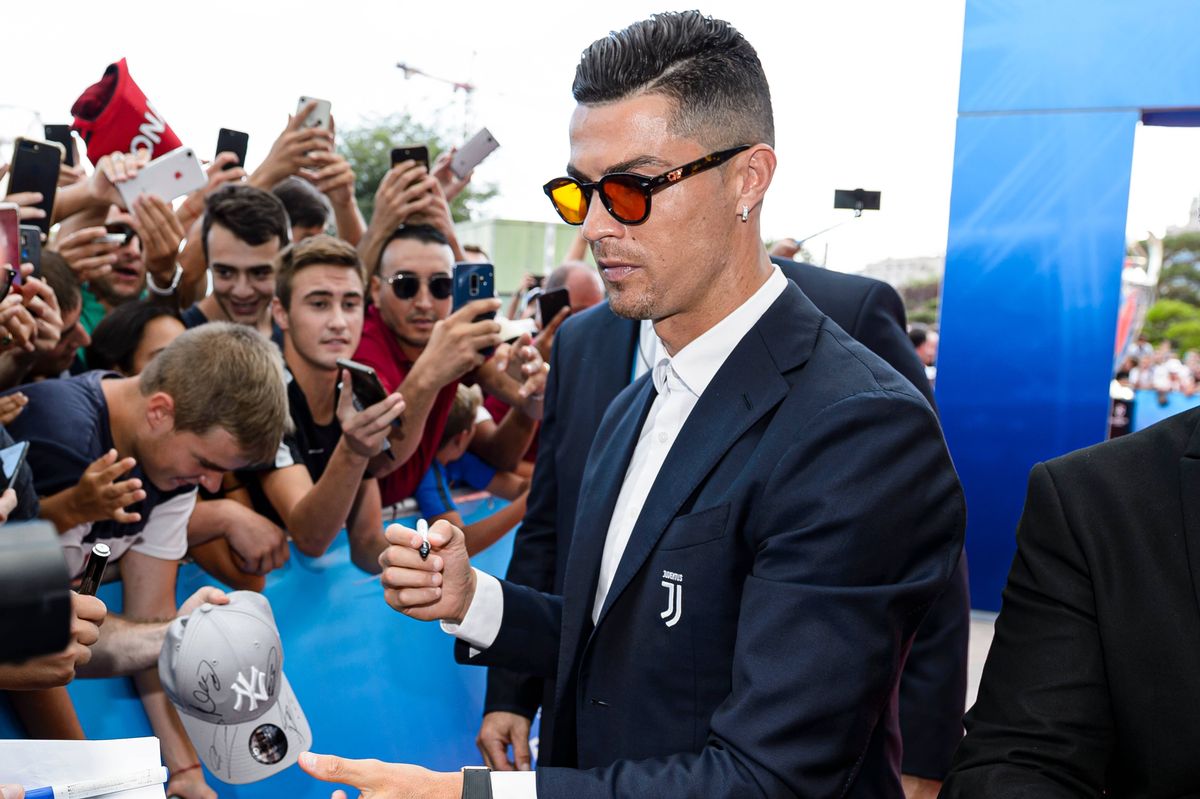
The real Cristiano Ronaldo is one of the most famous men on the planet(Image: Eurasia Sport Images, Getty Images)

Cristiano Ronaldo is undeniably one of the most recognisable faces on the globe. With the highest number of Instagram followers worldwide, the Portuguese football icon has a fan base spanning all six continents.

His face (and physique) are instantly recognisable to billions. However, even A-list status couldn’t prevent a hilarious mix-up involving an overly optimistic and rather inebriated influencer hoping to score some social media points with a celebrity selfie.

In a tale that’s sure to bruise the former Madrid player’s ego, a Lithuanian influencer mistook a random bloke for the real CR7.

Taking to Instagram, Goda Problema shared a video of herself enjoying a drink at a lively club with a man she mistook for the footballing legend.

She captioned the post: “Yesterday I got so drunk I thought I met Cristiano Ronaldo” – and the video she took on the night is as funny as it sounds.

Content cannot be displayed without consent

The random man plays along – despite bearing no resemblance to the real Ronaldo.

At one point, he seems to convince himself that he might indeed be the ex-Manchester United star because he starts referring to the influencer as ‘Georgina’, the name of Cristiano’s partner.

Incredibly, the power of social media managed to identify the opportunistic Milanese chap who fancied a night pretending to be Ronaldo.

Stefano Boscolo, a motorcycling enthusiast and whiskey fan, even left a comment on the Instagram post.

He quipped: “It was a pleasure to meet you, see you in Milan! Greetings from Ronaldo of Temu”. The comment has since garnered thousands of likes and comments.

Cristiano Ronaldo and his girlfriend Georgina Rodriguez
Sadly, Cristiano Ronaldo and his partner Georgina Rodriguez weren’t actually on the night out(Image: Instagram)

Predictably, the internet didn’t miss the opportunity to poke fun at both the influencer and Stefano. One user jibed: “Ronaldo SHEIN version.”

Meanwhile, another chimed in that he had “no shame” in playing along with the mix-up.

However, there were some who seemed convinced this could be the beginning of a romantic liaison between the faux CR7 and the Lithuanian influencer.

Article continues below

‘He’s hot who cares”, one user penned, rather bluntly. Meanwhile, another slightly more starry-eyed Instagrammer added “Please marry him!”

The fact that Ronaldo isn’t actually out partying in Milan should have been a significant clue. That’s because he’s still an active footballer!