Sainsbury’s Tu is selling a classy pair of William Morris print wellies for £17.60, down from £22, but this clever deal stacking hack can get you them for under £2
This article contains affiliate links, we will receive a commission on any sales we generate from it. Learn more
View 2 Images
Shoppers have rated the wellies highly on Tu’s site(Image: Tu)
Whether it’s for brisk, winter strolls through muddy fields or a bit of gardening, a dependable pair of wellies is essential for the UK’s chillier months. One place shoppers might not consider is Tu, Sainsbury’s clothing brand, which is currently offering a charming pair of Morris & Co. navy pimpernel print wellies for just £17.60, reduced from £22.
However, clever shoppers have discovered a way to get them for almost nothing. By signing up to TopCashback using this link, you can snag the Tu x Morris & Co. pimpernel wellies for only £1.87 after cashback, thanks to a £15 welcome reward.
READ MORE: Kendall Jenner’s stylish and waterproof wellies from Princess Kate-loved brand are now £35 off
READ MORE: Emma Louise Connolly’s cosy M&S winter coat feels like a hug and ‘hangs so nicely’
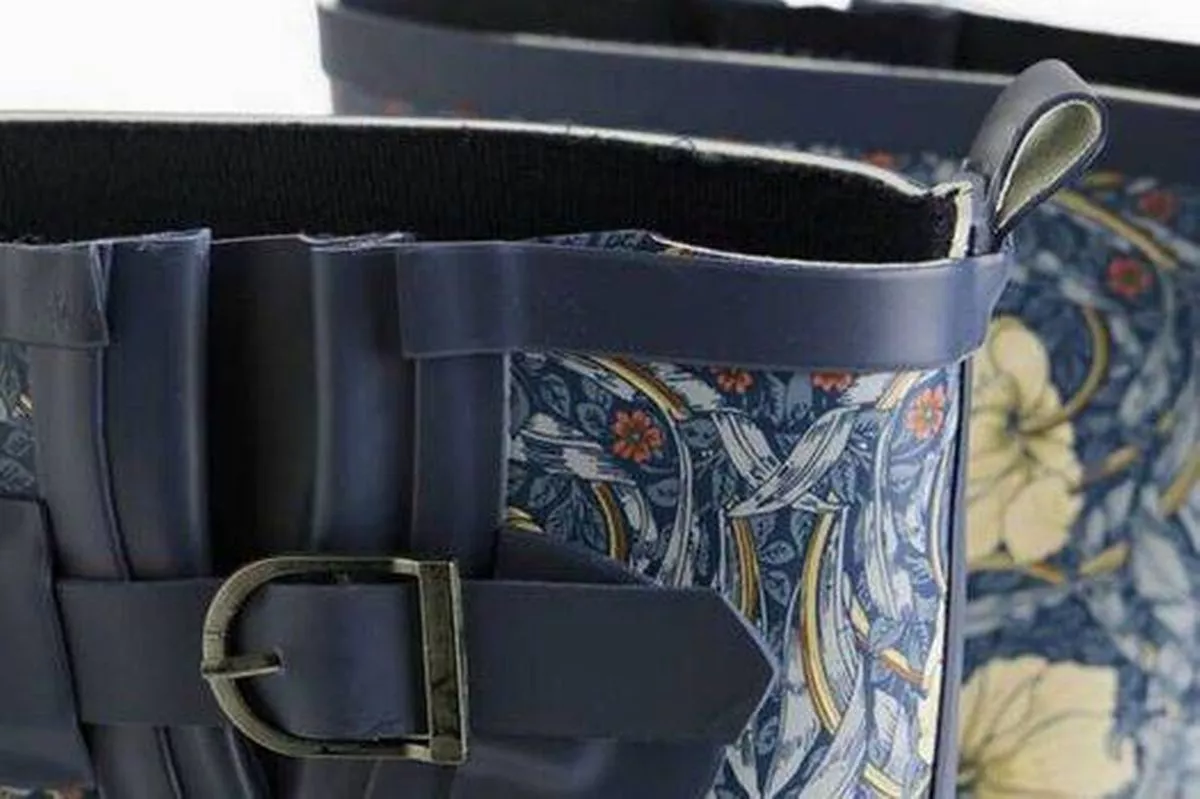
Existing TopCashback customers can also enjoy a small discount, with the wellies costing £16.87 after cashback. Standing out from the typical plain green or black, these wellies are adorned with an all-over Pimpernel print, a complex floral design crafted by renowned artist and writer William Morris in 1876.
This navy version of the pattern layers its delicate namesake flowers with swirling blue foliage and pale ruffled poppies for a stunning heritage look in signature Morris style. The wellies end around halfway up the shin, offering plenty of protection from long, wet grass or deeper puddles.
They also feature an adjustable buckle detail at the top, allowing wearers to adjust the fit, and available sizes range from 4 to 7 – sizes 3 and 8 are currently sold out.
For those seeking a classic and understated look, Next offers Pavers black warm lined wellies for £30. These boots echo the design of traditional riding boots, featuring a matte black finish, buckle detail, and a raised heel.
For shoppers with a larger budget, M&S stocks shearling insulated short Wellington boots from Hunter, a brand practically synonymous with wellies, priced at £105. These boots are perfect for chillier days with their cosy lining, while the textured sole provides extra grip on slippery surfaces, reports the Express.
Returning to the Tu x Morris & Co. wellies, one customer left a glowing review on the Sainsbury’s website, stating: “These wellies are really good quality with a lovely print on them.”
Others took to Trustpilot to express their opinions on the retailer, with one reviewer saying as part of a longer review: “I love supermarket clothes. I think supermarkets are really nailing trends with pretty decent quality and great prices!”.
Another customer shared their positive experience: “Delighted with the recent order, it came really quickly and on time. The ordering process was very easy too.”
However, one shopper expressed disappointment, commenting: “Good discount on a promo offer, however I was not able to exchange for a bigger size in-store as I bought online. I was told I need to refund and then buy again, meaning I would miss out on the discount I originally got.”
Others praised the delivery speed to their local Sainsbury’s, with one customer stating: “Easy to order, and collection in-store was simple. Only negative was that it was several days before it was available to collect.”
Here’s how you can snag the Morris & Co wellies from Tu for a mere £1.87:
Article continues below
Sign up at TopCashback for free via this link.
Once logged in, search for Tu and click through.
Shop and checkout as usual.
The cashback will be tracked to the TopCashback ‘Earnings’ page within seven days of purchase.
The United States is planning to require some visitors to provide their social media history from the past five years, according to US President Donald Trump’s administration.
This requirement will apply to visitors who do not need a visa to enter the US.
Here is a closer look at this proposal:
What is the US planning to do?
The proposal was announced on the Federal Register by the US Customs and Border Protection (CBP) on Wednesday. It will enable officials to collect up to five years of social media history from travellers from certain visa-waiver countries before they can enter the country.
The proposal states that this mandatory social media history disclosure is in line with Executive Order 14161, signed by Trump in January 2025.
That order, titled “Protecting the United States from foreign terrorists and other national security and public safety threats”, required US government agencies to increase their vetting of foreign nationals entering the country.
Who would this affect?
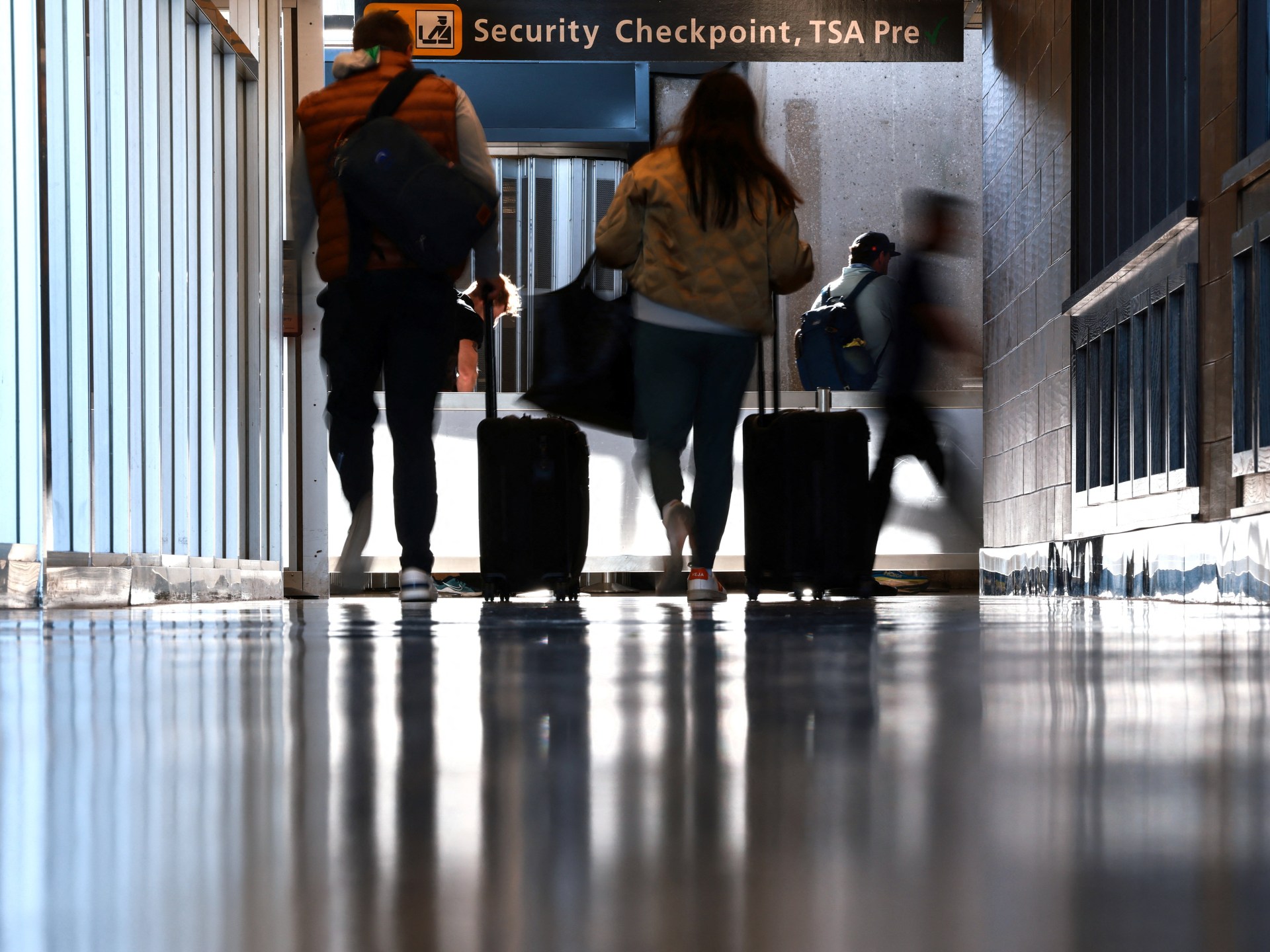
The requirement will apply to travellers using the Electronic System for Travel Authorization (ESTA) under the US’s Visa Waiver Program.
The Visa Waiver Program permits citizens of 42 countries – including the United Kingdom, Germany, Qatar, Greece, Malta, New Zealand, Australia, Japan, Israel and South Korea – to travel to the US for tourism or business purposes for up to 90 days.
At present, the ESTA automatically screens applicants and grants travel approval without requiring an in-person interview at a US embassy or consulate, unlike standard visa applications. Applicants are required to provide a more limited set of information, such as their parents’ names, current email address and details of any past criminal record.
Since 2016, the ESTA has included an optional question asking travellers to disclose their social media information.
How would this work?
Once the proposal comes into effect, visitors will be required to provide CBP with a list of their social media handles or usernames used over the past five years.
The visitors would not have to give CBP their social media log‑in credentials or passwords. They will use this information to review the publicly accessible information on the social media profiles of these visitors.
The new notice also states that travellers will have to provide additional personal information, including all telephone numbers used over the past five years and email addresses used over the previous 10 years.
Authorities also said they plan to add what are described as “high-value data fields” to the ESTA application “when feasible”. These will include metadata from electronically submitted photographs, extensive personal details about applicants’ family members, such as their places of birth and telephone numbers used over the past five years, as well as biometric information, including fingerprints, DNA and iris data.
The announcement did not include information about what the administration will be looking for within social media accounts of visitors or why it is asking for that information.
It is unclear when the proposal will take effect. However, the public now has 60 days to submit comments about the proposed changes before they are finalised, the notice in the Federal Register states.
Why is the US government doing this now?
Travellers from non-Visa Waiver Program countries have been required to disclose their social media handles since 2019. This is an extension of that.
That measure was first introduced by the Trump administration during his first term as president, and was kept in place during President Joe Biden’s tenure.
The CBP and US Citizenship and Immigration Services (USCIS) have been seeking to significantly broaden the existing social media disclosure rules for some time.
“USCIS has proposed to extend the social media disclosure requirement to applicants for other immigration benefits as well – up through naturalisation,” Caroline DeCell, a senior staff attorney and legislative adviser at Columbia University’s Knight First Amendment Institute, told Al Jazeera.
In June this year, the State Department also announced that it now requires all F, M and J visa applicants to make their social media profiles public as part of enhanced screening to identify national security threats.
Most social media platforms allow users to either keep their profiles private or make them public.
Private profiles can only be viewed by people actively added as friends – this includes all posts, photos, videos or other content posted by the profile user. Content posted on public profiles can be viewed by anyone.
This relates to student visas for those enrolled in accredited colleges, or in vocational or technical, non‑academic educational programmes. It also covers exchange visitors participating in approved exchange study programmes.
“A US visa is a privilege, not a right,” the State Department statement from June said.
What are the privacy implications of this?
DeCell said that if the CBP proposal is approved, the privacy implications would be “significant” as it will require disclosure not only of social media handles, but also of all phone numbers used in the past five years and email addresses used in the past 10 years, as well as biometric data.
“Even travellers who post publicly on social media typically maintain some expectation of obscurity, if not privacy, online. And those who use pseudonymous social media handles or email addresses would be directly deprived of their online anonymity,” she said.
DeCell added that if the USCIS proposal to seek this information for all immigration visa and citizenship applicants is also approved, besides the CBP proposal for travellers from visa waiver countries, “then nearly every non-US citizen who seeks to enter or remain in the United States would be subject to indefinite social media surveillance by the US government”.
Under the USCIS proposal, US citizens who petition in support of their relatives’ immigration applications would also be subjected to this “surveillance”.
What are the implications for freedom of speech?
The First Amendment to the US Constitution guarantees the freedom of religion, speech, the press and peaceful assembly.
However, DeCell warned that this expanding system will deter free speech online and many foreigners will be put off from travelling to the US, whether for work or leisure.
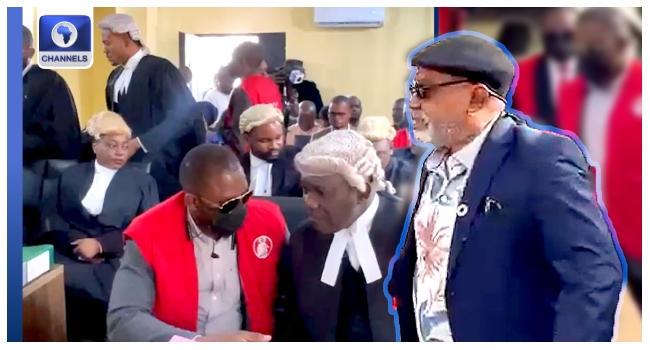
Former Minister of Labour and Productivity, Chris Ngige, on Friday pleaded not guilty to the eight-count charge.
Ngige was arraigned by the Economic and Financial Crimes Commission (EFCC) before Justice Mariam Hassan of the Federal Capital Territory High Court, Gwarinpa.
He was alleged to have awarded eight contracts for supply, training, and consultancy, with NSITF, to the said company to the tune of ₦583,682,686.00 (Five Hundred and Eighty Three Million, Six Hundred and Eighty Two Thousand, Six Hundred and Eighty Six Naira) only.
READ ALSO: EFCC Arraigns Ngige On ₦2.2bn Corruption Allegations
Appearing before the court, the EFCC Counsel, Sylvanus Tahir, asked the high court for a date for the commencement of the trial.
Before the date, he asked that the accused be remanded in the custody of the anti-graft commission.
Counsel to the defendant said his client has been in the EFCC custody for the past three days
He said the defendant is not an unknown person in the country – a former minister – up until a year and three months ago.
Ngige argued that they will meet any bail condition for his client, saying the ex-minister is not in good health and needs to get to the hospital
As Bonnie Blue’s Bali saga continues, two experts have weighed in on the controversial adult star’s holiday from hell, warning she is now ‘losing control’
View 11 Images
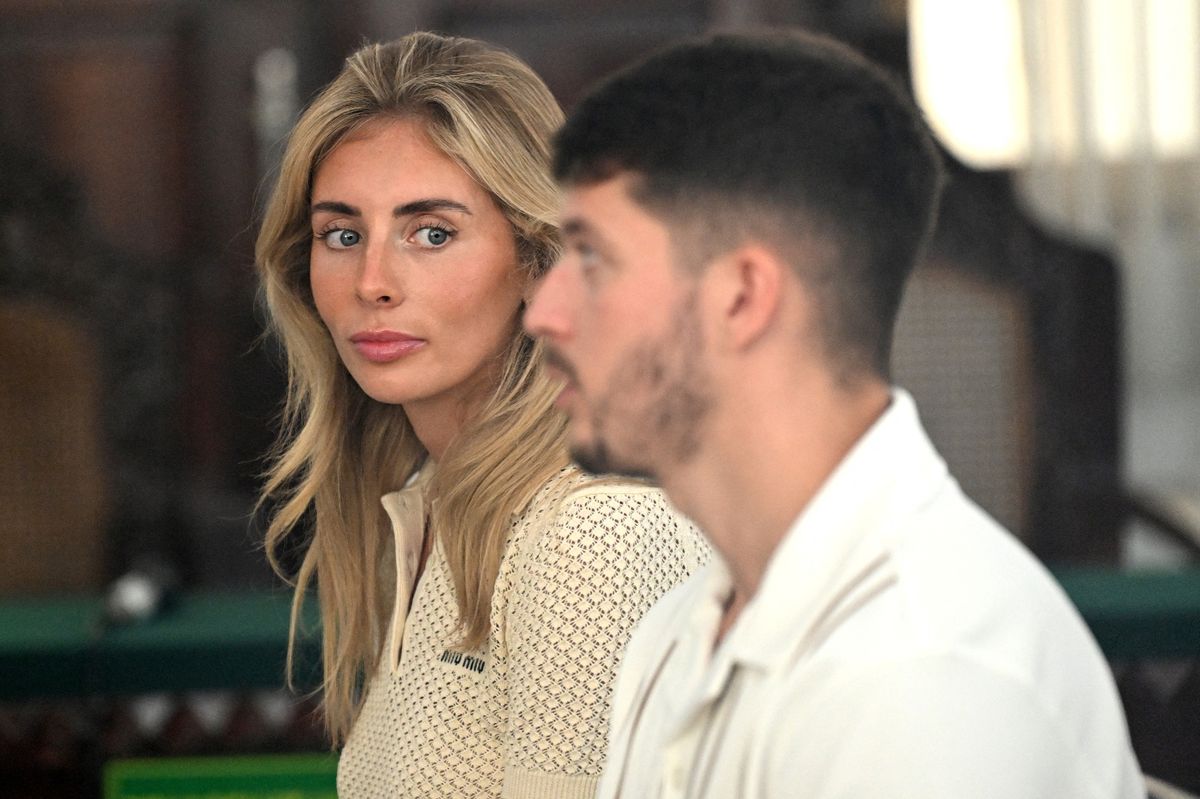
Bonnie appeared in court today(Image: AFP via Getty Images)
Bonnie Blue’s fate has finally been sealed after her Bali ‘Bang Bus’ tour landed her in a jail cell – and now the true motive behind her troubling trip has been revealed.
Although she was released from jail following her arrest on suspicion of breaking ‘morality’ laws in Bali, Bonnie had her passport seized and today appeared in court over the purchase of her blue ‘Bang Bus’ truck, due to its lack of vehicle registration.
Just minutes before officials ruled she would be deported over the saga, she allegedly quipped to the press pack outside court: “Usually I have other things in my face.”
Bonnie is allegedly set due to be deported on Friday night after a court issued her with a £9 fine after breaching traffic laws and ordered her to leave the country within 48 hours by immigration officials
The controversial star has allegedly been ‘blacklisted’ from returning for at least a decade, and while many Brits would be alarmed to find themselves facing punishment overseas, Bonnie, who is known for performing extreme sex stunts, appears to have taken a more light-hearted approach.
The 26-year-old could be seen grinning in photos following her arrest, and was even heard making jokes about subscribing to her content, despite having just been faced with potentially grave prison time. And it’s believed this startling reaction could all be part of her continuous ploy to generate outrage.
READ MORE: Bonnie breaks silence on Bali arrest with dark plea as she learns her punishment
Criminologist Alex Iszatt told the Mirror: “Bonnie Blue’s operation thrives on a simple, relentless formula: all attention is fuel. Each public complaint, news cycle, and social media debate actively amplifies he brand. Even legal issues are repurposed as promotional material, whether deflecting accountability or, as in Bali, directly instructing an audience to ‘subscribe and find out’.”
“Her quip that ‘people are so stupid’ is less a boast than a diagnosis of her method; she understands that public fascination and outrage are two sides of the same coin in the real-life soap opera she scripts, and she has proven clever enough to dance along the line of the law without decisively crossing it.”
Meanwhile, offering her personal branding expertise, PR to the stars, Mayah Riaz told us: “From a PR point of view, Bonnie’s decision to take her brand of shock content to Bali feels like someone playing with fireworks and acting surprised when they go off.
“She knows exactly what she is doing. Bali’s strict laws are no secret, which is why this looks less like an accident and more like calculated chaos. For someone whose entire career is built on outrage, the risk was part of the performance. In her world, scandal is not a setback; she uses it as a sales tool.”
Last Thursday (December 4), Nottinghamshire-born Bonnie, real name Tia Billinger, was hauled into custody in Bali on suspicion of breaking strict ‘morality’ laws, alongside 17 male tourists from Australia and the UK, between the ages of 19 and 40. This came after locals told police that she’d hired a truck to travel around the island, with the intention of filming explicit content with “barely legal” students.
Bonnie, who infamously claims to have slept with more than 1,000 men in a 12-hour period, has repeatedly faced fierce criticism for boasting about having sex with university students, leading some to brand her a “predator”.
She was previously banned from Australia following her ‘Schoolies’ campaign, which saw her target newly graduated 18-year-old boys in Australia, enjoying a week of partying after graduating from school. She is also now banned from Fiji.
After landing in Bali, Bonnie, who has long used ‘rage bait’ as a promotional tactic, took to social media, writing: “Hey boys, those that are going to Schoolies and to those who are barely legal, cannot wait to meet you and I’m in Bali, so you know exactly what that means.”
It was alleged that Bonnie had sourced a van locally as part of her ‘Bang Bus’ campaign, hoping to attract the Australian students, celebrating their graduations on the picturesque holiday island. Speaking anonymously with Aussie outlet News.com.au, one local revealed that Bali police initially couldn’t “comprehend” what they were being told when they were informed about Bonnie’s antics.
They said: “The business community doesn’t want it, the expat community doesn’t want it, and the local community can’t even comprehend it. We don’t want Bonnie Blue’s Gang Bang from Bali being posted and shared around the world.”
These recent allegations could have had serious consequences for Bonnie. As a Muslim-majority country, Indonesia enforces very strict legislation on the distribution, production or public display of adult content, and the star was potentially facing up to 15 years’ imprisonment and a fine of about £270,000 if convicted of pornography offences.
Warning that Bonnie’s confident approach could well still backfire, Alex noted: “Bali was a perfect stage for this performance. While Indonesia enforces some of the world’s strictest laws, Bali itself is a notorious tourist enclave with a thriving underground scene, offering both willing participants.
“The resulting national outrage was precisely the intended effect, and her only ‘crimes’ were administrative: insurance and traffic violations for the bus, and a visa misuse allegation. Police reported finding no pornography, suggesting a deliberate strategy of plausible deniability. Although there may be a flaw in her approach, as the Indonesian state isn’t her usual audience, and it could very well impose definitive consequences just to make a point.”
Similarly, PR guru Mayah remarked that Bonnie could well be in danger of “losing control” over her own narrative, as she navigates unfamiliar territory. According to Mayah: “What makes this situation different is that she is not in control of the narrative like she normally is. Local authorities are. Once a performer like her loses control of the story, the shock factor starts to look less clever and more dangerous. This is a reminder that rage bait might get clicks, but it cannot outrun the law.”
Following the arrests, law enforcement discovered various items in Bonnie’s rented studio in Badung, including several cameras, 19 outfits labelled ‘School Bonnie Blue’, lubricant, a box of condoms, flash drives, and two sheets of Viagra pills – some used. They also found her ‘Bang Bus’ van alongside the ownership certificate.
However, it was subsequently confirmed that officials found no evidence of pornographic content, meaning Bonnie and three other men have escaped serious convictions. Aiptu Ni Nyoman Ayu Inastuti, Acting Head of the Public Relations Sub-Division of the Badung Police, said: “When they were raided, they were making collab content about a game where the winner would sleep with Bonnie Blue. No pornographic activities or acts have been found in the collaborative content.”
It’s been reported that 14 out of the 17 tourists who were arrested were released without charge, while Bonnie and three other men remained under investigation. These four remaining arrestees were eventually freed, but first faced two days of questioning by immigration, during which time their passports were seized.
On Wednesday, December 10, while entering the Ngurah Rai Immigration Office in Jimbaran, south of Kuta, Bonnie was quizzed as to whether she intended to make more explicit content during her time in Bali. Apparently untroubled by her brush with the law, Bonnie teasingly responded: “Subscribe and you’ll find out.” However, when pressed about whether she would soon be flying home, the divisive content creator remained schtum.
As explained by Alex, this sort of behaviour is all an exercise in myth-making on Bonnie’s part. She said: “Her reaction in custody shows who she is; her brand. The smiling mugshot and jokes about subscriptions were not signs of defiance but evidence of the entire legal process being treated as raw content. Her existence is built on rage bait; she knows precisely what provokes complaint, and each complaint extends her reach. Thus, the arrest provided powerful imagery to repurpose, and the deportation will be curated into the next chapter of her personal myth.”
Mayah too agrees that Bonnie is “trying to turn a courtroom into a content studio”, telling us: “The grinning photos and jokes about subscribing to her content while facing possible prison time are classic Bonnie. It is the same formula she always uses: turn every serious moment into a spectacle and keep the spotlight glued on her.”
However, even though she’s dodged a lengthy prison sentence, there could be further tribulations in store for Bonnie. At a press conference held yesterday (Thursday, December 11), outside the Ngurah Rai Immigration Office, Immigration chief Heru Winarko confirmed Bonnie had breached her travel visa privileges and would therefore be deported, reports Australia’s Daily Telegraph.
Mr Winarko stated: “They have misused the visa they have to make content in Bali. They will be black-listed from entering Indonesia for at least 10 years (that) could be extended. Once police has finished with the investigation, after that we will deport them and put them (on) the blacklist.” During this same conference, as reported by local publication detikBali, Badung Police told members of the press that Bonnie and the three other men are now facing trial over the purchase of her blue “Bang bus”, which allegedly doesn’t have vehicle registration.
The adult star has built a career on courting controversy, but could these latest alleged escapades be a step too far, even for her? Considering the impact this could have on her platform going forward, Mayah mused: “Will this boost her career? In the short term, I would say yes it would. This is because controversy is her currency. But long-term, this is the kind of international incident that can stain a brand permanently. There is a fine line between being provocative and being reckless, and she is sprinting over it.”
Meanwhile, Alex has issued a stark warning, as Bonnie reaches a new “frontier”: “The question becomes what next? Escalation is the backbone of her brand. After orchestrating a confrontation with a strict foreign legal system, facing arrest, detention, and potential prison, the logic of her model demands a higher-stakes spectacle. She is approaching a frontier where the consequences may be of a severity that cannot be spun into content, where the material world finally and decisively overwhelms the narrative.”
Shedding light on Bonnie’s “strategy”, Alex also picked up on what she describes as “a complex and reinforced behavioural pattern”. Alex continued: “What she calls empowerment is a flawed interpretation, shaped by a history where shock was reinforced giving her the attention and excitement she craved, and to get more she needed to escalate. She presents narcissistic tendencies such as grandiosity, narrative control and a habitual dismissal of consequences.
“Whether she experiences sexual enjoyment in a traditional sense is almost irrelevant because her behaviour suggests she is far more invested in the power and control that comes from using sex as a public spectacle. For her, the psychological thrill lies in the reaction it produces and the way that reaction keeps her at the centre of the frame.”
Article continues below
Do you have a story to share? Email me at julia.banim@reachplc.com
READ MORE: ‘Beautiful and long-lasting’ fragrance with nearly 5000 reviews gets mega 65% discount
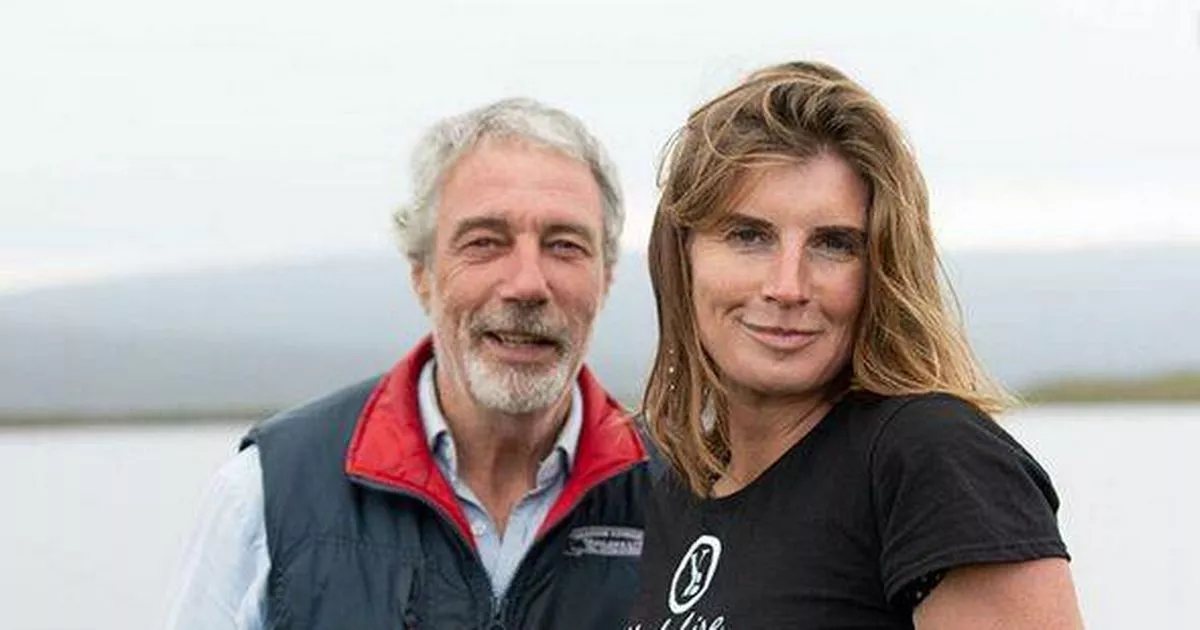
The Yorkshire Shepherdess Amanda Owen has revealed for the first time the true toll of her split from husband Clive that saw them both fearing for her life.
In a new interview Amanda recalls her darkest days after the pair called time on their marriage after 22 years. Amanda, who is mum to their nine children, reveals she suffered an eating disorder from which she is only now emerging.
Amanda says the disorder was part of a ‘cataclysmic’ breakdown she endured after splitting with Clive and embarking on a new short-lived new relationship with web designer Rob Davies, 72.
‘I just shut down.” Amanda tells the Daily Mail. “Physical and mental health are intertwined and anxiety, depression, paranoia, agoraphobia and an eating disorder were all smooshed into one.’
Amanda said she always had issues with food and eating – which was amplified by her nine pregnancies.
“The children witnessed it all. It has taught them resilience. It’s a weird sort of double life. You have moments of extreme strength, of feeling belligerent and spiky, then times when you feel the rug has been pulled from under you.
“I was back and forth to the hospital, to the doctors; it was a critical time and we were also doing the renovation at Anty John’s [the property that features in Our Farm Next Door].”
Clive said there were nights he feared he would not see Amanda the next morning.
Amanda says: “One Valentine’s night I went outside in the dark and something happened in my throat and I was throwing up blood. It was awful. The eating disorder has always bubbled up beneath the surface but I never imagined it would happen to that degree. Clive, in his basic, simplistic way said: “Why don’t you just eat summat?” There were a couple of times when I went out gathering [sheep] and I just flaked out. They had to come and get me.”
Amanda said it was a comfort to know that Clive would always have her back despite their separation.
“We can split up, shout the farm down, but we’ll always be there for each other,” said Clive.
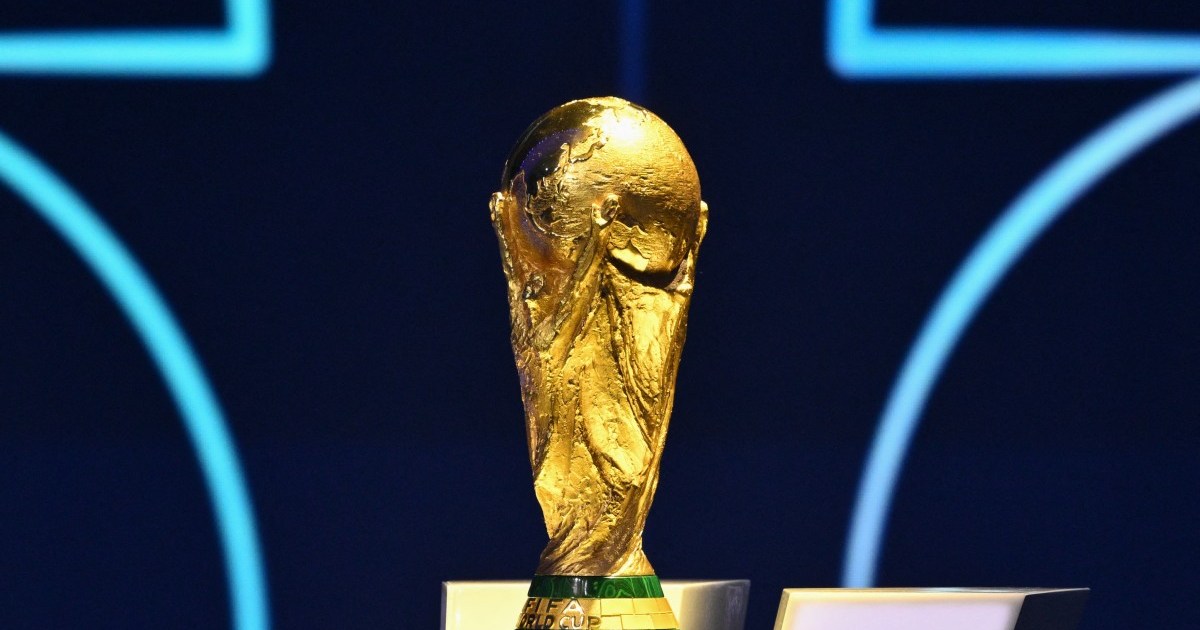
Football’s leading fan organisations have demanded FIFA immediately stop selling tickets for next year’s World Cup, to be played in the United States, Canada and Mexico, warning that prices reaching nearly $9,000 for premium final seats will exclude supporters from the tournament.
Football Supporters Europe, which called the ticket pricing “extortionate”, issued the call on Thursday after national associations began circulating price lists showing costs up to seven times higher than the 2022 World Cup in Qatar.
Recommended Stories
list of 2 itemsend of list
The group described the pricing structure as a “monumental betrayal” of the tournament’s traditions and called for urgent consultations before sales continue.
A fan attending every match next June and July from the group stage through the championship game faces costs of at least $6,900 via official supporter channels, based on price details released by Germany, England and Croatia’s football federations.
Premium tickets for the July 19 final at MetLife Stadium in New York are priced at $8,680, compared with roughly $1,600 for the equivalent category in Qatar.
FIFA is already under the microscope in the wake of its President Gianni Infantino’s effusive praise for US President Donald Trump and the doling out by the world football governing body of an inaugural peace prize award to the US leader, who was infuriated to be bypassed for this year’s Nobel Peace Prize.
That has triggered a formal complaint over ethics violations and political neutrality. Human rights group FairSquare said on Tuesday that it has filed a complaint with FIFA’s ethics committee, claiming the organisation’s behaviour was against the common interests of the global football community.
The latest controversy comes as FIFA began its third phase of ticket sales, with variable pricing now applied to group stage matches based on what the governing body terms fixture “attractiveness”, though it has not explained how this is calculated.
England’s opening match against Croatia carries a $523 price tag for seats behind the goal, while Scotland supporters will pay less for comparable matches, creating what critics call an opaque two-tier system.
“For the prices that have been put up by FIFA, we’re a bit stunned,” Football Supporters Europe executive director Ronan Evain said.
He warned that final tickets approaching $4,000 would strip stadiums of the atmosphere that makes the tournament compelling, adding that “none of this will happen” at current pricing levels.
Henry Winter, a prominent football writer in the UK, cautioned that excluding passionate supporters who generate atmosphere risks turning the competition into what he termed the “Corporate Games,” potentially leaving broadcasters, who pay FIFA substantial sums, facing empty seats and muted crowds.
For fans travelling from outside North America, the financial burden extends far beyond tickets. Gary Al-Smith, who covers African football, noted that supporters “will fly in from outside the US, spend on lodging and feeding,” warning this would prove “one helluva costly World Cup for fans”.
The pricing represents a dramatic departure from FIFA’s 2018 bid document for the tournament across the US, Canada and Mexico, which projected group stage tickets starting at $21.