Live updatesLive updates,
Thailand-Cambodia live: Renewed border clashes as fighting enters 2nd week

The Philippines has accused Chinese coastguard ships of firing water cannon at Filipino fishermen near a disputed South China Sea shoal, injuring three people and causing “significant damage” to two fishing vessels.
On Saturday, the Philippine coastguard (PCG) said that nearly two dozen Filipino fishing boats were attacked a day earlier, near an atoll called the Sabina Shoal that falls within the country’s 200km (124-mile) Exclusive Economic Zone (EEZ).
list of 3 itemsend of list
The fishermen faced high-pressure spray from Chinese water cannon, and Chinese vessels attempted aggressive blocking manoeuvres, according to Manila.
It was the latest in a series of confrontations between Chinese and Philippine ships in the contested waters of the South China Sea, which Beijing claims nearly in its entirety despite an international ruling against the claim.
Friday’s incident took place in a fish-rich area about 150km (93 miles) from the Philippine island of Palawan.
“As a result of these aggressive actions, three Filipino fishermen sustained physical injuries, including bruises and open wounds,” Commodore Jay Tarriela, a spokesman for the Philippine coastguard, said in a statement posted on Facebook.
“Two [Filipino fishing boats] also suffered significant damage from high-pressure water cannon blasts.”
During the incident, a Chinese boat also cut the anchor lines of several Filipino vessels, endangering their crews, according to the Philippine coastguard.
“The PCG calls on the Chinese coastguard to adhere to internationally recognised standards of conduct, prioritising the preservation of life at sea over pretensions of law enforcement that jeopardise the lives of innocent fishermen,” it said in a separate statement.
PCG Successfully Renders Assistance to Harassed Filipino Fishermen at Escoda Shoal Amid Aggressive Actions by Chinese Vessels
The Philippine Coast Guard (PCG) today announced the successful deployment of its multi-role response vessels, MRRV-4403 and MRRV-4411, to the vicinity… https://t.co/DW4eXgtjG3 pic.twitter.com/P2QOwRDjbB
China, however, defended its actions on Friday as necessary to maintain its “territorial sovereignty” over the Sabina Shoal, which it referred to by the Chinese name Xianbin Jiao.
In a statement, Chinese coastguard spokesperson Liu Dejun said the military’s vessels had taken “necessary control measures, including issuing verbal warnings and expelling by external means, in accordance with laws and regulations”.
Dejun accused the Philippine vessels of having “deliberately intruded” on the shoal “under the pretext of fishing”.
Tarriela told the Reuters news agency that the Chinese coastguard’s statement amounted to an admission of wrongdoing.
In Saturday’s statement, the Philippine coastguard added that the vessels it deployed to aid the injured fishermen were repeatedly blocked from reaching the Sabina Shoal.
“Despite these unprofessional and unlawful interferences, the PCG successfully reached the fishermen this morning and provided immediate medical attention to the injured, along with essential supplies,” the statement said.
There has been a history of clashes between Chinese and Philippine vessels in the South China Sea, as each side seeks to assert its territorial claims.
A separate incident on Friday took place at the Beijing-controlled Scarborough Shoal, known in China as Huangyan Dao.
There, the Chinese military said that it had also “warned and expelled” several small aircraft from the Philippines that flew through what it considers its airspace.
In October, the Philippines also accused a Chinese ship of deliberately ramming one of its government vessels in the Spratly Islands, where Beijing has sought to assert its sovereignty claims for years. Beijing blamed Manila for the incident.
A month earlier, one person was injured when a water cannon from a Chinese coastguard vessel shattered a window on the bridge of a fisheries bureau vessel near the Scarborough Shoal.
China claims an area in the South China Sea that cuts into the exclusive economic zones of Brunei, Indonesia, Malaysia, the Philippines and Vietnam, which all have competing claims.
In 2016, an international tribunal sided with the Philippines, finding that China’s claims exceeded lawful limits under the United Nations Convention on the Law of the Sea.
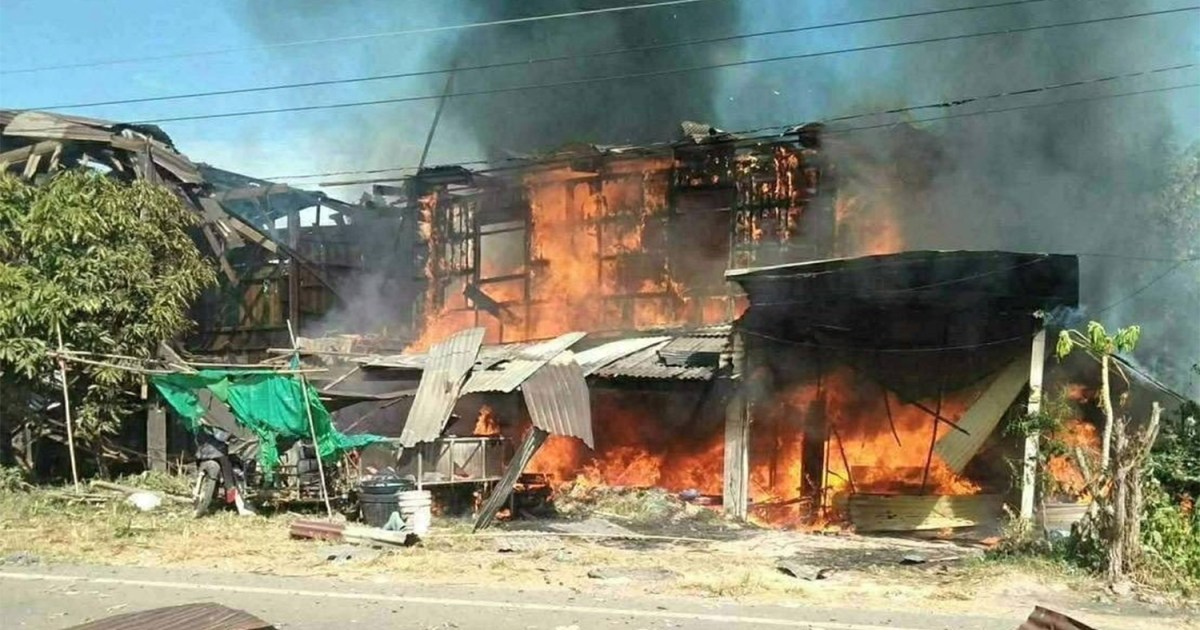
Thailand’s military has launched a new offensive against Cambodia to “reclaim sovereign territory”, spurning mediation efforts including that of United States President Donald Trump.
Violence between the two Southeast Asian nations continued on Sunday, a day after Phnom Penh announced that it was shutting all of its crossings with Thailand, its northern neighbour.
list of 3 itemsend of list
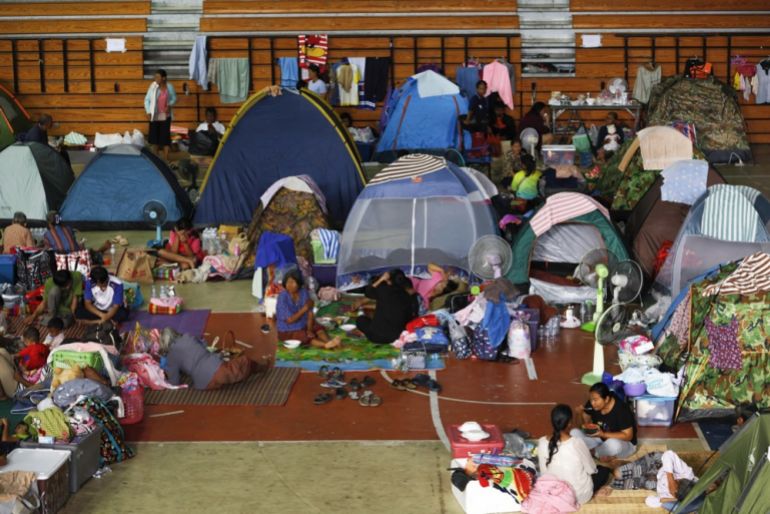
The conflict stems from a long-running dispute over the colonial-era demarcation of their 800km (500-mile) shared border. Fighting has left at least 25 soldiers and civilians dead, and displaced over half a million people on both sides.
The newspaper Matichon Online quoted a Royal Thai Navy spokesman, Rear Admiral Parach Rattanachaiyapan, as saying that its forces “launched a military operation to reclaim Thai sovereign territory” in an area of the coastal province of Trat.
“The operation began in the early morning hours with heavy clashes, conducted under the principles of self-defence according to international law and the preservation of national sovereignty,” Rattanachaiyapan told the Thai newspaper.
The Thai military said it has “successfully controlled and reclaimed the area, expelling all opposing forces”.
The public television channel Thai PBS also reported that the country’s military “planted the Thai national flag” after “driving out all opposing forces” in the area.
Thailand’s TV 3 Morning News quoted the military as saying that, as of early Sunday, the country’s “army, Navy and Air Force are continuing with [their] operations” along the border.
It also reported “sporadic clashes” in several other areas, including in Surin’s Ta Khwai area where “direct fire and indirect” and drone attacks took place.
There were no immediate reports on casualties from the latest incidents. The Cambodian military has yet to issue a statement regarding the latest fighting on Sunday.
But the Cambodian news website Cambodianess reported attacks in at least seven areas including in Pursat province, where the Thai military reportedly used F-16 fighter jet to drop bombs in the Thma Da commune.
Thai military also allegedly fired artillery shells southward into Boeung Trakoun village in the Banteay Meanchey province.
Al Jazeera could not independently confirmed the reports as of publication time.
Late on Saturday, Cambodia announced that it was shutting all border crossings with Thailand due to the fighting.
“The Royal Government of Cambodia has decided to fully suspend all entry and exit movements at all Cambodia-Thailand border crossings, effective immediately and until further notice,” Cambodia’s Ministry of Interior said in a statement late on Saturday.
The border shutdown was yet another symptom of the frayed relations between the neighbouring countries, despite international pressure to secure peace.
Earlier on Saturday, Trump had declared that he had won agreement from both countries for a new ceasefire.
But Thai officials said they had not agreed to pause the conflict. Rather, Thai Prime Minister Anutin Charnvirakul pledged that his country’s military would continue fighting on the disputed border.
Thai Minister of Foreign Affairs Sihasak Phuangketkeow also said on Saturday that some of Trump’s remarks did not “reflect an accurate understanding of the situation” on the ground.
Cambodia has not commented directly on Trump’s claim of a new ceasefire, but its Ministry of National Defence said earlier that Thai jets carried out air strikes on Saturday morning.
The latest large-scale fighting was set off by a skirmish on December 7, which wounded two Thai soldiers, derailing a ceasefire promoted by Trump that ended five days of combat in July.
The July ceasefire was brokered by Malaysia and pushed through by pressure from Trump, who threatened to withhold trade privileges unless Thailand and Cambodia agreed. It was formalised in more detail in October at a regional meeting in Malaysia that Trump attended.
Trump has cited his work on the Southeast Asian conflict as he lobbies for a Nobel Peace Prize.
Late on Saturday, a spokesman for Trump said in a statement: “The President expects all parties to fully honor the commitments they have made in signing these agreements, and he will hold anyone accountable as necessary to stop the killing and ensure durable peace.”


Here is where things stand on Sunday, December 14:
The fallout from England’s latest damaging Ashes defeat has, as ever, focused largely on their struggling batters.
Brainless. Unwilling to learn. Reckless. The withering analysis goes on.
But in the second Test there was another concerning failure as a fast bowling attack built for this very moment performed desperately.
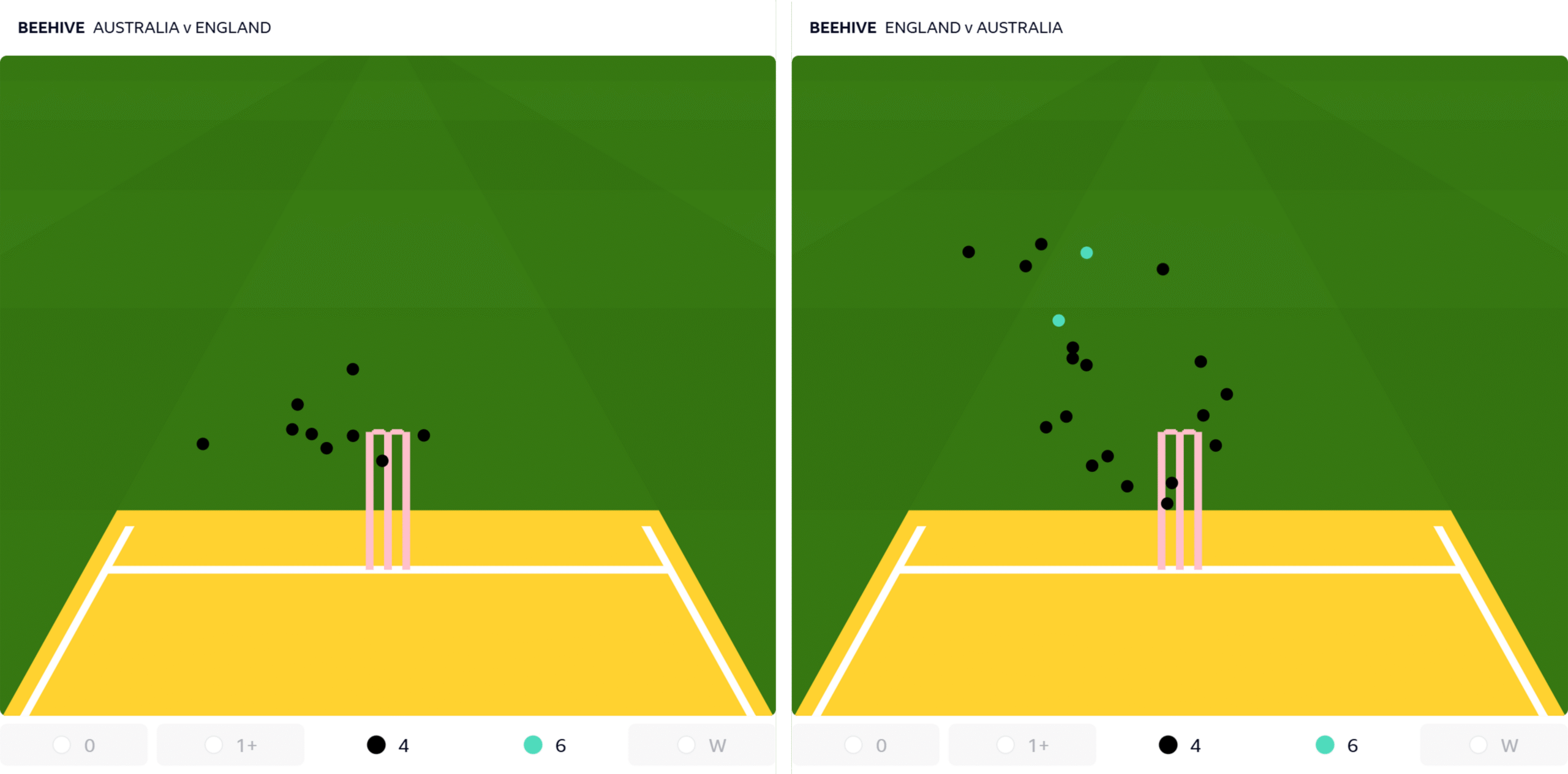
Stuart Broad, an all-time great not long out of the dressing room, has labelled England’s first-innings effort with the ball in Brisbane their worst bowling performance since 2008. A wayward start and a bizarrely flat end allowed Australia to canter towards a par score and stroll well beyond it.
Broad is right – that innings was a startling extreme.
But the overall bowling average of Ben Stokes’ side in 2025 is also their worst for 23 years and their sixth worst calendar year in 140 years of Test cricket.
Those 2025 numbers can, in part, be put down to who and where England have played.
Seven Tests in a row have come against India and Australia, with those India matches all lasting five days on some of the flattest pitches seen in the UK.
England’s only other Test this year was the four-day match against Zimbabwe, played on another slow surface at Trent Bridge, on which spinner Shoaib Bashir took nine wickets.
It is also undeniable an all-pace attack was both thrilling and threatening on first viewing in this Ashes series in bundling Australia out for 135 in Perth.
But that only makes the performances since, particularly the first innings in Brisbane with the game on the line and momentum with them, more disheartening.
“I have not seen a whole group get it wrong and bowl short and wide,” Broad told the Sky Cricket podcast.
The numbers were ugly.
Only once had Australia reached 100 quicker in a home Ashes Test while Brydon Carse conceded 95 runs in his first 12 overs. Stokes went for 64 in his first 11.
The number of balls on the ideal hard length (7-8m) dropped from 31% in the first 20 overs in the first innings in Perth to 17% at the Gabba and Australia scored 81 runs off the back foot – the most on record by any team in their first 20 overs of a match and the clearest sign England bowled short and wide.
Broad was not the only legend watching on for the first time in a generation.
“I was just thinking, ‘Pitch it up, just try and pitch it up a bit fuller’,” said James Anderson, whose Ashes contributions now come via the Tailenders podcast having been pushed aside in 2024 for these very bowlers.
England cannot deny they began this tour with the exact attack they’d have scribbled down on a whiteboard two years ago, more in hope than expectation.
In Brisbane they picked three tall fast bowlers – Jofra Archer, Gus Atkinson and Carse – who thud the ball into the pitch at pace, plus a fully-fit Stokes.
This was their much-discussed plan – backing pace and steep bounce, while ignoring statistics that show bowlers operating below 83mph, who previously averaged eight runs per wicket worse than those reaching speeds above, have wiped out their inferiority in Australia in the past three years on livelier pitches and with the new Kookaburra ball.
Of course, there are caveats here too and, as ever, familiar criticism of the retiring of Anderson has resurfaced.
Chris Woakes’ shoulder injury in the fifth Test against India denied England the option of his nibblers while Essex seamer Sam Cook was overlooked after one underwhelming Test.
At his best, Anderson might have found more change from such surfaces but the 43-year-old played in less than half of Lancashire’s County Championship matches this summer amid injury struggles and averaged 85.40 with the ball against these Australians at home in 2023.
Are this crop simply England’s best Test bowlers, who happen to each be quick?
“They’re the right bowlers,” said former England bowler Steven Finn.
“I’m not sure anyone else in the country would have made a difference.”

Though six wickets for Michael Neser’s 82mph seam were an uncomfortable contrast at the Gabba, wickets are still falling more regularly to deliveries over 85mph than below in this series.
Archer has been England’s best bowler so far – the one capable of a match-winning spell – and he and Wood, England’s quickest two options before Wood’s series-ending injury, have the produced the highest percentage of false shots from Australian batters.
Despite taking only three wickets, Archer also comes out top of CricViz’s ‘Expected Average’ model across both sides while Mitchell Starc, Australia’s quickest bowler, is two Tests into an iconic Australian summer.
Broad, though, highlighted a deeper issue that could continue to thwart England’s plans.
“[Archer, Carse and Atkinson] don’t strike me as real tacticians of a game – thinkers of the craft,” said Broad on the For The Love of Cricket podcast.
“It struck me there were a lot of times Archer was at mid-on, Atkinson deep cover and Carse bowling. They would not say a word. You have got to work together.
“Stokes has to make all of the decisions along with other captaincy decisions. He is bowling, pouring with sweat and looks like he is taking so much on.
“It is first time he has captained without an experienced bowler.”
Suddenly the absence of Woakes and his 62 Tests of experience looks more significant, even with his history of struggling down under.
Remarkably, with Wood now to return home, 22-year-old Bashir’s 19 Test caps make him the most experienced of any of England’s frontline bowlers on tour.
Hopes Atkinson could grow from his quiet personality and be the attack leader were hit by injuries he suffered in the summer, which meant he only played one of the India Tests.
Archer is the most experienced quick with 17 caps, making his way back after four years out injured.
“That’s not me saying Anderson should be here or Woakes should be here,” added Broad.
“It is one of those things that happens.
“It struck me for the first time in two years that there is no-one helping Stokesy.”


Alfie Burden beat Stuart Bingham 63-8 to win the Snooker Shoot Out and claim his first ranking title in Blackpool.
He turns 49 on Sunday but started the celebrations early by climbing on the table to huge cheers once victory was confirmed at Blackpool Tower Circus.
Burden, who won the World Seniors Championship in May, takes home the £50,000 prize.
“I’ve had a 30-year career and it has been mainly downs – I’ve underperformed – but tonight is a night for me,” Burden told TNT Sports.
“I’d like to thank all my family and friends for all the belief they’ve had in me. This is a special moment and I’m going to cherish it.”
Bingham finished runner-up at the Snooker Shoot Out in 2014 but passed up the opportunity to mount a fightback from 56-7 with three minutes on the clock.
The 2015 World Champion put away a red but was well wide of the mark when going at the blue.
“He looked so cool and calm all the way through. He played brilliantly from the start,” Bingham told TNT Sports.
Snooker Shoot Out is a single-frame game with a maximum length of 10 minutes and players facing a shot clock.