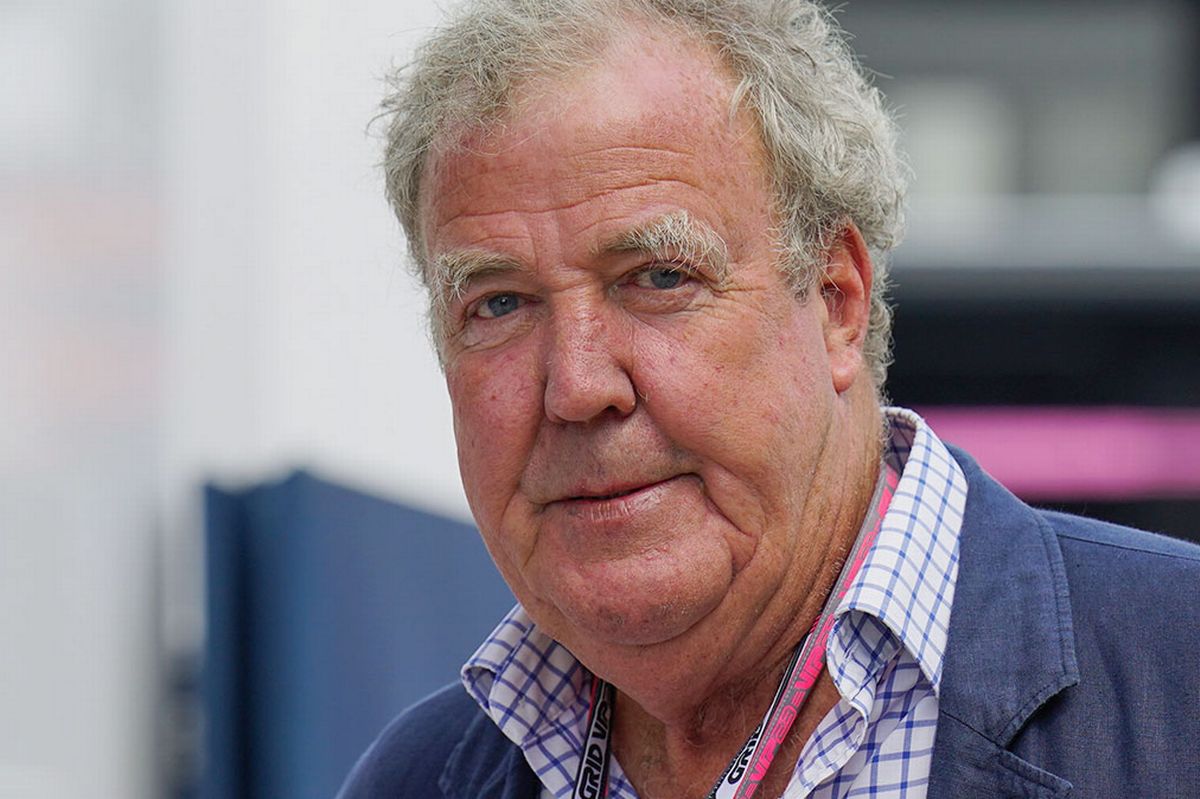
Jeremy Clarkson has used Liam Gallagher as an example of something he hates about Mancunians.
View 3 Images
Despite his dislike for the accent, Jeremy said his feelings for Manchester have changed over time
Jeremy Clarkson has taken a blunt swipe at Manchester accents, singling out Liam Gallagher in the process.
Writing for The Sunday Times, the former Top Gear host reflected on his long-running role as host of Who Wants to Be a Millionaire?, revealing that his excitement about landing the job was initially tempered when he learned where it would be filmed.
“When I was offered the chance to host Who Wants to Be a Millionaire?, I immediately signed the contract and then ran around in little circles, grabbing my tinkle and squeaking,” Clarkson wrote.
“I love quiz shows, and Millionaire is the biggest and the best of them all, so I was very happy. And I continued to be very happy until I found out that it would be filmed in Manchester.”
Jeremy went on to describe his feelings about the northern city—though he admits they have softened over time. Originally from Doncaster, in South Yorkshire, he claimed there is a natural rivalry between those on opposite sides of the Pennines.
“It’s true, of course, that no one is born racist,” he wrote, adding that “people from Yorkshire, like me, are born with an instinctive dislike of people from the other side of the Pennines. The wet side. The gloomy side. The miserable side.”
His next swipe was aimed at Mancunian accents, which he described as the worst of northern ones.
“The side where everyone speaks with that stupid accent. If you’re going to sound northern, have the decency to talk like Sean Bean or Mark Knopfler, not Liam bloody Gallagher.”
Despite his initial scepticism, Clarkson admits his feelings about Manchester have evolved after years of travelling there to film the quiz show.
“However, I’ve been going to Manchester for eight years now, to record the show, and I must admit, it’s been steadily growing on me,” he wrote. “I came to not mind it, and then I started to like it, and now—drum roll, please—I think it might be better than London.”
Aldi analysed shopping patterns to identify the “calmest” times to shop so customers can dodge queues and get in and out quickly this festive season.
View 2 Images
Aldi analysed shopping patterns to identify the “calmest” times to shop so customers can dodge queues and get in and out quickly this festive season(Image: Liuba Bilyk via Getty Images)
Supermarket behemoth Aldi has disclosed the optimal time to do your Christmas grocery shopping this festive season, as well as when to steer clear of the shops. With Christmas Day just over a week away, if you haven’t yet gathered all the bits and pieces for the festivities, it’s high time to get your shopping list in order.
Whether you’re grabbing something special for a Christmas bash, making a last-ditch dash for family gifts or picking up everything for the Christmas dinner, now is the moment to venture out.
To assist you in navigating the shopping frenzy this festive season, Aldi has scrutinised shopper habits to pinpoint exactly when customers should visit stores to sidestep the festive pandemonium.
As supermarkets gear up for one of their busiest Christmases ever, Aldi has unveiled the quietest shopping slots so customers can avoid queues, zip in and out swiftly, and genuinely savour the Christmas build-up.
According to Aldi, the prime times to hit the shops are between 8am and 10am, and 8pm and 10pm. These are anticipated to be the “calmest” shopping periods nationwide.
If you’re curious about which days will be the least crowded, Aldi predicted that Sunday, December 21 and Wednesday, December 24, are the days you’ll want to head to the shops for any last-minute Christmas necessities.
Rachel Geary, Communications Director at Aldi UK, has offered some advice for the festive season, saying: “The final countdown to Christmas can feel overwhelming, but a little planning goes a long way.
“Visiting stores in quieter moments means a faster, smoother shop, so customers can focus on what really matters – enjoying the festivities with family and friends.”
Article continues below
She also emphasised Aldi’s commitment to customer satisfaction during the holiday period, adding: “That’s why, alongside our award-winning quality and unbeatable prices, we’re committed to making the Christmas shop as easy and affordable as possible.”
The supermarket has been named Which?’s Cheapest Supermarket of the Year for the fourth year running and was recently crowned Christmas Retailer of the Year by the Quality Food Awards for the sixth year in a row.
Some define time as linear, some see it as a block. Others refer to it as something spent, in the present, or the future. Meanwhile, others consider it to be supernatural or holy, or something to twist, tame or traverse.
As someone who has been sentenced to a lifetime behind bars, time is both abstract and defined. When you have so much time, it is all you have, yet, inside, you have almost no control over how to spend it.
Every day, I can hear it: tick, tick, tick. It’s torturous, like that dripping faucet in my cell.
So to quiet the sound, I study. I learn. I try to build something meaningful from the minutes.
At the time of my arrest in 2002, I was a 25-year-old entrepreneur who had started a successful business. I was enrolled in college, working towards my degree in Information Technology, when my world collapsed. Once in New Jersey State Prison (NJSP) in Trenton, I had a simple choice: either give up on all of my dreams, or fight for them alongside my efforts to prove my innocence. So, I decided to use my time to complete my education.
My father had brought our family to the United States from Pakistan so his two sons could have access to higher education. He passed away this past January, and it is because of him I keep studying, to fulfil the dream he carried across an ocean.
Yet on the inside, that dream has been hard to chase.
‘You guys aren’t going anywhere’
Prison life is an insidious thing. The environment is conducive to vice and illicit activities. Drugs and gambling are easy to find; doing something constructive, like education, well, that can be a monumental task.
The NJSP’s education department only offers GED-level (high-school level) education. Prisoners can also enrol in outside correspondence courses, also known as independent study. These include certifications, like in paralegal studies, costing about $750 to $1,000.
For-profit “correspondence schools” advertise mail-order college degrees, but most, costing anywhere from $500 to $1,000, are unaccredited – selling paper, not knowledge. Some men collect a bachelor’s, master’s, and even a doctorate in a single year. I could not bring myself to do that. For me, an accredited degree is something that cannot be dismissed, and would make me feel on par with those in the free world.
But the options for college degrees from reputable accredited universities can run into the thousands – a non-starter for most of those imprisoned. So I began with a prison paralegal training course taught by fellow prisoners helping others with their legal battles.
Later on, I watched a PBS documentary about the Bard Prison Initiative in New York, a real college programme, accredited and rigorous, for men and women in the state’s prisons. Inspired, I decided to write dozens of letters to reputable universities across the country, asking them to take me as a test case to do a degree. None replied.
Then I learned about NJ-STEP, a programme offering college courses to prisoners at East Jersey State Prison. But when I asked to enrol, the NJSP’s education supervisor replied that it was not offered at our prison. When I appealed to the administration, a security major told me, “Why should I bring the NJ-STEP here? You guys aren’t going anywhere.”
His words echoed, as if a sentence within a sentence.
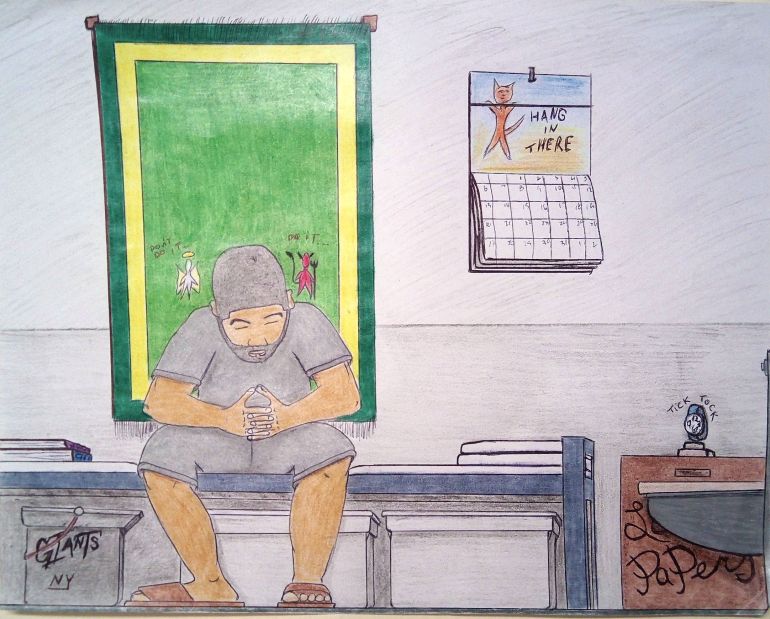
[Illustration by Martin Robles]
The myth of higher education
Thomas Koskovich, 47, has spent nearly three decades in NJSP, where he is serving a life sentence.
When I asked him about the opportunities for higher education in the prison, he scoffed.
“What college programme?” he blurted.
“The only thing they let us do is something called independent study, and by the way, you pay for everything yourself. The prison doesn’t help you. They just proctor [meaning they provide someone to administer] the tests.”
Thomas works as a teacher’s aide, a prison job detail, in the Donald Bourne School, named after a policeman who was killed by a prison inmate in 1972. The teachers come from the outside, while aides like Thomas assist them and also tutor students requiring extra support. He helps men earn their GEDs while knowing there is no path offered beyond that to further higher education.
“I’ve seen guys stuck in GED classes for 15 years,” he said.
Prisoners get stuck for different reasons: classes get cancelled because of emergencies, or sometimes the men have little education to begin with and require years to learn to read and write. Students also get paid $70 a month to attend, so some consider it a job – particularly as prison jobs are scarce – and deliberately fail so they can stay at the school for longer.
Of the two dozen or so students, “the school averages maybe five to 10 graduates a year”, Thomas explained.
He earns about $1,500 a year, far less than the $20,000 he would need to afford an accredited correspondence degree. But he chooses to help others in the same school where he got his GED because, as he put it, “Most people in here aren’t career criminals. They just got caught in bad situations.”
He added, “If given half a chance, they’d choose a legal, meaningful life.”
Thomas sees education as key to self-betterment. It was a book, Pedagogy of the Oppressed by Paulo Freire, a Brazilian Marxist educator, given to him by an activist friend that showed him the power of education, he says.
Education equips us to “better handle stressful situations” and nurture creativity and “artistic expression”, he reflected. “But most importantly, we can develop skills that will allow us to earn a living legally and contribute to society in a positive way.”
The Department of Corrections may store bodies, but it does not nurture minds, though many will eventually be freed back into society after serving their terms, while others could win their freedom in court or through clemency.
And education can only help with transitioning into life on the outside. According to the Prison Policy Initiative, a research and advocacy nonprofit, limited access to education in prisons remains a major barrier to rehabilitation and reentry into society. Decades of studies support the idea that education in prison reduces recidivism – a RAND meta-analysis found a 43 percent lower likelihood of reoffending among inmates who pursued studies.
Kashif Hassan, 40, from Brooklyn in New York City, has been imprisoned for 15 years. Serving a life-plus-10-year sentence, he has earned multiple degrees, including two PhDs, one in business administration and one in criminal justice, through university distance education.
Unlike other prisoners, Kashif was fortunate in that his family could afford the tens of thousands in accredited college tuition fees.
“I have two sons,” he told me, “and I want to show them that no matter the circumstances, even here, you can keep learning.”
He laughed when I asked about support from the NJSP’s education department. “None,” he said. “They even cancelled the college correspondence roster [a list that allowed students enrolled in long-distance education to access the prison law library and school computers to type and print]. They say it’s for security, but really, it’s about control.”
Kashif has also been on the waiting list for a paralegal course for 10 years.
“Education is a powerful tool,” he said. “It helps you understand your rights, navigate the system, and articulate yourself better. Especially in here, it’s the difference between feeling powerless and feeling empowered.”
A door where there was a wall
In 2023, I learned of a glimmer of progress. The Thomas Edison State University (TESU) in Trenton – ranked among the state’s top 20 public institutions – launched a new programme enabling men in NJSP to pursue accredited college degrees.
In 2024, I began taking TESU courses for a liberal arts degree. My tuition is paid for by grants and scholarships. The programme runs independently from the NJSP’s education department, which only proctors exams. For those of us long shut out of higher learning, it felt revolutionary. As if a door opened where there had only been a wall. It has made me feel free and given me purpose.
For Michael Doce, 44, another student in the programme who is serving a 30-year sentence, the door is narrow but precious. “I want to stick it to the NJDOC, to say, ‘Look what I did all on my own.’”
Michael studied engineering at Rutgers University before he was imprisoned. Now he is earning a communications degree.
“My family buys used textbooks,” he said. These are mailed to the prison, but security checks mean they can take weeks to reach him.
“But the prison just banned used books,” he added. “Depending on how much new ones cost, I might not be able to continue.”
Al Jazeera requested clarification from the New Jersey Department of Corrections about the cancellation of the roster and the banning of used books, but did not receive a response.
Michael shrugged and gave a wry smile. “If too many guys signed up, they’d probably cancel the whole thing. I’m being funny, but not really.”
He maintains top grades and dreams of becoming a journalist. “A criminal conviction closes a lot of doors,” he told me. “I’m just trying to open new ones.”
‘Doing his own time’
There is a couplet from the 18th-century Urdu poet Mir Taqi Mir that goes:
Yaarān-e deyr o Ka‘bah, donon bulā rahe hain
Ab dekhen Mir, apnā jānā kidhar bane hai
My heart is torn between two calls – the world of love and the house of God.
Now it is a test to see which way my soul will turn.
Perhaps that captures the prisoner’s daily dilemma: between despair and determination; between giving up and growing. In the absence of rehabilitation, every man must choose his own path – “doing his own time,” as the popular prison phrase goes – towards light or darkness.
Men like Thomas, Kashif, Michael, and many others choose light. They choose education.
The Department of Corrections may store bodies, but it cannot own the will to grow. Education here is not charity. It is resistance. It is the one realm where we can still choose, and in choosing, we stay human and free.
Because in the end, freedom does not begin with release. It begins with the decision to grow. It begins with the mind.
And in this place, where time is both enemy and companion, every page turned, every lesson learned, is a way to quiet the endless ticking, a way to remind ourselves that even behind bars, time can still belong to us.
Tick. Tick. Tick.
This is the final story in a three-part series on how prisoners are taking on the US justice system through law, prison hustles and hard-won education.
Read more from the series:
How I’m fighting the US prison system from the inside
Tailors and corner stores: The hustles helping prisoners survive
Tariq MaQbool is a prisoner at New Jersey State Prison (NJSP), where he has been held since 2005. He is a contributor to various publications, including Al Jazeera English, where he has written about the trauma of solitary confinement (he has spent a total of more than two years in isolation) and what it means to be a Muslim prisoner inside a US prison.
Martin Robles is also a prisoner at NJSP. These illustrations were made using lead and coloured pencils. As he has limited art supplies, Robles used folded squares of toilet paper to blend the pigments into different shades and colours.
Goalkeepers Francis Uzoho and Stanley Nwabali were the first batch of players to arrive at the Super Eagles’ camp for the 2025 Africa Cup of Nations (AFCON).
Uzoho, a returnee to the Nigerian team after months of absence, was the first to touch down at the Super Eagles’ camp in Cairo, Egypt, on Sunday morning.
The Omonia of Cyprus man, who was a surprise inclusion in the 28-man roster for the continental showpiece, joins Nwabali as the team’s camp opened on Sunday.
A video on the Super Eagles’ official X handle showed Chippa United’s Nwabali alighting from a bus and checking into Nigeria’s hotel.
Already, the backroom staff and the coaching crew are in the team’s camp.
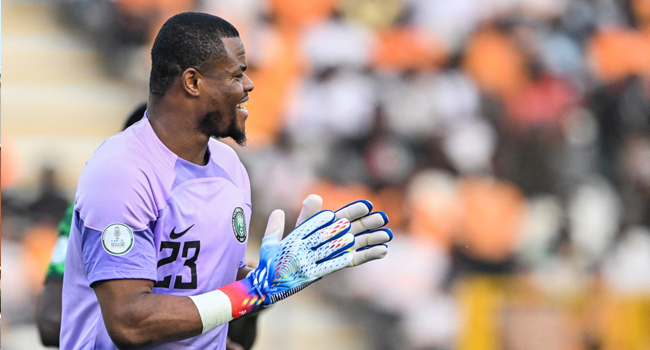
Nigeria’s goalkeeper #23 Stanley Nwabali gestures during the Africa Cup of Nations (CAN) 2024 semi-final football match between Nigeria and South Africa at the Stade de la Paix in Bouake on February 7, 2024. (Photo by Issouf SANOGO / AFP)
With Nwabali still recovering from injuries, Uzoho will fancy his chances of usurping the Chippa United goalkeeper as Nigeria’s first choice.
Amas Obasogie of Singida Blackstars in Tanzania completes the trio of Nigerian goalkeepers for the competition.
More players are expected to arrive at Nigeria’s camp in the coming days after this weekend’s actions, especially in Europe.
The Super Eagles will take on Egypt in a practice match on Tuesday, December 16, 2025, at the Cairo Stadium.
After the match, the Coach Eric Chelle-tutored side will fly to Fes in Morocco, their base for the group stage of the tournament.
Nigeria are in Group C alongside Tunisia, Tanzania, and Uganda. They begin their campaign in the competition against the Taifa Stars on December, 23.
After that, the team will take on Tunisia’s Carthage Eagles on the 27th before battling the Cranes of Uganda three days later.
The 2025 AFCON comes with added pressure for the Super Eagles following their failure to qualify for the 2026 World Cup, the second time in a row Nigeria will be missing out on the competition.
The Traitors star, Charlotte Chilton, continues to fight to find out the paternity of her daughter Penelope – as she insists YouTuber, Conor Maynard, is the father
View 5 Images
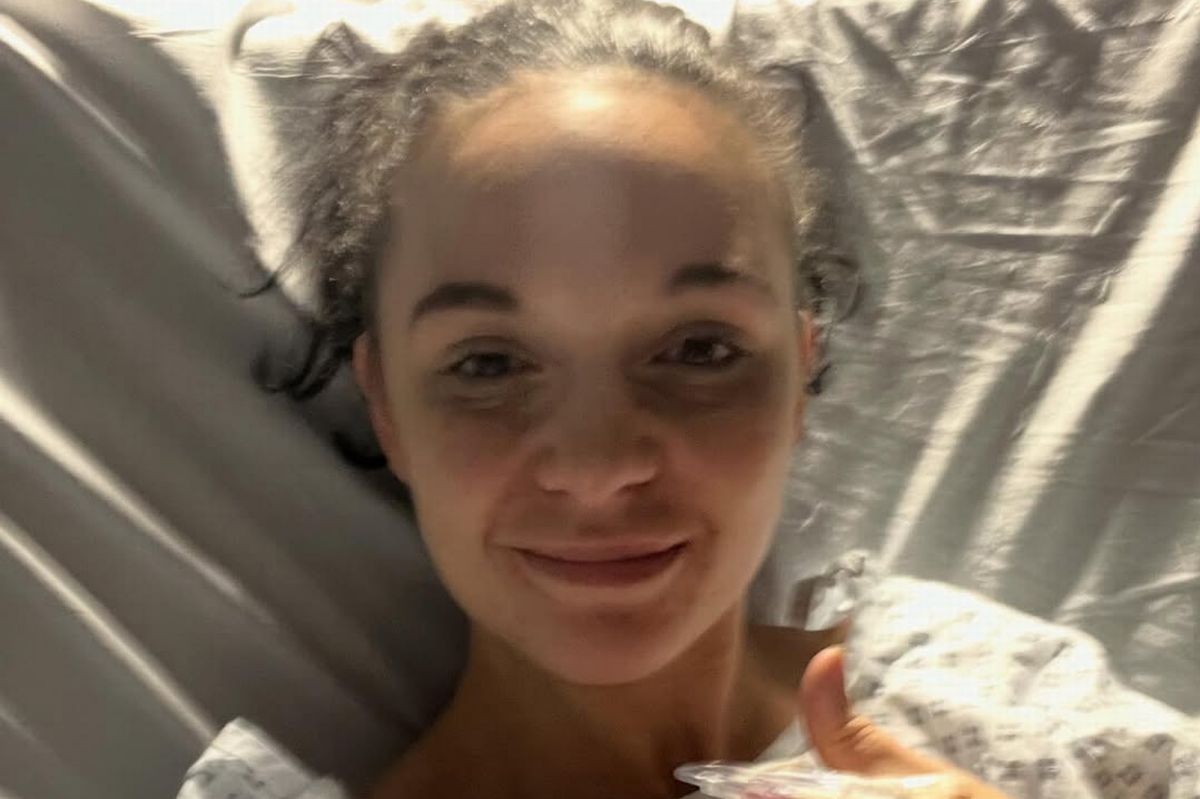
The Traitors star, Charlotte Chilton, has been rushed to hospital for brain surgery(Image: INSTAGRAM/charlchilts)
The Traitors star, Charlotte Chilton, has been rushed to hospital for brain surgery as fans expressed their concern for the mum-of-one.
Charlotte, 32, who made it to the finale of the second series of the BBC show in 2024, shared a photo of herself from her hospital bed, telling her followers she will need to will need to undergo an operation to manage her trigeminal neuralgia. The chronic pain condition characterised by intense, electric shock-like pain in the face, typically triggered by light touch or routine activities.
Admitting she felt ‘daunted’ ahead of the operation, Charlotte, who is currently undergoing a bitter paternity battle with YouTuber, Conor Maynard, 33, wrote: “As many of you know I have tried raise awareness of the condition trigeminal neuralgia. I have unfortunately found myself back in hospital with a terrible attack and this has resulted in me needing another neuro surgery to control it. Having surgery on your brain is always daunting, however this has long term relief and allows me to get on with my life.”
READ MORE: Matthew Wright sparks concern on LBC as he reacts to Bondi Beach shootingREAD MORE: Ed Sheeran takes savage swipe at Strictly as he reveals why he’ll never sign up for show
Saying she was rushed to A&E after suffering a “huge attack” in what was a “hellish week”, Charlotte continued: “After being rushed into A&E with a huge attack, I have been taken care of by the amazing Neuro team at QE hospital and today I have an operation to relieve me of my physical torture.
“For my TN followers keep fighting to find the right team to support you. I’m so grateful for my family and friends who have supported me through this hellish week! Wish me luck and see you on the other side!!”
It’s been a tough time for Charlotte as she continues to fight to find out the paternity of her daughter Penelope – as she insists that social media star, Conor, is the father.
In the summer, the pair took a DNA test, with the results validating the earlier test which showed that Conor was not the dad of baby Penelope.
Following the bombshell, Charlotte released a statement via her representatives. They told the Daily Mail: “For those of you who have followed Charlotte’s journey since her appearance on BBC’s The Traitors, will know she has fought an extraordinary battle for truth and justice with heartfelt conviction. Charlotte will now take time to process, heal and reflect and when she is ready, she will finally share her story in full.”
She then told The Sun she will prove that Conor is the father of her daughter Penelope – despite two paternity tests saying he isn’t.
Claiming the DNA tests were inaccurate, she said: “I have had so much abuse from people wondering why I am saying he is her father. I am saying it because I know it is true. But I’ve also had messages off people who have had DNA tests with strange results like this too. There are so many scenarios.”
However, breaking his silence on the results of the second test on social media, Conor said: “Today I received the results of a second paternity test, which was requested by Charlotte Chilton regarding her baby girl, Penelope. As with the last test, this test has confirmed again that I am not Penelope’s father.
“As Charlotte requested, Penelope’s, Charlotte’s and my DNA were all taken at a Ministry of Justice accredited DNA facility that was selected by Charlotte. The results are therefore conclusive.
“This has been difficult for me and my family, and I’m so grateful for everyone’s support. I’m glad we can now finally draw a line under this.”
Meanwhile, a second name has been thrown into the mix following Conor’s constant denials and two paternity tests confirming he isn’t the father. It has now been revealed that Charlotte’s co-star Jonny Holloway also claimed he slept with the reality star around a similar time.
However, Charlotte has denied sleeping with Jonny. He claimed that he has asked for a DNA test – but she has since changed her mind, according to Jonny, and won’t discuss the paternity with him.
Article continues below
The Mirror has contacted Charlotte’s reps for comment.
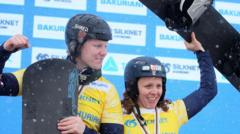
Great Britain’s Charlotte Bankes and Huw Nightingale claimed gold in the mixed team event at the Snowboard Cross World Cup in Cervinia, Italy.
Nightingale, 24, finished third in the men’s run to put the British team in a strong position before Bankes, 30, produced a stunning run on her return from injury to win the women’s race and clinch gold for the team.
Austria claimed silver ahead of France, who won bronze.
Bankes won the Crystal Globe as overall winner in 2021-22 and 2022-23 but sustained a broken collarbone in April as she chased a third individual Snowboard Cross World Cup title in four years.
She was ruled out of the final races of last season at Mont Sainte Anne, Canada and needed two rounds of surgery to correct the injury, missing all of pre-season.
“To see all the hard work from this summer’s training paying off from Huw as well as this being Charlotte’s first race back since injury, this was quite the victory,” said GB Snowsport head coach Pat Sharples.
Bankes was knocked out of the women’s event at the quarter-finals stage on Saturday.