Archive December 15, 2025

Maresca ‘happy’ at Chelsea but wounds remain open

Getty Images

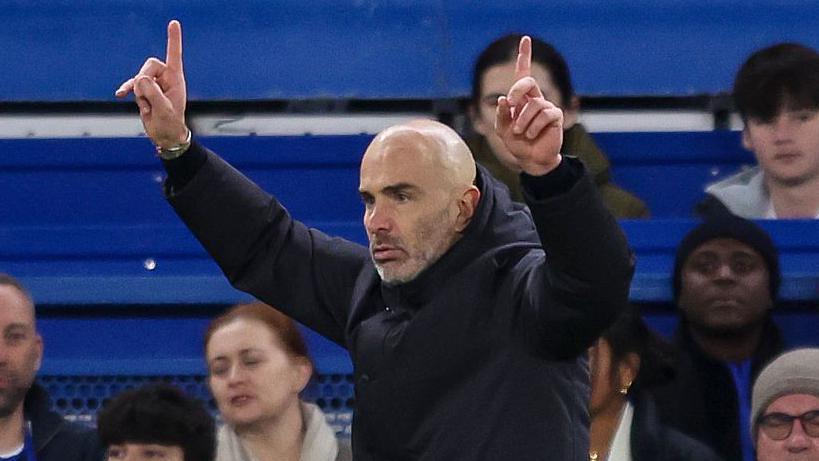
Chelsea head coach Enzo Maresca is keeping everyone guessing about exactly what he meant when he described the period before the weekend win over Everton as “the worst 48 hours” of his time in charge.

In a news conference on Monday, Maresca was evasive when asked to elaborate on the remarks that followed Saturday’s 2-0 victory at Stamford Bridge.

It is understood that Maresca’s gripe, which he is unwilling to explain, remains unresolved.

Situation overshadows important cup trip

Maresca repeatedly said he had “nothing to add” on Monday when questioned about his weekend claim that “many people didn’t support us”.

That factor was one that Maresca felt contributed to making the build-up to the Everton game so challenging.

Maresca appeared frustrated when pressed on whether he was referring to the club’s hierarchy, replying several times: “It’s Cardiff tomorrow, please.”

Yet the situation overshadows Tuesday’s Carabao Cup quarter-final in the Welsh capital, where Chelsea face the League One leaders and are expected to win.

Chelsea sit fourth in the Premier League, but their form has dipped of late. Before beating Everton, they had only taken two points from the previous nine available in the domestic league, while also suffering defeat at Atalanta in the Champions League.

    • 1 day ago
    • 5 hours ago

Why is Maresca upset in ‘fantastic’ season?

Maresca eventually said “Yes, absolutely” when asked if he was happy at Chelsea.

He also described the season as “fantastic” when asked about whether he was enjoying his role.

Much, however, seemed to be deliberately left unsaid.

When asked about his relationship with Chelsea’s owners, he said: “I love the Chelsea supporters. They deserve the best, and again, I don’t have anything to add.”

It is understood the former Leicester City boss is proud of qualifying for the Champions League last season and winning both the Club World Cup and Conference League.

Against that backdrop, Maresca is believed to have wanted more protection from figures within Chelsea against criticism of his team selection and rotation during their recent four-game winless run.

He is encouraged to rotate heavily to develop young players, and for much of the season he has had to cope without star forward Cole Palmer because of injury, while key midfielder Moises Caicedo is serving a three-match suspension and managing an ongoing knee issue.

To play this video you need to enable JavaScript in your browser.

Appointed in July 2024, Maresca feels he has outperformed other managers who have faced a rebuilding job when joining a major Premier League force, such as Mikel Arteta at Arsenal, Jurgen Klopp previously at Liverpool, and even Ruben Amorim at Manchester United.

Amorim has had strong public backing despite his struggles.

The initial comments from Maresca came while hands-on owner Behdad Eghbali was overseas, with sporting directors Paul Winstanley and Laurence Stewart stepping in to lead in his absence alongside other key staff.

Chelsea’s aim this season is to qualify for the Champions League and challenge in cup competitions, while they are still not entirely out of the Premier League title race.

When Maresca joined Chelsea, he was told he would be assessed at the end of his second year. Predecessor Mauricio Pochettino did not pass such a review following his first, after not agreeing with the future direction at the American-owned club.

In the case of Maresca, Chelsea privately accept emotional outbursts can happen after tense matches.

It has also been explained that he is speaking his third or fourth language, as an Italian who speaks Spanish at home with his family.

Related topics

  • Chelsea
  • Premier League
  • Football

More on this story

  • Stamford Bridge
  • Ask Me Anything logo

Police detain son of Hollywood director-actor Rob Reiner

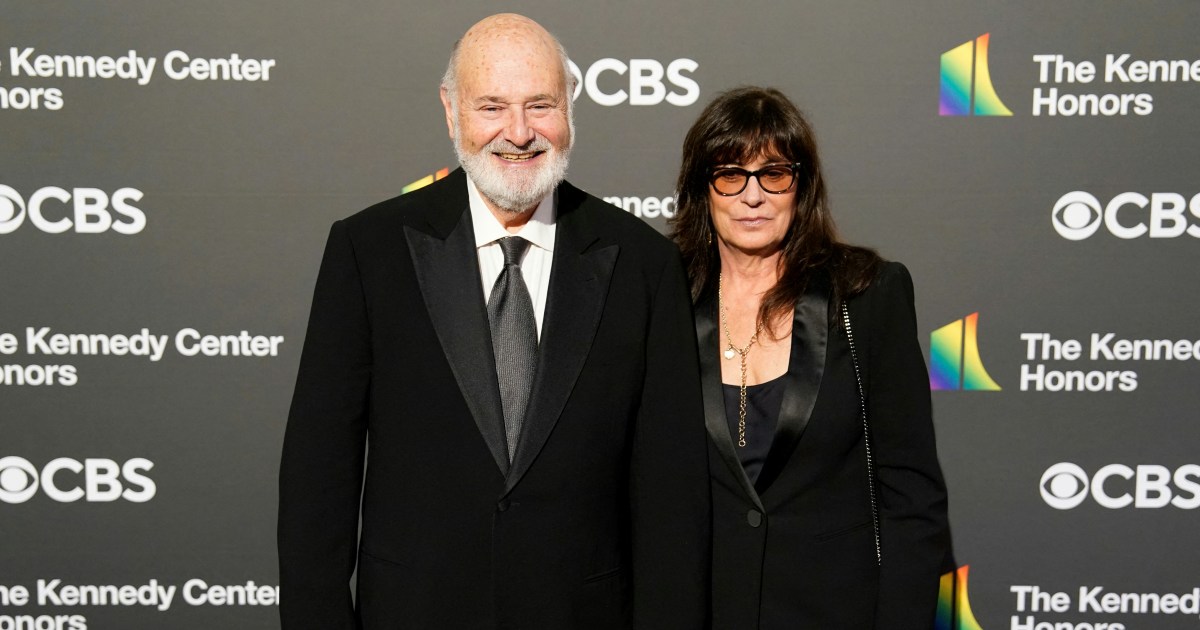
Law enforcement authorities in California have arrested the son of film director and writer Rob Reiner, who was found dead with his wife Michele in their Los Angeles home over the weekend, according to media reports.

The news service Reuters reported that Reiner’s 32-year-old son Nick was arrested on Sunday evening and is being held on $4m bail, citing booking information from the Los Angeles County Sheriff’s Department.

Recommended Stories

list of 1 itemend of list

The LA Police Department had said in a statement on Sunday that it was investigating the deaths as an apparent homicide, and the Associated Press reported that investigators believe the victims had been stabbed.

It is not yet clear what charges Reiner’s son could face if found guilty of the crime, and many details around the incident remain uncertain.

In a social media post on Monday, President Donald Trump seemed to blame the death of Reiner, a comedy giant who embraced progressive political causes, on his criticisms of Trump.

Trump’s post on Truth Social states that Reiner’s death was “reportedly due to the anger he caused others through his massive, unyielding, and incurable affliction with a mind crippling disease known as TRUMP DERANGEMENT SYNDROME”.

Free after 21 years in Assad prisons, a Syrian adjusts to being home

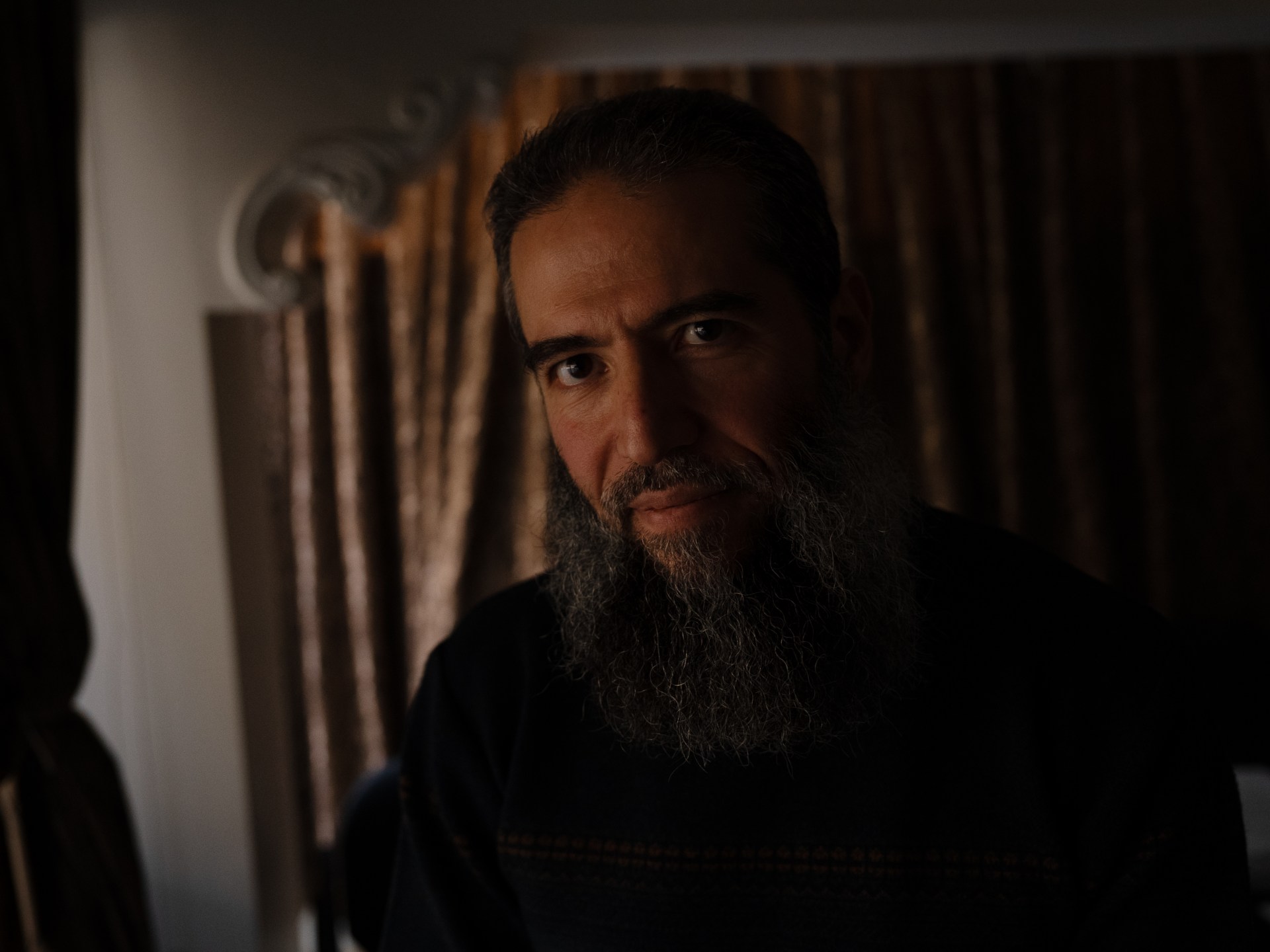
Damascus, Syria – Fouad Naal spent 21 years in prison under the regime of Bashar al-Assad.

He remained in the notorious Sednaya and Adra prisons until December 8, 2024, which was not only his liberation but also the liberation of Syria from al-Assad’s rule, he told Al Jazeera a day before the anniversary.

Recommended Stories

list of 3 itemsend of list

Tall and slim with a long salt and pepper beard, Naal, 52, speaks with enthusiasm and moves fluidly despite his years in confinement.

He was a practising imam before his arrest and holds his faith closely, he explains in the salon of his modest apartment in Damascus’s Muhajreen neighbourhood, a 10-minute walk from al-Assad’s former residence.

‘Tomorrow, I will get out’

On December 8, Syria celebrated the first anniversary of al-Assad fleeing Damascus for Moscow. His flight meant the end of five decades of al-Assad family rule, known for its brutality and ruthlessness.

Hundreds of thousands of people have disappeared in the al-Assad prison network. Even more experienced the brutal conditions and were left with physical or mental ailments, traumas or severe health conditions.

Naal said he was summoned by the regime “hundreds of times” before his arrest and imprisonment in 2004 for issuing a fatwa, a religious opinion, saying Syrians shouldn’t go fight the United States invasion in Iraq.

He and many others believed the Syrian state was encouraging Syrians to go to Iraq to fight against the US military, which had invaded the country in 2003.

Many Muslims Naal knew decided to go, but never made it to Iraq. The buses that had been provided to take them across the border into Iraq were bombed before leaving Syrian territory, he said.

Naal suspected the Syrian state was behind the attack on the convoy and put out his fatwa.

He was arrested with his wife and then-four-year-old daughter and given a life sentence. He said the regime accused him of planning to assassinate al-Assad and several other senior regime figures.

The charges were fake, he said, but he admitted to them under coercion to free his daughter and wife. He was sent to Sednaya, where he was held in what in later years would become known as the “Red Prison”.

He passed the time working out, reading and studying law. In 2005, after a full year in jail, he was allowed monthly visits.

Conditions in Sednaya were difficult. He recalled a time when his eyelid was inflamed but medicine was withheld. The prisoners were also not allowed to pray in groups or read the Quran together, he said.

Still, he never gave up hope of leaving prison. “I had a bag packed, ready to go, every single day,” he said.

“I always thought: ‘Tomorrow, I will get out.’”

The revolution begins

After Naal had been in Sednaya for seven years, the Syrian uprising began.

He and his fellow prisoners had been following the revolutions in Tunisia, Egypt and Libya but didn’t believe a similar event would happen in Syria.

“It was really surprising that in Syria this is happening,” he said.

“They were really great moments of joy. I was happy with the beginning of the revolution.”

In 2012, Naal said he was transferred from Sednaya to Adra Central Prison on the northeastern outskirts of Damascus, where he and other Muslims were put into a special political wing.

It seemed as though Sednaya was being emptied to receive Syrians who were being rounded up for opposing the regime.

In Adra, the conditions were easier. Naal was placed with other alleged Islamists. They could pray. They were granted weekly visits during which they got news of the outside world.

“Within a month of the first visits, everyone in the prison had one or two phones,” he said.

Furthermore, the prison administration in Adra was afraid of Naal and the other prisoners due to rumours that had spread about them. One day, a police officer approached him to ask about them. He was named Khadr, and Naal said he later defected and joined the opposition

“He said: ‘Can I ask you a question, sheikh?’ I told him: ‘Please.’

“He actually asked me if it were true that we used to cut off the heads of officers in Sednaya and play football with them.”

‘Hey, you animals! Open the doors!’

On December 7, 2024, Naal said he and his fellow inmates knew anti-Assad forces were heading their way. The excitement was palpable, and some prisoners suggested trying to break out.

“People couldn’t bear it any more,” he said.

By now, the prisoners knew that Aleppo had been liberated and were eagerly anticipating the rebels’ arrival in Homs, Syria’s third-largest city.

Naal was awoken by the smell of coffee being made by his fellow prisoners sometime in the wee hours of December 8, 2024. The prisoners were anxious but excited.

At one point, Naal rang a bell that alerted the guards that a prisoner was in need, but no one responded. He rang again and, again, nothing.

Although swearing was forbidden in the prison, Naal began swearing at the guards to try to elicit a response.

“Hey, you animals! Open the doors!”

At one point, a prisoner who could see out a window spread the news that the prison guards had lined up and were leaving the prison.

Shouts of “God is greatest” spread around the prison. The excitement began to grow to the point that Naal said inmates began breaking the prison doors themselves.

But the trauma that some of the prisoners suffered was so high that they were begging others to keep the doors locked, fearing repercussions. Some, he said, hid under their covers.

Others felt there was no turning back and continued breaking down their cell doors.

When they broke out of their cells, the prisoners found guard uniforms scattered on the ground as they ran to the prison’s weapons depot.

“People shot in the air out of joy,” Naal said.

The prisoners moved away from the prison and found an abandoned checkpoint. “There was a pot of mate still boiling on the burning wood,” he said. “Guns were on the ground next to abandoned military uniforms.”

As they continued walking, Naal said he and his fellow prisoners encountered soldiers. Some had removed the tops of their uniforms but kept their pants. Instead of firing at them, the soldiers were telling the prisoners: “We are with you. We are with you,” Naal recalled.

Naal said the power of this moment appeared to be a gift from the divine.

“You feel that even a person who has no faith in God Almighty would feel that there is a greater power than himself.”

A similar prison for al-Assad in exile

Naal emerged from prison in much better physical condition than others who were in al-Assad’s prison system for shorter sentences.

“I exercised every day in prison,” he told Al Jazeera.

“I’m 51 years old,” he said, then corrected himself.

“I’m 52, but I still associate myself with the age I was when I left prison.”

But he has not emerged unscathed. He pointed to the closed door of the small room where he was giving the interview.

“I don’t like closed places. I don’t like it in general, but I don’t get affected by it psychologically,” he said.

“I don’t want to sleep with a closed door. I’m not upset, but I prefer to have it open,” he said.

He also said he and many of his fellow prisoners struggled to sleep after they escaped prison because they’d grown accustomed to the quiet there.

Just a couple of days before this interview, he revisited Sednaya Prison with a group of Syrians and Ukrainians. The visit was emotionally fraught for him, but he recognised its importance for finding justice for people in Syria and beyond.

“What does Bashar al-Assad feel today? He is listening to these words and sitting like a mouse hiding in a burrow in Russia. Even if this burrow is built of gold.

“We used to say that if the prison were a palace of gold, we still wouldn’t want it. We’d rather go home and live for an hour and die hungry for our freedom. Today, he is living the same way,” Naal said.

Before his imprisonment, Naal said he enjoyed doing everything at home. He used to not enjoy going to restaurants. “My mother raised me not to eat in front of people in case they couldn’t afford what I am eating,” he said.

“I’d prefer to get food and come back home to eat.”

Now, however, he enjoys leaving the house to walk around his neighbourhood. And he endures going to restaurants because he sees the value in sharing a communal experience in public, something that can’t be done in prison.

He also says it is important to remember that in Syria, “the children made a revolution.”

“The one who won the revolution was Hamza al-Khatib,” he said, speaking of the 13-year-old from Deraa who was likely brutally tortured to death by Syrian security forces for taking part in an anti-regime protest in 2011.

He also spoke of the teenagers in Deraa who graffitied a wall with the phrase “Your turn has come, oh doctor.” It referred to al-Assad, who studied ophthalmology in London.

“They were the trigger of this popular explosion, … the volcano,” Naal said
Rob Reiner’s son Nick in custody after his parents were gruesomely murdered

Rob Reiner’s youngest son, Nick is in custody following the brutal murders of his parents after the pair were found dead at their home in Los Angeles yesterday

Rob Reiner’s son Nick is in custody after his parents were murdered. Nick, 32, was taken into custody by the Los Angeles County Sheriff’s Department at around 5:46am PST on Monday. He is being held on $4million bail in connection with the murder of his parents, records obtained by the Mirror have revealed.

He was arrested on Sunday at 21:15 local time and booked the following morning. Nick, who is said to live in the Los Angeles area, is very rarely seen in public after opening up about his battles with addiction in 2016. He previously opened up about going to rehab and how his addictions led him to homelessness. “I was homeless in Maine. I was homeless in New Jersey. I was homeless in Texas. I spent nights on the street. I spent weeks on the street. It was not fun,” he told People magazine in an interview in 2016.

The murder of Rob and his wife, Michele, has sent shockwaves across the globe after they allegedly had their throats slit by a relative following an argument. The agency description of Nick’s arrest states “Gang Activity.”

It’s claimed that Romy, Rob and Michele’s daughter found their bodies inside their home in Brentwood. Romy had told law enforcement that a relative “should be a suspect” because they were “dangerous”.

The Los Angeles Fire Department were called to the home to provide medical aid at 3:30pm local time on Sunday and discovered a man, 78, and a woman, 68, were already dead upon arrival. Police confirmed that both victims had suffered from lacerations “consistent with a knife [attack].”

A spokesperson for the Reiner family said: “It is with profound sorrow that we announce the tragic passing of Michele and Rob Reiner. We are heartbroken by this sudden loss, and we ask for privacy during this unbelievably difficult time.”

Meanwhile, Rob’s eldest daughter, Tracy Reiner, who was adopted by the star during his first marriage to Penny Marshall, said she was in “shock.” Speaking to NBC, she said: “I came from the greatest family ever. I don’t know what to say. I’m in shock.”

She told how she had seen her father the day before for a family gathering. “I came from the greatest family ever,” she said. “I don’t know what to say. I’m in shock.” A senior officer told the Mirror that investigators intended to speak with all relevant family members and associates as part of a routine procedure in a case of this nature.

“We’re going to try to speak to every family member that we can to get to the facts of this investigation,” the officer said, adding that detectives were set to re-enter the sprawling six-bedroomed property to conduct a detailed forensic examination.He noted that the house had been left in the same condition as when officers first arrived, after police determined there was no ongoing threat.

Police had already questioned a relative of Rob over the alleged murder. During a press conference late on Sunday evening, police said they were seeking to obtain a search warrant for a home and were “not looking for anyone as a suspect or in any other manner,” before adding that they would continue with their investigations.

Alan Hamilton, deputy police chief of Los Angeles, confirmed that the force would continue to interview several members of the family. There were no signs of forced entry on the $13.5 million mansion.

In a statement shared on X, formerly known as Twitter on Sunday, the police department said: “LAPD officers responded to a death investigation in the 200 block of S. Chadbourne Ave. Inside the residence, officers discovered 2 decedents. The identity of the decedents has not yet been confirmed.

Article continues below

“Robbery Homicide Division (RHD) responded to the residence, which has been identified as the home of Rob Reiner. At this time, no further details are available as this is an ongoing RHD investigation, into an apparent homicide.”

Court Dismisses Suit Challenging Constitutionality Of Pilgrims Commissions

The Federal High Court sitting in Lagos has dismissed a suit seeking to declare the Nigerian Christian Pilgrims Commission (NCPC) and the National Hajj Commission (NAHCON) Acts as unconstitutional.

This decision affirms the legality of government-established religious commissions in the country.

Justice Akintayo Aluko held that the Applicant, Human Rights and Empowerment Project Ltd/Gte, failed to provide credible evidence that the statutes violated Sections 10 and 42 of the Constitution of the Federal Republic of Nigeria, 1999 (as amended).

On October 17, 2024, the Applicant had approached the court, seeking a series of declarations and orders.

These included a declaration that the NCPC and NAHCON Acts were inconsistent with the Constitution, and an order restraining the Federal Government from funding or subsidising religious pilgrimages for Christians and Muslims.

The suit argued that such sponsorship was discriminatory against adherents of other faiths and amounted to an unconstitutional adoption of state religion.

READ ALSO: Supreme Court Upholds President’s Power To Declare Emergency Rule, Suspend Elected Officials

In its affidavit, the Applicant relied largely on newspaper reports and argued that government allocations for pilgrimages amounted to misuse of taxpayers’ funds.

The Applicant also sought to highlight alleged breaches of the fundamental right to freedom from discrimination under Section 42 of the Constitution.

During the hearing on October 9, 2025, counsel for the Applicant urged the court to hold that government sponsorship of pilgrimages breached constitutional provisions, noting that restricting funding to only Christian and Muslim pilgrims was discriminatory.

However, the 4th Respondent, NAHCON, countered that all Hajj payments were made directly by intending pilgrims through state-level Muslim Pilgrims Welfare Boards, not from public funds.

Counsel for NAHCON further submitted that the existence of the religious commissions did not amount to adopting a state religion, and that the Applicant had not shown any identifiable group of citizens whose rights were violated.

In resolving the first issue, Justice Aluko examined the provisions of Sections 10 and 42 of the Constitution. Section 10 prohibits any government from adopting a religion as a state religion, while Section 42 protects citizens from discrimination based on religion, ethnicity, or other grounds.

The court held that there was no credible evidence that either Act led to the adoption of a state religion or violated the right to freedom from discrimination.

On the second issue regarding the alleged misuse of taxpayers’ funds, the court noted that the Applicant’s own evidence indicated that the Lagos State Government had saved N4.5 billion over three years by ceasing the sponsorship of pilgrimages, redirecting the funds to infrastructure projects.

Justice Aluko emphasised that the Applicant’s reliance on newspaper publications was inadequate, describing such evidence as hearsay unless properly certified under the law.

The judgment also highlighted that declaratory reliefs require strong and convincing proof, which the Applicant failed to provide.

The court stressed that allegations without concrete evidence, particularly those relying on speculation or media reports, could not sustain a constitutional claim.