Archive November 5, 2025

Inside Bellingham’s tough start at Dortmund

EPA
  • 7 Comments

Jobe Bellingham could have hoped for a better start to the season with Borussia Dortmund, without a doubt.

Dortmund manager Niko Kovac gave Bellingham a spot in the starting xi for the Bundesliga opener against St Pauli in August after a promising summer campaign at the Club World Cup, where he collected a goal and an assist in four appearances.

However, Bellingham was dismissed at halftime.

After the game, Mark Bellingham, the father of Jobe and Jude Bellingham, allegedly confronted Dortmund’s sporting director Sebastian Kehl.

In part because of Filippo Mane’s red card in the 85th minute just before the hosts scored two goals to draw the game, Dortmund had a 3-1 lead at St Pauli.

However, Bellingham Sr. felt subbing off his son so soon and watching what he thought was a rather dull game of football was enough to scuttle Kehl and indirectly criticize Kovac’s work.

Despite Kehl’s efforts to downplay the post-match incident, Dortmund’s hierarchy was unhappy with what transpired at St Pauli.

Following that, the club said that only players, coaches, and officials could enter areas like the players’ tunnel.

Meanwhile, managing director Lars Ricken claimed that the Bellingham family and the club had established a “trusting relationship” over the years and that they were anticipating their son’s arrival in the Bundesliga.

Dortmund are unable to locate Bellingham’s best role.

Bellingham was frequently found on the bench after the St Pauli game, despite the fact that his father’s altercation with Kehl had no bearing on his declining playing time.

In Dortmund’s second match against Union Berlin, he made his only other Bundesliga start. After 71 minutes, Felix Nmecha subbed him off.

Bellingham essentially played as a number 10 behind two strikers in his first game against St Pauli. Kovac has always preferred a three-forward formation with two center midfielders.

Which position might Dortmund’s manager think would be best for Bellingham, at this time. He frequently played alongside a more defensive-minded midfielder during his time at Sunderland last season.

Jobe BellinghamEPA

Bellingham has never played on the bench for the entire 90 minutes, making nine of his 14 appearances this season in all competitions as substitutes.

In victories over Athletic Club and FC Copenhagen, he even started two Champions League games, helping two of Dortmund’s four goals.

This suggests that Dortmund, who travel to Manchester City on Wednesday, are interested in developing the 20-year-old over time.

However, Bellingham’s ability to make an impact in the final moments of a game has not been easy.

His most memorable performance thus far in the Bundesliga “Klassiker” was probably his brief appearance against Bayern Munich.

When Bellingham scored in the 73rd minute, Dortmund was one goal clear. Harry Kane delivered a long ball to Luis Diaz, who had already started a great counterattack.

Bellingham found himself in front of the goal line as the former Liverpool winger outplayed goalkeeper Gregor Kobel and passed the ball past Gregor Kobel. He unintentionally stepped on the ball in an attempt to stop it from crossing the line, giving it to Michael Olise.

The Dortmund first half of his season was embodied in Bellingham, not the main factor in the team’s second goal at Allianz Arena.

Dortmund would like another Bellingham tale.

Bellingham had incredibly high expectations from the beginning and had only ever played in the Championship prior to his arrival in Dortmund.

When he joined Dortmund in 2020, Dortmund paid roughly the same transfer fee for him as they did for his brother Jude.

After only one full season with Birmingham City, Jude was deemed a generational talent at the age of 17. Jobe also spent a number of years at Birmingham and Sunderland, despite his talent. To travel to Dortmund, he required a longer runway.

Dortmund emphasized the possibility that history would repeat itself throughout the narrative.

Everyone enjoyed the three-year partnership with Jude. After a successful spell at Real Madrid, he almost immediately established himself as one of the Bundesliga’s most promising midfielders for a record transfer fee.

After Bellingham’s performances at the Club World Cup, perhaps the younger brother’s expectations were too high in August. His rise can be accompanied by his rapid fall.

Bellingham has started to excel in the games since Bayern Munich’s defeat, despite being the only substitute in the Bundesliga.

In the German Cup, Dortmund advanced to the next round after he played 120 minutes against Eintracht Frankfurt, who had already qualified for the penalty shootout.

Even his late-range effort against Augsburg in the Bundesliga on Friday was not unmistakable. With a 1-0 lead, Dortmund and Bellingham made sure to deny a few of Augsburg’s offensive attempts.

After Friday’s game, Kovac said, “I believe things go faster than I could have imagined. The lad has a lot of quality.”

Bellingham has a good chance of starting regularly in Dortmund’s central midfield with time.

As a playmaker, Sabitzer has not ignited the imagination. And Gross is 34 and cannot play full force every game, which is respected and reliable, as Brighton fans can attest.

related subjects

  • Borussia Dortmund
  • Football in Europe
  • German Bundesliga
  • Football

More on this story.

Zohran Mamdani elected New York mayor – vows to serve all communities

NewsFeed

The first Muslim mayor of New York City has been chosen, Zohran Mamdani. Mammabodani vowed to support all of the city’s neighborhoods as a result of his victory, saying that it had given ordinary New Yorkers the upper hand. Additionally, he pledged to challenge President Donald Trump’s policies.

Olympics legend Denise Lewis, 53, splits from husband after 17 year marriage

Olympic gold medallist Dame Denise Lewis has split from her music mogul husband Steve Finan after 18 years of marriage. The former athlete, 53, confirmed the news in an Instagram stories post on Tuesday.

Denise said in her statement – in white words on a black background: “After much thought and consideration, Steve and I decided to separate two years ago as a couple.

“This decision was made with mutual respect and care for one another after many meaningful years together.
“We remain grateful for the time we shared and the wonderful children created.

“We value the kindness and support from our family and friends over the last two years and our priority moving forward is maintaining a positive co-parenting relationship and focusing on the well-being of those we care about most.

“We appreciate your understanding for privacy during this time and as we move forward.”


Denise Lewis and Steve Finan O’Connor got married in 2006
(
Niki Nikolova/FilmMagic)

It had been reported that Mr Finan, 60, who was the late Liam Payne’s manager for seven years, had moved out of the home he shared with Denise in Buckinghamshire, where the pair lived with their three sons.

One source told The Mail on Sunday at the time of the report: “It’s such a shame because they are both lovely people and were always thought of as a wonderful couple.

“Despite trying to make it work, Steve and Denise just found themselves drifting apart from one another.

“In the end they decided that breaking up was probably the most sensible thing to do.”

Heptathlete Denise was spotted without her wedding ring on air throughout her run as a pundit for the BBC’s Olympic Games coverage in 2024, and her social media accounts appear to be bare of any photos of her and Steve.


Denise Lewis and Liam Payne


Denise Lewis’ husband was the late Liam Payne’s manager
(
@realdeniselewis/instagram)


Denise Lewis, Anton Du Beke on Strictly


Denise Lewis returned to Strictly in 2016 for the Christmas special where she danced with Anton Du Beke
(
BBC / Guy Levy)

The pair also seem to have unfollowed each other on their socials.

Steve is the son of comedian Tom O’Connor, and met Denise in 2000 through mutual friends at the Brit Awards when he was then a pop manager looking after acts such as Neneh Cherry and All Saints.

They met again and started dating after Denise split from the Belgian sprinter Patrick Stevens – father to her daughter Lauryn.

Denise said in 2006: “I was still with Patrick when I first met Steve, then we met again more recently and it was sort of love at second sight.”

The Mail on Sunday said when Denise approached about their story about her marriage split in November 2024, she declined to comment but did not deny their separation.

Steve and a spokeswoman for Denise also declined to comment at the time.

Olympics legend Denise Lewis, 53, splits from husband after 17 year marriage

After 18 years of marriage, Dame Denise Lewis, a former Olympic gold medalist, has wed her music mogul husband Steve Finan. In a Tuesday Instagram post, the 53-year-old former athlete confirmed the news.

In a statement, Denise stated, “Steve and I decided to split up two years ago as a couple, after much thought and consideration.

After many meaningful years of dating, the couple made the decision with mutual respect and love.
“We continue to be appreciative of the time and the wonderful children they gave.”

We value the kindness and support our friends and family have given us over the past two years, and keeping a positive co-parenting relationship and putting our best interests at heart on the well-being of those we care about most matters a priority.

We appreciate your patience with this situation and as we progress.

In 2006, Denise Lewis and Steve Finan O’Connor (Niki Nikolova/FilmMagic) wed.

According to reports, Mr. Finan, 60, who served as the late Liam Payne’s manager for seven years, had left the Buckinghamshire home he shared with Denise and their three sons.

It’s a shame because they are both lovely people and have always been viewed as a wonderful couple, according to a source who spoke to The Mail on Sunday.

Steve and Denise simply found themselves stumbling apart from one another despite making the effort work.

They ultimately decided that ending their relationship was probably the best course of action.

During her run as a pundit for the BBC’s coverage of the 2024 Olympics, hip-hop star Denise was spotted without her wedding ring on air, and her social media accounts are bare of any images of her and Steve.

Denise Lewis and Liam Payne
The late Liam Payne’s manager (@realdeniselewis/instagram) was Denise Lewis’ husband.
Denise Lewis, Anton Du Beke on Strictly
In the 2016 Christmas special, Denise Lewis danced with Anton Du Beke (BBC/Guy Levy), who also performed with Anton Du Beke.

Additionally, it appears that the two have unfollowed one another on social media.

Tom O’Connor’s son, Steve, and Denise met in 2000 through mutual friends at the Brit Awards, when he was then a pop manager looking after acts like Neneh Cherry and All Saints.

After Denise’s breakup with Belgian sprinter Patrick Stevens, the father of her daughter Lauryn, they reconnected and began dating.

In 2006, Denise stated, “I was still with Patrick when I first met Steve, and then we later met again, and it was sort of love at first sight.”

When Denise and her husband were approached about their split in November of 2024, Denise said she would not comment on their relationship but would not deny their separation.

At the time, Steve and a Denise spokeswoman declined to comment.

Bayern Munich upset PSG as Diaz scores two goals in Champions League

‘If a player was recommended, I always watched them twice away from home’

  • 325 Comments

One of the biggest differences between being a manager now and when I started out 33 years ago is the amount of data used by football clubs.

So much of the modern game is driven by it and not just in the recruitment of players – it’s also used for looking after them, in the medical and sports science departments too.

It has led to some amazing innovations since I began my time in the dugout at Bournemouth in 1992 – the same year the Premier League era began – but I would argue there are many ways it has made a manager’s job harder, not easier, compared to what is now viewed as old-school.

When I look back at those early days, there were only three people running the club – the chairman, secretary and manager.

Now it has changed completely.

Running alongside the first team and reserves, you’ve got an academy for boys and girls, a medical department, a fitness team and of course recruitment too. Each can consist of an army of workers, who are driven and directed by heads of department.

They are all separate entities striving to meet their own objectives and they often build different identities too, with data dictating the direction.

And, while before they were totally in control, the managers or head coaches of today are often subservient to the people running these departments, and their decisions.

What I find interesting is to see how many of those other people leave the club when the manager gets sacked, when they have had such a big influence on the culture of it.

‘My database was in my own head’

Tony Pulis was player-coach at Bournemouth

Each head of department now is instructed and guided by the director of football, who usually works especially closely with recruitment – an area that is almost certainly data driven.

I am going to sound like a dinosaur again here, but I signed hundreds of players during more than three decades as a manager, and not one of those signings was data driven – unless you count the database that existed in my own head.

That database was based on my own information I gathered each week, watching live league, reserve and non-league games, and making contacts with different scouts and managers from every level. In those days, being at training at 8am each morning and getting home past midnight was expected, and most managers then did the same.

We had a network of scouts in different parts of the country but we still did a lot of travelling to speak to people about players they had seen, young and old.

If a player was recommended to me, I would always try to follow it up by watching him at least three times, with two of those occasions being away from home because I always believed that if he was a good character, that aspect would shine more in away games.

In those pre-internet days, the Rothmans Football Yearbook was my bible, and it was priceless for identifying information on players from every team in the league.

I started out as a player-coach at Bournemouth under Harry Redknapp and he showed me the value of having that knowledge.

‘Unless everything is joined up, you will never be successful’

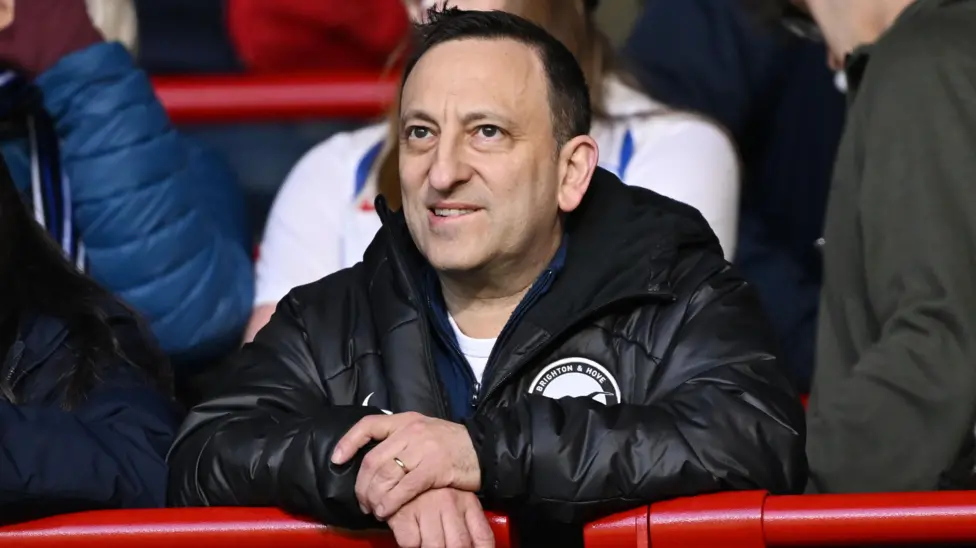
Brighton majority owner and chairman Tony BloomGetty Images

I managed the recruitment at all my clubs. I would tell my scouts and coaches what I wanted and then did my homework on their recommendations and watched them in action.

The more the years passed, the more noise there would be in this area from other people inside the club, but I always insisted on being the person who made the final decision.

My scouts and coaches knew exactly what type of players I wanted for each position. I often saw good players, but did not try to sign them because they did not fit the identity of the team I was managing at the time.

Ideally, that kind of thinking is used in the data-driven model which is prevalent today – where the profile of signings is aligned to the identity of the club and what the manager needs.

Brighton, Brentford and Bournemouth are good examples of where it has worked brilliantly, but there are a few more established Premier League clubs who have not used it as successfully.

It is amazing how they unearth these players, and it is having access to this information that has turned the Premier League into a world league, where more than 65% of its players are foreign.

But, irrespective of having data as an incredible tool to discover new talent, being a dinosaur I would still always insist on viewing the player before they were signed, and I am sure most managers now would want that too.

If the player I signed did not fit the bill, and there were many, then I was more than happy to raise my hand and accept full responsibility.

It does not always happen that way anymore, however, and it has irked me to hear that some of the players brought in to a club have not had the manager’s approval, or even been seen by him.

Unless everything is joined up, you are never going to be successful.

Young managers today often don’t know anything different but when I speak to them about this, I always remind them that at the end of the day, it is you who is in front of the dugout when your team is playing, and because it’s your job that’s on the line, then the team should be of your making.

‘Common sense should apply to player fitness too’

Pulis (front right) and his assistant Dave Kemp oversee a training session at West Brom in 2017Getty Images

The same issues apply to the sports science and medical departments, who have come to the fore in most professional clubs.

In my day, and especially early in my management career, I had a very simple and successful guide to know whether my fitness work was effective or not. If my players were moaning and sweating, I knew they were working hard enough!

Every department I have mentioned has grown not only in size but also in expense. They each have a specific and important role, reflected by their cost to the club, and for me as a manager it was important each head of department was made accountable for their actions.

I always felt fitness coaches and sports science departments should be challenged. They are vitally important to the manager’s preparation so should shoulder responsibility for fitness levels and certain injuries.

For example, injuries to knees, ankles and joints were always looked on differently to muscular injuries which, for me, were definitely classed as preventable.

I worked with some fantastic doctors and medical teams, but they always knew they were working for the benefit of the club and not for the comfort of injured players.

That was my thinking when we built a new training ground at Stoke. I only wanted two beds in the medical room but by the time they had finished it, there were five. I went to the club’s chairman, Peter Coates, who said, ‘what’s the problem?’.

I said, ‘Peter, if you have two beds, you’ll have two people injured in there. If you have five beds, there will be five of them lying there, because it is a comfort room for people who are not in the team and it breeds the wrong culture’.

In the end I got what I wanted – two beds – and if you were not injured you were banned from going in. I didn’t want anyone at my club thinking that an easy-ozy attitude was acceptable – and I’d stand by that today.

Related topics

  • Premier League
  • Football