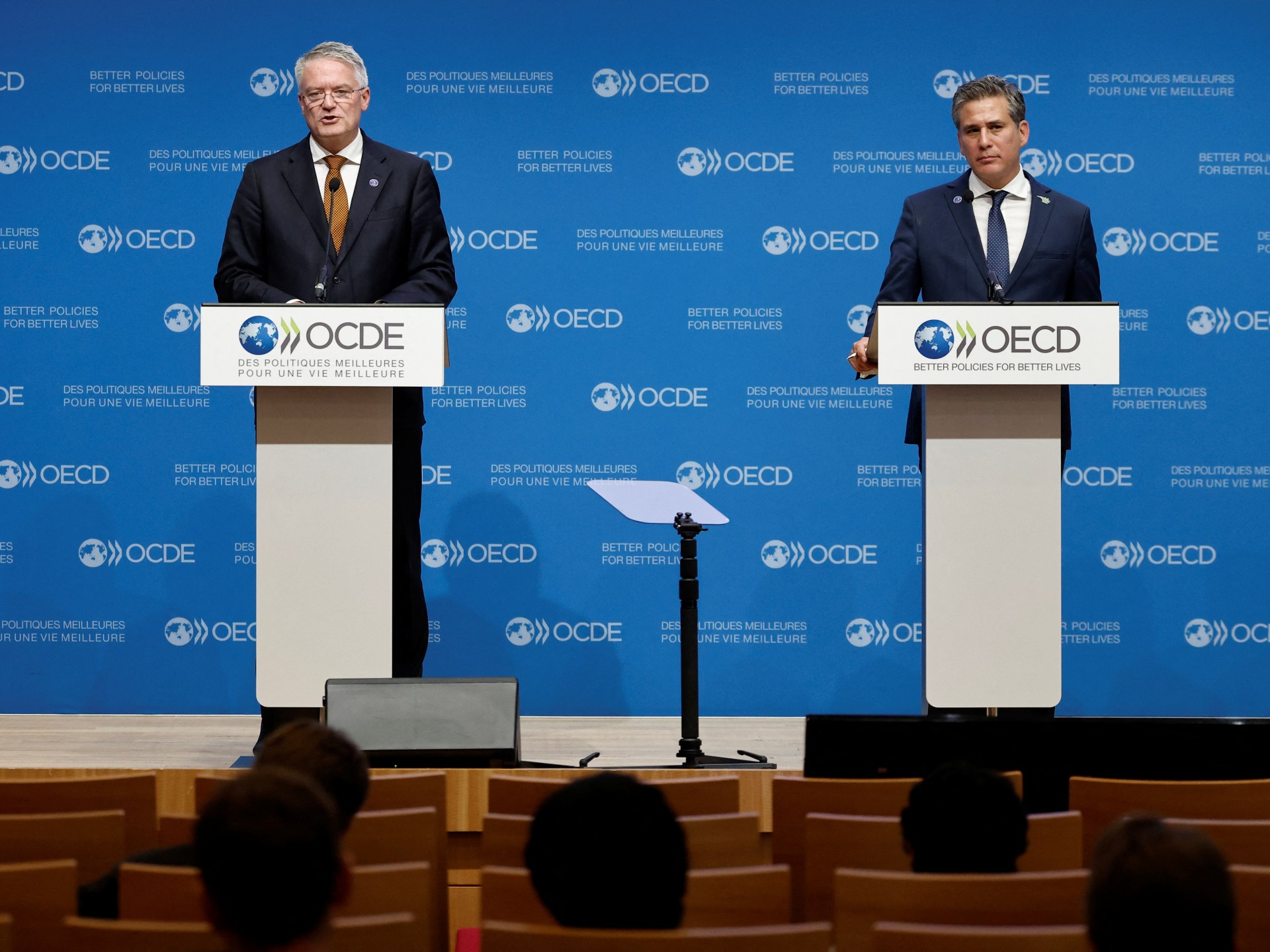
According to the Organization for Economic Co-operation and Development (OECD), the rise in artificial intelligence (AI) investment helps offset some of the shock caused by US tariff increases.
However, the Paris-based organization warned on Tuesday that if any new trade tensions arise, global growth could suffer, and investor optimism about AI could cause a stock market correction if expectations are not met.
Recommended Stories
list of 4 itemsend of list
The OECD’s Economic Outlook predicted a modest slowdown in global growth from its previous estimates in September, with its projections unchanged from its most recent projections, which were 3.2% in 2025 and 2.9% in 2026. In 2027, it forecast a 3.1 percent rebound.
According to OECD head Mathias Cormann, the trade shocks that US President Donald Trump’s tariff increases have so far been moderate, but they are likely to cost more.
As businesses reduce their built-up inventories, he said at a press conference, “the full effects of those higher tariffs since the start of the year will become clearer.”
The US economy is projected to increase by 2% in 2025, up from 1.8 percent in September, before easing to 1.7 percent in 2026, up from the 1.5 percent forecast in September.
The OECD reported that AI investment, fiscal support, and anticipated US Federal Reserve rate cuts are assisting in reducing the impact of tariffs on imported goods, as well as job losses and reduced immigration.
However, it warned that the Trump administration had put US fiscal policy on a “significant adjustment” in the upcoming years due to the country’s growing debt and budget deficits.
Slowing global trade growth
As fiscal support declines and new US tariffs on imported goods from China are looming, China’s growth is projected to increase to 5 percent in 2025, up from 4 % in September, before slowing to 4.4 percent in 2026, unchanged from September.
The eurozone’s 2025 growth forecast was increased from 1.2 percent to 1.3 percent, thanks to stronger labor markets and increased public spending in Germany. Growth is anticipated to decrease to 1.2 percent in 2026 from the previous estimate of 1%, as budget tightening in France and Italy affects the outlook.
Japan’s economy is projected to grow by 1.3 percent in 2025, up from 1.1 percent, thanks to strong corporate earnings and investment, before contracting at 0.9 percent in 2026.
As investment and consumption are affected by the full effects of tariffs, the global trade growth is anticipated to decrease from 4.2% in 2025 to 2.3% in 2026. The likelihood of a recovery is constrained by high trade policy uncertainty.
Most of the world’s major economies are projected to have reached their mid-2027 target of gradual reinvention of inflation. In the US, tariff pass-through before easing is anticipated to cause inflation to peak in mid-2026. In China and some emerging markets, excess production capacity is thought to decrease, but inflation is anticipated to increase modestly.
Share this:
Related
Source: Aljazeera

Leave a Reply