In terms of territorial integrity, sovereignty, and security, the Trump administration is now deciding what the future holds for Ukraine and, consequently, for Europe. Even if it means breaking long-standing international norms that prohibit the recognition of territory acquired through military occupation, Washington wants to reach a resolution to put an end to the full-fledged conflict Russia launched in February 2022 against Ukraine.
However, there is much more at stake than those principles, which Washington has rarely given priority in its own foreign policy, for Europe in general and the European Union in particular.
The bloc’s security and political concerns are at the center of preventing Putin from engaging in additional aggression and guaranteeing stability for Ukraine both politically and economically. Any resolution to the conflict that doesn’t succeed in either would put the bloc at risk for its long-term security.
All of this must be managed while keeping in mind that the Trump administration does not further undermine European security by once more questioning its commitment to NATO’s security infrastructure. However, Europe has already begun to acknowledge these concerns, albeit reluctantly. 23 NATO members agreed to increase core defence spending to at least 3.5% of GDP by 2035, with another 1.5% going toward building their defense industrial bases and boosting their defense spending goals by the end of last year.
According to the Ukraine Support Tracker, Europe has already surpassed the US for the first time since June 2022 in total military aid, with 72 billion euros ($83.95 billion) being allocated as opposed to Washington’s 65 billion euros ($77.55 billion) by the end of April.
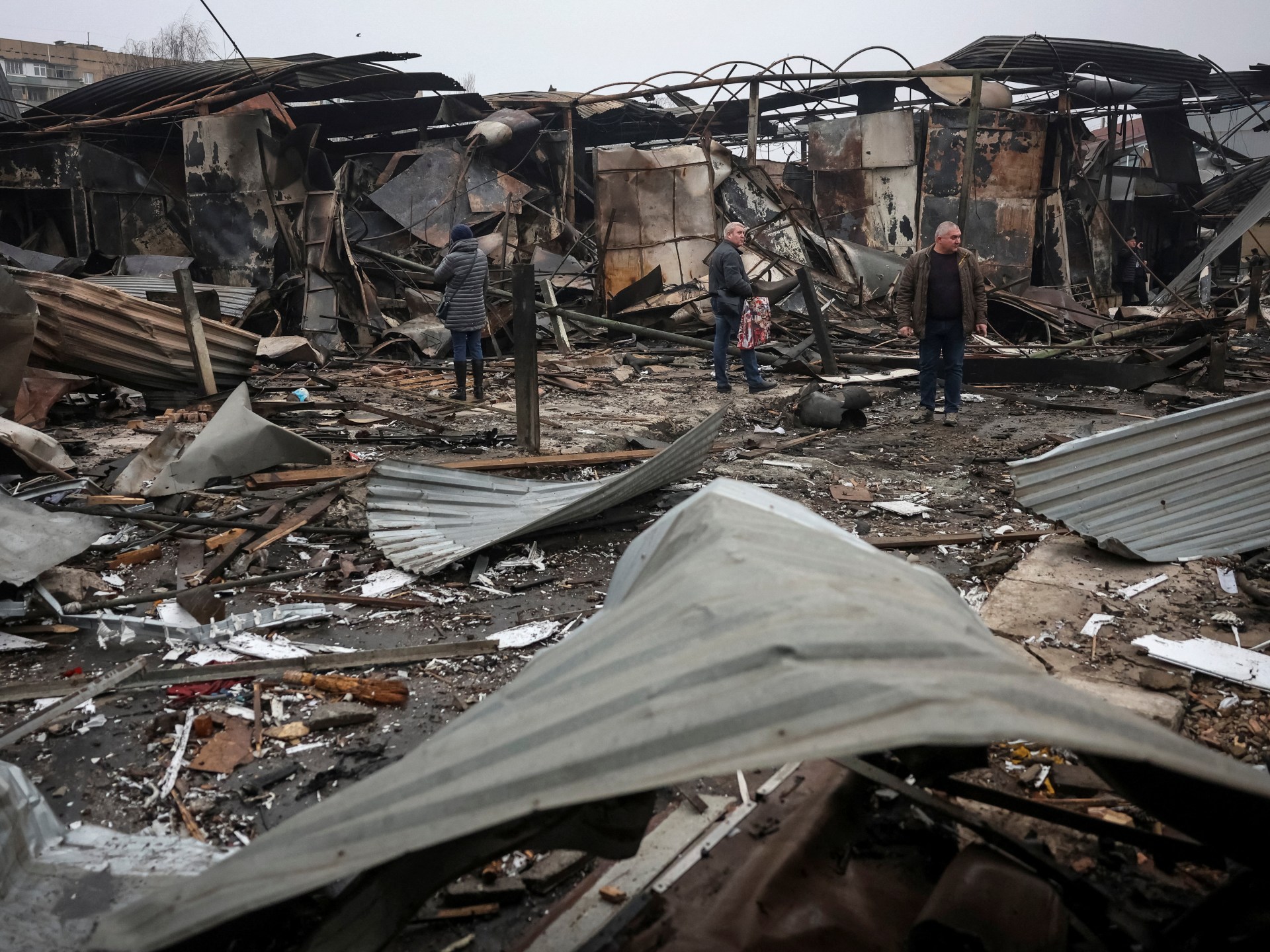
However, the increased European support does not make up for the stagnant US funding, regardless of the outcome of the Trump administration’s efforts to entice Ukraine into a negotiating position that Putin might be willing to accept. The West’s fiscal support is only one component of the equation, and Kyiv is also relying on it to keep its government running. And with Russia’s continued airstrikes and assaults, the cost of reconstruction only increases. The World Bank estimated it to be worth $524 billion (506 billion euros), or 280 percent of Kyiv’s GDP by 2024, according to its World Bank projections in February.
Despite agreeing to his demands on trade and NATO funding and military support for Ukraine and signing agreements that have seen the US’s average tariff rate on imports from the EU and UK rise sharply, Europe runs the risk of being left to Trump’s will.
However, Europe has a clear choice to make to ensure that Kyiv’s financial support is sufficient over the upcoming years and that any conflict resolution results will be decided in a way that both further deters Putin.
The sovereign Russian funds that have been frozen in their jurisdictions since 2022 can now be taken into custody by the European Union and the UK. The most important thing is that they can seize the 185 billion euros ($214.8 billion) frozen at Euroclear, a Belgian clearing house, as well as the Russian government’s ($23.25 billion) frozen funds at Euroclear’s Luxembourg-based rival, Clearstream, which are thought to be worth around 20 billion euros ($23.25 billion).
Europe has been debating this possibility for months, and it is not at all unaware of it. An earlier $50 billion (43 billion euros) loan to Ukraine, which was secured over those assets, was already supported by Euroclear’s assets, which were used to fund it in January 2025.
Following a delay of a final decision at the previous council meeting on October 23 and the announcement to secure a new loan of up to 140 billion euros ($162.6bn) was anticipated, Europe was to proceed with the plan to secure the assets at the European Council meeting on December 18-19. The Belgian government has largely complied with its demands for indemnification while supporting Kremlin claims that such a move would be unheard of.
However, there is a lot of precedent. The United States seized German and Japanese government assets during the Second World War. Prior to Pearl Harbour’s attack, Japan’s assets were even frozen, the majority of which were later preserved under the San Francisco Peace Treaty of 1951.
The Kremlin’s threats to encircle Belgium in decades-long legal battles are also overblown. They rely on a bilateral investment treaty from the days of Soviet collapse that Putin and his supporters have unsuccessfully invoked to unfreeze their assets or challenge previous sanctions. Additionally, there are dozens of unresolved disputes involving Russia that are worth tens of billions of dollars in European courts, including the roughly 13 billion-euro ($15 billion) arbitration award won by Uniper against Gazprom for disruption of gas supplies in 2022. The largest and most significant case involving the expropriation of Yukos by the Kremlin continues to be the 2014 award to former Yukos shareholders. The Supreme Court of the Netherlands, which is now worth more than $65 billion, including interest, decided that the award was final and enforceable against Russian state assets around the world in October 2025. However, enforcement will still need to find trustworthy Russian assets that the courts will be willing to seize.
As it has done numerous times throughout Putin’s presidency, the Kremlin will undoubtedly engage in legal battles and litigation over these disputes. However, it will lose, and it will be responsible for the loss of its national interests. When crucial access to Western markets or assets was in question, Russia has repeatedly complied with bad decisions. The only conclusive evidence that Russia or the West has returned money owed as a result of litigation involving Russia’s war has been the settlements made by Russian state insurers NSK and Aeroflot over Putin’s 2022 sequestration of aircraft leased from Western businesses.
There is no justification for Europe’s current acting woes. Every month of inaction places a greater financial burden on Europe and makes it more likely that Washington will strike a deal that threatens European interests. How can Ukraine ensure continued funding and the ability to sustain its defense is now a crucial issue? Europe must act urgently before the Trump Administration attempts to negotiate a deal with Russia.
The 28-point “peace plan” developed by Kremlin insiders and approved by Trump’s special envoy and long-time associate Steve Witkoff last month includes slicing up these same frozen funds, requiring even more funding from Europe, as well as diverting frozen Russian assets from Ukraine’s reconstruction while placing an additional financial burden on Europe. If the Kremlin violates its obligations, as it did with the ceasefire agreements signed in 2014 and 2015 following its initial invasion of Ukraine, with such a deal, Europe would be left with an even bigger bill.
In the negotiations over the future of Ukraine, Europe has the power to use it to advance its political, economic, and military interests.
Source: Aljazeera

Leave a Reply