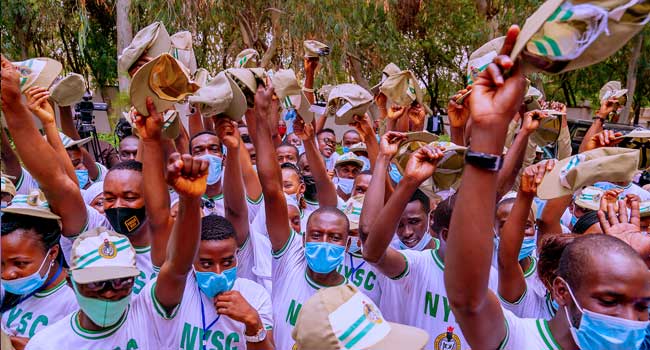
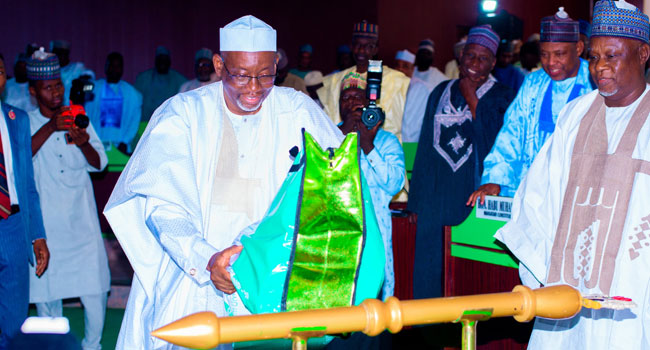
Siminalayi Fubara, the governor of Rivers State, has approved the addition and renovation of the NYSC Orientation Camp.
Brigadier General Olakunle Nafiu, the director-general of the National Youth Service Corps (NYSC), was met by Governor Fubara on Tuesday for a work-related visit to Government House in Port Harcourt, where he received the approval.
The governor noted that while Rivers State is still tranquil and hospitable, he was not surprised by reports that many graduates and parents choose the state for their national service.
He claimed that the state’s stability reflects the government’s fundamental obligation to safeguard people’s lives, property, and provide basic amenities.
Read more about Fubara’s commitment to finishing the new assembly complex in the proposed 2026 budget.
Dr. Benino Anabraba, the SSG’s secretary, was given the order by Fubara to assess the amount of work needed at the camp and prepare a report for action right away.
He also assured that the state would consider moving or remodeling the NYSC State Secretariat, which he claimed is no longer appropriate, and that the state would rent office space for the newly established NYSC regional office.
Brigadier General Olakunle Nafiu, the director-general of the NYSC, earlier claimed to be on a tour of the state as part of the organization’s nationwide orientation camp.
He disclosed that Rivers State is the state’s fourth-favored deployment location because 2, 586 corps members are currently undergoing the 2025 Batch C orientation program.
Additionally, he added that there are also 8, 349 Rivers State residents serving in various states.
The DG praised corps members’ contributions to national development, claiming that if paid at full-salary, their services could save the state up to $115 billion annually.
He thanked the governor for the support the state gave, including the purchase of land for the State Coordinator’s residence and plans to improve camp amenities.
He requested the relocation of the NYSC office, which is currently housed in a congested market area in Mile 2, Diobu, and called for the reconstitution of the state and local government NYSC governing boards.
The DG noted that there are now more than 400 000 participants in the NYSC, which was founded in 1973/74 with 2, 764 corps members.
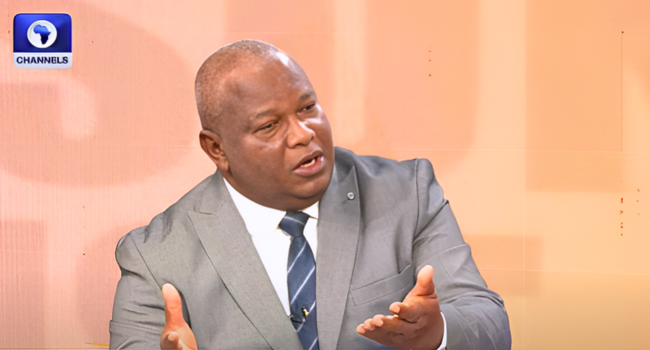
Wahab Shittu, a senior advocate for Nigeria, has called for stronger community-based security measures to combat the state of insecurity in some Kwara South.
Shittu made the announcement on Channels Television’s Sunrise Daily on Wednesday.
He said, “If we want to address this problem, especially in Kwara South, we must strengthen community-based protection.”
He added that authority must be exercised by local security officials, vigilante organizations, and other organizations.
The community must increase its capacity to address these issues, the statement states. They can’t rely solely on the state government’s efforts.
Shittu claimed that border communities are still vulnerable because of the area’s persistent insecurity.
Read more about IGP sending an intelligence team to Kwara after a church attack here.
He claims that “our borders around Kwara South and other communities in that area are porous, which allows the influx of weapons and armed bandits into these areas without checks.”
He argued that the situation calls for more active security cooperation from neighborhood residents, noting that relying solely on the state government won’t solve the issue.
Shittu also pointed out resource and human resource gaps and suggested that security agencies appeared overstretched.
He claimed that “the security agencies appear to be overwhelmed by the security agents’ lack of support and staffing.”
He recalled the Kwara State Government’s response to recent Kwara South attacks.
Remember that the state governor had to convene state security meetings where traditional rulers, local government chairmen, and other important stakeholders in the security architecture came together, as the Kwara South situation demonstrated.
The senior attorney argued that local involvement in long-term security is essential.
Security must be increased, he said, and everyone involved in the process must be in the mix if you want to address what is happening at the community level.
He further stated that traditional rulers, regional government chairmen in these regions, as well as local vigilante organizations, should be mobilized to take security seriously rather than merely to the state or federal government.
Abductions
In recent weeks, there have been two significant kidnappings in Kwara State that have occurred within a week.
38 members of the Christ Apostolic Church (CAC) branch in Eruku were abducted on Tuesday last week, according to reports of gunmen killing others.
Many residents fled into nearby bushes for safety, according to eyewitnesses in the community who reported to Channels Television that the attackers stormed the area “suddenly and heavily armed.”
The bandits had requested $3 billion to release the victims, but the ransom was later reduced to $760 million. In the same Kwara State, bandits abducted 11 residents and struck the Isapa community in the Ekiti Local Government Area shortly after the Eruku attack.
More than 20 gunmen stormed the neighborhood on Monday carrying a sizable herd of cattle and fired shots without distinction. A stray bullet reportedly struck the elderly woman during the attack.
Seven of the abducted people belong to the same family, according to a community leader who spoke on condition of anonymity. A pregnant woman, two nursing mothers, and several young children are among the victims.
Release of the Eruku victims
The 38 worshipers who had been abducted by bandits from Eruku’s Christ Apostolic Church (CAC) were set free on Monday by the Kwara State Government.
The worshipers were released on Sunday, according to Governor Abdul Rahman AbdulRazaq, who signed a statement signed by his chief press secretary Rafiu Ajakaye.
However, the statement made no mention of how the abductees came back to life.
After “a lot of days of hard work by security forces and government representatives,” the statement reads, “Abdul Rahman AbdulRazaq is pleased to announce the freedom of 38 people who were recently abducted in an attack on Christ Apostolic Church (CAC) Eruku, Ekiti LGA, Kwara State.”
The state government attributed President Bola Tinubu’s “hands-on approach” to the rescue of the victims, which reportedly “personally led the efforts” to free the abductees.
However, the statement made no mention of how the abductees came back to life.
After “a lot of days of hard work by security forces and government representatives,” the statement reads, “Abdul Rahman AbdulRazaq is pleased to announce the freedom of 38 people who were recently abducted in an attack on Christ Apostolic Church (CAC) Eruku, Ekiti LGA, Kwara State.”
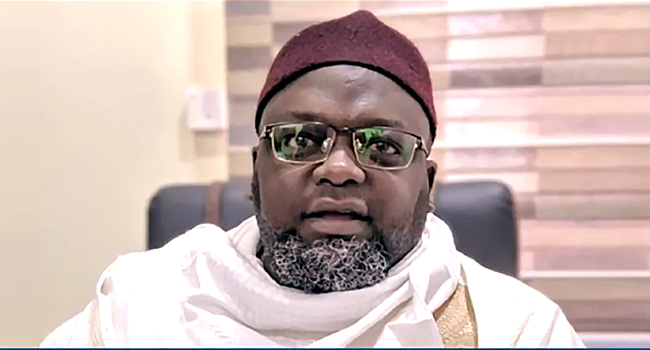
A Department of State Services (DSS) investigator has told the Federal High Court in Abuja that Tukur Mamu was offered a N50 million share by Shugaba, the leader of the terrorist group, who attacked the Abuja-Kaduna-bound train in 2022.
The DSS operative, who testified as the 6th prosecution witness (PW-6) in the ongoing terrorism trial of Mamu, the alleged terrorists ‘ negotiator, told Justice Mohammed Umar while being led in evidence by the DSS lawyer, David Kaswe.
The witness, who gave his testimony behind a witness screen for security reasons, said the group also asked Mamu to teach them how to open a website for their terrorist activities.
He stated this while interpreting four voice notes played in the courtroom containing the defendant’s telephone interactions with the terrorists who held the abducted train passengers hostage.
READ ALSO:]Alleged Misappropriation] Court Adjourns Trial Of Ganduje, Seven Others To February 3
A file photo of Tukur Mamu
The audio recordings were extracted from Mamu’s mobile telephones during interrogation after he was arrested in Egypt and brought back to Nigeria.
“The first voice note that played was for the defendant (Mamu) fixing a date for the delivery of the ransom.
” The second voice note that played for five minutes was the voice of Shugaba, the leader of the terrorist group.
“In the voice note, he was appreciating the defendant’s effort and asked him to remove N50 million for his personal use from a particular tranche of ransom sent to them.
” The last voice note that played, Baba Adamu, who is their spokesperson, was heard requesting the defendant to help them procure speakers and a public address system for their preaching activities, and the defendant responded that he was going to look into their request.
“They also requested that the defendant teach them how to open a website for their activities”, the witness said.
Silhouette Illustration Of DSS Officials
Mamu was alleged to have convinced the terrorists to discuss ransom payments with individual families of the hostages of the train attack instead of the Chief of Defense Staff Committee set up by the Federal Government for his personal financial gain.
The defendant was said to have been nominated by the terrorists who attacked the train sometime in March 2022, where scores of passengers were held hostage.
Mamu was alleged to have collected ransoms on behalf of a terror group from families of hostages, confirmed the amount, and facilitated the delivery of the same to them.
The PW-6, while being led in evidence by the prosecuting lawyer, Kaswe, told the court that after Mamu was brought back from Egypt, he submitted his Samsung tablet and two phones to DSS officials.
The witness, who said he was part of those who investigated the case, told the court that when the defendant was intercepted in Egypt, he put a call to his in-law, identified as Mubarak Tinja and directed him to move out all his valuables, comprising of cash, cars and other items of values, from his house to a safe location, to avoid detection by security agents.
“The defendant was subsequently arrested in Egypt and returned back to Nigeria, where a team of investigators was on the ground to receive him.
” A duly endorsed search warrant was executed in his property and office in Kaduna, during which cash, in both local and foreign currencies, vehicles, and other valuables were recovered.
“In compliance with his directive to his in-law, Mubarak Tinja, and the other dependants in the house, some cars and cash were moved out of the house to various locations”, he said.
He said investigators later traced and located some of the items, including about 300, 000 US dollars, about seven cars, including a Toyota Camry (Muscle), a Peugeot 5008, a Lexus, a Mercedes E350, and a Hyundai car.
Vehicle documents relating to the cars were later tendered by the prosecution through the witness, which the court admitted in evidence.
The witness added that when the defendant was brought back to the country, he “handed his Samsung tablet and two of his phones to our exhibit keeper, who sent them to our forensic department for forensic analysis.
” The outcome of the forensic analysis, which included the voice notes of the conversation between the defendant and the terrorists, was part of the content that was presented to the interrogation team and the items recovered from his home.
“He (the defendant) was subsequently interviewed, during which the content of his phones and other items were presented to him.
” During the interview, the defendant admitted giving instruction to Mubarak to move his belongings from his house.
“He also admitted communicating with the terrorists, using his voice notes, which were extracted from his two phones and Samsung tablet”.
He added that the defendant also admitted owning a pump-action gun, which was recovered from his house, which he claimed was duly licensed.
The witness, however, told the court that investigators later discovered that the licence expired in December 2021, nine months before he was arrested.
The DSS operative said about 98 per cent of the conversation on the voice notes is in Hausa Language, some of which were translated to English by him, because there were too many.
Kaswe then applied to tender the recorded voice notes stored on compact disk plates and flash drives, which the court admitted, after Mamu’s counsel, Johnson Usman, reserved his objection until the final address.
The recorded conversations were played in the courtroom.
The witness added that in the course of the investigation, two victims volunteered written statements in which they recounted their experiences.
He said one of the statements was written in English and the other in Hausa.
He, however, said that the victims, a male and female, were no longer available, because they expressed their unwillingness to attend court to testify because of fear and trauma.
The court admitted the statements of the victims in evidence and marked them as exhibits after it was not opposed by Usman.
The court also admitted in evidence eight statements made to investigators by Mamu and video recordings of the statement-writing sessions.
According to the Joint United Nations Programme on HIV/AIDS (UNAIDS), the distribution of condoms for the disease’s prevention in Nigeria has decreased by 55% from last December to March this year.
What the organization described as widespread disruptions to prevention, testing, and community-based programs across dozens of nations is illustrated by the figure, which was made public on Tuesday in the UNAIDS’ 2025 World AIDS Day report, Overcoming Disruption, Transforming the AIDS Response.
Due to the cuts to global programs since Donald Trump’s return to the White House, an uncountable number of additional people have died from AIDS, and 2.5 million have lost access to medication to stop the spread of HIV.
In a report released by UNAIDS, persistent funding shortfalls and the risky risks posed by the global HIV response have profound, long-lasting effects on the health and well-being of millions of people worldwide.
The impact was “immediate and severe” for countries like Nigeria, which is crucial for funding prevention infrastructure.
According to the report, UNAIDS’ community partners reported deaths of HIV-positive individuals who had been affected by local clinics and treatments, but it is unclear how many more deaths were brought on because data collection was still being done.
The United States, which contributed 75% of all global HIV funding, abruptly stopped all funding for HIV-related causes earlier in the year, according to UNAIDS, which was the catalyst for the global AIDS response.
Other donor countries have drastically reduced their foreign aid this year, including those in Europe, which have been pressed by Trump to instead increase defense spending.
Despite funding for some HIV programs that were previously funded by a U.S. program known as PEPFAR, UNAIDS, overall funding is still declining, putting in doubt 2030’s goals to end AIDS as a public health threat, according to UNAIDS.
READ MORE: UK to unveils tax-raising budget
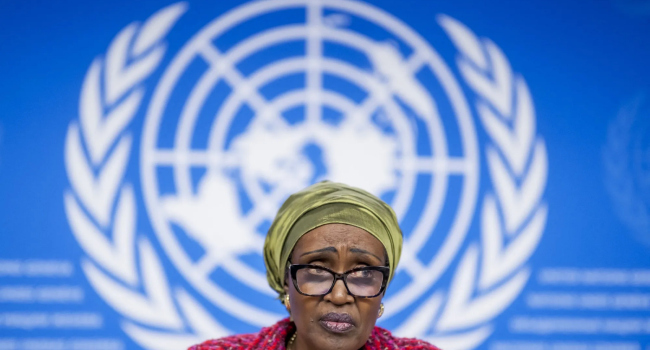
Winnie Byanyima, the executive director of UNAIDS, stated to reporters in Geneva that her organization was working with at least 30 nations to reduce their dependence on international donors. She claimed that there are still significant challenges to overcome and that the funding gap cannot be closed right away.
According to the U.N. agency, there are 40.8 million HIV-positive people living, and 1.3 million new cases were identified in 2024.
In medical training and testing, the invention may lessen the need for cadavers and animals.
In October 2025, donors’ funding gaps reportedly caused 2.5 million people to lose access to the PrEP preventive HIV medication. According to Byanyima, Burundi’s distribution of preventive HIV medications decreased by 31%, 21%, and 64%.
Nearly half of women and adolescent girls reported interruptions to HIV prevention and treatment services in their communities, according to a survey conducted this year by UNAIDS and the ATHENA Network, a women’s rights organization.
In contrast to 2010, there were only 39% fewer people in the world who contracted HIV, with sub-Saharan Africa experiencing the greatest decline (56%).
However, an estimated 1.3 million [1 / 1.0 million / 1.7 million] people became HIV in 2023, which is more than the 370, 000 or fewer new infections that were targeted in 2025.
Condom programs have been defunded and social marketing initiatives have been reduced in many countries, but condom use continues to be the most cost-effective low-cost HIV prevention method. According to household survey data, condom use has decreased in recent years, particularly among young people between the ages of 15 and 24 and is not as frequent during sex with non-regular partners.
“A condom was used at the last sex by 36% of adults in eastern and southern Africa and 25% in western and central Africa.”
The HIV response is being hampered by a growing funding gap.
In 2023, low- and middle-income countries had funding for HIV programs worth almost US $ 9.8 billion (2019 United States dollars), which is almost US $ 9.9 billion less than the amount needed in 2025.
The total HIV resources available are at their lowest level in more than ten years, inflation-adjusted.
Eastern Europe, Central Asia, the Middle East, and North Africa are the countries that are preventing HIV epidemics the most.
The majority of HIV funding comes from domestic sources (roughly 59%), but stress exists for both domestic and international funding.
Domestic HIV funding decreased for the fourth year in a row in 2023, and international resources were almost 20% less than they did in 2013 when inflation was adjusted for inflation.
The amount of funding provided by bilateral donors has drastically decreased. Without continued, substantial funding from the United States Government and the Global Fund to Combat AIDS, Tuberculosis, and Malaria, the overall reductions in external HIV resources would be much greater.
HIV development assistance will continue to be a significant priority. The HIV response is still underfunded, despite societal enabler programs, and community-led initiatives.
“People from important populations are especially neglected,” according to the report, “even in areas where the vast majority of new HIV infections are spread by people from these populations.”
In contrast to the US $ 9.5 billion that will be required in 2025, USAID estimated that between US $ 1.8 billion and US $ 2.4 billion were available for primary prevention programs in low- and middle-income countries in 2023.
UNAIDS urged world leaders to reiterate their political and financial commitments to ending AIDS, citing commitments made at the most recent G20 summit in South Africa.
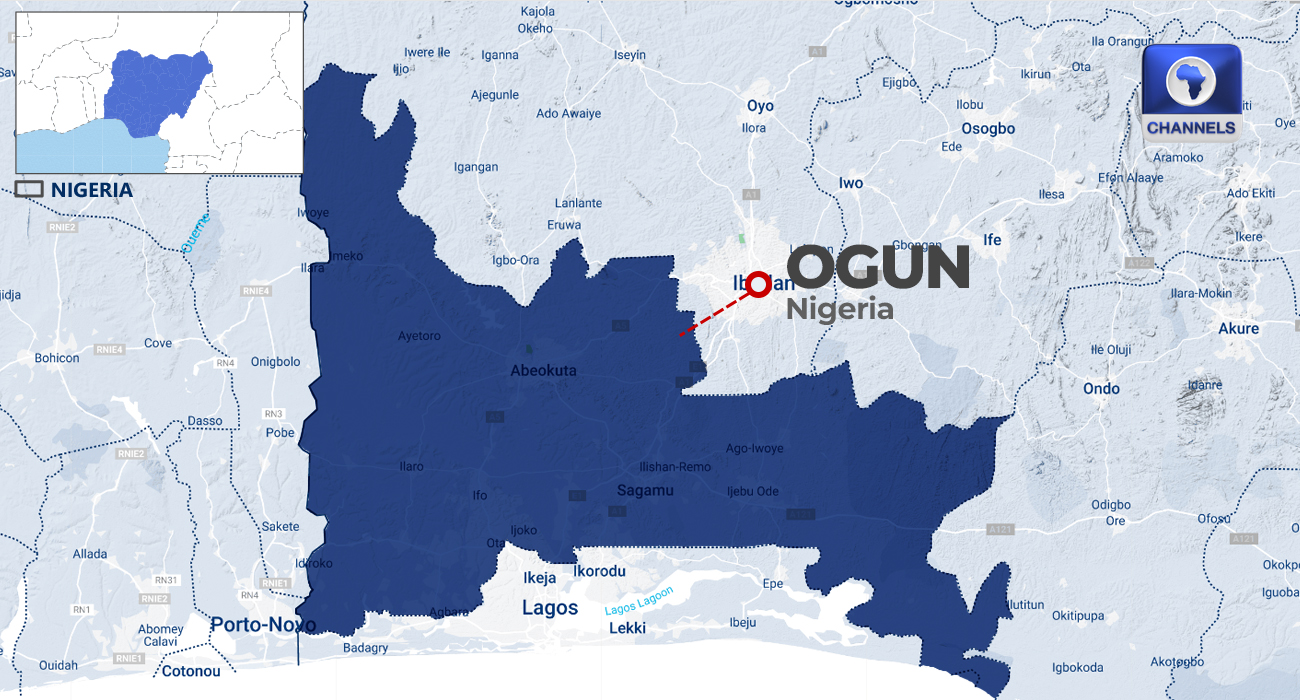
Following the discovery of serious breaches of Occupational Safety and Health (OSH) standards, the Minister of State for Labour and Employment, Nkeiruka Onyechocho, on Monday, ordered the immediate sealing of two Ogun State factories.
Along the busy industrial corridor between Ikorodu and Sambu, True Metals Nigeria Limited and Phoenix Steel Mills Limited are both located.
Onyejeocha, who was joined by the Director of Occupational Safety and Health (OSH), Florence Owie, and OSH officials from the states of Lagos and Ogun, made it clear that the Renewed Hope Agenda will not tolerate employers who purposely endanger Nigerian workers.
A Dehumanizing Environment with a Focus on True Metals
The Minister expressed deep concern about the risky and “dehumanizing” conditions at the battery recycling facility at True Metals Nigeria Limited. She specifically noted: * Unprotected and ongoing lead emissions exposure. * Clearly inadequate sanitation facilities. * The company hasn’t been required to perform safety automation despite receiving numerous verbal warnings in the past.
According to Onyejeocha, “you are not putting our people’s lives in danger” because “you are giving them jobs.”
“We cannot make up our minds that we are killing our people.” Life is not exchanged for money. Every Nigerian deserves a welcoming, secure workplace.
She mandated that the factory be immediately sealed until all OSH regulations are in full force and effect.
Also read: Kwara’s Two Factories Are Wrecked By Fire.
Inaccessible and Non-Compliant Phoenix Steel Mills
The Minister and her team discovered the impassable and unsafe internal access roads at Phoenix Steel Mills Limited before the inspection could even begin. Another violation of the Factories Act was the clear instances of stagnant water and a complete lack of adequate drainage.
We can only imagine what is inside if the factory’s internal roads are unpassable for people, she said. According to the statement, “These circumstances demonstrate a total disregard for both basic safety standards and the workers.”
After that, the facility was sealed in order to complete necessary remediation and upcoming compliance checks.
The Minister’s Warning: “That Era Is Over.”
The Minister emailed factory owners a sharp warning after the exercise to journalists.
Nigerians are treated as though they are not people in many factories, according to the report. You train and put them in danger by paying them $3, 000 or $4, 000 per day. She claimed that the era is over.
Onyejeocha stated that enforcement would be thorough and persistent. They won’t go to sleep, we promise.
“We will keep conducting inspections, and we will seal your factory if necessary.” You attract more investment if you make the right decision. You won’t be able to operate if you don’t.
She did this by reiterating that OSH standards are not legally binding and that she should keep them in mind.
There are rules for occupational safety and health. Every worker needs to be safeguarded. The minister said it’s impossible to blame bad economic conditions on someone for endangering lives.
The budget’s “Budget of Innovation & Transformation for Greater Jigawa II” represents a 19.2% increase over the budget’s 2025 budget.
The governor claims that the proposal is based on the government’s 12-Point Agenda, which was included in the recently approved third edition of the Jigawa State Comprehensive Development Framework.
The Governor stated during the presentation that the 2026 proposed budget would largely follow the philosophy and policy direction that served as the budget’s guiding principle. Our main goals will be to use agriculture, SMEs, and critical infrastructure to promote inclusive and human-centred economic growth.
Governor Yusuf also presents the Kano Assembly with the budget for 2026.
Breakdown of Revenue and Expense
The governor stated that the state intends to use a variety of sources of revenue to fund the budget, including statutory allocation (N96. 3 billion), VAT share (N102bn), other federal transfers (N223bn), internally generated revenue (N88. 9 billion), local government reimbursements, and capital receipts in excess of N349 billion.
Capital spending accounts for nearly 77% of the budget, making up one of the largest capital allocations in recent years, accounting for N693.4 billion in expenditures.
The governor stated that “this robust structure allows us to pursue our 12-Point Agenda, which includes investments in human capital development, agricultural transformation, and youth empowerment.”
The Social Sector, Agriculture, and Roads are the biggest beneficiaries.
The highest capital investment total was N186.37 billion, which includes over 60 regional roads, 20 township roads, and numerous feeder roads in each of the 27 local government areas.
Along with significant new regional routes like Kafin Hausa–Gafasa–Jabo and Guri–Margadu, the governor announced the opening of new township roads in Hadejia, Basirka, Gantsa, Buji, Garun Gabas, and others.
N74.98 billion is followed by N74.98 billion, which shows how the government is pushing for improved livestock productivity, mechanization, and food security.
He stated, “These investments demonstrate our unwavering commitment to economic diversification and prosperity for all Jigawa Staten citizens.”
N50.7 billion was primarily used for renewable energy projects, solarization of public buildings, and rural electrification.
More than one-third of the budget is made up of education and health, accounting for more than 310 billion. Despite competing with international benchmarks, education alone accounts for over 26% of the total.
Other important industries, such as housing and urban development (N7.9 billion), environment and climate resilience (N25.4 billion), and water supply (N25.4 billion), also received substantial funding.
Youth Empowerment and Social Intervention
Skills centers, microcredit programs, agro-processing equipment leasing, and women’s enterprise support are among the N12.7 billion that are allocated for youth empowerment and employment initiatives.
Our goal, according to the Governor, is to promote entrepreneurship and provide numerous opportunities for women and youth, paving the way for long-term prosperity.
Local government budgets
A consolidated budget of N288.8 billion will be managed by local government councils. N137.6 billion in capital expenditures are accounted for by personnel costs, which total N68.8 billion in overhead and N74.2 billion in overhead.
Additionally, the councils are expected to expand mass housing, implement greenhouse- and dry-season irrigation schemes, and support Tsangaya education.
Call for Timely Passage
The governor urged lawmakers to quickly review the budget while wrapping up his address, “I also kindly request that the 2026 Appropriation Bill be approved and passed.
He also reaffirmed the administration’s commitment to accountable and participatory governance, and he concluded with a prayer for state and nation peace and progress.