The US-Israeli war on Iran will have a profound impact on the global energy markets. It has already sent the price of the benchmark Brent crude oil soaring to nearly $120 per barrel, close to its highest point of $147 recorded in July 2008.
In 2022, after Russia’s invasion of Ukraine, Brent crude also spiked, reaching $139 per barrel in March, before stabilising at roughly pre-war rates the following year. The price of natural gas also registered a peak in 2022, and so it has this month, as a result of the attacks on Iran and the closure of the Strait of Hormuz.
Some may point to the energy shock of the Russia-Ukraine war and argue that the Iran war will follow the same pattern: a temporary shock and eventual market normalisation. But that is unlikely to be the case. Yes, oil and gas prices will eventually stabilise, but that would come at a much higher economic cost for the region and the world.
A chokepoint and no alternatives
The 2022 energy shock was primarily driven by the sanctions and price caps that European countries and the United States imposed on Russia. This pushed large volumes of oil into alternative trade routes and cut off most of the Russian pipeline gas supply to Europe. This resulted in the rerouting of oil and gas flows and the coordinated release of oil reserves to mitigate price spikes.
The war and the sanctions, however, did not change Russia’s position in the global market: it remained one of the largest oil and gas producers. It continued to sell its hydrocarbons internationally, including to European countries, albeit through intermediaries.
By contrast, the 2026 US–Iran war has resulted in a physical chokepoint, taking offline part of the supply of oil and gas due to the closure of the Strait of Hormuz. Tanker traffic disruptions have forced Gulf producers to curtail output as they have run out of storage capacity.
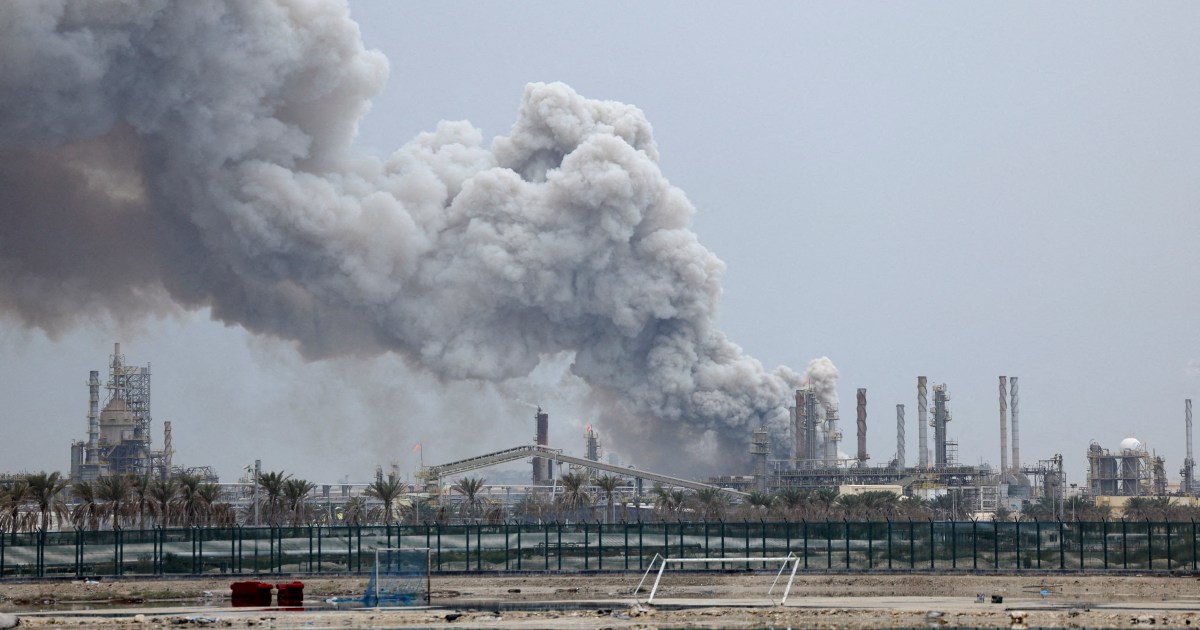
In addition, Iranian strikes on gas and oil infrastructure have resulted in some damage and the shutdown of many facilities as a precaution. These infrastructure attacks have amplified uncertainty, increasing risk premiums, and removing some production capacity from the market.
The International Energy Agency (IEA) assesses that the current episode is the largest supply disruption in the history of the global oil market, with flows through Hormuz collapsing from 20 million barrels per day to a trickle and Gulf production cuts of at least 10 million barrels per day.
In 2022, the release of 180 million barrels of oil helped manage the energy price shock as it somewhat alleviated fears of shortages. However, this month’s decision by the IEA to release 400 million barrels of oil is unlikely to have the same effect because it is not addressing the root problem: the physical outage.
Furthermore, the effectiveness of the reserve release is constrained by logistics. Strategic petroleum reserves are predominantly located in the US, Europe, Japan, and South Korea, where they are stored in inland facilities. Moving this oil to the areas most affected by shortages, namely Asian import markets and, to a lesser extent, Europe, requires time, shipping capacity, and secure maritime routes. In the current context, with the constrained tanker availability, simply releasing oil from storage does not guarantee its timely delivery to end users.
Rerouting will also not help. Alternative pipeline routes that bypass the Strait of Hormuz in Saudi Arabia and Iraq provide only 3.5–5.5 million barrels per day of spare capacity.
The natural gas market faces a similar crisis. On a yearly basis, 112 billion cubic metres (bcm) of liquefied natural gas (LNG) or 20 percent of global LNG trade, normally passes through the Strait of Hormuz. This has now been cut off.
The alternatives are limited. There is the Dolphin pipeline, which runs from Qatar through the United Arab Emirates and to Oman and transports 20-22 bcm a year. The pipeline itself does not have much extra capacity to take on more gas, and Oman’s LNG terminals, where gas is liquified, also cannot accommodate an increased flow.
The global LNG market is even tighter than oil, and there is no spare production capacity to satisfy global demand. Most existing facilities are already running at high utilisation rates, and short-term supply flexibility is limited. The expansion of LNG production would take time and cannot compensate for the immediate shortages.
What awaits us in the long run?
In 2022, the Russia–Ukraine war demonstrated that the global energy system had the capacity to absorb price shocks through rerouting, substitution, and policy intervention. In 2026, the US-Israeli war on Iran exposed a fundamental vulnerability: the physical concentration of hydrocarbon flows in critical chokepoints, which cannot be compensated for when a closure occurs.
Unlike sanctions-driven disruptions, a sustained blocking of the Strait of Hormuz obstructs not only trade routes, but the very ability of producers to export, pushing markets beyond adjustment mechanisms into forced demand destruction and structural reconfiguration.
In other words, the longer the war continues and the longer the free transit through the strait remains disrupted, the longer the prices of oil and gas will remain high. Tools used in 2022 – such as diversification and rerouting – will not work to calm the markets.
Persistent high prices will force consumers and industries to curb their consumption. Energy-intensive industries such as petrochemicals, fertilisers, aluminium, steel, and cement are likely to face the most immediate pressure, as raw materials and fuel costs rise sharply.
The transportation sector will also be affected, though with different dynamics. Higher oil prices translate into increased fuel costs for aviation, shipping, and road transport, as well as raising freight rates and ticket prices.
While demand in these sectors is relatively inelastic in the short term, sustained high prices will eventually reduce mobility, shift consumption patterns, and accelerate efficiency measures. At the household level, higher energy costs will reduce disposable income, leading to indirect consumption contraction across the broader economy.
For the Gulf Cooperation Council (GCC) states, this will not be merely a market shock but an existential challenge to their role as reliable suppliers, as export disruptions, infrastructure vulnerability, and rising security costs undermine both volumes and credibility.
For the rest of the world, this would mean slower economic growth. The only way to avoid grave economic consequences is to end the war as soon as possible.

Leave a Reply